








Adaferin Γέλη
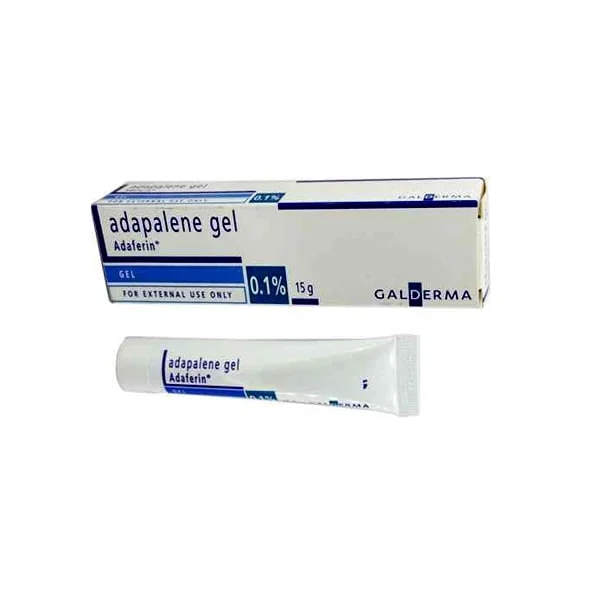
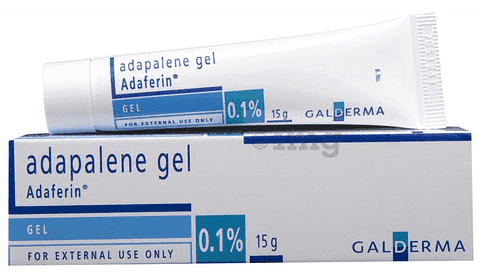

✅ Θεραπεύει την ακμή αποτελεσματικά
✅ Μειώνει τη φλεγμονή
✅ Προωθεί την ανανέωση του δέρματος
✅ Ελαχιστοποιεί τη φραγή των πόρων
✅ Μειώνει την ερυθρότητα του δέρματος
Το Adaferin Gel περιέχει Adapalene
✓ Ιατρικά ελεγμένο από Morgan Ellis — Ερευνητής Φαρμακευτικής · 8 χρόνια εμπειρία · Τελευταία αναθεώρηση: Μάιος 2026
⚡ Γρήγορη Απάντηση — Τι είναι το Adaferin Gel;
Adaferin Γέλη περιέχει αδαπαλένη 0.1% ως τοπικό τζελ από τα Εργαστήρια Galderma — ένα τοπικό ρετινοειδές τρίτης γενιάς που χρησιμοποιείται για τη θεραπεία της ήπιας έως μέτριας κοινής ακμής και ως θεραπεία συντήρησης μετά από αντιβιοτικά ή ισοτρετινοΐνη για την πρόληψη υποτροπής ακμής. Η αδαπαλένη δεσμεύεται επιλεκτικά στους πυρηνικούς υποδοχείς ρετινοειδών RAR-β και RAR-γ, ομαλοποιώντας την κερατινοποίηση των φολλικυλίων και μειώνοντας τη φλεγμονώδη αντίδραση που προκαλεί την ακμή. Εφαρμόστε μια λεπτή στρώση μια φορά την ημέρα το βράδυ σε καθαρό και ξηρό δέρμα. Αρχική βελτίωση σε 4-8 εβδομάδες· πλήρης αποτέλεσμα μετά από 12 εβδομάδες συνεχούς χρήσης. Η αδαπαλένη είναι η καλύτερα ανεκτή τοπική ρετινοειδής — σημαντικά λιγότερο ερεθιστική από την τρετινοΐνη ή την ταζαροτένη, κατάλληλη για ευαίσθητο δέρμα και τύπους δέρματος Fitzpatrick III-VI όπου η τρετινοΐνη συχνά προκαλεί μεταφλεγμονώδη υπερχρωμάτωση. Συχνότερες παρενέργειες: ήπια ξηρότητα, απολέπιση, ερυθρότητα στις πρώτες 2-3 εβδομάδες (η φάση “ρετινικοποίησης”). Καθημερινή χρήση SPF 30+ το πρωί είναι υποχρεωτική — τα τοπικά ρετινοειδή αυξάνουν την ευαισθησία στον ήλιο. Αποφύγετε κατά τη διάρκεια της εγκυμοσύνης (Κατηγορία εγκυμοσύνης FDA C· χρησιμοποιήστε μια μη ρετινοειδή θεραπεία για ακμή όπως τοπική κλινδαμυκίνη, αζελαϊκό οξύ ή υπεροξείδιο του βενζοϊλίου).
📦 Κάθε παραγγελία καλύπτεται από την Πολιτική Εγγύησης Επαναποστολής — εάν το δέμα σας δεν φτάσει εντός 20 εργάσιμων ημερών, το επαναποστέλλουμε.
Γιατί να παραγγείλετε από τη MedsBase
Τα γενόσημα φάρμακά μας προέρχονται από κατασκευαστές που πιστοποιούνται από την WHO-GMP και αποστέλλονται παγκοσμίως σε διακριτική, απλή συσκευασία — χωρίς όνομα φαρμάκου στο εξωτερικό του δέματος. Οι πληρωμές με κάρτα δρομολογούνται μέσω ρυθμισμένου επεξεργαστή (οι περιγραφές εκκαθάρισης περιλαμβάνουν ρυθμισμένο επεξεργαστή πληρωμών με κάρτα — ποτέ “MedsBase” ή οποιοδήποτε όνομα φαρμάκου). Γίνονται δεκτές και πληρωμές με κρυπτονομίσματα και τραπεζική μεταφορά SEPA. Κάθε παραγγελία καλύπτεται από την Πολιτική Επαναποστολής Εξασφαλίσεώς μας.
Τι είναι το Adaferin Gel;
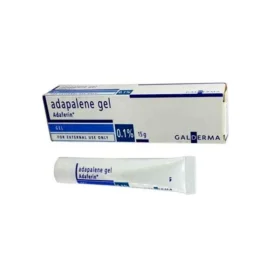
Το Adaferin Gel είναι ένα τοπικό αδαπαλένη 0.1% τζελ από τα Εργαστήρια Galderma, παρεχόμενο σε σωληνάριο 15 g. Η αδαπαλένη είναι μια τρίτης γενιάς τοπική ρετινοειδής (ίδια κατηγορία φαρμάκων με την τρετινοΐνη και την ταζαροτένη) αλλά με σημαντικά βελτιωμένη ανοχή. Είναι η προτιμώμενη τοπική ρετινοειδής στα σύγχρονα πρωτόκολλα διαχείρισης ακμής (Αμερικανική Ακαδημία Δερματολογίας 2024, Ευρωπαϊκό Φόρουμ Δερματολογίας 2023) τόσο για μονοθεραπεία όσο και ως συστατικό σταθερών συνδυασμών δόσης.
Διεθνώς εμπορική επωνυμία ως Differin (Galderma, ΗΠΑ/ΕΕ/ΗΒ/ΑΥ/παγκόσμια), με διαθέσιμες και τις δύο αντοχές τζελ 0,1% και 0,3%. Η αδαπαλένη 0,1% έγινε η πρώτη αναγνωρισμένη από τον FDA ρετινοειδή χωρίς ιατρική συνταγή στις ΗΠΑ το 2016 — ένα σημαντικό ορόσημο ασφάλειας που αντικατοπτρίζει δύο δεκαετίες κλινικής εμπειρίας με το φάρμακο.
Πώς λειτουργεί η Αδαπαλένη;
Η Αδαπαλένη συνδέεται με τους υποδοχείς ρετινοϊκού οξέος (RAR) -β και -γ στα κερατινοκύτταρα και τους σμηγματοκύτταρες. Τρεις κλινικά σχετικές επιδράσεις:
- Κωμωδολυτική δράση — κανονικοποιεί την θυλακική κερατινοποίηση, διασπώντας τα υπάρχοντα κωμώδη (μαύρες και λευκές κεφαλές) και αποτρέποντας τη δημιουργία νέων.
- Αντιφλεγμονώδης επίδραση — μειώνει την απελευθέρωση φλεγμονώδων κυτοκινών, καταστέλλοντας τις φλεγμονώδεις παπύλες και παστούλες της ακμής.
- Επιλεκτικότητα υποδοχέα — δένεται προτιμησιακά με τους RAR-β/γ έναντι του RAR-α, που είναι ο υποδοχέας υπεύθυνος για την περισσότερη ενόχληση από ρετινοειδή. Αυτή η επιλεκτικότητα εξηγεί γιατί η αδαπαλενή είναι πολύ καλύτερα ανεκτική από την τρετινοΐνη (που δένεται και με τις τρεις ισομορφές RAR).
Έναρξη δράσης: κωμωδολυτική δραστηριότητα εντός 2-4 εβδομάδων; ορατή βελτίωση των ακμών σε 4-8 εβδομάδες; μέγιστη αποτελεσματικότητα μετά από 12 εβδομάδες συνεχούς νυχτερινής χρήσης. Η φάση “ρετινικοποίησης” (αρχική ξηρότητα, απολέπιση, ερυθρότητα) συνήθως εξομαλύνεται μέχρι την 3η-4η εβδομάδα καθώς προσαρμόζεται το φραγματικό στρώμα του δέρματος.
Χρήσεις και ενδείξεις
- Ηπια έως μέτρια κοινή ακμή — η άδεια χρήσης· πρώτη γραμμή σύμφωνα με τις οδηγίες AAD 2024 / EDF 2023
- Κωμωδική ακμή (μαύρες κηλίδες, λευκές κηλίδες) — ιδιαίτερα αποτελεσματική
- Φλεγμονώδης ακμή (παπύλες, φλύκταινες) — αποτελεσματική· συνήθως συνδυάζεται με τοπικά αντιβακτηριακά (BPO, κλινδαμυκίνη) για συνέργεια
- Συντηρητική θεραπεία μετά από στοματική ισοτρετινοΐνη ή αντιβιοτικά — μειώνει σημαντικά το ποσοστό υποτροπής
- Φωτογήρανση (εκτός ετικέτας) — μέτρια βελτίωση στις λεπτές ρυτίδες, την υφή, την ανομοιόμορφη χρωστική· λιγότερο ισχυρή από την τρετινοΐνη για αυτήν την ένδειξη
- Μεταφλεγμονώδης υπερχρωσία (PIH) μετά από ακμή — ιδιαίτερα χρήσιμη σε δέρματα Fitzpatrick III-VI όπου η ενόχληση από ρετινοειδή επιδεινώνει την PIH και το πιο ήπιο προφίλ της αδαπαλενής είναι πλεονεκτικό
- Κεράτωση πιλαρίς (εκτός ετικέτας) — οι τραχείς εξογκώματα στους ανώτερους βραχίονες· μέτρια βελτίωση
Δοσολογία και Τρόπος Εφαρμογής του Adaferin Gel
Το Adaferin Gel διατίθεται σε σωληνάριο 15 g με αδαπαλένη 0.1%.
Πώς να Εφαρμόσετε Σωστά το Adaferin Gel
- Μία φορά την ημέρα το βράδυ — η νυχτερινή εφαρμογή ελαχιστοποιεί την ερεθισμό από τον ήλιο και επιτρέπει στο τζελ να δράσει κατά τη διάρκεια της νύχτας.
- Πλύνετε το πρόσωπό σας με ένα ήπιο καθαριστικό χωρίς αφρό, στη συνέχεια στεγνώστε με ελαφρά πιέσεις. Περιμένετε 20-30 λεπτά για να στεγνώσει πλήρως το δέρμα — η εφαρμογή ρετινοειδών σε υγρό δέρμα αυξάνει απότομα τον ερεθισμό.
- Εφαρμόστε μια ποσότητα στο μέγεθος μπιζελιού απλώστε σε ολόκληρη την πληγείσα περιοχή — όχι μόνο σε μεμονωμένες κηλίδες. Η αδαπαλένη δρα αποτρέποντας τη δημιουργία μελλοντικών κωμώδων, όχι απλώς εξαλείφοντας τα υπάρχοντα.
- Αποφύγετε τα μάτια, τις γωνίες του στόματος, τα χείλη, τις ρουθουνίες και τις βλεννογόνους μεμβράνες.
- Εφαρμόστε ενυδατική κρέμα ΜΕΤΑ την απορρόφηση της αδαπαλένης (περίπου 20 λεπτά αργότερα). Χρησιμοποιήστε μια ενυδατική κρέμα χωρίς αρωματικές ουσίες και μη κωμωδογόνα· οι CeraVe, Cetaphil, La Roche-Posay Toleriane λειτουργούν καλά.
- Η καθημερινή χρήση ευρέος φάσματος SPF 30+ κάθε πρωί είναι απαραίτητη — οι τοπικές ρετινοΐδες αυξάνουν τη φωτοευαισθησία. Εφαρμόστε ξανά κάθε 2-3 ώρες σε εξωτερικούς χώρους. Αποφύγετε εντελώς τα κρεβάτια μαυρίσματος.
- Η φάση “ρετινικοποίησης” — αναμένετε ήπια ξηρότητα, απολέπιση και ερυθρότητα τις εβδομάδες 2-3. Αυτό είναι φυσιολογικό και συνήθως σταθεροποιείται μέχρι την εβδομάδα 4. Για ελαχιστοποίηση: ξεκινήστε κάθε δεύτερη νύχτα για 2 εβδομάδες, μετά αυξήστε σε καθημερινή χρήση. Χρησιμοποιείτε ενυδατική κρέμα γενναιόδωρα.
- Συνεχίστε για τουλάχιστον 12 εβδομάδες πριν κρίνετε την απόκριση. Η ακμή μπορεί να επιδεινωθεί προσωρινά (“εκκένωση”) τις εβδομάδες 2-4 καθώς οι βαθιές κωμίδωνες αναδύονται. Μείνετε συνεπείς.
- Για συντήρηση: αφού η ακμή ελεγχθεί (3-6 μήνες), συνεχίστε 2-3 νύχτες την εβδομάδα για την πρόληψη υποτροπής.
Παρενέργειες
Συχνά (ήπια, σταθεροποιούνται μέχρι την εβδομάδα 3-4):
- Ξηρότητα, απολέπιση, ήπιο ξεφλούδισμα στο σημείο εφαρμογής
- Ήπια ερυθρότητα ή ερύθημα
- Ήπια καύση ή τσούξιμο κατά την εφαρμογή
- Αυξημένη ευαισθησία στον ήλιο — τονίζει τον κανόνα της καθημερινής χρήσης SPF
- Προσωρινή επιδείνωση ακμής (“εκκαθάριση”) τις εβδομάδες 2-4 καθώς βγαίνουν τα βαθιά κωμώδη
Λιγότερο συχνές:
- Αλλεργική επαφής δερματίτιδα (σπάνια· συνήθως σε μη ενεργό βοηθητικό συστατικό)
- Συνεχής σοβαρή ερεθισμός (ασυνήθιστο· μειώστε τη συχνότητα ή διακόψτε)
- Ερεθισμός των ματιών εάν εφαρμοστεί κατά λάθος πολύ κοντά στα μάτια
Σε σύγκριση με tretinoin, η αδαπαλενή είναι σημαντικά καλύτερα ανεκτή — οι κλινικές συγκρίσεις δείχνουν 30-50% λιγότερη ξηρότητα, ερυθρότητα και τσούξιμο με ισοδύναμη αποτελεσματικότητα στην ακμή. Αυτό είναι το κύριο πρακτικό πλεονέκτημα της αδαπαλενής έναντι των παλαιότερων τοπικών ρετινοειδών.
Αντενδείξεις και προειδοποιήσεις
- Υπερευαισθησία στην αδαπαλενή ή σε οποιοδήποτε βοηθητικό συστατικό
- Εκζεματώδες, τραυματισμένο ή ηλιασμένο δέρμα (θεραπεύστε πρώτα τη φλεγμονή)
- Ενεργή ροδόχρου ή περιστοματική δερματίτιδα — τα τοπικά ρετινοειδή συνήθως επιδεινώνουν αυτές
- Εγκυμοσύνη — FDA Κατηγορία Εγκυμοσύνης C. Αν και η τοπική απορρόφηση είναι ελάχιστη, τα ρετινοειδή ως κατηγορία είναι τερατογόνα σε χορική μορφή και η τοπική χρήση γενικά αποφεύγεται κατά τη διάρκεια της εγκυμοσύνης. Χρησιμοποιήστε τοπική κλινδαμυκίνη, αζελαϊκό οξύ ή υπεροξείδιο του βενζοϊλίου κατά τη διάρκεια της εγκυμοσύνης.
- Θηλασμός — ελάχιστα δεδομένα· γενικά αποφεύγεται.
- Παιδιά κάτω των 12 ετών — δεν χρησιμοποιείται γενικά· απαιτείται ειδική παρακολούθηση
Αλληλεπιδράσεις Φαρμάκων
- Άλλα τοπικά ρετινοειδή (τρετινοΐνη, ταζαροτένη) — μην συνδυάζετε· πλεονασμός μηχανισμού, πρόσθετη ερεθισμό
- Βενζοϋλοπεροξείδιο (BPO) — ασφαλής και συνεργιστικός συνδυασμός· συνήθως χρησιμοποιείται μαζί (το Epiduo Gel είναι ο σταθερός συνδυασμός δόσης)
- Τοπική κλινδαμυκίνη — ασφαλής συνδυασμός· συνήθως συνταγογραφείται μαζί (το Deriva CMS Gel είναι ο σταθερός συνδυασμός δόσης)
- Θείο τοπικά, σαλικυλικό οξύ, άλφα-υδροξυοξέα (AHAs/γλυκολικό), βήτα-υδροξυοξύ (σαλικυλικό οξύ σε προϊόντα που αφήνονται) — πρόσθετος ερεθισμός· εισάγετε μόνο μετά την εδραίωση της ανοχής στην αδαπαλένη (8+ εβδομάδες)
- Χημικά πιλίνγκ, μικροδερμαβλάστρωση, δερμαπλάνινγκ, αποβλητική λέιζερ — διακοπή της αδαπαλένης 1-2 εβδομάδες πριν και μετά
- Αποτρίχωση με κερί σε δέρμα που έχει υποστεί θεραπεία με αδαπαλένη — μπορεί να προκαλέσει σημαντικό τραυματισμό του δέρματος· διακοπή της αδαπαλένης για 1 εβδομάδα πριν και μετά την αποτρίχωση
Πώς συγκρίνεται το Adaferin Gel με άλλες θεραπείες ακμής
| Θεραπεία | Αξιοσημείωτο χαρακτηριστικό |
|---|---|
| Αδαπαλένη 0.1% (Adaferin Gel) | Το καλύτερα ανεκτό τοπικό ρετινοειδές· προτιμάται για ευαίσθητο δέρμα και Fitzpatrick III-VI |
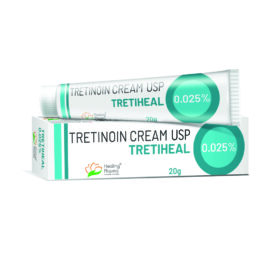
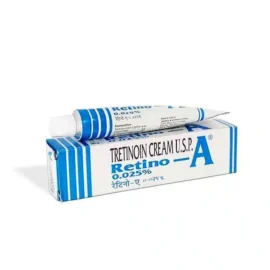
| Τρετινοΐνη (Retino-A Cream) | Παλαιότερο ρετινοειδές· πιο δραστικό για φωτογήρανση· πιο ερεθιστικό |
| Ταζαροτένη (Tazret Forte) | Το πιο δραστικό τοπικό ρετινοειδές· επίσης για ψωρίαση· το πιο ερεθιστικό |
| Αδαπαλένη + BPO (Epiduo Gel) | Συνδυασμός σταθερής δόσης - χρυσό πρότυπο για μέτρια ακμή |
| Αδαπαλένη + Κλινδαμυκίνη (Deriva CMS) | Συνδυασμός σταθερής δόσης με τοπικό αντιβιοτικό· ενυδατική βάση |
| Τοπική κλινδαμυκίνη (Clincitop) | Τοπικό αντιβιοτικό· για φλεγμονώδεις ακμές· συνδυάστε με BPO/ρετινοειδή για την πρόληψη ανθεκτικότητας |
| Από του στόματος ισοτρετινοΐνη | Για σοβαρή κομβοκυστική ακμή ή περιπτώσεις που δεν ανταποκρίνονται σε θεραπεία· μόνο από ειδικό |
Αποθήκευση και Διάρκεια Ζωής
Φυλάξτε το Adaferin Gel κάτω από 25°C στην αρχική συσκευασία, μακριά από άμεση ηλιακή ακτινοβολία. Κλείντε καλά το καπάκι μετά από κάθε χρήση. Μην αφήνετε σε μέρη προσβάσιμα από παιδιά. Χρησιμοποιήστε εντός της περιόδου που ορίζει ο κατασκευαστής μετά το άνοιγμα (συνήθως 6 μήνες) ή πριν από την ημερομηνία λήξης, όποιο έρθει πρώτο.
Συχνές Ερωτήσεις
Πότε θα δω αποτελέσματα από το Adaferin Gel;
Αρχική βελτίωση στις φλεγμονώδεις βλάβες εμφανίζεται συνήθως σε 4-8 εβδομάδες· πλήρης επίδραση τόσο στις φλεγμονώδεις όσο και στις κωμικονικές ακμές μέχρι τις 12 εβδομάδες. Οι πρώτες 2-4 εβδομάδες μπορεί να περιλαμβάνουν προσωρινή επιδείνωση της ακμής (“εκκαθάριση”) καθώς οι βαθιές κωμίδωνες έρχονται στην επιφάνεια και μια φάση “ρετινικοποίησης” με ξηρότητα και ελαφριά ερυθρότητα. Συνεχίστε με σταθερή εφαρμογή κάθε βράδυ για τουλάχιστον 12 εβδομάδες πριν κρίνετε την απόκριση.
Γιατί το δέρμα μου φαίνεται χειρότερο τις πρώτες εβδομάδες;
Συμβαίνουν δύο πράγματα: (1) Εκκαθάριση — η αδαπαλενή επιταχύνει την ωρίμανση των μικροκωμίδωνων που υπήρχαν ήδη στο δέρμα, φέρνοντάς τα στην επιφάνεια ως ορατές κηλίδες που εξαφανίζονται σε μία-δύο εβδομάδες. (2) Ρετινικοποίηση — το δερματικό φραγμό προσαρμόζεται στο ρετινοειδές τις πρώτες 3-4 εβδομάδες· ελαφριά ξηρότητα, απολέπιση και ερυθρότητα είναι συχνά αλλά εξομαλύνονται. Για ελαχιστοποίηση: ξεκινήστε μια μέρα ναι και μια όχι για 2 εβδομάδες, μετά αυξήστε σε καθημερινή χρήση· χρησιμοποιείστε ενυδατική κρέμα γενναιόδωρα· μην παραλείπετε ποτέ το SPF.
Πρέπει να χρησιμοποιήσω το Adaferin Gel αν έχω ευαίσθητο δέρμα;
Ναι — η αδαπαλενή είναι κατά πολύ το πιο φιλικό προς το ευαίσθητο δέρμα τοπικό ρετινοειδές. Κλινικές συγκρίσεις δείχνουν 30-50% λιγότερη ερεθισμό σε σχέση με την τρετινοΐνη με ισοδύναμη αποτελεσματικότητα στην ακμή. Ξεκινήστε μια μέρα ναι και μια όχι για τις πρώτες 2 εβδομάδες, χρησιμοποιείστε μια ενυδατική κρέμα χωρίς αρώματα (CeraVe/Cetaphil/La Roche-Posay Toleriane) και εφαρμόστε σε εντελώς ξηρό δέρμα (περιμένετε 20-30 λεπτά μετά το πλύσιμο).
Μπορώ να χρησιμοποιήσω το Adaferin Gel με το περυξείδιο του βενζοϊλίου ή το σαλικυλικό οξύ μου;
Ναι για το περυξείδιο του βενζοϊλίου — ο συνδυασμός είναι συνεργιστικός και αποτελεί τον χρυσό κανόνα για μέτρια ακμή (βλ. Epiduo Gel). Εφαρμόστε BPO το πρωί και αδαπαλένη το βράδυ για να ελαχιστοποιήσετε την ερεθισμό. Για το σαλικυλικό οξύ (ένα β-υδροξυοξύ), εισάγετε το μόνο αφού έχει εδραιωθεί η ανοχή στην αδαπαλένη (8+ εβδομάδες)· εφαρμόστε σε διαφορετικές ώρες της ημέρας και χρησιμοποιήστε τη χαμηλότερη αποτελεσματική συχνότητα.
Γιατί πρέπει να αποφεύγω την έκθεση στον ήλιο;
Οι τοπικές ρετινοειδείς αυξάνουν την ευαισθησία του δέρματος στην υπεριώδη ακτινοβολία λεπταίνοντας το στρώμα του κερατίνου και μειώνοντας την προστασία της μελανίνης. Χωρίς καθημερινή SPF 30+, το δέρμα που υποβάλλεται σε θεραπεία ευκολότερα παθαίνει ηλιακά εγκαύματα και αναπτύσσει περισσότερες ηλιακές βλάβες. Η ρετινοειδής επίσης αποικοδομείται από την υπεριώδη ακτινοβολία, μειώνοντας την αποτελεσματικότητά της στην ακμή. Η καθημερινή χρήση SPF 30+ το πρωί είναι υποχρεωτική σε οποιαδήποτε τοπική ρετινοειδή· επαναφέρετε κάθε 2-3 ώρες όταν βρίσκεστε έξω και αποφεύγετε τα κρεβάτια ηλιοθεραπείας.
Μπορώ να χρησιμοποιήσω το Adaferin Gel κατά τη διάρκεια της εγκυμοσύνης;
Όχι — οι τοπικές ρετινοειδείς ως κατηγορία αποφεύγονται κατά τη διάρκεια της εγκυμοσύνης ως προφύλαξη (FDA Κατηγορία Εγκυμοσύνης C για την αδαπαλένη). Αν και η τοπική απορρόφηση είναι ελάχιστη και τα μεμονωμένα δεδομένα περιπτώσεων είναι καθησυχαστικά, οι ρετινοειδείς σε χάπι (ισοτρετινοΐνη) είναι ιδιαίτερα τερατογόνες και η συναίνεση είναι να αποφεύγονται οι τοπικές ρετινοειδείς κατά τη διάρκεια της εγκυμοσύνης. Μεταβείτε σε τοπική κλινδαμυκίνη, αζελαϊκό οξύ ή υπεροξείδιο του βενζοϊλίου για τη διαχείριση της ακμής κατά τη διάρκεια της εγκυμοσύνης.
Πώς διαφέρει η αδαπαλένη από την τρετινοΐνη;
Και οι δύο είναι τοπικές ρετινοειδείς που δεσμεύουν τους υποδοχείς ρετινοϊκού οξέος. Η αδαπαλένη είναι επιλεκτική για τους RAR-β/γ, που σημαίνει ισοδύναμη αποτελεσματικότητα στην ακμή με σημαντικά λιγότερο ερεθισμό από την τρετινοΐνη (που δεσμεύει και τους τρεις ισομορφούς RAR, συμπεριλαμβανομένου του RAR-α που προκαλεί ερεθισμό). Η αδαπαλένη είναι επίσης χημικά πιο σταθερή — η τρετινοΐνη αποικοδομείται από την υπεριώδη ακτινοβολία και το οξυγόνο, ενώ η αδαπαλένη ανέχεται καλύτερα την ημερήσια χρήση. Για την ακμή, η αδαπαλένη είναι προτιμότερη. Για τη φωτογήρανση, η τρετινοΐνη παραμένει ελαφρώς πιο δυνατή.
Πόσο καιρό πρέπει να συνεχίσω να χρησιμοποιώ το Adaferin Gel;
Οι περισσότεροι άνθρωποι χρησιμοποιούν αδαπαλένη για 6-12 μήνες για την ενεργή θεραπεία της ακμής. Μόλις το δέρμα καθαρίσει, μεταβείτε στη συντήρηση: 2-3 βράδια την εβδομάδα επ' αόριστον. Η θεραπεία συντήρησης με αδαπαλένη μειώνει την υποτροπή της ακμής κατά 50%+ σε σύγκριση με τη διακοπή πλήρους της θεραπείας. Δεν υπάρχει ανώτερο χρονικό όριο· η αδαπαλένη είναι ασφαλής για χρόνια συνεχούς χρήσης.
Πού μπορώ να παραγγείλω το Adaferin Gel online;
Μπορείτε να παραγγείλετε το Adaferin Gel από το MedsBase σε τυπικά μεγέθη συσκευασίας (σωληνάριο 15 g). Οι παραγγελίες αποστέλλονται παγκοσμίως με διακριτική συσκευασία.
Σχετικές Εναλλακτικές
Άλλα προϊόντα σε Γενική Υγεία που οι πελάτες εξετάζουν επίσης:
Περισσότερες επιλογές στην κατηγορία Ομορφιά & Φροντίδα Δέρματος
Ταξινομημένα σύμφωνα με τον όγκο παραγγελιών στο MedsBase — τι επιλέγουν άλλοι πελάτες σε αυτήν την κατηγορία.


| Ισχύς | 0.1% (15γρ) |
|---|---|
| Ποσότητα | 1 Tube/s, 3 Tube/s, 6 Tube/s |
| Φαρμακευτική Μορφή | Tube/s |
| Κατασκευαστής | Galderma Laboratories |
| Θεραπεία | ΟΜΟΡΦΙΑ & ΦΡΟΝΤΙΔΑ ΔΕΡΜΑΤΟΣ |
| Γενόσημη μάρκα | Τοπικό Μπεκλομεθαζόνη + Τοπικό Λιδοκαΐνη + Φαινυλεφρίνη |
 Adaferin Γέλη
Ερωτήσεις & Απαντήσεις
Adaferin Γέλη
Σχετικά προϊόντα


Κριτικές
Δεν υπάρχουν ακόμη κριτικές