









Prilox Cream
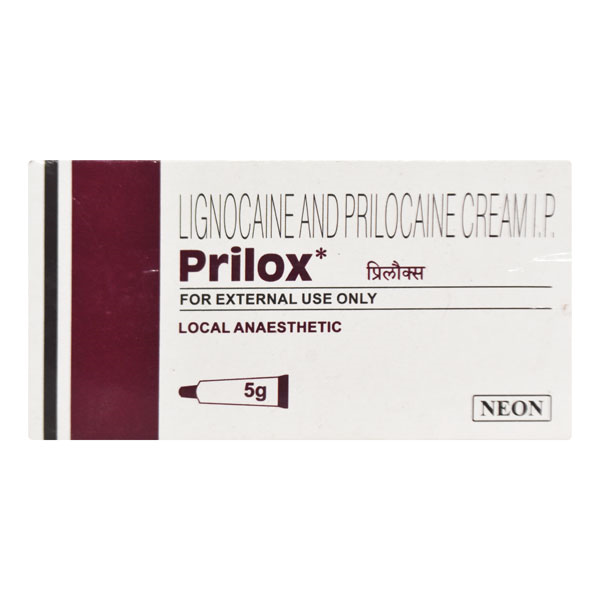
✅ Τοπική αναισθητική κρέμα
✅ Γρήγορη ανακούφιση
✅ Λιδοκαΐνη & Πριλοκαΐνη
✅ Αποτελεσματική αναισθησία
✅ Ιδανική για μικρές επεμβάσεις
Η κρέμα Prilox περιέχει Λιδοκαΐνη & Πριλοκαΐνη.
✓ Ιατρικά ελεγμένο από Morgan Ellis — Ερευνητής Φαρμακευτικής · 8 χρόνια εμπειρία · Τελευταία αναθεώρηση: Μάιος 2026
⚡ Γρήγορη απάντηση — Τι είναι η κρέμα Prilox;
Prilox Cream είναι τοπική αναισθητική κρέμα που περιέχει λιδοκαΐνη 2.5% + πριλοκαΐνη 2.5% — η φόρμουλα “EMLA” (Eutectic Mixture of Local Anaesthetics). Χρησιμοποιείται για την αναισθητοποίηση του δέρματος πριν από μικρές επεμβάσεις: ενέσεις, αίματα, καθετηριασμός φλέβας (ειδικά σε παιδιά), αποτρίχωση με λέιζερ, δερματογραφίες, επιφανειακές βιοψίες δέρματος και μικρές επεμβάσεις στην γεννητική περιοχή. Εφαρμόστε ένα παχύ στρώμα κάτω από μια οκλουζική επίδεση τουλάχιστον 60 λεπτά πριν από την επέμβαση (μέγιστο 5 ώρες).
📦 Κάθε παραγγελία καλύπτεται από την Πολιτική Εγγύησης Επαναποστολής — εάν το δέμα σας δεν φτάσει εντός 20 εργάσιμων ημερών, το επαναποστέλλουμε.
Γιατί να παραγγείλετε από τη MedsBase
Τα γενόσημα φάρμακά μας προέρχονται από κατασκευαστές που πιστοποιούνται από την WHO-GMP και αποστέλλονται παγκοσμίως σε διακριτική, απλή συσκευασία — χωρίς όνομα φαρμάκου στο εξωτερικό του δέματος. Οι πληρωμές με κάρτα δρομολογούνται μέσω ρυθμισμένου επεξεργαστή (οι περιγραφές εκκαθάρισης περιλαμβάνουν ρυθμισμένο επεξεργαστή πληρωμών με κάρτα — ποτέ “MedsBase” ή οποιοδήποτε όνομα φαρμάκου). Γίνονται δεκτές και πληρωμές με κρυπτονομίσματα και τραπεζική μεταφορά SEPA. Κάθε παραγγελία καλύπτεται από την Πολιτική Επαναποστολής Εξασφαλίσεώς μας.
Prilox Cream είναι μια τοπική παρασκευή λιδοκαΐνης 2,5% και πριλοκαΐνης 2,5%, διαμορφωμένη ως ευτεκτικό μείγμα έτσι ώστε τα δύο κρυσταλλικά τοπικά αναισθητικά να σχηματίζουν ένα μόνο έλαιο σε θερμοκρασία δωματίου — μια μορφή που διεισδύει στο άθικτο δέρμα πολύ καλύτερα από κάθε ένα από τα δύο μέσα χωριστά. Αυτή είναι η ίδια ενεργή σύνθεση με το αρχικό εμπορικό σήμα Astra EMLA Cream, το οποίο έχει είναι το παγκόσμιο αναφοράς προϊόν για τοπική δερματική αναισθησία από τη δεκαετία του 1980.
Το Prilox Cream χρησιμοποιείται ευρέως στην παιδιατρική πρακτική, την αισθητική δερματολογία και τις κλινικές εξωτερικών ασθενών για τη μείωση του πόνου των επεμβάσεων χωρίς εγχυόμενο αναισθητικό. Ειδικότερα, έχει μεταμορφώσει την εμπειρία των επεμβάσεων με βελόνες (εμβολιασμοί, εξετάσεις αίματος, καθετηριασμός φλέβας) για τα παιδιά.
Για τι χρησιμοποιείται το Prilox Cream;
- Ενέσεις και φλεβοκέντηση — εμβολιασμοί, αίματα, καθετηριασμός φλέβας (ειδικά σε παιδιά)
- Αποτρίχωση με λέιζερ, λέιζερ ανανέωσης δέρματος, IPL — για τη μείωση της δυσφορίας κατά τις επεμβάσεις
- Εργασίες τατουάζ — δυσφορία κατά τη φάση περιγράμματος και χρωματισμού
- Επιφανειακές βιοψίες δέρματος, βιοψίες ξυρίσματος, κουρέτα
- Μικρές δερματολογικές επεμβάσεις — αφαίρεση δερματικών εξογκωμάτων, θεραπεία κρεατοελιών
- Μικρές επεμβάσεις στην περιοχή των γεννητικών οργάνων — θεραπεία μαλακίας, κατάψυξη κρεατοελιών γεννητικών οργάνων, προμελέτη περιτομής
- Εισαγωγή κεντρικής φλεβικής γραμμής (ως συμπλήρωμα της τοπικής αναισθησίας)
- Πόνος σχετιζόμενος με χρόνια έλκη ποδιών κατά την αλλαγή επιδέσμων
- Προμελέτη πριν από ενδομυικές ενέσεις σε ασθενείς με φοβία προς τις βελόνες
Πώς να Εφαρμόσετε την Κρέμα Prilox
- Βεβαιωθείτε ότι το δέρμα είναι καθαρό και εντελώς ακέραιο (μην το χρησιμοποιείτε σε σπασμένο, εγκεφαλικό ή μολυσμένο δέρμα).
- Εφαρμόστε μια παχύ στρώμα κρέμας — περίπου 1–2 γραμμάρια ανά 10 cm² — στην περιοχή που θέλετε να αναισθητοποιηθεί. Μην δεν τρίβετε. Η κρέμα πρέπει να παραμένει στην επιφάνεια του δέρματος ως ορατό στρώμα.
- Καλύψτε με οκλουζική επίδεση (διαφανές πλαστικό φιλμ, Tegaderm ή την επίδεση που παρέχεται με το προϊόν). Η οκλουζία είναι απαραίτητη — χωρίς αυτή, το μεγαλύτερο μέρος του αναισθητικού εξατμίζεται πριν μπορέσει να διεισδύσει.
- Αφήστε στη θέση του για τουλάχιστον 60 λεπτά πριν από την επέμβαση. Μέγιστο 5 ώρες. Τυπικοί χρόνοι: 60 λεπτά για επιφανειακές επεμβάσεις· 90–120 λεπτά για αποτρίχωση με λέιζερ· 120 λεπτά για βαθύτερες επεμβάσεις με βελόνα.
- Ακριβώς πριν από την επέμβαση, αφαιρέστε την επίδεση και σκουπίστε τα υπολείμματα της κρέμας με ένα ξηρό γάζο.
- Το δέρμα θα παραμείνει μουδιασμένο για επιπλέον 1–2 ώρες μετά την αφαίρεση.
Περιοχές και όρια δόσης εξαρτώνται από την ηλικία και το σωματικό βάρος:
- Ενήλικες: έως 60 g κρέμα σε έκταση έως 600 cm² για έως 5 ώρες
- Παιδιά 7–12 ετών: έως 20 g σε έκταση έως 200 cm²
- Παιδιά 1–6 ετών: έως 10 g σε έκταση έως 100 cm²
- Παιδιά 3–11 μηνών: έως 2 g σε έκταση έως 20 cm²
- Βρέφη < 3 μηνών: μοναδική εφαρμογή 1 g για έως 1 ώρα, μέγιστη μία φορά κάθε 24 ώρες (κίνδυνος μεθαιμοσφαιναιμίας)
Προειδοποίηση για μεθαιμοσφαιναιμία. Η πριλοκαΐνη μπορεί σπάνια να προκαλέσει μεθαιμοσφαιναιμία — μια κατάσταση όπου τα ερυθρά αιμοσφαίρια δεν μπορούν να μεταφέρουν οξυγόνο αποτελεσματικά, δίνοντας στο δέρμα και στα χείλη μια γαλαζωπή απόχρωση. Ο κίνδυνος είναι μεγαλύτερος σε βρέφη κάτω των 3 μηνών, σε ασθενείς με έλλειψη G6PD και σε όσους λαμβάνουν φάρμακα που προκαλούν μεθαιμοσφαιναιμία (σουλφοναμίδες, νιτρικά, δαψόνη). Ακολουθήστε αυστηρά τα όρια δόσης που βασίζονται στην ηλικία και την έκταση που αναφέρονται παραπάνω.
Ποιος Δεν Πρέπει να Χρησιμοποιεί την Κρέμα Prilox;
- Γνωστή υπερευαισθησία στη λιδοκαΐνη, πριλοκαΐνη ή σε οποιοδήποτε άλλο τοπικό αναισθητικό τύπου αμίδου
- Σπασμένο, φλεγμονώδες, μολυσμένο ή εξεζητημένο δέρμα στο σημείο εφαρμογής
- Μεθαιμοσφαιναιμία ή κληρονομική προδιάθεση (έλλειψη G6PD)
- Βρέφη ηλικίας μικρότερης των 37 εβδομάδων κύησης
- Μην χρησιμοποιείτε κοντά στα μάτια — μπορεί να προκαλέσει τραύμα κερατοειδούς και χημικά εγκαύματα
- Μην χρησιμοποιείτε μέσα στο αυτί (κίνδυνος ωτοτοξικότητας εάν υπάρχει τρυπημένο τύμπανο)
- Μην χρησιμοποιείτε στην στοματική βλεννογόνο ή μέσα στο στόμα — γρήγορη απορρόφηση και κίνδυνος τοξικότητας
Παρενέργειες
- Συχνές: προσωρινή ωχρότητα (ασπρίλα) του δέρματος, ελαφριά ερυθρότητα, ελαφρύ κνησμό ή καύση στο σημείο εφαρμογής — όλα συνήθως εξαφανίζονται εντός 1–2 ωρών από την αφαίρεση της κρέμας
- Ασυνήθιστες: επαφής δερματίτιδα, οίδημα, πετεχίες
- Σπάνια: μεθαιμοσφαιναιμία (βρέφη, έλλειψη G6PD, υπερβολική δόση), συστημική τοξικότητα τοπικού αναισθητικού (εάν απορροφηθεί μέσω σπασμένου δέρματος ή χρησιμοποιηθεί σε μεγάλες περιοχές), αλλεργική αντίδραση
Παραγγελία & Παράδοση
Η MedsBase προσφέρει παγκόσμια αποστολή για κάθε παραγγελία. Οι παραγγελίες αποστέλλονται σε διακριτική συσκευασία και φτάνουν σε συσκευασίες με εμπορικό σήμα του κατασκευαστή. Εάν το προτιμώμενο μέγεθος συσκευασίας σας δεν είναι διαθέσιμο, επικοινωνήστε με την υποστήριξη πελατών για εκτίμηση χρόνου παράδοσης.
Ιατρική αποποίηση ευθυνών. Οι πληροφορίες σε αυτή τη σελίδα παρέχονται μόνο για γενική ενημέρωση. Δεν αποτελούν υποκατάστατο των συμβουλών του γιατρού ή του φαρμακοποιού σας. Συμβουλευτείτε έναν καταλληλό επαγγελματία υγείας πριν ξεκινήσετε, διακόψετε ή αλλάξετε θεραπεία.
Συχνές Ερωτήσεις
Για τι χρησιμοποιείται το Prilox Cream;
Το Prilox Cream (λιδοκαΐνη + πριλοκαΐνη) είναι ένα τοπικό αναισθητικό που χρησιμοποιείται για την αναισθησία της ακέραιας πριν από μικρές επεμβάσεις — ενέσεις, εξετάσεις αίματος, καθετηριασμός φλέβας (ειδικά σε παιδιά), αποτρίχωση με λέιζερ, δερματογραφήματα, επιφανειακές βιοψίες και μικρές επεμβάσεις στην περιοχή των γεννητικών οργάνων.
Είναι το Prilox Cream το ίδιο με το EMLA Cream;
Ναι — ίδια σύνθεση (λιδοκαΐνη 2,5% + πριλοκαΐνη 2,5% ευτεκτικό μείγμα). Το EMLA είναι η πρωτότυπη μάρκα Astra/Recipharm· το Prilox είναι ένα κλινικά ισοδύναμο γενόσημο.
Πόσο πριν από την επέμβαση πρέπει να εφαρμόσω την κρέμα;
Τουλάχιστον 60 λεπτά, ιδανικά 90–120 λεπτά για αποτρίχωση με λέιζερ ή βαθύτερες επεμβάσεις με βελόνα. Μην εφαρμόζετε λιγότερο από 60 λεπτά πριν — η κρέμα δεν θα έχει διεισδύσει επαρκώς.
Γιατί χρειάζομαι οκλυστική επίδεση;
Χωρίς οκλυστική επίδεση (διαφανή πλαστική μεμβράνη, Tegaderm ή μεμβράνη συσκευασίας), η κρέμα εξατμίζεται κυρίως και η απορρόφηση στο δέρμα είναι ελάχιστη. Η επίδεση είναι απαραίτητη για την αναισθητική επίδραση.
Πόσο διαρκεί η μούδιαση μετά την αφαίρεση;
Το δέρμα παραμένει μουδιασμένο για 1–2 ώρες μετά την αφαίρεση της κρέμας. Αυτό συνήθως είναι αρκετό για την επέμβαση και τον καθαρισμό.
Μπορώ να χρησιμοποιήσω το Prilox Cream στο πρόσωπό μου;
Ναι, για αποτρίχωση με λέιζερ, αφαίρεση τατουάζ ή μικρές επεμβάσεις — αλλά αποφύγετε την περιοχή πολύ κοντά στα μάτια (κίνδυνος τραυματισμού του κερατοειδούς) και μην εφαρμόζετε μέσα στο στόμα ή τη μύτη.
Μπορώ να χρησιμοποιήσω το Prilox Cream στο παιδί μου;
Ναι, σε κατάλληλες δόσεις για την ηλικία. Για τα περισσότερα παιδιά άνω του 1 έτους, το Prilox είναι καλά ανεκτό. Για βρέφη κάτω των 3 μηνών, χρησιμοποιείστε μόνο με ειδική ιατρική συμβουλή λόγω κινδύνου μεθαιμοσφαιριναιμίας.
Μπορώ να χρησιμοποιήσω το Prilox Cream σε τραυματισμένο δέρμα;
Όχι. Η εφαρμογή σε σπασμένο, μολυσμένο ή εγκεφαλισμένο δέρμα οδηγεί σε απρόβλεπτη συστημική απορρόφηση και μεγαλύτερο κίνδυνο τοξικότητας. Εφαρμόστε μόνο σε ακέραιο δέρμα.
Γιατί το δέρμα μου έχει γίνει χλωμό;
Η προσωρινή λεύκανση (ασπρίσιμο) του δέρματος είναι μια άμεση επίδραση της αγγειοσυστολής που προκαλείται από την κρέμα. Είναι συχνή, αβλαβής και εξαφανίζεται εντός 1-2 ωρών μετά την αφαίρεση.
Μπορώ να χρησιμοποιήσω την κρέμα Prilox πριν από το τατουάζ;
Ναι — αυτή είναι μια συχνή εκτός ετικέτας χρήση. Εφαρμόστε στην περιοχή του τατουάζ 60-90 λεπτά πριν από τη συνεδρία, κάτω από οκλουσιούν επίδεσμο. Συζητήστε πρώτα με τον καλλιτέχνη τατουάζ σας· μερικοί προτιμούν συγκεκριμένες μάρκες ή αποφεύγουν την προεπεξεργασία λόγω της επίδρασης στην ελαστικότητα του δέρματος.
Είναι η κρέμα Prilox ασφαλής κατά την εγκυμοσύνη;
Η τοπική χρήση για σύντομες περιόδους σε μικρές περιοχές θεωρείται γενικά αποδεκτή κατά την εγκυμοσύνη. Συζητήστε με τον μαιευτήρα σας εάν προγραμματίζονται μεγαλύτερες περιοχές ή συχνή χρήση.
Οι ασθενείς που χρειάζονται ένα τοπικό αναισθητικό με ταχύτερη έναρξη δράσης χωρίς την 60-λεπτη οκλουσία που απαιτείται από το EMLA μπορούν να χρησιμοποιήσουν Lox 2% Jelly (λιδοκαΐνη 2% τοπική) — έναρξη δράσης εντός 2-5 λεπτών, ιδανικό για την ακινητοποίηση κατά τις διαδικασίες και ως τοπικό βοήθημα για την καθυστερημένη εκσπερμάτιση.
Δείτε επίσης: Lox 2% Jelly (λιδοκαΐνη) — Το τοπικό γήλο λιδοκαΐνης 2% της Neon Labs για αιμορροΐδες, καθετηριασμό ουροδόχου κύστης, πρόωρη εκσπερμάτιση και μικρές επεμβάσεις.
Prilox Cream (λιδοκαΐνη 2.5% + πριλοκαΐνη 2.5%, η σύνθεση EMLA) χρειάζεται 30-60 λεπτά κάτω από οκλουσία για να λειτουργήσει· για γρήγορη επιφανειακή αναισθησία του δέρματος ή των βλεννογόνων αμέσως πριν από μια μικρή επέμβαση, Lox 10 % Spray (lidocaine 10 % τοπικό) παρέχει μια μετρημένη δόση με έναρξη δράσης σε 1-3 λεπτά.
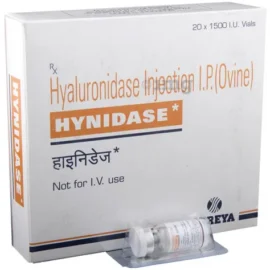
Prilox Cream συνδυάζει λιδοκαΐνη και πριλοκαΐνη για τοπική ακινητοποίηση πριν από μικρές επεμβάσεις, ενώ η ενέσιμη αναισθησία συχνά ενισχύεται με Hynidase Injection (υαλουρονιδάση 1500 IU), ένα βοηθητικό ένζυμο που βελτιώνει τη διάσπαση και μειώνει τον χρόνο για την επίτευξη λειτουργικού μπλοκ.
Σχετικές Εναλλακτικές
Άλλα προϊόντα σε Χρόνιες Παθήσεις που οι πελάτες εξετάζουν επίσης:
Περισσότερες επιλογές σε Φάρμακα για τον Πόνο
Ταξινομημένα σύμφωνα με τον όγκο παραγγελιών στο MedsBase — τι επιλέγουν άλλοι πελάτες σε αυτήν την κατηγορία.
| Ισχύς | 5 g |
|---|---|
| Ποσότητα | 1 Σωληνάριο/ς, 2 Σωληνάρια/ς, 3 Σωληνάρια/ς, 6 Σωληνάρια/ς |
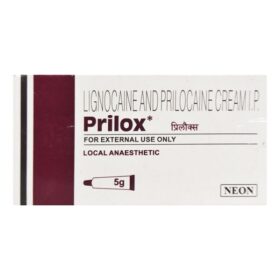 Prilox Cream
Ερωτήσεις & Απαντήσεις
Prilox Cream
Σχετικά προϊόντα



Κριτικές
Δεν υπάρχουν ακόμη κριτικές