







Βιταμίνη Α Μασώμενο Δισκίο
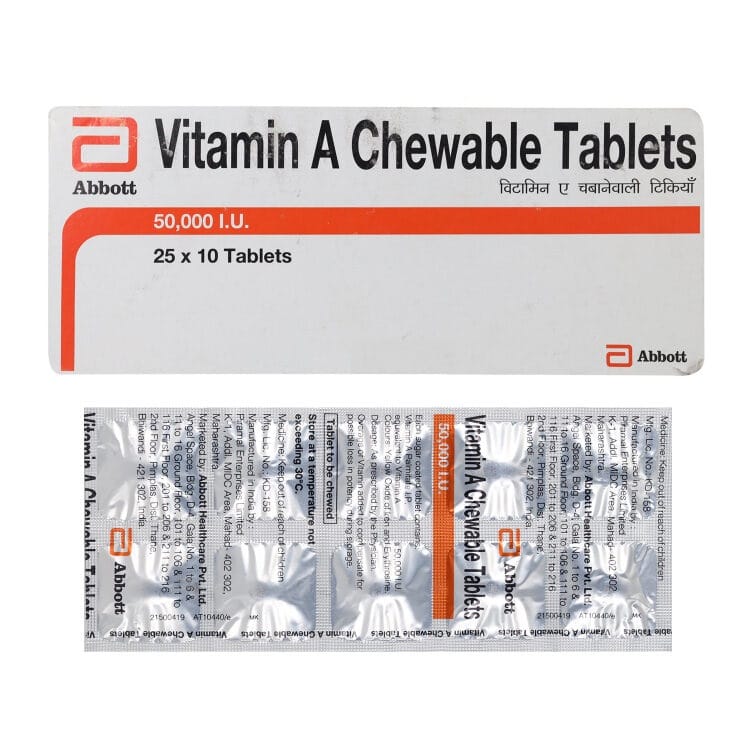
Βιταμίνη Α Μασώμενο Δισκίο (50.000 IU) — συμπλήρωμα υψηλής δόσης ρετινυλο-παλμιτάτης για έλλειψη βιταμίνης Α, ξηροφθαλμία και νυκτερινή τύφλωση. Εγκυμοσύνη: τερατογόνο — αποφεύγετε.
✓ Ιατρικά ελεγμένο από Morgan Ellis — Ερευνητής Φαρμακευτικής · 8 χρόνια εμπειρία · Τελευταία αναθεώρηση: Μάιος 2026
⚡ Γρήγορη Απάντηση — Τι είναι το Μασώμενο Δισκίο Βιταμίνης Α;
Το Μασώμενο Δισκίο Βιταμίνης Α είναι ένα μασώμενο δισκίο Βιταμίνης Α 50.000 IU για ξηρό μάτι, νυκτερινή τύφλωση και διατροφική συμπλήρωση λόγω έλλειψης βιταμίνης Α. Χρησιμοποιείται μία φορά ημερησίως για περιορισμένη χρονική περίοδο. Αποφεύγετε κατά την εγκυμοσύνη (η υψηλή δόση βιταμίνης Α είναι τερατογόνος).
📦 Κάθε παραγγελία καλύπτεται από την Πολιτική Εγγύησης Επαναποστολής — εάν το δέμα σας δεν φτάσει εντός 20 εργάσιμων ημερών, το επαναποστέλλουμε.
Γιατί να παραγγείλετε από τη MedsBase
Το Μασώμενο Δισκίο Βιταμίνης Α προέρχεται από έναν κατασκευαστή πιστοποιημένο από τον WHO-GMP και αποστέλλεται παγκοσμίως σε απλή, διακριτική συσκευασία. Κάθε παραγγελία καλύπτεται από την Πολιτική Εγγύησης Επαναποστολής — εάν δεν έχει φτάσει μετά από 20 εργάσιμες ημέρες, το ξαναστέλνουμε χωρίς επιπλέον κόστος. Υποστηρίζεται από πάνω από 1,400 επαληθευμένες κριτικές πελατών.
Τι είναι το Μασώμενο Δισκίο Βιταμίνης Α;
Το Μασώμενο Δισκίο Βιταμίνης Α κατασκευάζεται από τη Generic ως μασώμενο δισκίο Βιταμίνης Α 50.000 IU. Η βιταμίνη Α (ρετινόλη) είναι απαραίτητη για την υγεία της επιφάνειας του οφθαλμού, τη λειτουργία των φωτοϋποδοχέων (σύνθεση ροδοψίνης) και την ακεραιότητα των επιθηλίων σε όλο το σώμα. Η έλλειψη είναι η κύρια αιτία της προληπτής παιδικής τύφλωσης στον αναπτυσσόμενο κόσμο και συντελεί στη χρόνια ξηροφθαλμία και νυκτερινή τύφλωση.
Πώς Λειτουργεί
Η βιταμίνη Α μεταβολίζεται σε 11-σις-ρετινάλη, το χρωμοφόρο στους φωτοϋποδοχείς του αμφιβληστροειδούς που είναι απαραίτητο για τη μετατροπή του φωτός σε νευρικά σήματα. Είναι επίσης απαραίτητη για τη διαφοροποίηση των επιθηλιακών κυττάρων, συμπεριλαμβανομένων των κυττάρων γκομπλέ του επιπεφυκότος που παράγουν μουσίνης του δακρυϊκού υμένους. Η έλλειψη προκαλεί νυκτερινή τύφλωση (αποτυχία ροδοψίνης), κηλίδες Bitot, ξήρανση επιπεφυκότος, ξήρανση κερατοειδούς και τελικά κερατομαλακία — μια κατάσταση που απειλεί την όραση λόγω τήξης του κερατοειδούς.
Ενδείξεις
- Έλλειψη βιταμίνης Α — επιβεβαιώνεται με σειρική ρετινόλη ή κλινικά χαρακτηριστικά (νυκτερινή τύφλωση, κηλίδες Bitot)
- Ξηροφθαλμία — ξηρό μάτι και νόσος του κερατοειδούς λόγω έλλειψης βιταμίνης Α
- Νυκτερινή τύφλωση λόγω ελλείμματος (όχι αμφιβληστροειδική εκφύλιση ή άλλες κληρονομικές διαταραχές)
- Έλλειμμα μετά από βαριάτρικη επέμβαση
- Σύνδρομα κακής απορρόφησης (κυστική ίνωση, χολική κίρρωση, σύνδρομο κοντού εντέρου)
- Ιλαρά σε παιδιά σε ενδημικές περιοχές (σύσταση του ΠΟΥ)
Χορήγηση
Ενήλικες: 50.000–200.000 IU μία φορά ημερησίως για περιορισμένα χρονικά διαστήματα διόρθωσης ελλείμματος (συνήθως 1–2 εβδομάδες), στη συνέχεια συντήρηση 5.000–10.000 IU ημερησίως. Παιδιά: δοσολογία βάσει βάρους υπό παιδιατρική επίβλεψη. Πάντα υπό ιατρική επίβλεψη — οι χρόνιες υψηλές δόσεις προκαλούν υπερβιταμίνωση Α.
Παρενέργειες
Σε θεραπευτικές δόσεις: γενικά καλά ανεκτή.
Υπερβιταμίνωση Α (χρόνιες υψηλές δόσεις): πονοκέφαλος, ναυτία, θολή όραση, ξηρό δέρμα, σκασμένα χείλη, αλωπεκία, πόνος στα οστά, ηπατοτοξικότητα, αυξημένη ενδοκρανιακή πίεση (ψευδοόγκος εγκεφάλου).
Οξεία τοξικότητα: ναυτία, εμετός, πονοκέφαλος, ζάλη, θολή όραση — συνήθως επιλύεται εντός 24–48 ωρών μετά τη διακοπή.
Ειδοποιήσεις & Αντενδείξεις
- Εγκυμοσύνη — η θεραπευτική δόση βιταμίνης Α είναι τερατογόνος· αποφεύγετε
- Ηπατική νόσος — η βιταμίνη Α αποθηκεύεται στο ήπαρ· η τοξικότητα επιδεινώνεται με κίρρωση
- Ταυτόχρονη ισοτρετινοΐνη ή άλλες ρετινοειδείς ουσίες — πρόσθετη τοξικότητα
- Υπερβιταμίνωση Α — πρόσθετος κίνδυνος
- Παιδιά — μόνο παιδιατρική δοσολογία βάσει βάρους
Αποθήκευση
Αποθηκεύστε σε θερμοκρασία δωματίου 15–25°C προστατευμένο από υγρασία και φως. Κρατήστε μακριά από παιδιά — η υψηλή δόση βιταμίνης Α μπορεί να προκαλέσει οξεία τοξικότητα σε μικρά σώματα.
Συχνές Ερωτήσεις
Ποιος χρειάζεται συμπλήρωση βιταμίνης Α;
Άτομα με επιβεβαιωμένη έλλειψη (ορού ρετινόλης ή κλινικά χαρακτηριστικά), ξηροφθαλμία, ασθενείς μετά από bariatric ή μετά από malabsorption, και παιδιά σε ενδημικές περιοχές ελλείψεως. Οι περισσότεροι υγιείς ενήλικες με ισορροπημένη διατροφή δεν χρειάζονται συμπληρώματα υψηλής δόσης.
Είναι περισσότερη βιταμίνη Α καλύτερη για την νυχτερινή όραση;
Μόνο αν έχετε έλλειψη. Η προσθήκη βιταμίνης Α σε φυσιολογικά επίπεδα δεν βελτιώνει τη νυχτερινή όραση και η χρόνια υπερβολή προκαλεί τοξικότητα (πονοκέφαλος, απώλεια μαλλιών, πόνος στα οστά, ηπατοτοξικότητα).
Μπορεί να ληφθεί η Μασώμενη Ταμπλέτα Βιταμίνης Α κατά την εγκυμοσύνη;
Όχι — η θεραπευτική δόση βιταμίνης Α είναι τερατογόνος. Τα συνήθη προγεννητικά βιταμίνες περιέχουν χαμηλή δόση βιταμίνης Α ή β-καροτένιο (ένα ασφαλέστερο πρόδρομο). Ελέγξτε την ετικέτα και συζητήστε οποιοδήποτε συμπλήρωμα με τον μαιευτήρα σας.
Τι είναι η ξηροφθαλμία;
Το κλινικό σύνδρομο της ξηροφθαλμίας από έλλειψη βιταμίνης Α — περιλαμβάνει ξήρωση της επισκληρίδας, κηλίδες Bitot (αφρώδεις κηλίδες στην επισκληρίδα), ξήρωση της κερατοειδούς και σε σοβαρή έλλειψη κερατομαλακία (διάλυση της κερατοειδούς). Επαναστρέψιμο εάν αντιμετωπιστεί νωρίς.
Ποια είναι η διαφορά μεταξύ βιταμίνης Α και β-καροτενίου;
Η βιταμίνη Α (ρετινόλη) είναι η ενεργή μορφή· το β-καροτένιο είναι ένα φυτικό πρόδρομο που ο οργανισμός μετατρέπει σε βιταμίνη Α όταν χρειάζεται. Το β-καροτένιο δεν μπορεί να προκαλέσει υπερβιταμίνωση Α — ο οργανισμός ρυθμίζει τη μετατροπή. Τα συμπληρώματα β-καροτενίου είναι ασφαλέστερα κατά την εγκυμοσύνη και σε χρόνια χρήση.
Τι γίνεται αν έχω ηπατική νόσο;
Η βιταμίνη Α αποθηκεύεται στο ήπαρ. Η κίρρωση ή οποιαδήποτε χρόνια ηπατική νόσο αυξάνει τον κίνδυνο τοξικότητας. Η ρουτίνα υψηλών δόσεων συμπληρωμάτων είναι αντενδειγμένη. Η ήπια έλλειψη μπορεί να αντιμετωπιστεί με διατροφικά μέτρα (πορτοκαλί και σκούρα πράσινα λαχανικά, γαλακτοκομικά, αυγά) συν συμπληρώματα πολυβιταμινών χαμηλής δόσης.
Είναι το Vitamin A Chewable Tablet θεραπεία για την αμφιβληστροειδοπάθεια;
Μερικές μελέτες υποδηλώνουν ότι η υψηλή δόση παλμιτικού βιταμίνης Α (15,000 IU/ημέρα) μπορεί να επιβραδύνει την εξέλιξη της αμφιβληστροειδοπάθειας ενηλίκων, αλλά τα στοιχεία είναι ανάμεικτα. Αυτό δεν είναι το ίδιο με τη θεραπεία της συνηθισμένης νυκτερινής τύφλωσης. Συζητήστε με έναν ειδικό αμφιβληστροειδούς.
Τι γίνεται με τους καπνιστές;
Τα συμπληρώματα β-καροτενίου (και πιθανώς η υψηλή δόση βιταμίνης Α) έχουν συνδεθεί με αυξημένο κίνδυνο καρκίνου του πνεύμονα σε καπνιστές (δοκιμές CARET, ATBC). Οι καπνιστές πρέπει να αποφεύγουν την υψηλή δόση βιταμίνης Α και β-καροτενίου.
Μπορούν τα παιδιά να πάρουν το Vitamin A Chewable Tablet;
Μόνο υπό παιδιατρική καθοδήγηση. Τα παιδιά είναι ιδιαίτερα ευάλωτα σε οξεία και χρόνια τοξικότητα. Ο ΠΟΥ συνιστά συγκεκριμένες δόσεις για ιλαρά σε παιδιά σε ενδημικές περιοχές.
Τι γίνεται αν παίρνω άλλες πολυβιταμίνες;
Ελέγξτε τη συνολική περιεκτικότητα σε βιταμίνη Α σε όλα τα συμπληρώματά σας. Οι περισσότερες πολυβιταμίνες περιέχουν 2,500–5,000 IU. Η προσθήκη του Vitamin A Chewable Tablet μπορεί γρήγορα να υπερβεί τα ασφαλή ανώτερα όρια με χρόνια χρήση.
Άλλα Φάρμακα για τη Φροντίδα των Ματιών
Οι πελάτες που βλέπουν αυτό το προϊόν εξετάζουν επίσης αυτές τις εναλλακτικές λύσεις στην Φροντίδα Ματιών ποικιλία μας:
- Restasis Eye Drops (κυκλοσπορίνη)
- Cyclomune Eye Drop (κυκλοσπορίνη)
- Just Tears Σταγόνες για τα Μάτια
- Moisol Σταγόνες για τα Μάτια
- Nano Tears Σταγόνες για τα Μάτια
Ιατρική Αποποίηση Ευθύνης
Οι πληροφορίες σε αυτή τη σελίδα προορίζονται μόνο για εκπαιδευτικούς σκοπούς και δεν αποτελούν υποκατάστατο ιατρικής συμβουλής από έναν προσόντα οφθαλμίατρο ή οπτομετρία. Οι παθήσεις των ματιών μπορούν να απειλήσουν γρήγορα την όραση — η ξαφνική απώλεια όρασης, ο σοβαρός πόνος ή το τραύμα αποτελούν οφθαλμολογική έκτακτη ανάγκη. Συμβουλευτείτε πάντα έναν επαγγελματία φροντίδας των ματιών πριν ξεκινήσετε, διακόψετε ή αλλάξετε οποιαδήποτε θεραπεία.
Περισσότερες επιλογές σε Βιταμίνες και Μέταλλα
Ταξινομημένα σύμφωνα με τον όγκο παραγγελιών στο MedsBase — τι επιλέγουν άλλοι πελάτες σε αυτήν την κατηγορία.
| Ισχύς | 50.000iu |
|---|---|
| Ποσότητα | 30 δισκία, 60 δισκία, 90 δισκία, 180 δισκία |
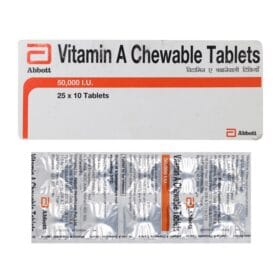 Βιταμίνη Α Μασώμενο Δισκίο
Ερωτήσεις & Απαντήσεις
Βιταμίνη Α Μασώμενο Δισκίο
Σχετικά προϊόντα


Κριτικές
Δεν υπάρχουν ακόμη κριτικές