








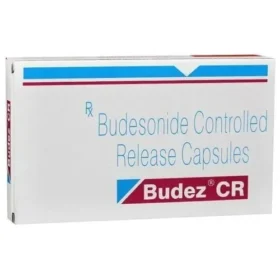
Budez CR

✅ Διαχειρίζεται φλεγμονώδη νόσο του εντέρου
✅ Μειώνει τα συμπτώματα της νόσου του Crohn
✅ Ελέγχει την ελκώδη κολίτιδα
✅ Ελαχιστοποιεί τη γαστρεντερική φλεγμονή
✅ Ανακουφίζει τον κοιλιακό πόνο
Το Budez CR περιέχει Budesonide.
✓ Ιατρικά ελεγμένο από Morgan Ellis — Ερευνητής Φαρμακευτικής · 8 χρόνια εμπειρία · Τελευταία αναθεώρηση: Μάιος 2026
⚡ Γρήγορη απάντηση — Τι είναι το Budez CR;
Budez CR είναι καψάκια ελεγχόμενης απελευθέρωσης από τη Sun Pharma που περιέχει budesonide 3 mg — ένα ισχυρό συνθετικό γλυκοκορτικοειδές διατυπωμένο με pH- και χρονικά εξαρτώμενη απελευθέρωση που παρέχει το ενεργό φάρμακο απευθείας στο τερματικό ειλεό και την ανιούσα κόλο. Η βουδεσονούλη έχει ~90% πρωτοπαθές ηπατικό μεταβολισμό, οπότε παρά το ότι είναι ισχυρό γλυκοκορτικοειδές σε ιστικό επίπεδο, η συστημική έκθεση είναι ~10% αυτής μιας ισοδύναμης αντιφλεγμονώδους δόσης πρεδνιζολόνης — με λιγότερες κουσινγκοειδείς εκδηλώσεις, λιγότερη καταστολή του υποφυσιο-υπονερεφρικού άξονα και λιγότερη απώλεια οστικής μάζας. Χρησιμοποιείται για ήπια έως μέτρια ενεργή νόσο του Crohn που εμπλέκει τον τερματικό ειλεό ή την ανιούσα κόλο, μικροσκοπική κολίτιδα (κολλαγονώδης και λεμφοκυτταρικός), και εκτός ετικέτας για αυτοάνοση ηπατίτιδα. Τυπική δόση για ενήλικες: 9 mg μια φορά την ημέρα το πρωί για 8–10 εβδομάδες, στη συνέχεια μειώστε σταδιακά. Οι συστημικές παρενέργειες των στεροειδών εξακολουθούν να εμφανίζονται — ειδικά με μακροχρόνιες θεραπείες, αύξηση δόσης ή συνταγογράφηση ισχυρών αναστολέων CYP3A4 (π.χ. κετοκοναζόλη, ριτοναβίρη, κλαριθρομυκίνη, χυμός γκρέιπφρουτ).
📦 Κάθε παραγγελία καλύπτεται από την Πολιτική Εγγύησης Επαναποστολής — εάν το δέμα σας δεν φτάσει εντός 20 εργάσιμων ημερών, το επαναποστέλλουμε.
Γιατί να παραγγείλετε από τη MedsBase
Τα γενόσημα φάρμακά μας προέρχονται από κατασκευαστές που πιστοποιούνται από την WHO-GMP και αποστέλλονται παγκοσμίως σε διακριτική, απλή συσκευασία — χωρίς όνομα φαρμάκου στο εξωτερικό του δέματος. Οι πληρωμές με κάρτα δρομολογούνται μέσω ρυθμισμένου επεξεργαστή (οι περιγραφές εκκαθάρισης περιλαμβάνουν ρυθμισμένο επεξεργαστή πληρωμών με κάρτα — ποτέ “MedsBase” ή οποιοδήποτε όνομα φαρμάκου). Γίνονται δεκτές και πληρωμές με κρυπτονομίσματα και τραπεζική μεταφορά SEPA. Κάθε παραγγελία καλύπτεται από την Πολιτική Επαναποστολής Εξασφαλίσεώς μας.
Τι είναι το Budez CR;
Το Budez CR είναι καψάκια στοματικής χορήγησης ελεγχόμενης απελευθέρωσης (CR) κατασκευασμένη από τη Sun Pharma που περιέχει budesonide 3 mg. Η βουδεσονονίδη είναι γλυκοκορτικοειδές δεύτερης γενιάς που είναι περίπου 15 φορές πιο ισχυρό από την υδροκορτιζόνη και 5 φορές πιο ισχυρό από την πρεδνιζολόνη σε ιστικό επίπεδο — αλλά μοναδικά, περίπου το 90% του απορροφημένου φαρμάκου απενεργοποιείται στην πρώτη διέλευση από το ήπαρ.
Το Budez CR είναι το γενόσημο ισοδύναμο της Sun Pharma για τα Entocort EC / Uceris — μια καψούλα βουδεσονονίδης με ελεγχόμενη απελευθέρωση σχεδιασμένη να απελευθερώνει το ενεργό φάρμακο στον τερματικό ειλέα και το ανιόν έντερο. Σε αυτόν τον ιστότοπο είναι το μόνο στομαχεντερικό κορτικοστεροειδές που διατίθεται και είναι το προτιμώμενο στεροειδές πρώτης γραμμής για τη νόσο Crohn του ειλεοκακκικού τμήματος και τη μικροσκοπική κολίτιδα. Το περίβλημα CR σχεδιάστηκε να διαλύεται σε pH > 5.5 (τερματικός ειλέας και δεξιό έντερο) και όχι στο στομάχι ή το δωδεκαδάκτυλο, ώστε το φάρμακο να απελευθερώνεται ακριβώς εκεί όπου η φλεγμονή είναι πιο ενεργή στη νόσο Crohn του ειλεοκακκικού τμήματος και τη μικροσκοπική κολίτιδα. Αυτή η στοχευμένη παράδοση σε ιστό συν η σχεδόν πλήρης ηπατική μεταβολή πρώτης διέλευσης είναι που κάνει το Budez CR το προτιμώμενο κορτικοστεροειδές για γαστρεντερολόγους που αντιμετωπίζουν την ειλεοτυφλική νόσο του Crohn το 2026 — παρουσιάζει παρόμοια ποσοστά ύφεσης με την πρεδνιζολόνη σε αυτή την υποομάδα με περίπου το μισό συστημικό φορτίο παρενεργειών των στεροειδών.
Πώς Λειτουργεί το Budez CR;
Το Budez CR επιτυγχάνει ένα εντερικό-επιλεκτικό αντιφλεγμονώδες αποτέλεσμα μέσω τριών μηχανισμών:
- Επιλεκτική παράδοση στο έντερο — το CR κάψουλο χρησιμοποιεί ένα πολυμερές μεθακρυλικού οξέος εξαρτώμενο από το pH που παραμένει ακέραιο στο στομάχι και το προξιμικό λεπτό έντερο, έπειτα διαλύεται σε pH 5,5 ή υψηλότερο στο απόμακρο λεπτό έντερο και τον προξιμικό κόλο. Η μέγιστη τοπική συγκέντρωση στους ιστούς είναι στο τερματικό ειλεό και τον ανιόντα κόλο — τα ακριβή σημεία της ειλεοτυφλικής νόσου του Crohn και πολλών περιπτώσεων μικροσκοπικής κολίτιδας.
- Υψηλή πρώτης διέλευσης ηπατική μεταβολή (~90%) — η απορροφηθείσα βουδεσονίδη μεταβολίζεται γρήγορα από το CYP3A4 στο ήπαρ σε δύο ανενεργούς μεταβολίτες (6β-υδροξυ-βουδεσονίδη και 16α-υδροξυ-πρεδνιζολόνη). Μόνο ~10% της απορροφηθείσας δόσης φτάνει στη συστηματική κυκλοφορία, δίνοντας σημαντικά μικρότερο συστημικό φορτίο στεροειδών σε σύγκριση με μια ισοδύναμη αντιφλεγμονώδη δόση πρεδνιζολόνης.
- Τυπική δράση των υποδοχέων γλυκοκορτικοειδών στον ιστό — στην εντερική βλεννογόνο, η βουδεσονίδη δεσμεύει ενδοκυτταρικούς υποδοχείς γλυκοκορτικοειδών, καταστέλλει τους μεταγραφικούς παράγοντες NF-κB και AP-1, μειώνει τις προφλεγμονώδεις κυτοκίνες (TNF-α, IL-1, IL-6, IL-8), αναστέλλει την κυκλοφορία των λευκοκυττάρων στη βλεννογόνο και σταθεροποιεί τη λειτουργία της επιθηλιακής φραγής.
Κλινική έναρξη: βελτίωση των συμπτωμάτων σε 2–4 εβδομάδες· τα ποσοστά ύφεσης χωρίς στεροειδή είναι συγκρίσιμα με τα συμβατικά της πρεδνιζολόνης (δοκιμές βασισμένες στο CDAI, Campieri 1997, Thomsen 1998) στην υποομάδα της ειλεοτυφλικής νόσου του Crohn.
Χρήσεις και ενδείξεις
- Ηπια έως μέτρια ενεργή νόσος του Crohn που εμπλέκει το τερματικό ειλεό και/ή τον ανιόντα κόλο — πρώτη επιλογή κορτικοστεροειδούς για αυτή την ανατομική κατανομή. Λιγότερο αποτελεσματικό για την προξιμική λεπτού εντέρου ή εκτεταμένη κολική νόσο του Crohn.
- Μικροσκοπική κολίτιδα — τόσο κολλαγονώδης κολίτιδα όσο και λεμφοκυτταρική κολίτιδα. Θεραπεία πρώτης γραμμής· ~80% κλινική ύφεση εντός 6–8 εβδομάδων. Συχνά απαιτείται συντήρηση σε χαμηλότερη δόση (3–6 mg/ημέρα) μετά την επαγωγή για την πρόληψη υποτροπής.
- Αυτοάνοση ηπατίτιδα (εκτός ετικέτας) — ως εναλλακτική της πρεδνιζολόνης σε μη κυρωτικούς ασθενείς, όπου η ~90% πρώτη διέλευση μεταβολισμού δίνει το μεγαλύτερο μέρος της ηπατικής αντιφλεγμονώδους δράσης χωρίς συστημικές παρενέργειες στεροειδών. Αποτελεί αντίθεση στην κίρρωση επειδή η πυλαία-συστημική παράκαμψη παρακάμπτει τον πρώτο μεταβολισμό.
- Ηωσινοφιλική οισοφαγίτιδα (εκτός ετικέτας, προτιμάται η στοματικά διασπώμενη βουδεσονονίνη) — όχι η CR μορφή.
- Συντήρηση ύφεσης στη νόσο του Crohn — 6 mg/ημέρα για 3–12 μήνες χρησιμοποιείται μερικές φορές, αν και τα στοιχεία για μακροπρόθεσμη συντήρηση είναι μέτρια.
Το Budez CR είναι δεν ενδείκνυται για: σοβαρή νόσο του Crohn, εκτεταμένη ελκώδης κολίτιδα (χρησιμοποιήστε πρεδνιζολόνη ή 5-ASA), νόσο του Crohn περιορισμένη στο στομάχι ή το προξιμικό λεπτό έντερο, περιπρωκτικό Crohn (απαιτεί συστημική θεραπεία), ή για γενική αντιφλεγμονώδη χρήση (άσθμα, RA, δερματολογία — χρησιμοποιήστε διαφορετικές μορφές στεροειδών).
Budez CR Δοσολογία και Τρόπος Λήψης
Το Budez CR παρέχεται σε 3 mg ανά κάψουλα ελεγχόμενης απελευθέρωσης.
- Ενεργή επαγωγή Crohn: 9 mg (3 κάψουλες) μία φορά την ημέρα το πρωί για 8–10 εβδομάδες.
- Μείωση δόσης: μειώστε σε 6 mg ημερησίως για 2 εβδομάδες, στη συνέχεια 3 mg ημερησίως για 2 εβδομάδες και μετά διακόψτε. Η απότομη διακοπή μετά από 8+ εβδομάδες σε 9 mg/ημέρα μπορεί να αποκαλύψει καταστολή του υποφυσιο-επινεφριδικού άξονα.
- Επαγωγή μικροσκοπικής κολίτιδας: 9 mg μία φορά την ημέρα για 6–8 εβδομάδες· μειώστε σταδιακά τη δόση.
- Συντήρηση μικροσκοπικής κολίτιδας: 3–6 mg μία φορά την ημέρα (συχνά δια βίου σε χρόνιους υποτροπιάζοντες ασθενείς).
- Συντήρηση Crohn (όταν χρησιμοποιείται): 6 mg μία φορά την ημέρα για 3–12 μήνες· περιορίστε τη χρήση πέραν των 12 μηνών όπου είναι δυνατόν.
- Αυτοάνοση ηπατίτιδα (εκτός ετικέτας): 9 mg/ημέρα για επαγωγή, μειώστε σταδιακά σε 3–6 mg/ημέρα· μόνο υπό ειδικευμένη παρακολούθηση· ΟΧΙ για ασθενείς με κίρρωση.
- Νεφρική δυσλειτουργία: χωρίς προσαρμογή δόσης.
- Ηπατική δυσλειτουργία: χρησιμοποιήστε με προσοχή· ο μεταβολισμός πρώτης διέλευσης είναι μειωμένος, οπότε η συστημική έκθεση αυξάνεται σημαντικά. Αποφύγετε σε σοβαρή ηπατική νόσο / κίρρωση.
Πώς να Λάβετε Σωστά το Budez CR
- Καταπιείτε ολόκληρο με ένα ποτήρι νερό το πρωί. Μην συνθλίβετε, μασάτε ή ανοίγετε τα καψάκια — η σύνθλιψη καταστρέφει το ελεγχόμενης απελευθέρωσης περίβλημα, το οποίο θα απελευθέρωνε το φάρμακο στο στομάχι και θα μείωνε σημαντικά την εντερική επιλεκτική δράση ενώ θα αύξανε τη συστημική απορρόφηση.
- Πάρτε τουλάχιστον 30 λεπτά πριν το πρωινό. Η πρωινή χορήγηση μιμείται τη φυσιολογική κορτιζόλης ρυθμό και ελαχιστοποιεί την καταστολή του υποφυσιο-επινεφριδικού άξονα.
- Αποφύγετε εντελώς τη γκρέιπφρουτ και τον χυμό γκρέιπφρουτ κατά τη διάρκεια της θεραπείας. Η γκρέιπφρουτ αναστέλλει το εντερικό CYP3A4, το οποίο αυξάνει τα συστημικά επίπεδα της βουδεσοναΐδης ~2–3 φορές και αυξάνει δραματικά τις συστημικές στεροειδικές παρενέργειες.
- Μην διακόψετε απότομα μετά από 8 εβδομάδες ή περισσότερο σε δόση 9 mg/ημέρα. Παρόλο που η συστημική έκθεση είναι χαμηλότερη από αυτή της πρεδνιζολόνης, μπορεί να συμβεί καταστολή του υποφυσιο-επινεφριδικού άξονα. Μειώστε σταδιακά όπως περιγράφηκε παραπάνω.
- Κουβαλάτε μια κάρτα στεροειδών εάν βρίσκεστε σε θεραπεία για περισσότερο από 8 εβδομάδες. Ενημερώστε τους αναισθησιολόγους, τους κλινικούς έκτακτης ανάγκης και κάθε νέο ιατρό για την τρέχουσα χρήση βουδεσοναΐδης — ενδέχεται να απαιτηθεί στεροειδής κάλυψη σε περιόδους μεγάλης χειρουργικής επέμβασης ή σοβαρής ασθένειας.
- Προστασία των οστών — για θεραπείες μεγαλύτερες από 3 μήνες, η συμπλήρωση ασβεστίου + βιταμίνης D είναι συνετή. Ο κίνδυνος απώλειας οστικής μάζας είναι σημαντικά χαμηλότερος από αυτόν της πρεδνιζολόνης αλλά όχι μηδενικός· εξετάστε τη διενέργεια DEXA μετά από 12 μήνες συνεχούς χρήσης.
- Παρακολουθήστε για συστημικές στεροειδικές παρενέργειες σε κάθε επανεξέταση — αύξηση βάρους, πρήξιμο προσώπου, αλλαγή στη διάθεση, ακμή, αυξημένη γλυκόζη αίματος, θολή όραση (πιθανή καταρράκτη/γλαύκωμα με μακροχρόνια χρήση).
- Αναφέρετε κάθε νέο πυρετό, παραγωγικό βήχα ή μη επουλωμένο δερματικό έλκος αμέσως — η ανοσοκαταστολή που προκαλείται από στεροειδή είναι πραγματική ακόμα και με βουδεσονονίδη.
- Αποφύγετε ζωντανά εμβόλια κατά τη διάρκεια της επαγωγής με 9 mg/ημέρα. Σε συντήρηση 3–6 mg/ημέρα, τα ζωντανά εμβόλια είναι συνήθως αποδεκτά αλλά συζητήστε με τον ιατρό που τα συνταγογραφεί. Τα αδρανοποιημένα εμβόλια (ετήσια γρίπη, πνευμονιόκοκκος, COVID-19, Shingrix) είναι ασφαλή και συνιστώνται.
- Μην συνδυάζετε με συστηματικά κορτικοστεροειδή (π.χ. προδνιζολόνη από το στόμα) εκτός εάν ορίζεται από ειδικό — τότε οι συστημικές παρενέργειες είναι προσθετικές.
Παρενέργειες της Budez CR
Οι συστημικές παρενέργειες των στεροειδών εμφανίζονται αλλά είναι σημαντικά λιγότερο συχνές και σοβαρές σε σύγκριση με ισοδύναμες αντιφλεγμονώδεις δόσεις προδνιζολόνης. Συγκριτικές μελέτες δείχνουν περίπου 50% του φορτίου συστημικών παρενεργειών σε σύγκριση με τα συμβατικά στεροειδή.
Συχνές:
- Κεφαλαλγία
- Ναυτία
- Κούραση
- Δυσπεψία
- Ήπια οίδημα στο πρόσωπο (“σεληνιακό πρόσωπο”) σε μια μειοψηφία ασθενών, συνήθως λιγότερο έντονο από ό,τι με προδνιζολόνη
- Ακμή
- Αλλαγή στη διάθεση (ήπια αναβίωση, περιστασιακά αϋπνία)
- Ήπια αύξηση βάρους
- Μικρή αύξηση της γλυκόζης (λιγότερο από την πρεδνιζολόνη)
Λιγότερο συχνά αλλά σημαντικά:
- Καταστολή του άξονα Υποφυσιο-επινεφριδιακού (HPA) με παρατεταμένη δοσολογία 9 mg/ημέρα
- Αυξημένη αρτηριακή πίεση (λιγότερο από την πρεδνιζολόνη)
- Αυξημένη ευαισθησία σε λοιμώξεις (καντιντίαση, λοιμώξεις ανώτερων αναπνευστικών, περιστασιακές ευκαιριακές λοιμώξεις)
- Καταρράκτης, οπίσθια υποπεριοστιακή (μακροχρόνια χρήση)
- Αυξημένη ενδοφθάλμια πίεση και γλαύκωμα
- Απώλεια οστικής μάζας (λιγότερο από την πρεδνιζολόνη αλλά μετρήσιμη)
- Μυϊκή αδυναμία (στεροειδής μυοπάθεια, σπάνια σε δόσεις βουδεσονοΐδης)
Σπάνια αλλά σοβαρές — ζητήστε άμεση επανεξέταση:
- Επινεφριδιακή κρίση κατά τη διάρκεια/μετά τη διακοπή (υποτασία, σοβαρή αδυναμία, ναυτία, σύγχυση)
- Σοβαρή λοίμωξη (ειδικά κατά τη διάρκεια μακροχρόνιας θεραπείας)
- Σοβαρή ψυχιατρική αντίδραση
- Απότομη αλλαγή στην όραση
- Πόνος στο ισχίο ή το γόνατο (πιθανή αγγειακή νέκρωση, σπάνια)
- Αναφυλαξία σε βοηθητικές ουσίες κάψουλας (πολύ σπάνια)
Προειδοποιήσεις και προφυλάξεις
- Ενεργή μη θεραπευμένη λοίμωξη — μην ξεκινήσετε. Η βουδεσονοΐδη αποκρύπτει τα σημάδια λοίμωξης λιγότερο από τα συστημικά στεροειδή, αλλά ακόμα σημαντικά.
- Λανθάνουσα φυματίωση ή ηπατίτιδα Β — πραγματοποιήστε έλεγχο πριν από παρατεταμένες ανοσοκατασταλτικές θεραπείες. Λιγότερο κρίσιμο από ό,τι για βιολογικά ή αναστολείς JAK, αλλά εξακολουθεί να υποδεικνύεται για χρήση > 3 μηνών.
- Κίρρωση / σοβαρή ηπατική δυσλειτουργία — χρησιμοποιείστε με προσοχή ή αποφύγετε. Η πυλαία-συστημική παράκαμψη παρακάμπτει τον μεταβολισμό πρώτης διέλευσης, αυξάνοντας δραματικά τη συστημική έκθεση.
- Διαβήτης — αναμένεται μέτρια αύξηση της γλυκόζης αίματος· αυξήστε τη δόση των σακχαροκατασταλικών ή της ινσουλίνης ανάλογα με την ανάγκη (λιγότερο επιθετική προσαρμογή από ό,τι με την πρεδνιζολόνη).
- Υπέρταση, καρδιακή ανεπάρκεια — παρακολουθήστε την πίεση· λιγότερο αποτέλεσμα συγκράτησης υγρών από την πρεδνιζολόνη, αλλά όχι αμελητέο.
- Εγκυμοσύνη και θηλασμός — η βουδεσονοΐδη θεωρείται μεταξύ των προτιμώμενων κορτικοστεροειδών στην εγκυμοσύνη για IBD λόγω της χαμηλής συστημικής βιοδιαθεσιμότητάς της. Η συνέχιση ή η έναρξη κατά τη διάρκεια της εγκυμοσύνης είναι συχνά κατάλληλη για ενεργή νόσο· ειδική κρίση. Συμβατή με το θηλασμό (ελάχιστη μεταφορά στο γάλα).
- Κίνδυνος οστεοπόρωσης — χαμηλότερη από ό,τι με την πρεδνιζολόνη. Για μακροχρόνιες θεραπείες (> 3 μήνες), ασβεστίου + βιταμίνη D είναι σύνετο· DEXA μετά από 12 μήνες.
- Παιδιά — η βουδεσονοΐδη CR χρησιμοποιείται σε παιδιατρικό IBD με κατάλληλη προσαρμογή δόσης· παρακολουθήστε την ανάπτυξη.
- Αναισθησία / μεγάλη χειρουργική επέμβαση / σοβαρή ασθένεια — μπορεί να απαιτηθεί κάλυψη με υδροκορτιζόνη σε δόσεις στρες σε περίπτωση παρατεταμένης θεραπείας. Ενημερώστε τους αναισθησιολόγους και τους κλινικούς επειγόντων περιστατικών για τη βουδεσονοΐδη.
- Ζωντανά εμβόλια — αποφύγετε σε δόσεις επαγωγής 9 mg/ημέρα· συνήθως αποδεκτό σε συντήρηση 3–6 mg/ημέρα, αλλά συζητήστε με τον ιατρό που συνταγογραφεί. Οι αδρανοποιημένοι εμβολιασμοί είναι ασφαλείς.
- Γκρέιπφρουτ, ισχυροί αναστολείς CYP3A4 — αυξάνουν δραματικά τα συστημικά επίπεδα βουδεσονονίδης. Αποφύγετε τον συνδυασμό εάν είναι δυνατόν· εάν είναι αναπόφευκτος, μειώστε τη δόση στο μισό και παρακολουθήστε.
Αντενδείξεις — Ποιος ΔΕΝ Πρέπει να Λαμβάνει Budez CR
- Γνωστή υπερευαισθησία στη βουδεσονονίδη ή σε οποιοδήποτε βοηθητικό συστατικό του καψιδίου
- Ενεργή συστημική μυκητιασική λοίμωξη (χωρίς αντιμυκητιακή κάλυψη)
- Μη θεραπευμένη ενεργή φυματίωση, ηπατίτιδα Β ή άλλη σοβαρή λοίμωξη
- Κίρρωση (για την ένδειξη αυτοάνοσης ηπατίτιδας· επανεκτίμηση για ενδείξεις IBD εάν η κίρρωση είναι προχωρημένη)
- Σοβαρός ανεξέλεγκτος διαβήτης, υπέρταση, καρδιακή ανεπάρκεια ή ψυχιατρική νόσος (σχετική)
- Πρόσφατη χορήγηση ζωντανών εμβολίων σε ανοσοκατασταλτικές δόσεις
Αλληλεπιδράσεις Φαρμάκων
| Συνδυάζεται με | Αποτέλεσμα | Τι να κάνετε |
|---|---|---|
| Χυμός γκρέιπφρουτ και ισχυροί αναστολείς CYP3A4 (κετοκοναζόλη, ιτρακοναζόλη, κλαριθρομυκίνη, ριτοναβίρ, κομπικιστάτη, νεφαζοδόνη) | Μειώνουν δραματικά τον μεταβολισμό πρώτης διέλευσης — τα συστημικά επίπεδα βουδεσονονίδης αυξάνονται 2–8 φορές, προκαλώντας συστημικές παρενέργειες στεροειδών παρόμοιες με την πρεδνιζολόνη | Αποφύγετε τον συνδυασμό. Εάν είναι αναπόφευκτο, μειώστε τη δόση στο μισό και παρακολουθήστε στενά για χαρακτηριστικά Cushing, καταστολή του άξονα υποφύσης-επινεφριδίων-φλοιού επινεφριδίων, αυξημένη αρτηριακή πίεση/γλυκόζη. |
| Μέτριοι αναστολείς CYP3A4 (ερυθρομυκίνη, διλτιαζέμη, φλουκοναζόλη) | Αύξηση της συστηματικής βουδεσονονίδης μέτρια | Παρακολούθηση για συστημικές παρενέργειες στεροειδών· εξετάστε τη μείωση της δόσης σε περίπτωση μακροχρόνιας συνδυασμένης χρήσης. |
| Ισχυροί επαγωγείς CYP3A4 (ριφαμπικίνη, φαινυτοΐνη, καρβαμαζεπίνη, τσάι του Αγίου Ιωάννη) | Μείωση της συστηματικής βουδεσονονίδης — πιθανή απώλεια ελέγχου της νόσου | Μπορεί να απαιτηθεί υψηλότερη δόση ή εναλλακτικό κορτικοστεροειδές· αξιολόγηση από ειδικό. |
| Χοληστυραμίνη και άλλοι δεσμευτές χολικών οξέων | Μπορεί να μειώσει την απορρόφηση της βουδεσονονίδης από το έντερο | Χωρίστε τις δόσεις κατά 4–6 ώρες. |
| ΜΣΑΦ (ιβουπροφαίνη, διχλοφαινάκη, ναπροξένη) | Πρόσθετο γαστρεντερικό έλκος και κίνδυνος αιμορραγίας· τα ΜΣΑΦ μπορούν επίσης να επιδεινώσουν τη δραστηριότητα της φλεγμονώδους νόσου του εντέρου | Αποφύγετε όπου είναι δυνατόν· συνταγογραφήστε αναστολέα αντλίας πρωτονίων εάν είναι αναπόφευκτο. |
| Συστημικά κορτικοστεροειδή (πρεδνιζολόνη, μεθυλπρεδνιζολόνη, δεξαμεθαζόνη) | Προσθετική έκθεση σε συστημικά στεροειδή | Αποφύγετε τη συνήθη συνδυασμένη χρήση· απόφαση ειδικού. |
| Άλλα ανοσοκατασταλτικά (αζαθειοπρίνη, μεθοτρεξάτη, βιολογικά, αναστολείς JAK) | Προσθετική ανοσοκαταστολή (προγραμματισμένος συνδυασμός σε φλεγμονώδη νόσο του εντέρου) | Συχνή και συχνά απαραίτητη· παρακολουθήστε για λοιμώξεις και παρενέργειες στεροειδών. |
| Ζωντανοί εμβολιασμοί (MMR, ανεμοβλογιά, κίτρινος πυρετός, BCG, Zostavax, ζωντανή ρινική γρίπη) | Θεωρητικός κίνδυνος διάχυτης λοίμωξης από εμβολιασμένο στελέχος σε δόσεις επαγωγής | Αποφύγετε κατά τη διάρκεια της επαγωγής με 9 mg/ημέρα· θεωρείται αποδεκτό σε συντήρηση 3–6 mg/ημέρα υπό ειδικευμένη καθοδήγηση. |
| Φάρμακα για διαβήτη | Μέτρια αύξηση της γλυκόζης — λιγότερο από ό,τι με την πρεδνιζολόνη | Παρακολουθήστε τη γλυκόζη του αίματος· μπορεί να απαιτηθεί μικρή προσαρμογή της δόσης. |
Οδηγίες Αποθήκευσης
- Φυλάξτε σε θερμοκρασία δωματίου, κάτω από 25°C, στην αρχική συσκευασία υπό δισκίων, προστατευμένο από το φως και την υγρασία.
- Μην αποθηκεύετε στο μπάνιο — η υγρασία μπορεί να υπονομεύσει το επικαλυμμένο φάρμακο ελεγχόμενης απελευθέρωσης.
- Μην αφήνετε σε μέρη προσβάσιμα από παιδιά.
- Μην χρησιμοποιείτε μετά την ημερομηνία λήξης που αναγράφεται στη συσκευασία.
- Επιστρέψτε τα άχρηστα κapsules σε φαρμακείο για απόρριψη.
Σχετικές Εναλλακτικές Λύσεις στο MedsBase
Άλλα φάρμακα που χρησιμοποιούνται στην αντιφλεγμονώδη και αυτοάνοση φροντίδα διατίθενται μαζί με αυτό το προϊόν:
- Barinat (baricitinib 2 / 4 mg) — αναστολέας JAK1/2 για RA
- Tofe (tofacitinib 5 mg) — αναστολέας JAK1/3 για RA, UC, PsA
- Azoran (azathioprine 50 mg) — κλασικό ανοσοκατασταλτικό DMARD
- Lefuheal (leflunomide) — από του στόματος DMARD για ρευματοειδή αρθρίτιδα
- Conimune ME (κυκλοσπορίνη) — αναστολέας καλσινευρίνης
- Wysolone (prednisolone 5 / 10 / 20 mg) — από του στόματος κορτικοστεροειδές
- Medrol (methylprednisolone 4 / 8 / 16 mg) — από του στόματος κορτικοστεροειδές
- Predniheal (prednisolone) — κορτικοστεροειδές για από του στόματος χορήγηση
- Hisone (hydrocortisone) — φυσιολογικό στεροειδές αντικατάστασης
- Kenacort (triamcinolone) — συστημικό κορτικοστεροειδές
Explore the full Αντιφλεγμονώδη & Αυτοάνοση Φροντίδα κατηγορία.
Συχνές Ερωτήσεις
Πώς διαφέρει το Budez CR από την πρεδνιζολόνη ή τη μεθυλπρεδνιζολόνη;
Τρεις κρίσιμες διαφορές. (1) Τοποθεσία: το επικαλυμμένο φάρμακο ελεγχόμενης απελευθέρωσης παραδίδει το φάρμακο στο τελικό ειλεό και το δεξιό κόλον, ώστε να αντιμετωπίζει τη φλεγμονή ακριβώς εκεί όπου βρίσκονται η νόσος του Crohn στο ειλεοκολικό τμήμα και η μικροσκοπική κολίτιδα. (2) Συστημική έκθεση: ~90% της απορροφούμενης βουδεσονίδης απενεργοποιείται στην πρώτη διέλευση από το ήπαρ, έτσι οι συστημικές παρενέργειες στεροειδών είναι περίπου οι μισές σε συχνότητα και σοβαρότητα σε σύγκριση με μια ισοδύναμη αντιφλεγμονώδη δόση πρεδνιζολόνης. (3) Ενδείξεις: η βουδεσονίδη CR είναι ειδική για εντερικές παθήσεις — δεν χρησιμοποιείται για άσθμα, ρευματοειδή αρθρίτιδα, λύκο ή γενικούς αντιφλεγμονώδεις σκοπούς. Για αυτές, χρησιμοποιήστε Wysolone (πρεδνιζολόνη) ή Medrol (μεθυλπρεδνιζολόνη).
Γιατί ο χυμός γκρέιπφρουτ είναι τόσο προβληματικός με το Budez CR;
Ο χυμός γκρέιπφρουτ αναστέλλει μη αναστρέψιμα το εντερικό CYP3A4 — το ένζυμο που απενεργοποιεί την απορροφούμενη βουδεσονονίνη πριν φτάσει στη συστηματική κυκλοφορία. Με γκρέιπφρουτ στη διατροφή, τα συστηματικά επίπεδα βουδεσονονίνης μπορεί να αυξηθούν 2–8 φορές, προκαλώντας παρενέργειες τύπου Cushingoid παρόμοιες με την πρεδνιζολόνη (σεληνόμορφο πρόσωπο, αύξηση βάρους, αλλαγή διάθεσης, αυξημένη γλυκόζη αίματος, καταστολή του υποφυσιο-επινεφριδικού άξονα). Αποφύγετε εντελώς το γκρέιπφρουτ και τον χυμό του κατά τη διάρκεια της θεραπείας. Το ίδιο πρόβλημα ισχύει και για ισχυρά αναστολείς CYP3A4 (κετοκοναζόλη, κλαριθρομυκίνη, ριτοναβίρ).
Πότε θα νιώσω ότι το Budez CR δουλεύει;
Η συμπτωματική βελτίωση στη νόσο του Crohn ξεκινά συνήθως μετά από 2–4 εβδομάδες στη δόση επαγωγής των 9 mg/ημέρα, με τους περισσότερους ασθενείς σε κλινική ύφεση μέχρι τις 8 εβδομάδες. Η μικροσκοπική κολίτιδα συνήθως ανταποκρίνεται πιο γρήγορα — η διάρροια συχνά βελτιώνεται εντός 1–2 εβδομάδων. Εάν δεν υπάρχει σημαντική βελτίωση μέχρι τις 4 εβδομάδες στη μικροσκοπική κολίτιδα ή τις 8 εβδομάδες στη νόσο του Crohn, η διάγνωση ή το θεραπευτικό σχέδιο πρέπει να επανεξεταστεί από τον ιατρό.
Μπορώ να πάρω το Budez CR μακροπρόθεσμα;
Για μικροσκοπική κολίτιδα, ναι — πολλοί ασθενείς χρειάζονται μακροπρόθεσμη συντήρηση σε δόσεις 3–6 mg/ημέρα για να παραμείνουν σε ύφεση, μερικές φορές για χρόνια. Για τη νόσο του Crohn, η μακροπρόθεσμη χρήση πέραν των 12 μηνών αποθαρρύνεται — προτιμάται συντήρηση με στεροειδοφειδή όπως αζαθειοπρίνη, μεθοτρεξάτη ή βιολογικό μόλις επέλθει ύφεση. Για τη αυτοάνοση ηπατίτιδα, η μακροπρόθεσμη χρήση είναι στάνταρ σε μη κυρρωτικούς ασθενείς. Η μακροπρόθεσμη χρήση βουδεσονονίνης συνεπάγεται μέτρια κινδύνους καταστολής του υποφυσιο-επινεφριδικού άξονα, απώλειας οστικής μάζας, καταρράκτη και γλαυκώματος — παρακολουθήστε ανάλογα.
Είναι το Budez CR ασφαλές στην εγκυμοσύνη και τον θηλασμό;
Ναι — η βουδεσονονίνη είναι ένα από τα προτιμώμενες κορτικοστεροειδείς θεραπείες κατά την εγκυμοσύνη για ενεργή φλεγμονώδη νόσο του εντέρου λόγω της χαμηλής συστηματικής βιοδιαθεσιμότητας που ελαχιστοποιεί την έκθεση του εμβρύου. Η συνέχιση ή η έναρξη κατά την εγκυμοσύνη είναι κατάλληλη για ενεργή νόσο που απαιτεί στεροειδή θεραπεία. Συμβατή με το θηλασμό· η μεταφορά στο γάλα είναι ελάχιστη. Συζητήστε με τον γαστρεντερολόγο και τον μαιευτήρα κατά τον προγραμματισμό της εγκυμοσύνης.
Χρειάζομαι ακόμα κάρτα στεροειδών με το Budez CR;
Ναι, εάν θεραπεύεστε για περισσότερο από 8 εβδομάδες με 9 mg/ημέρα. Η καταστολή του άξονα Υποφυσιο-επινεφριδική μπορεί ακόμα να συμβεί, ειδικά εάν το φάρμακο συνδυάζεται με αναστολέα CYP3A4 ή εάν καταναλώνεται γκρέιπφρουτ. Μια κάρτα στεροειδών ειδοποιεί τους κλινικούς για επείγοντα περιστατικά και τους αναισθησιολόγους για την έκθεσή σας σε στεροειδή και την πιθανή ανάγκη για υδροκορτιζόνη σε δόσεις στρες κατά τη διάρκεια σοβαρής ασθένειας, τραύματος ή χειρουργείου.
Μπορώ να χρησιμοποιήσω το Budez CR για ελκώδη κολίτιδα;
Η βουδεσονοΐδη CR ΔΕΝ είναι κατάλληλη για την τυπική κατώτερη ελκώδη κολίτιδα επειδή το CR κάψουλα απελευθερώνει το φάρμακο στο τελικό ειλεό και στο ανιόν έντερο — που βρίσκεται προβληματική της περισσότερης δραστηριότητας της νόσου UC. Για την UC, προτιμάται είτε η βουδεσονοΐδη MMX (μια διαφορετική σύνθεση ειδικά σχεδιασμένη για πλήρη αποδέσμευση στο κόλο) είτε η συμβατική πρεδνιζολόνη. Η μικροσκοπική κολίτιδα — που είναι μια διαφορετική νόσος παρά το όνομα “κολίτιδα” — είναι ανταποκρίνεται στο Budez CR.
Γιατί να μην χρησιμοποιήσω απλά πρεδνιζολόνη αν είναι φθηνότερη και λειτουργεί;
Η πρεδνιζολόνη παράγει παρόμοιους ρυθμούς ύφεσης στην ήπια έως μέτρια νόσο του Crohn αλλά με περίπου διπλάσια συστηματική παρενέργεια από τα στεροειδή: περισσότερα χαρακτηριστικά Cushing, περισσότερες διαταραχές διάθεσης, περισσότερη καταστολή του άξονα Υποφυσιο-επινεφριδική, περισσότερη απώλεια οστών, περισσότερη αϋπνία, μεγαλύτερος κίνδυνος για διαβήτη και υπέρταση. Οι οδηγίες (ECCO, ACG) καταγράφουν την βουδεσονοΐδη CR ως την προτιμώμενη κορτικοστεροειδή θεραπεία για την νόσο του Crohn στο ειλεοκολικό τμήμα ακριβώς επειδή επιτυγχάνει την ίδια επίδραση στον εντερικό ιστό με λιγότερες συστηματικές συνέπειες. Για εκτεταμένη νόσο του Crohn ή σοβαρή νόσο, η πρεδνιζολόνη παραμένει πρώτη γραμμή επειδή τότε απαιτείται η συστηματική της επίδραση.
Τι γίνεται αν το Budez CR δεν προκαλέσει ύφεση στο Crohn μου;
Η μη απόκριση στα στεροειδή ή η εξάρτηση από στεροειδή είναι ένδειξη για κλιμάκωση της θεραπείας. Οι επιλογές περιλαμβάνουν (α) εναλλαγή σε πρεδνιζολόνη για περισσότερη συστηματική επίδραση, (β) έναρξη μιας θεραπείας εξοικονόμησης στεροειδών με DMARD (αζαθειοπρίνη μέσω Azoran, μεθοτρεξάτη), ή (γ) έναρξη βιολογικού (anti-TNF, anti-integrin, αναστολέα IL-23) ανάλογα με το μοτίβο και τη σοβαρότητα της νόσου. Η εισαγωγή από ειδικό γαστρεντερολόγο είναι απαραίτητη μόλις η βουδεσονοΐδη αποτύχει.
Άλλα Φάρμακα Για Γαστρεντερική Υγεία
- Asacol — Μεσαλαμίνη 400 mg DR (ύφεση UC)
- Mesacol — Μεσαλαμίνη 400 mg DR
- Saaz — Σουλφασαλαζίνη 500 mg (Ελκώδης κολίτιδα + Νόσος του Crohn)
- Pentasa Υποθετικά — Μεσαλαζίνη 1 g (κατάληκτη ελκώδης κολίτιδα)
- Rifagut — Ριφαξιμίνη 400/550 mg (εντερική δράση)
- Περιήγηση σε όλα τα Φάρμακα Για Γαστρεντερική Υγεία
Περισσότερες επιλογές στην Αντιφλεγμονώδη & Αυτοάνοση Φροντίδα
Ταξινομημένα σύμφωνα με τον όγκο παραγγελιών στο MedsBase — τι επιλέγουν άλλοι πελάτες σε αυτήν την κατηγορία.



| Ποσότητα | 30 Καψάκια, 60 Καψάκια, 90 Καψάκια, 180 Καψάκια |
|---|
 Budez CR
Ερωτήσεις & Απαντήσεις
Budez CR
Σχετικά προϊόντα





Κριτικές
Δεν υπάρχουν ακόμη κριτικές