







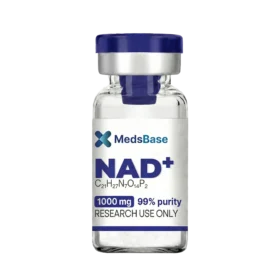
NAD⁺
✅ Ενισχύει την κυτταρική ενέργεια
✅ Υποστηρίζει τη λειτουργία των μιτοχονδρίων
✅ Προωθεί τη μεταβολική ισορροπία
✅ Ενισχύει την κυτταρική επισκευή
✅ Βελτιώνει τις διαδρομές ζωτικότητας
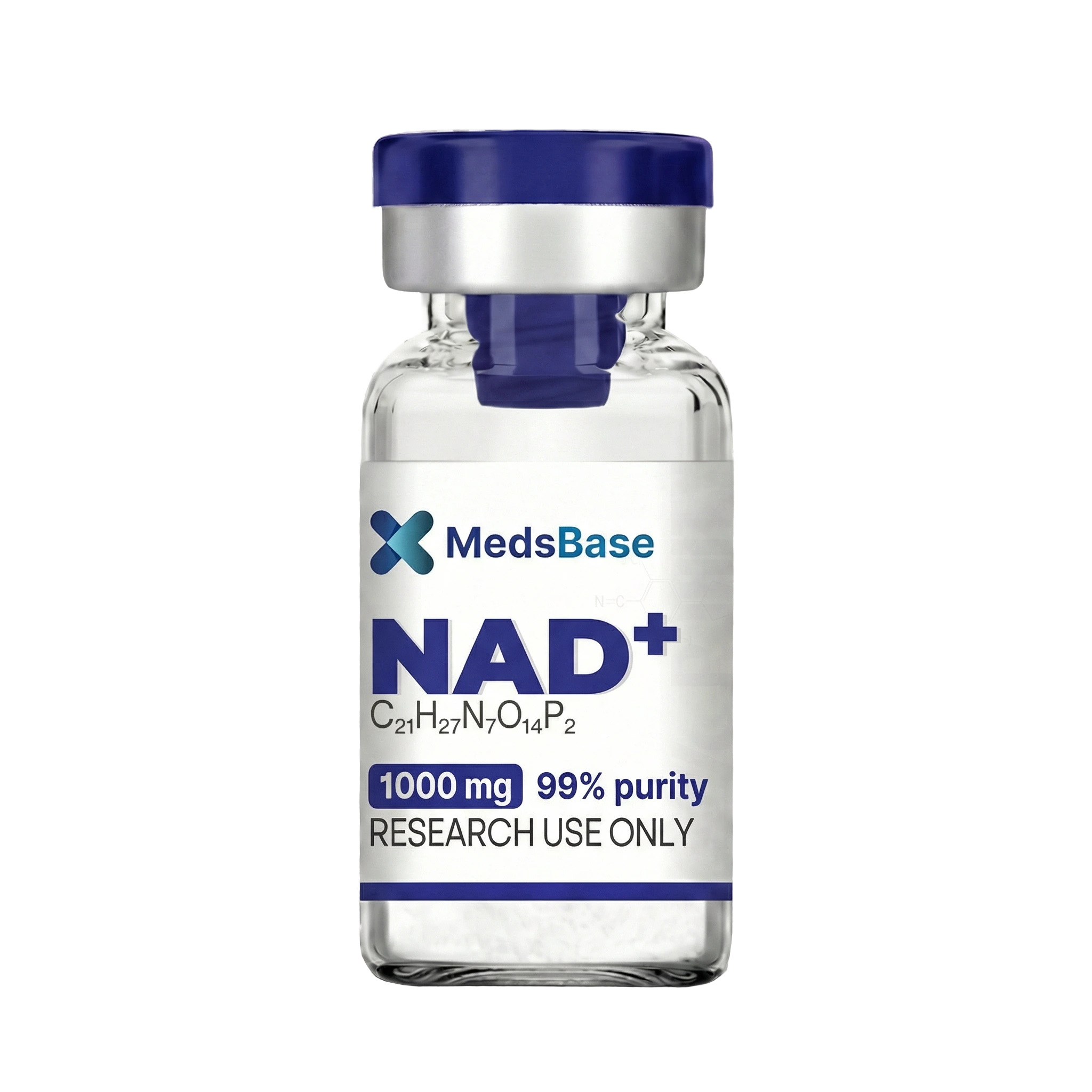
NAD⁺ περιέχει συνθετική πεπτιδική ένωση.
✓ Ιατρικά ελεγμένο από Morgan Ellis — Ερευνητής Φαρμακευτικής · 8 χρόνια εμπειρία · Τελευταία αναθεώρηση: Μάιος 2026
Γρήγορη απάντηση — Τι είναι το NAD+;
NAD+ (νικοτιναμίδιο αδενινοδινουκλεοτίδιο) είναι ένα βασικό συνένζυμο που υπάρχει σε κάθε κύτταρο, κεντρικό για τον μεταβολισμό της ενέργειας, τη σηματοδότηση μακροζωίας μέσω της οδού των σιρτουϊνών και την επισκευή DNA που μεσολαβείται από τα PARP. Τα επίπεδα NAD+ στα κύτταρα μειώνονται σημαντικά με την ηλικία, κάνοντάς το ένα από τα πιο μελετημένα μόρια στην έρευνα μακροζωίας. Προσφέρεται σε φιαλίδια λυοφιλισμένου υλικού 100 mg έως 1000 mg μόνο για εργαστηριακή έρευνα.
📦 Κάθε παραγγελία καλύπτεται από την Πολιτική Εγγύησης Επαναποστολής — εάν το δέμα σας δεν φτάσει εντός 20 εργάσιμων ημερών, το επαναποστέλλουμε.
| Προδιαγραφή | Λεπτομέρεια |
|---|---|
| Αριθμός CAS | 53-84-9 |
| Μοριακός Τύπος | C21H27N7O14P2 |
| Μοριακό Βάρος | 663.43 Da |
| Ακολουθία | n/a (δινουκλεοτιδικό συνένζυμο — όχι πεπτίδιο) |
| Μορφή | Υαλοποιημένη σκόνη (ή όπως παρέχεται) |
| Καθαρότητα | ≥99% (HPLC επαληθευμένο, COA κατόπιν αιτήματος) |
| Αποθήκευση | Λυοφιλισμένο: 2–8 °C (ψυγείο) για το τρέχον απόθεμα· −20 °C για μακροπρόθεσμη αποθήκευση ανοιχτών φιαλιδίων. Ανασυσταθείσα μορφή: 2–8 °C, χρήση εντός ~30 ημερών. Προστασία από το φως — το NAD οξειδώνεται εύκολα. Μην καταψύχετε και αποψύχετε την ανασυσταθείσα διάλυση.+ Οξειδώνεται εύκολα. Μην υποβάλλετε το ανασυσταθέν διάλυμα σε κατάψυξη και απόψυξη. |
| Διαλυτότητα | Βακτηριοστατικό νερό (προτείνεται) ή στειρωμένο νερό για μικρότερα χρονικά διαστήματα χρήσης |
| Ερευνητική Χρήση | Μόνο για εργαστηριακή έρευνα. Δεν προορίζεται για διαγνωστική ή θεραπευτική χρήση σε ανθρώπους ή ζώα. |
(νικοτιναμίδιο αδενινοδινουκλεοτίδιο) δεν είναι αυστηρά πεπτίδιο — είναι ένα δινουκλεοτιδικό συνένζυμο που αποτελείται από δύο νουκλεοτίδια ενωμένα μέσω των φωσφορικών ομάδων τους. Ωστόσο, είναι το πιο ευρέως μελετημένο μόριο στη βιβλιογραφία για τη μακροζωία και τη κυτταρική γήρανση, και συνήθως παρέχεται μέσω προμηθευτών έρευνας πεπτιδίων μαζί με ενώσεις πεπτιδίων για τη διευκόλυνση των ερευνητών που εργάζονται σε μελέτες πολυπαραγοντικής κυτταρικής γήρανσης.
NAD+ (νικοτιναμίδιο αδενινοδινουκλεοτίδιο) δεν είναι αυστηρά ένα πεπτίδιο — είναι ένα συνένζυμο δινουκλεοτίδιο που αποτελείται από δύο νουκλεοτίδια ενωμένα μέσω των φωσφορικών τους ομάδων. Ωστόσο, είναι το πιο ευρέως μελετημένο μόριο στη βιβλιογραφία για τη μακροζωία και τη κυτταρική γήρανση, και συνήθως παρέχεται μέσω προμηθευτών έρευνας πεπτιδίων μαζί με ενώσεις πεπτιδίων για τη διευκόλυνση των ερευνητών που εργάζονται σε μελέτες πολυπαραγοντικής κυτταρικής γήρανσης.
Το NAD+ βρίσκεται σε κάθε ζωντανό κύτταρο και λειτουργεί ως υπόστρωμα για τρεις κύριες οικογένειες ενζύμων: (μεταβολισμός ενέργειας), σιρτουΐνες, (σηματοδότηση μακροζωίας, σίγαση γονιδίων), και (μακροζωία σηματοδότηση, αποσιώπηση γονιδίων), και PARPs (Απόκριση σε βλάβη DNA). Τα επίπεδα NAD+ των κυττάρων μειώνονται κατά περίπου 50% μεταξύ της ηλικίας των 30 και 70 ετών στα περισσότερα ιστούς — η “μείωση του NAD+” — και η αποκατάσταση αυτής της μείωσης αποτελεί κεντρική υπόθεση στην ερευνητική κοινότητα μακροζωίας (Yoshino, Baur & Imai, Cell Metab 2018).
Μοριακό βάρος 663.4 Da, εμπειρικός τύπος C21H27N7O14P2. Παρασχεόμενο ως υψηλής καθαρότητας λυοφιλισμένη σκόνη για ανασύνθεση με βακτηριοστατικό νερό. Το NAD+ είναι μόνο για εργαστηριακή έρευνα και δεν προορίζεται για ανθρώπινη ή κτηνιατρική διάγνωση ή θεραπεία. Για βαθύτερο μηχανισμό, πλαίσιο έρευνας μακροζωίας και εναλλακτικές ενώσεις προδρόμους (NR, NMN), δείτε τον πλήρη οδηγό έρευνας NAD+.
Μηχανισμός Δράσης — Τρία Βασικά Μονοπάτια
Το NAD+ συμμετέχει στην κυτταρική βιολογία μέσω τριών μηχανιστικά διακριτών αλλά αλληλοεξαρτώμενων οικογενειών ενζύμων:
- Συνένζυμο οξειδοαναγωγής (ενεργειακός μεταβολισμός) — Το NAD+ είναι ο κεντρικός φορέας ηλεκτρονίων στη γλυκόλυση, τον κύκλο TCA και την οξειδωτική φωσφορυλίωση. Κάθε βήμα που εξάγει ενέργεια από τα τρόφιμα τελικά μεταφέρει ηλεκτρόνια στο NAD+ (σχηματίζοντας NADH) το οποίο στη συνέχεια οδηγεί τη σύνθεση ATP στα μιτοχόνδρια. Χωρίς επαρκή NAD+, τα κύτταρα δεν μπορούν να παράγουν ενέργεια αποτελεσματικά.
- Ενεργοποίηση σιρτουΐνης (σήμανση μακροζωίας) — οι επτά σιρτουΐνες των θηλαστικών (SIRT1–SIRT7) είναι NAD+-εξαρτώμενες αποακετυλάσες που ρυθμίζουν τη σίγαση γονιδίων, την απάντηση στο στρες, τη μιτοχονδριακή βιογένεση και την επισκευή του DNA. Όταν τα επίπεδα NAD+ μειώνονται, μειώνεται και η δραστηριότητα των σιρτουϊνών, κάτι που αποτελεί έναν από τους προτεινόμενους μηχανιστικούς συνδέσμους μεταξύ της μείωσης του NAD+ και των φαινοτύπων γήρανσης (Rajman, Chwalek & Sinclair, Cell Metab 2018).
- Επισκευή DNA μεσολάβηση PARP — η οικογένεια ενζύμων πολυ(ADP-ριβόζη) πολυμεράσης (PARP) χρησιμοποιεί το NAD+ ως υπόστρωμα για την απάντηση στη βλάβη του DNA. Η μείωση των επιπέδων NAD+ σημαίνει λιγότερο διαθέσιμο υπόστρωμα για την επισκευή του DNA, δημιουργώντας έναν κύκλο ανατροφοδότησης όπου η βλάβη του DNA εξαντλεί περαιτέρω το NAD+.
Επειδή αυτές οι τρεις οδοί αγγίζουν συνολικά τον ενεργειακό μεταβολισμό, τη ρύθμιση γονιδίων και τη διατήρηση του γονιδιώματος, η αποκατάσταση του NAD+ διερευνάται σε ένα ασυνήθιστα ευρύ φάσμα ερευνητικών πλαισίων κυτταρικής γήρανσης — από το μεταβολικό σύνδρομο έως τη νευροεκφύλιση και τη λειτουργία των μυών.
Εφαρμογές Δημοσιευμένης Έρευνας
Το NAD+ χρησιμοποιείται σε ερευνητικά πλαίσια εργαστηρίου που διερευνούν:
- Έρευνα μακροζωίας — ενεργοποίηση της οδού sirtuin και βιοδείκτες κυτταρικής γήρανσης σε μελέτες γήρανσης τρωκτικών (Yoshino et al., Cell Metab 2018)
- Κυτταρική ενέργεια / λειτουργία μιτοχονδρίων — παραγωγή ATP και βιογένεση μιτοχονδρίων σε έρευνα κυτταρικού στρες
- Έρευνα νευροπροστασίας — μοντέλα γνωστικής υποβάθμισης και νευρολογικής γήρανσης σε μελέτες τρωκτικών
- Μεταβολική υγεία — ευαισθησία στην ινσουλίνη, ομοιόσταση γλυκόζης και έρευνα μεταβολικού συνδρόμου
- Έρευνα επισκευής DNA — δραστηριότητα της οδού PARP και συντήρηση του γονιδιώματος σε μοντέλα βλάβης DNA
- Έρευνα αντιγήρανσης — σύνθετοι δείκτες κυτταρικής γήρανσης σε πολλαπλά συστήματα ιστών
- Συγκριτική έρευνα προδρόμων — παράλληλη με τους προδρόμους NR (νικοτιναμίδιο ριβοζίδιο) και NMN (νικοτιναμίδιο μονονουκλεοτίδιο) για απομόνωση του άμεσου-NAD+ αποτελέσματος
Για ευρύτερο πλαίσιο σχετικά με τα πεπτίδια μακροζωίας και κυτταρικής γήρανσης δείτε στοίβες πεπτιδίων για μεταβολική έρευνα και το πλήρες κατάλογο ερευνητικών πεπτιδίων.
Διαθέσιμες Δυνάμεις και Συγκεντρώσεις
Η MedsBase διαθέτει NAD+ στα ακόλουθα μεγέθη λυοφιλισμένων φιαλιδίων. Κάθε παραλλαγή αποστέλλεται σε συσκευασίες 10, 20 ή 30 φιαλιδίων:
| Δύναμη Φιαλιδίου | Τυπική Περίπτωση Χρήσης | Μεγέθη Συσκευασίας |
|---|---|---|
| 100 mg | Πιλοτική δοσολογία ή πρωτόκολλα μικρής διάρκειας | 10, 20 ή 30 φιαλίδια |
| 500 mg | Τυπική ερευνητική ισχύς, υποστηρίζει πρωτόκολλα πολλαπλών εβδομάδων | 10, 20 ή 30 φιαλίδια |
| 1000 mg | Εκτεταμένη έρευνα, ενδοφλέβια πρωτόκολλα, μαζική προετοιμασία | 10, 20 ή 30 φιαλίδια |
Το NAD+ απαιτεί μεγαλύτερες απόλυτες δόσεις από τα περισσότερα πεπτίδια (γραμμάρια αντί για μικρογραμμάρια) επειδή είναι ένα συνένζυμο που λειτουργεί σε συγκεντρώσεις κυτταρικής δεξαμενής, όχι ως μόριο σηματοδότησης σε συγκεντρώσεις επιπέδου υποδοχέων. Προσφέρεται ως λυοφιλισμένη σκόνη με καθαρότητα HPLC 99%+.
Πώς συγκρίνεται — NAD+ vs NR vs NMN
Τρία μόρια κυριαρχούν στον χώρο έρευνας του NAD+. Κάθε ένα τροφοδοτεί την ίδια διαδικασία διάσωσης αλλά σε διαφορετικά σημεία εισόδου:
| Κριτήριο | NAD+ | NR (Νικοτιναμίδιο Ριβόζιδη) | NMN (Νικοτιναμίδιο Μονονοουκλεοτίδιο) |
|---|---|---|---|
| Ρόλος | Τελικό συνένζυμο (άμεσο) | Πρόδρομο (από του στόματος) | Πρόδρομο (από του στόματος ή υποδόρια) |
| Διαδρομή | Υποδόρια, ενδομυϊκά, ενδοφλέβια στην έρευνα | Κυρίως από του στόματος | Από του στόματος, υποδόρια |
| Τυπική δόση έρευνας | 50–1000 mg | 250–500 mg από του στόματος | 250–1000 mg από του στόματος/υποδόρια |
| Καθεστώς ρύθμισης | Μόνο για ερευνητική χρήση | Διαιτητικό συμπλήρωμα FDA GRAS | Μεταβλητό (πρόσφατη ενέργεια FDA) |
Οι ερευνητές συνήθως επιλέγουν άμεσο NAD+ έναντι των προδρόμων όταν θέλουν να παρακάμψουν μεταβλητούς ρυθμούς ενζυμικής μετατροπής (ορισμένοι πρόδρομοι μετατρέπονται αναποτελεσματικά σε ορισμένους ιστούς) ή όταν χρειάζονται γρήγορη αύξηση στο πλάσμα. Οι πρόδρομοι προτιμώνται σε έρευνες με διαρκή χορήγηση μέσω στοματικής χορήγησης.
Αποθήκευση και ανασύνθεση
Πριν την ανασύνθεση: Αποθηκεύστε τα λυοφιλισμένα φιαλίδια σε ψυγείο στους 2–8 °C στην αρχική συσκευασία, σταθερά έως και 36 μήνες. Το NAD+ είναι ευαίσθητο στο φως — διατηρήστε την αρχική αλουμινόχαρτη συσκευασία ανέπαφη.
Διαδικασία ανασύνθεσης: Εισάγετε βακτηριοστατικό νερό κατά μήκος του πλευρικού τοιχώματος του φιαλιδίου σύμφωνα με τον παραπάνω πίνακα. Τα φιαλίδια NAD+ χρησιμοποιούν μεγαλύτερους όγκους ανασύνθεσης από τα φιαλίδια πεπτιδίων λόγω της μεγαλύτερης απόλυτης δόσης. Ανακατέψτε απαλά — μην δεν το κουνήσετε — και αφήστε 5–10 λεπτά για πλήρη διάλυση.
Μετά την ανασύνθεση: Αποθηκεύστε σε ψυγείο στους 2–8 °C, προστατευμένα από το φως, και χρησιμοποιήστε εντός 30 ημερών. Το ανασυντεθειμένο NAD+ μπορεί να υποστεί υποβάθμιση πιο γρήγορα από τα πεπτίδια — μια αλλαγή χρώματος από κίτρινο σε καφέ υποδηλώνει οξείδωση και πρέπει να οδηγήσει σε απόρριψη.
Συχνές Ερωτήσεις
Για τι χρησιμοποιείται το NAD+ στην έρευνα;
Το NAD+ χρησιμοποιείται σε εργαστηριακή έρευνα που διερευνά τη κυτταρική γήρανση, την ενεργοποίηση της οδού σιρτουΐνης, τη λειτουργία των μιτοχονδρίων, την επισκευή DNA μέσω PARP, τη νευροπροστασία και μοντέλα μεταβολικής υγείας. Είναι δεν εγκεκριμένο από την FDA για θεραπευτική χρήση και πωλείται εδώ αποκλειστικά για εργαστηριακή ερευνητική χρήση.
Είναι το NAD+ πεπτίδιο;
Όχι. Το NAD+ είναι ένα συνένζυμο διπυρηνικού νουκλεοτιδίου, όχι πεπτίδιο. Συνήθως παρέχεται μέσω προμηθευτών ερευνητικών πεπτιδίων επειδή οι ερευνητές μακροζωίας το χρησιμοποιούν συχνά παράλληλα με πρωτόκολλα έρευνας πεπτιδίων, και και οι δύο κατηγορίες μοιράζονται τη μορφή λυοφιλισμένης σκόνης με ανασύνθεση με βακτηριοστατικό νερό.
Ποια είναι η τυπική ερευνητική δόση NAD+;
Τα δημοσιευμένα προκλινικά πρωτόκολλα ποικίλλουν σημαντικά ανάλογα με το ερευνητικό πλαίσιο. Κοινές περιοχές: 50–100 mg υποδόρια/ενδομυϊκά καθημερινά για έρευνα μακροζωίας, 250–500 mg για έρευνα κυτταρικής ενέργειας, και έως και 1.000 mg σε πρωτόκολλα ενδοφλέβιας έρευνας. Ένα φιαλίδιο 500 mg ανασυντεθειμένο με 5,0 mL βακτηριοστατικού νερού δίνει 100 mg/mL — 50 τικ σε σύριγγα U-100 παρέχουν 50 mg.
Είναι το NAD+ εγκεκριμένο από την FDA;
Όχι. Το NAD+ δεν είναι θεραπευτικό μέσο εγκεκριμένο από τον FDA. Έχει μελετηθεί σε κλινικά πλαίσια (συμπεριλαμβανομένων κλινικών ευεξίας με ενδοφλέβια “θεραπεία NAD+”), αλλά δεν έχει λάβει έγκριση FDA για καμία συγκεκριμένη ένδειξη. Όλο το NAD+ που πωλείται από προμηθευτές μόνο για ερευνητική χρήση προορίζεται για εργαστηριακή έρευνα.
Πώς διαφέρει το NAD+ από το NR ή το NMN;
Το NR (νικοτιναμίδιο ριβοζίδιο) και το NMN (νικοτιναμίδιο μονονοουκλεοτίδιο) είναι προδρόμους που τα κύτταρα μετατρέπουν σε NAD+ μέσω της οδού διάσωσης. Το άμεσο NAD+ παρακάμπτει αυτό το βήμα μετατροπής. Οι ερευνητές επιλέγουν το άμεσο NAD+ όταν θέλουν να ελέγξουν με ακρίβεια τα επίπεδα στο πλάσμα· οι πρόδρομοι χρησιμοποιούνται για έρευνα με διαρκή από του στόματος χορήγηση όπου η ενζυμική μετατροπή είναι αποδεκτή.
Πώς πρέπει να αποθηκεύεται το NAD+;
Λυοφιλισμένα φιαλίδια: ψυγείο στους 2–8 °C στην αρχική συσκευασία, προστατευμένα από το φως. Σταθερά έως και 36 μήνες. Ανασυσταθείσο διάλυμα: ψυγείο στους 2–8 °C, προστατευμένο από το φως, χρήση εντός 30 ημερών. Το NAD+ είναι πιο ευαίσθητο στο φως και στην οξείδωση από τα περισσότερα πεπτίδια.
Πώς ανασυντίθεται το NAD+;
Ακολουθήστε το παραπάνω διάγραμμα ανασύνθεσης. Προσθέστε βακτηριοστατικό νερό κατά μήκος του πλευρικού τοιχώματος του φιαλιδίου, ανακατέψτε απαλά και αφήστε 5–10 λεπτά για πλήρη διάλυση. Το NAD+ απαιτεί μεγαλύτερους όγκους ανασύνθεσης από τα πεπτίδια λόγω της μεγαλύτερης απόλυτης δόσης. Μην δεν κουνήσετε.
Μπορεί το NAD+ να συνδυαστεί με πεπτίδια σε έρευνα;
Ναι. Το NAD+ μελετάται συχνά παράλληλα GHK-Cu (έρευνα κυτταρικής ενέργειας), ipamorelin (έρευνα μεταβολικού άξονα), και άλλα πεπτίδια μακροζωίας. Επειδή το NAD+ λειτουργεί σε επίπεδο συνένζυμου και όχι σε υποδοχείς, οι φαρμακολογικές αλληλεπιδράσεις με πεπτίδια είναι ελάχιστες.
Ποιες δόσεις διαθέτει το MedsBase;
Η MedsBase διαθέτει NAD+ σε φιαλίδια λυοφιλισμένου σε δόσεις 100 mg, 500 mg και 1000 mg. Κάθε δόση είναι διαθέσιμη σε συσκευασίες 10, 20 ή 30 φιαλιδίων. Όλα τα φιαλίδια παρέχονται με καθαρότητα HPLC 99%+ και πιστοποιητικό ανάλυσης κατόπιν αιτήματος.
Προκαλεί το NAD+ παρενέργειες σε έρευνα;
Το πιο συχνά αναφερόμενο φαινόμενο σε έρευνα και κλινική χρήση είναι μια αίσθηση “ερυθρότητας” κατά τη διαφλεβική χορήγηση με γρήγορους ρυθμούς έγχυσης — πιστεύεται ότι πρόκειται για μεταβατική αγγειακή επίδραση. Άλλες παρενέργειες φαίνεται να είναι ελάχιστες σε τυπικές ερευνητικές δόσεις. Επειδή το NAD+ είναι ενδογενές συνένζυμο, οι φαρμακολογικές ανησυχίες είναι γενικά χαμηλότερες σε σύγκριση με εξωγενές ξενόβια συστατικά.
Ποια είναι η βιολογική ημιζωή του NAD+;
Το ενδογενές NAD+ έχει βιολογική ημιζωή περίπου 1–2 ώρες στους περισσότερους τύπους κυττάρων, με σημαντικές διακυμάνσεις ανάλογα με τον ιστό. Σε προκλινικές έρευνες διαφλεβικής χορήγησης, το εξωγενές NAD+ απορροφάται γρήγορα από τους ιστούς και μετατρέπεται σε μεταβολίτες (NADH, NAAD, ADPR). Η λυοφιλισμένη μορφή για εργαστηριακή ανασύνθεση χρησιμοποιείται συνήθως σε μοντέλα έρευνας οξείας συμπληρωματικής θεραπείας ή κυτταρικής καλλιέργειας.
Πώς συγκρίνεται η άμεση συμπλήρωση NAD+ με το NMN και το NR σε έρευνα;
Το NMN (μονονοουκλεοτίδιο νικοτιναμίδης) και το NR (νικοτιναμίδιο ριβοζίδιο) είναι πρόδρομες ουσίες του NAD+ που μετατρέπονται σε NAD+ ενδοκυττάρια. Η άμεση συμπλήρωση NAD+ μελετάται για ερευνητικά μοντέλα όπου η μετατροπή πρόδρομων ουσιών μπορεί να είναι περιοριστική. Και οι τρεις προσεγγίσεις αποτελούν ενεργούς τομείς έρευνας μακροζωίας και βιοενεργητικής, με διαφορετικά προφίλ βιοδιαθεσιμότητας και μεταβολικής μετατροπής.
Μπορώ να παραγγείλω NAD+ για διεθνή αποστολή;
Ναι. Η MedsBase αποστέλλει NAD+ παγκοσμίως από το αποκλειστικό δίκτυο αποστολών πεπτιδίων μας. Οι παραγγελίες NAD+ πληρούν τις προϋποθέσεις για την αυτόνοπη υπηρεσία αποστολής πεπτιδίων μας. Οι παραγγελίες αποστέλλονται σε θερμοκρασιακά ελεγχόμενη συσκευασία με προστασία από φως και πλήρη παρακολούθηση.
Άλλα πεπτίδια για έρευνα ανάκαμψης και απόδοσης
- BPC-157 — Body Protection Compound — έρευνα ανάκαμψης τένοντα, συνδέσμου, εντέρου
- TB-500 — Θραύσμα Thymosin Beta-4 — έρευνα ανάκαμψης μαλακών ιστών και αγγείων
- Ιπαμορελίνη — Επιλεκτικός αγωνιστής ghrelin — καθαρός παλμός GH χωρίς κορτιζόλη/προλακτίνη
- CJC-1295 with DAC — Αναλογικό GHRH με παρατεταμένο χρόνο ημιζωής
- GHK-Cu — Πεπτίδιο χαλκού — έρευνα για αναγέννηση δέρματος και συνδετικού ιστού
Περαιτέρω ανάγνωση
📖 Μάθετε την έρευνα πίσω από αυτό το συνένζυμο
Διαβάστε τον πλήρη αποδεικτικά τεκμηριωμένο οδηγό μας: NAD+ — μηχανισμός, έρευνα μακροζωίας και η ειλικρινής επιστήμη. Καλύπτει τη βιολογία των σιρτουϊνών και των PARP, την υπόθεση της μείωσης του NAD+, τη σύγκριση προδρόμων (NR / NMN), τις δημοσιευμένες δοσολογίες έρευνας, τα πρωτόκολλα ανασύνθεσης και τις σημειώσεις ασφαλείας.
Περισσότερες επιλογές σε Πεπτίδια
Ταξινομημένα σύμφωνα με τον όγκο παραγγελιών στο MedsBase — τι επιλέγουν άλλοι πελάτες σε αυτήν την κατηγορία.
| Ισχύς | 100 mg, 500 mg, 1000 mg |
|---|---|
| Ποσότητα | 10 Φιαλίδια, 20 Φιαλίδια, 30 Φιαλίδια |
 NAD⁺
NAD⁺
Ερωτήσεις & Απαντήσεις
NAD⁺
Σχετικά προϊόντα
Κριτικές
Δεν υπάρχουν ακόμη κριτικές