








Prazopress
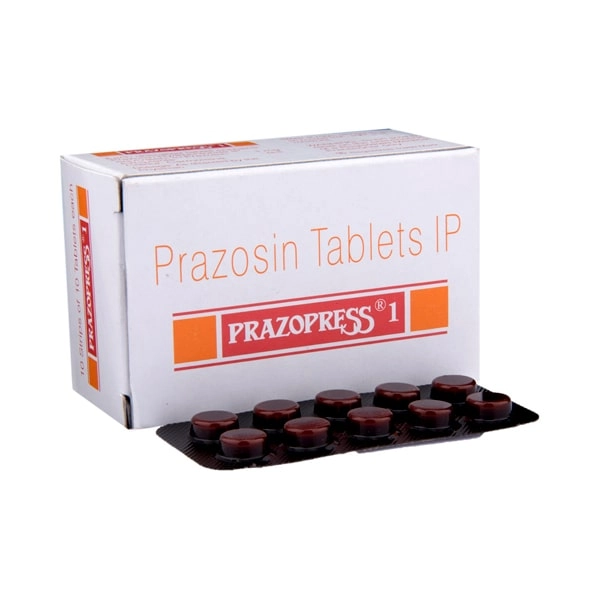
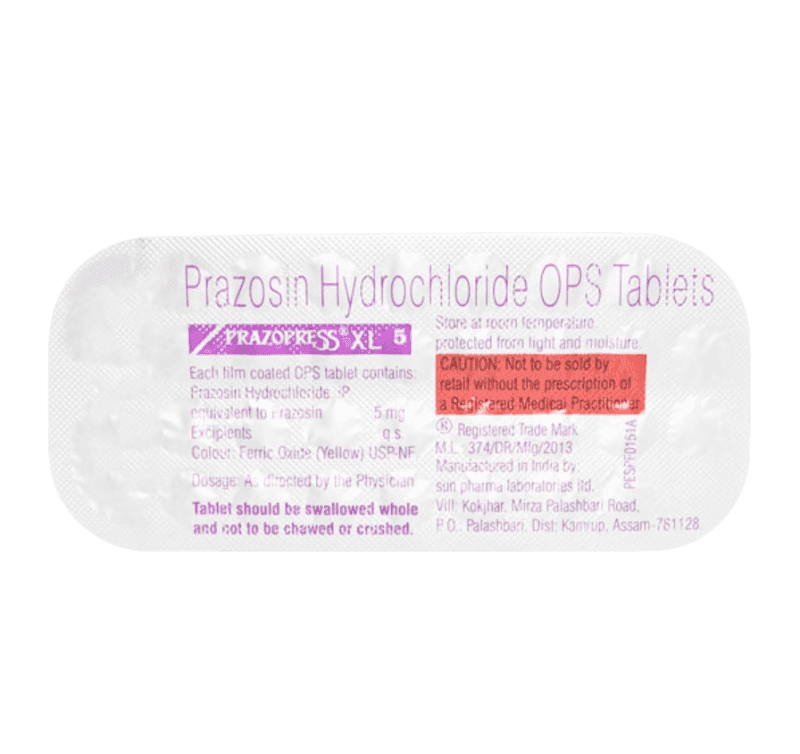
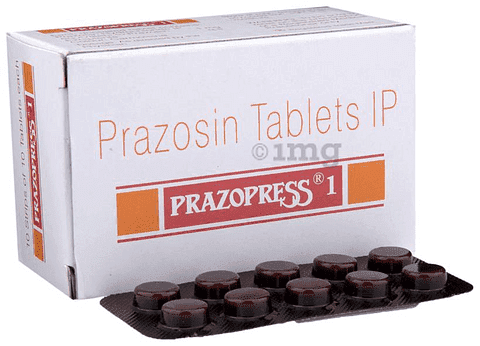
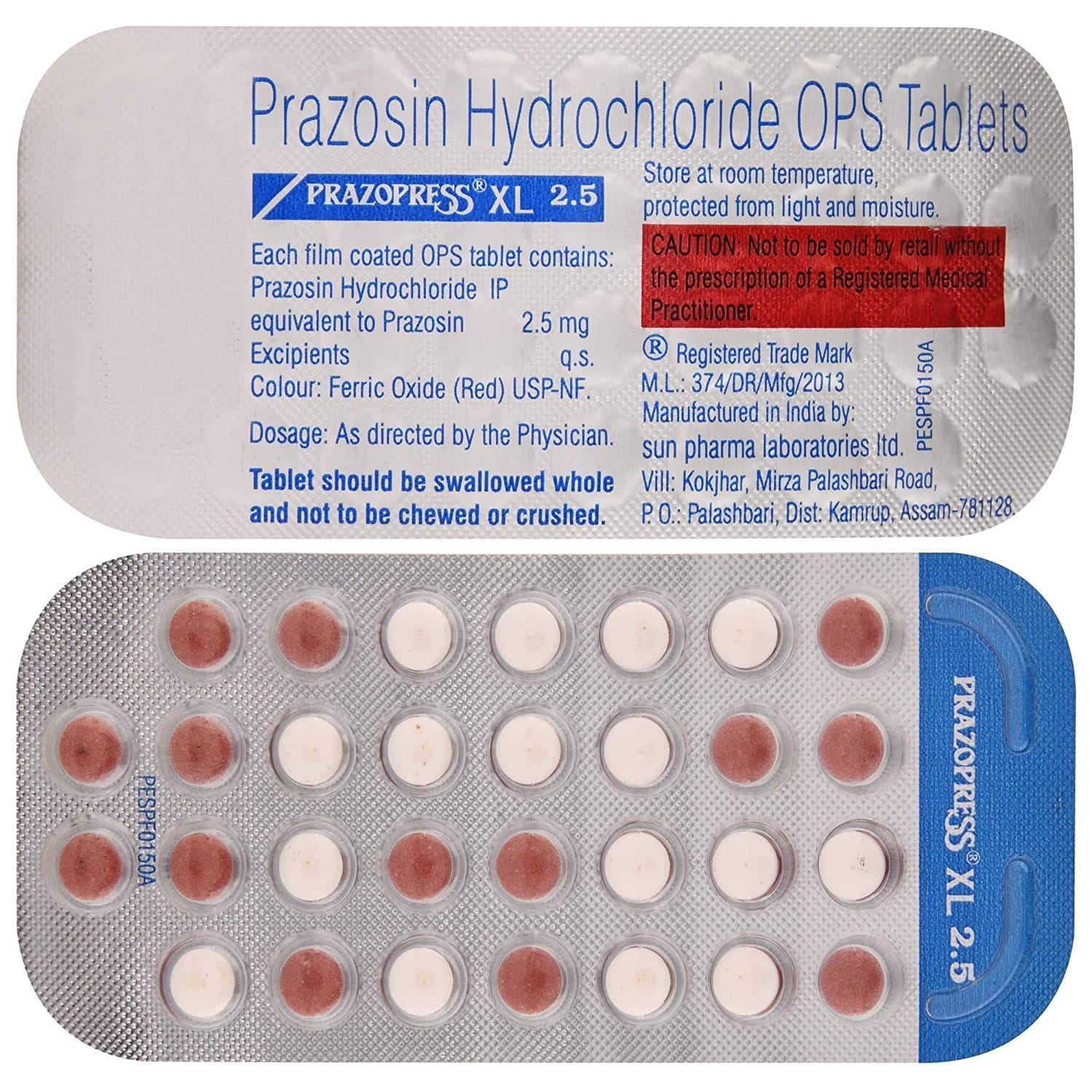

Το Prazopress είναι τα δισκία prazosin 1 mg άμεσης αποδέσμευσης της Sun Pharma — ο πρωτότυπος αντιαγωνιστής των α1-αδρενοϋποδοχέων (Minipress της Pfizer, 1974). Σύγχρονες χρήσεις εκτός ετικέτας: εφιάλτες σχετιζόμενοι με διαταραχή μετατραυματικού στρες (στοιχεία από RCT Raskind), καλοήθης υπερπλασία προστάτη και ανθεκτική υπέρταση ως προσθήκη τέταρτης/πέμπτης γραμμής μετά από ACEi/ARB + CCB + θειαζίδιο + σπιρονολακτόνη. Το φαινόμενο “πρώτης δόσης” — πάντα να ξεκινάται πριν τον ύπνο. Οι ανησυχίες τύπου ALLHAT σημαίνουν ότι οι αντιαγωνιστές των α-υποδοχέων δεν είναι πλέον πρώτης γραμμής για την υπέρταση.
✓ Ιατρικά ελεγμένο από Morgan Ellis — Ερευνητής Φαρμακευτικής · 8 χρόνια εμπειρία · Τελευταία αναθεώρηση: Μάιος 2026
⚡ Γρήγορη απάντηση — Τι είναι το Prazopress;
Prazopress είναι Δισκίο prazosin 1 mg άμεσης αποδέσμευσης από τη Sun Pharma — ένα επιλεκτικός αντιαγωνιστής των α1-αδρενοϋποδοχέων (δομή κιναζολίνης), δρώντας σε μετασυναπτικούς α1-αδρενοϋποδοχείς στα λεία μύ των αρτηριών και φλεβών, και στα λεία μύ του προστάτη/τραχήλου της ουροδόχου κύστης. Το prazosin εισήχθη από την Pfizer το 1974 ως Minipress — ο πρώτος επιλεκτικός αντιαγωνιστής των α1-υποδοχέων και το πρότυπο για όλη την κατηγορία των α-αναστολέων. Το prazosin άμεσης αποδέσμευσης έχει κυρίως αντικατασταθεί στην υπέρταση από νεότερες κατηγορίες, αλλά παραμένει κλινικά σημαντικό για εφιάλτες σχετιζόμενους με διαταραχή μετατραυματικού στρες (εκτός ετικέτας) και για επιλεκτικές περιπτώσεις καλοήθους υπερπλασίας προστάτη (BPH). Ημιζωή 2-3 ώρες (σύντομη — απαιτεί δόση δύο ή τρεις φορές την ημέρα); έναρξη δράσης 30-90 λεπτά; μέγιστη πλάσματική συγκέντρωση 1-3 ώρες; διάρκεια δράσης 4-10 ώρες ανάλογα με τη δόση. Κύριες ενδείξεις: εφιάλτες σχετιζόμενοι με διαταραχή μετατραυματικού στρες (εκτός ετικέτας, κύρια σύγχρονη χρήση), ανθεκτική υπέρταση ως προσθήκη, καλοήθης υπερπλασία προστάτη. Τυπική δοσολογία: Υπέρταση: έναρξη 0,5-1 mg πριν τον ύπνο για την πρώτη δόση (το “φαινόμενο πρώτης δόσης” — δείτε παρακάτω), έπειτα 1 mg 2-3 φορές ημερησίως, προσαρμόζοντας σε 2-20 mg/ημέρα σε διαιρεμένες δόσεις. Δεν είναι πρώτης γραμμής αντιυπερτασικό. Η ALLHAT διέκοψε νωρίς τον κλάδο της δοξαζοσίνης λόγω υπερβολικής καρδιακής ανεπάρκειας, κάνοντας τους σύγχρονους οδηγούς να διατηρούν τους α-αναστολείς ως παράγοντες τέταρτης/πέμπτης γραμμής για ανθεκτική ΥΑ. Πάντα ξεκινήστε την πρώτη δόση πριν τον ύπνο — το φαινόμενο της “πρώτης δόσης” προκαλεί σοβαρή ορθοστατική υποπτώση τις πρώτες ώρες. Δεν είναι αντυπερτασικό πρώτης γραμμής (ανησυχίες κλάσης ALLHAT) — κρατήστε για χρήση ως τέταρτη/πέμπτη γραμμή, ειδικά όταν συνυπάρχει BPH. Για τους περισσότερους υπερτασικούς ασθενείς, η σύγχρονη θεραπεία ξεκινά με έναν αναστολέα ACE/ARB, ένα αντιαγωνιστή ασβεστίου, ένα θειαζιδικό και σπιρονολακτόνη πριν φτάσει σε α-αναστολέα ή κεντρικά δρώντα παράγοντα.
📦 Κάθε παραγγελία καλύπτεται από την Πολιτική Εγγύησης Επαναποστολής — εάν το δέμα σας δεν φτάσει εντός 20 εργάσιμων ημερών, το επαναποστέλλουμε.
Γιατί να παραγγείλετε από τη MedsBase
Τα γενόσημα φάρμακά μας προέρχονται από κατασκευαστές που πιστοποιούνται από την WHO-GMP και αποστέλλονται παγκοσμίως σε διακριτική, απλή συσκευασία — χωρίς όνομα φαρμάκου στο εξωτερικό του δέματος. Οι πληρωμές με κάρτα δρομολογούνται μέσω ρυθμισμένου επεξεργαστή (οι περιγραφές εκκαθάρισης περιλαμβάνουν ρυθμισμένο επεξεργαστή πληρωμών με κάρτα — ποτέ “MedsBase” ή οποιοδήποτε όνομα φαρμάκου). Γίνονται δεκτές και πληρωμές με κρυπτονομίσματα και τραπεζική μεταφορά SEPA. Κάθε παραγγελία καλύπτεται από την Πολιτική Επαναποστολής Εξασφαλίσεώς μας.
Τι είναι το Prazopress;
Το Prazopress είναι ένα δισκίο Prazosin (άμεσης αποδέσμευσης) 1 mg από τη Sun Pharma, σε συσκευασίες 30-90 δισκίων. Η Prazosin εισήχθη από την Pfizer το 1974 ως Minipress — ο πρώτος επιλεκτικός αντιαγωνιστής των α1-υποδοχέων και το πρότυπο για όλη την κατηγορία των α-αναστολέων. Το prazosin άμεσης αποδέσμευσης έχει κυρίως αντικατασταθεί στην υπέρταση από νεότερες κατηγορίες, αλλά παραμένει κλινικά σημαντικό για εφιάλτες σχετιζόμενους με διαταραχή μετατραυματικού στρες (εκτός ετικέτας) και για επιλεκτικές περιπτώσεις καλοήθους υπερπλασίας προστάτη (ΚΥΠ).
Πώς λειτουργεί η Prazosin (άμεσης αποδέσμευσης)
Η Prazosin (άμεσης αποδέσμευσης) δρα στον μετασυναπτικούς α1-αδρενοϋποδοχείς στα λεία μύ των αρτηριών και φλεβών, και στα λεία μύ του προστάτη/τραχήλου της ουροδόχου κύστης. Οι επακόλουθες επιπτώσεις:
- Αρτηριακή και φλεβική διαστολή — ο αποκλεισμός των α-1 υποδοχέων στους λείους μύες των αγγείων μειώνει την συστηματική αγγειακή αντίσταση· η φλεβική διαστολή μειώνει το προφόρτιο
- Μειωμένος τόνος των λείων μυών της ουροδόχου κύστης και του προστάτη — βελτιώνει τη ροή των ούρων στην BPH (κυρίαρχη κλινική επίδραση για τις XL/μακράς δράσης μορφές)
- Βελτιωμένο λιπιδαιμικό προφίλ — μέτρια μείωση του LDL και των τριγλυκεριδίων, μικρή αύξηση του HDL· μεταβολικά διαφορετικό από τα θειαζίδια και τα β-αναστολείς
- Βελτιωμένη ευαισθησία στην ινσουλίνη σε ορισμένες μελέτες — ένα επιχείρημα για τους α-αναστολείς σε υπερτασικούς ασθενείς με μεταβολικό σύνδρομο ή διαβήτη τύπου 2
- Καμία άμεση επίδραση στη ρενίνη ή στα ηλεκτρολύτες — το κάλιο, το νάτριο και η κρεατινίνη δεν επηρεάζονται (σε αντίθεση με τα διουρητικά και τους αναστολείς RAAS)
- Ανακλαστική ταχυκαρδία είναι μειωμένη σε σύγκριση με τους άμεσους αγγειοδιασταλτικούς (υδραλαζίνη, μινοξιδίλη) λόγω κάποιας κεντρικής συμπαθητικής ανάδρασης, αλλά εξακολουθεί να εμφανίζεται κατά την έναρξη
- Κεντρικό α-1 αποκλεισμό στον locus coeruleus είναι ο προτεινόμενος μηχανισμός για το όφελος στους εφιάλτες του PTSD — μειώνει την νοραδρενοεργική υπερδιέγερση κατά τη διάρκεια του ύπνου
Εγκεκριμένες και Βασισμένες σε Αποδείξεις Χρήσεις
- εφιάλτες σχετιζόμενοι με διαταραχή μετατραυματικού στρες (εκτός ετικέτας, κύρια σύγχρονη χρήση), ανθεκτική υπέρταση ως προσθήκη, καλοήθης υπερπλασία προστάτη
- εφιάλτες και διαταραχές ύπνου σχετιζόμενες με PTSD (εκτός ετικέτας) — ευρέως χρησιμοποιούμενο· στοιχεία από τη μελέτη Raskind
- Καλοήθης υπερπλασία προστάτη — η άμεσης αποδέσμευσης πραζοσίνης λιγότερο βολική από την XL
- φαινόμενο Raynaud (εκτός ετικέτας· ανάμεικτα στοιχεία)
- προεγχειρητική προετοιμασία για φαιοχρωμοκύττωμα — η φαινοξυβενζαμίνη είναι προτιμότερη· η πραζοσίνης αποτελεί εναλλακτική βραχύβιας δράσης σε ορισμένα πρωτόκολλα
Κυρίαρχες κλινικές δοκιμές: Συνεταιριστική Δοκιμή VA (1982) — η πραζοσίνης συγκρίσιμη με τα τυπικά αντιυπερτασικά σε ήπια-μέτρια υπέρταση· καθιερωμένη κλινική εγκυρότητα. Ομάδα doxazosin της μελέτης ALLHAT (2000) — διακόπηκε 3 χρόνια νωρίτερα λόγω 25% υπερβολικού κινδύνου καρδιακής ανεπάρκειας έναντι χλωρθαλιδόνης· ερμηνεύτηκε ως ανησυχία κλάσης για τα άλφα-αναστολείς στην υπέρταση. Μελέτες Raskind et al. για PTSD (2003, 2007, 2013) — πραζοσίνης 1-10 mg πριν τον ύπνο μείωσε τους τραυματικούς εφιάλτες και βελτίωσε τον ύπνο σε πολεμικό και αστικό PTSD. PACT (2018) — Σε 304 βετεράνους, η πραζοσίν δεν ήταν πιο αποτελεσματική από το εικονικό φάρμακο για το PTSD συνολικά, αν και οι αναλύσεις υποομάδων παρέμειναν υποστηρικτικές.
Δοσολογία Prazopress
Κύρια δόση: Υπέρταση: έναρξη 0,5-1 mg πριν τον ύπνο για την πρώτη δόση (το “φαινόμενο πρώτης δόσης” — δείτε παρακάτω), έπειτα 1 mg 2-3 φορές ημερησίως, προσαρμόζοντας σε 2-20 mg/ημέρα σε διαιρεμένες δόσεις. Δεν είναι πρώτης γραμμής αντιυπερτασικό. Η ALLHAT διέκοψε νωρίς τον κλάδο της δοξαζοσίνης λόγω υπερβολικής καρδιακής ανεπάρκειας, κάνοντας τους σύγχρονους οδηγούς να διατηρούν τους α-αναστολείς ως παράγοντες τέταρτης/πέμπτης γραμμής για ανθεκτική ΥΑ.
Άλλες ενδείξεις: Εφιάλτες PTSD (εκτός ετικέτας): 1 mg πριν τον ύπνο αρχικά, με αύξηση κατά 1 mg κάθε 3-5 ημέρες σύμφωνα με την κλινική επίδραση. Τυπική αποτελεσματική δόση 2-10 mg πριν τον ύπνο· ορισμένοι ασθενείς χρειάζονται 15-20 mg. Βάση αποδεικτικών στοιχείων: Οι τυχαιοποιημένες ελεγχόμενες μελέτες Raskind και Peskind (2003-2013) έδειξαν σημαντική μείωση στη συχνότητα των εφιάλτων και βελτίωση στη δομή του ύπνου, αν και η μεγαλύτερη δοκιμή PACT του 2018 ήταν αρνητική — ο ενθουσιασμός περιορίστηκε αλλά η χρήση παραμένει συχνή όταν η CBT-I και η ψυχοθεραπεία εστιασμένη στο τραύμα είναι ανεπαρκείς. Καλοήθης υπερπλασία προστάτη: 1-2 mg δύο ή τρεις φορές ημερησίως· η παρατεταμένης αποδέσμευσης πραζοσίν (XL) είναι γενικά προτιμότερη για την BPH. Φαινόμενο Raynaud: 1-5 mg δύο ή τρεις φορές ημερησίως εκτός ετικέτας.
Χορήγηση: Παίρνετε με ή χωρίς τροφή. Πρώτη δόση πριν τον ύπνο. Οι τακτικές δόσεις απέχουν 6-8 ώρες.
Πρόγραμμα παρακολούθησης:
- Βασική αξιολόγηση: σφυγμική πίεση σε ύπτια και όρθια θέση (καταγράψτε ορθοστατική πτώση), καρδιακό ρυθμό, ανασκόπηση συμπτωμάτων για ζάλη/πτώσεις, κατάλογος φαρμάκων (ελέγξτε για φάρμακα που αλληλεπιδρούν).
- Εβδομάδα 1-2: επανάληψη μέτρησης αρτηριακής πίεσης (ύπτια και όρθια στάση), καρδιακής συχνότητας, αξιολόγηση συμπτωμάτων. Προσαρμογή δόσης προς τα πάνω ή κάτω με βάση την αρτηριακή πίεση και την ανοχή.
- Εβδομάδα 4-6: αξιολογήστε την στόχος πίεσης· το βάρος των συμπτωμάτων· ελέγξτε για ανταπόκριση σε συμπτώματα ΚΥΠ εάν ισχύει (IPSS).
- Συνεχής παρακολούθηση: ετήσια ανασκόπηση της πίεσης αίματος, ιστορικό πτώσεων/συγκοπής, ιστορικό καταρράκτη (προειδοποίηση για χαλαρή ίριδα πριν από εγχείρηση).
- Διακοπή ή μείωση δόσης σε περίπτωση: συγκοπή, πτώσεις, πριάπισμος, αναγνώριση χαλαρής ίριδας, σοβαρή οπισθοδρομική εκσπερμάτιση που επηρεάζει την ποιότητα ζωής.
Διακοπή: χωρίς σύνδρομο επαναφοράς. Οι απλά αναστολείς μπορούν να διακοπούν, αλλά αναμένεται κάποια αύξηση της πίεσης αν συνέβαλαν σημαντικά στον έλεγχο. Επανεκκινήστε στη δόση έναρξης (όχι στην προηγούμενη δόση συντήρησης) αν επανεκκινείτε μετά από διάστημα >1 εβδομάδας — το φαινόμενο της πρώτης δόσης επιστρέφει.
Πρακτικές Σκέψεις για το Prazopress
- “Φαινόμενο πρώτης δόσης” — σοβαρή ορθοστατική υπόταση, συγκοπή και ανακλαστική ταχυκαρδία εντός 30-90 λεπτών από την πρώτη δόση, ειδικά σε ασθενείς με υποτονία ή σε εκείνους που λαμβάνουν ήδη διουρητικό ή βητα-αναστολέα. Πάντα ξεκινήστε με 0,5-1 mg πριν τον ύπνο. Ο κίνδυνος μειώνεται γρήγορα κατά την πρώτη εβδομάδα καθώς ρυθμίζεται ο αυτόνομος τόνος.
- “Σύνδρομο χαλαρής ίριδας” (ενδοχειρουργικά κατά την επέμβαση καταρράκτη) — ενημερώστε τον οφθαλμίατρο για οποιοδήποτε ιστορικό χρήσης απλοαναστολέων. Μπορεί να προκαλέσει προλαψία ίριδας και μείωση της κόρης κατά τη διάρκεια της επέμβασης. Δεν επιλύεται γρήγορα με τη διακοπή του φαρμάκου.
- Ανοχή στο αντιυπερτασικό αποτέλεσμα μπορεί να αναπτυχθεί σε διάστημα μηνών — εν μέρει γι' αυτό οι απλοαναστολείς έχουν χάσει την προτίμηση ως μονοθεραπεία για την υπέρταση.
- Η αλκοόλ ενισχύει την ορθοστατική υπόταση απότομα — προειδοποιήστε τους ασθενείς ειδικά κατά την έναρξη της θεραπείας.
Παρενέργειες
Συχνά (>1%):
- Ορθοστατική υπόταση και ζάλη (ειδικά όταν σηκώνεται κανείς ή μετά από ζεστό ντους)
- Κούραση, υπνηλία
- Κεφαλαλγία
- Παλμοί (αντανακλαστική ταχυκαρδία)
- Συμφόρηση ρινών (απλοαναστολή των αγγείων της ρινικής κοιλότητας)
- Ναυτία, ξηρό στόμα
- Ακράτεια ούρων σε γυναίκες (σπάνιο· απώλεια τόνου της ουροδόχου κύστης λόγω απωδότητας αλφα-αναστολέων)
- Πριαπισμός — σπάνιο αλλά επείγον. Ζητήστε άμεση ιατρική περίθαλψη για στύση που διαρκεί πάνω από 4 ώρες.
- Περιφερικό οίδημα
Σπάνια αλλά κλινικά σημαντικά:
- Συγκοπή με απώλεια συνείδησης στην πρώτη δόση ή γρήγορη τιτλοδότηση — χορήγηση πριν τον ύπνο· ενημερώστε ρητά τον ασθενή.
- Πριαπισμός — επείγουσα ουρολογική παραπομπή για στύση >4 ωρών.
- Σύνδρομο χαλαρής ίριδας κατά την εγχείρηση — μπορεί να προκαλέσει επιπλοκές σε επέμβαση καταρράκτη· ενημερώστε τον οφθαλμίατρο.
- Παραδοξική ακράτεια ούρων σε γυναίκες (σπάνια· απλοποίηση του τόνου της ουροδόχου κύστης λόγω απλοαναστολής).
- Εξάρθρωση καρδιακής ανεπάρκειας — ανησυχία κλάσης από τη μελέτη ALLHAT· προσοχή σε ασθενείς με ΚΑ.
- Σοβαρή υποτασία με αναστολείς PDE-5 (σιλδεναφίλη, ταδαλαφίλη, βαρδεναφίλη) — διατηρήστε διάστημα 4-6 ωρών.
Αντενδείξεις
- Γνωστή υπερευαισθησία σε κιναζολίνες (πραζοσίνη, δοξαζοσίνη, τεραζοσίνη)
- Ταυτόχρονη χρήση αναστολέων PDE-5 (σιλδεναφίλη, ταδαλαφίλη, βαρδεναφίλη) χωρίς αυστηρό διάστημα 4-6 ωρών — πρόσθετη σοβαρή υποτόνση
- Ιστορικό ορθοστατικής υποτόνσης, συγκοπής ή σοβαρής πτώσης πίεσης σε όρθια θέση
- Σοβαρή αορτική στένωση ή σημαντική αποφρακτική βαλβιδοπάθεια
- Εγκυμοσύνη και θηλασμός (περιορισμένα δεδομένα· προτιμήστε μεθυλδόπα ή λαβεταλόλη)
Εγκυμοσύνη: να αποφεύγεται — περιορισμένα δεδομένα για εγκυμοσύνη και α-αναστολείς. Μεταβείτε σε μεθυλδόπα, λαβεταλόλη ή νιφεδιπίνη για υπέρταση εγκυμοσύνης.
Θηλασμός: περιορισμένα δεδομένα· χρήση με προσοχή. Μεταβείτε σε ένα παράγοντα με καλύτερα δεδομένα για θηλασμό (λαβεταλόλη, νιφεδιπίνη, εναλαπρίλη) όπου είναι δυνατόν.
Αλληλεπιδράσεις Φαρμάκων
- Αναστολείς PDE-5 (σιλδεναφίλη, ταδαλαφίλη, βαρδεναφίλη) — ΚΡΙΤΙΚΟ. Η συνδυασμένη χρήση προκαλεί σοβαρή πρόσθετη υποτονία. Διατηρήστε διάστημα 4-6 ωρών μεταξύ των δόσεων α-αναστολέων και αναστολέων PDE-5· η ημερήσια δόση ταδαλαφίλης 5 mg για BPH είναι αντενδεικτική με α-αναστολείς.
- Άλλα αντιυπερτασικά — πρόσθετη μείωση της πίεσης. Ξεκινήστε με χαμηλή δόση, αυξάνετε αργά.
- Βήτα-αναστολείς — η μειωμένη αντανακλαστική ταχυκαρδία μπορεί να καλύψει υπογλυκαιμία ή οξεία αιμορραγία. Η συνδυασμένη χρήση δεν είναι αντενδεικτική αλλά μπορεί να απαιτήσει χαμηλότερη αρχική δόση α-αναστολέων.
- Μη-διυδροπυριδινικοί CCBs (βεραπαμίλη, διλτιαζέμη) — πρόσθετη υποτασία.
- Διουρητικά — η υπογονιμοποίηση του όγκου ενισχύει την υπόταση πρώτης δόσης. Κρατήστε το διουρητικό την ημέρα της πρώτης δόσης αλφα-αναστολέα αν είναι δυνατόν.
- Τρικυκλικά αντικαταθλιπτικά — πρόσθετη ορθοστατική υπόταση.
- Μη στεροειδή αντιφλεγμονώδη φάρμακα (NSAIDs) — μείωση της αντιυπερτασικής επίδρασης (λιγότερο από ό,τι με θειαζίδες/ACE αναστολείς).
- Αλκοόλ — σημαντική πρόσθετη ορθοστατική υπόταση· προειδοποιήστε τους ασθενείς.
Πού ταιριάζει το Prazopress στην ιεραρχία των αντιυπερτασικών
| Επίπεδο | Κατηγορία / Παραδείγματα | Ρόλος |
|---|---|---|
| Πρώτη γραμμή | Αναστολείς ACE (ramipril), ARBs (telmisartan), CCBs (amlodipine), θειαζίδες (indapamide, HCTZ) | Ξεκινήστε εδώ για νεοδιαγνωσμένη υπέρταση |
| Δεύτερο / τρίτο φάρμακο | Συνδυασμοί των παραπάνω (ACEi+CCB, ARB+θειαζίδη) | Όταν ένα φάρμακο είναι ανεπαρκές |
| Τέταρτο φάρμακο (ανθεκτική υπέρταση) | Σπιρονολακτόνη (PATHWAY-2 στοιχεία); β-αναστολέας; δοξαζοσίνης | Εάν η πίεση αίματος δεν ελέγχεται με συνδυασμό τριών φαρμάκων σε πλήρη δόση |
| Πέμπτη ουσία | Αλφα-αναστολείς (πραζοσίνης, τεραζοσίνης, δοξαζοσίνης); κεντρικά δρώντα παράγοντες | Προσθέστε εάν η σπιρονολακτόνη είναι ανεπαρκής ή αντενδείκνυται· προτιμήστε α-αναστολείς όπου συνυπάρχει BPH |
| Πέμπτη / έκτη ουσία | Κεντρικά δρώντα παράγοντες (κλονιδίνη, μοξονιδίνη) | Προσθήκη για να φτάσει η ανθεκτική υπέρταση στο στόχο· παρακολούθηση για ανάκαμψη και υπνηλία |
| Πρώτη γραμμή κατά την εγκυμοσύνη | Μεθυλντόπα, λαβεταλόλη, νιφεδιπίνη | Γενετική υπέρταση και προϋπάρχουσα υπέρταση κατά την εγκυμοσύνη |
Αποθήκευση
Φυλάξτε το Prazopress κάτω από 25°C στην αρχική συσκευασία. Κρατήστε μακριά από παιδιά.
Συχνές Ερωτήσεις
Γιατί το Prazopress δεν είναι φάρμακο πρώτης γραμμής για την υπέρταση;
Η δοκιμή ALLHAT διακόπηκε το τμήμα της δοξαζοσίνης τρία χρόνια νωρίτερα αφού βρήκε 25% υπερβολική καρδιακή ανεπάρκεια σε σύγκριση με τη χλωρθαλιδόνη. Το εύρημα ερμηνεύθηκε ως ανησυχία για την κατηγορία των αλφα-αναστολέων. Οι οδηγίες τώρα τοποθετούν τους αναστολείς ACE, τους ARB, τους αναστολείς ασβεστιακών καναλιών και τις θειαζίδες ως πρώτης γραμμής, κρατώντας τους αλφα-αναστολείς ως παράγοντες τέταρτης ή πέμπτης γραμμής. Οι αλφα-αναστολείς παραμένουν προτιμώμενες προσθήκες όπου συνυπάρχει καλοήθης υπερπλασία του προστάτη (BPH) με υπέρταση — ένα φάρμακο για δύο προβλήματα.
Τι είναι το “φαινόμενο πρώτης δόσης” και πώς το αποφεύγω;
Η πρώτη δόση οποιουδήποτε αλφα-αναστολέα μπορεί να προκαλέσει σοβαρή ορθοστατική υπόταση — η αρτηριακή πίεση πέφτει όταν σηκώνεστε, μερικές φορές μέχρι σημείο λιποθυμίας, εντός 30-90 λεπτών από τη δόση. Ο κίνδυνος είναι μεγαλύτερος σε ασθενείς με υπογονιμοποίηση όγκου (αυτοί που ήδη παίρνουν διουρητικά) ή σε αυτούς που παίρνουν βητα-αναστολείς. Για να ελαχιστοποιήσετε τον κίνδυνο: πάρτε την πρώτη δόση πριν τον ύπνο, μείνετε στο κρεβάτι για τις πρώτες 2-3 ώρες, αποφύγετε το αλκοόλ, κρατήστε τη δόση του διουρητικού αν είναι δυνατόν την πρώτη ημέρα και προσαρμόζετε τις δόσεις εβδομαδιαία και όχι καθημερινά. Ο κίνδυνος μειώνεται δραματικά κατά τις πρώτες 7-10 ημέρες καθώς συμβαίνει αυτόνομη προσαρμογή.
Μπορώ να πάρω Prazopress με αλκοόλ;
Το ελαφρύ, περιστασιακό πόσιμο συνήθως ανέχεται. Το τακτικό ή υπερβολικό πόσιμο ενισχύει σημαντικά την ορθοστατική υποτόνση του Prazopress — πτώσεις, λιποθυμίες και ατυχήματα γίνονται πιο πιθανά. Οι ασθενείς με υψηλότερο κίνδυνο (ηλικιωμένοι, προηγούμενες πτώσεις, ταυτόχρονη χρήση διουρητικών ή ηρεμιστικών) θα πρέπει να αποφεύγουν εντελώς το αλκοόλ με αυτό το φάρμακο.
Βοηθά πραγματικά η πραζοσίν στον εφιάλτες του PTSD;
Για πολλούς ασθενείς, ναι — αλλά όχι για όλους. Τα στοιχεία (Raskind και Peskind RCTs, 2003-2013) έδειξαν σημαντική μείωση στη συχνότητα των εφιάλτων και βελτιώσεις στην αρχιτεκτονική του ύπνου σε δόσεις 2-10 mg πριν τον ύπνο. Η μεγαλύτερη δοκιμή PACT το 2018 ήταν αρνητική συνολικά, μετρώντας τον ενθουσιασμό, και οι τρέχουσες οδηγίες VA/DOD είναι πιο προσεκτικές από το 2015. Πολλοί ειδικοί PTSD εξακολουθούν να χρησιμοποιούν πραζοσίν για ενοχλητικούς εφιάλτες σχετικούς με τραύμα όταν η ψυχοθεραπεία εστιασμένη στο τραύμα και τα SSRI πρώτης γραμμής είναι ανεπαρκή. Ξεκινήστε με 1 mg πριν τον ύπνο· αυξήστε κατά 1 mg κάθε 3-5 ημέρες σύμφωνα με την κλινική επίδραση· τυπική αποτελεσματική δόση 2-10 mg πριν τον ύπνο.
Τι γίνεται αν χάσω μια δόση;
Πάρτε το μόλις το θυμηθείτε, εκτός αν είναι σχεδόν ώρα για την επόμενη δόση σας — σε αυτή την περίπτωση παραλείψτε τη χαμένη δόση και συνεχίστε την επόμενη προγραμματισμένη δόση. Μην πάρετε διπλή δόση. Μία μόνο χαμένη δόση δεν επηρεάζει ουσιαστικά τον μακροπρόθεσμο έλεγχο της πίεσης.
Μπορώ να σταματήσω το Prazopress αν η πίεσή μου είναι υπό έλεγχο;
Τα α-μπλοκάδικα μπορούν να διακοπούν χωρίς ειδικό πρωτόκολλο μείωσης, αλλά η πίεση συνήθως αυξάνεται εάν συνέβαλαν σημαντικά στον έλεγχο. Εάν επαναρχίσετε μετά από διάλειμμα περισσότερο από 1 εβδομάδα, ξεκινήστε ξανά με την αρχική δόση (όχι την προηγούμενη συντηρητική δόση) — το φαινόμενο της πρώτης δόσης επιστρέφει μετά από ένα διάλειμμα χωρίς φάρμακο.
Μπορώ να πάρω Prazopress κατά την εγκυμοσύνη;
Γενικά όχι. Τα αντιυπερτασικά φάρμακα επιλογής κατά την εγκυμοσύνη είναι η μεθυldopa, η labetalol και η nifedipine — το Prazopress δεν είναι πρώτης γραμμής στην εγκυμοσύνη. Αλλάξτε σε ένα από αυτά πριν από τη σύλληψη ή μόλις επιβεβαιωθεί η εγκυμοσύνη, υπό την επίβλεψη ειδικού.
Πού μπορώ να αγοράσω Prazopress online;
Μπορείτε να αγοράσετε Prazopress (1 mg prazosin, 30-90 δισκία) από το MedsBase με διακριτική συσκευασία και παγκόσμια αποστολή.
Σχετικά Αντιυπερτασικά στο MedsBase
- Aldactone — Σπιρονολακτόνη 25/50/100 mg (PATHWAY-2 4η γραμμή)
- Amlode — Amlodipine 5/10 mg (CCB)
- Clodict — Clonidine 100 mcg
- Minipress XL — Πραζοσίνη ER 2.5/5 mg (Pfizer)
- Prazopress XL — Prazosin ER 2.5/5 mg (Sun Pharma)
- Telma H — Τελμισαρτάνη + HCTZ συνδυασμός
- Περιήγηση σε όλα τα Φάρμακα για Υψηλή Πίεση Αίματος
Περισσότερες επιλογές σε φάρμακα για υψηλή πίεση αίματος
Ταξινομημένα σύμφωνα με τον όγκο παραγγελιών στο MedsBase — τι επιλέγουν άλλοι πελάτες σε αυτήν την κατηγορία.

| Ισχύς | 1 mg |
|---|---|
| Ποσότητα | 30 Δισκία, 60 Δισκία, 90 Δισκία |
| Φαρμακευτική Μορφή | Δισκία |
| Κατασκευαστής | Sun Pharma |
| Θεραπεία | Υψηλή αρτηριακή πίεση, νόσος του Raynaud |
| Γενόσημη μάρκα | Prazosin |
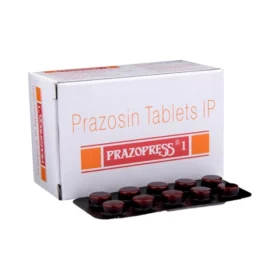 Prazopress
Ερωτήσεις & Απαντήσεις
Prazopress
Σχετικά προϊόντα









Κριτικές
Δεν υπάρχουν ακόμη κριτικές