







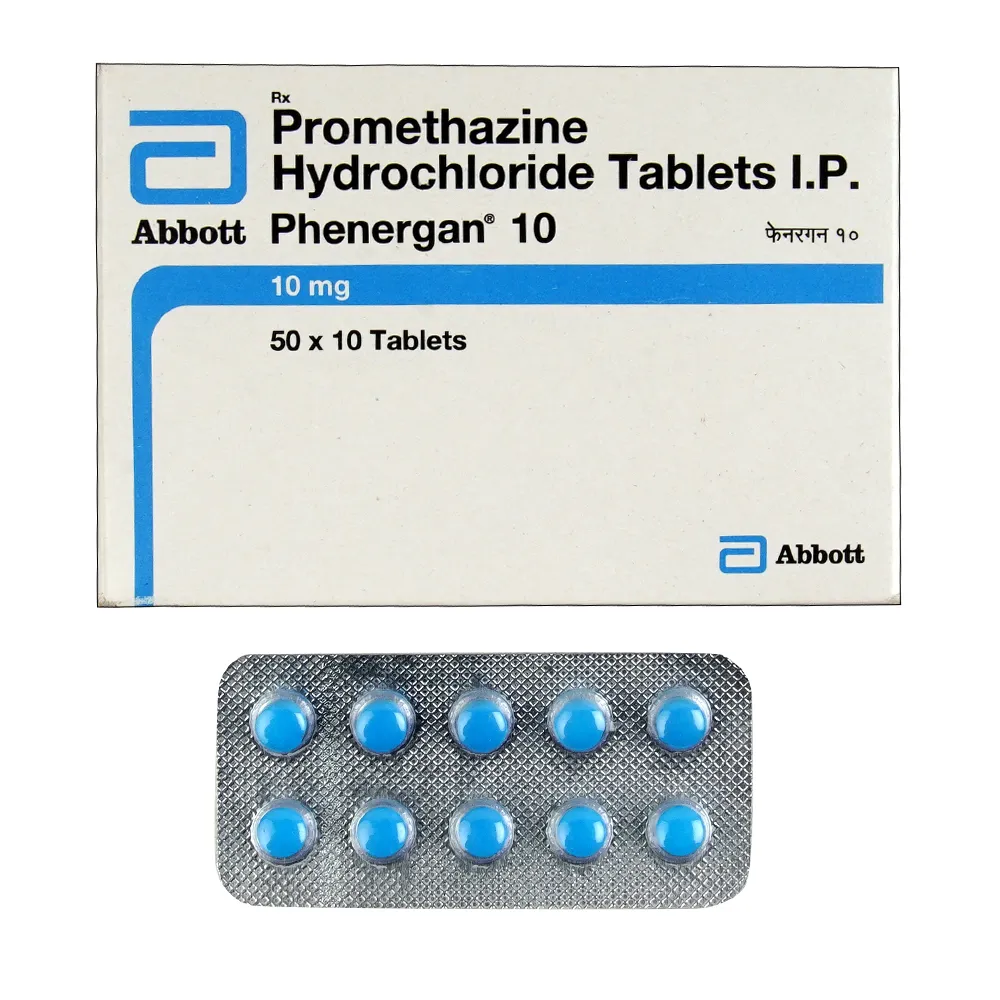
Phenergan
✅ Ανακούφιση από ναυτία
✅ Πρόληψη εμέτου
✅ Ανακούφιση από συμπτώματα αλλεργίας
✅ Θεραπεία κινητικής ναυτίας
✅ Επαγωγή καταστολής
Το Phenergan περιέχει Promethazine.
✓ Ιατρικά ελεγμένο από Morgan Ellis — Ερευνητής Φαρμακευτικής · 8 χρόνια εμπειρία · Τελευταία αναθεώρηση: Μάιος 2026
Γρήγορη απάντηση
Phenergan είναι μια μάρκα promethazine 10 mg — αντιισταμινικό πρώτης γενιάς με ισχυρή αντικολινεργική, αντιεμετική και κατασταλτική δράση. Λάβετε ένα δισκίο 30–60 λεπτά πριν από το ταξίδι για να προλαμβάνεται το ναυτία, ή 10–20 mg κάθε 4–6 ώρες για ναυτία / αλλεργικά συμπτώματα (συνήθως μέγιστη δόση 100 mg/ημέρα σε ενήλικες). Το δισκίο των 10 mg είναι η πιο ήπια επιλογή με καλύτερη προσαρμογή της δόσης σε σύγκριση με το δισκίο των 25 mg Avimax δισκίο.
Γιατί να παραγγείλετε από τη MedsBase
📦 Κάθε παραγγελία καλύπτεται από την Πολιτική Εγγύησης Επαναποστολής — εάν το δέμα σας δεν φτάσει εντός 20 εργάσιμων ημερών, το επαναποστέλλουμε.
Γιατί να παραγγείλετε από τη MedsBase
Το Phenergan προέρχεται από WHO-GMP πιστοποιημένους κατασκευαστές, συσκευάζεται διακριτικά και αποστέλλεται παγκοσμίως. Κάθε παραγγελία υποστηρίζεται από την Πολιτική Εγγύησης Επαναποστολής και υποστηρίζεται από 1,400+ κριτικές πελατών.
Πώς λειτουργεί το Phenergan
Η Promethazine συνδυάζει τέσσερις μηχανισμούς σε ένα μόριο: η αναστολή των υποδοχέων H1 μειώνει τα αλλεργικά συμπτώματα· η κεντρική αντικολινεργική δράση καταστέλλει τους πυρήνες του περιφερικού ιστού που προκαλούν ναυτία· η αναστολή των υποδοχέων D2 στη ζώνη των χημειοϋποδοχέων παρέχει άμεση αντιεμετική δράση· και η δέσμευση στους υποδοχείς H1/M1 του ΚΝΣ προκαλεί δόση-εξαρτώμενη καταστολή. Η έναρξη της δράσης είναι περίπου 20 λεπτά μετά από από του στόματος λήψη, με μέγιστη δράση σε 1–2 ώρες, και η διάρκεια της δράσης είναι 4–6 ώρες (η καταστολή μπορεί να διαρκέσει περισσότερο σε ηλικιωμένους).
Ενδείξεις και δοσολογία
| Ενδείξεις | Ενήλικη δόση (10 mg δισκία) | Σημειώσεις |
|---|---|---|
| Αιώρηση — πρόληψη | 20 mg (2 δισκία) 30–60 λεπτά πριν από το ταξίδι· επαναλάβετε 10–20 mg κάθε 6–8 ώρες αν χρειαστεί | Λήψη πριν από το ταξίδι — μόλις αρχίσει η ναυτία, η από του στόματος απορρόφηση μειώνεται |
| Ναυτία / εμετός | 10–20 mg κάθε 4–6 ώρες κατά ανάγκη | Μέγιστη ημερήσια δόση 100 mg· αξιολογήστε την υποκείμενη αιτία |
| Αλλεργική ρινίτιδα / κνίδωση | 10–20 mg έως τρεις φορές ημερησίως | Συχνά μία μόνο δόση 20 mg το βράδυ |
| Βραχυπρόθεσμη καταστολή | 20–50 mg πριν τον ύπνο | Δεν προορίζεται για μακροπρόθεσμη αϋπνία — αναπτύσσεται ανοχή και αντικιχολινεργικό φορτίο |
| Παιδιά 5–10 ετών | 10–20 mg τη νύχτα για αλλεργία / αιώρηση | Ειδική συμβουλή για μικρότερα παιδιά |
Σημαντικό — παιδιά κάτω των 2 ετών
Η προμεθαζίνη είναι αντενδείκνυται σε παιδιά κάτω των 2 ετών. Έχουν αναφερθεί θανάσιμες περιπτώσεις αναπνευστικής καταστολής. Χρησιμοποιείστε με προσοχή σε παιδιά ηλικίας 2–6 ετών και μόνο στην χαμηλότερη αποτελεσματική δόση.
Παρενέργειες
Συχνές (συχνά σχετιζόμενες με τη δόση): υπνηλία, ξηροστομία, θολή όραση, δυσκοιλιότητα, ζάλη όταν σηκώνεστε.
Λιγότερο συχνές: φωτοευαισθησία, παράδοξη διέγερση σε παιδιά, εμβοές, ήπια ταχυκαρδία.
Σοβαρό — ζητήστε άμεση ιατρική περίθαλψη: αναπνευστική καταστολή (ειδικά σε μικρά παιδιά ή με οπιοειδή/βενζοδιαζεπίνες), νευροληπτικό κακοήθες σύνδρομο (ακαμψία + πυρετός + αλλαγή στη συνείδηση), οξεία δυστονική αντίδραση (ωληνυγική κρίση, σπασμός λαιμού — η ενδοφλέβια προκυκλιδίνη αντιστρέφει), σοβαρή ορθοστατική υπόταση, σπασμοί σε υψηλές δόσεις.
Αντενδείξεις και προφυλάξεις
- Παιδιά κάτω των 2 ετών (απόλυτη απαγόρευση)
- Γλαύκωμα στενής γωνίας (κλειστό)
- Σοβαρή καλοήθης υπερπλασία προστάτη ή συμπτωματική ούρηση
- Σοβαρή αναπνευστική νόσος — ειδικά όταν η καταστολή μπορεί να επιδεινώσει τον αερισμό
- Ταυτόχρονη χρήση αναστολέων ΜΑΟ
- Ηλικιωμένοι (προσοχή σύμφωνα με τα Κριτήρια Beers — αντιχολινεργικό φορτίο, πτώσεις, παραλήρημα)
- Οδήγηση ή χειρισμός μηχανημάτων — ισχυρή καταστολή διαρκεί 6–12 ώρες
Αλληλεπιδράσεις φαρμάκων
| Φάρμακο αλληλεπίδρασης | Αποτέλεσμα | Δράση |
|---|---|---|
| Οπιοειδή, βενζοδιαζεπίνες, βαρβιτουρικά, αλκοόλ | Προσθετική καταστολή ΚΝΣ + αναπνευστικού | Αποφύγετε τον συνδυασμό ή μειώστε και τις δύο δόσεις |
| Άλλα αντιχολινεργικά (ΤCA, FGA αντιψυχωσικά, αντιπαρκινσονικά) | Προσθετική ξηροστομία, ούρηση, σύγχυση | Αποφύγετε τη στοίβαξη· μειώστε τη δόση σε ηλικιωμένους |
| MAO αναστολείς | Επιμηκυμένη αντιχολινεργική + κατασταλτική επίδραση | Αποφύγετε· περίοδος αποχής 14 ημερών και από τις δύο πλευρές |
| Αδρεναλίνη (για υπόταση) | Αντιστροφή αγγειοσυσπαστικής επίδρασης μέσω άλφα αποκλεισμού | Χρησιμοποιήστε νοραδρεναλίνη / φαινυλεφρίνη αντί |
| Levodopa | Η αναστολή D2 μειώνει την αντιπαρκινσονική αποτελεσματικότητα | Αποφύγετε στην νόσο του Parkinson — χρησιμοποιήστε ονδανοσετρόνη / ντομπεριδόνη |
| Φάρμακα που επιμηκύνουν το QT (αζιθρομυκίνη, κινίνη, αμιοδαρόνη) | Προσθετικό σήμα επιμήκυνσης QT σε υψηλές δόσεις | Προσοχή· αποφύγετε σε υψηλότερες δόσεις προμεθαζίνης |
Εγκυμοσύνη, θηλασμός και αποθήκευση
Η προμεθαζίνη έχει μακρόχρονη πρακτική χρήση στην εγκυμοσύνη (ναυτία εγκυμοσύνης και σοβαρή ναυτία) — ιστορικά χαρακτηριζόταν ως χαμηλού κινδύνου αλλά, όπως κάθε φάρμακο, προτιμάται η ελάχιστη αποτελεσματική δόση για τη συντομότερη δυνατή διάρκεια και η απόφαση πρέπει να λαμβάνεται από κλινικό γιατρό. Μικρές ποσότητες περνούν στο μητρικό γάλα και μπορεί να προκαλέσουν υπνηλία στο βρέφος· η σποραδική βραχυπρόθεσμη χρήση είναι γενικά αποδεκτή, ενώ η τακτική χρήση λιγότερο. Αποθηκεύστε κάτω από 30 °C, προστατευμένο από το φως.
Συχνές Ερωτήσεις
Πόσο πριν από το ταξίδι πρέπει να πάρω το Phenergan;
Πάρτε 20 mg (δύο δισκία των 10 mg) περίπου 30–60 λεπτά πριν την αναχώρηση. Μόλις εμφανιστεί η κινητική ναυτία, η γαστρική στασιμότητα μειώνει την απορρόφηση από το στόμα — είναι καλύτερο να πάρετε μια δεύτερη δόση μετά από 6–8 ώρες παρά να διπλασιάσετε τη δόση αν τα συμπτώματα είναι ήδη σοβαρά.
Phenergan 10 mg έναντι Avimax 25 mg — ποιο να επιλέξω;
Και τα δύο περιέχουν προμεθαζίνη, απλώς σε διαφορετικές δόσεις. Το δισκίο των 10 mg (Phenergan) είναι η καλύτερη επιλογή για τη διαχείριση αλλεργίας το βράδυ, ήπια κινητική ναυτία, παιδιατρική δοσολογία (άνω των 2 ετών) και οποιαδήποτε κατάσταση όπου χρειάζεστε λεπτότερη τιτλοδότηση ή λιγότερη υπνηλία. Το δισκίο των 25 mg (Avimax) είναι κατάλληλο για ταξίδια μικρής διάρκειας όπου δεν χρειάζεται να οδηγήσετε στον προορισμό, για ναυτία μετά από εγχείρηση και για ενήλικες όπου τα 10 mg ήταν ανεπαρκή.
Μπορώ να οδηγήσω μετά τη λήψη Phenergan;
Όχι. Ακόμα και σε δόση 10 mg, η προμεθαζίνη προκαλεί σημαντική υπνηλία και μειώνει τον χρόνο αντίδρασης για τουλάχιστον 6–12 ώρες. Αν συνδυαστεί με αλκοόλ ή οποιοδήποτε υπνωτικό φάρμακο, η επίδραση είναι πολύ χειρότερη. Οργανώστε το πρόγραμμα σας ανάλογα με τη δόση.
Είναι το Phenergan ασφαλές σε παιδιά;
Αντενδείκνυται σε ηλικίες κάτω των 2 ετών λόγω θανατηφόρων περιπτώσεων αναπνευστικής καταστολής. Χρησιμοποιείστε με προσοχή μεταξύ 2 και 6 ετών και μόνο στην ελάχιστη αποτελεσματική δόση. Τα παιδιά άνω των 5 ετών συνήθως λαμβάνουν 10–20 mg για κινητική ασθένεια ή αλλεργική κνίδωση.
Phenergan έναντι cetirizine ή loratadine — ποια είναι η διαφορά;
Το cetirizine και η loratadine είναι αντιισταμινικά δεύτερης γενιάς σχεδιασμένα να αποφεύγουν τον εγκέφαλο — ανακουφίζουν τις αλλεργίες με ελάχιστη καταστολή, αλλά δεν έχουν αντιεμετική ή περιφερειακή επίδραση. Η promethazine είναι φάρμακο πρώτης γενιάς που διασχίζει ελεύθερα τον εγκέφαλο — προκαλεί καταστολή, καταστέλλει την κινητική ασθένεια και σταματά τον εμετό. Επιλέξτε το φάρμακο δεύτερης γενιάς για συνηθισμένες αλλεργίες και το Phenergan όταν επιθυμείτε την κατασταλτική ή αντιεμετική δράση.
Μπορώ να πάρω Phenergan μαζί με το υπνωτικό μου ή το αγχολυτικό;
Το Phenergan ενισχύει σημαντικά την καταστολή της αναπνοής και της συνείδησης που προκαλούν τα zolpidem, τα βαλπροϊκά, τα οπιοειδή, η gabapentin ή το αλκοόλ. Ο συνδυασμός δεν είναι ασφαλής σε τυπικές δόσεις. Συζητήστε με τον ιατρό πριν το συνδυάσετε.
Θα βοηθήσει το Phenergan με την ίλιγγο;
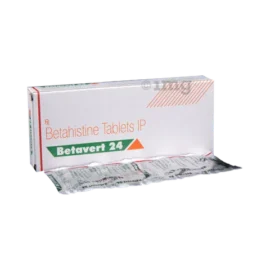
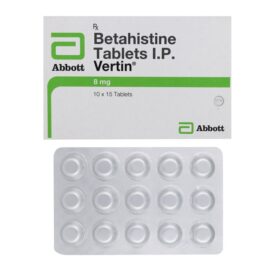
Έχει κάποια ωφέλεια στην οξεία περιφερική ίλιγγο λόγω της αντιχολινεργικής καταστολής του ιστικού. Για τη χρόνια νόσο του Meniere ή την επαναλαμβανόμενη περιφερική ίλιγγο, η βεταϊστίνη (Vertin, Βεταβέρτ, Betavert Tab) είναι το πιο κατάλληλο φάρμακο. Η προμεθαζίνη χρησιμοποιείται μόνο για σύντομο χρονικό διάστημα — η μακροχρόνια χρήση επιβραδύνει την εκ των υστέρων αντιρρόπηση του εγκεφάλου.
Μπορώ να πάρω το Phenergan με φαγητό ή αλκοόλ;
Το φαγητό είναι εντάξει και μπορεί να μειώσει το στομαχικό άγχος. Το αλκοόλ όχι — αυξάνει δραματικά την καταστολή, μειώνει περαιτέρω την αρτηριακή πίεση και επηρεάζει τη γνωστική λειτουργία πολύ περισσότερο από κάθε φάρμακο ξεχωριστά.
Είναι το Phenergan ασφαλές κατά την εγκυμοσύνη;
Χρησιμοποιείται κατά τη διάρκεια της εγκυμοσύνης για σοβαρή ναυτία και εμετό εδώ και πολλές δεκαετίες και γενικά θεωρείται χαμηλού κινδύνου, αλλά κανένα αντιεμετικό δεν πρέπει να λαμβάνεται χωρίς ιατρική συμβουλή κατά τη διάρκεια της εγκυμοσύνης. Η πρώτη γραμμή θεραπείας για ναυτία και εμετό εγκυμοσύνης είναι Doxinate Γιατί το Phenergan με ξηραίνει το στόμα;.
Γιατί το Phenergan προκαλεί ξηροστομία;
Promethazine’s anticholinergic action reduces saliva, tears and respiratory secretions. Useful for nausea but unpleasant for the mouth. Sip water, chew sugar-free gum, and avoid stacking with other anticholinergic drugs (TCAs, oxybutynin, hyoscine patches).
Πώς αποθηκεύω το Phenergan;
Κάτω από 30 °C στην αρχική του συσκευασία, προστατευμένο από το φως και την υγρασία. Κρατήστε το μακριά από τα παιδιά — ακόμη και μια μικρή υπερδοσολογία σε μικρό παιδί μπορεί να προκαλέσει σοβαρή αναπνευστική καταστολή.
Οι ταξιδιώτες που διαπιστώνουν ότι η δόση των 10 mg του Phenergan (promethazine) αφήνει υπολειμματική ναυτία σε μεγάλες πτήσεις ή ταξίδια με λεωφορείο συνήθως προχωρούν στην υψηλότερης δόσης αδελφή παραλλαγή Avimax (προμεθαζίνη 25 mg), που λαμβάνεται 30 έως 60 λεπτά πριν την αναχώρηση για ισχυρότερη αντιισταμινική και αντιεμετική κάλυψη με διπλάσια ισχύ ανά δισκίο.
Άλλες Θεραπείες για Ταξιδιωτική Αρρώστια
- Avimax (Promethazine 25 mg) — ίδιο μόριο, υψηλότερη ισχύς
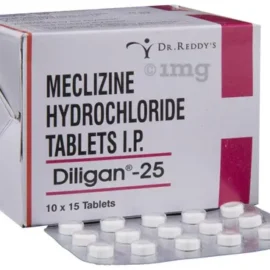
- Diligan (Meclizine 25 mg) — λιγότερο κατασταλτικό αντιισταμινικό
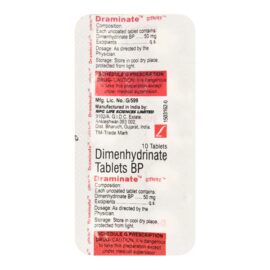
- Draminate (Dimenhydrinate 50 mg) — ισοδύναμο του πρωτότυπου Dramamine
- Vertin (Betahistine 8 mg) — για ιλίγγο του περιφερικού ιστού / ασθένεια Meniere
- Betavert Tab (Betahistine 24 mg) — πλήρης δόση για ασθένεια Meniere
Ιατρική Αποποίηση Ευθύνης
Αυτή η σελίδα είναι για εκπαιδευτικούς σκοπούς και δεν αντικαθιστά εξατομικευμένη ιατρική συμβουλή. Σοβαρή ίλιγγος με απώλεια ακοής, νευρολογικό έλλειμμα ή διακυμάνσεις στη συνείδηση δεν είναι κινητική ασθένεια — ζητήστε ιατρική αξιολόγηση την ίδια ημέρα. Οι αντιισταμινικές και αντιχολινεργικές ουσίες αλληλεπιδρούν επικίνδυνα με το αλκοόλ και τα κατασταλτικά του ΚΝΣ. Συζητήστε κάθε νέο φάρμακο με έναν καταρτισμένο κλινικό, ειδικά κατά τη διάρκεια της εγκυμοσύνης, του θηλασμού ή όταν παίρνετε άλλα φάρμακα.
Περισσότερες επιλογές σε Δισκία για Ταξιδιωτική Ναυτία
Ταξινομημένα σύμφωνα με τον όγκο παραγγελιών στο MedsBase — τι επιλέγουν άλλοι πελάτες σε αυτήν την κατηγορία.
| Ισχύς | 10 mg |
|---|---|
| Ποσότητα | 30 δισκία, 60 δισκία, 90 δισκία, 180 δισκία |
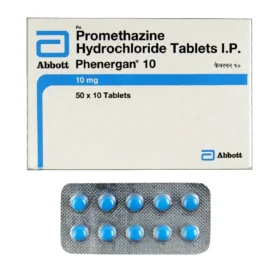 Phenergan
Ερωτήσεις & Απαντήσεις
Phenergan
Σχετικά προϊόντα


Κριτικές
Δεν υπάρχουν ακόμη κριτικές