







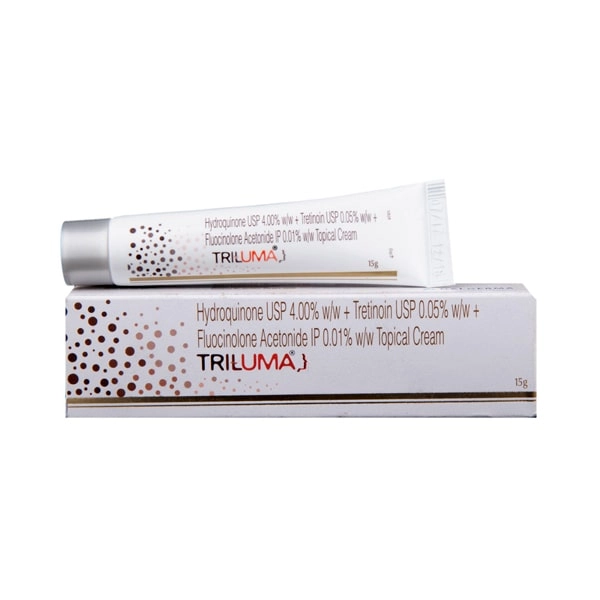
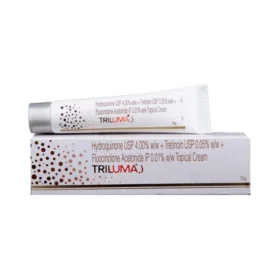
Triluma Κρέμα
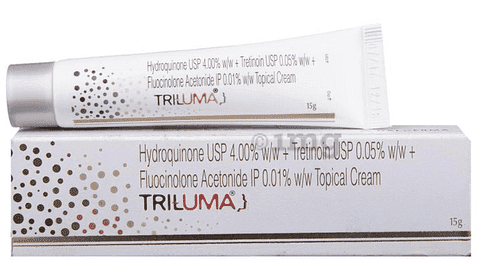
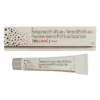
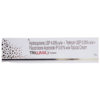
✅ Μειώνει την χρωστική της επιδερμίδας
✅ Θεραπεύει αποτελεσματικά το μέλασμα
✅ Προωθεί την ελαφρύνωση του δέρματος
✅ Περιέχει αντιφλεγμονώδεις ιδιότητες
✅ Ενισχύει την αναζωογόνηση του δέρματος
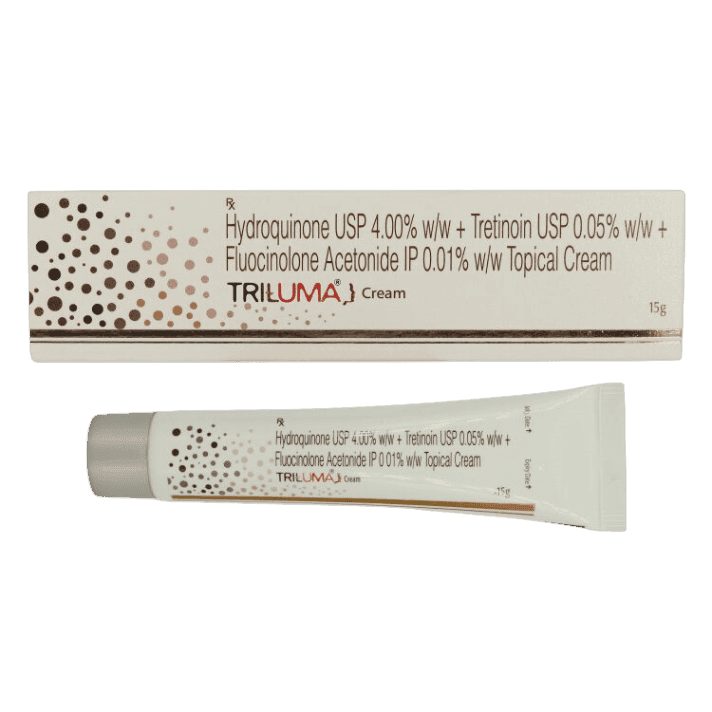
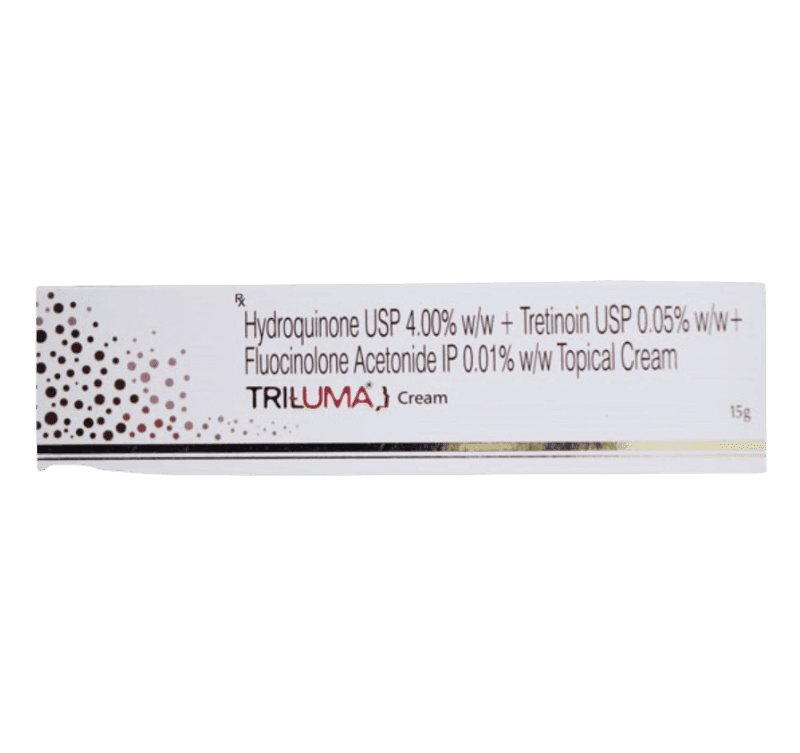
Η κρέμα Triluma περιέχει hydroquinone, tretinoin και fluocinolone acetonide.
✓ Ιατρικά ελεγμένο από Morgan Ellis — Ερευνητής Φαρμακευτικής · 8 χρόνια εμπειρία · Τελευταία αναθεώρηση: Μάιος 2026
⚡ Γρήγορη απάντηση — Τι είναι η κρέμα Triluma;
Triluma Κρέμα είναι μια τοπική κρέμα αποχρωματισμού τύπου “Kligman triple” από τα Εργαστήρια Galderma που περιέχει υδροκινόνη 4% + τρετινοΐνη 0.05% + φλουοκινόλονη ακετονίδη 0.01%. Είναι μια θεραπεία βραχείας διάρκειας με συνταγογράφηση για μέλασμα, μεταφλεγμονώδη υπερχρωμάτωση (PIH) μετά από ακμή, και ηλιακές λεντιγκίνες στο πρόσωπο. Εφαρμόστε μια λεπτή ποσότητα στο μέγεθος μπιζελιού στις πληγείσες σκούρες κηλίδες μόνο μια φορά το βράδυ, με αυστηρό πρωτόκολλο 8 εβδομάδες ενεργό / 8 εβδομάδες ανενεργό πρωτόκολλο κυκλικής χρήσης — το ενσωματωμένο τοπικό στεροειδές (fluocinolone acetonide, ένα κορτικοστεροειδές μέτριας ισχύος) προκαλεί ατροφία του δέρματος εάν χρησιμοποιείται συνεχώς. Ημερήσια χρήση SPF 50+ το πρωί είναι υποχρεωτική — Η έκθεση σε UV αντιστρέφει την επίδραση της υδροκινόνης μέσα σε λίγες ημέρες. Μην χρησιμοποιείτε κατά τη διάρκεια της εγκυμοσύνης, του θηλασμού ή σε τραυματισμένο δέρμα. Η υδροκινόνη περιορίζεται σε εποπτεία ειδικού στις ΗΠΑ (FDA 2020) και στην ΕΕ.
📦 Κάθε παραγγελία καλύπτεται από την Πολιτική Εγγύησης Επαναποστολής — εάν το δέμα σας δεν φτάσει εντός 20 εργάσιμων ημερών, το επαναποστέλλουμε.
Γιατί να παραγγείλετε από τη MedsBase
Τα γενόσημα φάρμακά μας προέρχονται από κατασκευαστές που πιστοποιούνται από την WHO-GMP και αποστέλλονται παγκοσμίως σε διακριτική, απλή συσκευασία — χωρίς όνομα φαρμάκου στο εξωτερικό του δέματος. Οι πληρωμές με κάρτα δρομολογούνται μέσω ρυθμισμένου επεξεργαστή (οι περιγραφές εκκαθάρισης περιλαμβάνουν ρυθμισμένο επεξεργαστή πληρωμών με κάρτα — ποτέ “MedsBase” ή οποιοδήποτε όνομα φαρμάκου). Γίνονται δεκτές και πληρωμές με κρυπτονομίσματα και τραπεζική μεταφορά SEPA. Κάθε παραγγελία καλύπτεται από την Πολιτική Επαναποστολής Εξασφαλίσεώς μας.
Τι είναι η κρέμα Triluma;
Η κρέμα Triluma είναι μια τοπική κρέμα αποχρωματισμού από τα Εργαστήρια Galderma που περιέχει τρία ενεργά συστατικά σε σταθερή συνδυασμένη δόση: υδροκινόνη 4% + τρετινοΐνη 0.05% + φλουοκινόλονη ακετονίδη 0.01%. Η σύνθεση ακολουθεί το κλασικό πρωτόκολλο Kligman — τον πιο κλινικά επικυρωμένο βραχυπρόθεσμο συνδυασμό για τη θεραπεία μέλασμα (χλόασμα), μεταφλεγμονώδη υπερχρωμάτωση (PIH) μετά από ακμή ή έκζεμα, και επίμονες ηλιακές λεντιγίνες.
Η κρέμα Triluma προορίζεται για βραχυπρόθεσμη χρήση μόνο — συνήθως 8 εβδομάδες νυχτερινής εφαρμογής, ακολουθούμενες από διακοπή 8 εβδομάδων. Η υδροκινόνη φέρει κίνδυνο πλευρικών επιδράσεων στη χρωματική (εξωγενής οχρόνωση) με συνεχή χρήση πέραν των 6 μηνών, και η τοπική κορτικοστεροειδής συνιστώσα προκαλεί λεπτό δέρμα, τηλεγγειεκτασίες και επαναλαμβανόμενη δερματίτιδα εάν χρησιμοποιείται συνεχώς. Χρησιμοποιούμενος κυκλικά, ο συνδυασμός είναι ασφαλής και ιδιαίτερα αποτελεσματικός· με καθημερινή χρήση για χρόνια, προκαλεί ζημιά που μπορεί να είναι δύσκολο να αντιστραφεί.
Πώς Λειτουργεί η Κρέμα Triluma;
Τα τρία συστατικά της κρέμας Triluma επιτίθενται στην υπερχρωμάτωση από διαφορετικές γωνίες ταυτόχρονα:
- Υδροκινόνη — το πιο αποτελεσματικό τοπικό αποχρωματικό μέσο που είναι διαθέσιμο σήμερα. Αναστέλλει το ένζυμο τυροσινάση μέσα στα μελανοκύτταρα, μπλοκάροντας τη σύνθεση της μελανίνης στο βήμα που περιορίζει τον ρυθμό. Ορατό φωτίζοντας σε 4–8 εβδομάδες.
- Τρετινοΐνη — ένα τοπικό ρετινοειδές που επιταχύνει τον κύκλο εναλλαγής των κερατινοκυττάρων της επιφάνειας που είναι γεμάτα με μελανίνη (έτσι το υπάρχον χρώμα φεύγει από το δέρμα πιο γρήγορα), και αυξάνει την διείσδυση της υδροκινόνης στην επιδερμίδα.
- fluocinolone acetonide — ένα μετρίου ισχύος τοπικό κορτικοστεροειδές που καταστέλλει τη δερματίτιδα από ερεθισμό που προκαλείται από την υδροκινόνη + τρετινοΐνη (χωρίς αυτό, ο συνδυασμός είναι πολύ ερεθιστικός για να αντέξει) και προσθέτει άμεση αντιφλεγμονώδη δράση που μειώνει τη μετά-φλεγμονώδη χρωμάτωση.
Ορατή βελτίωση σε 4 εβδομάδες; κλινικά σημαντική ανοίχτρωση σε 8–12 εβδομάδες. Οι αποκτήσεις είναι εξαρτώμενη από την υπεριώδη ακτινοβολία — χωρίς αυστηρή προστασία από τον ήλιο, το αποχρωματιστικό αποτέλεσμα αντιστρέφεται μέσα σε ημέρες μη προστατευμένης έκθεσης στον ήλιο.
Χρήσεις και ενδείξεις
- Μέλασμα (χλόασμα) — συμμετρικές καφέ κηλίδες στα μάγουλα, το μέτωπο, το άνω χείλος και το πηγούνι, συχνά ορμονικά προκαλούμενες (κύηση, αντισυλληπτικά, ήλιος)
- Μεταφλεγμονώδης υπερχρωσία (PIH) μετά από ακμή, ειδικά σε δέρμα Fitzpatrick III–VI
- Ηλιακές λεντιγίνες (ηλιακές κηλίδες, κηλίδες ηλικίας) στο πρόσωπο και την πλάτη των χεριών
- Φακίδες (εφηλίδες) — λιγότερο αποτελεσματικό· εξαρτάται από την υπεριώδη ακτινοβολία και τείνει να επαναλαμβάνεται
- Περιοφθάλμια υπερχρωμάτωση (σκοτεινοί κύκλοι κάτω από τα μάτια) μόνο μελανινικής προέλευσης — όχι αποτελεσματικό για αγγειακούς σκοτεινούς κύκλους
Η κρέμα Triluma είναι δεν για: μελανινικό μέλασμα δερματικής προέλευσης (βαθύ χρωματισμό που δεν ανταποκρίνεται σε τοπική θεραπεία — απαιτεί λέιζερ ή χημικό ξύσιμο), φωτοδερματίτιδα ή οποιαδήποτε κατάσταση όπου το περιβάλλον δέρμα είναι κατεστραμμένο ή εξεζητημένο, ή ως καθημερινό καλλυντικό για ανοίχτρωση δέρματος. Η καθημερινή μακροπρόθεσμη καλλυντική χρήση είναι η πιο κοινή αιτία μόνιμης υδροκινόνης-προκαλούμενης οχρονώσεως.
Δοσολογία και Τρόπος Εφαρμογής της Κρέμας Triluma — ΠΡΟΤΟΚΟΛΟ ΚΥΚΛΟΦΟΡΙΑΣ
Η κρέμα Triluma διατίθεται σε σωληνάρια 15 g που περιέχουν υδροκινόνη 4% + τρετινοΐνη 0.05% + φλουοκινόλονη ακετονίδη 0.01%.
Πώς να Εφαρμόσετε Σωστά την Κρέμα Triluma
- Πλύνετε απαλά με ένα ήπιο καθαριστικό χωρίς αφρό, στη συνέχεια στεγνώστε με ελαφρά πιέσεις. Περιμένετε 20–30 λεπτά για να στεγνώσει πλήρως το δέρμα.
- Εφαρμόστε μια μικρή ποσότητα, όση μια μπιζέλα, μόνο στις σκούρες κηλίδες — όχι σε όλο το πρόσωπο. Απλώστε λεπτό στρώμα μόνο στην αποχρωματισμένη περιοχή. Αποφύγετε το γύρω υγιές δέρμα (η κορτικοστεροΐδη θα λεπτύνει το υγιές δέρμα).
- Αποφύγετε τα μάτια, τις γωνίες του στόματος, τις ρουθούνες, τα χείλη, τις βλεννογόνους μεμβράνες, τα βλέφαρα και τον λαιμό.
- Μόνο μία φορά τη νύχτα — ποτέ δύο φορές την ημέρα. Πλύνετε τα χέρια μετά την εφαρμογή.
- ΚΥΚΛΟΦΟΡΙΑ: 8 εβδομάδες νυχτερινής χρήσης, στη συνέχεια υποχρεωτική 8-εβδομαδιαία διακοπή. Μην χρησιμοποιείτε συνεχώς πέραν των 8 εβδομάδων κάθε φορά. Μετά τη διακοπή, μπορείτε να ξεκινήσετε έναν άλλον 8-εβδομαδιαίο κύκλο εάν χρειαστεί. Μέγιστο 4 κύκλοι σε 12 μήνες.
- Ημερήσια εφαρμογή ευρέος φάσματος SPF 50+ το πρωί είναι υποχρεωτική. — όχι μόνο για τη διάρκεια της θεραπείας αλλά επ' αόριστον μετά, επειδή η υπεριώδης ακτινοβολία επαναφέρει τη χρωστική ουσία. Επαναφέρετε κάθε 2–3 ώρες αν βρίσκεστε σε εξωτερικούς χώρους. Χρησιμοποιήστε πλατύγυρο καπέλο. Αποφύγετε εντελώς τον ηλιακό περίγυρο το μεσημέρι και τα σολάριουμ.
- Σταματήστε αμέσως αν παρατηρήσετε μπλε-μαύρη ή γκρι αποχρωματισμό των περιοχών που υποβάλλονται σε θεραπεία (σημείο οχρονώσεως), λεπτό δέρμα με ορατά αιμοφόρα αγγεία, επίμονο τσούξιμο ή επαναφορά σκούρυνσης της πλάκας.
- Μην συνδυάζετε με σέρουμ AHA ή BHA που μένουν στο δέρμα, ρετινόλη, πιλες ή μικροβελόνισμα κατά τη διάρκεια του κύκλου θεραπείας των 8 εβδομάδων. Το κορτικοστεροειδές συστατικό δεν προστατεύει το δέρμα από την επιπλοκή της ερεθισμού.
Παρενέργειες της Κρέμας Triluma
Συχνές (ήπιες, εξασφαλίζονται σε 2–4 εβδομάδες):
- Ήπια ξηρότητα, ξεφλούδισμα, απολέπιση στην πλάκα που υποβάλλεται σε θεραπεία
- Τσούξιμο ή καύση κατά την εφαρμογή (χειρότερο την εβδομάδα 1–2)
- Ήπια ερυθρότητα
- Αυξημένη ευαισθησία στον ήλιο
- Αρχική εκκένωση μικροκωμωδίων εάν χρησιμοποιείται σε περιοχές επιρρεπείς στην ακμή
Λιγότερο συχνά αλλά σημαντικά:
- Δερματίτιδα επαφής (3–5%) — ειδικά σε ασθενείς με ευαίσθητο δέρμα ή έκζεμα
- Φαινόμενο φωτοστέφανου — εξασθένηση του υγιούς δέρματος γύρω από την σκούρη κηλίδα (χρησιμοποιήστε την ελάχιστη απαιτούμενη ποσότητα και εφαρμόστε μόνο στην ίδια την κηλίδα)
- Εξάνθημα ακνεϊκής μορφής από το τοπικό κορτικοστεροειδές συστατικό, ειδικά με υπερβολική χρήση ή εφαρμογή στο πρόσωπο πέραν των 4 εβδομάδων
- Τηλεγγειεκτασίες (λεπτά κόκκινα αιμοφόρα αγγεία) και λεπτόνιση του δέρματος από το κορτικοστεροειδές συστατικό — αναστρέψιμο μόνο αν εντοπιστεί νωρίς
- Περιορική δερματίτιδα από χρήση στεροειδών γύρω από το στόμα
Σπάνιο αλλά διακόψτε και ζητήστε αξιολόγηση από δερματολόγο:
- Εξωγενής οχρόνωση — γαλαζομαύρη ή σκουρογκρίζα παραδοξική υπερχρωσία που είναι το χαρακτηριστικό της υπερβολικής χρήσης υδροκινόνης. Εξελίσσεται με συνεχή χρήση πέραν των 6 μηνών, ειδικά σε υψηλότερες συγκεντρώσεις και σε δέρμα Fitzpatrick V–VI. Δύσκολο να αντιστραφεί και μπορεί να είναι μόνιμη.
- Στεροειδής δερματίτιδα ανάκαμψης — σοβερή ερυθρότητα, καύση και επιδείνωση της χρωστικής ουσίας όταν η κρέμα διακοπεί ξαφνικά μετά από παρατεταμένη καθημερινή χρήση. Διαχειριστείτε με σταδιακή μείωση.
- Καταστολή του υποθαλαμικού-υποφυσικού-επινεφριδικού (HPA) άξονα — θεωρητική με παρατεταμένη εκτεταμένη εφαρμογή κορτικοστεροειδών· σπάνια με χρήση μόνο στο πρόσωπο
- Σοβαρή δερματίτιδα επαφής ή εκζεματώδης αντίδραση
Προειδοποιήσεις και Προφυλάξεις — ΚΡΙΣΙΜΟ
- Εγκυμοσύνη και θηλασμός: αντενδεικτικό. Το συστατικό τρετινοΐνη ανήκει στην κατηγορία εγκυμοσύνης C της FDA· η υδροκινόνη είναι επίσης κατηγορίας C με έως και 35% συστηματική απορρόφηση τεκμηριωμένη. Το κορτικοστεροειδές προσθέτει περαιτέρω κίνδυνο έκθεσης του εμβρύου. Χρησιμοποιήστε αζελαϊκό οξύ (ασφαλές στην εγκυμοσύνη) για τη μέλασμα αντί αυτού.
- αυξημένη ευαισθησία σε UV. Ημερήσια χρήση ευρέος φάσματος SPF 30+ είναι υποχρεωτική. Αποφύγετε τα σολάριουμ. η καθημερινή χρήση ευρέος φάσματος SPF 50+ είναι υποχρεωτική. Χωρίς αυτό, η επίδραση της υδροκινόνης αντιστρέφεται μέσα σε λίγες μέρες και κινδυνεύετε με οχρόνωση. Αποφύγετε εντελώς τα σολάριουμ.
- Το πρωτόκολλο κυκλοφορίας δεν είναι διαπραγματεύσιμο: ποτέ μην χρησιμοποιείτε συνεχώς για περισσότερο από 8 εβδομάδες συνεχόμενα. Η συνεχής ημερήσια χρήση για περισσότερο από 6 μήνες κινδυνεύει με εξωγενή οχρόνωση (η οποία μπορεί να είναι μόνιμη) και ατροφία δέρματος που προκαλείται από κορτικοστεροειδή.
- Δράση FDA 2020: το FDA απέσυρε όλα τα χωρίς ιατρική συνταγή προϊόντα υδροκινόνης από την αμερικανική αγορά το 2020 μετά από αξιολόγηση αναφορών περιπτώσεων οχρόνωσης. Η υδροκινόνη είναι τώρα περιορισμένη σε εποπτεία ειδικού στις ΗΠΑ, την ΕΕ και το μεγαλύτερο μέρος της Ασίας.
- Μην εφαρμόζετε σε σπασμένο δέρμα, ενεργό έκζεμα, σοβαρό ηλιακό έγκαυμα ή ανοιχτές πληγές.
- Μην εφαρμόζετε γύρω από τα μάτια, στα βλέφαρα ή στο χείλος. Το κορτικοστεροειδές προκαλεί γρήγορη λεπτότητα του δέρματος σε αυτές τις ζώνες.
- Αποτρίχωση με κερί, νήμα, αφαίρεση τριχών με λέιζερ, δερμαβράσιωση, μικροβελόνασμα, χημικά πιλίνγκ: διακόψτε τη χρήση της κρέμας Triluma για τουλάχιστον 14 ημέρες πριν από οποιαδήποτε από αυτές τις διαδικασίες και συνεχίστε μόνο αφού το δέρμα έχει αναρρώσει πλήρως.
- Άσθμα, σοβαρή ατοπική δερματίτιδα: προσοχή — τα συντηρητικά θειώδη σε ορισμένες συνθέσεις υδροκινόνης μπορεί να προκαλέσουν αντιδράσεις.
- Παιδιά κάτω των 12 ετών: όχι για παιδιατρική χρήση.
Αντενδείξεις — Ποιος ΔΕΝ Πρέπει να Χρησιμοποιεί την Κρέμα Triluma
- Γνωστή υπερευαισθησία στην υδροκινόνη, τρετινοΐνη, φλουοκινόλονη ακετονίδη ή οποιοδήποτε συστατικό της κρέμας βάσης
- Εγκυμοσύνη, σχεδιασμός εγκυμοσύνης ή θηλασμός
- Ενεργό έκζεμα, σοβαρή ροδόχρου, τραυματισμένο δέρμα, δερματίτιδα με έκκριση ή ανοιχτές πληγές στην περιοχή που θα θεραπευτεί
- Καθιερωμένη εξωγενής οχρόνωση (μπλε-μαύρη χρωματική αλλαγή που προκαλείται από υδροκινόνη)
- Υφιστάμενη ατροφία ή τηλεγγεκτασίες προσώπου που προκαλούνται από κορτικοστεροειδή
- Ταυτόχρονη θεραπεία με από του στόματος ισοτρετινοΐνη
- Παιδιά κάτω των 12 ετών
- Ασθενείς που δεν είναι διατεθειμένοι να τηρήσουν καθημερινή προστασία SPF 50+ και αυστηρό πρωτόκολλο κυκλοφορίας
Αλληλεπιδράσεις φαρμάκων και δερματικής φροντίδας
| Συνδυάζεται με | Αποτέλεσμα | Τι να κάνετε |
|---|---|---|
| Άλλα τοπικά ρετινοειδή (τρετινοΐνη, ταζαροτένης, αδαπαλένη) | Πλεονάζει με την τρετινοΐνη στην κρέμα Triluma· σοβαρή επαυξημένη ερεθισμός | Διακόψτε άλλα ρετινοειδή κατά τη διάρκεια του κύκλου θεραπείας 8 εβδομάδων. |
| Ορός υψηλής περιεκτικότητας σε AHA/BHA για παραμονή στο δέρμα | Σοβαρός ερεθισμός, βλάβη φραγμού, αυξημένος κίνδυνος οχρόνωσης | Αποφύγετε κατά τη διάρκεια του κύκλου των 8 εβδομάδων. Συνεχίστε μόνο κατά τη διάρκεια της διακοπής εκτός κύκλου. |
| Άλλα τοπικά κορτικοστεροειδή | Σύνθετη ατροφία από στεροειδή | Μην χρησιμοποιείτε άλλα στεροειδή προσώπου κατά τη διάρκεια του κύκλου της κρέμας Triluma. |
| Προϊόντα με βάση τη ρεσορκινόλη και τη φαινόλη | Αυξημένος κίνδυνος οχρονώσεως | Αποφύγετε τον συνδυασμό. |
| Ημερήσιο αντηλιακό (ευρύ φάσμα SPF 50+) | Υποχρεωτικός συνοδός | Εφαρμόστε κάθε πρωί. Επαναφέρετε κάθε 2–3 ώρες σε εξωτερικούς χώρους. |
| Ορός βιταμίνης C (L-ασκορβικό οξύ 10–15%) | Συμβατό — συμπληρωματική αναστολή της τυροσινάσης + αντιοξειδωτικό | Βιταμίνη C το πρωί κάτω από SPF, κρέμα Triluma το βράδυ. |
| Νιασιναμίδη 5% | Συμβατό — μειώνει τη μεταφορά μελανοσωμάτων· υποστηρίζει το φραγμό | Εξαιρετικό προϊόν συντήρησης εκτός κύκλου. |
| Από του στόματος ισοτρετινοΐνη | Συνδυασμός ρετινοειδούς + ευθραυστότητα δέρματος | Διακόψτε την κρέμα Triluma κατά τη διάρκεια της θεραπείας με ισοτρετινοΐνη από το στόμα. |
Οδηγίες Αποθήκευσης
- Φυλάξτε σε θερμοκρασία δωματίου, 15–25°C. Μην το ψύχετε ή το καταψύχετε.
- Κρατήστε το σωληνάριο καλά κλειστό και μακριά από την άμεση ηλιοφάνεια — η υδροκινόνη οξειδώνεται (γίνεται καφέ) όταν εκτίθεται στον αέρα και το φως, χάνοντας την αποτελεσματικότητά της.
- Εάν η κρέμα έχει γίνει καφέ ή γκρι στο σωληνάριο, απορρίψτε την — η οξειδωμένη υδροκινόνη είναι αναποτελεσματική.
- Απορρίψτε 6 μήνες μετά την πρώτη άνοιξη ακόμα κι αν παραμένει προϊόν στο σωληνάριο.
- Μην αφήνετε σε μέρη προσβάσιμα από παιδιά.
Σχετικές Εναλλακτικές Λύσεις στο MedsBase
Άλλα προϊόντα αποχρωματισμού και ακμής διαθέσιμα στο MedsBase:
- Melrio Cream (υδροκινόνη + τρετινοΐνη + φλουοκινόλονη)
- Melacare Forte Cream (υδροκινόνη + τρετινοΐνη + μομεταζόνη)
- Kojiglo Forte Cream (υδροκινόνη + τρετινοΐνη + μομεταζόνη)
- Epilite Liquid (υδροκινόνη 2%)
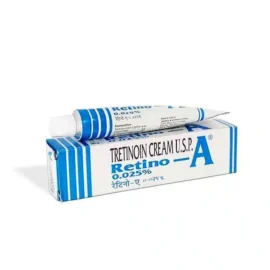
- Retino-A Κρέμα (tretinoin 0.025% / 0.05%)
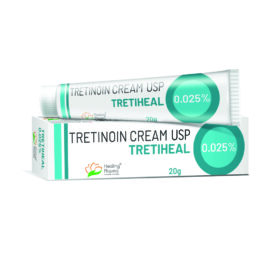
- Tretiheal Κρέμα (tretinoin 0.025% / 0.05% / 0.1%)
- Isotroin (στοματική ισοτρετινοΐνη 5 / 10 / 20 / 30 mg)
Χρήσιμη ανάγνωση: Κρέμα τρετινοΐνης έναντι γέλης · Tretinoin έναντι retinol · Όλα όσα θέλετε να γνωρίζετε για την ακμή.
Συχνές Ερωτήσεις
Γιατί είναι σημαντικό το πρωτόκολλο 8 εβδομάδων χρήσης / 8 εβδομάδων διακοπής;
Δύο διακριτοί κίνδυνοι καθορίζουν τον κανόνα του κύκλου: (1) η υδροκινόνη προκαλεί εξωγενή οχρόνωση (παράδοξη γαλαζομαύρη χρωστική αλλοίωση που μπορεί να είναι μόνιμη) με συνεχή χρήση πέρα από περίπου 6 μήνες· (2) η τοπική κορτικοστεροειδής συνιστώσα προκαλεί ατροφία δέρματος, τηλεγγειεκτασίες και δερματίτιδα ανάκρουσης με συνεχή χρήση στο πρόσωπο. Ο κύκλος 8 εβδομάδες ενεργό / 8 εβδομάδες ανενεργό παρέχει 32 εβδομάδες θεραπείας ετησίως με τεκμηριωμένη ασφάλεια. Η συνεχής καθημερινή χρήση είναι η πιο συνηθισμένη αιτία μόνιμης βλάβης του δέρματος από αποχρωματικά κρέματα.
Πότε θα δω αποτελέσματα από την κρέμα Triluma;
Ορατό φωτίζοντας σε 4 εβδομάδες; · κλινικά σημαντική βελτίωση σε 8–12 εβδομάδες — ακριβώς πριν από την υποχρεωτική διακοπή του κύκλου. Οι περισσότεροι ασθενείς χρειάζονται 2–3 κύκλους (8 εβδομάδες ενεργό, 8 εβδομάδες ανενεργό) σε διάστημα 6–12 μηνών για σταθερή εξάλειψη της μέλασμα. Συντήρηση κατά τη διάρκεια της διακοπής του κύκλου χρησιμοποιεί αζελαϊκό οξύ 15–20% ή βιταμίνη C + νιασιναμίδη.
Είναι το υδροκινόνη ασφαλές; Έχω διαβάσει ότι προκαλεί καρκίνο.
Το υδροκινόνη έχει ταξινομηθεί από το IARC ως Ομάδα 3 (δεν μπορεί να ταξινομηθεί ως προς την καρκινογόνο δράση της στον άνθρωπο) — σημαίνει ότι τα δεδομένα από αρουραίους δεν μεταφέρονται στην τοπική έκθεση στον άνθρωπο. Δεκαετίες χρήσης στη δερματολογία σε συγκεντρώσεις 2–4% κυκλικά δεν έχουν δείξει αυξημένο κίνδυνο καρκίνου στον άνθρωπο. Η πραγματική ανησυχία ασφάλειας είναι η οχρώνωση (μια παρενέργεια χρωματισμού, όχι καρκίνος), η οποία μπορεί να αποφευχθεί ακολουθώντας το πρωτόκολλο κυκλικής χρήσης 8 εβδομάδων και καθημερινή χρήση SPF 50+.
Γιατί περιορίστηκε η υδροκινόνη από την FDA;
Η FDA απέσυρε την υδροκινόνη χωρίς ιατρική συνταγή από την αγορά των ΗΠΑ τον Σεπτέμβριο του 2020 μετά την αξιολόγηση των συσσωρευμένων αναφορών περιπτώσεων οχρώνωσης. Η υδροκινόνη εξακολουθεί να αδειοδοτείται για χρήση με συνταγή σε συγκεντρώσεις έως 4%, αλλά η καθημερινή μακροπρόθεσμη καλλυντική χρήση είναι ο πληθυσμός που προκάλεσε την απαγόρευση. Η εποπτεία με συνταγή είναι ο μηχανισμός ασφάλειας — η κυκλική βραχυπρόθεσμη χρήση υπό ιατρική επίβλεψη παραμένει το πρότυπο για τη μέλασμα.
Μπορώ να χρησιμοποιήσω την κρέμα Triluma κατά τη διάρκεια της εγκυμοσύνης ή του θηλασμού;
Όχι. Και τα τρία συστατικά είναι προβληματικά κατά τη διάρκεια της εγκυμοσύνης: η τρετινοΐνη (Κατηγορία Εγκυμοσύνης C, τερατογόνα σε ζωικά μοντέλα), η υδροκινόνη (έως 35% συστηματική απορρόφηση από εφαρμογή στο πρόσωπο) και το κορτικοστεροειδές (μικρή αλλά μετρήσιμη συστηματική έκθεση). Για τη μέλασμα σχετική με την εγκυμοσύνη, μεταβείτε σε αζελαϊκό οξύ 15–20% (Κατηγορία Εγκυμοσύνης B) και αυστηρή καθημερινή χρήση SPF 50+.
Γιατί χρειάζομαι SPF 50+ κάθε μέρα;
Η έκθεση σε UV ενεργοποιεί τα μελανοκύτταρα και αντιστρέφει κάθε πρόοδο που έχετε κάνει. Χωρίς καθημερινή ευρείας φάσματος SPF 50+ (τα ορυκτά ή τα υβριδικά προτιμώνται για τη μέλασμα), ακόμη και μικρές ποσότητες τυχαίας ηλιακής ακτινοβολίας (οδήγηση, περπάτημα έξω) θα αναιρέσουν εβδομάδες χρήσης κρέμας σε λίγες μέρες. Το SPF είναι η πιο σημαντική μεταβλητή στον μακροπρόθεσμο έλεγχο της μέλασμα — πιο σημαντική από την ίδια την κρέμα.
Τι είναι η εξωγενής οχρώνωση και πώς μπορώ να την αποφύγω;
Η εξωγενής οχρόνωση είναι μια παραδοξολογική μπλε-μαύρη ή γκριζομαύρη υπερχρωμάτωση που αναπτύσσεται στο δέρμα που εκτίθεται σε υδροκινόνη για πολύ καιρό — συνήθως συνεχής καθημερινή χρήση πέραν των 6 μηνών, πιο συχνή σε συγκεντρώσεις >4% και σε δέρμα Fitzpatrick V–VI. Μπορεί να είναι μόνιμη. Πρόληψη: τηρείτε τον κύκλο 8 εβδομάδων χρήσης / 8 εβδομάδων διακοπής, μην χρησιμοποιείτε ποτέ πέραν των 4 κύκλων ετησίως, μην εφαρμόζετε σε μεγαλύτερη επιφάνεια από την απαραίτητη και διακόψτε αμέσως αν παρατηρήσετε σκούρασμα της περιοχής που θεραπεύεται.
Τι μπορώ να χρησιμοποιώ κατά τη διάρκεια της διακοπής 8 εβδομάδων;
Η τυπική ρουτίνα συντήρησης: αζελαϊκό οξύ 15–20% (ήπιο αναστολέας της τυροσινάσης, ασφαλής κατά την εγκυμοσύνη), βιταμίνη C 10–15% ορού το πρωί, νιασιναμίδη 5% (μειώνει τη μεταφορά μελανοσωμάτων) και αυστηρή καθημερινή χρήση SPF 50+. Η τρανεξαμικό οξύ (από το στόμα ή τοπικά) χρησιμοποιείται επίσης για τη συντήρηση της μέλασμα υπό την επίβλεψη δερματολόγου. Αποφύγετε όλα τα σέρουμ AHA/BHA που αφήνονται επί μακρόν κατά τη διάρκεια του off-cycle αν σκοπεύετε να συνεχίσετε την κρέμα Triluma.
Μπορώ να χρησιμοποιήσω την κρέμα Triluma στο σώμα μου (στήθος, χέρια, λαιμός);
Γενικά δεν συνιστάται — το στεροειδές συστατικό είναι πολύ ισχυρό για παρατεταμένη χρήση σε περιοχές του σώματος, και η εφαρμογή σε μεγάλες επιφάνειες αυξάνει τη συστηματική απορρόφηση. Για υπερχρωματισμούς στο σώμα, χρησιμοποιήστε απλή υδροκινόνη ή αζελαϊκό οξύ υπό την επίβλεψη δερματολόγου. Η κρέμα Triluma προορίζεται μόνο για μέλασμα προσώπου και PIH.
Κρέμα Triluma vs αζελαϊκό οξύ — ποιο πρέπει να χρησιμοποιήσω;
Η κρέμα Triluma είναι πιο ισχυρή και δρα πιο γρήγορα αλλά συνοδεύεται από τους περιορισμούς του κύκλου και τον κίνδυνο οχρονώσης που αναφέρονται παραπάνω. Αζελαϊκό οξύ 15–20% είναι πιο ήπια, ασφαλής κατά τη διάρκεια της εγκυμοσύνης, μπορεί να χρησιμοποιηθεί συνεχώς και είναι εξαιρετική για συντήρηση μετά από ένα κύκλο τριπλής θεραπείας Kligman ή ως πρωτογενής θεραπεία για ήπιους υπερχρωματισμούς. Οι περισσότεροι δερματολόγοι εναλλάσσουν: κρέμα Triluma για ενεργούς κύκλους θεραπείας, αζελαϊκό οξύ για συντήρηση εκτός κύκλου.
Μετά την 8–12 εβδομάδες τριπλής θεραπείας Kligman με Tri-Luma (υδροκινόνη 4% + τρετινοΐνη 0.05% + φλουοκινόλονη), οι περισσότεροι κλινικοί ιατροί μεταβαίνουν σε μονοθεραπεία με υδροκινόνη — Κρέμα Eukroma (υδροκινόνη 4%) είναι το τυπικό βήμα συντήρησης χωρίς το τοπικό στεροειδές συστατικό.
Σχετικές Εναλλακτικές
Άλλα προϊόντα σε Γενική Υγεία που οι πελάτες εξετάζουν επίσης:
Περισσότερες επιλογές στην κατηγορία Ομορφιά & Φροντίδα Δέρματος
Ταξινομημένα σύμφωνα με τον όγκο παραγγελιών στο MedsBase — τι επιλέγουν άλλοι πελάτες σε αυτήν την κατηγορία.


| Ισχύς | 15 γραμμάρια |
|---|---|
| Ποσότητα | 1 Tube/s, 3 Tube/s, 6 Tube/s |
| Φαρμακευτική Μορφή | Κρέμες |
| Κατασκευαστής | Galderma Laboratories |
| Θεραπεία | Μέλασμα |
| Γενόσημη μάρκα | Γλυκόριζα + Boswellia Serrata + Αρβουτίνη + Λάδι Σπόρου Κόλιανδρου |
 Triluma Κρέμα
Ερωτήσεις & Απαντήσεις
Triluma Κρέμα
Σχετικά προϊόντα





Κριτικές
Δεν υπάρχουν ακόμη κριτικές