









Unibrom Oogdruppels
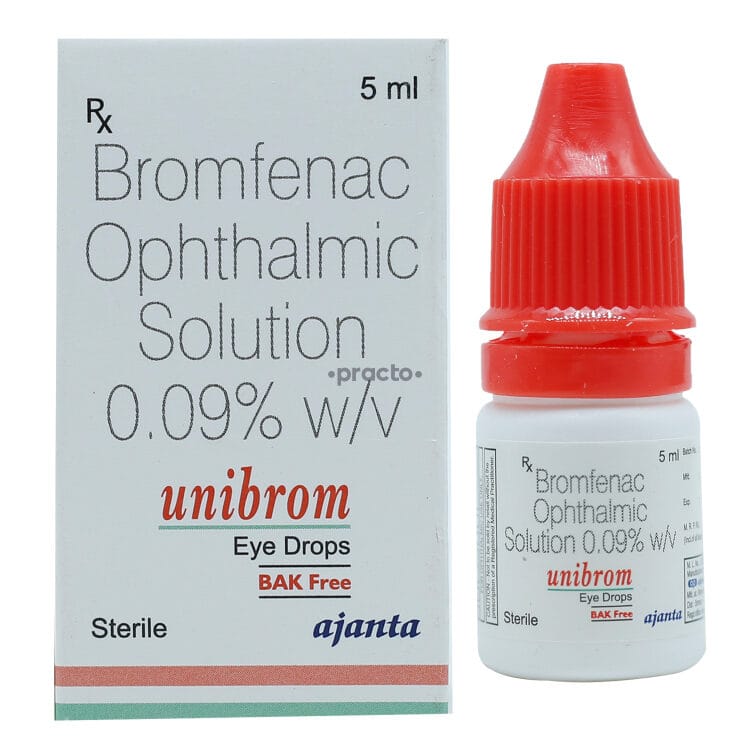
Unibrom (bromfenac 0,09%) — tweemaal daagse NSAID oogdruppel. Profylaxe van post-cataract ontsteking en macula-oedeem. Vermijd langdurig gebruik (risico op cornea-smelting).
✓ Medisch beoordeeld door Morgan Ellis — Apotheekonderzoeker · 8 jaar ervaring · Laatst beoordeeld: mei 2026
⚡ Kort antwoord — Wat is Unibrom oogdruppels?
Unibrom oogdruppels is Bromfenac natrium 0,09%, een NSAID oogdruppel voor postoperatieve pijn en ontsteking, allergische conjunctivitis en preventie van cystoïd macula-oedeem na cataractoperatie. Gebruik 2–4 keer per dag.
📦 Elke bestelling is gedekt door onze Reshipment Assurance-beleid — als uw pakket niet binnen 20 werkdagen arriveert, sturen wij het opnieuw.
Waarom bestellen bij MedsBase
Unibrom oogdruppels worden geleverd door een WHO-GMP gecertificeerde fabrikant en wereldwijd verzonden in eenvoudige, discrete verpakking. Elke bestelling wordt gedekt door onze Reshipment Assurance-beleid — als het niet is aangekomen na 20 werkdagen, sturen wij het opnieuw zonder extra kosten. Ondersteund door meer dan 1.400 geverifieerde klantbeoordelingen.
Wat zijn Unibrom Eye Drops?
Unibrom Eye Drops wordt geproduceerd door Indoco en bevat Bromfenac natrium 0,09% als een steriele oogdruppeloplossing. Topicale NSAID's verminderen ontstekingen door cyclo-oxygenase (COX) enzymen te blokkeren, waardoor de productie van prostaglandinen afneemt. Ze zijn niet-steroïde en vermijden de problemen van topische steroïden zoals verhoogde oogdruk, risico op cataract en immuunsuppressie.
Hoe het werkt
Bromfenac-natrium remt zowel COX-1 als COX-2 (direct) in oculaire weefsels. Het resultaat is verminderde prostaglandinesynthese, minder leukocytenverkeer en verminderde miosis, pijn en ontsteking.
Indicaties
- Postoperatieve oculaire ontsteking na cataractchirurgie, refractieve chirurgie, cornea cross-linking
- Profylaxe van cystoïd macula-oedeem (CME) na cataractchirurgie — vooral bij diabetische patiënten, eerder CME of epiretinaal membraan
- Handhaving van intra-operatieve mydriasis tijdens cataractchirurgie (vermindert miosis door prostaglandineafgifte)
- Seizoensgebonden allergische conjunctivitis — niet eerste keus, maar nuttig wanneer antihistaminica onvoldoende zijn
- Postoperatieve pijnbestrijding — vermindert het gebruik van narcotica na refractieve chirurgie
Dosering
| Indicatie | Dosering |
|---|---|
| Ontsteking na cataract | 1 druppel tweemaal daags gedurende 2 weken |
| CME-profylaxe (hoog risico) | Pre-operatief gedurende 1–3 dagen en vervolgens 4–6 weken postoperatief voortzetten |
| Allergische conjunctivitis | 1 druppel vier keer daags naar behoefte |
Bijwerkingen
Lokaal: prikken bij instillatie (meest voorkomend), conjunctivale hyperemie, vreemd lichaamssensatie, tijdelijk wazig zicht, oculaire jeuk, corneale kleuring bij langdurig gebruik.
Overgevoeligheid: zeldzame bronchospasme bij aspirinegevoelige patiënten, netelroos, angio-oedeem.
Waarschuwingen & Contra-indicaties
- Astma veroorzaakt door aspirine of NSAID's — relatief contra-indicatie
- Reeds bestaande hoornvliesaandoening (ernstige droge ogen, neurotrofe keratitis, herpesinfectie) — verhoogd risico op hoornvliessmelting
- Diabetische keratopathie — verhoogd risico op smelten
- Gelijktijdig gebruik van plaatselijke steroïden — additionele hoornvliestoxiciteit
- Bloedingsneiging of gebruik van antistollingsmiddelen — gering risico op intraoperatieve bloedingen indien preoperatief gebruikt
- Late zwangerschap (derde trimester) — vermijden (theoretisch risico op voortijdige sluiting van de ductus arteriosus bij systemische absorptie; minimaal bij oogdruppels)
- Kinderen — meestal veilig boven de 3 jaar; zelden gebruikt onder die leeftijd
Opslag
Bewaren bij 15–25°C beschermd tegen licht. Na eerste opening 28 dagen houdbaar.
Veelgestelde vragen
Waar worden Unibrom Eye Drops voor gebruikt?
Meestal na cataractoperaties om ontsteking te verminderen, pijn te beheersen en cystoïd macula-oedeem te voorkomen. Ook gebruikt voor allergische conjunctivitis, herstel na refractieve chirurgie en als alternatief voor steroïden bij patiënten met een steroïdenrespons.
Hoe verschillen Unibrom Eye Drops van een steroïde oogdruppel?
NSAID's blokkeren de prostaglandinesynthese zonder het bredere immuunrespons te beïnvloeden. Ze verhogen de intraoculaire druk niet, veroorzaken geen cataract en bevorderen geen virale of schimmelinfecties — wat ze veiliger maakt voor langdurig gebruik. Ze zijn ook minder krachtig bij ernstige ontstekingen; steroïden hebben nog steeds de voorkeur bij actieve uveïtis.
Waarom worden Unibrom Eye Drops gebruikt na een cataractoperatie?
Prostaglandinen die vrijkomen tijdens de operatie veroorzaken pijn, miosis en dragen bij aan cystoïd macula-oedeem (een veelvoorkomende oorzaak van gezichtsverlies na cataract). NSAID's dempen deze reactie. Veel oogartsen gebruiken NSAID's naast steroïden gedurende de eerste 2 weken, waarna ze alleen NSAID's blijven gebruiken gedurende 4–6 weken bij ogen met een hoog risico op CME.
Wat is corneasmelting?
Zeldzaam maar ernstig — het hoornvliesepitheel breekt af en het onderliggende stroma wordt dunner, soms met perforatie tot gevolg. Risicofactoren: lange behandelingsperioden, bestaande hoornvliesaandoeningen, diabetes, gelijktijdig gebruik van lokale steroïden. Stop met de druppels en zoek dezelfde dag hulp bij onverklaarbare toename van pijn of verslechtering van het gezichtsvermogen.
Mag ik autorijden na het gebruik van Unibrom Eye Drops?
Milde wazigheid gedurende 5–10 minuten na toediening. Wacht tot het zicht weer helder is.
Zijn Unibrom Eye Drops veilig tijdens de zwangerschap?
Lokale absorptie is minimaal. Vermijd gebruik in het derde trimester (theoretisch risico op voortijdige sluiting van de ductus arteriosus bij systemische NSAID's). Over het algemeen veilig in eerdere stadia van de zwangerschap wanneer duidelijk geïndiceerd.
Kan ik Unibrom Eye Drops gebruiken met een steroïde oogdruppel?
Ja, maar let op additieve corneatoxiciteit. De combinatie is standaard na cataractoperaties in veel klinieken. Wacht 5 minuten tussen de flesjes.
Wat als ik overgevoelig ben voor aspirine?
Kruisreactiviteit is mogelijk. Vermijd lokale NSAID's als u een voorgeschiedenis heeft van aspirine-geïnduceerd astma of anafylaxie op orale NSAID's.
Wat als ik een dosis vergeet?
Neem het in zodra u eraan denkt, tenzij de volgende geplande dosis dichtbij is.
Hoe lang duurt een typische kuur?
2–6 weken, afhankelijk van de indicatie. Vermijd kuren langer dan 6 weken tenzij onder specialistisch toezicht vanwege cumulatieve corneatoxiciteit.
Andere oogzorgmedicijnen
Klanten die dit product bekijken, overwegen ook deze alternatieven in ons Oogzorg assortiment:
- Pred Forte (prednisolonacetaat)
- FML Eye Drop (fluorometholon)
- Lotepred Eye Drop (loteprednol)
- Acular LS (ketorolac)
- Megabrom (bromfenac)
Medische Disclaimer
De informatie op deze pagina is alleen voor educatieve doeleinden en is geen vervanging voor medisch advies van een gekwalificeerde oogarts of optometrist. Oogaandoeningen kunnen snel een bedreiging vormen voor het gezichtsvermogen — plotseling verlies van gezichtsvermogen, hevige pijn of trauma is een oogheelkundig spoedgeval. Raadpleeg altijd een oogzorgprofessional voordat u een behandeling start, stopt of wijzigt.
Meer opties in ontstekingsremmende en auto-immuunzorg
Gerangschikt op recente bestelvolumes van MedsBase — wat andere klanten in deze categorie kiezen.


| Sterkte | 5 ml |
|---|---|
| Hoeveelheid | 1 Fles/s, 2 Flessen/s, 3 Flessen/s, 6 Flessen/s |
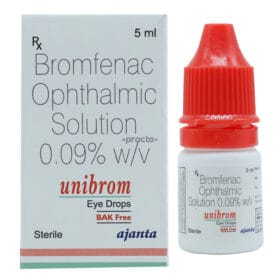 Unibrom Oogdruppels
Vragen & antwoorden
Unibrom Oogdruppels
Gerelateerde producten


Beoordelingen
Er zijn nog geen beoordelingen