







Aquazide
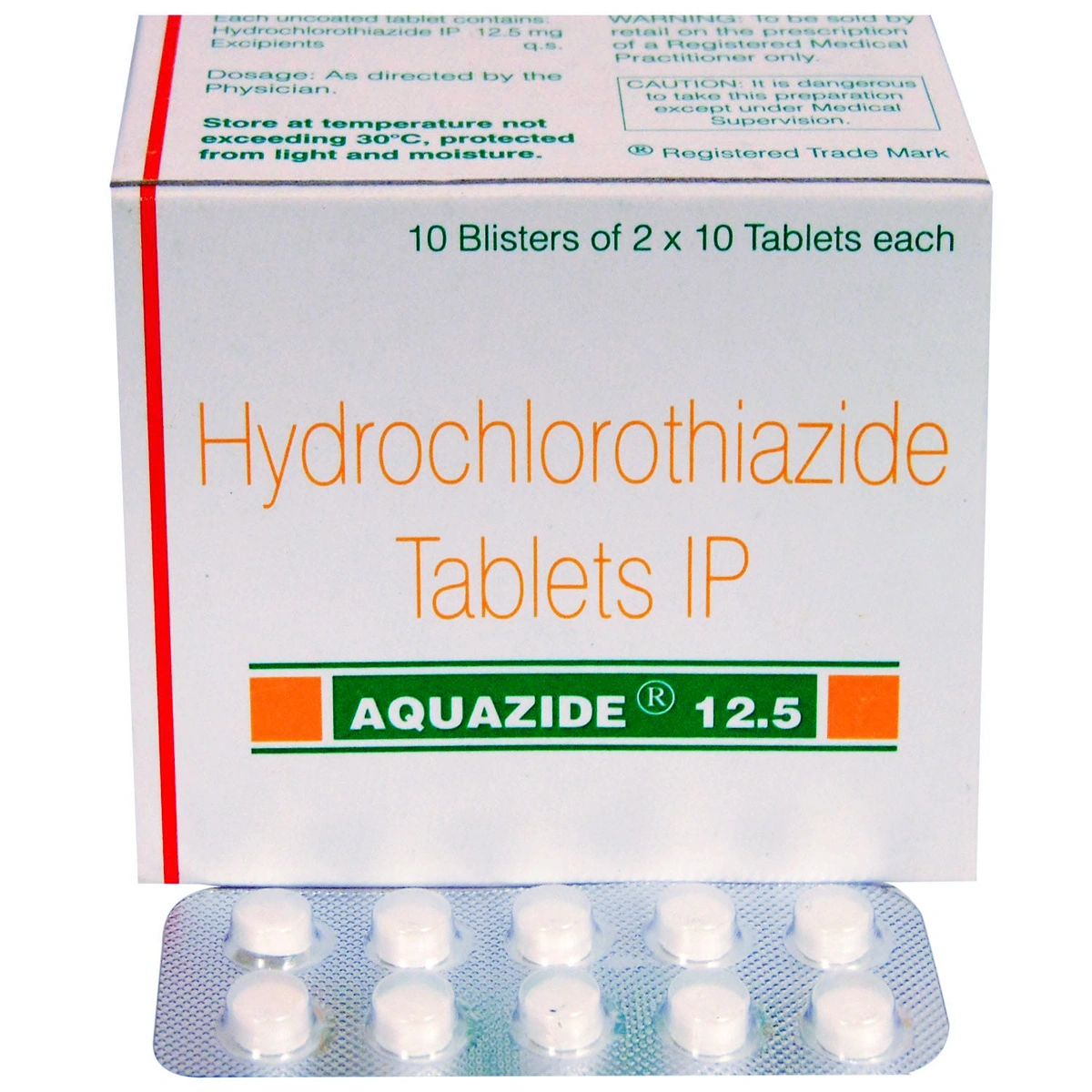
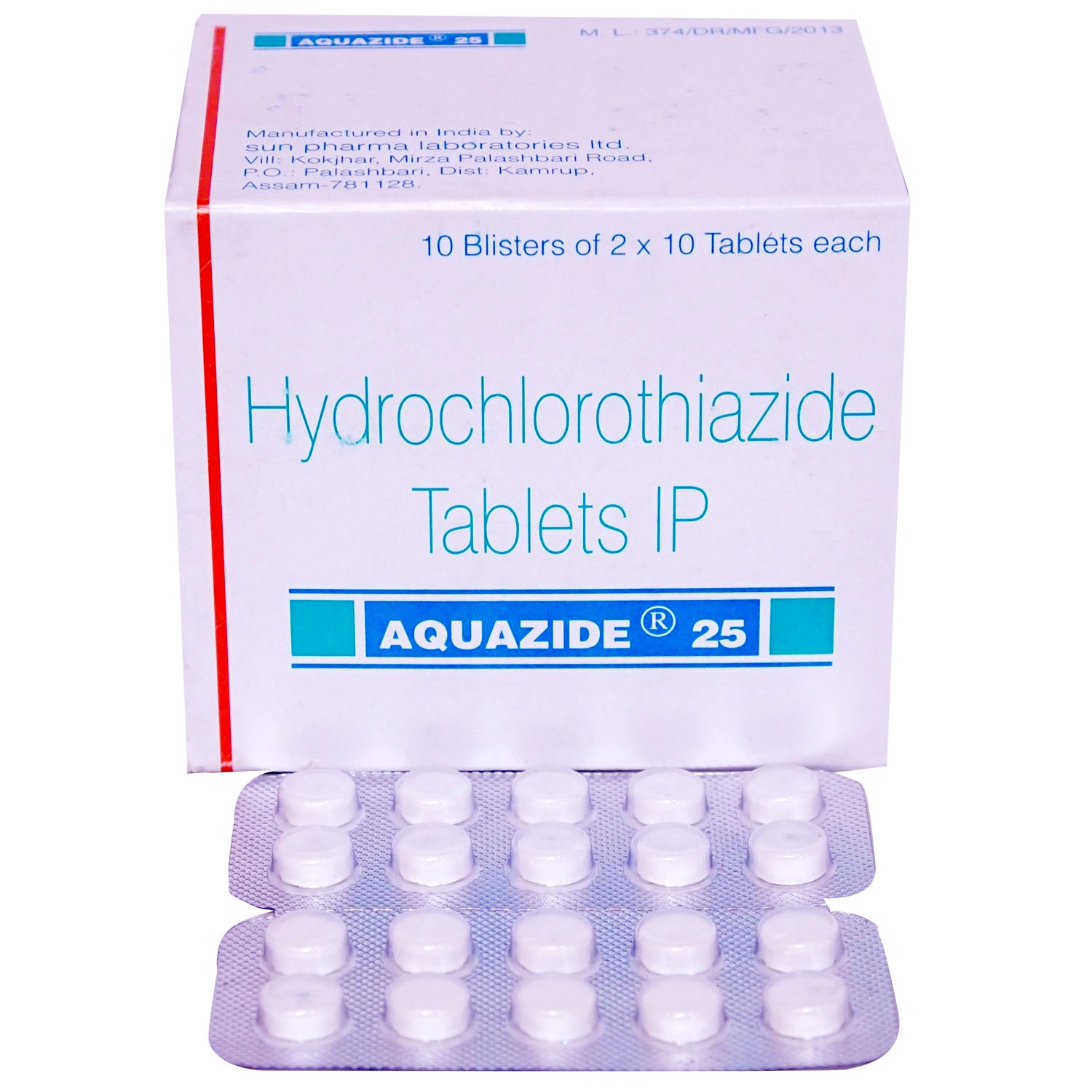
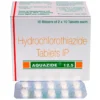
Το Aquazide είναι τα δισκία υδροχλωροθειαζίδης 12,5/25 mg της Sun Pharma — το αναφοράς θειαζιδικό διουρητικό και μία από τις τέσσερις κατηγορίες αντιυπερτασικών φαρμάκων πρώτης γραμμής που συνιστώνται από τις οδηγίες. Αποκλείει την επαναρρόφηση νατρίου στον διστικό σωληνίσκο· αναπτύσσεται μέτρια άμεση αγγειοδιασταλτική δράση σε 2-6 εβδομάδες. Οι σύγχρονες οδηγίες προτιμούν τη χαμηλή δόση 12,5-25 mg για να περιοριστούν οι μεταβολικές παρενέργειες. Στοιχεία από τις μελέτες ALLHAT και SHEP.
✓ Ιατρικά ελεγμένο από Morgan Ellis — Ερευνητής Φαρμακευτικής · 8 χρόνια εμπειρία · Τελευταία αναθεώρηση: Μάιος 2026
⚡ Γρήγορη Απάντηση — Τι είναι το Aquazide;
Aquazide είναι Δισκίο υδροχλωροθειαζίδης 12,5 / 25 mg από τη Sun Pharma — ένα θειαζιδικό διουρητικό (βενζοθειαδιαζινικό σουλφοναμίδιο) που δρα στον NCC (συνεκφορέας νατρίου-χλωρίου) στον διασταλμένο ελικοειδή σωλήνα. Η υδροχλωροθειαζίδη εισήχθη το 1959 από τη Merck Sharp & Dohme ως HydroDiuril — προέρχεται από το σουλφανιλαμίδιο κατά τη διάρκεια του προγράμματος σουλφοναμιδικών-αντιβιοτικών όταν παρατηρήθηκε τυχαία η διουρητική του δράση. Η HCTZ έγινε το αναφοράς θειαζιδικό και αποτελεί αντιυπερτασικό πρώτης γραμμής έκτοτε. Ημιζωή 6-15 ώρες; έναρξη δράσης 2 ώρες; μέγιστη δράση 4-6 ώρες; διάρκεια δράσης 6-12 ώρες. Κύρια ένδειξη: υπέρταση (πρώτης γραμμής· συνιστάται από κατευθυντήριες οδηγίες παράλληλα με ARB, ACEi και CCB). Τυπική δοσολογία: Ξεκινήστε με 12,5 mg μια φορά την ημέρα το πρωί. Στόχος 12,5-25 mg. Μην υπερβείτε τα 25 mg για υπέρταση — οι υψηλότερες δόσεις δίνουν φθίνουσες αποδόσεις στην πίεση αλλά επιδεινώνουν τις μεταβολικές παρενέργειες (ουρικό οξύ, γλυκόζη, λιπίδια). Οι σύγχρονες κατευθυντήριες οδηγίες έχουν απομακρυνθεί από την ιστορική δόση 50 mg για υπέρταση. Βασικές αντενδείξεις: δείτε την πλήρη λίστα παρακάτω. Παρακολουθήστε ηλεκτρολύτες, κρεατινίνη και γλυκόζη. Μην συνδυάζετε με λίθιο (τα θειαζίδια/διουρητικά βρόχου μπορούν να προκαλέσουν τοξικότητα λιθίου). Η χρήση κατά την εγκυμοσύνη εξετάζεται ανά περίπτωση (βλ. σημείωση εγκυμοσύνης). Για τους περισσότερους υπερτασικούς ασθενείς, τα διουρητικά λειτουργούν καλύτερα ως το δεύτερο ή τρίτο φάρμακο — συνήθως συνδυάζονται με ARB, αναστολέα ACE ή αναστολέα διαύλων ασβεστίου παρά να χρησιμοποιούνται μόνα.
📦 Κάθε παραγγελία καλύπτεται από την Πολιτική Εγγύησης Επαναποστολής — εάν το δέμα σας δεν φτάσει εντός 20 εργάσιμων ημερών, το επαναποστέλλουμε.
Γιατί να παραγγείλετε από τη MedsBase
Τα γενόσημα φάρμακά μας προέρχονται από κατασκευαστές που πιστοποιούνται από την WHO-GMP και αποστέλλονται παγκοσμίως σε διακριτική, απλή συσκευασία — χωρίς όνομα φαρμάκου στο εξωτερικό του δέματος. Οι πληρωμές με κάρτα δρομολογούνται μέσω ρυθμισμένου επεξεργαστή (οι περιγραφές εκκαθάρισης περιλαμβάνουν ρυθμισμένο επεξεργαστή πληρωμών με κάρτα — ποτέ “MedsBase” ή οποιοδήποτε όνομα φαρμάκου). Γίνονται δεκτές και πληρωμές με κρυπτονομίσματα και τραπεζική μεταφορά SEPA. Κάθε παραγγελία καλύπτεται από την Πολιτική Επαναποστολής Εξασφαλίσεώς μας.
Τι Είναι το Aquazide;
Το Aquazide είναι δισκίο υδροχλωροθειαζίδης 12,5 / 25 mg για από του στόματος χορήγηση από τη Sun Pharma, διαθέσιμο σε συσκευασίες 30-180 δισκίων. Η υδροχλωροθειαζίδη εισήχθη το 1959 από τη Merck Sharp & Dohme ως HydroDiuril — προέρχεται από το σουλφανιλαμίδιο κατά τη διάρκεια του προγράμματος σουλφοναμιδικών-αντιβιοτικών όταν παρατηρήθηκε τυχαία η διουρητική του δράση. Η HCTZ έγινε το αναφοράς θειαζιδικό και αποτελεί αντιυπερτασικό πρώτης γραμμής έκτοτε.
Πώς λειτουργεί η Υδροχλωροθειαζίδη
Η Υδροχλωροθειαζίδη αναστέλλει την NCC (συνεκφορέας νατρίου-χλωρίου) στον διασταλμένο ελικοειδή σωλήνα. Οι επακόλουθες επιπτώσεις:
- Μειωμένη επαναρρόφηση νατρίου στον μακρινό ελικοειδή σωληνάριο — μια μέτρια (~5%) αύξηση στην απέκκριση νατρίου στα ούρα
- Συστολή όγκου κατά τις πρώτες 1-2 εβδομάδες — αυτός είναι ο κυρίαρχος πρώιμος μηχανισμός μείωσης της πίεσης
- Άμεση δραστηριότητα αγγειοδιαστολής αναπτύσσεται σε 2-6 εβδομάδες — ο κυρίαρχος μακροπρόθεσμος μηχανισμός μείωσης της πίεσης· οι θειαζίδες σε σταθερή κατάσταση μειώνουν την συστηματική αγγειακή αντίσταση ανεξάρτητα από τη συνεχιζόμενη συστολή όγκου
- Ενισχυμένη επαναρρόφηση ασβεστίου στον μακρινό σωληνάριο — αυξάνει μέτρια τα επίπεδα ασβεστίου στο αίμα και μειώνει το ασβέστιο στα ούρα (αξιοποιείται στην πρόληψη λίθων ασβεστίου)
- Μειωμένη εκκαθάριση ελεύθερου νερού — μπορεί να προκαλέσει υπονατριαιμία σε ευάλωτους ασθενείς
- Ενεργοποίηση του συστήματος ρενίνης-αγγειοτενσίνης-αλδοστερόνης ως αντισταθμιστική απόκριση — μερικά εξουδετερώνει την επίδραση πίεσης της μονοθεραπείας· εξουδετερώνεται πλήρως με συνδυασμό με ARB ή αναστολέα ACE (το σκεπτικό για συνδυασμένες δοσολογίες όπως Telma H, Cosart H)
Εγκεκριμένες και Βασισμένες σε Αποδείξεις Χρήσεις
- Υπέρταση (πρώτης γραμμής· σύμφωνα με τις οδηγίες μαζί με ARB, αναστολέα ACE και CCB) — κύρια ενδείξει
- Ήπια οίδημα καρδιακής ανεπάρκειας — προχωρήστε σε διαιρητικό βρόχου εάν δεν ελεγχθεί
- Επαναλαμβανόμενες νεφρικές πέτρες που περιέχουν ασβέστη — 12.5-25 mg μειώνει την έκκριση ασβεστίου και την επανεμφάνιση πέτρας κατά 30-50%
- Νεφρογενής διαβήτης insipidus — παραδοξολογική μείωση της ούρησης σε 25 mg BD
- Οστεοπόρωση — μέτρια ωφέλεια μέσω μειωμένης απώλειας ασβεστίου στα ούρα (μόνο ως συμπληρωματική)
Κυρίαρχες κλινικές δοκιμές: ALLHAT (2002) — η χλορθαλιδόνη (κοντινό ανάλογο θειαζιδικού) δεν είναι κατώτερη από την αμολοδιπίνη και τη λισινοπρίλη για θανάσιμα και μη θανάσιμα καρδιαγγειακά αποτελέσματα σε >33.000 ασθενείς με υπέρταση· καθιέρωσε τα θειαζιδικά ως επιλογή πρώτης γραμμής. SHEP (1991) — η θεραπεία με βάση τη χλορθαλιδόνη μείωσε το εγκεφαλικό επεισόδιο κατά 36% σε μεμονωμένη συστολική υπέρταση ηλικιωμένων. MRFIT, HDFP (1970s-80s) — προηγούμενη βάση αποδεικτικών στοιχείων. Τα δεδομένα μεγάλης κλίμακας για σκληρά αποτελέσματα ειδικά για την HCTZ είναι πιο αδύναμα από αυτά της χλορθαλιδόνης, αλλά θεωρείται ότι υπάρχει επίδραση κλάσης.
Δοσολογία Aquazide
Δοσολογία για υπέρταση: Ξεκινήστε με 12.5 mg μια φορά την ημέρα το πρωί. Στόχος 12.5-25 mg. Μην υπερβείτε τα 25 mg για υπέρταση — οι υψηλότερες δόσεις δίνουν φθίνουσες αποδόσεις στην πίεση αλλά επιδεινώνουν τις μεταβολικές παρενέργειες (ουρικό οξύ, γλυκόζη, λιπίδια). Οι σύγχρονες οδηγίες έχουν απομακρυνθεί από την ιστορική δόση 50 mg για υπέρταση.
Άλλες ενδείξεις: Ήπια οίδημα καρδιακής ανεπάρκειας: 25-50 mg/ημέρα· αυξήστε σε διουρητικό βρόγχου (φουροσεμίδη) εάν δεν ελεγχθεί. Ιδιοπαθής υπερασβεστουρία (επαναλαμβανόμενες πέτρες ασβεστίου): 12,5-25 mg/ημέρα — τα θειαζίδια προάγουν την επαναρρόφηση ασβεστίου στον προπεριφερικό σωληνίσκο και μειώνουν την επανεμφάνιση πέτρας κατά 30-50%. Νεφρογενής διαβήτης insipidus: 25 mg δύο φορές ημερησίως μειώνει παραδόξως την παραγωγή ούρων.
Χορήγηση: μία φορά την ημέρα (ή δύο φορές την ημέρα για υψηλές δόσεις θηλακικών διουρητικών σε καρδιακή ανεπάρκεια), το πρωί. Η χορήγηση το βράδυ προκαλεί νυκτουρία και θα πρέπει να αποφεύγεται όταν είναι δυνατόν. Λήψη την ίδια ώρα κάθε μέρα. Η τροφή δεν επηρεάζει σημαντικά την απορρόφηση για κανένα από αυτά τα διουρητικά.
Πρόγραμμα παρακολούθησης:
- Βασική αξιολόγηση: ουρία, ηλεκτρολύτες (ειδικά κάλιο και νάτριο), κρεατινίνη, eGFR, γλυκόζη, ουρικό οξύ ορού. Οικιακή ή κλινική πίεση και καθημερινό βάρος για ασθενείς με καρδιακή ανεπάρκεια.
- 1-2 εβδομάδες μετά την έναρξη ή αλλαγή δόσης: επαναλαμβανόμενη U&E και κρεατινίνη. Αναμένεται ήπια μεταβολή των ηλεκτρολυτών· διερεύνηση σημαντικών αλλαγών.
- 4-6 εβδομάδες: αξιολόγηση πίεσης και πλήρης μεταβολικό προφίλ.
- Συνεχής παρακολούθηση: ετήσια U&E, ουρικό οξύ, γλυκόζη και λιπιδαίο προφίλ μόλις σταθεροποιηθεί. Πιο συχνά σε χρόνια νεφρική νόσο, καρδιακή ανεπάρκεια ή σε συνδυασμένη θεραπεία.
- Διακοπή ή μείωση δόσης σε περίπτωση: νάτριο <130 με συμπτώματα, κάλιο 5.5, αύξηση κρεατινίνης >30%, νεαρή ουρική αρθρίτιδα, συμπτώματα σοβαρής αφυδάτωσης.
Διακοπή: δεν υπάρχει σύνδρομο στέρησης αλλά η απότομη διακοπή μπορεί να προκαλέσει ανάκαμψη όγκου σε ασθενείς με χρόνια καρδιακή ανεπάρκεια σε χρόνια υψηλή δόση θηλακικών διουρητικών — σταδιακή μείωση όπου είναι δυνατόν και παρακολούθηση βάρους.
- Χάνει την αποτελεσματικότητα σε eGFR <30. Αλλάξτε σε διουρητικό βρόγχου (φουροσεμίδη, τορασεμίδη) σε προχωρημένη ΧΑΝ — τα θειαζίδια απαιτούν λειτουργική παράδοση νατρίου στον προπεριφερικό σωληνίσκο.
- Αυξάνει το ορρό ασβεστίου (παράδοξο: τα θειαζίδια ενισχύουν την επαναρρόφηση ασβεστίου στον προπεριφερικό σωληνίσκο). Χρήσιμο σε ασθενείς με οστεοπόρωση· προβληματικό σε καταστάσεις υπερασβεστιαιμίας (πρωτοπαθής υπερπαραθυρεοειδισμός, σαρκοείδωση).
- Εξάνθημα φωτοευαισθησίας είναι ειδικό αποτέλεσμα της κατηγορίας θειαζιδίων — συμβουλεύστε προστασία από τον ήλιο σε ηλιόλουστες περιοχές.
- Διασταυρωμένη ευαισθησία στα σουλφοναμίδια — αποφύγετε σε σοβαρή αλλεργία σε σουλφα (σπάνια· τα μη αντιβιοτικά σουλφοναμίδια σπάνια διασταυρώνονται).
Παρενέργειες
Συχνά (>1%):
- Υποκαλιαιμία (3-5%) — πιο συχνή σε δόσεις >25 mg· σε μεγάλο βαθμό αποτρέπεται όταν συνδυάζεται με ACEi/ARB
- Υπονατριαιμία (2-5%) — ιδιαίτερα σε ηλικιωμένες γυναίκες με δίαιτα χαμηλή σε αλάτι· μπορεί να είναι σοβαρή
- Υπερουριχαιμία και πρόκληση ουρικής πέψης
- Μέτρια επιδείνωση της γλυκόζης (γλυκόζη νηστείας +5-8 mg/dL κατά μέσο όρο)
- Μικρή αύξηση LDL και τριγλυκεριδίων
- Ανικανότητα στύσης σε ορισμένους άνδρες — εξαρτάται από τη δόση
- Υπερκαλσιναιμία (συνήθως ήπια)
- Εξάνθημα φωτοευαισθησίας
Σπάνια αλλά κλινικά σημαντικά:
- Σοβαρή υπονατριαιμία — ιδιαίτερα σε ηλικιωμένους με δίαιτα χαμηλής αλατότητας, καταστάσεις με τάση για SIADH ή σε συνδυασμό με SSRIs. Μπορεί να εκδηλωθεί ως σύγχυση, πτώσεις ή σπασμοί.
- Παγκρεατίτιδα — σπάνια επίδραση κλάσης θειαζιδικών/βρόγχων· διακοπή άμεσα σε περίπτωση άνω κοιλιακού πόνου με αύξηση λιπάσης
- Θρομβοκυτταροπενία, λευκοπενία, αγκρανουλοκυττάρωση — σπάνιες υπερευαισθησικές αντιδράσεις (πιο συχνές με θειαζίδια παρά με βρόγχους)
- Οξεία μυωπία και γλαύκωμα κλειστής γωνίας — σπάνια αντίδραση κλάσης σουλφοναμιδών εντός ωρών ή ημερών από την έναρξη· διακοπή άμεσα σε περίπτωση ξαφνικού οφθαλμικού πόνου ή αλλαγής όρασης
- Σύνδρομο Stevens-Johnson / τοξική επιδερμική νεκρόλυση — εξαιρετικά σπάνιο αλλά έχει αναφερθεί
Αντενδείξεις
- Ανουρία ή σοβαρή νεφρική δυσλειτουργία (eGFR <30) — χάνει την αποτελεσματικότητα
- Υπερευαισθησία σε σουλφοναμίδια (σουλφα)
- Συμπτωματική υπονατριαιμία (Na <130) ή υποκαλιαιμία (K <3.0) κατά τη βασική αξιολόγηση
- Υπερκαλσιναιμία
- Σοβαρή ηπατική δυσλειτουργία (Child-Pugh C)
- Νόσος Addison (πρωτογενής επινεφριδιακή ανεπάρκεια)
Εγκυμοσύνη: γενικά αποφεύγονται — οι θειαζίδες διασχίζουν τον πλακούντα και μπορούν να προκαλέσουν νεογνική ίκτερο ή θρομβοπενία. Χρησιμοποιείστε μόνο εάν το όφελος υπερτερεί σαφώς του κινδύνου (ανθεκτική υπέρταση σε προχωρημένη εγκυμοσύνη), υπό ειδικευμένη φροντίδα.
Θηλασμός: γενικά αποδεκτές σε χαμηλές δόσεις· οι υψηλές δόσεις μπορούν να καταστείλουν τη γαλουχία (ειδικά οι θειαζίδες). Προτιμώνται εναλλακτικά αντιυπερτασικά (προπρανόλολ, νιφεδιπίνη) όταν είναι δυνατόν.
Αλληλεπιδράσεις Φαρμάκων
- Λίθιο — ΚΡΙΣΙΜΗ ΑΛΛΗΛΕΠΙΔΡΑΣΗ. Οι θειαζίδες και οι διουρητικοί βρόγχου μειώνουν την νεφρική κάθαρση του λιθίου και μπορούν να προκαλέσουν τοξικότητα λιθίου. Αποφύγετε τον συνδυασμό εάν είναι δυνατόν· εάν είναι αναπόφευκτος, παρακολουθήστε τα επίπεδα λιθίου εβδομαδιαία για τον πρώτο μήνα και μειώστε τη δόση λιθίου κατά 25-50%.
- Μη στεροειδή αντιφλεγμονώδη φάρμακα (NSAIDs) — μειώνουν τη διουρητική επίδραση (μέσω αναστολής προσταγλανδινών) και αυξάνουν σημαντικά τον κίνδυνο οξείας νεφρικής βλάβης όταν συνδυάζονται με ACEi/ARB (το “τριπλό χτύπημα”). Χρησιμοποιείτε προτιμησιακά παρακεταμόλη για χρόνιο πόνο.
- Αναστολείς ACE και ARBs — ο συνδυασμός είναι στάνταρτ και ωφέλιμος στην υπέρταση· η προσθήκη ACEi/ARB αναστέλλει την αντισταθμιστική ενεργοποίηση RAAS και ενισχύει τη διουρητική επίδραση. Παρακολουθήστε κάλιο και κρεατινίνη.
- Προσθήκες καλίου και διουρητικά που εξοικονομούν κάλιο — συχνά απαιτούνται για να αντισταθμιστεί η υποκαλιαιμία που προκαλείται από διουρητικά βρόγχου/θειαζίδες. Παρακολουθήστε το κάλιο· αποφύγετε την υπερδιόρθωση.
- Ντιγκοξίνη — η υποκαλιαιμία ενισχύει την τοξικότητα διγοξίνης (διουρητικά βρόγχου και θειαζίδες)· η σπιρονολακτόνη μειώνει άμεσα την κάθαρση διγοξίνης. Παρακολουθήστε τα επίπεδα διγοξίνης και καλίου κατά την έναρξη ή αλλαγή διουρητικού.
- Στοματικοί κορτικοστεροειδείς, αμφοτερικίνη Β, διεγερτικά καθαρτικά — πρόσθετη υποκαλιαιμία (διουρητικά βρόγχου/θειαζίδες) ή κρυμμένη ανάγκη για κάλιο (σπιρονολακτόνη).
- Στοματικά αντιδιαβητικά φάρμακα, ινσουλίνη — οι θειαζίδες και (λιγότερο) τα διουρητικά βρόγχου επιδεινώνουν την ανοχή στη γλυκόζη· μπορεί να απαιτούνται προσαρμογές δόσης.
- Χοληστυραμίνη / κολεστιπόλη — μειώνει την απορρόφηση των θειαζιδικών και των θηλυκωδών διουρητικών κατά 40-85%. Χωρίστε τη δόση κάθε 4 ώρες.
- Αλκοόλ — πρόσθετη ορθοστατική υπόταση.
Πού Τοποθετείται το Aquazide στην Κλάση των Διουρητικών
| Κατηγορία | Εκπρόσωποι | Τυπική χρήση |
|---|---|---|
| Θειαζίδιο | HCTZ, χλορθαλιδόνη | Πρώτη γραμμή για υπέρταση, πέτρες νεφρών, νεφρογενή ΔΙ |
| Θειαζιδικό | Ινδαπαμίδη, μετολαζόνη | Υπέρταση (ηλικιωμένοι, στοιχεία HYVET), διαδοχική νεφρική αποκλεισμός |
| Βρόγχος (βραχύβιος) | Φουροσεμίδη, βουμετανίδη | Οξύ πνευμονικό οίδημα, καρδιακή ανεπάρκεια, ασκίτης, υπερκαλιαιμία |
| Βρόγχος (μακρόβιος) | Τορασεμίδη | Χρόνια καρδιακή ανεπάρκεια, υπέρταση (μόνο βρόγχος με στοιχεία υπέρτασης), νεφρική ανεπάρκεια με οίδημα |
| Ανταγωνιστής αλδοστερόνης | Σπιρονολακτόνη, επλερενόνη | Καρδιακή ανεπάρκεια με μειωμένο κλάσμα εξώσεως (RALES), ανθεκτική υπέρταση (PATHWAY-2), σύνδρομο Conn, κιρρωτικός ασκίτης |
| Άλλα διατηρούντα κάλιο | Αμιλορίδη, τριαμτερένη (συνήθως σε συνδυασμούς) | Πρόληψη υποκαλιαιμίας όταν προστίθεται σε βρόγχο/θειαζίδιο |
| Ανθρακική ανυδράση | Ακεταζολαμίδη | Υψοφοβία, γλαύκωμα, μεταβολική αλκάλωση |
Αποθήκευση
Φυλάξτε το Aquazide κάτω από 25°C στην αρχική του συσκευασία. Κρατήστε το μακριά από παιδιά.
Συχνές Ερωτήσεις
Πότε πρέπει να παίρνω το Aquazide — το πρωί ή το βράδυ;
Πρωί σχεδόν σε όλες τις περιπτώσεις. Το διουρητικό αποτέλεσμα προκαλεί αυξημένη ούρηση για 2-4 ώρες μετά τη χορήγηση. Η χορήγηση το βράδυ προκαλεί νυκτουρία και διαταράσσει τον ύπνο. Οι ασθενείς που λαμβάνουν διουρητικά βρόγχου δύο φορές την ημέρα συνήθως τα παίρνουν στο πρωινό και το πρώτο απόγευμα (όχι πριν τον ύπνο).
Είναι το Aquazide φάρμακο πρώτης γραμμής για την υπέρταση;
Ναι — οι θειαζίδες (HCTZ, χλωρθαλιδόνη) και παρόμοιες ουσίες (ινδαπαμίδη) είναι μία από τις τέσσερις κατηγορίες αντιυπερτασικών πρώτης γραμμής μαζί με τους ARB, τους αναστολείς ACE και τους αναστολείς των αγωγών ασβεστίου. Για τους περισσότερους νεοδιαγνωσμένους υπερτασικούς ασθενείς, μια θειαζίδη είναι ένα λογικό πρώτο ή δεύτερο φάρμακο, και σχεδόν όλοι οι ασθενείς σε πολυφαρμακευτική αγωγή περιλαμβάνουν μία.
Θα επηρεάσει το Aquazide το κάλιο μου;
Ναι — το Aquazide μειώνει το κάλιο αυξάνοντας την έκκριση καλίου στον μακρινό σωλήνα. Παρακολουθήστε στην αρχή, σε 1-2 εβδομάδες και περιοδικά. Ο κίνδυνος υποκαλιαιμίας είναι ελαχιστοποιείται με τον συνδυασμό Το Aquazide με ARB ή αναστολέα ACE — που είναι και ο τυπικός συνδυασμός στην υπέρταση. Εάν το κάλιο πέσει κάτω από 3,5 σε απομονωμένη χρήση διουρητικού, προσθέστε συμπλήρωμα καλίου, δίαιτα πλούσια σε κάλιο ή μικρή δόση φαρμάκου που εξοικονομεί κάλιο (σπιρονολακτόνη, επλερενόνη ή έναν συνδυασμό που περιέχει αμιλορίδη).
Έχω ουρική αρθρίτιδα — μπορώ να πάρω το Aquazide;
Με προσοχή. Τα θειαζιδικά και (λιγότερο) τα διουρητικά βρόχου αυξάνουν το ουρικό οξύ στο αίμα ανταγωνιζόμενα την έκκριση στο εγγύς σωληναρίο. Σε ασθενείς με τάση για ουρική αρθρίτιδα: προτιμήστε συνδυασμούς με λοζαρτάνη (Cosart H, Cozartan H) του οποίου το συστατικό λοσαρτάνης είναι μοναδικά ουρικοουρητικό και αντισταθμίζει την αύξηση των ουρικών από το θειαζίδιο. Εάν το Aquazide χρησιμοποιείται ήδη και εμφανιστούν επιδείνωση της ουρικής αρθρίτιδας, προσθέστε ή συνεχίστε την θεραπεία μείωσης των ουρικών (αλλοπουρινόλη) αντί να διακόψετε το Aquazide εντελώς.
Είμαι διαβητικός — είναι ασφαλές το Aquazide;
Κυρίως ναι, αλλά να γνωρίζετε ότι οι θειαζίδες και (σε μικρότερο βαθμό) οι θηλακικοί διουρητικοί επηρεάζουν μέτρια την ανοχή στη γλυκόζη (μέση αύξηση γλυκόζης νηστείας 5-8 mg/dL, HbA1c 0,1-0,3%). Το όφελος για την αρτηριακή πίεση υπερτερεί αυτού στους περισσότερους διαβητικούς. Εάν θέλετε έναν πιο μεταβολικά ουδέτερο συνδυασμό, το ARB+CCB είναι μια εναλλακτική (Olmezest AM).
Μπορώ να πάρω ιβουπροφαίνη με το Aquazide;
Η περιστασιακή βραχυπρόθεσμη χρήση είναι συνήθως εντάξει. Η χρόνια ημερήσια χρήση NSAIDs (ιβουπροφαίνη, διχλοφαινάκη, ναπροξένη) μειώνει το διουρητικό και αντιυπερτασικό αποτέλεσμα του Aquazide (αποκλεισμός προσταγλανδινών) και αυξάνουν σημαντικά τον κίνδυνο οξείας νεφρικής βλάβης όταν συνδυάζονται με αναστολέα ΜΕΑ ή ARB — το “τριπλό χτύπημα”. Χρησιμοποιείτε προτιμητέο παρακεταμόλη για χρόνιο πόνο.
Θα ουρώ περισσότερο τη νύχτα;
Συνήθως όχι, εάν παίρνετε το Aquazide το πρωί. Το διουρητικό αποτέλεσμα κορυφώνεται 2-4 ώρες μετά τη λήψη και έχει κυρίως εξασθενήσει μέχρι το βράδυ. Η νυκτουρία είναι μια κοινή παράπονο όταν οι ασθενείς αλλάζουν σε βραδινή λήψη· επιστρέψτε στην πρωινή λήψη και η νυκτουρία επιλύεται εντός 1-3 ημερών.
Μπορώ να πάρω το Aquazide κατά τη διάρκεια της εγκυμοσύνης;
Αποφεύγεται συνήθως. Τα θειαζίδια διασχίζουν τον πλακούντα και μπορούν να επηρεάσουν το έμβρυο. Για υπέρταση στην εγκυμοσύνη, αλλάξτε σε λαβεταλόλη, μεθυldopa ή νιφεδίπη. Τα διουρητικά χρησιμοποιούνται στην εγκυμοσύνη μόνο για συγκεκριμένες ενδείξεις (πνευμονικό οίδημα, ανθεκτική καρδιακή ανεπάρκεια) υπό ειδική επίβλεψη.
Τι γίνεται αν χάσω μια δόση;
Πάρτε το μόλις το θυμηθείτε, εκτός αν είναι σχεδόν ώρα για την επόμενη δόση σας — σε αυτή την περίπτωση παραλείψτε τη χαμένη δόση. Μην πάρετε διπλή δόση. Μία μόνο χαμένη δόση δεν επηρεάζει σημαντικά τον μακροπρόθεσμο έλεγχο της πίεσης ή των υγρών.
Πού μπορώ να αγοράσω το Aquazide online;
Μπορείτε να αγοράσετε το Aquazide (12.5 / 25 mg υδροχλωροθειαζίδη, 30-180 δισκία) από το MedsBase με διακριτική συσκευασία και παγκόσμια αποστολή.
Σχετικά Αντιυπερτασικά & Διουρητικά στο MedsBase
- Aldactone — Σπιρονολακτόνη 25 mg (ανταγωνιστής αλδοστερόνης)
- Cosart H — Λοσαρτάνη + HCTZ σταθερός συνδυασμός
- Dytor — Τορασεμίδη (βρόγχος, πιο προβλέψιμη βιοδιαθεσιμότητα)
- Hydrocl — Hydrochlorothiazide (HCTZ)
- Losar — Λοσαρτάνη (ARB συνεργάτης για διουρητικό)
- Telma H — Σταθερός συνδυασμός Τελμισαρτάνης + HCTZ
- Περιήγηση σε όλα τα Φάρμακα για Υψηλή Πίεση Αίματος
Σχετικές Εναλλακτικές
Άλλα προϊόντα σε Χρόνιες Παθήσεις που οι πελάτες εξετάζουν επίσης:
Περισσότερες επιλογές σε φάρμακα για υψηλή πίεση αίματος
Ταξινομημένα σύμφωνα με τον όγκο παραγγελιών στο MedsBase — τι επιλέγουν άλλοι πελάτες σε αυτήν την κατηγορία.
| Ισχύς | 12,5 mg, 25 mg |
|---|---|
| Ποσότητα | 30 δισκία, 60 δισκία, 90 δισκία, 180 δισκία |
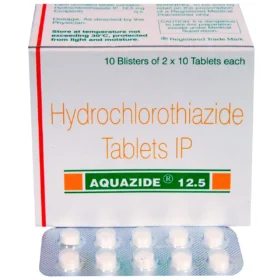 Aquazide
Ερωτήσεις & Απαντήσεις
Aquazide
Σχετικά προϊόντα



Κριτικές
Δεν υπάρχουν ακόμη κριτικές