









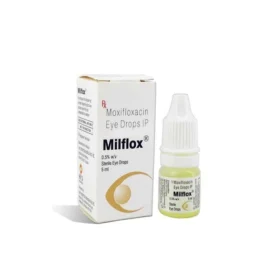
Milflox Οφθαλμικές σταγόνες
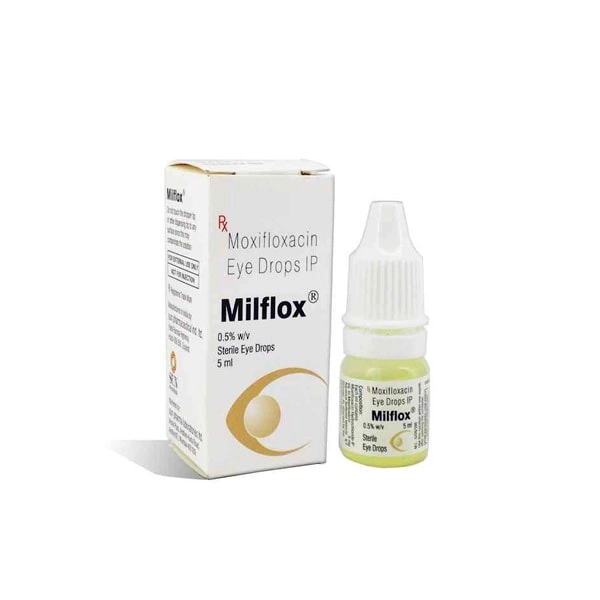
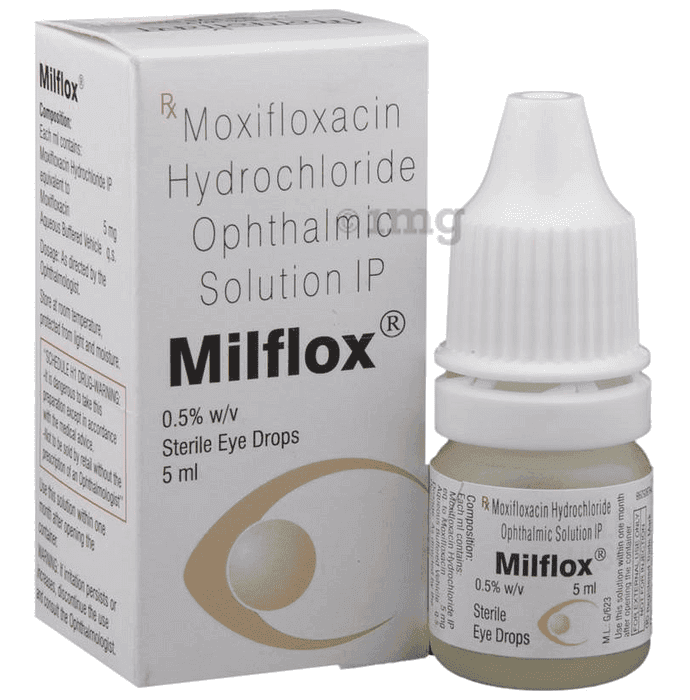

Milflox (μοξιφλοξασίνη 0,5%) — σταγόνες οφθαλμού τετάρτης γενιάς φθοροκινολόνης για βακτηριακή κοινιουγκτίτιδα και κερατοελκές. Αυτοσυντηρούμενες — προτιμώνται για ανθεκτικά Gram-θετικά.
✓ Ιατρικά ελεγμένο από Morgan Ellis — Ερευνητής Φαρμακευτικής · 8 χρόνια εμπειρία · Τελευταία αναθεώρηση: Μάιος 2026
⚡ Γρήγορη Απάντηση — Τι είναι οι Στάλτες Milflox;
Οι Στάλτες Milflox είναι Μοξιφλοξασίνη 0,5%, μια σταγόνα οφθαλμού αντιβιοτικού τετάρτης γενιάς φθοροκινολόνης για βακτηριακή κοινιουγκτίτιδα, βλεφαρίτιδα και κερατοελκές. Χρησιμοποιείται 4–6 φορές ημερησίως για 5–7 ημέρες. Η μοξιφλοξασίνη τετάρτης γενιάς έχει την ευρύτερη κάλυψη Gram-θετικών.
📦 Κάθε παραγγελία καλύπτεται από την Πολιτική Εγγύησης Επαναποστολής — εάν το δέμα σας δεν φτάσει εντός 20 εργάσιμων ημερών, το επαναποστέλλουμε.
Γιατί να παραγγείλετε από τη MedsBase
Οι Στάλτες Milflox προέρχονται από έναν κατασκευαστή πιστοποιημένο από τον WHO-GMP και αποστέλλονται παγκοσμίως σε απλή, διακριτική συσκευασία. Κάθε παραγγελία καλύπτεται από την Πολιτική Εγγύησης Επαναποστολής — εάν δεν έχει φτάσει μετά από 20 εργάσιμες ημέρες, το ξαναστέλνουμε χωρίς επιπλέον κόστος. Υποστηρίζεται από πάνω από 1,400 επαληθευμένες κριτικές πελατών.
Τι είναι οι Στάλτες Milflox;
Οι Στάλτες Milflox κατασκευάζονται από τη Sun Pharma και περιέχουν Μοξιφλοξασίνη 0,5% ως στείρη οφθαλμική λύση. Είναι ένα αντιβιοτικό φθοροκινολόνης τετάρτης γενιάς που χρησιμοποιείται για βακτηριακές λοιμώξεις των ματιών.
Πώς Λειτουργεί
Η μοξιφλοξασίνη αναστέλλει την βακτηριακή DNA γυράση (τοποϊσομεράση II) και την τοποϊσομεράση IV, τα ένζυμα που είναι υπεύθυνα για την ξετύλιξη και την επανατύλιξη της βακτηριακής DNA. Χωρίς αυτά τα ένζυμα το βακτήριο δεν μπορεί να αναπαραχθεί ή να επισκευάσει ζημιά DNA, οδηγώντας σε θάνατο του βακτηριακού κυττάρου. Επειδή το μάτι δεν έχει ισοδύναμα ένζυμα, τα κύτταρα του ξενιστή δεν επηρεάζονται σε θεραπευτικές συγκεντρώσεις.
Ενδείξεις
- Βακτηριακή κοινουγκτίτιδα — επιβεβαιωμένη ή ισχυρά ύποπτη (πυώδης έκκριση, κολλημένες βλεφαρίδες κατά την ξύπνηση, χωρίς ταυτόχρονα συμπτώματα άνω αναπνευστικού)
- Βακτηριακή βλεφαρίτιδα — όταν η συντηρητική υγιεινή των βλεφάρων αποτυγχάνει
- Βακτηριακό έλκος κερατοειδούς / κερατίτιδα — υπό την επίβλεψη οφθαλμίατρου· απαιτείται εντατική δοσολογία ανά ώρα
- Προ- / μετεγχειρητική προφύλαξη — καταρράκτης, μεταμόσχευση κερατοειδούς, υαλοειδεκτομή
- Κερατίτιδα σχετιζόμενη με φακούς επαφής — η κάλυψη για Pseudomonas είναι κρίσιμη
Χορήγηση
| Ενδείξεις | Δόση |
|---|---|
| Βακτηριακή κοινουγκτίτιδα | 1–2 σταγόνες κάθε 2 ώρες ενώ είναι ξύπνιος για 2 ημέρες, έπειτα 1–2 σταγόνες κάθε 4 ώρες για 5 ακόμη ημέρες |
| Έλκος κερατοειδούς (ειδικός) | 2 σταγόνες κάθε 15 λεπτά για τις πρώτες 6 ώρες, έπειτα κάθε 30 λεπτά μέχρι το τέλος της 1ης ημέρας, έπειτα ανά ώρα μέχρι το τέλος της 2ης ημέρας, έπειτα 4 φορές ημερησίως |
| Προεγχειρητική προφύλαξη | 1 σταγόνα QID για 1–3 ημέρες πριν από τη χειρουργική επέμβαση |
| Μετεγχειρητικά | 1 σταγόνα QID για 7–14 ημέρες μετά την εγχείρηση |
Παρενέργειες
Τοπικά: τσούξιμο, καύση κατά τη χορήγηση (πιο συχνό), υπεραιμία επιπεφυκότος, αίσθηση ξένου σώματος, κρούστας στα βλέφαρα, κνησμός οφθαλμού, φωτοφοβία.
Συστημικές (σπάνιες): κεφαλαλγία, ναυτία, διαταραχή γεύσης.
Αλλεργικές αντιδράσεις: Η άμεσου τύπου υπερευαισθησία είναι σπάνια αλλά έχει αναφερθεί. Διακόψτε τη χρήση εάν εμφανιστεί εξάνθημα, οίδημα ή σοβαρός κνησμός.
Ειδοποιήσεις & Αντενδείξεις
- Υπερευαισθησία σε φθοροκινολόνες (σιπροφλοξασίνη, λεβοφλοξασίνη, μοξιφλοξασίνη, νορφλοξασίνη, οφλοξασίνη)
- Ιογενής κερατίτιδα (herpes simplex, varicella zoster) — οι φθοροκινολόνες δεν αντιμετωπίζουν ιογενείς λοιμώξεις· η ταυτόχρονη ιογενής κερατίτιδα μπορεί να επιδεινωθεί εάν προστεθούν τοπικά στεροειδή ακατάλληλα
- Μυκητιασική κερατίτιδα
- Acanthamoeba κερατίτιδα (ειδικά σε χρήστες επαφών)
- Εγκυμοσύνη/θηλασμός — ελάχιστη συστημική απορρόφηση από οφθαλμικές σταγόνες· συνήθως αποδεκτό, αλλά συζητήστε με τον ιατρό
- Παιδιά — συνήθως ασφαλές από την ηλικία του 1 έτους για επιπεφυκίτιδα· η δοσολογία για έλκος κερατοειδούς απαιτεί ειδική επίβλεψη.
Αποθήκευση
Αποθηκεύστε σε θερμοκρασία 15–25°C προστατευμένο από το φως. Απορρίψτε 28 ημέρες μετά την πρώτη άνοιξη. Μην αγγίζετε την άκρη του σταγονόμετρου με το μάτι σας ή οποιαδήποτε επιφάνεια.
Συχνές Ερωτήσεις
Πότε πρέπει να χρησιμοποιώ το Milflox Eye Drop;
Όταν υπάρχει υποψία βακτηριακής επιπεφυκίτιδας: παχύ κιτρινοπράσινο πυώδες εκκρίνον, κολλημένες βλεφαρίδες κατά το ξύπνημα, απουσία ανώτερων αναπνευστικών συμπτωμάτων, συχνά μονόπλευρη. Τα περισσότερα κόκκινα μάτια είναι ιογενή ή αλλεργικά — τα αντιβιοτικά σταγόνες δεν είναι πρώτη γραμμή για αυτές τις περιπτώσεις.
Πόσο καιρό πρέπει να χρησιμοποιώ το Milflox Eye Drop;
5–7 ημέρες για επιπεφυκίτιδα. Τα συμπτώματα συνήθως βελτιώνονται εντός 48 ωρών· ολοκληρώστε την πλήρη θεραπεία ακόμα κι αν τα μάτια φαίνονται κανονικά. Η παρατεταμένη χρήση (> 14 ημέρες) προκαλεί ανθεκτικότητα.
Μπορώ να φοράω φακούς επαφής ενώ χρησιμοποιώ το Milflox Eye Drop;
Όχι. Σταματήστε να φοράτε φακούς για τη διάρκεια της θεραπείας και για τουλάχιστον 24 ώρες μετά την εξαφάνιση των συμπτωμάτων. Η κερατίτιδα που σχετίζεται με φακούς επαφής απαιτεί συγκεκριμένα τη διακοπή των φακών ως μέρος της θεραπείας.
Τι είναι η λευκή ίζημα που βλέπω στο μάτι;
Θα πρέπει να είναι σπάνιο με τη Moxifloxacin. Αν δείτε κρυσταλλικές εναποθέσεις, επικοινωνήστε με τον οφθαλμίατρό σας.
Είναι το Milflox Eye Drop ασφαλές κατά την εγκυμοσύνη;
Η τοπική απορρόφηση είναι ελάχιστη και οι οφθαλμικές φθοροκινολόνες γενικά θεωρούνται ασφαλείς κατά την εγκυμοσύνη όταν υπάρχει σαφής ένδειξη. Συζητήστε με τον ιατρό σας.
Τι γίνεται αν τα συμπτώματα δεν βελτιωθούν σε 48 ώρες;
Επανεκτιμήστε τη διάγνωση. Η λοίμωξη μπορεί να είναι ιογενής, μυκητιασική ή αμοιβαδική — οι φθοροκινολόνες δεν αντιμετωπίζουν καμία από αυτές. Τα επίμονα ή επιδεινούμενα συμπτώματα απαιτούν άμεση οφθαλμολογική επανεξέταση.
Γιατί να μην χρησιμοποιώ απλώς το Milflox Eye Drop για οποιοδήποτε κόκκινο μάτι;
Η πλειονότητα των περιπτώσεων οξείας κοιντζυγκτιβίτιδας είναι ιογενής (αδενοϊός) ή αλλεργικής φύσης. Τα τοπικά αντιβιοτικά δεν προσφέρουν κανένα όφελος σε αυτές τις περιπτώσεις και συμβάλλουν στην ανάπτυξη ανθεκτικών στελεχών S. pneumoniae και S. aureus στα φθοροκινολόνια.
Τι γίνεται αν έχω αλλεργική αντίδραση;
Διακόψτε αμέσως τη χρήση των σταγόνων και επικοινωνήστε με τον ιατρό σας. Τα συμπτώματα περιλαμβάνουν αυξανόμενη ερυθρότητα, πρήξιμο των βλεφάρων, σοβαρό κνησμό ή εξάπλωση εξάνθηματος από το μάτι. Αλλάξτε σε μια διαφορετική κατηγορία αντιβιοτικού.
Μπορεί το Milflox Eye Drop να χρησιμοποιηθεί μαζί με άλλες οφθαλμικές σταγόνες;
Ναι, αλλά με διαφορά 5 λεπτών. Εάν χρησιμοποιείτε ταυτόχρονα στεροειδείς οφθαλμικές σταγόνες, βεβαιωθείτε ότι η διάγνωση είναι βακτηριακή και όχι ιογενής — τα στεροειδή μπορεί να επιδεινώσει την ερπητική κερατίτιδα.
Γιατί αυτό ονομάζεται φθοροκινολόνη;
Η μοξιφλοξασίνη είναι ένα συνθετικό αντιβιοτικό της κατηγορίας των φθοροκινολονών — χαρακτηρίζεται από ένα άτομο φθορίου σε ένα δακτύλιο κινολόνης. Η κατηγορία περιλαμβάνει κυπροφλοξασίνη, λεβοφλοξασίνη, μοξιφλοξασίνη, οφλοξασίνη και νορφλοξασίνη.
Άλλα Φάρμακα για τη Φροντίδα των Ματιών
Οι πελάτες που βλέπουν αυτό το προϊόν εξετάζουν επίσης αυτές τις εναλλακτικές λύσεις στην Φροντίδα Ματιών ποικιλία μας:
- Ciplox-D Eye Drops (cipro+dex)
- Gate P Eye Drops (gatifloxacin)
- Genticyn Eye Drop (gentamicin)
- Milflox Eye Drop (moxifloxacin)
- Oflox Eye Drop (ofloxacin)
Ιατρική Αποποίηση Ευθύνης
Οι πληροφορίες σε αυτή τη σελίδα προορίζονται μόνο για εκπαιδευτικούς σκοπούς και δεν αποτελούν υποκατάστατο ιατρικής συμβουλής από έναν προσόντα οφθαλμίατρο ή οπτομετρία. Οι παθήσεις των ματιών μπορούν να απειλήσουν γρήγορα την όραση — η ξαφνική απώλεια όρασης, ο σοβαρός πόνος ή το τραύμα αποτελούν οφθαλμολογική έκτακτη ανάγκη. Συμβουλευτείτε πάντα έναν επαγγελματία φροντίδας των ματιών πριν ξεκινήσετε, διακόψετε ή αλλάξετε οποιαδήποτε θεραπεία.
Περισσότερες επιλογές στη Φροντίδα Ματιών
Ταξινομημένα σύμφωνα με τον όγκο παραγγελιών στο MedsBase — τι επιλέγουν άλλοι πελάτες σε αυτήν την κατηγορία.
| Ισχύς | 5 ml |
|---|---|
| Ποσότητα | 1 Μπουκάλι/α, 3 Μπουκάλια, 6 Μπουκάλια |
| Φαρμακευτική Μορφή | Τα σταγονίδια ματιού |
| Κατασκευαστής | Sun Pharma |
| Θεραπεία | Βακτηριακές λοιμώξεις των ματιών |
| Γενόσημη μάρκα | Moxifloxacin |
 Milflox Οφθαλμικές σταγόνες
Ερωτήσεις & Απαντήσεις
Milflox Οφθαλμικές σταγόνες
Σχετικά προϊόντα






Κριτικές
Δεν υπάρχουν ακόμη κριτικές