







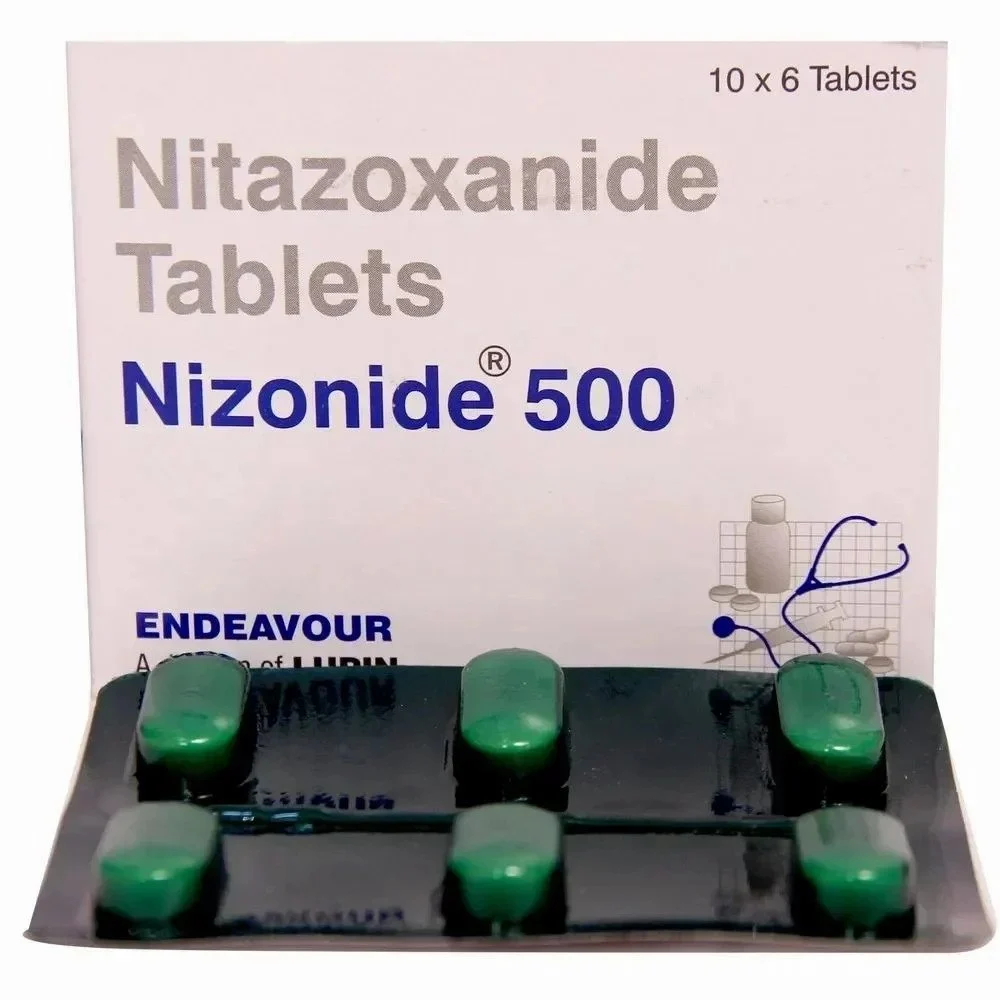
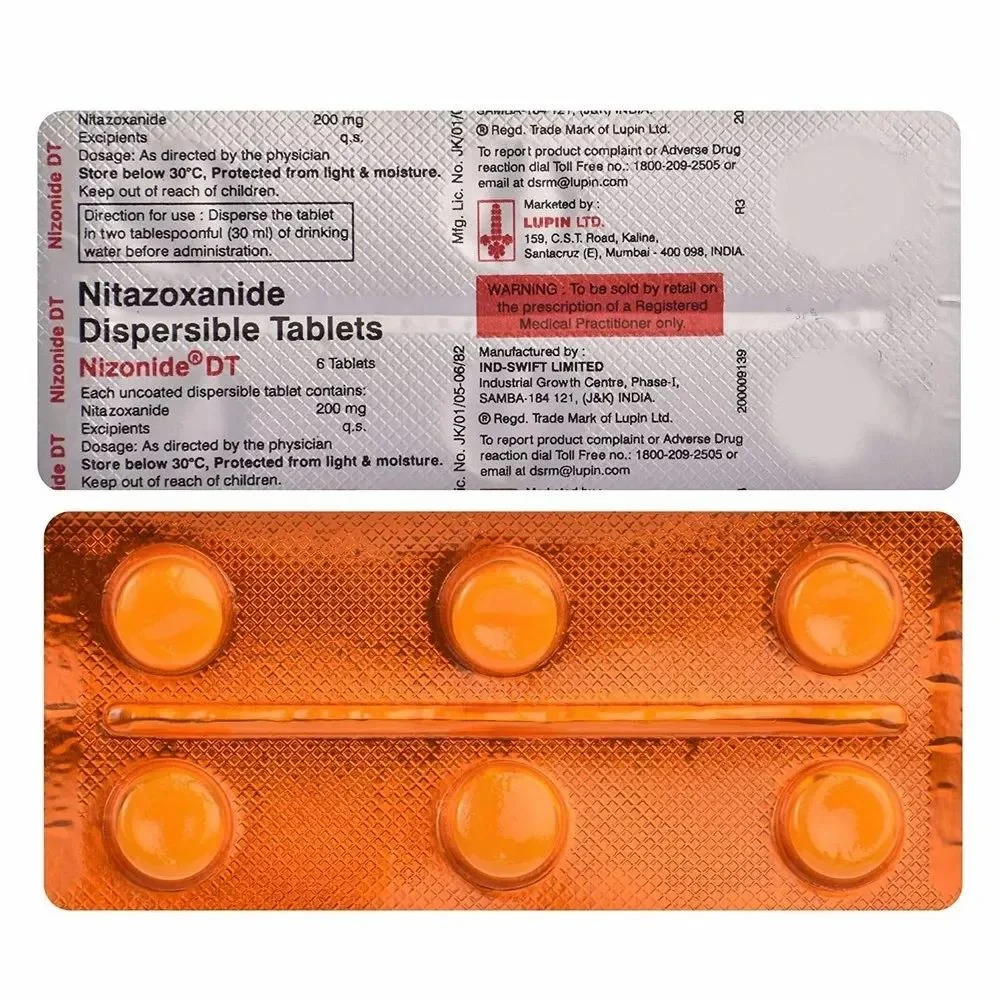
Nizonide


✅ Θεραπεύει παρασιτικές λοιμώξεις
✅ Καταπολεμά τη ιογενή γαστρεντερίτιδα
✅ Μειώνει τα συμπτώματα διάρροιας
✅ Γρήγορη ανακούφιση
✅ Ευρεία αντιπαρασιτική δράση
Το Nizonide περιέχει Nitazoxanide.
✓ Ιατρικά ελεγμένο από Morgan Ellis — Ερευνητής Φαρμακευτικής · 8 χρόνια εμπειρία · Τελευταία αναθεώρηση: Μάιος 2026
⚡ Γρήγορη Απάντηση — Τι είναι το Nizonide;
Το Nizonide είναι η επωνυμία της Cipla για τη nitazoxanide (200 / 500 mg) — ένα ευρέος φάσματος αντιπρωτοζωικό και αντιιικό. Πρώτη γραμμή για επιβεβαιωμένες λοιμώξεις από Giardia lamblia και Cryptosporidium parvum (η μόνη ένδειξη που έχει εγκριθεί από τον FDA) και χρήσιμο για την αμοιβάδαση και επιλεγμένες ιογενείς διαρροές. Η τυπική δοσολογία για ενήλικες είναι 500 mg δύο φορές ημερησίως για 3 ημέρες, που λαμβάνεται με τροφή.
📦 Κάθε παραγγελία καλύπτεται από την Πολιτική Εγγύησης Επαναποστολής — εάν το δέμα σας δεν φτάσει εντός 20 εργάσιμων ημερών, το επαναποστέλλουμε.
Γιατί να παραγγείλετε από τη MedsBase
Τα γενόσημα φάρμακά μας προέρχονται από κατασκευαστές που πιστοποιούνται από την WHO-GMP και αποστέλλονται παγκοσμίως σε διακριτική, απλή συσκευασία — χωρίς όνομα φαρμάκου στο εξωτερικό του δέματος. Οι πληρωμές με κάρτα δρομολογούνται μέσω ρυθμισμένου επεξεργαστή (οι περιγραφές εκκαθάρισης περιλαμβάνουν ρυθμισμένο επεξεργαστή πληρωμών με κάρτα — ποτέ “MedsBase” ή οποιοδήποτε όνομα φαρμάκου). Γίνονται δεκτές και πληρωμές με κρυπτονομίσματα και τραπεζική μεταφορά SEPA. Κάθε παραγγελία καλύπτεται από την Πολιτική Επαναποστολής Εξασφαλίσεώς μας.
Σκοπός του Nizonide
Το Nizonide είναι ένα αντιπρωτοζωικό θειαζολίδιο που παράγεται από την Cipla. Η ενεργός ουσία νιταζοξανίδη έχει ένα εξαιρετικά ευρύ φάσμα δράσης έναντι ενδοκυτταρικών και εντερικών πρωτοζώων, ορισμένων ελμινθών, αναερόβων βακτηρίων και μιας σειράς RNA ιών. Στην πρακτική της ταξιδιωτικής διάρροιας και της τροπικής ιατρικής χρησιμοποιείται συχνότερα για:
- Γιαρδίωση — πρώτη γραμμή σε πολλές χώρες· εναλλακτική στη μετρονιδαζόλη και την τινιδαζόλη. Καλύτερη ανοχή (χωρίς δισουλφιραμοειδή αντίδραση με αλκοόλ) και συντομότερη θεραπεία 3 ημερών.
- Κρυπτοσποριδίαση — το μόνο εγκεκριμένο από την FDA φάρμακο για αυτή τη λοίμωξη σε ανοσολογικά competent ενήλικες και παιδιά. Στη σοβαρή κρυπτοσποριδίαση που σχετίζεται με HIV/AIDS η απόκριση είναι μερική — η αποκατάσταση του αριθμού CD4 μέσω ART είναι η κεντρική παρέμβαση.
- Αμοιβάδαση (εντερική, εκτός ετικέτας) — καλή δραστηριότητα έναντι Entamoeba histolytica; · η μετρονιδαζόλη ή η τινιδαζόλη παραμένουν προτιμότερες για εισχωρητική νόσο.
- Άλλα πρωτόζωα — Blastocystis hominis, Cyclospora, Isospora σε επιλεγμένες περιπτώσεις.
- Ελμινθικές λοιμώξεις (εκτός ετικέτας) — Hymenolepis nana (νάνος ταινία), Ascaris lumbricoides, Trichuris trichiura; · ο αλβενδαζόλη/μεβενδαζόλη παραμένουν η προτιμώμενη θεραπεία πρώτης γραμμής.
- Ιογενής γαστρεντερίτιδα — κλινικές μελέτες υποστηρίζουν μια μέτρια μείωση στη διάρκεια των συμπτωμάτων σε διάρροια από ροταϊό και νοροϊό (Rossignol JAMA 2009· Rossignol Lancet 2006). Δεν αποτελεί πρότυπο θεραπείας· μπορεί να εξεταστεί σε σοβαρές ή παρατεταμένες ιογενείς λοιμώξεις.
- Επαναλαμβανόμενη Λοίμωξη από Clostridioides difficile λοίμωξη (εκτός ετικέτας ως θεραπεία διάσωσης) — μόνο μικρές σειρές περιπτώσεων· η βανακομυκίνη και η φιδαξομυκίνη παραμένουν θεραπεία πρώτης γραμμής.
Πώς λειτουργεί το Nizonide
Η νιταζοξανίδη είναι ένα προφάρμακο που υδρολύεται γρήγορα στο ενεργό μεταβολίτη της, την τιζοξανίδη, στο έντερο και το ήπαρ. Ο μηχανισμός είναι μοναδικός μεταξύ των αντιλοιμωξικών: αναστέλλει την πυροσταφυλική:φερρεδοξίνη οξειδοαναγωγάση (PFOR) ένζυμο απαιτείται για την αναερόβια ενεργειακή μεταβολή σε πρωτόζωα, αναερόβια βακτήρια και ορισμένα ελμινθία. Επειδή τα θηλαστικά κύτταρα χρησιμοποιούν αερόβια μιτοχονδριακή μεταβολή αντί αυτής, το φάρμακο είναι επιλεκτικά τοξικό για το παθογόνο. Η αντιιική δράση έναντι του ροταϊού, νοροϊού, γρίπης και ηπατίτιδας Β/C μεσολαβείται μέσω διαφορετικών μονοπατιών, συμπεριλαμβανομένης της παρέμβασης στην ωρίμανση των ιικών πρωτεϊνών.
Χορήγηση
| Ενδείξεις | Δόση ενηλίκων | Παιδιατρική (1–11 έτη) | Διάρκεια |
|---|---|---|---|
| Γιαρδίωση | 500 mg BID | 1–3 έτη: 100 mg BID · 4–11 έτη: 200 mg BID | 3 ημέρες |
| Κρυπτοσποριδίαση (ανοσοανεπάρκεια) | 500 mg BID | 100 / 200 mg BID ανά ηλικιακή ομάδα | 3 ημέρες |
| Κρυπτοσποριδίαση (HIV/CD4 < 200) | 500–1000 mg BID | Ειδική καθοδήγηση | 14 ημέρες ελάχιστο |
| Αμοιβαίαση (εκτός ετικέτας) | 500 mg BID | Ανά ηλικιακή ομάδα | 3 ημέρες |
| Ιική γαστρεντερίτιδα (εκτός ετικέτας) | 500 mg BID | Ανά ηλικιακή ομάδα | 3 ημέρες |
Η νιταζοξανίδη είναι ελάχιστα υδατοδιαλυτή. Λαμβάνεται κάθε δόση με φαγητό αυξάνει την AUC κατά περίπου 2–3 φορές σε σύγκριση με νηστεία. Η τήρηση αυτού του κανόνα είναι ο μεγαλύτερος προγνωστικός παράγοντας επιτυχίας της θεραπείας — οι αποτυχημένες θεραπείες οφείλονται συχνότερα σε υπο-απορρόφηση παρά σε υπο-δοσολογία.
Παρενέργειες
- Φωτεινό πρασινωπό-κίτρινο ούρα — μια αβλαβής και χαρακτηριστική επίδραση του μεταβολίτη τιζοξανίδης. Επιλύεται εντός 24–48 ωρών από τη διακοπή της θεραπείας.
- Συχνά (1–10%) — κοιλιακός πόνος, διάρροια (παραδόξως), πονοκέφαλος, ναυτία.
- Ασυνήθιστες — έμετος, δυσπεψία, δερματικό εξάνθημα.
- Σπάνιες — αυξημένα ενζύμια ήπατος (συνήθως αυτοπεριοριζόμενα), αντιδράσεις υπερευαισθησίας.
Αλληλεπιδράσεις φαρμάκων
Η νιταζοξανίδη και η τιζοξανίδη δεσμεύονται εκτενώς με πρωτεΐνες (> 99 %). Απαιτείται προσοχή με άλλα φάρμακα που δεσμεύονται έντονα με πρωτεΐνες και έχουν στερά θεραπευτικά παράθυρα:
- Βαρφαρίνη — ο ανταγωνισμός για τη δέσμευση με την αλβουμίνη μπορεί προσωρινά να αυξήσει τα ελεύθερα επίπεδα βαρφαρίνης· παρακολουθήστε το INR στενά σε περίπτωση συνδιαχείρισης.
- Φαινυτοΐνη — παρόμοιος μηχανισμός· εξετάστε την παρακολούθηση επιπέδων κατά τη συνθεραπεία.
- Αντιόξινα και συγκρατητές χολικών οξέων — δεν αναφέρεται κλινικά σημαντική αλληλεπίδραση, αλλά ως προφύλαξη χωρίστε τη δόση κατά 2 ώρες.
- CYP ένζυμα — η νιταζοξανίδη δεν είναι σημαντικό CYP υπόστρωμα ή αναστολέας σε θεραπευτικές δόσεις· οι CYP-μεσολαβούμενες αλληλεπιδράσεις είναι σπάνιες.
Αντενδείξεις και προφυλάξεις
- Εγκυμοσύνη — περιορισμένα ανθρώπινα δεδομένα. FDA Κατηγορία Εγκυμοσύνης Β (εμπιστευτικά δεδομένα από ζώα· δεν υπάρχουν ελεγχόμενες μελέτες σε ανθρώπους). Αποφύγετε κατά το πρώτο τρίμηνο εκτός εάν το όφελος ξεκάθαρα υπερτερεί της αβέβαιης επικινδυνότητας.
- Θηλασμός — περιορισμένα δεδομένα για έκκριση στο μητρικό γάλα. Οι σύντομοι κύκλοι θεραπείας είναι γενικά συμβατοί· αποφύγετε παρατεταμένες δόσεις όπου είναι δυνατόν.
- Παιδιά < 1 έτους — η ασφάλεια δεν έχει τεκμηριωθεί· μόνο υπό ειδικευμένη επιτήρηση.
- Σοβαρή ηπατική δυσλειτουργία — περιορισμένα δεδομένα· ειδικευμένη επιτήρηση.
- Σοβαρή νεφρική δυσλειτουργία (CrCl < 30) — περιορισμένα δεδομένα· ειδικευμένη επιτήρηση.
Η συμπτωματική πρωτοζωική λοίμωξη θα έπρεπε ιδανικά να επιβεβαιωθεί με μικροσκόπηση κοπράνων, δοκιμασία αντιγόνου ή PCR πριν από τη θεραπεία, ειδικά για την κρυπτοσποριδίαση (η οποία έχει επικαλυπτόμενα συμπτώματα με γιάρδια, ιογενείς και βακτηριακές αιτίες). Η εμπειρική χρήση νιταζοξανίδης για μη καθορισμένη “χρόνια διάρροια” χωρίς διαγνωστική διερεύνηση δεν συνιστάται — η χρόνια διάρροια μετά από ταξίδι μπορεί επίσης να αντανακλά μεταλοιμωτική σύνδρομο ευερέθιστου εντέρου, μικροσκοπική κολίτιδα, τροπική σπρού ή κοιλιοκάκη, όλες οι οποίες απαιτούν διαφορετική διαχείριση.
Αποθήκευση
Αποθηκεύστε κάτω από 25 °C στην αρχική συσκευασία, μακριά από υγρασία και άμεση ηλιακή ακτινοβολία. Φυλάξτε μακριά από παιδιά. Μην χρησιμοποιείτε μετά την ημερομηνία λήξης — η αντιπρωτοζωική ισχύς υποβαθμίζεται.
Συχνές Ερωτήσεις
Είναι η Nizonide πρώτης γραμμής για τη διάρροια των ταξιδιωτών;
Όχι. Οι περισσότερες περιπτώσεις οξείας διάρροιας των ταξιδιωτών είναι βακτηριακής αιτίας (ETEC, Campylobacter, Shigella, Salmonella) — για τις οποίες μια μονοδόση αζιθρομυκίνης ή μια πορεία φθοροκινολόνης 1–3 ημερών είναι πρώτης γραμμής. Η Nizonide γίνεται κατάλληλη όταν οι εξετάσεις κοπράνων εντοπίζουν πρωτοζωική αιτία, ή σε χρόνια / επαναλαμβανόμενη / διάρροια που αντιστέκεται στα αντιβιοτικά και υποδηλώνει κρυπτοσπόριδιο ή γιάρδια.
Γιατί το ούρο μου γίνεται φωτεινό κιτρινοπράσινο με την Nizonide;
Η τιζοξανίδη, το ενεργό μεταβολίτη, έχει ένα έντονο κιτρινοπράσινο χρωμοφόρο που εκκρίνεται νεφρικά. Το χρώμα είναι αβλαβές και μια φυσιολογική αναμενόμενη επίδραση — δεν υποδηλώνει ηπατικά ή νεφρικά προβλήματα. Εξαφανίζεται εντός 24–48 ωρών μετά το τέλος της θεραπείας.
Μπορώ να πάρω Nizonide εάν είμαι έγκυος;
Τα δεδομένα για την ανθρώπινη εγκυμοσύνη είναι περιορισμένα. Η FDA των ΗΠΑ κατατάσσει τη νιταζοξανίδη στην Κατηγορία Εγκυμοσύνης B (καμία απόδειξη βλάβης σε ζώα, καμία ελεγχόμενη μελέτη σε ανθρώπους). Για επιβεβαιωμένη γιαρδίωση ή κρυπτοσποριδίαση κατά την εγκυμοσύνη, η παραμομυκίνη (μη απορροφώμενο αμινογλυκοζίδιο) προτιμάται συχνά στο πρώτο τρίμηνο. Η νιταζοξανίδη μπορεί να χρησιμοποιηθεί στο δεύτερο/τρίτο τρίμηνο μετά από συζήτηση κινδύνου-οφέλους με γυναικολόγο.
Η Nizonide θεραπεύει την κρυπτοσποριδίαση σε HIV/AIDS;
Μόνο μερική απόκριση. Σε ανοσολογικά αρτιμελείς ενήλικες, η νιταζοξανίδη συντομεύει αξιόπιστα τη διάρροια από κρυπτοσπορίδια. Σε σοβαρή ανοσοκατάσταση (CD4 < 200), τα ποσοστά απόκρισης είναι χαμηλότερα και η κεντρική παρέμβαση είναι η αποκατάσταση του αριθμού CD4 μέσω αποτελεσματικής αντιρετροϊκής θεραπείας. Υψηλότερες δόσεις (1000 mg BID) και μακρύτερες θεραπείες (≥ 14 ημέρες) χρησιμοποιούνται σε HIV υπό ειδικευμένη επίβλεψη.
Η Nizonide λειτουργεί κατά της COVID-19;
Όχι. Πρώιμες μικρές μελέτες πρότειναν δραστηριότητα in vitro, αλλά μεγάλες τυχαιοποιημένες ελεγχόμενες δοκιμές σε συμπτωματικούς ασθενείς εξωτερικού (PROMINENT-NZX 2022, Rocco 2023) δεν έδειξαν κλινικά σημαντικό όφελος σε ιικό φορτίο, διάρκεια συμπτωμάτων ή νοσηλεία. Η ρουτίνα χρήση για COVID-19 δεν υποστηρίζεται.
Πόσο καιρό μέχρι να βελτιωθούν τα συμπτώματα;
Για γιαρδίωση και κρυπτοσποριδίαση σε ανοσολογικά αρτιμελείς ενήλικες, οι περισσότεροι ασθενείς παρατηρούν βελτίωση των συμπτωμάτων εντός 24–72 ωρών από την έναρξη της θεραπείας, με πλήρη ανάκτηση μέχρι το τέλος της 3ημέρης θεραπείας ή λίγο μετά. Διάρροια πέραν της 5ης ημέρας πρέπει να οδηγήσει σε επανεκτίμηση — πιθανή εναλλακτική διάγνωση, αποτυχία θεραπείας (σκεφτείτε έκθεση στο φάρμακο με τροφή) ή συνεπικράτηση.
Μπορώ να πίνω αλκοόλ ενώ παίρνω Nizonide;
Ναι. Σε αντίθεση με τη μετρονιδαζόλη και την τινιδαζόλη, η νιταζοξανίδη δεν δεν προκαλεί αντίδραση τύπου δισιουλφιράμης με το αλκοόλ. Η μέτρια κατανάλωση αλκοόλ κατά τη διάρκεια μιας 3ήμερης θεραπείας δεν είναι επικίνδυνη, αν και η ενυδάτωση, η ξεκούραση του εντέρου και η αποφυγή αλκοόλ ενώ η διάρροια είναι ενεργή είναι λογικές ανεξάρτητα.
Γιατί πρέπει να το πάρω με φαγητό;
Η νιταζοξανίδη είναι ελάχιστα διαλυτή στο νερό. Η λήψη της με άδειο στομάχι δίνει περίπου τη μισή συστηματική έκθεση σε σύγκριση με τη λήψη της με τροφή — ιδιαίτερα λιπαρή τροφή. Η υποθεραπευτική απορρόφηση είναι η πιο συχνή αιτία αποτυχίας θεραπείας. Πάντα να παίρνετε και τις δύο ημερήσιες δόσεις με ένα γεύμα, κατά προτίμηση ένα που περιέχει κάποιο λίπος.
Μπορώ να δώσω Nizonide στο παιδί μου;
Ναι, από την ηλικία του 1 έτους. Η παιδιατρική δοσολογία είναι ανάλογα με την ηλικία: 1–3 έτη 100 mg BID; 4–11 έτη 200 mg BID; 12+ έτη ενήλικες 500 mg BID. Η Cipla παράγει επίσης νιταζοξανίδη ως παιδιατρικό στοματικό διάλυμα σε 100 mg / 5 ml. Η ασφάλεια σε βρέφη < 1 έτους δεν έχει τεκμηριωθεί.
Πώς συγκρίνεται η Nizonide με τη μετρονιδαζόλη για γιαρδίωση;
Συγκρίσιμα ποσοστά θεραπείας (περίπου 75–85%) σε συγκριτικές δοκιμές. Πλεονεκτήματα της νιταζοξανίδης: συντομότερη θεραπεία 3 ημερών (έναντι 5–7 ημερών για τη μετρονιδαζόλη), απουσία αντιδράσεων τύπου δισουλφιράμης με αλκοόλ, απουσία μεταλλικής γεύσης, γενικά καλύτερη ανοχή. Πλεονεκτήματα της μετρονιδαζόλης: μεγαλύτερη εξοικείωση της αγοράς, χαμηλότερο κόστος, διαθεσιμότητα στις περισσότερες υγειονομικές δομές. Και οι δύο αποτελούν λογικές επιλογές πρώτης γραμμής.
Μπορεί η Nizonide να θεραπεύσει την αμοιβάση;
Ναι, για εντερική/εντυλώδη αμοιβάση (θεραπεία 3 ημερών), με ποσοστά θεραπείας συγκρίσιμα με τη μετρονιδαζόλη. Για επεμβατική νόσο (αμοιβαία δυσεντερία, ηπατικό απόστημα), η μετρονιδαζόλη ή η τινιδαζόλη — ακολουθούμενες από εντυλώδες παράγοντα όπως η παρομομυκίνη για την απομάκρυνση των κυστιδίων — παραμένουν το προτιμώμενο σχήμα. Πάντα διερευνήστε την ύποπτη αμοιβάση με αντιγόνο κοπράνων ή PCR συν σερολογία όταν υπάρχει πιθανότητα ηπατικής εμπλοκής.
Άλλες Επιλογές για Τουριστική Διάρροια & Αντιβιοτικά
- Althrocin (ερυθρομυκίνη 250/500 mg) — εναλλακτική για κάλυψη Campylobacter
- Augmentin (αμοξικιλλίνη + κλαβουλανικό οξύ) — για επιλεγμένες βακτηριακές γαστρεντερικές λοιμώξεις
- Cendox (δοξυκυκλίνη 100 mg) — αντιβιοτικό ευρέος φάσματος για ταξιδιωτική ιατρική
- Κιτ Ιατρικής Επείγουσας Ανάγκης — ταξιδιωτικό πακέτο 8 φαρμάκων
- Metrogyl (μετρονιδαζόλη 200/400 mg) — εναλλακτική για γιαρδίωση / αμοιβάση
- Tiniba (τινιδαζόλη 500/1000 mg) — επιλογή μονοδόσης για γιαρδίωση
Περισσότερες επιλογές στη Θεραπεία Διάρροιας
Ταξινομημένα σύμφωνα με τον όγκο παραγγελιών στο MedsBase — τι επιλέγουν άλλοι πελάτες σε αυτήν την κατηγορία.
| Ισχύς | 200 mg, 500 mg |
|---|---|
| Ποσότητα | 60 Δισκία, 120 Δισκία, 180 Δισκία, 360 Δισκία, 720 Δισκία |
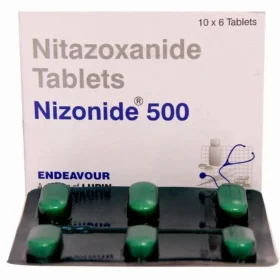 Nizonide
Ερωτήσεις & Απαντήσεις
Nizonide
Σχετικά προϊόντα







Κριτικές
Δεν υπάρχουν ακόμη κριτικές