








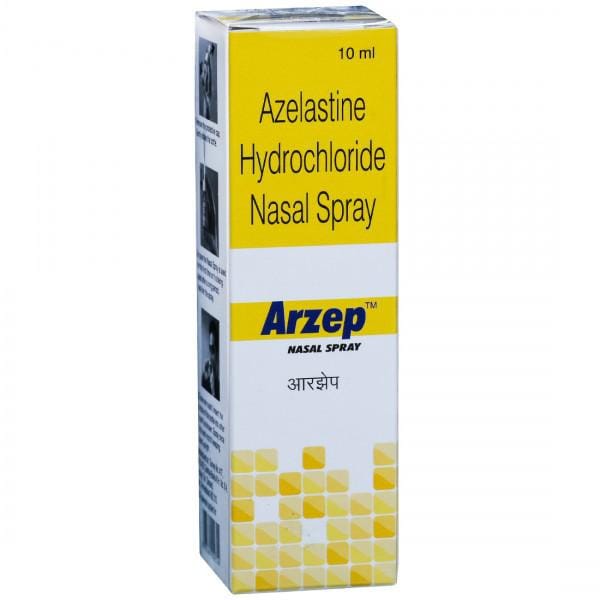
Arzep Nasal Spray
✅ Dubbele werking voor verlichting
✅ Verlicht neusverstopping
✅ Vermindert allergiesymptomen
✅ Snel werkend
✅ Langdurige verlichting
Arzep Nasal Spray bevat Azelastine en Fluticasone.
✓ Medisch beoordeeld door Morgan Ellis — Apotheekonderzoeker · 8 jaar ervaring · Laatst beoordeeld: mei 2026
⚡ Snel antwoord — Wat is Arzep Nasal Spray?
Arzep Nasal Spray is een gecombineerde neusspray die bevat azelastinehydrochloride (een snelwerkend intranasaal antihistaminicum, 137 µg/dosis) en fluticasonpropionaat (een intranasale corticosteroid, 50 µg/dosis). Origineel merk: Dymista (Meda/Viatris). Het is de meest effectieve enkele behandeling voor matige tot ernstige allergische rhinitis — superieur aan elk afzonderlijk bestanddeel in directe vergelijkende onderzoeken (MP-AzeFlu-programma). Gebruikt voor hooikoorts en chronische allergische rhinitis die niet onder controle zijn met monotherapie. Dosering: 1 spray in elk neusgat tweemaal daags. Werking binnen enkele minuten voor symptoomverlichting (van azelastine), met volledig ontstekingsremmend effect dat zich over 1–2 weken opbouwt (van fluticason). Belangrijkste bijwerkingen: bittere smaak (veelvoorkomend bij azelastine), neusirritatie, occasioneel neusbloedingen. Leeftijd 6+ in de meeste markten.
📦 Elke bestelling is gedekt door onze Reshipment Assurance-beleid — als uw pakket niet binnen 20 werkdagen arriveert, sturen wij het opnieuw.
Waarom bestellen bij MedsBase
Onze generieke medicijnen zijn afkomstig van WHO-GMP gecertificeerde fabrikanten en worden wereldwijd verzonden in discrete, eenvoudige verpakkingen — geen medicijnnaam op de buitenkant van het pakket. Betalingen met kaart worden verwerkt via een gereguleerde processor (betalingsoverzichten vermelden een gereguleerde kaartbetalingprocessor — nooit “MedsBase” of een medicijnnaam). Crypto en SEPA bankoverschrijvingen worden ook geaccepteerd. Elke bestelling wordt ondersteund door ons Reshipment Assurance Policy.
Wat Is Arzep Neusspray?
Arzep Neusspray is een gedoseerde waterige neusspray die twee allergiemedicijnen combineert in één apparaat:
- Azelastine hydrochloride — een intranasaal H1-antihistaminicum, 137 µg per spray
- Fluticasonpropionaat — een intranasaal corticosteroïd, 50 µg per spray
Geproduceerd door een WHO-GMP-gecertificeerde fabrikant; geleverd als 1, 2 of 3 flessen (10 mL / ~120 doses per stuk). Totale sterkte per verstuiving: Azelastine 137 µg + Fluticasonpropionaat 50 µg per spray. Het originele merk is Dymista, goedgekeurd door de FDA en EMA in 2012 voor matige tot ernstige allergische rhinitis die niet reageert op intranasale corticosteroïden of orale antihistaminica alleen.
Waar Wordt Arzep Neusspray Voor Gebruikt?
- Matige tot ernstige seizoensgebonden allergische rhinitis (hooikoorts) waarbij monotherapie niet effectief is geweest
- Perennial allergische rhinitis (het hele jaar door, veroorzaakt door huisstofmijt of schimmel)
- Gemengde rhinitis — patiënten met zowel allergische als niet-allergische componenten
- Stapsgewijze behandeling wanneer mometason/fluticason neusspray alleen niet voldoende is
Het behandelt alle vier de belangrijkste symptomen van allergische rhinitis — niezen, loopneus, jeukende neus en neusverstopping — en verlicht ook de bijbehorende oogsymptomen via systemische en lokale mechanismen.
Hoe Werkt Arzep Neusspray?
De twee componenten bestrijden allergische ontsteking via complementaire mechanismen:
- Azelastine is een selectieve H1-antihistaminicum dat ook mestcellen stabiliseert en eosinofielenactivatie vermindert. Direct in de neus toegediend, biedt het symptoomverlichting binnen enkele minuten — veel sneller dan elk oraal antihistaminicum. Het heeft ook milde anti-leukotrieen en anti-ICAM-1 effecten.
- Fluticasonpropionaat is een krachtig intranasale corticosteroïde dat bindt aan glucocorticoidreceptoren in het neusslijmvlies, waardoor de productie van cytokinen en chemokinen wordt onderdrukt, eosinofiele infiltratie wordt verminderd en de late-fase allergische reactie wordt gedownreguleerd. Vrijwel geen systemische absorptie (< 0,5% biobeschikbaarheid).
In gerandomiseerde head-to-head onderzoeken (het MP-AzeFlu-programma) was de combinatie effectiever dan elk van de afzonderlijke componenten voor zowel totale nasale als totale oculaire symptoomscores, en werkte sneller. Daarom wordt het gereserveerd als een stap-omhoog optie wanneer monotherapie niet voldoende is.
Dosering en toediening
Volwassenen en kinderen vanaf 12 jaar: 1 spray in elk neusgat tweemaal daags — 's ochtends en 's avonds. Totale dagelijkse dosis: 2 sprays per neusgat per dag.
Kinderen van 6–11 jaar: 1 spray in elk neusgat tweemaal daags, afhankelijk van goedkeuring door de voorschrijver (etikettering verschilt per land).
Techniek:
- Primer de fles voor eerste gebruik — schud zachtjes, druk dan op de pomp tot er een fijne nevel verschijnt (meestal 6–10 primersprays). Herprimeer (2 sprays) als het 14+ dagen niet is gebruikt.
- Snuit uw neus zachtjes voor elke dosis.
- Houd de fles rechtop en kantel uw hoofd lichtjes naar voren.
- Breng de nozzle in één neusgat, gericht van het neustussenschot af (richting de buitenwand van de neus).
- Adem zachtjes in door de neus terwijl u één keer op de pomp drukt; vermijd hard snuiven.
- Herhaal in het andere neusgat.
- Do niet kantel uw hoofd naar achteren na de spray — dit is de belangrijkste oorzaak van de bittere smaak.
- Veeg de nozzle af met een schoon tissue en plaats de dop terug terug.
Gemiste dosis: neem het zo snel mogelijk in als u het vergeten bent. Als het bijna tijd is voor de volgende dosis, sla deze over en ga verder zoals normaal.
Bijwerkingen
Vaak voorkomend:
- Bittere of metaalachtige smaak — de meest voorkomende klacht (van azelastine dat achter in de keel druipt). Minimaliseer dit door te sprayen met het hoofd naar voren, gekanteld, niet naar achteren.
- Neusirritatie, mild branderig of prikkend gevoel
- Milde epistaxis (neusbloedingen) — meestal te voorkomen door de nozzle naar buiten te richten
- Hoofdpijn
- Milde sedatie (zelden bij intranasaal azelastinegebruik, maar mogelijk)
Minder vaak voorkomend:
- Droge neus, korstvorming
- Hoest, keelirritatie
- Veranderde reuk of smaak
- Neusseptumperforatie — zeer zeldzaam; geassocieerd met agressieve techniek of reeds bestaande septumzwakte
- Candida (spruw) van de mond of neus — zeldzaam
- Cataract of verhoogde intraoculaire druk — zeldzaam bij intranasaal gebruik; oogcontroles verstandig bij langdurig gebruik
- Overgevoeligheidsreacties
De systemische opname van beide componenten is zeer laag, waardoor de systemische bijwerkingenlast van corticosteroïden en antihistaminica minimaal is in vergelijking met orale therapieën.
Geneesmiddelinteracties
- Sterke CYP3A4-remmers (ritonavir, ketoconazol, itraconazol, clarithromycine) — kunnen de systemische niveaus van fluticason licht verhogen; zelden klinisch relevant bij intranasale doseringen, maar vermijd bij chronisch gebruik.
- Alcohol, sederende middelen — zeer laag risico bij intranasaal azelastinegebruik, maar mogelijk additieve slaperigheid bij hogere dan voorgeschreven doseringen.
- Andere intranasale of orale corticosteroïden — cumulatieve systemische blootstelling aan steroïden bij langdurig gecombineerd gebruik; bespreek dit met uw voorschrijver.
- Levende vaccins — geen significante interactie bij intranasale doseringen.
Wie mag Arzep Neusspray niet gebruiken?
- Bekende overgevoeligheid voor azelastine, fluticason of een hulpstof
- Onbehandelde lokale neusinfectie (bacterieel, schimmel, herpes) — behandel eerst
- Recente neusoperatie, trauma of septumulcera — vermijd tot genezing
- Kinderen onder de leeftijdsgrens zoals aangegeven voor uw land
- Zwangerschap en borstvoeding — gebruik alleen wanneer klinisch noodzakelijk; overleg met een arts
Opslag
Bewaar Arzep Neusspray onder 25°C in een rechtopstaande positie, op een droge plaats. Niet invriezen. Buiten bereik van kinderen houden. Wegwerpen volgens de gebruiksduur op het etiket na eerste opening (meestal 3 maanden na eerste gebruik, maar controleer het etiket).
Veelgestelde vragen
Is Arzep Neusspray hetzelfde als Dymista?
Ja — Arzep Nasal Spray bevat dezelfde twee werkzame bestanddelen (azelastine 137 µg + fluticasone propionaat 50 µg per spray) als Dymista (Meda/Viatris). Bio-equivalentie is vereist door regelgevende instanties, dus het klinische effect is hetzelfde bij dezelfde dosering.
Wanneer moet ik overstappen op een combinatiespray zoals Arzep Nasal Spray?
Huidige richtlijnen (ARIA, AAAAI) bevelen aan om over te stappen op een azelastine + fluticasone combinatie wanneer een intranasale corticosteroid (mometason, fluticason, budesonide) of een oraal antihistaminicum alleen matige tot ernstige symptomen niet onder controle houdt na 2–4 weken consistent dagelijks gebruik. Het is ook eerste keus bij ernstige seizoensgebonden hooikoorts waar een snelle start belangrijk is.
Waarom smaakt Arzep Nasal Spray bitter?
De bittere smaak komt door azelastine dat in de keel druppelt. Twee technieken minimaliseren dit: spray met je hoofd licht naar voren gekanteld voren (niet naar achteren), en adem zachtjes in in plaats van hard te snuiven — het medicijn moet in de neus blijven, niet achterin de keel lopen.
Hoe snel werkt Arzep Nasal Spray?
Azelastine biedt symptoomverlichting binnen enkele minuten. Het ontstekingsremmende effect van fluticason begint na 6–12 uur en bereikt zijn piek na 1–2 weken. De combinatie geeft je beide: snelle verlichting vandaag plus opbouwende controle over twee weken.
Kan ik Arzep Nasal Spray langdurig gebruiken?
Ja — langdurig dagelijks gebruik is goed onderzocht. De systemische opname van beide componenten is zeer laag. Voor kinderen: gebruik de laagst effectieve dosis en monitor de groei periodiek.
Kan ik Arzep Nasal Spray combineren met een oraal antihistaminicum?
Ja, indien klinisch geïndiceerd, maar doorgaans overbodig — Arzep Neusspray bevat reeds een intranasaal antihistaminicum. Het toevoegen van een oraal 2e-generatie antihistaminicum (loratadine, cetirizine, fexofenadine) is redelijk bij ernstige symptomen of wanneer oogklachten op de voorgrond staan.
Waar kan ik Arzep Nasal Spray online kopen?
U kunt Arzep Nasal Spray (Azelastine 137 µg + Fluticasone propionaat 50 µg per spray) bestellen bij MedsBase in 1, 2 of 3 flessen (10 mL / ~120 doses per fles). Wij verzenden wereldwijd met discrete verpakking en echte WHO-GMP gecertificeerde fabrikantsvoorraad.
Gerelateerde allergiemedicijnen
- Meta Spray — Mometasone neusspray (eerste keus INCS)
- Allegra — Fexofenadine (oraal niet-sederend)
- Xyzal — Levocetirizine
- Loratin — Loratadine
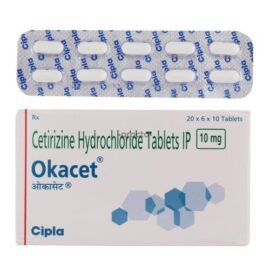
- Okacet — Cetirizine
- Ocurest-AH Oogdruppels — voor jeukende allergische ogen
- Bekijk alle hooikoorts- en allergiemedicijnen
Gerelateerde alternatieven
Andere producten in Chronische aandoeningen die klanten ook bekijken:
Meer opties in behandeling van hooikoorts/allergieën
Gerangschikt op recente bestelvolumes van MedsBase — wat andere klanten in deze categorie kiezen.


| Sterkte | 10 ml |
|---|---|
| Hoeveelheid | 1 Fles/s, 2 Flessen/s, 3 Flessen/s, 6 Flessen/s |
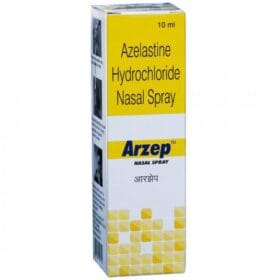 Arzep Nasal Spray
Vragen & antwoorden
Arzep Nasal Spray
Gerelateerde producten



Beoordelingen
Er zijn nog geen beoordelingen