







Augmentin
✅ Behandelt bacteriële infecties
✅ Vermindert snel ontstekingen
✅ Breedspectrum antibioticumwerking
✅ Effectief tegen resistente stammen
✅ Ondersteunt een sneller herstel
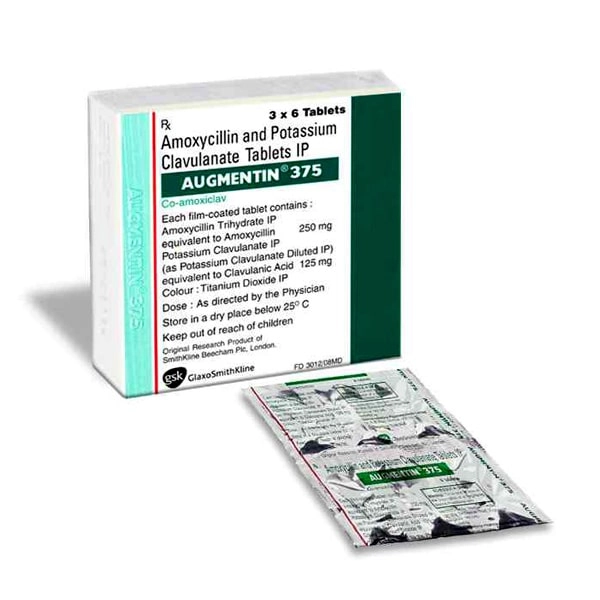
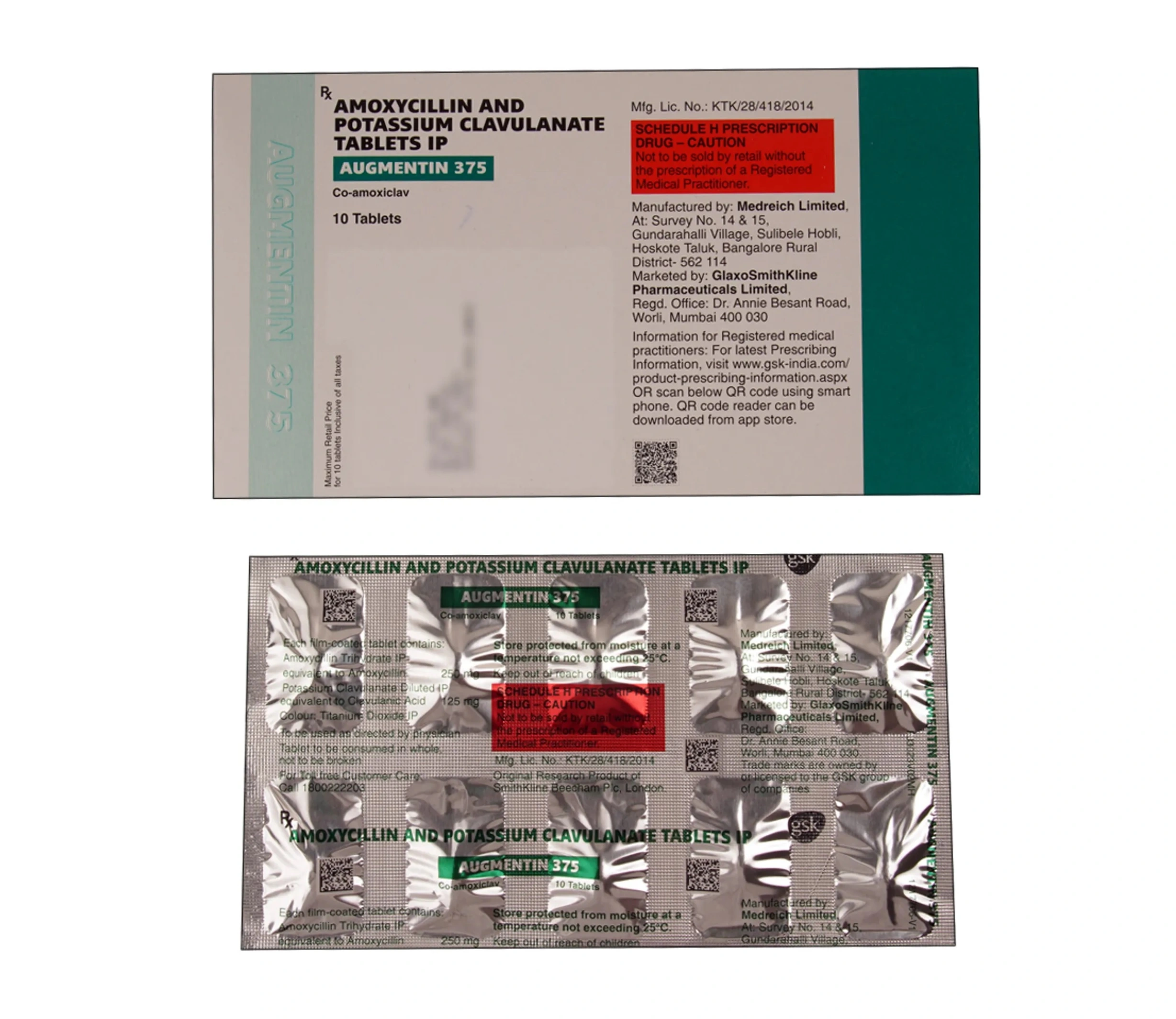
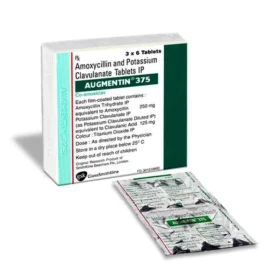
Augmentin bevat Amoxycillin en Clavulanic acid.
✓ Medisch beoordeeld door Morgan Ellis — Apotheekonderzoeker · 8 jaar ervaring · Laatst beoordeeld: mei 2026
⚡ Snelle vraag — Wat is Augmentin?
Augmentin is GSK’s amoxicilline 250 mg + clavulaanzuur 125 mg tablet — een bètalactam-antibioticum gecombineerd met een bètalactamaseremmer die de werking tegen veel resistente bacteriën herstelt. Aangewezen voor geselecteerde luchtweginfecties, KNO-infecties, urineweginfecties, huidinfecties en bijtwonden. De standaarddosering voor volwassenen is één tablet van 375 mg driemaal daags gedurende 5–7 dagen; gecompliceerde infecties kunnen 625 mg of 1 g preparaten vereisen.
📦 Elke bestelling is gedekt door onze Reshipment Assurance-beleid — als uw pakket niet binnen 20 werkdagen arriveert, sturen wij het opnieuw.
Waarom bestellen bij MedsBase
Onze generieke medicijnen zijn afkomstig van WHO-GMP gecertificeerde fabrikanten en worden wereldwijd verzonden in discrete, eenvoudige verpakkingen — geen medicijnnaam op de buitenkant van het pakket. Betalingen met kaart worden verwerkt via een gereguleerde processor (betalingsoverzichten vermelden een gereguleerde kaartbetalingprocessor — nooit “MedsBase” of een medicijnnaam). Crypto en SEPA bankoverschrijvingen worden ook geaccepteerd. Elke bestelling wordt ondersteund door ons Reshipment Assurance Policy.
Co-amoxiclav heeft het hoogste gerapporteerde percentage van door geneesmiddelen geïnduceerde cholestatische hepatitis van alle orale antibiotica — ongeveer 1 op de 2.500 tot 1 op de 6.000 behandelingen. Het begin is kenmerkend vertraagd (meestal 1–6 weken na afloop van de behandeling), met geelzucht, donkere urine, bleke ontlasting en jeuk. Een eerdere episode van geelzucht geassocieerd met co-amoxiclav is een absoluut levenslang contra-indicatie — het risico op herhaling bij hernieuwde blootstelling is zeer hoog. Het risico is groter bij oudere mannen en bij langdurige behandelingen.
Waar Augmentin voor wordt gebruikt
Augmentin combineert amoxicilline (een breedspectrum aminopenicilline) met clavulaanzuur (een onomkeerbare bèta-lactamase-remmer). De combinatie behoudt de gram-positieve en geselecteerde gram-negatieve werking van amoxicilline en voegt activiteit toe tegen bèta-lactamase-producerende stammen van Staphylococcus aureus (alleen methicilline-gevoelige), Haemophilus influenzae, Moraxella catarrhalis, Klebsiella, anaëroben inclusief Bacteroides fragilis, en vele Escherichia coli. Veelvoorkomende indicaties:
- Acute bacteriële sinusitis — voorkeursbehandeling bij ernstige symptomen, aanhoudend > 10 dagen, of verslechtering na initiële verbetering.
- Acute otitis media — tweedekeus na amoxicilline alleen, of eerstekeus bij verwachte hoge prevalentie van beta-lactamase.
- Community-acquired pneumonia (CAP) — meestal gecombineerd met een macrolide voor atypische dekking.
- Acute exacerbaties van COPD met purulent sputum en toegenomen dyspnoe.
- Gecompliceerde UTI/pyelonefritis in geselecteerde gevallen, geleid door lokale resistentie en kweek.
- Huid- en weke delen infecties inclusief profylaxe bij dierenbeten en mensenbeten (dekt Pasteurella multocida, Eikenella corrodens, orale anaëroben).
- Geselecteerde bacteriële GI-infecties in reizigerscontext — niet de eerste keus voor reguliere reizigersdiarree (azitromycine of een fluoroquinolon hebben de voorkeur), maar nuttig voor gedocumenteerde gevoelige pathogenen.
- Tandabces / odontogene infectie wanneer monotherapie met penicilline-V onvoldoende is.
De meeste gevallen van bacteriële reizigersdiarree worden veroorzaakt door enterotoxigene E. coli, Campylobacter, Shigella of Salmonella. Enkelvoudige dosis azitromycine 1 g wordt aanbevolen voor Zuid-/Zuidoost-Azië (hoge resistentie van Campylobacter tegen fluorchinolonen) en een kuur van 1–3 dagen met fluorchinolonen (ciprofloxacine, levofloxacine) wordt elders aanbevolen. Co-amoxiclav heeft een rol bij geselecteerde gevoelige infecties, maar mag niet het empirische middel van keuze zijn voor reizigersdiarree.
Hoe Augmentin werkt
Amoxicilline bindt aan penicillinebindende eiwitten (PBPs) in de bacteriële celwand, verstoort de peptidoglycaan-crosslinking en veroorzaakt cellysis — een bactericide effect. Clavulanic acid heeft op zichzelf minimale antibacteriële activiteit; het is een “zelfmoordsubstraat” dat onomkeerbaar bindt aan bacteriële bètalactamase-enzymen, waardoor ze de bètalactamring van amoxicilline niet kunnen hydrolyseren. De 4:1 verhouding van amoxicilline tot clavulanaat in de 375 mg tablet (250 mg + 125 mg) is de oorspronkelijke GSK-formulering; moderne tabletten met hogere doseringen (625 mg, 1 g) gebruiken verhoudingen van 7:1 of hoger om GI-bijwerkingen van clavulanaat te verminderen terwijl de bètalactamase-dekking behouden blijft.
Dosering
| Indicatie | Volwassen dosis | Duur |
|---|---|---|
| Acute sinusitis / otitis | 375 mg TID of 625 mg BID | 5–7 dagen |
| Community-acquired pneumonia | 625 mg of 1 g TID + macrolide | 5–7 dagen |
| Gecompliceerde UTI | 625 mg BID of TID | 7–14 dagen |
| Huid-/bijtwond | 375 mg TID of 625 mg BID | 5–10 dagen |
| Tandabces | 375 mg TID | 5 dagen |
| Nierfunctiestoornis (CrCl 10–30) | 375 mg BID | Zoals aangegeven |
| Nierfunctiestoornis (CrCl < 10) | 375 mg OD | Zoals aangegeven |
Neem elke tablet aan het begin van een maaltijd in. Voedsel heeft geen significant effect op de opname van amoxicilline, maar vermindert aanzienlijk de maag-darmklachten (misselijkheid, diarree) veroorzaakt door clavulanaat.
Bijwerkingen
- Vaak (1–10%) — diarree (vaak door clavulanaat), misselijkheid, braken, vaginale candidiasis, milde huiduitslag.
- Maculopapulaire uitslag — met name bij patiënten met een incubatie van het Epstein-Barr-virus (~90% uitslag tijdens infectieuze mononucleosis). Geen echte penicilline-allergie.
- Antibioticageassocieerde diarree — mild en zelflimiterend bij de meeste; Clostridioides difficile infectie bij een minderheid (vooral oudere patiënten, ziekenhuisopnames of gelijktijdig PPI-gebruik).
- Cholestatische hepatitis — zie rode waarschuwing bovenaan de pagina.
- Anafylaxie / urticaria — echte IgE-gemedieerde penicilline-allergie bij ongeveer 1 op de 5.000–10.000 kuren.
- Stevens-Johnson-syndroom / TEN — zeldzaam.
Geneesmiddelinteracties
- Methotrexaat — penicillines verminderen de renale klaring; risico op methotrexaattoxiciteit (myelosuppressie, mucositis). Monitor niveaus nauwlettend of vermijd combinatie.
- Allopurinol — verhoogd risico op maculopapulaire uitslag. Mechanisme onduidelijk.
- Probenecide — vermindert de renale tubulaire secretie van amoxicilline → hogere en langdurigere amoxicillinespiegels. Soms bewust gebruikt bij ernstige infecties.
- Warfarine — casusrapporten van INR-stijging bij breedspectrumantibiotica door vermindering van vitamine K door darmflora. Controleer INR tijdens de kuur.
- Orale anticonceptiva — historisch beweerd maar grotendeels weerlegd voor standaardkuren. Gebruik alleen aanvullende barrièremethode tijdens langdurige kuren of aanhoudende diarree/braken.
- Levend oraal tyfusvaccin — antibiotica kunnen inactiveren. Houd minimaal 3 dagen tussen.
Contra-indicaties en waarschuwingen
- Eerdere co-amoxiclav-geassocieerde geelzucht of leverfunctiestoornis — absoluut levenslange contra-indicatie.
- Penicilline-allergie — echte IgE-gemedieerde reacties zijn een absolute contra-indicatie. Ongeveer 5–10% kruisreactiviteit met cefalosporines (voornamelijk eerste generatie); verwaarloosbaar bij latere generaties cefalosporines en carbapenems.
- Infectieuze mononucleosis (EBV) — vermijden; hoog percentage huiduitslag.
- Ernstige nierfunctiestoornis — dosering aanpassen zoals hierboven.
- Zwangerschap — over het algemeen als veilig beschouwd; veel gebruikt.
- Borstvoeding — compatibel; overdracht in moedermelk is minimaal.
Opslag
Bewaren onder 25 °C in originele blister, uit de buurt van vocht en direct zonlicht. Buiten bereik van kinderen houden. Niet gebruiken na de vervaldatum — bètalactamring degradeert en antibacteriële werking neemt af.
Veelgestelde vragen
Is Augmentin het juiste antibioticum voor reizigersdiarree?
Meestal niet. Eerstelijns empirische antibiotica voor matig-ernstige reizigersdiarree zijn eenmalige dosis azitromycine 1 g (voorkeur voor Zuid-/Zuidoost-Azië vanwege Campylobacter-resistentie tegen fluoroquinolonen) of ciprofloxacine 500 mg tweemaal daags gedurende 1–3 dagen (voorkeur voor Latijns-Amerika, Afrika). Augmentin kan worden gebruikt voor gedocumenteerde bacteriële GI-infecties die gevoelig zijn voor amoxicilline-clavulaanzuur, of bij patiënten met een niet-allergische geschiedenis voor penicilline die geen macroliden of fluoroquinolonen kunnen gebruiken.
Wat is het verschil tussen Augmentin 375 mg, 625 mg en 1 g tabletten?
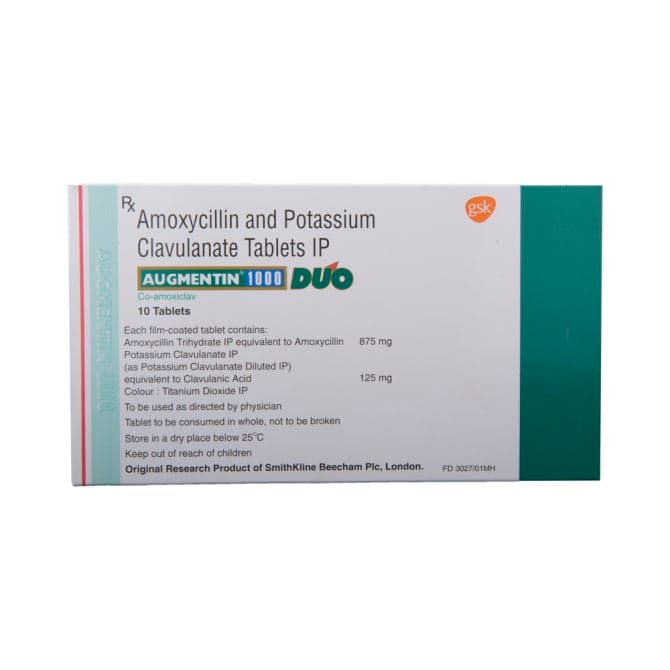
Alle bevatten dezelfde twee ingrediënten (amoxicilline + clavulaanzuur) maar in verschillende doseringen en verhoudingen. De 375 mg tablet bevat 250 mg amoxicilline + 125 mg clavulaanzuur (4:1). De 625 mg tablet bevat 500 mg amoxicilline + 125 mg clavulaanzuur (4:1). De 1 g tablet bevat 875 mg amoxicilline + 125 mg clavulaanzuur (7:1) — ontworpen om meer amoxicilline af te geven zonder de clavulaanzuur-gerelateerde GI-bijwerkingen te verhogen. Het 1 g BID-schema wordt steeds vaker gebruikt voor sinusitis, lagere luchtweginfecties en CAP.
Mag ik alcohol drinken tijdens het gebruik van Augmentin?
Augmentin veroorzaakt geen disulfiram-achtige reactie met alcohol (in tegenstelling tot metronidazol of tinidazol). Als u echter ziek bent door de onderliggende infectie, kan alcohol uitdroging en GI-bijwerkingen verergeren. Licht tot matig alcoholgebruik tijdens een kuur van 5–7 dagen is niet specifiek gevaarlijk, maar wordt over het algemeen niet aanbevolen terwijl u aan het herstellen bent.
Waarom veroorzaakt Augmentin meer diarree dan amoxicilline alleen?
Het clavulaanzuur-component verstoort de darmmotiliteit en het darmmicrobioom meer dan amoxicilline alleen. Daarom zijn hogere amoxicilline / vaste clavulaanzuur-verhoudingen (7:1 in de 1 g tablet) en het innemen van de dosis met voedsel ontwikkeld — beide verminderen diarree zonder bètalactamase-dekking te verliezen.
Wat moet ik doen als ik gele huid of donkere urine krijg na een kuur?
Stop het antibioticum als u het nog gebruikt en zoek direct medische hulp. Cholestatische hepatitis door co-amoxiclav verschijnt kenmerkend 1–6 weken na na afloop van de kuur, met geelzucht, jeuk, donkere urine en bleke ontlasting. De meeste gevallen herstellen binnen enkele weken tot maanden. Een gedocumenteerde episode is een absoluut levenslang contra-indicatie voor hernieuwde blootstelling.
Is de uitslag door amoxicilline een echte penicilline-allergie?
Niet altijd. Een maculopapulaire uitslag die 5–10 dagen na het starten van een kuur met amoxicilline of co-amoxiclav verschijnt, vooral bij adolescenten en jongvolwassenen, weerspiegelt vaak een onderliggende Epstein-Barr-virusinfectie (mononucleosis) — geen echte IgE-gemedieerde penicilline-allergie. Netelroos, anafylaxie, angio-oedeem of uitslag binnen minuten tot uren na een dosis zijn anders en moeten als echte allergie worden behandeld tot het tegendeel is bewezen. Bij twijfel, zoek een formele allergiebeoordeling voor hernieuwde blootstelling.
Mag ik Augmentin gebruiken tijdens de zwangerschap?
Ja. Co-amoxiclav is veelvuldig gebruikt tijdens de zwangerschap en wordt over het algemeen als veilig beschouwd (geen significant teratogeen signaal). Let op: bij vroegtijdig breken van de vliezen (PPROM) betekent het ORACLE-II-trial signaal van verhoogde neonatale necrotiserende enterocolitis dat erytromycine de voorkeur heeft boven co-amoxiclav voor die specifieke indicatie.
Wat als ik een dosis vergeet?
Neem de gemiste dosis zo snel mogelijk in als u eraan denkt, met voedsel, tenzij het bijna tijd is voor de volgende dosis — in dat geval slaat u de gemiste dosis over. Neem geen dubbele dosis. Streef naar een gelijkmatige verdeling over de dag (elke 8 uur voor TID, elke 12 uur voor BID) voor stabiele niveaus in de darmen en weefsels.
Kan ik de kuur vroegtijdig stoppen zodra ik me beter voel?
Voor de meeste indicaties moet u de voorgeschreven kuur afmaken. Vroegtijdig stoppen kan leiden tot resterende, gedeeltelijk behandelde bacteriën met selectiedruk die resistente klonen bevordert. Recent bewijs ondersteunt kortere kuren (bijv. 5 dagen voor ongecompliceerde CAP), maar dit moet een klinische beslissing zijn gebaseerd op de specifieke infectie — niet een standaard voor alle toepassingen.
Dekt Augmentin MRSA?
Nee. Co-amoxiclav dekt methicillinegevoelige Staph aureus (MSSA) maar niet methicillineresistente stammen (MRSA). Voor vermoedelijke of bevestigde MRSA zijn alternatieve middelen (clindamycine, doxycycline, trimethoprim-sulfamethoxazol, vancomycine, linezolid) nodig, afhankelijk van de locatie en ernst.
Hoe verhoudt Augmentin zich tot Bactrim of doxycycline voor huidinfecties?
Augmentin dekt MSSA, streptokokken, anaëroben en bijtwondflora goed — voorkeursbehandeling voor profylaxe na dierenbeten en menselijke beten. Doxycycline (Cendox) en trimethoprim-sulfamethoxazol dekken MRSA maar niet betrouwbaar anaëroben of Pasteurella — voorkeursbehandeling wanneer MRSA wordt vermoed. Cellulitis zonder beet of abces is meestal streptokokken — flucloxacilline of orale cefalexine is vaak voldoende. De keuze hangt af van de locatie, het vermoedelijke pathogeen en lokale resistentie.
Andere opties voor reizigersdiarree & antibiotica
- Althrocin (erythromycin 250/500 mg) — alternatief voor Campylobacter / atypische longontsteking
- Cendox (doxycycline 100 mg) — breedspectrum, MRSA + Lyme + Pasteurella dekking
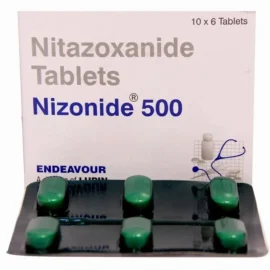
- Nizonide (nitazoxanide 200/500 mg) — voor protozoaire oorzaken van diarree
- Medische Noodkit — multigeneesmiddelen reisset
- Cipmox (amoxicillin 250/500 mg) — zonder clavulanaat, eenvoudigere indicaties
- Ciplox (ciprofloxacin 250/500 mg) — fluoroquinolone optie
Meer opties in de behandeling van reizigersdiarree
Gerangschikt op recente bestelvolumes van MedsBase — wat andere klanten in deze categorie kiezen.

| Sterkte | 375 mg |
|---|---|
| Hoeveelheid | 30 Tablet/s, 60 Tablet/s, 90 Tablet/s |
 Augmentin
Vragen & antwoorden
Augmentin
Gerelateerde producten

Beoordelingen
Er zijn nog geen beoordelingen