







Keytruda
✅ PD-1 immuuncheckpointremmer
✅ 15+ kankerindicaties (melanoom, NSCLC, MSI-H/dMMR tumor-agnostisch, HNSCC, Hodgkin, urotheelcarcinoom, RCC, TNBC, endometriumcarcinoom en meer)
✅ IV infusie 200 mg elke 3 weken OF 400 mg elke 6 weken
✅ Alleen toegediend in ziekenhuis / oncologiedagbehandeling
✅ Specialistische oncologenbegeleiding essentieel
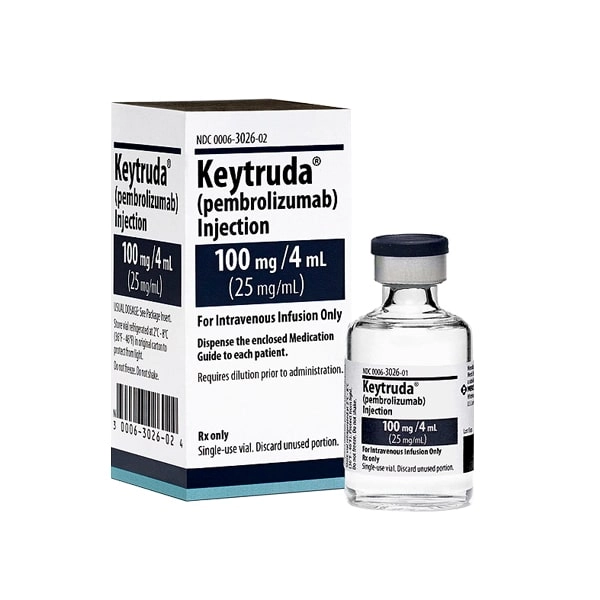
Keytruda bevat pembrolizumab 100 mg/4 mL (Merck/MSD). Een gehumaniseerd monoklonaal antilichaam dat PD-1 blokkeert om het immuunsysteem kankercellen te laten herkennen. Vereist zorg onder leiding van een oncoloog, basisstadiëring en biomarker (PD-L1, MSI/dMMR) testen voor aanvang.
✓ Medisch beoordeeld door Morgan Ellis — Apotheekonderzoeker · 8 jaar ervaring · Laatst beoordeeld: mei 2026
⚡ Kort antwoord — Wat is Keytruda?
Keytruda is een intraveneuze infusie van Merck (MSD) met pembrolizumab 100 mg/4 mL — een gehumaniseerd monoklonaal antilichaam en PD-1 immuuncheckpointremmer. Pembrolizumab maakt het immuunsysteem weer in staat kankercellen te herkennen. Goedgekeurd voor veel soorten kanker: gevorderd melanoom, niet-kleincellig longcarcinoom (NSCLC), plaveiselcelcarcinoom van hoofd en hals, klassiek Hodgkin-lymfoom, urotheelcarcinoom, MSI-H/dMMR-kankers (elke tumortype), maagkanker, slokdarmkanker, baarmoederhalskanker, hepatocellulair carcinoom, niercelcarcinoom, endometriumcarcinoom, triple-negatieve borstkanker, en diverse andere. Standaarddosering voor volwassenen: 200 mg intraveneus elke 3 weken OF 400 mg intraveneus elke 6 weken, toegediend gedurende 30 minuten. Uitsluitend toegediend in een ziekenhuis of oncologisch dagbehandelingscentrum door getraind personeel — niet voor zelftoediening. Belangrijke risico's: immuungerelateerde bijwerkingen (irAEs) — kan elk orgaansysteem beïnvloeden (pneumonitis, colitis, hepatitis, endocrinopathieën, huidreacties, nefritis, neuropathie) en kan systemische corticosteroïden en permanent stoppen van de behandeling vereisen.
📦 Elke bestelling is gedekt door onze Reshipment Assurance-beleid — als uw pakket niet binnen 20 werkdagen arriveert, sturen wij het opnieuw.
Wat is Keytruda?
Keytruda (pembrolizumab) is een gehumaniseerd IgG4-monoklonaal antilichaam van Merck (MSD) dat zich richt op de geprogrammeerde celdood proteïne 1 (PD-1) receptor op T-cellen. Door PD-1 te blokkeren, heft pembrolizumab de immuunremming op die kankercellen gebruiken om vernietiging door het immuunsysteem te ontlopen. Goedgekeurd door de FDA in 2014, is Keytruda nu geregistreerd voor meer kankerindicaties dan enige andere immunotherapie en heeft het de behandeling van gevorderd melanoom, gevorderd NSCLC en vele andere tumortypes getransformeerd.
Pembrolizumab wordt geleverd als een geconcentreerde oplossing voor infusie (100 mg/4 mL fles) die wordt verdund in normale zoutoplossing of 5% dextrose en wordt toegediend als een langzame intraveneuze infusie gedurende 30 minuten in een ziekenhuis of oncologie dagbehandeling. Het is niet beschikbaar in orale vorm en kan niet zelf worden toegediend.
Hoe Werkt Keytruda?
Kankercellen brengen vaak de PD-L1 ligand tot expressie op hun oppervlak. Wanneer PD-L1 bindt aan de PD-1 receptor op een tumor-infiltrerende T-cel, geeft het signaal aan de T-cel om zich terug te trekken — wat in feite de immuunrespons tegen de tumor uitschakelt. Pembrolizumab is ontworpen om deze PD-1 / PD-L1-interactie te blokkeren:
- Haalt de immuunrem weg — PD-1-blokkade zorgt ervoor dat tumorspecifieke T-cellen kankercellen kunnen herkennen en doden.
- PD-L1-expressie in de tumor voorspelt vaak de respons — tumoren met een hoge PD-L1-kleuring (TPS ≥ 50%) reageren vaker dan PD-L1-negatieve tumoren, vooral bij NSCLC. Sommige indicaties vereisen PD-L1-testen vóór behandeling.
- MSI-H / dMMR-kankers reageren onafhankelijk van PD-L1 — tumoren met een mismatch-repair-deficiëntie of microsatellietinstabiliteit reageren zeer goed op checkpointremmers, ongeacht de PD-L1-status. Keytruda heeft een tumor-agnostische indicatie voor MSI-H/dMMR-kankers.
- Tumor mutational burden (TMB) — tumoren met een hoge TMB genereren meer neo-antigenen voor het immuunsysteem om te herkennen; sommige Keytruda-indicaties gebruiken TMB ≥ 10 mut/Mb als biomarker.
Toepassingen en Indicaties
Keytruda is goedgekeurd door grote regelgevende instanties (FDA, EMA, MHRA, anderen) voor een ongebruikelijk breed scala aan kankers. Belangrijke indicaties voor volwassenen zijn onder meer:
- Melanoom — onresectabel gevorderd of gemetastaseerd; adjuvans voor stadium IIB/IIC/III na volledige resectie
- Niet-kleincellig longcarcinoom (NSCLC) — eerstelijns monotherapie voor gemetastaseerd NSCLC met PD-L1 TPS ≥ 50%; eerstelijns combinatie met chemotherapie ongeacht PD-L1; tweedelijns monotherapie voor PD-L1 ≥ 1%; adjuvante therapie na resectie
- Plaveiselcelcarcinoom van hoofd en hals (HNSCC) — eerstelijns metastatisch / recidiverend (met of zonder chemotherapie)
- Klassiek Hodgkinlymfoom — recidiverend of refractair na multi-agent chemotherapie
- Urotheelcarcinoom — eerstelijns metastatisch bij cisplatine-ongeschikte patiënten; tweedelijns na platina chemotherapie; hoogrisico niet-spierinvasieve blaaskanker (BCG-nonresponsief)
- MSI-H / dMMR kankers — tumor-agnostische indicatie voor elke solide tumor met MSI-hoog of mismatch-repair-deficiënte status; vooral belangrijk bij colorectale, endometrium- en maagkankers
- Maag- en gastro-oesofageale junctiekanker — eerstelijns HER2+ (met chemotherapie) en HER2- (met chemotherapie)
- Slokdarmkanker
- Baarmoederhalskanker — eerstelijns PD-L1+ persisterend, recidiverend of gemetastaseerd (met chemotherapie ± bevacizumab)
- Hepatocellulair carcinoom (lever)
- Niercelcarcinoom — eerstelijns in combinatie met axitinib of lenvatinib
- Endometriumkanker — pMMR (met lenvatinib) en dMMR/MSI-H (monotherapie)
- Triple-negatieve borstkanker (TNBC) — hoogrisico vroegstadium neoadjuvant (met chemotherapie) en gemetastaseerd PD-L1+ (CPS ≥ 10)
- Cutaan plaveiselcelcarcinoom, Merkelcelcarcinoom, primair mediastinaal grootcellig B-cellymfoom, en enkele zeldzame tumor-agnostische indicaties
De juiste Keytruda-indicatie en combinatie hangt af van het tumortype, stadium, biomarkerstatus (PD-L1 TPS of CPS, MSI/dMMR, TMB, HER2) en eerdere therapie. Dit is een beslissing van de specialistische oncoloog nadat het pathologie- en biomarkeronderzoek is voltooid.
Keytruda Dosering en Toediening
Standaard dosering voor volwassenen:
- 200 mg intraveneuze infusie elke 3 weken (het oorspronkelijke schema) OF
- 400 mg intraveneuze infusie elke 6 weken (Q6W vaste dosering — gelijke werkzaamheid met minder frequente bezoeken)
- Pediatrische dosis: 2 mg/kg (maximaal 200 mg) intraveneus elke 3 weken
- Elke infusie wordt toegediend gedurende 30 minuten via een 0,2–5 µm in-line filter
Hoe Keytruda wordt toegediend
- Alleen in ziekenhuis- of oncologie dagbehandelingssetting. Keytruda wordt toegediend door opgeleide verpleegkundigen of medisch personeel onder toezicht van een specialistisch oncoloog — nooit zelf toegediend of in de thuissituatie.
- Pre-infusie voorbereiding bij elke cyclus: volledig bloedbeeld, uitgebreid metabool panel (leverfuncties, nierfunctie), schildklierfunctie (TSH, vrij T4) elke 6 weken, bloedglucose. Symptoom screening voor nieuwe immuungerelateerde bijwerkingen.
- Premedicatie is over het algemeen NIET nodig — pembrolizumab veroorzaakt geen typische chemotherapie-gerelateerde misselijkheid of overgevoeligheidsreacties. Antiemetica zijn niet nodig.
- Vialbereiding: verdun pembrolizumab in normale zoutoplossing of 5% dextrose tot een eindconcentratie van 1–10 mg/mL. Gebruik binnen 6 uur na bereiding indien bewaard bij kamertemperatuur, of binnen 24 uur indien gekoeld.
- 30 minuten intraveneuze infusie via een 0,2–5 µm in-line filter. Niet voor intraveneuze push of bolus.
- Cyclusfrequentie zoals gepland (Q3W of Q6W). Ga door tot ziekteprogressie, onverdraaglijke toxiciteit of voltooiing van de geplande behandelingsduur (meestal 24 maanden in adjuvante setting; tot progressie bij metastatische ziekte).
- Verplichte monitoring controleer bij elk bezoek op immuungerelateerde bijwerkingen: huid (uitslag, vitiligo, dermatitis), maag-darmstelsel (diarree, buikpijn), luchtwegen (hoesten, dyspnoe), endocrien (vermoeidheid, gewichtsverandering, hartkloppingen door thyreoïditis of hypofysitis), lever (geelzucht), nieren (creatinine), neurologisch (zwakte, paresthesieën).
- Definitieve stopzetting bij graad 3–4 immuungerelateerde bijwerkingen van pneumonitis, hepatitis, nefritis, dermatitis, neurotoxiciteit, myocarditis; terugkerende graad 2–3 immuungerelateerde bijwerkingen van elk systeem; of graad 4 immuungerelateerde bijwerkingen.
Bijwerkingen van Keytruda
Pembrolizumab heeft een fundamenteel ander toxiciteitsprofiel dan cytotoxische chemotherapie. De dominante categorie van bijwerkingen is immuungerelateerde bijwerkingen (irAEs) — auto-immuunachtige reacties veroorzaakt door ongecontroleerde immuunactiviteit tegen normale weefsels.
Vaak voorkomend (geen irAE): vermoeidheid, verminderde eetlust, misselijkheid (mild), obstipatie, diarree, artralgie, jeuk, huiduitslag, milde hoofdpijn.
Vaak voorkomende immuungerelateerde bijwerkingen (irAEs):
- Hypothyreoïdie (10–15%) en hyperthyreoïdie (4–6%) — door immuunthyreoïditis. Meestal levenslange levothyroxine nodig. Controleer TSH elke 6 weken.
- Huidreacties — huiduitslag, jeuk, vitiligo, lichenoïde eruptie. Ernstig in 1–3%.
- Diarree / colitis — 1–3% ernstig. Risico op darmperforatie indien onbehandeld.
- Pneumonitis (~3% van alle gradaties, < 1% ernstig) — nieuwe dyspnoe of hoest vereist dringende CT-thorax.
- Hepatitis (~1% ernstig) — LFT-stijging.
- Bijnierinsufficiëntie, hypofysitis — vermoeidheid, hypotensie, hyponatriëmie. Kan levenslange corticosteroïdenvervanging vereisen.
- Type 1 diabetes — nieuw ontstane ketoacidose. Meestal onomkeerbaar; levenslange insuline.
- Nefritis — stijgend creatinine.
Minder vaak maar belangrijke irAE's: myocarditis (zeldzaam maar met hoge mortaliteit), perifere en craniale neuropathieën, Guillain-Barré-syndroom, myasthenia gravis, encefalitis, polymyalgia, uveïtis, ernstige huidreacties (Stevens-Johnson-syndroom, TEN), hemolytische anemie, cytopenieën.
Belangrijkste behandelprincipe voor irAE's: graad 1 behandelen met ondersteunende zorg + monitoring; graad 2 behandeling onderbreken + start systemische corticosteroïden (prednison 0,5–1 mg/kg); graad 3–4 onderbreken of permanent stoppen + hoge dosis corticosteroïden (1–2 mg/kg) + endocriene / GI / long- / cardiologiespecialistbeoordeling indien relevant. De meeste irAE's verbeteren met tijdige steroïdentherapie. Endocrinopathieën (schildklier, bijnier, type 1 diabetes) zijn meestal permanent en vereisen levenslange hormoonvervanging.
Waarschuwingen en voorzorgsmaatregelen
- Immuungerelateerde bijwerkingen: kunnen elk orgaansysteem aantasten, kunnen op elk moment tijdens de behandeling optreden (inclusief maanden na stopzetting). Patiënt- en verzorgereducatie over irAE-symptomen is verplicht. Patiënten moeten dezelfde dag zorg zoeken bij: ernstige diarree (> 4 ontlastingen boven basislijn), nieuwe kortademigheid, ernstige vermoeidheid met hypotensie, geelzucht, ernstige buikpijn, pijn op de borst, zwakte of gevoelloosheid, ernstige huiduitslag of nieuwe hoofdpijn + visuele veranderingen.
- Reeds bestaande auto-immuunziekte (bijv. inflammatoire darmziekte, lupus, reumatoïde artritis, psoriasis, MS, type 1 diabetes): Keytruda kan de onderliggende ziekte ernstig doen opvlammen. Risico-batenbeslissing door oncoloog + relevante specialist.
- Ontvangers van solide organen of stamceltransplantatie: Keytruda kan transplantatieafstoting of graft-versus-hostziekte veroorzaken. Specialistisch toezicht vereist.
- Zwangerschap: gecontra-indiceerd — pembrolizumab passeert de placenta en kan foetale immunotolerantie verstoren met doodgeboorte of auto-immuuncomplicaties tot gevolg. Betrouwbare anticonceptie gedurende de behandeling + 4 maanden na de laatste dosis.
- Borstvoeding: vermijden — immunoglobulinen worden uitgescheiden in moedermelk. Wacht 4 maanden na de laatste dosis.
- Levende vaccins: gecontra-indiceerd.
- Actieve infectie: onderbreek tijdens ernstige infectie.
- Ernstige lever-/nierfunctiestoornis: beperkte gegevens; specialistisch oordeel.
- Koudeketenopslag: flacons moeten gekoeld worden bewaard bij 2–8°C en niet bevroren. Koudeketenbreuk maakt het flacon ongeldig.
- Kosten en vergoeding: Keytruda is een van de duurste kankermedicijnen (~$10.000–14.000 USD per dosis bij originele prijzen). Patiëntentoegangsprogramma's, biosimilar pembrolizumab waar beschikbaar, en generieke versies uit bronlanden verschillen aanzienlijk in prijs.
Contra-indicaties
- Bekende overgevoeligheid voor pembrolizumab of een hulpstof in het flacon
- Zwangerschap of zwangerschapswens
- Borstvoeding
- Ernstige reeds bestaande auto-immuunziekte (relatief; specialistisch oordeel)
- Ontvangers van vaste orgaantransplantaties (relatief; specialistisch oordeel; risico op transplantatieafstoting)
- Actieve ongecontroleerde infectie
Geneesmiddelinteracties
| Combineren met | Effect | Wat te doen |
|---|---|---|
| Systemische corticosteroïden (chronisch, prednison > 10 mg/dag equivalent) | Onderdruk de immuunrespons die Keytruda probeert te versterken — kan de werkzaamheid verminderen | Vermijd indien mogelijk chronische basale steroïden. Korte kuren voor irAE-beheer of andere indicaties zijn nog steeds geschikt. |
| Andere immunosuppressiva (cyclosporine, mycophenolaat, azathioprine) | Hetzelfde als hierboven — kan de werkzaamheid van Keytruda verminderen | Specialistisch overleg. |
| Levende vaccins (MMR, gele koorts, BCG, orale polio, varicella) | Risico op verspreide infectie door levend vaccinvirus | Gecontra-indiceerd tijdens Keytruda-therapie en gedurende enkele maanden daarna. |
| Geïnactiveerde vaccins (jaarlijkse griep, pneumokokken, COVID-19, hepatitis B) | Veilig en aanbevolen | Standaardpraktijk. |
| Gelijktijdige chemotherapie (carboplatin/paclitaxel, lenvatinib, axitinib, anderen) | Standaardcombinatie bij veel indicaties — additieve werkzaamheid | Specialistisch regimespecifiek. |
| CTLA-4-remmers (ipilimumab) | Gecombineerde PD-1 + CTLA-4-blokkade verbetert de respons bij sommige indicaties, maar verhoogt het risico op irAE aanzienlijk | Specialistische combinatietherapie met intensieve monitoring. |
Bewaaradvies
- Bewaar ongeopende flacons 2–8°C in de originele verpakking, beschermd tegen licht. NIET invriezen.
- Schud de flacon niet.
- Verdunde infuusoplossing: stabiel tot 24 uur onder koeling of 6 uur bij kamertemperatuur; niet invriezen.
- Koelketenonderbreking (boven 8°C gedurende > 24 uur) maakt de flacon onbruikbaar — niet gebruiken.
- Buiten bereik van kinderen en huisdieren houden.
- Breng ongebruikte flacons terug naar een apotheek of oncologieafdeling voor juiste verwijdering.
Gerelateerde alternatieven op MedsBase
Andere oncologische medicijnen die naast dit product wordt aangeboden:
- Anaridex (anastrozol 1 mg)
- Xtane (exemestane 25 mg)
- Fempro (letrozole 2,5 mg)
- Letroheal (letrozole 2,5 mg)
- Tamilong (tamoxifen 10 / 20 mg)
- Tamodex (tamoxifen 10 / 20 mg)
- Tamoxilon (tamoxifen 10 / 20 mg)
- Cytotam (tamoxifen 10 / 20 mg)
Bekijk alle anti-kankermedicijnen →
Veelgestelde vragen
Hoe verschilt Keytruda van chemotherapie?
Chemotherapie doodt direct snel-delende cellen (kankercellen, maar ook beenmerg, haarzakjes, maag-darmwand), wat leidt tot de klassieke bijwerkingen van myelosuppressie, alopecia, mucositis en misselijkheid. Keytruda activeert het eigen immuunsysteem van de patiënt om kanker te herkennen en te vernietigen — het doodt niet direct cellen. De bijwerkingen zijn daarom fundamenteel anders: voornamelijk immuungerelateerde bijwerkingen (irAEs) — auto-immuunachtige reacties in elk orgaansysteem. De meeste patiënten die Keytruda gebruiken, ervaren niet het typische toxiciteitsprofiel van chemotherapie, hoewel veel behandelingsregimes Keytruda combineren met chemotherapie.
Wat betekent PD-L1-testen voor mijn Keytruda-behandeling?
PD-L1 is het eiwit op kankercellen dat het mechanisme van Keytruda onderbreekt. De PD-L1-expressie van de tumor wordt gemeten door immunohistochemie op de biopsie en gerapporteerd als TPS (Tumour Proportion Score) of CPS (Combined Positive Score). Hogere PD-L1-expressie voorspelt over het algemeen een betere Keytruda-respons, met name bij NSCLC (TPS ≥ 50% → eerstelijns monotherapie; 1–49% → tweedelijns of met chemotherapie). Voor sommige indicaties (NSCLC, maag, baarmoederhals, TNBC) is PD-L1-testen vereist vóór behandeling. Voor andere (MSI-H/dMMR-kankers, melanoom, Hodgkin-lymfoom) wordt Keytruda gebruikt ongeacht de PD-L1-status.
Wat zijn immuungerelateerde bijwerkingen (irAEs) en waarom zijn ze zo belangrijk?
irAEs zijn de dominante categorie van Keytruda-bijwerkingen — auto-immuunachtige reacties veroorzaakt door het ongeremde immuunsysteem dat normale weefsels aanvalt. Ze kunnen elk orgaan aantasten: huid, maag-darmkanaal (colitis), longen (pneumonitis), lever (hepatitis), schildklier, hypofyse, bijnieren, alvleesklier bij type 1-diabetes, nieren, perifere zenuwen, hart (zeldzame myocarditis met hoge mortaliteit). Ze kunnen optreden op elk moment tijdens de behandeling, en zelfs maanden na de laatste dosis. De ernst varieert van graad 1 (mild) tot graad 4 (levensbedreigend). Vroege herkenning is cruciaal — de meeste irAEs reageren goed op systemische corticosteroïden als ze tijdig worden behandeld. Patiënten moeten een 24-uurs oncologie-contactnummer hebben en worden geïnformeerd om dezelfde dag te bellen bij nieuwe ernstige diarree, dyspneu, geelzucht, ernstige vermoeidheid, zwakte, verandering in het gezichtsvermogen of pijn op de borst.
Zal Keytruda mijn kanker genezen?
Voor sommige patiënten met bepaalde indicaties zorgt Keytruda voor duurzame responsen die kunnen leiden tot een functionele genezing — met name bij gevorderd melanoom, MSI-H/dMMR-kankers en Hodgkin-lymfoom waar de 5-jaarsoverleving nu aanzienlijk is. Bij NSCLC en andere indicaties verlengt Keytruda de overleving aanzienlijk bij een subset van patiënten. De respons is zeer individueel en hangt af van het tumortype, PD-L1-expressie, MSI/TMB-status, eerdere therapie, prestatiestatus en of Keytruda als monotherapie of in combinatie wordt gebruikt. Bespreek het verwachte resultaat specifiek voor uw tumor met uw oncoloog.
Wanneer zal ik zien dat Keytruda werkt?
Beeldvormingsrespons is meestal eerst meetbaar na 9–12 weken (na 3–4 cycli). Sommige patiënten vertonen pseudoprogressie — aanvankelijk schijnbare vergroting op de eerste scan veroorzaakt door immuuncelinfiltratie van de tumor, gevolgd door een echte respons. Specialistisch oordeel is nodig voordat behandeling mislukt wordt verklaard op basis van vroege beeldvorming.
Kan ik levende vaccins krijgen tijdens Keytruda?
Nee — levende vaccins (BMR, gele koorts, BCG, orale polio, varicella) zijn gecontra-indiceerd tijdens Keytruda-therapie en gedurende ten minste 6 maanden na de laatste dosis. Geïnactiveerde vaccins (jaarlijkse griepprik, pneumokokken, COVID-19, hepatitis B) zijn niet alleen veilig maar worden ook aanbevolen — kankerpatiënten lopen een hoger infectierisico en moeten proactief worden gevaccineerd.
Kan ik steroïden gebruiken tijdens Keytruda?
Korte of kortdurende steroïdenkuren voor het beheer van irAE zijn gepast en noodzakelijk. Chronische hoge doses steroïden (prednison > 10 mg/dag equivalent voor langere perioden) bij aanvang kunnen de immuunrespons die Keytruda moet versterken, onderdrukken — oncologen proberen deze af te bouwen voordat met Keytruda wordt begonnen. Als u steroïden nodig heeft voor een andere indicatie (astma, auto-immuunziekte, transplantatie), overleg dan met de oncoloog.
Is Keytruda veilig tijdens zwangerschap?
Nee — absoluut gecontra-indiceerd. Pembrolizumab passeert de placenta en kan de foetale immuuntolerantie verstoren met ernstige gevolgen (doodgeborene, foetale auto-immuunziekte). Betrouwbare anticonceptie is verplicht tijdens de behandeling EN gedurende ten minste 4 maanden na de laatste dosis. Vermijd borstvoeding tijdens de behandeling en gedurende 4 maanden daarna.
Waarom is Keytruda zo duur?
Pembrolizumab is een van de duurste kankermedicijnen wereldwijd — een enkele dosis van 200 mg tegen oorspronkelijke prijzen kan USD $10.000–14.000 kosten in hooginkomensmarkten, vóór kortingen. Redenen: complexe productie van monoklonale antilichamen, oorspronkelijk octrooimonopolie tot 2028, hoge terugverdiening van R&D, premiumprijzen. Patiëntondersteuningsprogramma's (Merck's ACT-programma in de VS, liefdadigheidsprogramma's in veel landen), generieke versies waar beschikbaar, en opkomende biosimilar pembrolizumab in sommige markten verlagen de kosten aanzienlijk. Bespreek financiële ondersteuning met uw oncologie-maatschappelijk werker of apotheek.
Hoelang blijf ik Keytruda gebruiken?
Hangt af van de indicatie. Adjuvante therapie (na curatief bedoelde operatie bij melanoom, NSCLC etc.): meestal 1 jaar (17 cycli van Q3W of 9 cycli van Q6W). Uitgezaaide ziekte: tot ziekteprogressie, onverdraaglijke toxiciteit, of voltooiing van 2 jaar therapie bij patiënten met aanhoudende volledige respons. De oorspronkelijke onderzoeken beperkten de duur tot 2 jaar; de duurzaamheid van de respons na stoppen na 2 jaar is geruststellend gebleken bij melanoom en NSCLC, minder vastgesteld bij andere indicaties.
Waarom bestellen bij MedsBase
Elke batch wordt ingekocht bij een WHO-GMP gecertificeerde fabrikant. Bestellingen worden verzonden in eenvoudige, ongemarkeerde verpakkingen door onze logistieke partners en vallen onder onze Reshipment Assurance-beleid: als een pakket niet binnen 20 werkdagen arriveert, sturen wij kosteloos een nieuwe zending, zonder vragen te stellen.
Gerelateerde Antikankermedicijnen
Andere oncologische medicijnen die naast dit product wordt aangeboden:
- Votrient (pazopanib 200/400 mg)
- Imatib (imatinib 100/400 mg)
- Veenat (imatinib 100/400 mg)
- Tamilong (tamoxifen 10/20 mg)
- Xtane (exemestane 25 mg)
Meer opties in antikankermedicatie
Gerangschikt op recente bestelvolumes van MedsBase — wat andere klanten in deze categorie kiezen.

| Sterkte | 100 mg/4 ml |
|---|---|
| Hoeveelheid | 1 injectie, 2 injecties, 3 injecties |
| Farmaceutische vorm | Injectie/s |
| Fabrikant | Merck & Co |
| Behandeling | Antikanker |
| Generiek merk | Pembrolizumab |
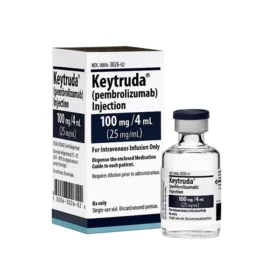 Keytruda
Vragen & antwoorden
Keytruda
Gerelateerde producten


Beoordelingen
Er zijn nog geen beoordelingen