








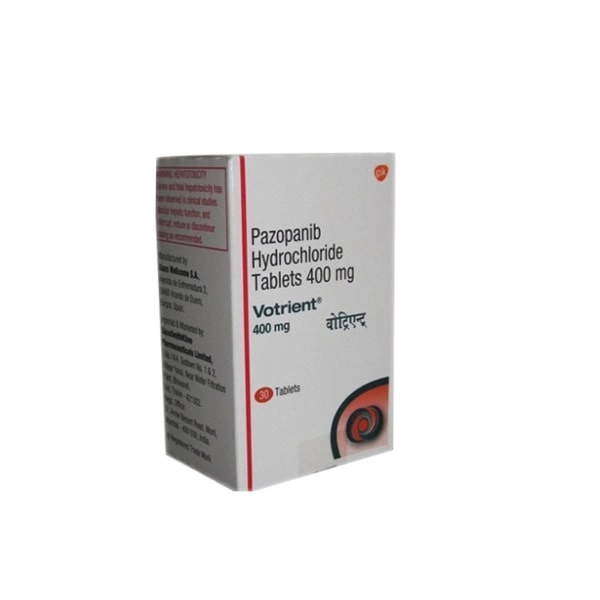
Votrient
✅ Remt de groei van kankercellen
✅ Behandelt gevorderde nierkanker
✅ Behandelt wekedelensarcomen
✅ Vertraagt tumorprogressie
✅ Gemak van orale toediening
✓ Medisch beoordeeld door Morgan Ellis — Apotheekonderzoeker · 8 jaar ervaring · Laatst beoordeeld: mei 2026
⚡ Snelle vraag — Wat is Votrient?
Votrient is een orale tablet van Novartis met pazopanib 400 mg — een multi-target tyrosinekinaseremmer (VEGFR-1/2/3, PDGFR-α/-β, KIT) voor gevorderd niercelcarcinoom (RCC) en gevorderde wekedelensarcomen (na eerdere chemotherapie). Standaarddosering: 800 mg eenmaal daags op een lege maag (1 uur voor of 2 uur na voedsel). Black-box waarschuwing voor hepatotoxiciteit — ernstige, soms fatale, leverschade. Verplichte wekelijkse leverfunctietesten gedurende de eerste 9 weken, daarna maandelijks. Andere belangrijke risico's: hypertensie (~40%), diarree, vermoeidheid, verandering van haarkleur (depigmentatie), proteïnurie, QT-verlenging, arteriële trombotische gebeurtenissen, GI-perforatie, vertraagde wondgenezing.
📦 Elke bestelling is gedekt door onze Reshipment Assurance-beleid — als uw pakket niet binnen 20 werkdagen arriveert, sturen wij het opnieuw.
Wat Is Votrient?
Votrient is een orale tablet van Novartis met pazopanib 400 mg. Pazopanib is een multi-target tyrosinekinaseremmer die actief is tegen VEGFR-1, VEGFR-2, VEGFR-3, PDGFR-α, PDGFR-β, FGFR-1 en KIT. Door het blokkeren van vasculaire en groeifactorsignalering remt het tumorangiogenese en -groei in vasculaire tumoren.
Toepassingen en Indicaties
- Gevorderd niercelcarcinoom (RCC) — eerstelijns en na cytokinetherapie
- Gevorderd wekedelensarcoom (STS) — na eerdere chemotherapie (PALETTE-studie)
Dosering en wijze van inname
Standaard dosering: 800 mg eenmaal daags (2 × 400 mg tabletten) op een lege maag — 1 uur voor of 2 uur na voedselinname. Voedsel verhoogt de absorptie van pazopanib met ~2-voudig, wat het toxiciteitsrisico verhoogt.
- Lege maag — verplicht. Stel een routine in: dosering 1 uur voor het ontbijt, OF 2 uur na het avondeten voor het slapen.
- Slik de tabletten heel door — niet pletten, oplossen of splitsen (significant veranderde absorptie).
- Verplichte monitoring: LFT's bij baseline, daarna wekelijks gedurende de eerste 9 weken, daarna maandelijks. Bloeddruk bij baseline + elke 1–2 weken gedurende de eerste 6 weken, daarna maandelijks. ECG (QTc) bij baseline + 4–6 weken. Urineonderzoek voor proteïnurie maandelijks. TFT (schildklier) elke 3 maanden.
- Doseraanpassingen: verlaag met 200–400 mg stappen bij graad ≥ 3 toxiciteit, AST/ALT > 8× ULN, ernstige hypertensie, ernstige proteïnurie of QT-verlenging.
- Stop pazopanib 7–14 dagen vóór electieve chirurgie; hervat 2–4 weken na volledige wondgenezing.
Bijwerkingen
Vaak voorkomend: diarree, vermoeidheid, misselijkheid, verminderde eetlust, gewichtsverlies, verandering van haarkleur (depigmentatie), hypertensie, hand-voet-syndroom, smaakverandering, mucositis.
Belangrijk:
- Hepatotoxiciteit (ZWARTE WAARSCHUWING) — ernstige, soms fatale, leverschade. Meeste gevallen in de eerste 4–9 weken. Verplichte leverfunctietestcontrole.
- Hypertensie (~40%) — nieuw ontstaan of verergering; agressief behandelen
- QT-verlenging en torsades de pointes
- Arteriële trombotische gebeurtenissen (hartinfarct, beroerte, TIA)
- Bloedingen (neusbloedingen, maag-darm, intracranieel)
- Maag-darmperforatie en fistelvorming
- Proteïnurie, nefrotisch syndroom
- Hypothyreoïdie
- Reversibel posterieur leuko-encefalopathiesyndroom (PRES)
- Vertraagde wondgenezing
Waarschuwingen
- Zwangerschap: teratogeen. Betrouwbare anticonceptie tijdens behandeling + 2 weken erna.
- Ernstige leverfunctiestoornis (Child-Pugh C): gecontra-indiceerd.
- QT-verlenging, elektrolytstoornissen: corrigeer hypokaliëmie/hypomagnesiëmie voor aanvang.
- Recent arterieel trombotisch event (< 6 maanden): vermijden.
- Chirurgie: stop 7–14 dagen voor; hervat 2–4 weken na.
Geneesmiddelinteracties
| Combineren met | Effect | Wat te doen |
|---|---|---|
| Sterke CYP3A4-remmers (ketoconazol, ritonavir, clarithromycine) | Verhoogde pazopanib-spiegels — toxiciteit | Verlaag pazopanib-dosis naar 400 mg/dag indien onvermijdbaar. |
| Sterke CYP3A4-induceerders (rifampicine, fenytoïne, carbamazepine, Sint-Janskruid) | Lagere pazopanib-spiegels — behandelingsfalen | Vermijden. |
| PPI's (omeprazol, esomeprazol, pantoprazol) | Verminderde pazopanib-opname aanzienlijk — behandelingsfalen | Schakel over naar kortwerkende H2-blokker; doseer apart indien H2-blokker nodig. |
| QT-verlengende middelen (citalopram, ondansetron, fluorchinolonen, methadon) | Additieve QT-verlenging | Vermijd combinaties; ECG-monitoring. |
| Warfarine | Bloedingsrisico; INR-variabiliteit | Controleer INR aanvankelijk wekelijks. |
| Grapefruitsap | Verhoogt de pazopanib-spiegels | Vermijden. |
Opslag
- Kamertemperatuur, 15–25°C, originele blister.
- Buiten bereik van kinderen, vrouwen in de vruchtbare leeftijd, huisdieren.
Gerelateerde alternatieven op MedsBase
Andere oncologische medicijnen die naast dit product wordt aangeboden:
Bekijk alle anti-kankermedicijnen →
Veelgestelde vragen
Waarom moet ik Votrient op een lege maag innemen?
Voedsel (vooral vetrijk) kan de opname van pazopanib verdubbelen, waardoor de bloedspiegels in het toxische bereik komen en het risico op hepatotoxiciteit, hypertensie en QT-verlenging toeneemt. Neem het 1 uur voor een maaltijd OF 2 uur na de laatste maaltijd in. De meeste patiënten vinden het het gemakkelijkst om pazopanib vlak voor het slapengaan in te nemen (ervan uitgaande dat het avondeten ≥ 2 uur eerder is afgerond) of direct na het opstaan.
Waarom wordt Votrient geassocieerd met ernstige hepatotoxiciteit?
Pazopanib heeft een FDA black-box waarschuwing voor ernstige, soms fatale, leverschade. De meeste gevallen doen zich voor in de eerste 4–9 weken. Verplichte monitoring: LFT's bij aanvang, daarna wekelijks gedurende de eerste 9 weken, daarna maandelijks. Stop pazopanib onmiddellijk bij AST/ALT > 8× ULN, of bij symptomen van leverschade (geelzucht, donkere urine, ernstige vermoeidheid).
Waarom verandert mijn haarkleur bij gebruik van Votrient?
Pazopanib remt tyrosinase (betrokken bij melaninesynthese) als bijwerking. Haarverkleuring — vaak dramatisch, soms wordt het haar binnen enkele maanden wit of grijs — is omkeerbaar na stopzetting. Komt voor bij ~40% van de patiënten. Puur cosmetisch, geen klinische betekenis.
Hoe wordt hypertensie behandeld?
Pazopanib-geïnduceerde hypertensie is mechanisme-gebonden (VEGF-remming vermindert stikstofmonoxide-synthese). Komt voor bij ~40% van de patiënten, vaak binnen de eerste 6 weken. Behandel agressief: ACE-remmer of ARB als eerste keus (ramipril, losartan, candesartan), voeg CCB of diureticum toe indien nodig. Vermijd het stoppen van pazopanib vanwege hypertensie als de bloeddruk onder controle kan worden gehouden — de hypertensie correleert juist met de antitumorwerking.
Waarom moet ik stoppen met Votrient voor een operatie?
Pazopanib belemmert wondgenezing (VEGF-gemedieerde angiogenese is essentieel voor wondherstel) en verhoogt het bloedingrisico. Stop 7–14 dagen voor een electieve operatie. Hervat alleen nadat de operatiewond volledig is genezen, meestal 2–4 weken na de operatie. Vertel elke chirurg en tandarts over pazopanib.
Kan ik een PPI gebruiken met Votrient?
PPI's (omeprazole, pantoprazole, esomeprazole) verhogen de maag-pH en verminderen de opname van pazopanib aanzienlijk — wat het risico op behandelingsfalen vergroot. Schakel over op een kortwerkende H2-blokker (famotidine) en houd een interval van minimaal 2 uur aan tussen de doseringen, OF gebruik alleen een antacidum bij symptomen, met een interval van minimaal 2 uur na inname van pazopanib.
Kan ik alcohol drinken met Votrient?
Beperk alcoholgebruik — zowel alcohol als pazopanib zijn hepatotoxisch en de combinatie verhoogt het risico op ernstige leverschade. Af en toe een kleine hoeveelheid kan soms worden verdragen, maar dagelijks of overmatig drinken moet worden vermeden.
Geneest Votrient mijn kanker?
Pazopanib is over het algemeen niet genezend voor gevorderde niercelkanker of sarcoom, maar het biedt wel een zinvolle ziektecontrole. Bij niercelkanker is de mediane progressievrije overleving met pazopanib als eerstelijnsbehandeling ongeveer 11 maanden (COMPARZ-studie). Bij sarcoom na chemotherapie is de verlenging van de progressievrije overleving bescheidener. De behandeling gaat door tot progressie of onaanvaardbare toxiciteit optreedt. Nieuwere immunotherapiecombinaties (pembrolizumab + axitinib, nivolumab + cabozantinib) hebben pazopanib-monotherapie grotendeels vervangen als eerstelijnsbehandeling voor niercelkanker waar deze beschikbaar zijn.
Waarom bestellen bij MedsBase
Elke batch wordt ingekocht bij een WHO-GMP gecertificeerde fabrikant. Bestellingen worden verzonden in eenvoudige, ongemarkeerde verpakkingen door onze logistieke partners en vallen onder onze Reshipment Assurance-beleid: als een pakket niet binnen 20 werkdagen arriveert, sturen wij kosteloos een nieuwe zending, zonder vragen te stellen.
Gerelateerde Antikankermedicijnen
Andere oncologische medicijnen die naast dit product wordt aangeboden:
- Imatib (imatinib 100/400 mg)
- Veenat (imatinib 100/400 mg)
- Imat (imatinib 100/400 mg)
- Riborea (ribociclib 200 mg)
- Keytruda (pembrolizumab 100 mg)
Meer opties in antikankermedicatie
Gerangschikt op recente bestelvolumes van MedsBase — wat andere klanten in deze categorie kiezen.


| Sterkte | 400 mg |
|---|---|
| Hoeveelheid | 30 Tablet/s, 60 Tablet/s, 90 Tablet/s |
| Farmaceutische vorm | Tablet/s |
| Fabrikant | Glaxosmithkline |
| Behandeling | Nierkanker, Weke delen sarcoom |
| Generiek merk | Pazopanib |
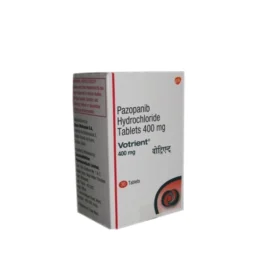 Votrient
Vragen & antwoorden
Votrient
Gerelateerde producten













Beoordelingen
Er zijn nog geen beoordelingen