







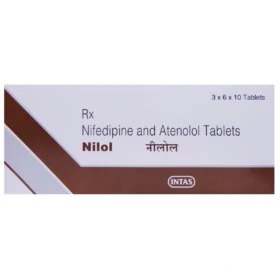
Nilol
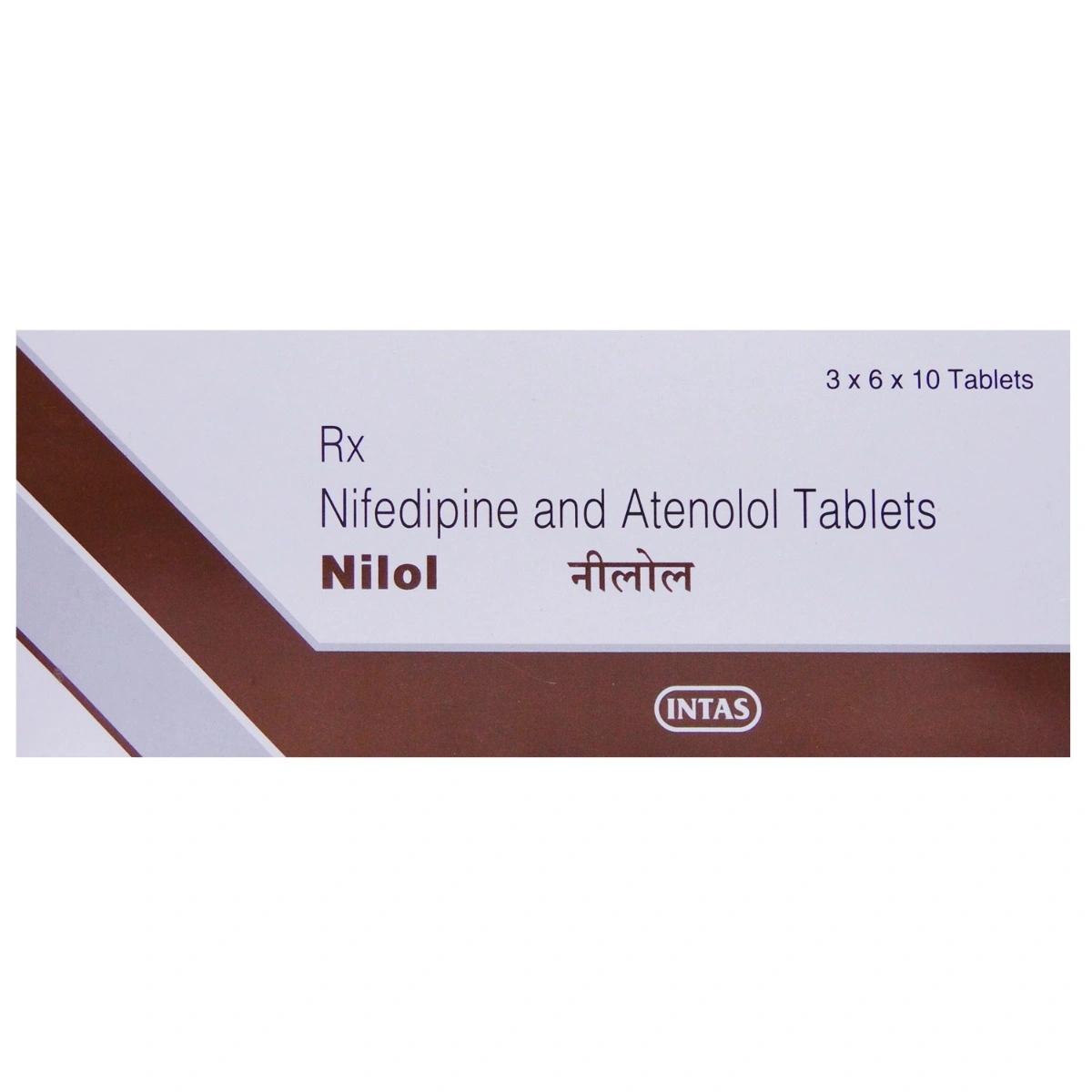
Nilol is een vaste dosiscombinatie van atenolol 50 mg + nifedipine 20 mg — een bètablokker plus een dihydropyridine calciumkanaalblokker voor gecombineerde hypertensie en stabiele angina pectoris. Complementaire werkingsmechanismen; atenolol blokkeert de reflex tachycardie veroorzaakt door nifedipine vasodilatatie. Eenmaal daags, 's ochtends. Niet voor gebruik tijdens de zwangerschap.
✓ Medisch beoordeeld door Morgan Ellis — Apotheekonderzoeker · 8 jaar ervaring · Laatst beoordeeld: mei 2026
Veelgestelde vragen
⚡ Kort antwoord — Wat is Nilol?
Nilol is een vaste dosiscombinatie van atenolol (bètablokker) + nifedipine (dihydropyridine calciumkanaalblokker) van een WHO-GMP gecertificeerde fabrikant — veel voorgeschreven in India en het subcontinent voor gecombineerde hypertensie en angina pectoris, vooral bij patiënten bij wie een monotherapie niet effectief is gebleken. De twee geneesmiddelen werken via complementaire mechanismen: atenolol vermindert het hartminuutvolume en de hartfrequentie (bèta-1 blokkade); nifedipine veroorzaakt directe arteriële vasodilatatie via L-type calciumkanaalblokkade. De bètablokker onderdrukt de reflex tachycardie die nifedipine anders zou veroorzaken. Typische dosering: één tablet eenmaal per dag. Contra-indicaties zijn afgeleid van beide componenten: astma / ernstige COPD / tweede-derdegraads hartblok / acuut hartfalen / ernstige aortastenose / recent myocardinfarct / cardiogene shock.
📦 Elke bestelling is gedekt door onze Reshipment Assurance-beleid — als uw pakket niet binnen 20 werkdagen arriveert, sturen wij het opnieuw.
Waarom bestellen bij MedsBase
Onze generieke medicijnen zijn afkomstig van WHO-GMP gecertificeerde fabrikanten en worden wereldwijd verzonden in discrete, eenvoudige verpakkingen — geen medicijnnaam op de buitenkant van het pakket. Betalingen met kaart worden verwerkt via een gereguleerde processor (betalingsoverzichten vermelden een gereguleerde kaartbetalingprocessor — nooit “MedsBase” of een medicijnnaam). Crypto en SEPA bankoverschrijvingen worden ook geaccepteerd. Elke bestelling wordt ondersteund door ons Reshipment Assurance Policy.
Wat is Nilol?
Nilol is een orale tablet van een WHO-GMP gecertificeerde fabrikant die bevat:
- Atenolol 50 mg — een cardioselectieve bèta-1-blokker (hetzelfde molecuul in Atenheal)
- Nifedipine 20 mg — een dihydropyridine calciumkanaalblokker (gereguleerde afgifte;zelfde molecuul in Depin, Nicardia Retard)
De combinatie ontstond in de jaren 80 in de Europese cardiologie (merknamen Tenif, Tenoretic) en blijft populair in India voor patiënten met zowel hypertensie als stabiele angina pectoris. De twee medicijnen richten zich op verschillende mechanismen: atenolol voor verlaging van hartslag en contractiliteit; nifedipine voor directe arteriële vasodilatatie. De bètablokker voorkomt de reflex tachycardie die monotherapie met nifedipine anders zou veroorzaken.
Hoe Nilol Werkt
- Atenolol — bèta-1-blokkade in de SA-knoop verlaagt de hartslag; blokkade in het ventriculaire myocard vermindert de contractiliteit. Lagere cardiale output = lagere bloeddruk; lagere myocardiale zuurstofbehoefte = minder angina.
- Nifedipine — L-type calciumkanaalblokkade in arteriële gladde spieren veroorzaakt directe arteriële verwijding. Verlaagt de systemische vaatweerstand en coronaire vasospasmen.
- Complementaire combinatie — puur nifedipine zou reflex tachycardie veroorzaken (sympathische reactie op vasodilatatie); atenolol blokkeert die reflex, wat een soepelere bloeddrukregulatie geeft zonder de bijwerking van hartkloppingen.
Toepassingen & Dosering
- Gecombineerde hypertensie + stabiele angina pectoris — primaire indicatie
- Resistente hypertensie — stapsgewijze therapie wanneer monotherapie niet effectief is
- Hypertensie met coronaire hartziekte
Dosering: één tablet eenmaal daags, meestal 's ochtends. Maximaal 2 tabletten/dag. Streefwaarde bloeddruk <140/90 (of <130/80 bij comorbiditeit).
Monitoring: baseline + periodiek ECG (atenolol bradycardie / nifedipine-effect op PR-interval), pols, bloeddruk, perifeer oedeem (nifedipine veroorzaakt vaak enkeloedeem).
Bijwerkingen
Gerelateerd aan atenolol: vermoeidheid, koude extremiteiten, bradycardie, inspanningsintolerantie, lichte vermoeidheid, erectiestoornissen, gemaskeerde hypoglykemie bij diabetici.
Gerelateerd aan nifedipine:
- Enkeloedeem (perifeer oedeem) — dosisafhankelijk; komt voor bij tot 25% van de langdurige gebruikers
- Flushing, hoofdpijn (vasodilatatie)
- Gingivale hyperplasie (tandvleesovergroei)
- Obstipatie
- Opvliegers, vooral bij start van de therapie
Contra-indicaties
- Astma / ernstige COPD (atenolol-component)
- Tweede/derdegraads hartblok, sinusbradycardie <50, sick-sinussyndroom
- Acute gedecompenseerd hartfalen, cardiogene shock
- Ernstige aortastenose (nifedipine kan verergeren)
- Recent myocardinfarct, instabiele angina pectoris (zorg bij kortwerkende nifedipine; de ER-vorm is veiliger)
- Ernstig nierfalen (eGFR <15 — dosisverlaging van atenolol nodig; voorkeur voor een niet-renaal geklaarde bètablokker)
- Zwangerschap (beide componenten)
- Overgevoeligheid voor een van de bestanddelen
Opslag
Bewaren bij een temperatuur onder 25°C; beschermen tegen licht.
Waarom atenolol combineren met nifedipine?
Complementaire werkingsmechanismen en vermindering van bijwerkingen. Nifedipine alleen veroorzaakt reflex tachycardie (sympathische reactie op vasodilatatie); atenolol blokkeert deze reflex, wat een gelijkmatigere bloeddrukregulatie geeft. Voor patiënten met zowel hypertensie ALS stabiele angina pectoris richten de twee medicijnen zich gelijktijdig op beide aandoeningen.
Hoe zit het met de enkelzwelling door nifedipine?
Dosisgerelateerd perifeer oedeem komt voor bij tot 25% van de langdurige nifedipinegebruikers. Het komt NIET door vochtretentie — het wordt veroorzaakt door precapillaire vasodilatatie die de hydrostatische druk in de onderbenen verhoogt. Behandeling: dosisverlaging, beenhoogstand, compressiekousen of overstappen op een niet-dihydropyridine calciumantagonist (verapamil, diltiazem) of een andere vasodilatorklasse (ACE-remmer, ARB).
Waarom dit niet gebruiken tijdens zwangerschap?
Atenolol wordt geassocieerd met intra-uteriene groeivertraging tijdens de zwangerschap (meer dan andere bètablokkers) en neonatale bradycardie/hypoglykemie. Voor antihypertensief gebruik tijdens zwangerschap zijn, labetalol, methyldopa en nifedipine-monotherapie (niet deze vaste combinatie) de voorkeursopties.
Waar kan ik Nilol online kopen?
U kunt Nilol (atenolol + nifedipine 50 mg + 20 mg, 30-180 tabletten) kopen bij MedsBase met discrete verpakking en wereldwijde verzending.
Gerelateerde bètablokkers & antihypertensiva
- Beloc — Propranolol 10/20/40 mg
- Betapro SR — Propranolol 80 mg SR
- Metolar — Metoprololtartraat 25/50/100 mg
- Metomac — Metoprolol 25 mg
- P-Nolol — Propranolol 20/40 mg
- Topme — Metoprolol 50 mg
- Bekijk alle hoge bloeddruk medicijnen
Gerelateerde alternatieven
Andere producten in Chronische aandoeningen die klanten ook bekijken:
Meer opties in medicatie tegen hoge bloeddruk
Gerangschikt op recente bestelvolumes van MedsBase — wat andere klanten in deze categorie kiezen.
| Sterkte | 20+50 mg |
|---|---|
| Hoeveelheid | 30 Tabletten, 60 Tabletten, 90 Tabletten, 180 Tabletten |
 Nilol
Nilol
Vragen & antwoorden
Nilol
Gerelateerde producten





Beoordelingen
Er zijn nog geen beoordelingen