







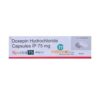
Doxin
Doxin (Doxepin 10/25/75 mg) — TCA met sterkste H1-sedatie voor depressie, angst, chronische slapeloosheid, urticaria. 3–6 mg HS voor slapeloosheid omzeilt TCA-klasse waarschuwingen.
✓ Medisch beoordeeld door Morgan Ellis — Apotheekonderzoeker · 8 jaar ervaring · Laatst beoordeeld: mei 2026
⚡ Snel antwoord
Doxin (Doxepin 10 / 25 / 75 mg) is een tricyclisch antidepressivum. Het meeste modern gebruik is bij lage doses voor chronische slapeloosheid (3–6 mg) of volledige antidepressieve doses (75–300 mg) voor sederende/angstremmende depressie.
📦 Elke bestelling is gedekt door onze Reshipment Assurance-beleid — als uw pakket niet binnen 20 werkdagen arriveert, sturen wij het opnieuw.
Waarom bestellen bij MedsBase
Doxin bij MedsBase wordt rechtstreeks geleverd door een WHO-GMP gecertificeerde fabrikant in eenvoudige, discrete verpakking. Elke bestelling wordt gedekt door onze Reshipment Assurance-beleid — 20 werkdagen levertermijn of wij sturen kosteloos opnieuw — en komt in aanmerking voor ons klantenloyaliteitsprogramma. Wereldwijde verzending is beschikbaar naar de meeste bestemmingen.
Wat Doxin is en hoe het werkt
Doxin is een tablet met Doxepin, geleverd door Sun Pharma. Beschikbare sterktes: 10 / 25 / 75 mg.
Doxepin is bijzonder onder de TCA's omdat het voornaamste moderne gebruik bij lage doses (3–6 mg) is voor chronische slapeloosheid — de diepe H1-antihistaminewerking is de sterkste van alle tricyclische middelen en biedt een slaaponderhoudend effect zonder het verslavingsprofiel van benzodiazepinen of Z-drugs. Bij volledige antidepressieve doseringen (75–300 mg) functioneert het als een klassiek gemengd serotonine-noradrenaline TCA met sederende, anxiolytische en pijnstillende eigenschappen.
Tricyclische antidepressiva blokkeren de heropname van serotonine en noradrenaline bij presynaptische transporters, vergelijkbaar met SSRIs en SNRIs. Hun nadeel qua verdraagbaarheid komt door off-target receptorblokkade: muscarinische (anticholinerge bijwerkingen), histaminerge H1 (sedatie, gewichtstoename) en α1-adrenerge (orthostatische hypotensie). Ze blokkeren ook snelle natriumkanalen in hartweefsel — de basis voor zowel hun pijnstillende werking als hun cardiale toxiciteit bij overdosering.
De 3–6 mg slaapstoornisindicatie is het enige TCA-doseringstraject dat geen ECG- en TCA-klasse anticholinergische voorlichting vereist — bij die doseringen is de systemische blootstelling verwaarloosbaar.
Indicaties en dosering
| Indicatie | Startdosering | Streefdosering | Maximaal |
|---|---|---|---|
| Ernstige depressie / angst | 25–75 mg HS | 75–300 mg/dag | 300 mg |
| Chronische slapeloosheid (lage dosis) | 3 mg HS | 3–6 mg HS | 6 mg |
| Chronische urticaria / pruritus | 10 mg TID | 10–25 mg TID | op basis van tolerantie |
| Oudere volwassenen | 10 mg HS | 30–75 mg/dag | 150 mg |
Belangrijke veiligheidsoverwegingen
TCA's verlengen QRS en QT, en een overdosis is levensbedreigend — historisch gezien de meest voorkomende oorzaak van fatale antidepressiva-incidenten. Basis-ECG voorafgaand aan initiatie bij patiënten met bekende hartaandoeningen, onder QT-verlengende therapie, of bij ouderen. Niet starten na recent myocardinfarct, bij geleidingsstoornissen, gedecompenseerd hartfalen of congenitaal lang QT. Beperk de verstrekking bij suïciderisico — de therapeutische-tot-toxische ratio is smal.
Droge mond, obstipatie, wazig zien, mictieproblemen, cognitieve vertraging — algemeen voorkomend bij therapeutische doseringen. Vermijd bij nauwe-kamerhoekglaucoom, BPH met significante retentie en dementie. Combineer met kauwgom/suikervrije pastilles, vezels + vocht en ontlastingsverzachters.
Alle antidepressiva dragen een FDA black-box waarschuwing voor verhoogde suïcidale gedachten bij patiënten onder de 25 — vooral relevant voor clomipramine bij adolescente OCD.
Veelvoorkomende bijwerkingen
- Anticholinergisch: droge mond, obstipatie, wazig zien, mictieproblemen.
- Sedatie: met name doxepine en clomipramine; dosering voor het slapengaan helpt.
- Cardiovasculair: orthostatische hypotensie (α1-blokkade), tachycardie, verlenging van het geleidingsinterval.
- Metabool: gewichtstoename (5–10 kg over 12 maanden bij veel patiënten), verhoogde eetlust.
- Seksueel: verminderd libido, vertraagde ejaculatie (soms klinisch gebruikt voor premature ejaculatie), erectiestoornissen.
- Ontwenning: afbouwen over 4 weken; abrupt stoppen veroorzaakt griepachtige symptomen, maag-darmklachten en slaapstoornissen.
Geneesmiddelinteracties
- MAO-remmers — absolute contra-indicatie. 14 dagen wash-out in beide richtingen.
- SSRI's / SNRI's — additief serotonerge risico; CYP2D6-remming door fluoxetine en paroxetine verhoogt de TCA-spiegels.
- QT-verlengende geneesmiddelen (azolen, macroliden, amiodaron, sotalol, methadon, ondansetron, antipsychotica) — additief risico.
- Andere anticholinergica (oxybutynine, benztropine, antihistaminica, clozapine, olanzapine) — additieve belasting bij oudere volwassenen.
- CNS-depressiva — additionele sedatie.
- Tramadol, bupropion, fluoroquinolonen — verlaagde drempel voor aanvallen; additief risico op aanvallen.
Zwangerschap, borstvoeding, pediatrie
TCA's zijn FDA-zwangerschap categorie C. Blootstelling laat in de zwangerschap kan neonatale anticholinerge ontwenning veroorzaken. Borstvoeding: TCA's komen in kleine hoeveelheden in de moedermelk terecht; nortriptyline en imipramine zijn het best onderzocht. Kinderen: imipramine is goedgekeurd vanaf 6 jaar (enurese) en clomipramine vanaf 10 jaar (OCD); doxepine bij adolescenten alleen met specialistische begeleiding.
Opslag
Bewaren bij 15–30 °C, uit direct zonlicht, in originele verpakking. Buiten bereik van kinderen houden — inname van TCA's door kinderen is een medisch noodgeval.
Veelgestelde vragen
Hoe lang duurt het voordat Doxin werkt?
TCA's tonen meestal verbetering binnen 2–4 weken. De verbeteringen in slaap en angst treden vaak al in week 1 op; het antidepressieve effect bouwt zich op over 4–6 weken.
Waarom 's avonds innemen?
Doxepine, clomipramine en imipramine hebben allemaal een sederende werking. Inname voor het slapengaan benut de sedatie als een gunstig neveneffect (slaap) in plaats van een belastend neveneffect (slaperigheid overdag). Het vermindert ook orthostatische hypotensie omdat de piek tijdens de slaap optreedt.
Is Doxin veilig voor oudere volwassenen?
TCA's staan op de Beers Criteria-lijst van mogelijk ongeschikte medicijnen voor oudere volwassenen vanwege de anticholinerge belasting, orthostatische hypotensie en cardiale risico's. Ze zijn niet absoluut gecontra-indiceerd, maar zijn over het algemeen tweedekeus — SSRI's/SNRI's hebben de voorkeur, tenzij een specifiek voordeel (bijv. pijn, slaap) de risico's overtreft.
Mag ik alcohol drinken tijdens het gebruik van Doxin?
Alcohol versterkt de sederende en orthostatische effecten van TCA's. Beperk het tot incidenteel en matig gebruik; vermijd binge-drinken helemaal. De combinatie is meestal niet gevaarlijk bij matig gebruik, maar voelt onaangenamer dan elk afzonderlijk.
Wat is het risico op een overdosis?
TCA's behoren tot de meest dodelijke medicijnklassen bij overdosering — hartgeleidingsstoornissen, epileptische aanvallen en coma kunnen optreden bij relatief lage veelvouden van de therapeutische dosis. Beperk de verstrekkingshoeveelheden bij patiënten met enig suïciderisico. Bij verdenking van een overdosis, ga onmiddellijk naar de spoedeisende hulp — natriumbicarbonaat is het antidotum voor de cardiale toxiciteit, maar timing is cruciaal.
Beïnvloedt Doxin mijn rijvaardigheid?
Sederende effecten en vertraagde reactietijd komen vaak voor in de eerste 1–2 weken. Vermijd autorijden totdat de tolerantie in stabiele toestand bekend is. Sommige patiënten verdragen volledige doses zonder rijbeperkingen; anderen blijven te gesedeerd, zelfs bij lage doses.
Kan Doxin gecombineerd worden met een SSRI?
Over het algemeen niet — de combinatie verhoogt het risico op serotoninesyndroom en de serumspiegels van TCA's (met name bij fluoxetine en paroxetine). De combinatie wordt soms gebruikt bij therapieresistente OCD of depressie onder specialistisch toezicht met TDM, nooit empirisch.
Hoe moet ik Doxin afbouwen?
Verlaag de dosering met ongeveer 25–50% elke 2 weken. Ontwenning (soms “TCA-griep” genoemd) veroorzaakt malaise, maag-darmklachten en slaapstoornissen — dit is beheersbaar met een langzamer afbouwschema. Overleg met de voorschrijvend arts voordat u stopt.
Veroorzaakt Doxin gewichtstoename?
Ja — de meeste TCA's veroorzaken aanzienlijke gewichtstoename over 6–12 maanden, vaak 5–10 kg. Doxepine en amitriptyline zijn het ergst; nortriptyline minder. Als dit een groot probleem is, bespreek dit dan voor aanvang — een SSRI/SNRI kan een betere keuze zijn.
Kan Doxin gebruikt worden voor chronische pijn?
Ja — TCA's (met name amitriptyline, nortriptyline en imipramine) in lage doses (10–75 mg) zijn eerste keus bij diabetische perifere neuropathie, postherpetische neuralgie en chronische spanningshoofdpijn. Natriumkanaalblokkade is het dominante werkingsmechanisme. Het pijnstillende effect is onafhankelijk van het antidepressieve effect en treedt eerder op (1–2 weken).
Andere medicijnen voor geestelijke gezondheid
- Spectra (Doxepine TCA)
- Doxin (Doxepine TCA)
- Antidep (Imipramine TCA)
- Flunil (Fluoxetine SSRI)
- Duvanta (Duloxetine SNRI)
Meer opties in Mentale Gezondheid en Psychiatrische Medicatie
Gerangschikt op recente bestelvolumes van MedsBase — wat andere klanten in deze categorie kiezen.


| Sterkte | 10 mg, 25 mg |
|---|---|
| Hoeveelheid | 30 Tabletten, 60 Tabletten, 90 Tabletten, 180 Tabletten |
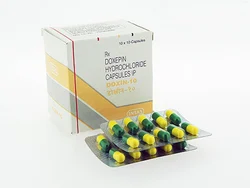 Doxin
Doxin
Vragen & antwoorden
Doxin
Gerelateerde producten






Beoordelingen
Er zijn nog geen beoordelingen