







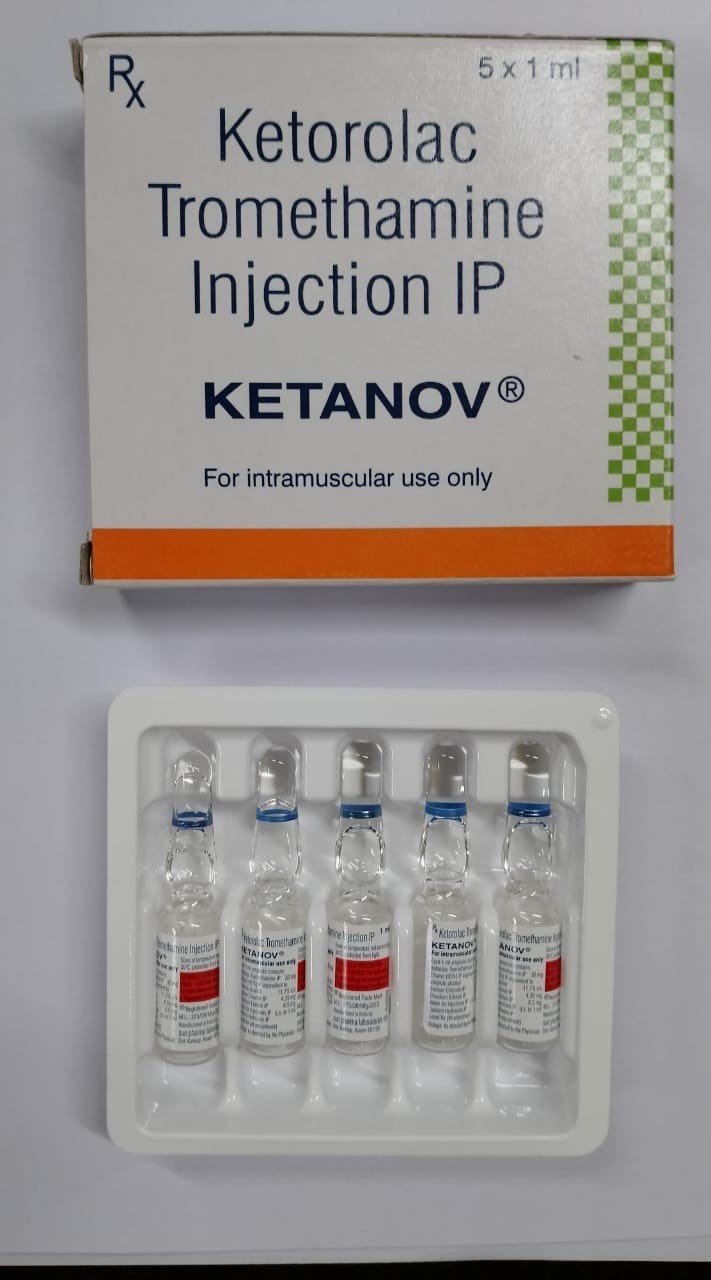
Ketanov Injectie
✅ Snelle pijnverlichting
✅ Krachtig ontstekingsremmend
✅ Gemak van injecteerbare toediening
✅ Effectief na operaties
✅ Pijnstillende werking
Ketanov-injectie bevat Ketorolac.
✓ Medisch beoordeeld door Morgan Ellis — Apotheekonderzoeker · 8 jaar ervaring · Laatst beoordeeld: mei 2026
⚡ Snelle vraag — Wat is Ketanov-injectie?
Ketanov Injectie is een ketorolac tromethamine 30 mg/ml ampul gedurende intramusculair of intraveneus toediening. Het is een van de krachtigste parenterale NSAID's die beschikbaar is en wordt gebruikt op spoedeisende hulpafdelingen, bij dagbehandelingen en postoperatief voor matige tot ernstige acute pijn. Standaard dosering voor volwassenen is 30 mg intramusculair elke 6 uur (maximaal 120 mg/dag gedurende ≤ 2 dagen parenteraal, ≤ 5 dagen totaal inclusief eventuele orale ketorolac). Het is niet niet bedoeld voor chronisch gebruik.
📦 Elke bestelling is gedekt door onze Reshipment Assurance-beleid — als uw pakket niet binnen 20 werkdagen arriveert, sturen wij het opnieuw.
Waarom bestellen bij MedsBase
Onze generieke medicijnen zijn afkomstig van WHO-GMP gecertificeerde fabrikanten en worden wereldwijd verzonden in discrete, eenvoudige verpakkingen — geen medicijnnaam op de buitenkant van het pakket. Betalingen met kaart worden verwerkt via een gereguleerde processor (betalingsoverzichten vermelden een gereguleerde kaartbetalingprocessor — nooit “MedsBase” of een medicijnnaam). Crypto en SEPA bankoverschrijvingen worden ook geaccepteerd. Elke bestelling wordt ondersteund door ons Reshipment Assurance Policy.
Ketanov Injectie is een ampul met ketorolac tromethamine 30 mg/ml, geproduceerd door Cipla. Ketorolac-injectie wordt gebruikt in acute zorgsettings waar sterke, snelle, niet-opioïde pijnbestrijding nodig is — spoedeisende hulp bij nierkoliek en ernstig trauma, postoperatieve herstelafdelingen, dagbehandelingsunits en peri-operatieve pijnprotocollen die gericht zijn op het verminderen van opioïdebehoefte.
De parenterale pijnstillende werking van ketorolac is vergelijkbaar met morfine in lage dosering: 30 mg intramusculaire ketorolac is ruwweg equivalent aan 6–12 mg intramusculaire morfine bij matige postoperatieve pijn, zonder de sedatie, ademhalingsdepressie of misbruikpotentieel.
Waar wordt Ketanov-injectie voor gebruikt?
- Postoperatieve pijn — met name bij dagbehandelingen en orthopedische ingrepen; vaak gecombineerd met paracetamol voor een “opioïd-besparend” regime
- Nierkoliek — pijn bij nierstenen; parenterale ketorolac is een eerstelijnsbehandeling in veel SEH-protocollen
- Galsteenkoliek
- Acuut musculoskeletaal trauma — fracturen vóór definitieve behandeling, ernstig weke delen letsel
- Ernstige acute migraine — wanneer orale therapie faalt of braken orale inname verhindert
- Ernstige dysmenorroe — wanneer orale NSAID niet wordt verdragen
- Acuut-op-chronische kankerpijn — kortdurende aanvulling op opioïdtherapie onder specialistische begeleiding
Hoe Werkt Ketorolac?
Ketorolac is een niet-selectieve NSAID — het blokkeert zowel COX-1 (die het maagslijmvlies, de bloedplaatjesfunctie en de nierdoorbloeding in stand houdt) en COX-2 (die opgereguleerd wordt bij ontstekingshaarden). Deze brede werking verklaart zowel het sterke ontstekingsremmende effect als het bekende maag-darm- en nierbijwerkingsprofiel.
De therapeutische keten van gebeurtenissen is hetzelfde voor elke NSAID:
- Weefselbeschadiging of ontsteking geeft fosfolipiden vrij uit celmembranen
- Fosfolipase A₂ zet deze om in arachidonzuur
- Cyclo-oxygenase (COX-1/COX-2) zet arachidonzuur om in prostaglandinen — de moleculen die verantwoordelijk zijn voor pijn, zwelling en koorts
- Ketorolac blokkeert de COX-enzymen, waardoor minder prostaglandine wordt geproduceerd en er minder pijn en ontsteking is
Omdat prostaglandinen ook het maagslijmvlies beschermen, de nierdoorbloeding reguleren en de bloedplaatjesfunctie beïnvloeden, is hetzelfde mechanisme dat pijn verlicht ook verantwoordelijk voor de belangrijkste bijwerkingen van NSAID's: maagirritatie, vochtretentie, hoge bloeddruk en (bij sommige personen) nierbelasting.
Ketanov Injectie Dosering
- Volwassenen (> 50 kg, onder 65): 30 mg intramusculair of langzaam intraveneus elke 6 uur; maximaal 120 mg/dag
- Ouderen (> 65), lichaamsgewicht < 50 kg, milde nierfunctiestoornis: 15 mg elke 6 uur; maximaal 60 mg/dag
- Enkele dosis IM: 60 mg (onder 65, normaal gewicht) of 30 mg (ouderen, laag gewicht)
- Enkele dosis IV: 30 mg langzaam IV push gedurende minimaal 15 seconden
- Maximale parenterale behandelduur: 2 dagen
- Maximale totale behandelduur (parenteraal + oraal): 5 dagen
De injectie wordt toegediend door een zorgprofessional. Zelftoediening is niet geschikt voor ketorolac.
Bij overgang van injectie naar oraal: de eerste orale dosis wordt toegediend op het tijdstip waarop de volgende parenterale dosis gepland was. De totale gecombineerde therapie mag nog steeds niet langer dan 5 dagen duren.
Maag-darmveiligheid — lees dit voor de eerste dosis. Elke NSAID, inclusief Ketanov-injectie, brengt een reëel risico op gastritis, maagzweren en bovenste GI-bloedingen met zich mee. Het risico is het hoogst bij patiënten ouder dan 65, bij mensen met een voorgeschiedenis van maagzweren en bij iedereen die ook lage doses aspirine, corticosteroïden, SSRI's of anticoagulantia gebruikt. Gebruik Ketanov-injectie met voedsel, in, gebruik de laagst effectieve dosis voor de kortst mogelijke tijd, en overleg met uw arts over het voorschrijven van een protonpompremmer (omeprazol, pantoprazol) als u het langer dan 2–4 weken nodig heeft.
Wie mag Ketanov-injectie niet ontvangen?
- Bekende overgevoeligheid voor Ketorolac of enige NSAID
- Actieve of terugkerende maagzweer, maag-darmbloeding of maag-darmperforatie
- Astma, netelroos of neusontsteking veroorzaakt door aspirine of een andere NSAID (“aspirine-geïnduceerde luchtwegziekte”)
- Ernstig hartfalen (NYHA klasse IV)
- Ernstige leverinsufficiëntie (Child–Pugh C)
- Ernstige nierinsufficiëntie (CrCl < 30 ml/min)
- Derde trimester van de zwangerschap (risico op voortijdige sluiting van de ductus arteriosus en oligohydramnion)
- Recentelijke coronaire bypassoperatie (CABG) — absolute contra-indicatie voor alle NSAID's
Specifiek voor parenterale ketorolac:
- Vermoedelijke of daadwerkelijke cerebrovasculaire bloeding, intracraniële chirurgie of bloeddiathese
- Onvolledige hemostase of hoog bloedingsrisico (bijv. bij gebruik van anticoagulantia)
- Neuraxiale (ruggenmerg/epidurale) toediening — de formulering is niet bedoeld voor deze route
- Bevalling en bevalling
- Ernstige vochttekort — eerst rehydreren
- Kinderen < 16 jaar in de meeste rechtsgebieden
- Profylaxe vóór grote operaties met een hoog bloedingsrisico
Cardiovasculair risico
Alle NSAID's (behalve lage doses aspirine) brengen een verhoogd risico op hartaanval en beroerte met zich mee en kunnen hartfalen verergeren. Het risico is afhankelijk van de dosis en duur en is over het algemeen het hoogst bij COX-2-selectieve middelen en bij diclofenac. Patiënten met vastgestelde ischemische hartziekte, perifeer arterieel vaatlijden, beroerte of ongecontroleerde hypertensie moeten niet-selectieve NSAID's (ibuprofen of naproxen) gebruiken in de laagst effectieve dosis, of waar mogelijk paracetamol gebruiken in plaats daarvan.
Nierveiligheid
NSAID's verminderen de productie van renale prostaglandinen, wat kan leiden tot zout- en waterretentie, verhoging van de bloeddruk en - bij kwetsbare patiënten - acuut nierletsel. Hoogrisicogroepen zijn ouderen, patiënten die ACE-remmers/ARB's plus diuretica gebruiken (de “triple whammy”), iedereen die uitgedroogd is (braken, diarree, hitte, zware inspanning) en mensen met reeds bestaande chronische nierziekte. Stop het NSAID en raadpleeg een arts als u verminderde urineproductie, zwelling of onverklaarbare gewichtstoename ontwikkelt.
Bijwerkingen van Ketanov-injectie
- Vaak voorkomend: pijn op de plaats van de IM-injectie, misselijkheid, dyspepsie, slaperigheid, duizeligheid, zweten, hoofdpijn
- Zeldzaam maar belangrijk: maagzweer en GI-bloedingen, acuut nierletsel (vooral bij uitgedroogde of oudere patiënten), hypertensie, postoperatieve wondbloedingen, verhoogde leverenzymen
- Zeldzaam: anafylaxie, ernstige hepatotoxiciteit, Stevens-Johnson-syndroom, bronchospasme, aseptische meningitis
Zoek dringend medische hulp bij: tekenen van maag-darmbloedingen, ademhalingsmoeilijkheden, gezichtszwelling, ernstige bloedingen na een operatie, verminderde urineproductie of een uitgebreide huiduitslag.
Bestellen & Levering
MedsBase biedt wereldwijde verzending voor elke bestelling. Bestellingen worden verzonden in discrete verpakkingen en arriveren in verpakkingen van de fabrikant. Als uw voorkeurssterkte of verpakkingsgrootte niet op voorraad is, neem dan contact op met de klantenservice voor een leverdatum.
Medisch disclaimer. De informatie op deze pagina is alleen bedoeld voor algemene educatie. Het is geen vervanging voor advies van uw eigen arts of apotheker. NSAID's hebben goed gedocumenteerde gastro-intestinale, cardiovasculaire en renale risico's - overleg met een gekwalificeerde zorgverlener voordat u met, stopt of verandert van therapie, vooral als u een voorgeschiedenis heeft van maagzweer, hartaandoeningen, nieraandoeningen, astma of zwanger bent.
Veelgestelde vragen
Waar wordt Ketanov-injectie voor gebruikt?
Ketanov-injectie (ketorolac 30 mg/ml) wordt gebruikt voor de kortdurende behandeling van matige tot ernstige acute pijn — postoperatief, nierkoliek, galkoliek, acuut trauma, ernstige migraine en ernstige dysmenorroe.
Hoe verschilt Ketanov-injectie van Ketorol DT?
Zelfde molecuul (ketorolac). Ketanov is de 30 mg/ml IM/IV-injectie die wordt gebruikt op spoedeisende hulp en postoperatieve zorg; Ketorol DT is de 10 mg orodispergeerbare tablet voor stapelverlaging of thuisgebruik. De totale gecombineerde therapie mag niet langer dan 5 dagen duren.
Hoe snel werkt Ketanov-injectie?
Werking begint na 10–30 minuten IM en binnen enkele minuten IV. Piekwerking na 45–60 minuten IM; werkingsduur 4–6 uur per dosis.
Is Ketanov-injectie even sterk als morfine?
Voor matige postoperatieve pijn is 30 mg IM ketorolac in de meeste studies vergelijkbaar met 6–12 mg IM morfine, zonder sedatie, ademhalingsdepressie of verslavingsrisico. Veel ziekenhuizen gebruiken ketorolac als onderdeel van een opioïdbesparend regime.
Kan ik Ketanov-injectie thuis toedienen?
Nee. Ketanov is een IM/IV-injectie die moet worden toegediend door een getraind zorgprofessional. Zelftoediening is niet geschikt vanwege het bloedingrisico, mogelijke injectieplaatsproblemen en de noodzaak van klinische monitoring.
Waarom mag ik ketorolac niet langer dan 5 dagen gebruiken?
Het risico op maagzweren, maag-darmbloedingen en acuut nierletsel neemt sterk toe na meer dan 5 dagen continue ketorolac-therapie. Dit is een regelgevende en klinische limiet. Na 5 dagen moet uw pijn worden behandeld met andere NSAID's, paracetamol of — indien echt nodig — opioïden, onder medisch toezicht.
Kan Ketanov-injectie worden gecombineerd met paracetamol?
Ja — deze combinatie is standaard peri-operatieve zorg. Paracetamol 1 g IV of oraal plus ketorolac 30 mg IM geeft een additieve, multimodale pijnverlichting.
Kan Ketanov-injectie voor een operatie worden gegeven?
Meestal niet als preventieve pijnstiller bij ingrepen met een hoog bloedingsrisico. Bij operaties met een lager bloedingsrisico wordt soms een dosis tijdens de operatie gebruikt, afhankelijk van het oordeel van de chirurg.
Is Ketanov-injectie veilig voor oudere patiënten?
Gebruik een verlaagde dosis (15 mg elke 6 uur, maximaal 60 mg/dag) en de kortst mogelijke behandelduur. Oudere patiënten lopen vooral risico op maag-darm- en nierbijwerkingen.
Veroorzaakt Ketanov-injectie slaperigheid of sedatie?
Lichte slaperigheid is mogelijk, maar ketorolac veroorzaakt niet de sterke sedatie die bij opioïden wordt gezien.
Is Ketanov-injectie veilig tijdens de zwangerschap?
Nee — ketorolac is gecontra-indiceerd tijdens de bevalling en moet vanaf 20 weken zwangerschap worden vermeden. Paracetamol of morfine-equivalente pijnstilling heeft de voorkeur.
Gerelateerde alternatieven
Andere producten in Chronische aandoeningen die klanten ook bekijken:
Meer opties in pijnstillende medicatie
Gerangschikt op recente bestelvolumes van MedsBase — wat andere klanten in deze categorie kiezen.
| Sterkte | 1 ml |
|---|---|
| Hoeveelheid | 5 Ampul(len), 10 Ampul(len), 15 Ampul(len), 30 Ampul(len) |
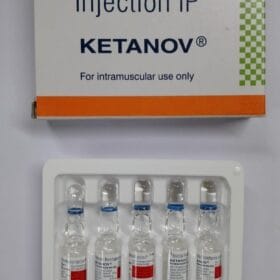 Ketanov Injectie
Vragen & antwoorden
Ketanov Injectie
Gerelateerde producten





Beoordelingen
Er zijn nog geen beoordelingen