









Lamitor OD
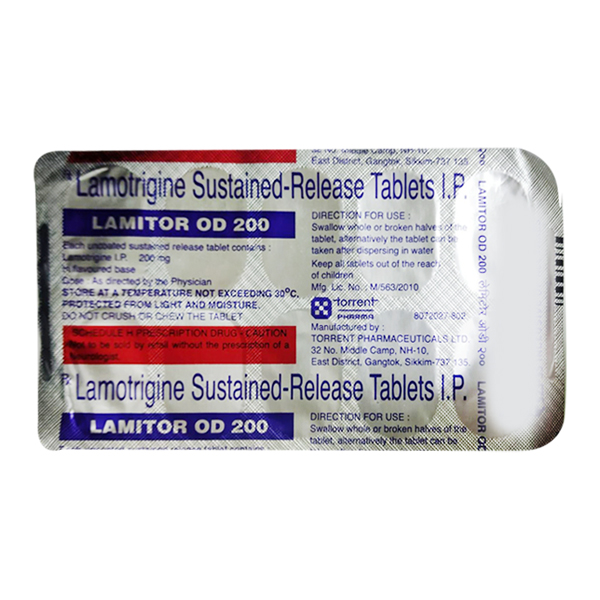
✅ Beheerst aanvallen
✅ Behandelt bipolaire stoornis
✅ Stabiliseert stemming
✅ Voorkomt depressieve episodes
✅ Bevat Lamotrigine
Lamitor OD bevat Lamotrigine.
✓ Medisch beoordeeld door Morgan Ellis — Apotheekonderzoeker · 8 jaar ervaring · Laatst beoordeeld: mei 2026
⚡ Snel antwoord — Wat is Lamitor OD?
Lamitor OD is een oraal orodispersible / eenmaal daags tablet met verlengde afgifte die lamotrigine (200 mg) — een breedspectrum anticonvulsivum en stemmingsstabilisator. Gebruikt voor: partiële en gegeneraliseerde tonisch-clonische aanvallen, Lennox-Gastaut-syndroom, en onderhoudstherapie bij bipolaire stoornis type I (ter voorkoming van depressieve episodes). Dosering voor volwassenen vereist langzame titratie over 6 weken — snelle opdosing is de belangrijkste oorzaak van ernstige huiduitslag en het syndroom van Stevens-Johnson. Standaard onderhoudsdosering: 200–400 mg/dag in 1–2 doses. Halveer deze dosis bij combinatie met valproaat; verdubbel bij combinatie met carbamazepine/fenytoïne. In te nemen met of zonder voedsel. Veelvoorkomende bijwerkingen: huiduitslag, hoofdpijn, duizeligheid, dubbelzien. Onmiddellijk stoppen bij elke nieuwe huiduitslag — het risico op SJS/TEN is het hoogst in de eerste 8 weken. Een van de weinige anticonvulsiva met relatief laag foetaal risico tijdens de zwangerschap.
📦 Elke bestelling is gedekt door onze Reshipment Assurance-beleid — als uw pakket niet binnen 20 werkdagen arriveert, sturen wij het opnieuw.
Waarom bestellen bij MedsBase
Onze generieke medicijnen zijn afkomstig van WHO-GMP gecertificeerde fabrikanten en worden wereldwijd verzonden in discrete, eenvoudige verpakkingen — geen medicijnnaam op de buitenkant van het pakket. Betalingen met kaart worden verwerkt via een gereguleerde processor (betalingsoverzichten vermelden een gereguleerde kaartbetalingprocessor — nooit “MedsBase” of een medicijnnaam). Crypto en SEPA bankoverschrijvingen worden ook geaccepteerd. Elke bestelling wordt ondersteund door ons Reshipment Assurance Policy.
Wat Is Lamitor OD?
Lamitor OD is een orale lamotrigine OD tablet met verlengde afgifte, verkrijgbaar in sterktes van 200 mg. Lamotrigine is een fenyltriazine-anticonvulsivum dat al lang een eerstelijnsmiddel is voor focale epilepsie, gegeneraliseerde tonisch-clonische aanvallen en onderhoudsbehandeling bij bipolaire stoornis type I sinds de late jaren 90. Het staat op de WHO Model List of Essential Medicines.
De OD/verlengde afgifte-formulering zorgt voor een vlakker plasmaconcentratieprofiel, wat piekgerelateerde bijwerkingen (slaperigheid, duizeligheid) vermindert en eenmaal daagse dosering ondersteunt zodra de patiënt stabiel is op de onderhoudsdosis.
Lamitor OD wordt geleverd door een WHO-GMP gecertificeerde fabrikant en is bio-equivalent aan het originele lamotrigine (Lamictal®).
Hoe Werkt Lamitor OD?
Lamotrigine heeft meerdere complementaire werkingsmechanismen:
- Blokkade van voltage-afhankelijke natriumkanalen op een gebruik-afhankelijke manier — het primaire anti-epileptische mechanisme. Het onderdrukt selectief hyperactieve neuronen zonder normale activiteit te beïnvloeden.
- Vermindering van glutamaatafgifte aan presynaptische uiteinden — draagt bij aan zowel aanvalscontrole als stemmingsstabilisatie.
- Bescheiden remming van hooggespanningsgeactiveerde calciumkanalen — complementair aan het natriumkanaaleffect.
Dit mechanismenprofiel maakt lamotrigine effectief tegen focale aanvallen, gegeneraliseerde tonisch-clonische aanvallen en bipolaire depressie (het enige stemmingsstabiliserende anticonvulsivum dat specifiek is goedgekeurd voor onderhoudstherapie bij bipolaire stoornis om te voorkomen depressie, niet manie). Het wordt over het algemeen niet gebruikt bij myoclonische aanvallen, waar het soms de aanvalsfrequentie kan verergeren.
Toepassingen en Indicaties
- Partiële (focale) aanvallen met of zonder secundaire generalisatie — eerstelijns monotherapie bij volwassenen en adolescenten
- Primair gegeneraliseerde tonisch-clonische aanvallen — eerstelijns, met name bij vrouwen in de vruchtbare leeftijd (alternatief voor valproaat)
- Lennox-Gastaut-syndroom — aanvullende therapie voor drop attacks en atypische absences
- Bipolaire stoornis type I — onderhoudstherapie voor het voorkomen van stemmingsepisoden, met name depressieve episoden (FDA-goedgekeurd). Niet eerstelijns voor acute manie.
- Off-label gebruik: bipolaire II depressie, therapieresistente unipolaire depressie (adjunct), borderline persoonlijkheidsstoornis, perifere neuropathie
Lamitor OD is niet eerstelijns voor: acute manie (gebruik valproaat of atypisch antipsychoticum); myoclonische aanvallen (kan deze verergeren); status epilepticus (geen IV-vorm, trage start).
Lamitor OD Dosering en Hoe In Te Nemen
Lamitor OD sterktes: 200 mg.
Lamotrigine titratie is afhankelijk van indicatie en co-medicatie en moet altijd langzaam worden opgebouwd. Het titratieschema is de belangrijkste factor om ernstige huiduitslag te voorkomen.
Monotherapie bij volwassenen of add-on zonder enzyminduceerders/valproaat (epilepsie):
- Week 1–2: 25 mg eenmaal daags
- Week 3–4: 50 mg eenmaal daags
- Week 5: 100 mg eenmaal daags (of 50 mg tweemaal daags)
- Week 6+: verhoog met 50–100 mg elke 1–2 weken. Onderhoudsdosis 100–400 mg/dag in 1–2 doses.
Add-on bij valproaat (wat lamotriginespiegels verdubbelt):
- Week 1–2: 25 mg om de dag
- Week 3–4: 25 mg eenmaal daags
- Week 5: 50 mg eenmaal daags; langzaam opbouwen naar 100–200 mg/dag totaal
Toevoegen aan enzyminduceerders (carbamazepine, fenytoïne, fenobarbital, primidon) zonder valproaat:
- Weken 1–2: 50 mg eenmaal daags
- Weken 3–4: 100 mg/dag in 2 doses
- Week 5+: verhoog met 100 mg/week. Onderhoudsdosering 200–700 mg/dag in 2 doses.
Onderhoudsbehandeling bipolaire stoornis I: Zelfde monotherapieschema, streefdosering 200 mg/dag (of 100 mg bij valproaat, 400 mg bij enzyminduceerders).
Hoe Lamitor OD correct in te nemen
- Volg het opbouwschema exact. Een stap overslaan of sneller opbouwen verhoogt het risico op huiduitslag aanzienlijk. Sneller opbouwen heeft geen klinisch voordeel.
- Met of zonder voedsel. Voeding heeft geen significant effect op de opname. Bij maag-darmklachten innemen met voedsel.
- Als u meer dan 5 opeenvolgende dagen overslaat, moet u het opbouwschema vanaf week 1 herstarten. De tolerantie voor huiduitslag door lamotrigine neemt snel af. Na een behandelingsonderbreking niet hervatten op de vorige dosis.
- Tweemaal daagse dosering bij onderhoudsdosering voor de meeste patiënten (halfwaardetijd 24–30 uur, maar korter bij enzyminduceerders). Eenmaal daags doseren is voldoende voor de OD/verlengde afgifte-vorm.
- Stop het medicijn bij elke nieuwe huiduitslag in de eerste 8 weken. De meeste lamotrigine-uitslagen zijn goedaardige morbilliforme erupties, maar het syndroom van Stevens-Johnson en TEN zijn in de eerste 24-48 uur niet te onderscheiden. De drempel om te stoppen is zeer laag.
- Nooit abrupt stoppen voor epilepsie — reboundaanvallen en status epilepticus zijn mogelijk. Afbouwen over 2 weken, tenzij een ernstige bijwerking (uitslag, anafylaxie) onmiddellijke stopzetting vereist.
- Gecombineerde orale anticonceptiva kunnen de lamotriginespiegel halveren. Informeer uw voorschrijver als u start of stopt met de pil — de dosis moet mogelijk worden verhoogd tijdens de pil of verlaagd in de pilvrije week.
- Zwangerschap en borstvoeding: lamotrigine behoort tot de anticonvulsiva met een lager risico voor blootstelling van de foetus. De spiegels dalen dramatisch tijdens de zwangerschap en stijgen weer na de bevalling — therapeutische geneesmiddelenmonitoring in gespecialiseerde klinieken wordt aanbevolen.
Bijwerkingen van Lamitor OD
Vaak voorkomend (vaak dosisgerelateerd, kan verbeteren):
- Hoofdpijn
- Duizeligheid
- Misselijkheid
- Diplopie (dubbelzien)
- Slaperigheid of slapeloosheid (paradoxaal — slapeloosheid bij sommige patiënten, sedatie bij anderen)
- Tremor
- Ataxie — meestal bij snelle titratie of hoge doses
- Milde morbilliforme uitslag (5-10% van de patiënten bij langzame titratie)
Minder vaak maar belangrijk:
- Stemmingsactivatie, prikkelbaarheid, rusteloosheid
- Aseptische meningitis (zeer zeldzaam)
- Bewegingsstoornissen — tics, dystonie (zeldzaam)
- Slapeloosheid
- Verergering van myoclonische aanvallen bij sommige genetische gegeneraliseerde epilepsieën
Zeldzaam maar zoek direct medische hulp:
- Syndroom van Stevens-Johnson en toxische epidermale necrolyse (TEN) — het risico is het hoogst in de eerste 8 weken, verhoogd door snelle titratie en gelijktijdig gebruik van valproaat. Ongeveer 1 op de 1.000 volwassenen; hoger bij kinderen. Stop het medicijn bij het eerste teken van huiduitslag, mucosale betrokkenheid of systemische ziekte met koorts.
- Geneesmiddelenreactie met eosinofilie en systemische symptomen (DRESS) — koorts, lymfadenopathie, hepatitis, eosinofilie. Onmiddellijk stoppen.
- Hemofagocytaire lymfohistiocytose (HLH) — zeer zeldzaam, levensbedreigende immuunactivatie. FDA-waarschuwing uitgegeven in 2018.
- Ernstige hartritmestoornissen — Brugada-achtige ECG-veranderingen zijn gemeld bij patiënten met structurele hartaandoeningen (FDA-waarschuwing 2021). Voorzichtigheid geboden bij bestaande hartaandoeningen en Brugada-syndroom.
- Suïcidale gedachten — klassewaarschuwing voor alle anti-epileptica.
- Anafylaxie
Waarschuwingen en voorzorgsmaatregelen — KRITISCH
- Ernstige huidreacties (SJS/TEN/DRESS) — lamotrigine heeft een black-box waarschuwing. Risicofactoren: snelle titratie, gelijktijdig gebruik van valproaat, leeftijd <16 jaar, eerdere huiduitslag door anti-epileptica. Stop bij huiduitslag en zoek binnen enkele uren medische hulp, niet dagen.
- Geneesmiddelinteracties zijn belangrijker dan bij de meeste andere anti-epileptica. Valproaat verdubbelt de lamotriginespiegel; carbamazepine/fenytoïne/fenobarbital/primidon halveren deze; oestrogeenbevattende anticonceptiva halveren deze ongeveer. De doseringsschema's verschillen per scenario.
- Zwangerschap: Lamotrigine is een van de veiligere anti-epileptica tijdens zwangerschap (registergegevens tonen geen duidelijke toename van grote misvormingen bij typische doseringen). Echter neemt de klaring van lamotrigine tijdens zwangerschap aanzienlijk toe; doorbraakaanvallen komen vaak voor als de dosis niet wordt aangepast. Specialistische follow-up is essentieel.
- Cardiale waarschuwing (FDA 2021): wees voorzichtig bij patiënten met structurele hartziekte, geleidingsstoornissen of het Brugada-syndroom. Een basis-ECG is redelijk bij oudere volwassenen met cardiale voorgeschiedenis.
- Aseptische meningitis — zeldzaam maar beschreven. Hoofdpijn, nekstijfheid, koorts na start of dosisverhoging vereist evaluatie.
- Suïcidaliteit — klassewaarschuwing. Meld elke nieuwe stemmingsverandering, gedachten aan zelfbeschadiging of gedragsverandering aan een clinicus.
- Behandelingsonderbreking van >5 dagen — herstart de titratie vanaf week 1 om tolerantie voor huiduitslag niet te verliezen.
- Rijvaardigheid: vermijd tot stabiele dosering bereikt is; dubbelzien en duizeligheid kunnen het rijden beïnvloeden tijdens de titratiefase.
Contra-indicaties — Wie mag Lamitor OD NIET gebruiken
- Bekende overgevoeligheid voor lamotrigine of een hulpstof in de tablet
- Eerdere ernstige huidreactie op een anti-epilepticum
- Ernstig leverfalen (Child-Pugh C) zonder dosisaanpassing en specialistische monitoring
- Geschiedenis van Stevens-Johnson-syndroom door een medicijn (relatieve contra-indicatie, specialistisch advies vereist)
Geneesmiddelinteracties
| Combineren met | Effect | Wat te doen |
|---|---|---|
| Natriumvalproaat | Verdubbelt de lamotriginespiegels — verhoogt het risico op SJS/TEN aanzienlijk | Halveer de startdosis lamotrigine; zeer langzame titratie. Specialistische begeleiding. |
| Carbamazepine, fenytoïne, fenobarbital, primidon | Halveert de lamotriginespiegels (enzyminductie) | Gebruik het hogere titratieschema (50 mg startdosis, snellere op-titratie, hogere onderhoudsdosis van 200–700 mg/dag). |
| Oestrogeenbevattende anticonceptiva | Vermindert de lamotriginespiegels met ~50% | Controleer de aanvalscontrole; mogelijk is een hogere dosis nodig tijdens de pilweek en een lagere dosis in de pilvrije week. Progestageen-only anticonceptiva hebben geen significant effect op lamotrigine. |
| Zwangerschap | De klaring neemt 2–3 keer toe tegen het derde trimester | Specialistische follow-up; therapeutische drugmonitoring; vaak is een dosisverhoging nodig; verlaag postpartum om toxiciteit te voorkomen. |
| Rifampicine | Vermindert de lamotriginespiegels (enzyminductie) | Verhoog de dosis onder specialistische begeleiding. |
| Lopinavir/ritonavir, atazanavir/ritonavir | Vermindert de lamotriginespiegels | Houd de niveaus in de gaten; dosisverhoging is vaak nodig. |
| Sertraline (hoge doseringen) | Kan lamotrigineniveaus licht verhogen | Meestal klinisch niet significant; let op bijwerkingen na start. |
| Alcohol | Additieve CNS-depressie | Vermijd alcohol volledig bij Lamitor OD. |
Bewaaradvies
- Bewaren bij kamertemperatuur, 15–30°C. Beschermen tegen licht en vocht.
- Bewaar tabletten in de originele blisterverpakking tot gebruik.
- Bewaar niet in de badkamer.
- Buiten bereik van kinderen houden - een overdosis lamotrigine veroorzaakt aanvallen, coma en hartritmestoornissen.
- Gebruik niet na de vervaldatum.
- Breng ongebruikte tabletten terug naar een apotheek voor juiste verwijdering.
Gerelateerde alternatieven op MedsBase
Andere medicijnen op voorraad voor gerelateerde aandoeningen:
- Bekijk alle neurologische & epilepsiemedicijnen
- Bekijk anti-migrainemiddelen
- Bekijk medicijnen voor geestelijke gezondheid & psychiatrie
Veelgestelde vragen
Waarom duurt het 6 weken om Lamitor OD op te titreren?
De langzame titratie is specifiek ontworpen om het syndroom van Stevens-Johnson en toxische epidermale necrolyse te voorkomen. Studies uit de jaren 90 toonden aan dat de incidentie van huiduitslag recht evenredig is met de snelheid van titratie en de startdosis. Het 6-weken schema vermindert het percentage ernstige huiduitslag van ~5% tot minder dan 0,1% bij volwassenen. Er is geen klinisch voordeel van een snellere escalatie; het verhoogt alleen het risico.
Wat als ik uitslag krijg van Lamitor OD?
Stop het medicijn en zoek dezelfde dag medische beoordeling. De meeste lamotrigine-uitslagen zijn goedaardige maculopapulaire erupties die verdwijnen na het stoppen, maar het Stevens-Johnson-syndroom kan in de eerste 24–48 uur niet betrouwbaar worden onderscheiden van een goedaardige uitslag. Alarmsignalen die spoedzorg vereisen: betrokkenheid van slijmvliezen (mond, ogen, geslachtsdelen), blaren, vervelling, koorts, malaise. De drempel om Lamitor OD te stoppen bij elke uitslag is bewust zeer laag.
Waarom verschilt de dosering als ik valproaat of carbamazepine gebruik?
Andere anti-epileptica veranderen de klaring van lamotrigine aanzienlijk. Valproaat remt glucuronidering en verdubbelt ongeveer de lamotriginespiegels — dus je hebt de helft van de gebruikelijke dosis nodig, en het risico op uitslag neemt sterk toe zonder langzame titratie. Carbamazepine, fenytoïne, fenobarbital en primidon induceren glucuronidering en halveren ongeveer de lamotriginespiegels — dus je hebt ongeveer het dubbele van de gebruikelijke dosis nodig. Gecombineerde orale anticonceptiva halveren ook de lamotriginespiegels.
Is Lamitor OD veilig tijdens de zwangerschap?
Lamotrigine is een van de veiligere anti-epileptica tijdens de zwangerschap. Zwangerschapsregisters (VK, Noord-Amerika) hebben geen duidelijke toename van grote aangeboren afwijkingen aangetoond bij typische doses (<200 mg/dag), vooral in vergelijking met valproaat of topiramaat. De klaring van lamotrigine neemt echter aanzienlijk toe tijdens de zwangerschap — soms met 200–300% tegen het derde trimester — en doorbraakaanvallen komen vaak voor als de dosis niet wordt aangepast. Specialistische obstetrische/neurologische follow-up met therapeutische medicijnmonitoring is essentieel, en de dosis moet snel na de bevalling worden verlaagd om toxiciteit te voorkomen.
Kan Lamitor OD depressie behandelen?
Voor bipolaire depressie, ja — lamotrigine is door de FDA goedgekeurd voor onderhoudstherapie van bipolaire I-stoornis, met name ter voorkoming van depressieve episodes.. Voor unipolaire depressie wordt het soms gebruikt als aanvullingsmiddel bij therapieresistente gevallen, maar het is niet de eerste keus. Het effect op bipolaire depressie heeft 6–12 weken nodig om zich volledig te ontwikkelen vanwege de langzame titratie. Het is niet effectief bij acute manie.
Wat gebeurt er als ik meerdere dagen Lamitor OD mis?
Als u meer dan 5 opeenvolgende dagen, mist, verliest u de tolerantie die door de langzame titratie is opgebouwd — het risico op uitslag bij hervatting op de vorige dosis is onacceptabel hoog. U moet de titratie vanaf week 1 opnieuw starten als u een behandelingsonderbreking van >5 dagen heeft, ongeacht hoe lang u stabiel was voor de onderbreking. Dit is dezelfde regel als bij de initiële titratie.
Zorgt Lamitor OD voor gewichtstoename?
Over het algemeen gewichtsneutraal. Lamotrigine is een van de weinige anticonvulsiva en stemmingsstabilisatoren die niet gewoonlijk geen gewichtstoename veroorzaken — in tegenstelling tot valproaat, gabapentine, pregabaline, olanzapine en quetiapine. Dit maakt het een populaire keuze voor bipolaire onderhoudstherapie bij patiënten die bezorgd zijn over metabole bijwerkingen.
Kan ik alcohol drinken tijdens het gebruik van Lamitor OD?
Licht, incidenteel alcoholgebruik wordt meestal verdragen. Zwaar of binge-drinken voegt CNS-depressie toe en verlaagt de drempel voor aanvallen, wat het risico op doorbraakaanvallen bij epilepsiepatiënten verhoogt. Vermijd alcohol volledig tijdens de titratiefase — het is moeilijker om symptomen (duizeligheid, ataxie, uitslag) correct toe te schrijven wanneer alcohol in het spel is.
Waarom heeft mijn voorschrijver een ECG laten maken voordat ik met Lamitor OD begin?
In In maart 2021 voegde de FDA een waarschuwing toe aan het etiket over Brugada-achtige ECG-veranderingen en het risico op aritmie bij patiënten met structurele hartziekten, geleidingsstoornissen of het Brugada-syndroom. Een basis-ECG is redelijk bij oudere volwassenen met een cardiale voorgeschiedenis; het is niet vereist voor gezonde jonge patiënten zonder cardiale symptomen.
Hoe kan ik Lamitor OD veilig afbouwen?
Voor epilepsie: bouw af over minimaal 2 weken, bij voorkeur langer, onder begeleiding van uw neuroloog — plotseling stoppen kan aanvallen en status epilepticus veroorzaken. Voor bipolaire onderhoudsbehandeling: afbouwen over 2–4 weken vermindert het risico op stemmingsrecidief maar kan dit niet volledig voorkomen; specialistisch advies wordt aanbevolen. Onmiddellijk stoppen is alleen geschikt bij ernstige bijwerkingen (uitslag, DRESS, HLH).
Waar wordt Lamitor OD geproduceerd?
Lamitor OD wordt geleverd door een WHO-GMP gecertificeerde fabrikant en is bio-equivalent aan het originele lamotrigine (Lamictal®, GSK). Batchcertificaten van analyse zijn op aanvraag beschikbaar.
Gerelateerde alternatieven
Andere producten in Chronische aandoeningen die klanten ook bekijken:
Meer opties in neurologische aandoeningen en epilepsie
Gerangschikt op recente bestelvolumes van MedsBase — wat andere klanten in deze categorie kiezen.




| Sterkte | 200 mg |
|---|---|
| Hoeveelheid | 30 Tabletten, 60 Tabletten, 90 Tabletten, 180 Tabletten |
 Lamitor OD
Vragen & antwoorden
Lamitor OD
Gerelateerde producten






















Beoordelingen
Er zijn nog geen beoordelingen