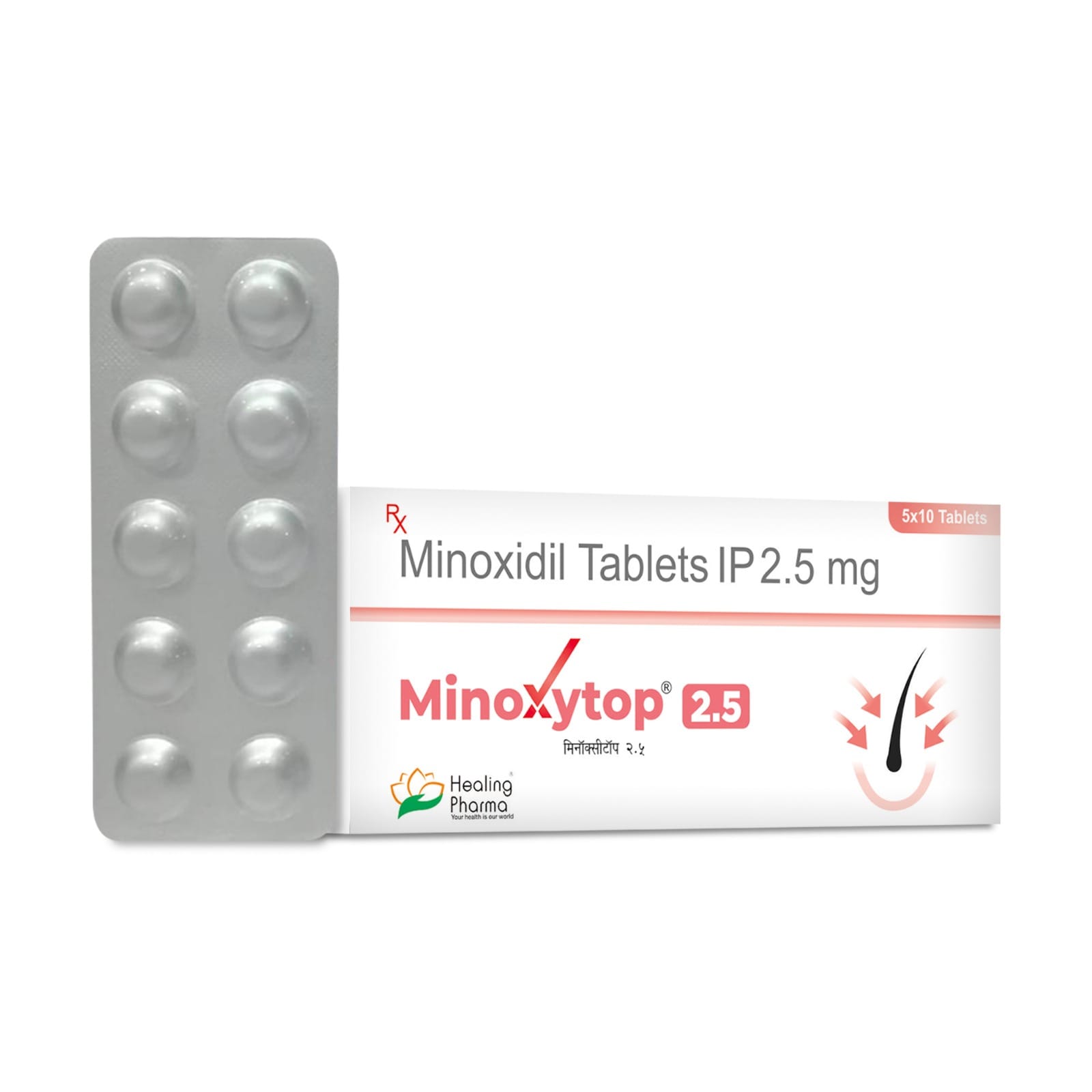
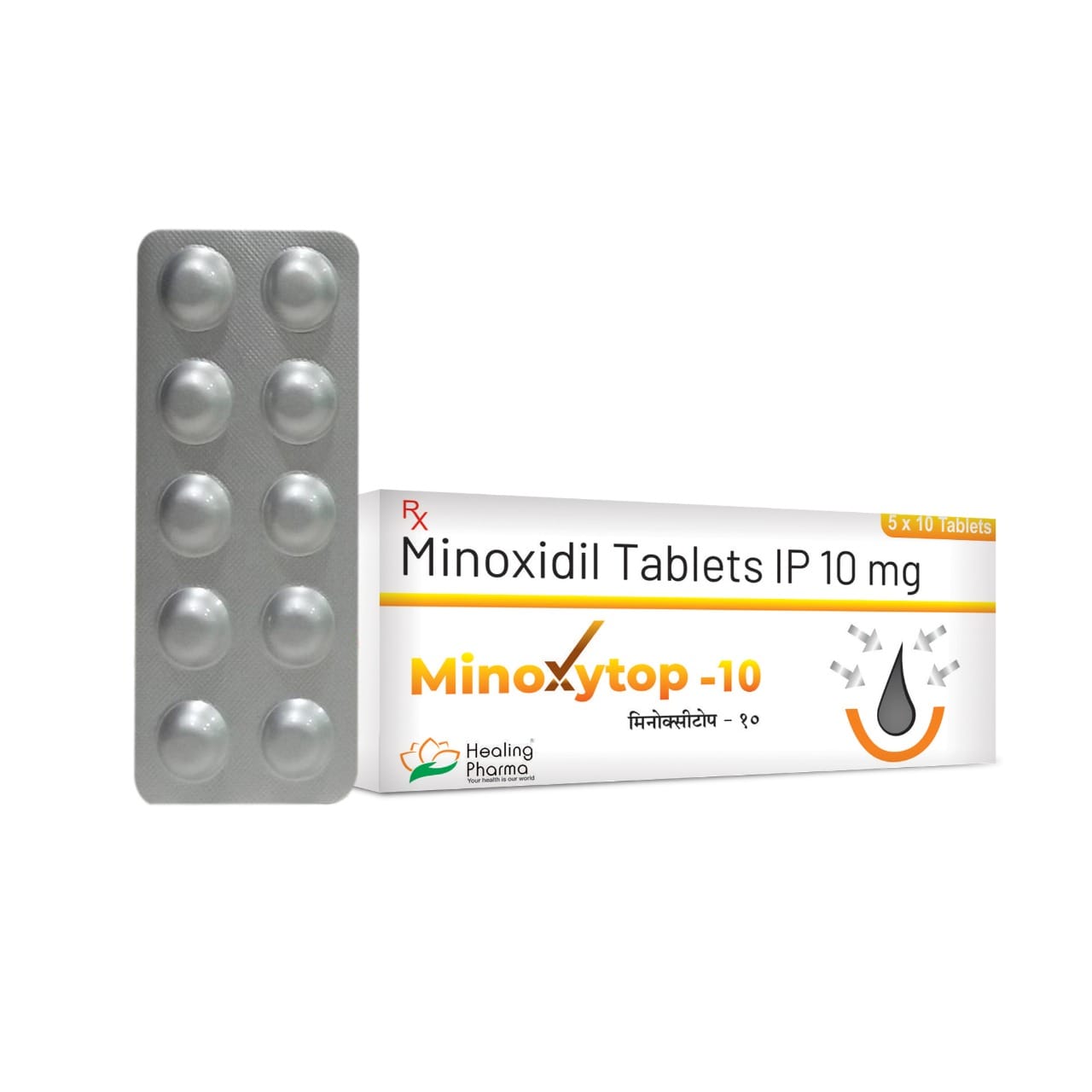
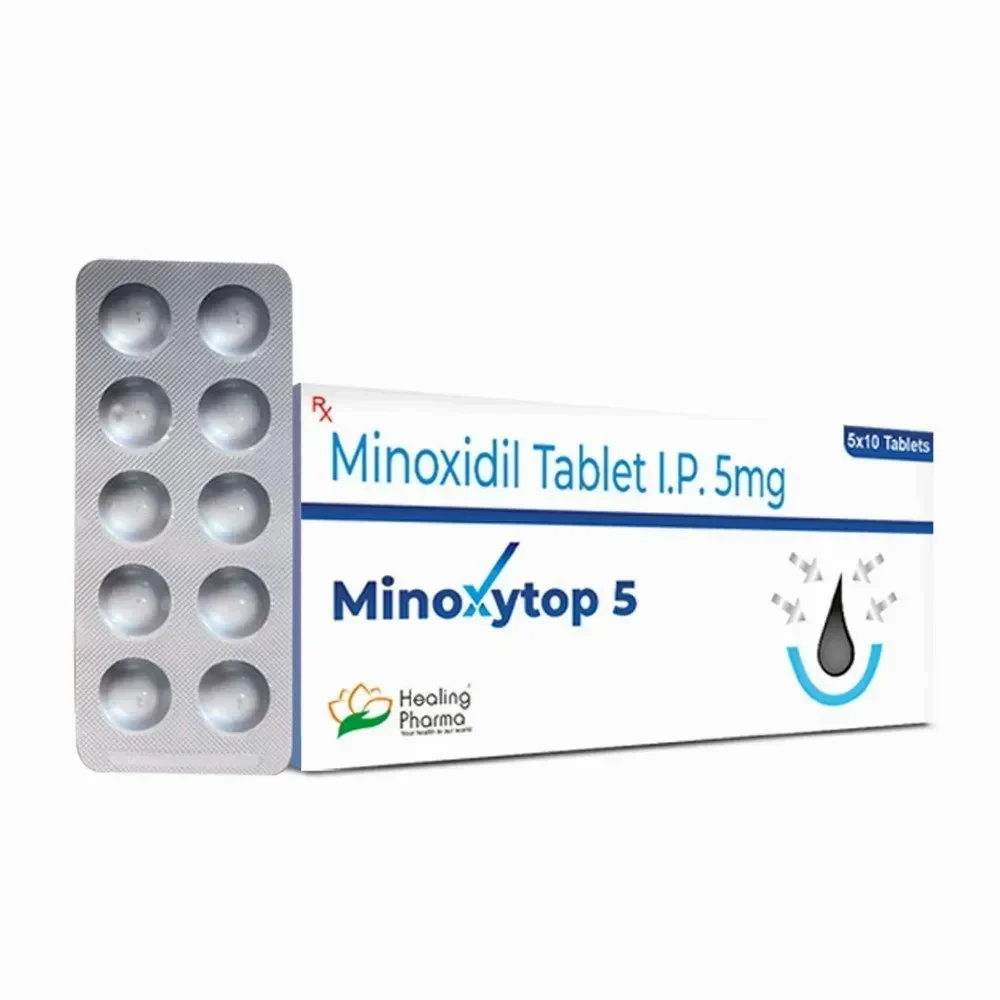
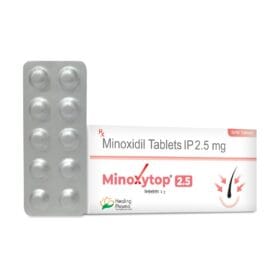
Minoxytop


✅ Bevordert haargroei
✅ Verhoogt haardichtheid
✅ Verbeterde hoofdhuidbedekking
✅ Verdikt haren
✅ Verhoogt zelfvertrouwen
Minoxytop bevat Minoxidil.
✓ Medisch beoordeeld door Morgan Ellis — Apotheekonderzoeker · 8 jaar ervaring · Laatst beoordeeld: mei 2026
Kort antwoord — Wat is Minoxytop?
Minoxytop is een oraal minoxidil 5 mg tablet dat off-label wordt voorgeschreven voor androgenetische alopecia (mannelijke en vrouwelijke erfelijke haaruitval). Het stimuleert de haarzakjes via systemische vasodilatatie. Typische lage-dosering regimes variëren van 0,625 mg tot 5 mg per dag; zichtbare haargroei verschijnt meestal na 3-6 maanden consistent gebruik.
📦 Elke bestelling is gedekt door onze Reshipment Assurance-beleid — als uw pakket niet binnen 20 werkdagen arriveert, sturen wij het opnieuw.
Waarom bestellen bij MedsBase
Onze generieke medicijnen zijn afkomstig van WHO-GMP gecertificeerde fabrikanten en worden wereldwijd verzonden in discrete, eenvoudige verpakkingen — geen medicijnnaam op de buitenkant van het pakket. Betalingen met kaart worden verwerkt via een gereguleerde processor (betalingsoverzichten vermelden een gereguleerde kaartbetalingprocessor — nooit “MedsBase” of een medicijnnaam). Crypto en SEPA bankoverschrijvingen worden ook geaccepteerd. Elke bestelling wordt ondersteund door ons Reshipment Assurance Policy.
Minoxytop 5mg is een oraal minoxidil tablet gebruikt voor de behandeling van haaruitval bij zowel mannen als vrouwen. Oorspronkelijk ontwikkeld als een bloeddrukmedicijn, bleek minoxidil een opmerkelijk bijeffect te hebben — aanzienlijke haargroei. Tegenwoordig is, lage dosis oraal minoxidil een van de meest veelbelovende behandelingen geworden voor androgenetische alopecia (erfelijke haaruitval), en biedt het een handig alternatief voor de bekende topicale oplossing.
In tegenstelling tot topicale minoxidil, dat direct op de hoofdhuid moet worden aangebracht, een of twee keer per dag, Minoxytop voor haaruitval wordt ingenomen als een enkele dagelijkse tablet. Dit maakt het een aantrekkelijke optie voor patiënten die topicale toepassing rommelig, onhandig of irriterend voor de hoofdhuid vinden. Als u behandelingsopties onderzoekt, is het belangrijk om te begrijpen hoe oraal minoxidil werkt en wat u kunt verwachten — en u kunt meer te weten komen over vroege interventiestrategieën voor haaruitval ook.
Productoverzicht
Minoxytop 5mg bevat minoxidil als werkzaam bestanddeel in orale tabletvorm. Minoxidil werd oorspronkelijk goedgekeurd door de FDA in de jaren 1970 onder de merknaam Loniten voor de behandeling van ernstige, refractaire hypertensie. Tijdens klinische onderzoeken observeerden onderzoekers dat patiënten consequent hypertrichose — overmatige haargroei — als bijwerking.
Deze observatie leidde tot de ontwikkeling van topische minoxidil-formuleringen (Rogaine), wat het eerste door de FDA goedgekeurde middel tegen haaruitval werd. Recentelijk schrijven dermatologen steeds vaker oraal minoxidil in lage doseringen (meestal 0,625 mg tot 5 mg) voor als off-label-behandeling bij verschillende vormen van haaruitval. Minoxytop 5mg-tabletten bieden een gestandaardiseerde, farmaceutisch hoogwaardige orale formulering voor dit doel.
Hoe Oraal Minoxidil Werkt bij Haaruitval
De haargroei-effecten van oraal minoxidil worden veroorzaakt door verschillende onderling verbonden biologische mechanismen. Het begrijpen van deze processen verklaart waarom het medicijn effectief is bij meerdere soorten haaruitval.
Vasodilatatie en Verhoogde Bloedstroom
Minoxidil is een krachtige vasodilatator die kaliumkanalen opent in vasculaire gladde spiercellen. Bij orale inname verhoogt het de bloedstroom door het hele lichaam - inclusief naar de dermale papil, de structuur aan de basis van elke haarzakje die verantwoordelijk is voor de aanvoer van voedingsstoffen en signaalmoleculen. Een verbeterde bloedtoevoer levert meer zuurstof, glucose en groeifactoren aan follikels die mogelijk zijn geminiaturiseerd door androgenetische alopecia.
Het verlengen van de anagene (groeifase)
Haarfollikels doorlopen drie fasen: anagene (actieve groei), catagene (regressie), en telogene (rust). Bij patroonkaalheid wordt de anagene fase progressief korter, wat dunnere, kortere haren oplevert. Minoxidil verlengt de anagene fase, waardoor follikels meer tijd krijgen om dikkere, langere terminale haren te produceren. Het verkort ook de telogene fase, wat de reden is waarom aanvankelijke uitval optreedt wanneer rustende haren worden uitgedreven om plaats te maken voor nieuwe groei.
Wnt/Beta-catenine Signalering
Opkomend onderzoek heeft aangetoond dat minoxidil de Wnt/β-catenin-signaalroute activeert, die een cruciale rol speelt bij de ontwikkeling van haarzakjes, activering van stamcellen en de overgang van telogene naar anagene fase. Dit moleculaire mechanisme kan verklaren waarom minoxidil folliculaire miniaturisatie gedeeltelijk kan omkeren, en niet alleen de progressie ervan kan vertragen. Studies suggereren ook dat minoxidil vasculaire endotheliale groeifactor (VEGF), opreguleert, wat de micro-omgeving van het haarzakje verder ondersteunt.
Orale versus topische minoxidil: Belangrijke verschillen
Veel patiënten zijn bekend met topische minoxidiloplossing, die al decennia zonder recept verkrijgbaar is. Orale minoxidil biedt een ander scala aan voordelen en overwegingen. De volgende tabel vat de belangrijkste verschillen samen:
| Kenmerk | Orale minoxidil (Minoxytop 5mg) | Topische minoxidil (oplossing/schuim) |
|---|---|---|
| Toediening | Eén dagelijkse tablet | Eenmaal of tweemaal daags op de hoofdhuid aanbrengen |
| Gebruiksgemak | Zeer handig; geen residu of droogtijd | Kan rommelig zijn; vereist droogtijd |
| Hoofdhuidbedekking | Systemisch — bereikt alle follikels gelijkmatig | Beperkt tot aangebrachte gebieden |
| Hoofdhuidirritatie | Geen (geen contact met hoofdhuid) | Vaak voorkomend — jeuk, schilfering, contactdermatitis |
| Effectiviteit | Vaak superieur; hogere therapietrouw | Goed ingeburgerd; effectief bij consistent gebruik |
| Systemische bijwerkingen | Mogelijk — lichaamsbeharing, vochtretentie, duizeligheid | Minimale systemische absorptie |
| Toegenomen lichaamsbeharing | Vaker voorkomend (hypertrichose) | Minder vaak voorkomend |
| Recept vereist | Ja — vereist medisch toezicht | Vrij verkrijgbaar |
Orale minoxidil wordt over het algemeen geprefereerd door patiënten die topische behandeling zonder voldoende resultaat hebben geprobeerd, die hoofdhuidirritatie ervaren van topische formuleringen, of die simpelweg een gemakkelijker dagelijks regime willen.
Toepassingen en Indicaties
Minoxytop 5mg wordt off-label voorgeschreven voor verschillende soorten haaruitval. Hoewel minoxidil niet specifiek door de FDA is goedgekeurd in orale vorm voor alopecia, wordt het wereldwijd veel gebruikt door dermatologen op basis van een groeiend aantal klinische bewijzen.
- Mannelijke kaalheid (androgenetische alopecia bij mannen): De meest voorkomende indicatie. Orale minoxidil kan haarverdunning vertragen of omkeren bij de kruin, vertex en midden hoofdhuidgebieden die typisch zijn voor mannelijke kaalheid.
- Vrouwelijke haaruitval (androgenetische alopecia bij vrouwen): Vrouwen met diffuse verdunning over de bovenkant van de hoofdhuid — vaak omschreven als een verbredende scheurlijn — kunnen aanzienlijk baat hebben bij een lage dosis orale minoxidil.
- Alopecia Areata (Off-Label): Sommige dermatologen schrijven oraal minoxidil voor als onderdeel van een combinatietherapie bij alopecia areata, een auto-immuunziekte die pleksgewijze haaruitval veroorzaakt.
- Telogeen Effluvium en Diffuse Dunning: Voor patiënten met algemene haaruitval door stress, ziekte, voedingstekorten of hormonale veranderingen kan oraal minoxidil het herstel versnellen door de haarfollikels terug in de groeifase te stimuleren.
- Haartransplantatie Ondersteuning: Sommige chirurgen schrijven oraal minoxidil voor vóór en na haartransplantaties om de overleving van de grafts te verbeteren en het bestaande natuurlijke haar te versterken.
Doseringhandleiding
De dosering van oraal minoxidil voor haaruitval is aanzienlijk lager dan de doses die historisch werden gebruikt voor hypertensie (10–40 mg per dag). Een lage dosis oraal minoxidil voor haaruitval varieert meestal van 0,625 mg tot 5 mg per dag, afhankelijk van het geslacht van de patiënt, tolerantie en respons.
| Patiëntengroep | Startdosis | Typische Onderhoudsdosis | Maximale Dosis |
|---|---|---|---|
| Mannen | 2,5 mg eenmaal daags | 2,5–5 mg eenmaal daags | 5 mg/dag |
| Vrouwen | 0,625 mg eenmaal daags | 0,625–2,5 mg eenmaal daags | 2,5 mg/dag |
- Start laag, bouw langzaam op: De meeste clinici beginnen met een lagere dosering en verhogen deze geleidelijk over enkele weken, waarbij ze letten op bijwerkingen — met name vochtretentie en veranderingen in hartslag.
- Tijdstip: De tablet kan op elk moment van de dag worden ingenomen, met of zonder voedsel. Veel patiënten geven er de voorkeur aan het 's ochtends in te nemen.
- Consistentie: Oraal minoxidil moet dagelijks zonder onderbreking worden ingenomen. Het stoppen van de medicatie zal geleidelijk alle behaalde haargroei tenietdoen.
- Dosis splitsen: Vrouwen kunnen een 2,5 mg-tablet splitsen om lagere doseringen te bereiken (bijv. 0,625 mg of 1,25 mg). Een pillensnijder kan helpen om nauwkeurig te splitsen.
Volg altijd de dosering die door uw zorgverlener is voorgeschreven. Pas uw dosis niet aan zonder medisch advies.
Voordelen van Oral Minoxytop
Minoxytop haargroei resultaten zijn bemoedigend in klinische studies en praktijkervaringen. Belangrijke voordelen zijn:
- Superieur Gemak: Een enkele dagelijkse tablet elimineert de noodzaak van tweemaal daagse lokale toepassing, wat de langetermijntrouw verbetert — een cruciale factor voor succes bij haaruitvalbehandeling.
- Geen Irritatie van de Hoofdhuid: Patiënten die jeuk, schilfering of contactdermatitis ervaren door lokale minoxidil kunnen deze problemen volledig vermijden met de orale vorm.
- Volledige Hoofdhuiddekking: Omdat het medicijn systemisch wordt opgenomen, bereikt het elke haarzakje op de hoofdhuid — niet alleen de gebieden waar een lokaal middel wordt aangebracht. Dit is vooral gunstig voor diffuse dunner wordende haren.
- Mogelijk Betere Werkzaamheid: Verschillende studies hebben gerapporteerd dat orale minoxidil grotere verbeteringen in haardichtheid en dikte oplevert in vergelijking met lokale minoxidil, waarschijnlijk door meer consistente toediening aan de haarzakjes.
- Compatibel met Andere Behandelingen: Orale minoxidil kan worden gecombineerd met finasteride, dutasteride, spironolacton, PRP-therapie of haartransplantatieprocedures als onderdeel van een uitgebreid haarherstelplan.
Bijwerkingen
Zoals alle medicijnen, oraal minoxidil kan bijwerkingen veroorzaken. Bij de lage doseringen die gebruikt worden voor haaruitval, zijn de meeste bijwerkingen mild en beheersbaar. Patiënten moeten zich echter bewust zijn van zowel veelvoorkomende als ernstige mogelijke effecten.
Veelvoorkomende bijwerkingen
- Hypertrichose (Toegenomen Lichaamsbeharing): De meest gerapporteerde bijwerking. Patiënten kunnen een toename van haargroei op het gezicht, armen, benen of rug opmerken. Dit komt vaker voor bij vrouwen en bij hogere doseringen. Het effect is omkeerbaar na stopzetting.
- Vochtretentie (Perifeer Oedeem): Milde zwelling van de enkels of onderbenen kan optreden, vooral in de eerste weken van de behandeling. Dit kan meestal worden beheerd door de dosis te verlagen of indien nodig een lage dosis diureticum toe te voegen.
- Duizeligheid of Licht gevoel in het hoofd: Vanwege de bloeddrukverlagende effecten kunnen sommige patiënten af en toe duizeligheid ervaren, vooral bij snel opstaan (orthostatische hypotensie).
- Verhoogde Hartslag: Een lichte toename van de rusthartslag (meestal 3–5 slagen per minuut) komt vaak voor als een reflexreactie op vasodilatatie.
Ernstige Bijwerkingen (Zeldzaam bij Lage Doseringen)
- Pericardiale effusie: Vochtophoping rond het hart is gemeld bij hoge doseringen (20–40 mg) die worden gebruikt voor hypertensie. Dit is extreem zeldzaam bij de lage doseringen die worden gebruikt voor haaruitval, maar vereist monitoring.
- Significante hypotensie: Overmatige bloeddrukverlaging is ongebruikelijk bij lage doseringen, maar kan voorkomen bij patiënten die al antihypertensiva gebruiken.
- Tachycardie: Aanhoudende snelle hartslag moet onmiddellijk aan een zorgverlener worden gemeld.
Als u pijn op de borst, kortademigheid, snelle of onregelmatige hartslag, aanzienlijke zwelling of onverklaarbare gewichtstoename ervaart, zoek dan direct medische hulp.
Wie mag geen oraal minoxidil gebruiken
Orale minoxidil is niet geschikt voor iedereen. De volgende groepen moeten vermijden dit medicijn vermijden of alleen onder zeer strikt medisch toezicht gebruiken:
- Patiënten met feochromocytoom — minoxidil kan de afgifte van catecholaminen uit deze bijnertumor stimuleren
- Patiënten met significante cardiovasculaire aandoeningen — inclusief recent myocardinfarct, instabiele angina of gedecompenseerd hartfalen
- Patiënten met pulmonale hypertensie geassocieerd met mitralisklepstenose
- Zwangere of borstvoedende vrouwen — minoxidil wordt geclassificeerd als Categorie C en kan schade toebrengen aan de zich ontwikkelende foetus; het wordt uitgescheiden in moedermelk
- Patiënten met bekende overgevoeligheid voor minoxidil of enig bestanddeel van de formulering
- Patiënten met ernstige nierinsufficiëntie — dosisaanpassing of vermijding kan nodig zijn, aangezien minoxidil voornamelijk door de nieren wordt uitgescheiden
Een grondige medische voorgeschiedenis en een basis cardiovasculaire beoordeling (inclusief bloeddruk- en hartslagmeting) moeten worden uitgevoerd voordat met orale minoxidiltherapie wordt begonnen.
Geneesmiddelinteracties en waarschuwingen
Omdat oraal minoxidil systemische vaatverwijdende effecten heeft, kan het interageren met verschillende klassen van medicijnen:
- Antihypertensiva: Het combineren van oraal minoxidil met andere bloeddrukverlagende medicijnen (ACE-remmers, ARB's, bètablokkers, calciumantagonisten, diuretica) kan leiden tot een excessieve bloeddrukdaling. Dosisaanpassingen kunnen nodig zijn.
- NSAID's (Ibuprofen, Naproxen): Niet-steroïde anti-inflammatoire geneesmiddelen kunnen vochtretentie veroorzaken en kunnen de diuretische strategieën die worden gebruikt om minoxidil-gerelateerd oedeem te beheersen, tegenwerken.
- Guanethidine: Gelijktijdig gebruik kan ernstige orthostatische hypotensie veroorzaken. Deze combinatie moet worden vermeden.
- Andere vaatverwijders: Gelijktijdig gebruik met andere vaatverwijdende middelen kan additieve hypotensieve effecten veroorzaken.
Belangrijke waarschuwingen: Informeer uw zorgverlener altijd over alle medicijnen en supplementen die u gebruikt voordat u begint Minoxytop 5mg. Start, stop of wijzig de dosering van geen enkel medicijn zonder medisch advies. Patiënten moeten hun bloeddruk en hartslag regelmatig laten controleren tijdens de behandeling, vooral gedurende de eerste 3 maanden.
Veelgestelde vragen
Hoe lang duurt het voordat resultaten van oraal minoxidil zichtbaar zijn?
De meeste patiënten beginnen verbeteringen in haardichtheid en dikte op te merken tussen 3 en 6 maanden bij consistent dagelijks gebruik. Sommige gebruikers kunnen al na 8–12 weken vroege tekenen van nieuwe haargroei (fijne vellusharen) waarnemen. Echter, significante cosmetische verbetering vereist doorgaans minimaal 6 maanden, en volledige resultaten kunnen zich blijven ontwikkelen gedurende 12–18 maanden. Geduld en consistentie zijn essentieel.
Is haaruitval normaal bij het starten met Minoxytop?
Ja. Een tijdelijke toename van haaruitval gedurende de eerste 2 tot 8 weken van de behandeling is gebruikelijk en verwacht. Dit staat bekend als de “doxycycline shed” of meer precies, de minoxidil-uitvalfase. Dit gebeurt omdat minoxidil rustende (telogene) haren uit de follikel duwt om plaats te maken voor nieuwe anagene (groeiende) haren. Hoewel de uitval verontrustend kan zijn, is het eigenlijk een positief teken dat het medicijn werkt. De uitvalfase is tijdelijk en de haardichtheid verbetert doorgaans aanzienlijk daarna.
Kan ik orale minoxidil combineren met finasteride?
Ja. Het combineren van orale minoxidil met finasteride (of dutasteride) is een van de meest effectieve strategieën voor de behandeling van androgenetische alopecia bij mannen. Finasteride werkt door DHT te blokkeren — het hormoon dat verantwoordelijk is voor folliculaire miniaturisatie — terwijl minoxidil haargroei stimuleert door vasodilatatie en follikelstimulatie. Deze complementaire mechanismen leveren vaak betere resultaten op dan elk medicijn afzonderlijk. Vrouwen moeten hun dermatoloog raadplegen over geschikte combinatietherapieën, aangezien finasteride doorgaans niet wordt voorgeschreven aan vrouwen in de vruchtbare leeftijd.
Vallen haren weer uit als ik stop met Minoxytop?
Ja. De haargroei die wordt bereikt met orale minoxidil is alleen behouden tijdens het gebruik van het medicijn. Als u met de behandeling stopt, zullen de nieuw gegroeide haren geleidelijk uitvallen over een periode van 3–6 maanden, en zal haaruitval hervatten in het tempo dat het zou hebben gedaan zonder behandeling. Om deze reden wordt oraal minoxidil beschouwd als een langetermijnverbintenis voor het behouden van resultaten.
Veroorzaakt oraal minoxidil ongewenste haargroei op het lichaam?
Hypertrichose — toegenomen haargroei in het gezicht, op de armen of het lichaam — is de meest voorkomende bijwerking van oraal minoxidil, gemeld bij ongeveer 15–25% van de patiënten bij de doses die worden gebruikt voor haaruitval. Het komt vaker voor bij vrouwen en bij hogere doses. De haargroei op het lichaam is omkeerbaar en verdwijnt geleidelijk binnen een paar maanden na het stoppen van het medicijn. Voor veel patiënten wegen de voordelen voor de hoofdhuidhaar zwaarder dan deze cosmetische bijwerking.
Is oraal minoxidil veilig voor vrouwen?
Lage doses oraal minoxidil worden steeds vaker voorgeschreven voor vrouwen met vrouwelijk patroon haaruitval, meestal in doses van 0,625–2,5 mg per dag. Studies hebben aangetoond dat het effectief en over het algemeen goed verdragen wordt door vrouwen. Vrouwen moeten echter lagere doses gebruiken dan mannen en worden gecontroleerd op hypertrichose en vochtretentie. Oraal minoxidil mag niet worden ingenomen tijdens de zwangerschap of borstvoeding. Vrouwen in de vruchtbare leeftijd moeten betrouwbare anticonceptie gebruiken tijdens de behandeling.
Hoe verschilt Minoxytop 5mg van topisch minoxidil?
Minoxytop 5mg is een oraal tablet, terwijl traditionele minoxidilproducten zoals Rogaine direct op de hoofdhuid worden aangebracht als een vloeistof of schuim. De orale vorm biedt systemische afgifte, wat betekent dat het medicijn alle haarzakjes bereikt via de bloedbaan in plaats van te vertrouwen op lokale absorptie door de hoofdhuid. Dit resulteert in een meer uniforme dekking en elimineert problemen zoals hoofdhuidirritatie en vettige residu. Orale minoxidil heeft echter een iets hoger risico op systemische bijwerkingen. U kunt ook onze topische Minoxytop (minoxidil oplossing) als u een niet-systemische aanpak verkiest.
Moet ik bloedonderzoek laten doen voordat ik met orale minoxidil begin?
Hoewel bloedonderzoek niet altijd strikt noodzakelijk is, raden de meeste dermatologen een basisbeoordeling aan die bloeddrukmeting, hartslag en in sommige gevallen basisbloedonderzoek (nierfunctie, elektrolyten en een volledig bloedbeeld) omvat. Een echocardiogram kan worden aanbevolen voor patiënten met bestaande cardiovasculaire aandoeningen. Regelmatige follow-upcontroles — met name bloeddruk- en hartslagcontroles na 1 maand, 3 maanden en vervolgens elke 6 maanden — worden beschouwd als beste praktijk.
Disclaimer
De informatie op deze pagina is uitsluitend bedoeld voor educatieve doeleinden en is niet bedoeld als vervanging voor professioneel medisch advies, diagnose of behandeling. Minoxytop 5mg (orale minoxidil) is een voorgeschreven medicatie die alleen onder toezicht van een gekwalificeerde zorgverlener mag worden ingenomen. Raadpleeg altijd uw arts of dermatoloog voordat u begint, stopt of een medicatieregime aanpast. Individuele resultaten kunnen variëren en de hier gepresenteerde informatie garandeert geen specifiek behandelresultaat. MedsBase.com biedt geen medische consulten of gepersonaliseerde behandeladviezen.
Gerelateerde alternatieven
Andere producten in Mannelijke gezondheid die klanten ook bekijken:
Meer opties in haartransplantatiebehandeling voor mannen
Gerangschikt op recente bestelvolumes van MedsBase — wat andere klanten in deze categorie kiezen.
| Sterkte | 2,5 mg, 10 mg |
|---|---|
| Hoeveelheid | 30 Tabletten, 60 Tabletten, 90 Tabletten, 180 Tabletten |
Vragen & antwoorden
 Minoxytop
Gerelateerde producten