









Valent

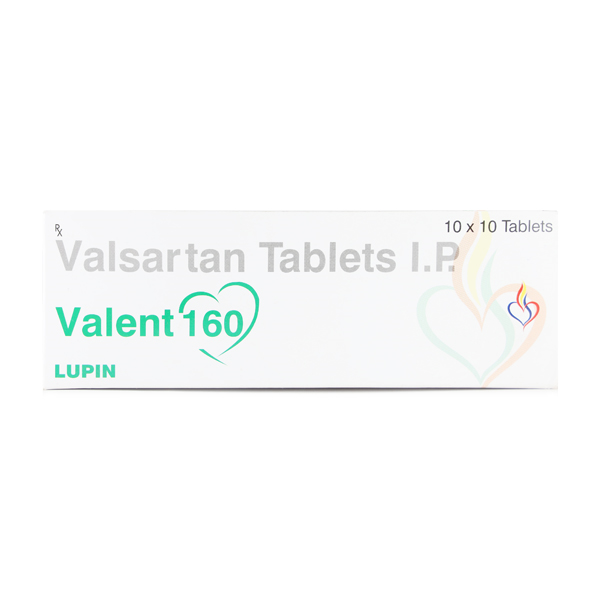


Valent is valsartan 80/160 mg tabletten — een ARB die het starter- tot onderhoudsdoseringbereik dekt. Voor hypertensie (start met 80 mg; titreer naar 160 mg; max 320 mg eenmaal daags), hartfalen met verminderde ejectiefractie (Val-HeFT-doel 160 mg tweemaal daags) en post-MI linkerventrikeldysfunctie (VALIANT niet-inferieur aan captopril).
✓ Medisch beoordeeld door Morgan Ellis — Apotheekonderzoeker · 8 jaar ervaring · Laatst beoordeeld: mei 2026
⚡ Kort Antwoord — Wat is Valent?
Valent is een 80 / 160 mg valsartan tablet van een WHO-GMP gecertificeerde fabrikant — een angiotensine II-receptorblokker (ARB). ARB's zijn eerste keus antihypertensiva naast ACE-remmers, CCB's en thiaziden volgens NICE, AHA/ACC en ESC/ESH richtlijnen — en zijn de voorkeursalternatief wanneer een ACE-remmer niet wordt verdragen (meestal vanwege de droge hoest, die tot 20% van de ACE-remmergebruikers treft). Geïntroduceerd in 1996 (Novartis als Diovan). De ARB met het meeste bewijs voor hartfalen na losartan; onderdeel van de sacubitril/valsartan-combinatie (Entresto) die ACE-remmers verving als eerstelijnsbehandeling voor HF-REF in de ESC-richtlijnen van 2021. Werkzame stof (geen prodrug); geen metabolische activering. Halfwaardetijd 6 uur, maar het effect duurt 24 uur door sterke AT1-receptorbinding. Typische dosis voor hypertensie: start met 80 mg eenmaal daags (40 mg bij ouderen, volumetekort of leverfunctiestoornissen), streefdosis 160 mg eenmaal daags. Onderdeel van sacubitril/valsartan (Entresto) — de angiotensine-receptor-neprilysine-remmer (ARNI) klasse. De PARADIGM-HF-studie (2014) toonde aan dat sacubitril/valsartan de cardiovasculaire mortaliteit met 20% verlaagde ten opzichte van enalapril bij HF-REF, wat de eerstelijnsbehandeling voor HF-REF veranderde. Standaard valsartan-monotherapie blijft een optie voor patiënten die sacubitril/valsartan niet kunnen betalen of verdragen. Absoluut gecontra-indiceerd tijdens zwangerschap (alle trimesters — zelfde teratogeen profiel als ACE-remmers: foetale nieragenese, oligohydramnion, pulmonale hypoplasie), bilaterale nierarteriestenose, en gelijktijdig sacubitril/valsartan of aliskiren. Controleer kalium en creatinine.
📦 Elke bestelling is gedekt door onze Reshipment Assurance-beleid — als uw pakket niet binnen 20 werkdagen arriveert, sturen wij het opnieuw.
Waarom bestellen bij MedsBase
Onze generieke medicijnen zijn afkomstig van WHO-GMP gecertificeerde fabrikanten en worden wereldwijd verzonden in discrete, eenvoudige verpakkingen — geen medicijnnaam op de buitenkant van het pakket. Betalingen met kaart worden verwerkt via een gereguleerde processor (betalingsoverzichten vermelden een gereguleerde kaartbetalingprocessor — nooit “MedsBase” of een medicijnnaam). Crypto en SEPA bankoverschrijvingen worden ook geaccepteerd. Elke bestelling wordt ondersteund door ons Reshipment Assurance Policy.
Wat Is Valent?
Valent is een orale 80 / 160 mg valsartan tablet van een WHO-GMP gecertificeerde fabrikant, geleverd in 30-180 tabletten. Geïntroduceerd in 1996 (Novartis als Diovan) De ARB met de meeste bewijzen voor hartfalen na losartan; onderdeel van de sacubitril/valsartan-combinatie (Entresto) die ACE-remmers verving als eerstelijnsbehandeling voor HF-REF in de ESC-richtlijnen van 2021. Actief geneesmiddel (geen pro-drug); geen metabolische activering nodig. Halveringstijd van 6 uur maar effect duurt 24 uur door sterke binding aan AT1-receptoren.
Hoe Valsartan de bloeddruk verlaagt
ARB's blokkeren de angiotensine II type 1 (AT1-) receptor direct, waardoor angiotensine II niet kan binden en zijn vasoconstrictor- en aldosteronafgevende effecten kan uitoefenen. Dit is één receptor stroomafwaarts van waar ACE-remmers werken (die de vorming van angiotensine II blokkeren) en produceert equivalente klinische effecten:
- Directe arteriële vasodilatatie — lagere systemische vasculaire weerstand = lagere bloeddruk
- Verminderde aldosteronafgifte — minder natrium- en waterretentie
- Verminderde activering van het sympathische zenuwstelsel
- Verbeterde endotheelfunctie en verminderde ventriculaire remodellering — het vaatbeschermende mechanisme dat verder gaat dan eenvoudige bloeddrukverlaging
- GEEN ophoping van bradykinine — dit is het belangrijkste klinische verschil met ACE-remmers. ARB's veroorzaken NIET de droge hoest die tot 20% van de ACE-remmergebruikers treft, omdat ze niet ingrijpen op de bradykininestofwisseling.
Klinisch gevolg van dit mechanisme: ARB's bereiken een vergelijkbare bloeddrukcontrole als ACE-remmers met lagere percentages hoest (0-3% vs 20% voor ACE-remmers) en angio-oedeem (ongeveer 30-50% lager dan ACE-remmers, hoewel niet nul).
Goedgekeurde en evidence-based toepassingen
- Hypertensie — primaire indicatie; eerstelijns volgens internationale richtlijnen
- Hartfalen met verminderde ejectiefractie (HF-REF) — Val-HeFT-bewijs; voorloper van ARNI
- Linkerventrikeldisfunctie na een myocardinfarct — VALIANT
- Hypertensie (breed doseringsbereik maakt titratie mogelijk van 40 mg tot 320 mg)
- Intolerantie voor ACE-remmers (hoest, minder vaak angio-oedeem) — standaard switch-doelwit
Belangrijke klinische onderzoeksresultaten: Val-HeFT (2001) — valsartan bij HF-REF verminderde ziekenhuisopnames. VALIANT (2003) — valsartan niet onderdoen voor captopril bij post-MI linkerventrikeldysfunctie. VALUE (2004) — valsartan versus amlodipine bij hoogrisico-hypertensie; licht voordeel voor amlodipine wat betreft beroerte + MI-eindpunten, voornamelijk door snellere bloeddrukcontrole met amlodipine.
Valent Dosering
Hypertensie:
- Startdosis: 80 mg eenmaal daags (40 mg bij ouderen, volume-depletie of leverfunctiestoornis)
- Streefdosis: 160 mg eenmaal daags
- Maximum: 320 mg eenmaal daags
- Doseer elke 2-4 weken; volledig antihypertensief effect na 3-6 weken
Hartfalen: 40 mg tweemaal daags, op te titreren naar 160 mg tweemaal daags (Val-HeFT-doel)
Toediening: eenmaal daags, met of zonder voedsel. Neem op hetzelfde tijdstip elke dag voor een stabiele bloeddrukregulatie.
Monitoring:
- Basislijn: ureum, elektrolyten (met name kalium), creatinine, eGFR. Thuis bloeddruk basislijn.
- Na 1-2 weken: herhaal U&E. Een kleine stijging van creatinine (tot 30%) is verwacht en acceptabel. Een kleine stijging van kalium komt vaak voor.
- Na dosisverhoging: herhaal U&E na 1-2 weken.
- Voortdurend: jaarlijkse U&E zodra stabiel.
- Stop en onderzoek: creatininestijging >30%, eGFR-daling >25%, kalium >5.5, symptomatische hypotensie.
Stopzetting: geen onttrekkingssyndroom; echter, abrupt stoppen veroorzaakt bloeddrukrebound over dagen. Afbouwen over 1-2 weken bij stoppen.
Bijwerkingen
Vaak (>1%, meestal mild):
- Duizeligheid, posturale hypotensie (meestal mild; komt vaker voor aan het begin van de therapie)
- Milde hyperkaliëmie
- Verwachte kleine creatininestijging (tot ~30% is acceptabel; intrarenale hemodynamische verandering, geen nefrotoxiciteit)
- Vermoeidheid, hoofdpijn
- Bovenste luchtwegklachten, nasofaryngitis
- Rugpijn, spierkrampen
Zeldzaam maar belangrijk:
- Angio-oedeem — lager percentage dan met ACE-remmers maar nog steeds mogelijk. Incidentie ~0.1%. Gebruik GEEN ARB als de patiënt een gedocumenteerde voorgeschiedenis heeft van angio-oedeem door een ACE-remmer in de eerste 4 weken; voorzichtig langdurig gebruik is vaak acceptabel.
- Ernstige hyperkaliëmie — met name bij kaliumsparende diuretica (spironolacton), kaliumsupplementen, NSAID's of CKD
- Acuut nierletsel bij bilaterale nierslagaderstenose — hetzelfde mechanisme als ACE-remmers
- Hypotensie na eerste dosis bij patiënten met volume-depletie (bijv. bij hoge doses diuretica, ernstig HF)
Contra-indicaties
- Zwangerschap — ABSOLUUT contra-indicatie in alle trimesters. Hetzelfde teratogene profiel als ACE-remmers. Stop direct bij zwangerschap; schakel over op labetalol, methyldopa, nifedipine of hydralazine.
- Voorgeschiedenis van angio-oedeem met een ACE-remmer of ARB (binnen 4 weken)
- Bilaterale renovasculaire stenose of stenose in een enkele functionerende nier
- Ernstige leverfunctiestoornis (Child-Pugh C) — met name voor prodrug ARB's
- Hyperkaliëmie >5,5 mmol/L bij aanvang
- Gelijktijdig gebruik van sacubitril/valsartan (Entresto) — 36 uur wash-out vereist bij overschakeling
- Gelijktijdig gebruik van aliskiren bij diabetes of CKD (schade in ALTITUDE-onderzoek)
- Gelijktijdige ACE-remmer — schade zonder voordeel in ONTARGET-onderzoek
- Overgevoeligheid voor valsartan
Borstvoeding: vermijd in de eerste weken na de bevalling van een premature baby. Langdurig gebruik tijdens borstvoeding wordt over het algemeen als aanvaardbaar beschouwd gezien de lage overdracht naar de moedermelk, maar alternatieve antihypertensiva (propranolol, nifedipine) hebben de voorkeur waar mogelijk.
Geneesmiddelinteracties
- Kaliumsparende diuretica (spironolacton, eplerenon, amiloride, triamtereen) — verhoogd risico op hyperkaliëmie; monitor nauwlettend
- Kaliumsupplementen en zoutvervangers — risico op hyperkaliëmie
- NSAID's — verminderd antihypertensief effect en verhoogd risico op AKI (met name de “triple whammy”: ARB + diureticum + NSAID)
- Lithium — ARB's verminderen de lithiumklaring; monitor niveaus
- ACE-remmers — NIET combineren (schade in ONTARGET)
- Sacubitril/valsartan (Entresto) — niet combineren; 36 uur wash-out periode
- — vermijd combinatie bij diabetes en CKD (ALTITUDE-studie vroegtijdig gestopt vanwege schade) — vermijden bij diabetes of CKD (schade in ALTITUDE)
ARB-klasse in één oogopslag
| ARB | Halfwaardetijd | Onderscheidende niche |
|---|---|---|
| Losartan (Losar, Cosart) | 2 uur / 6-9 uur (metaboliet) | Uricosurisch (bruikbaar bij jicht); LIFE-studie vermindering beroerte |
| Olmesartan (Olmin, Olmeheal, Olmesar) | 13 uur | Krachtig per mg; FDA-waarschuwing voor sprue-achtige enteropathie |
| Telmisartan (Telmaheal, Cresar, Targit) | 24 uur (langste) | Metabool voordeel (PPAR-γ); ONTARGET cardiovasculaire bescherming |
| Valsartan (Diovan 160, Valent) | 6 uur (24 uur effect) | Hartfalenbewijs (Val-HeFT, VALIANT); ARNI-voorloper (Entresto) |
| Irbesartan (Irovel) | 11-15 uur | Diabetische nefropathie (IRMA-2, IDNT) |
| Candesartan | 9 uur | HF-bewijs (CHARM); niet op voorraad bij MedsBase |
ARB versus ACE-remmer — Wanneer een ARB kiezen
ACE-remmers (ramipril, enalapril, ARB's, perindopril) en ARB's werken op hetzelfde renine-angiotensinepad en bieden een gelijkwaardige bloeddrukverlaging en cardiovasculaire bescherming. Kies een ARB wanneer:
- ACE-remmerhoest is opgetreden (bij tot 20% van de gebruikers; meest voorkomende reden voor overstap)
- Eerder angio-oedeem door ACE-remmer (gebruik een ARB voorzichtig, niet binnen 4 weken na het angio-oedeemepisode)
- Sommige patiënten geven de voorkeur aan het eenmaal daagse profiel van langwerkende ARB's zoals telmisartan voor een soepele 24-uurs controle
- Specifieke molecuulindicaties — losartan voor HTN+jicht, irbesartan voor diabetische nefropathie type 2, valsartan als precursor voor ARNI bij HF
Combineer GEEN ARB + ACE-remmer. De ONTARGET-studie (2008) toonde aan dat de combinatie MEER bijwerkingen veroorzaakt (hyperkaliëmie, AKI, hypotensie) zonder extra cardiovasculair voordeel. Als een patiënt beide gebruikt, stop dan met één.
Opslag
Bewaar Valent onder 25°C in de originele blisterverpakking. Buiten bereik van kinderen houden.
Veelgestelde vragen
Hoe lang duurt het voordat Valent de bloeddruk verlaagt?
Eerste daling van de bloeddruk binnen 1-2 uur; volledig antihypertensief effect na 3-6 weken. Meet thuis de bloeddruk elke dag op hetzelfde tijdstip om het effect te volgen. Als de bloeddruk na 6 weken nog niet op het streefniveau is, verhoog dan de dosis of voeg een middel uit een tweede klasse toe (CCB of thiazide zijn de standaard toevoegingen aan een ARB).
Ik ben overgestapt van een ACE-remmer vanwege hoesten — zal mijn hoest verdwijnen?
Ja. De hoest door ACE-remmers wordt veroorzaakt door ophoping van bradykinine; ARB's verhogen bradykinine niet. De hoest verdwijnt meestal binnen 1-4 weken van het stoppen met de ACE-remmer. Als uw hoest aanhoudt na meer dan 6 weken na het overschakelen op Valent, onderzoek dan een alternatieve oorzaak (reflux, postnasale drip, astma).
Kan ik Valent gebruiken tijdens de zwangerschap?
Nee — ARB's zijn absoluut gecontra-indiceerd tijdens de zwangerschap, net als ACE-remmers. Ze veroorzaken foetale nieragenesie, oligohydramnion, pulmonale hypoplasie en schedeldefecten. Stop onmiddellijk bij zwangerschap. Vrouwen in de vruchtbare leeftijd moeten betrouwbare anticonceptie gebruiken; voor wie zwangerschap plant, schakel over op labetalol, methyldopa of nifedipine vóór de conceptie.
Mijn creatinine is een beetje gestegen na het starten met Valent — moet ik stoppen?
Een stijging van creatinine tot 30% binnen de eerste 1-2 weken is verwacht en acceptabel. Het weerspiegelt een normale intrarenale hemodynamische aanpassing doordat de angiotensine-II-gemedieerde tonus van de efferente arteriolen wordt opgeheven. Een stijging >30% suggereert bilaterale renovasculaire stenose, volumetekort of NSAID-interactie en vereist onderzoek (stop het medicijn, laat beeldvorming van de nieren uitvoeren, beoordeel de gelijktijdige medicatie).
Moet ik kaliumrijk voedsel vermijden bij het gebruik van Valent?
Matige inname van kaliumrijke voedingsmiddelen (bananen, sinaasappels, spinazie, avocado, aardappelen) is voor de meeste gebruikers prima. Vermijd kaliumsupplementen (slow-K) en kaliumbevattende zoutvervangers, tenzij specifiek voorgeschreven — deze kunnen gevaarlijke hyperkaliëmie veroorzaken in combinatie met ARB's, vooral bij CKD of met kaliumsparende diuretica.
Kan ik Valent combineren met mijn andere bloeddrukmedicijnen?
Ja — ARB's combineren goed met calciumantagonisten (amlodipine), thiazidediuretica (HCTZ), en bisoprolol (metoprolol, metoprolol succinaat). Combineer een ARB NIET met een ACE-remmer (ramipril, lisinopril, etc.) — de ONTARGET-studie toonde schade zonder voordeel aan.
Kan ik ibuprofen gebruiken met Valent?
Incidenteel kortdurend gebruik is meestal acceptabel; chronisch dagelijks NSAID-gebruik (ibuprofen, diclofenac, naproxen) verminderen het antihypertensieve effect van ARB's EN verhogen aanzienlijk het risico op acuut nierletsel (AKI) — vooral in combinatie met een diureticum (de “triple whammy”). Voor chronische pijn is paracetamol veiliger; voor ontstekingen, bespreek alternatieven.
Is Valent een levenslange behandeling?
Voor de meeste patiënten met essentiële hypertensie, ja — antihypertensieve therapie is levenslang omdat het stoppen ervan de bloeddruk binnen enkele dagen tot weken terugbrengt naar het niveau voor de behandeling. Sommige patiënten verliezen hun hypertensie door aanzienlijk gewichtsverlies, verminderde alcoholinname of betere slaap; hun arts kan dan een zorgvuldige afbouw proberen onder bloeddrukmonitoring. Stop nooit met Valent zonder medisch advies.
Wat als ik een dosis vergeet?
Neem de vergeten dosis zo snel mogelijk in, tenzij het bijna tijd is voor de volgende dosis — in dat geval sla je de vergeten dosis over en houd je je normale schema aan. Neem geen dubbele dosis. Een enkele vergeten dosis heeft geen significant effect op de langetermijncontrole van de bloeddruk.
Waar kan ik Valent online kopen?
U kunt Valent (valsartan 80 / 160 mg, 30-180 tabletten) kopen bij MedsBase met discrete verpakking en wereldwijde verzending.
Gerelateerde antihypertensiva op MedsBase
- Cosart-H — Losartan + HCTZ
- Irovel — Irbesartan 150/300 mg
- Lispro — Lisinopril (ACEi-alternatief)
- Losar — Losartan 25/50 mg
- Olmesar — Olmesartan 20/40 mg
- Targit — Telmisartan 80 mg
- Bekijk alle hoge bloeddruk medicijnen
Gerelateerde alternatieven
Andere producten in Chronische aandoeningen die klanten ook bekijken:
Meer opties in medicatie tegen hoge bloeddruk
Gerangschikt op recente bestelvolumes van MedsBase — wat andere klanten in deze categorie kiezen.

| Sterkte | 80 mg, 160 mg |
|---|---|
| Hoeveelheid | 30 Tabletten, 60 Tabletten, 90 Tabletten, 180 Tabletten |
 Valent
Vragen & antwoorden
Valent
Gerelateerde producten



















Beoordelingen
Er zijn nog geen beoordelingen