







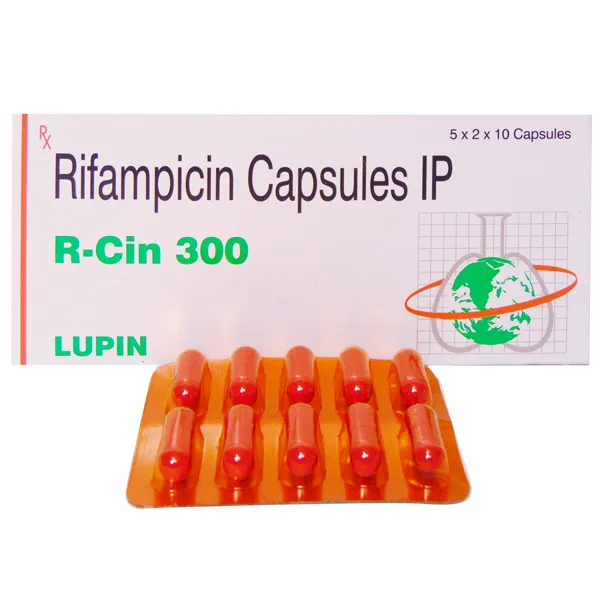
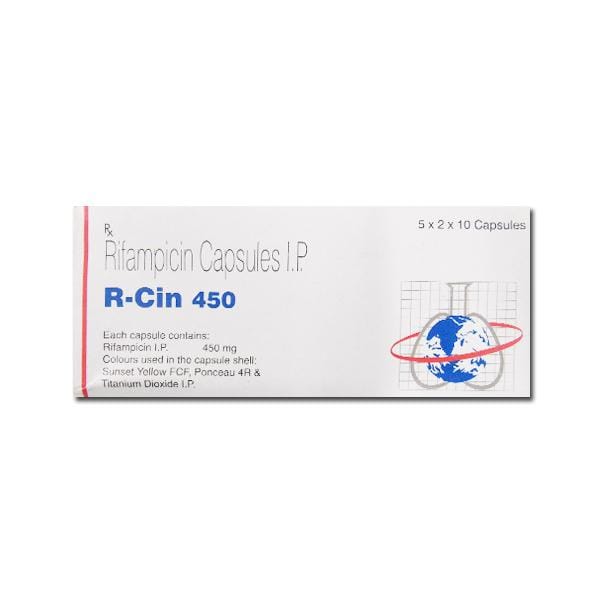
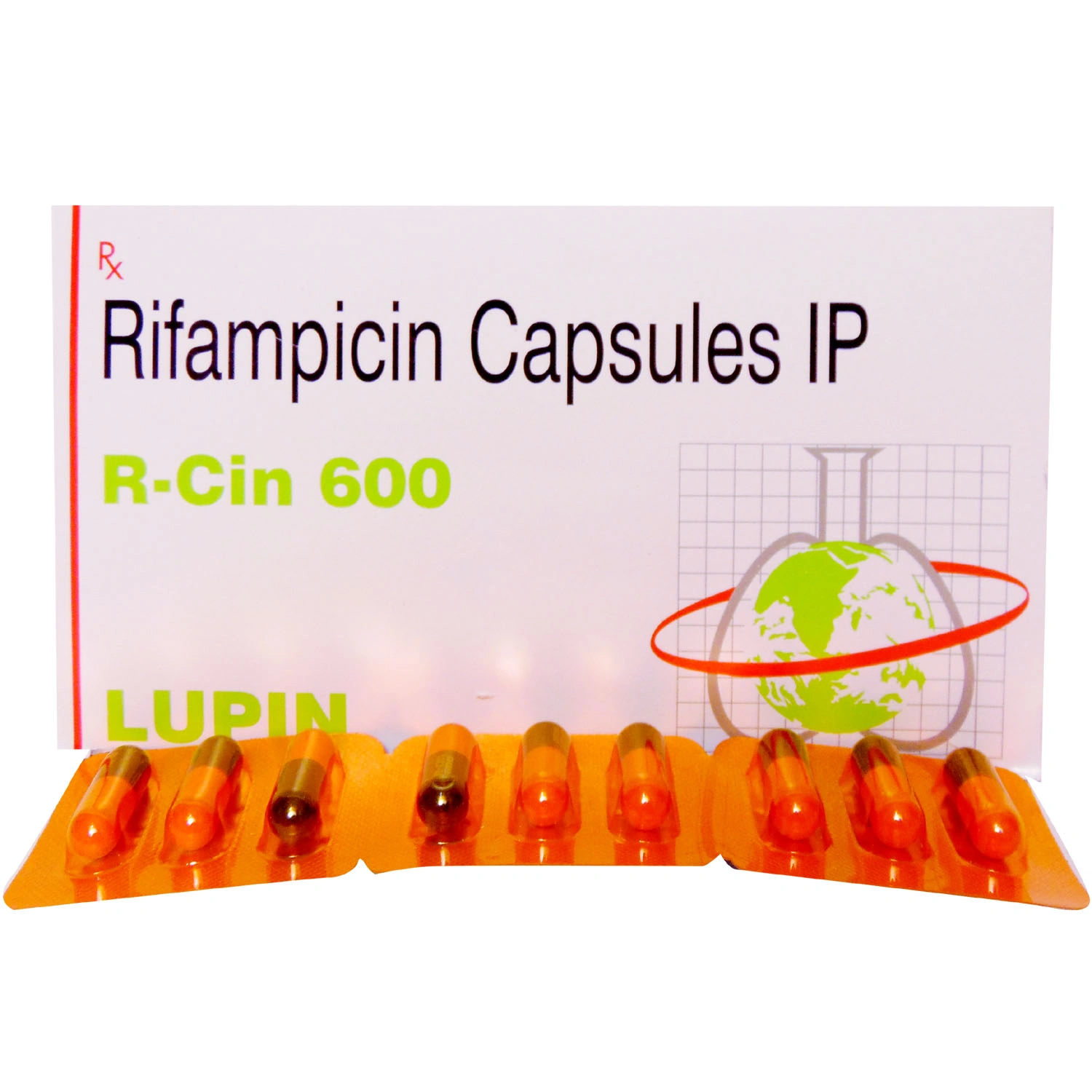
R-Cin


✅ Behandelt tuberculose
✅ Voorkomt bacteriegroei
✅ Verkort de behandelingsduur
✅ Verlaagt het risico op overdracht
✅ Vermindert medicijnresistentie
R-Cin bevat Rifampicin.
✓ Medisch beoordeeld door Morgan Ellis — Apotheekonderzoeker · 8 jaar ervaring · Laatst beoordeeld: mei 2026
⚡ Kort antwoord — Wat is R-Cin?
R-Cin bevat rifampicine (300 mg / 450 mg / 600 mg capsules) van een WHO-GMP gecertificeerde fabrikant (gemaakt door Cipla) — een bacteriedodend anti-tuberculose antibioticum dat bacteriële DNA-afhankelijke RNA-polymerase remt. Standaard dosering voor volwassenen met actieve TB: 10 mg/kg eenmaal daags (meestal 450 mg voor 38–55 kg, 600 mg voor > 55 kg) op een lege maag — een uur voor de maaltijd of twee uur erna. Rifampicine wordt nooit alleen gebruikt voor actieve tuberculose; het wordt altijd gecombineerd met isoniazide, pyrazinamide en ethambutol (het 4-geneesmiddelen RIPE-regime) voor de eerste twee maanden, en daarna voortgezet met isoniazide voor nog vier maanden. Rifampicine als enkel middel heeft specifieke toepassingen bij latente tuberculose-infectie (4 maanden monotherapie), lepra, meningokokkencontactprofylaxe, MRSA-bot-/gewrichtsinfecties en brucellose. Houd rekening met oranjerode verkleuring van urine, zweet, tranen en speeksel (onschadelijk maar verkleurt zachte contactlenzen permanent). Rifampicine is een zeer krachtige CYP3A4/2C9/2C19-inducer en vermindert de effectiviteit van tientallen medicijnen, waaronder orale anticonceptiva, warfarine, DOAC's, statines, methadon, immunosuppressiva, antiretrovirale middelen en vele anderen.
📦 Elke bestelling is gedekt door onze Reshipment Assurance-beleid — als uw pakket niet binnen 20 werkdagen arriveert, sturen wij het opnieuw.
Waarom bestellen bij MedsBase
Onze generieke medicijnen zijn afkomstig van WHO-GMP gecertificeerde fabrikanten en worden wereldwijd verzonden in discrete, eenvoudige verpakkingen — geen medicijnnaam op de buitenkant van het pakket. Betalingen met kaart worden verwerkt via een gereguleerde processor (betalingsoverzichten vermelden een gereguleerde kaartbetalingprocessor — nooit “MedsBase” of een medicijnnaam). Crypto en SEPA bankoverschrijvingen worden ook geaccepteerd. Elke bestelling wordt ondersteund door ons Reshipment Assurance Policy.
Wat R-Cin (Rifampicine) Is
R-Cin is het Cipla-merk van rifampicine, een semi-synthetisch rifamycine-antibioticum dat eind jaren 1960 werd geïntroduceerd en op de WHO Model List of Essential Medicines staat. Elke ondoorzichtige rood-bruine capsule bevat 300 mg, 450 mg of 600 mg rifampicine. Rifampicine is bactericide werkzaam tegen Mycobacterium tuberculosis, M. leprae, en een reeks stafylokokken, neisseria en andere intracellulaire pathogenen. Het is het belangrijkste sterilisatiemiddel in de moderne kortdurende TB-therapie — het enkelvoudige middel dat in de jaren 1970 de behandelingsduur kon verkorten van 18–24 maanden naar 6 maanden.
Hoe R-Cin Werkt (Werkingsmechanisme)
Rifampicine bindt aan de β-subeenheid van bacteriële DNA-afhankelijke RNA-polymerase, waardoor de initiatie van RNA-transcriptie wordt geblokkeerd. Zoogdier-RNA-polymerasen worden niet beïnvloed omdat hun structuur verschilt bij de rifampicine-bindingsplaats. Het medicijn dringt door in gastheercellen, granulomen, abcesholten en cerebrospinaal vocht bij ontstoken hersenvliezen — dit is de reden waarom het zo belangrijk is tegen intracellulaire en partitie-resistente infecties. Resistentie ontstaat door puntmutaties in het rpoB gen dat codeert voor de polymerase β-subeenheid; dit is de reden waarom rifampicine altijd gecombineerd moet worden met ten minste één ander actief middel bij de behandeling van organismen met een hoge bacillaire belasting (zoals actieve TB).
Indicaties — Wat R-Cin behandelt
1. Actieve tuberculose (alleen in combinatietherapie)
Rifampicine is de hoeksteen van het WHO 6-maanden korte-kuurregime voor geneesmiddelgevoelige pulmonale en extrapulmonale TB:
| Fase | Duur | Geneesmiddelen |
|---|---|---|
| Intensieve | 2 maanden | Rifampicine + Isoniazide + Pyrazinamide + Ethambutol (RIPE) |
| Vervolg | 4 maanden | Rifampicine + Isoniazide (RH) |
De totale minimale duur is 6 maanden. Langere regimes (9–12 maanden) worden gebruikt voor TB-meningitis, bot-/gewrichts-TB en gedissemineerde ziekte. De behandeling moet onder toezicht staan — direct geobserveerde therapie (DOT) wordt in de meeste nationale programma's aanbevolen om therapietrouw te waarborgen en het ontstaan van MDR-TB te voorkomen.
2. Latente tuberculose-infectie (LTBI)
Voor patiënten met een positieve TB-huidtest of interferon-gammareleaseassay maar zonder actieve ziekte, is vier maanden rifampicine monotherapie met 10 mg/kg/dag (het 4R-regime) een van de door de WHO voorkeursopties. De NEJM-studie uit 2017 van Menzies et al. toonde aan dat 4R niet-inferieur was aan 9 maanden isoniazide en significant minder hepatotoxiciteitsincidenten, lagere afbrekingspercentages en betere voltooiingspercentages had. Dit is de enige standaardsituatie waarin rifampicine correct als enkelvoudig middel wordt gebruikt voor tuberculeuze infectie.
3. Lepra (multibacillaire multitherapie)
Het WHO-multitherapieregime voor multibacillaire lepra bestaat uit maandelijks rifampicine 600 mg + maandelijks clofazimine 300 mg + dagelijks clofazimine 50 mg + dagelijks dapson 100 mg, gedurende 12 maanden. Rifampicine is het snelst bacteriedodende middel tegen M. leprae — een enkele dosis van 600 mg doodt meer dan 99% van de levensvatbare organismen.
4. Profylaxe van meningokokkenziekte
Nauwe contacten van een bevestigd geval van meningokokkenziekte kunnen rifampicine 600 mg tweemaal daags gedurende 2 dagen innemen (volwassenen; gewicht aangepast bij kinderen) om de nasofaryngeale dragerschap te elimineren. Ciprofloxacine 500 mg als eenmalige dosis of ceftriaxon 250 mg IM als eenmalige dosis zijn even acceptabele alternatieven, vooral wanneer rifampicine zou interageren met lopende medicatie.
5. Staphylokokkeninfecties van bot, gewrichten en prothesen
Rifampicine wordt toegevoegd aan vancomycine, daptomycine of bètalactams voor ernstige stafylokokkeninfecties met biofilm – met name prothetische gewrichtsinfecties en infectieuze endocarditis op prothetische kleppen. Rifampicine dringt door in biofilm waar de meeste antibiotica niet kunnen komen. Het moet altijd worden gecombineerd om snel resistentie te voorkomen.
6. Brucellose
Rifampicine 600–900 mg/dag gecombineerd met doxycycline 100 mg tweemaal daags gedurende 6 weken is een van de standaard WHO-regimes voor ongecompliceerde brucellose. Een aminoglycoside (streptomycine of gentamicine) wordt toegevoegd voor spondylitis of endocarditis.
Dosering
| Indicatie | Volwassen dosis | Pediatrische dosering |
|---|---|---|
| Actieve TB (in combinatie) | 10 mg/kg eenmaal daags, max 600 mg • 38–55 kg → 450 mg • > 55 kg → 600 mg | 15 mg/kg eenmaal daags, max 600 mg |
| Latente TB (4R) | 10 mg/kg eenmaal daags gedurende 4 maanden | 15 mg/kg eenmaal daags gedurende 4 maanden |
| Lepra (multibacillair) | 600 mg eenmaal per maand × 12 maanden | 10 mg/kg eenmaal per maand |
| Meningokokkenprofylaxe | 600 mg tweemaal daags gedurende 2 dagen | 10 mg/kg tweemaal daags × 2 dagen (max 600 mg/dosis) |
| Bot-/gewrichts-/prothese-infectie | 300–600 mg tweemaal daags, in combinatie | Onder leiding van een specialist |
| Brucellose (met doxycycline) | 600–900 mg eenmaal daags gedurende 6 weken | 15–20 mg/kg/dag |
Innemen op een lege maag — een uur voor het eten of twee uur erna. Voedsel (vooral vette maaltijden) vermindert de opname met ~30%. Slik de capsules heel door met water; breek of open ze niet.
Verplichte monitoring
Aanvullende monitoring afhankelijk van het regime: volledig bloedbeeld (rifampicine kan trombocytopenie en zeldzame hemolytische anemie veroorzaken), ureum/creatinine, sputumuitstrijkje/kweek (voor actieve TB — conversie na 2 maanden is de belangrijkste effectiviteitsmarker), HIV-status (TB-HIV co-infectie verandert het regime).
Bijwerkingen
Vaak voorkomend (verwacht en meestal onschadelijk):
- Oranje-rode verkleuring van urine, zweet, tranen, speeksel (altijd — bevestigt opname; verkleurt zachte contactlenzen permanent)
- Misselijkheid, verlies van eetlust, buikklachten — worden minder in de eerste 1–2 weken
- Milde huiduitslag, vooral in de eerste maand
Zeldzaam maar belangrijk:
- Geneesmiddel-geïnduceerde hepatitis (5–10% hebben asymptomatische transaminasestijging; ~1% ontwikkelt klinische hepatitis — risico hoger bij oudere patiënten, alcoholgebruikers, hepatitis B/C-dragers, en in combinatie met isoniazide + pyrazinamide)
- Griepachtig syndroom — koorts, koude rillingen, hoofdpijn, spierpijn — vooral bij intermitterende dosering (twee- of driemaal per week) of na herstarten
- Trombocytopenie, hemolytische anemie, eosinofilie (zeldzaam; immuungemedieerd; stop het middel)
- Acuut nierfalen (zeldzaam; meestal bij intermitterende dosering)
- Overgevoeligheidsuitslag, netelroos, angio-oedeem, anafylaxie (zeldzaam; blijvende contra-indicatie)
- Stevens-Johnson-syndroom / toxische epidermale necrolyse (zeer zeldzaam; blijvende contra-indicatie)
Geneesmiddelinteracties
| Geneesmiddelklasse / voorbeelden | Interactie met rifampicine | Wat te doen |
|---|---|---|
| Gecombineerde / progestageen-only orale anticonceptiva, pleister, ring, implantaat | Aanzienlijk verlies van effectiviteit | Gebruik barrière-anticonceptie (condooms) of koperhoudend spiraaltje tijdens en 4 weken na behandeling |
| Warfarine | INR daalt sterk; risico op trombose | Controleer wekelijks de INR; verwacht een 2-3-voudige dosisverhoging nodig te hebben; controleer wekelijks gedurende 4 weken na het stoppen van rifampicine |
| DOAC's (apixaban, rivaroxaban, dabigatran, edoxaban) | Alle DOAC-spiegels dalen aanzienlijk | Schakel over op warfarine (of LMWH) voor de duur van de rifampicinebehandeling |
| Statines (simvastatine, atorvastatine, lovastatine) | Plasmaspiegels met > 50% verlaagd | Schakel over naar fluvastatine, rosuvastatine of pravastatine (minder beïnvloed); overleg met de voorschrijver |
| HIV-proteaseremmers (lopinavir, atazanavir, darunavir) | PI-spiegels storten in; ART-falen | Vervang rifampicine door rifabutine of wijzig het ART-regime — specialistische input verplicht |
| HIV NNRTI's (efavirenz OK; nevirapine verminderd) | Variabel | Efavirenz-gebaseerde ART is over het algemeen compatibel met rifampicine |
| Dolutegravir, raltegravir | Niveaus verlaagd | Dolutegravir 50 mg twee keer per dag met rifampicine; raltegravir 800 mg tweemaal daags |
| Methadon | Onttrekking binnen enkele dagen | Verhoog de methadondosis met 50–100% onder monitoring; waarschuw de patiënt voordat rifampicine wordt gestart |
| Tacrolimus, ciclosporin, sirolimus, everolimus | Trough-niveaus storten in; risico op transplantatieafstoting | Specialistisch transplantatieteam input vereist voordat rifampicine wordt gestart |
| Fenytoïne, carbamazepine | Anticonvulsiva-niveaus dalen; risico op aanvallen | Monitor niveaus; doseringverhoging vaak nodig |
| Corticosteroïden (prednisolon, dexamethason) | Steroidklaring verdubbelt ongeveer | Verhoog de dosis steroïden bij de behandeling van de ziekte van Addison, astma of een auto-immuunopflakkering |
| Itraconazol, ketoconazol, voriconazol | Antischimmelspiegels dalen aanzienlijk | Vermijd combinatie — overweeg fluconazol (minder beïnvloed) of amfotericine |
| Sulfonylureumderivaten (gliclazide, glimepiride, glipizide) | Glykemische controle verslechtert | Controleer de bloedglucose; pas de dosis aan indien nodig |
| Levothyroxine | Verhoogde klaring; TSH stijgt | Controleer TSH na 6 weken; verwacht dat de levothyroxinedosis moet worden verhoogd |
| Theofylline, bètablokkers (gemetaboliseerd), opioïden (codeïne, oxycodon) | Verminderd effect | Klinische monitoring; titreer naar effect |
Deze lijst is niet uitputtend. Laat altijd een apotheker of arts elke gelijktijdige medicatie en supplementen beoordelen — inclusief vrij verkrijgbare pijnstillers, kruidenpreparaten en complementaire geneesmiddelen.
Contra-indicaties en voorzorgsmaatregelen
- Bekende overgevoeligheid voor rifampicine of enig rifamycine (rifabutine, rifapentine)
- Acute leverziekte, gevestigde geelzucht of chronische leverziekte met significante functiestoornis
- Gelijktijdig gebruik van saquinavir + ritonavir (ernstige hepatotoxiciteit)
- Porfyrie (rifampicine kan acute aanvallen uitlokken)
Voorzichtig gebruiken bij: alcoholmisbruik, chronische hepatitis B of C, ondervoeding (vitamine K-tekort → verhoogd bloedingsrisico), ouderen, voorgeschiedenis van door geneesmiddelen geïnduceerde hepatitis. Diabetesbehandeling kan moeilijker worden; de insulinebehoefte neemt vaak toe.
Zwangerschap, Borstvoeding en Kinderen
Rifampicine maakt deel uit van het standaard WHO TB-regime dat tijdens de zwangerschap wordt gebruikt - de risico's van onbehandelde actieve TB voor moeder en foetus wegen veel zwaarder dan het zeer kleine theoretische medicatierisico. Vitamine K 10 mg oraal dagelijks wordt toegevoegd in de laatste 4 weken van de zwangerschap om het risico op neonatale bloedingen te verminderen. Compatibel met borstvoeding (kleine hoeveelheden in melk; niet genoeg om de baby te behandelen en niet genoeg om schade te veroorzaken). Gebruikt bij kinderen met 15 mg/kg/dag bij actieve TB en met 10 mg/kg als eenmalige dosis voor meningokokkenprofylaxe.
Opslag
Bewaren bij 15–30 °C in de originele blisterverpakking of fles, beschermd tegen vocht en direct zonlicht. Capsules zijn gevoelig voor warmte - verplaats ze niet voor langere tijd naar een pillenorganizer. Buiten bereik van kinderen houden. Ongebruikte of verlopen capsules via een apotheek inleverprogramma afvoeren.
Veelgestelde vragen
Kan ik actieve tuberculose behandelen met alleen R-Cin?
Nee - nooit. Enkelvoudige rifampicine voor actieve TB veroorzaakt snel resistentie en behandelingsfalen. Actieve TB wordt behandeld met het 4-geneesmiddelen RIPE-regime (rifampicine + isoniazid + pyrazinamide + ethambutol) gedurende 2 maanden, daarna 4 maanden rifampicine + isoniazid. Enkelvoudige rifampicine is alleen geschikt voor latente TB-infectie, lepra, meningokokkenprofylaxe, bepaalde MRSA-infecties en brucellose - allemaal onder medisch toezicht.
Waarom kleurt rifampicine urine, zweet en tranen oranjerood?
Rifampicine en zijn metabolieten zijn intensief rood-oranje pigmenten die in alle lichaamsvloeistoffen worden uitgescheiden. De kleur is onschadelijk en bevestigt dat het medicijn wordt opgenomen. Het kan zachte contactlenzen permanent verkleuren, lichtgekleurde kleding tijdens het zweten en beddengoed. Schakel over op een bril of daglenzen tijdens de therapie en waarschuw uw tandarts (het kan kronen en gebitsprothesen tijdelijk verkleuren).
Hoe moet R-Cin worden ingenomen — met voedsel of op een lege maag?
Neem R-Cin in lege maag: één uur voor het eten of twee uur na het eten. Voedsel — vooral vetrijke maaltijden — vermindert de biologische beschikbaarheid van rifampicine met ongeveer 30%, wat de bloedspiegels onder het therapeutische bereik kan laten dalen. Als inname op een lege maag onverdraaglijke misselijkheid veroorzaakt, is een kleine lichte snack (een paar gewone koekjes) beter dan het overslaan of uitbraken van de dosis. Neem de volledige dagelijkse dosis in één keer in, niet verdeeld.
Zal rifampicine ervoor zorgen dat mijn anticonceptiepil stopt met werken?
Ja. Rifampicine verlaagt de niveaus van ethinyloestradiol en progestageen door inductie van leverenzymen; gecombineerde en alleen-progestageenpillen, de pleister, de vaginale ring en progestageenimplantaten zijn allemaal onbetrouwbaar tijdens rifampicinetherapie en voor minstens 4 weken na het stoppen. Gebruik barrière-anticonceptie (condooms) of een niet-hormonale methode (koperhoudend spiraaltje) gedurende deze periode. De depot-injectie (DMPA) en het levonorgestrel intra-uteriene systeem worden als onaangetast beschouwd.
Mag ik alcohol drinken tijdens het gebruik van R-Cin?
Vermijd alcohol of beperk het strikt. Zowel rifampicine als het begeleidende medicijn isoniazide zijn hepatotoxisch, en alcohol verhoogt aanzienlijk het risico op door geneesmiddelen geïnduceerde hepatitis — een van de belangrijkste redenen waarom TB-behandeling moet worden gestopt. Dagelijks alcoholgebruik is een relatieve contra-indicatie voor standaardregimes; informeer uw arts voordat u begint.
Welke bloedtesten moet ik ondergaan tijdens rifampicinetherapie?
Baseline voor aanvang: leverfunctietests (ALT, AST, bilirubine, alkalische fosfatase), volledig bloedbeeld, ureum/creatinine. Herhaal leverfunctietests na 2 weken, daarna maandelijks gedurende de therapie — of eerder als u misselijkheid, geelzucht, donkere urine of pijn in de rechterbovenbuik ontwikkelt. Stop rifampicine (en isoniazide) en neem contact op met uw arts als ALT drie keer de bovengrens van normaal overschrijdt met symptomen, of vijf keer zonder symptomen.
Is R-Cin veilig tijdens zwangerschap en borstvoeding?
Actieve TB tijdens de zwangerschap is gevaarlijk voor zowel moeder als foetus, en rifampicine is een van de middelen die als veilig tijdens de zwangerschap worden beschouwd — de WHO en de meeste nationale TB-programma's bevelen het aan als onderdeel van het standaardregime. Vitamine K (10 mg oraal dagelijks) wordt toegevoegd in de laatste 4 weken van de zwangerschap om het risico op neonatale bloedingen te verminderen. Rifampicine komt in kleine hoeveelheden in de moedermelk terecht, maar is compatibel met borstvoeding. Alle beslissingen moeten worden genomen in overleg met een verloskundige en TB-specialist.
Wat is het verschil tussen rifampicine en rifaximine?
Beide behoren tot de rifamycineklasse, maar ze zijn klinisch zeer verschillend. Rifampicine wordt goed systemisch opgenomen, wordt gebruikt voor tuberculose, lepra en ernstige bacteriële infecties, en is een belangrijke CYP-enzyminducer. Rifaximin is vrijwel niet opneembaar, blijft in de darm en wordt gebruikt voor reizigersdiarree, hepatische encefalopathie en IBS-D — het heeft minimale systemische bijwerkingen en minimale geneesmiddelinteracties. Ze zijn niet uitwisselbaar.
Ik gebruik antiretrovirale therapie voor hiv — kan ik nog steeds rifampicine gebruiken?
Dit vereist specialistisch advies. Rifampicine verlaagt de bloedspiegels van hiv-proteaseremmers en verschillende niet-nucleoside reverse-transcriptaseremmers aanzienlijk, wat het risico op ART-falen en hiv-resistentie verhoogt. Veelvoorkomende oplossingen: vervang rifampicine door rifabutine (een minder krachtige inducer), kies een ART-regime dat compatibel is met rifampicine (efavirenz-gebaseerde regimes, of dolutegravir in tweemaal daagse dosering), of plan de behandelingen in volgorde. Start nooit met rifampicine zonder uw ART-regime met de hiv-arts te bespreken.
Hoe wordt R-Cin bewaard?
Bewaren bij 15–30 °C in de originele verpakking, beschermd tegen vocht, hitte en direct zonlicht. Buiten bereik van kinderen houden — een overdosis rifampicine veroorzaakt rode verkleuring van de huid en ernstige hepatotoxiciteit. Lever verlopen of ongebruikte voorraden in via een apotheek innameprogramma in plaats van via huisafval.
Gerelateerde alternatieven
Andere producten in Chronische aandoeningen die klanten ook bekijken:
Meer opties in tuberculosebehandeling
Gerangschikt op recente bestelvolumes van MedsBase — wat andere klanten in deze categorie kiezen.
| Sterkte | 300 mg, 450 mg, 600 mg |
|---|---|
| Hoeveelheid | 30 Capsule/s, 60 Capsule/s, 90 Capsule/s, 180 Capsule/s |
 R-Cin
R-Cin
Vragen & antwoorden
R-Cin
Gerelateerde producten


Beoordelingen
Er zijn nog geen beoordelingen