









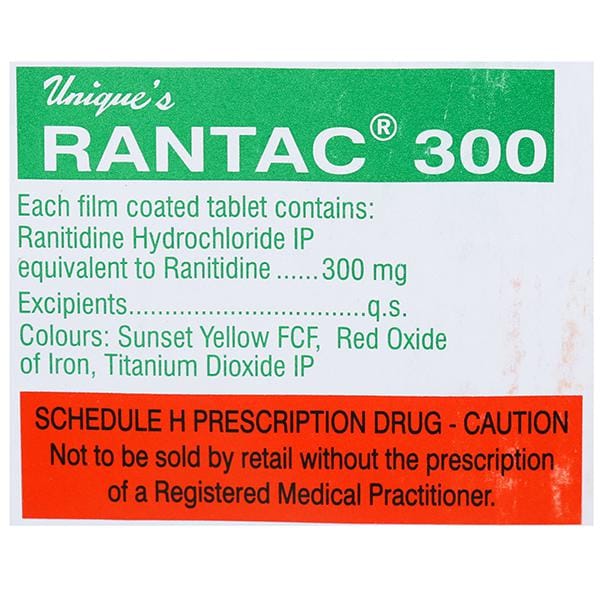
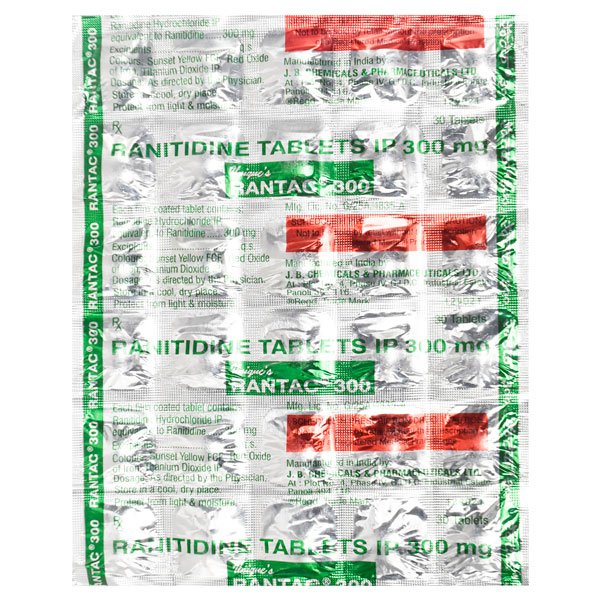
Rantac 300

✅ Verlichting van zuurbranden
✅ Behandeling van maagzweren
✅ Vermindering van brandend maagzuur
✅ Verlichting van maagklachten
✅ Ondersteuning van het spijsverteringsstelsel
Rantac bevat Ranitidine.
✓ Medisch beoordeeld door Morgan Ellis — Apotheekonderzoeker · 8 jaar ervaring · Laatst beoordeeld: mei 2026
⚡ Snelle vraag — Wat is Rantac 300?
Rantac 300 bevat ranitidine 300 mg (gemaakt door JB Chemicals) — een histamine H2 receptorantagonist die maagzuur vermindert. Belangrijke regelgevende opmerking: ranitidine werd teruggetrokken uit de markten van de Verenigde Staten, Europese Unie, Verenigd Koninkrijk en Canada in 2020 na de ontdekking van N-nitrosodimethylamine (NDMA, een waarschijnlijk kankerverwekkende stof voor mensen) besmetting in afgewerkte ranitidineproducten. De Indiase toezichthouder (CDSCO) heeft ranitidine niet formeel teruggetrokken, dus het blijft beschikbaar op de Indiase markt. De meeste grote toezichthouders raden nu famotidine (Famocid) aan als de voorkeurs H2-antagonist vervanger. Als u in een land woont waar ranitidine door uw lokale toezichthouder is teruggetrokken, lees dan de waarschuwing hieronder voor het bestellen en overweeg om over te stappen op famotidine. Standaard volwassen dosering waar ranitidine nog wordt gebruikt: 150 mg tweemaal daags, of 300 mg voor het slapengaan, gedurende maximaal 8 weken.
📦 Elke bestelling is gedekt door onze Reshipment Assurance-beleid — als uw pakket niet binnen 20 werkdagen arriveert, sturen wij het opnieuw.
Waarom bestellen bij MedsBase
Onze generieke medicijnen zijn afkomstig van WHO-GMP gecertificeerde fabrikanten en worden wereldwijd verzonden in discrete, eenvoudige verpakkingen — geen medicijnnaam op de buitenkant van het pakket. Betalingen met kaart worden verwerkt via een gereguleerde processor (betalingsoverzichten vermelden een gereguleerde kaartbetalingprocessor — nooit “MedsBase” of een medicijnnaam). Crypto en SEPA bankoverschrijvingen worden ook geaccepteerd. Elke bestelling wordt ondersteund door ons Reshipment Assurance Policy.
Wat Rantac 300 is
Rantac 300 is het merk van JB Chemicals voor ranitidine, een H2-receptorantagonist die wereldwijd veel werd gebruikt tussen de jaren 80 en 2020 voor zuurgerelateerde aandoeningen. Elke tablet bevat 300 mg ranitidine. Ranitidine is de tweede H2 antagonist die werd ontwikkeld (na cimetidine) en was decennialang het meest voorgeschreven medicijn ter wereld. De intrekking in 2020 vanwege NDMA-contaminatie in grote markten heeft de klinische praktijk bijna volledig naar famotidine doen verschuiven.
Hoe Ranitidine Werkt (Werkingsmechanisme)
Ranitidine is een competitieve, reversibele antagonist van de histamine H2 receptor op het basolaterale membraan van de pariëtale cel. Histamine-afgifte van maag-enterochromaffine-achtige cellen is het dominante signaal dat de zuursecretie aandrijft; het blokkeren van dit signaal vermindert de zuurproductie met 60–80% bij standaarddoseringen. Werking binnen 30 minuten, piek na 1–3 uur, werkingsduur 8–12 uur. Het mechanisme is identiek aan dat van famotidine; het verschil tussen de twee moleculen is puur chemisch — de aminonitrilgroep van ranitidine maakt het gevoelig voor de vorming van NDMA tijdens opslag, terwijl de thiazoolstructuur van famotidine dit niet doet.
Waarom werd Ranitidine teruggetrokken? (NDMA-verhaal)
In juni 2019 diende een onafhankelijke online apotheek ranitidinemonsters in voor routinematige NDMA-screening (NDMA is een bekend contaminant van bepaalde bloeddrukmedicijnen en tabaksproducten) en meldde niveaus ver boven de aanvaardbare dagelijkse inname van 96 ng van de FDA. Latere FDA-tests bevestigden de bevinding en toonden aan dat de NDMA-niveaus toenamen bij opslag bij hogere temperaturen. Tegen april 2020 verzocht de FDA om verwijdering van alle ranitidineproducten van de Amerikaanse markt (dit is een strengere maatregel dan een terugroeping). De EMA, MHRA en Health Canada volgden binnen enkele maanden. Het mechanisme is nu begrepen: de dimethylaminegroep van ranitidine kan afbreken tot NDMA in het molecuul zelf of reageren met nitrieten in de maag om NDMA in vivo. te vormen. Het risico voor een individuele patiënt door eerder ranitidinegebruik is in absolute termen klein, maar onnodige blootstelling aan een waarschijnlijk carcinogeen wanneer een effectief alternatief (famotidine) beschikbaar is, wordt niet langer als aanvaardbaar beschouwd.
De Indiase regulator CDSCO beoordeelde de gegevens in 2020 en concludeerde dat lokale ranitidineproducten voldeden aan nationale kwaliteitsnormen, en weigerde een formele terugtrekking uit te vaardigen. Ranitidine blijft daarom legaal beschikbaar op de Indiase markt en van fabrikanten die die markt bedienen. Klanten in landen waar ranitidine door hun nationale regulator is teruggetrokken, kunnen overwegen over te stappen op famotidine.
Indicaties waar Ranitidine werd gebruikt
Waar ranitidine nog wordt gebruikt, komt de indicatielijst overeen met die van famotidine:
- Milde tot matige GERD — naar behoefte of kortdurend
- Maagzweeraandoening (duodenale en gastrische)
- NSAID-ulcusprofylaxe (patiënten met een laag risico)
- Stressulcusprofylaxe (waarbij PPI niet de voorkeur heeft)
- Aspiratieprofylaxe vóór operatie
- Zollinger-Ellison-syndroom — hooggedoseerde aanvulling
Voor elk van deze indicaties is famotidine nu de aanbevolen H2 -antagonist van keuze; PPI's zijn eerste keus bij chronische matige tot ernstige aandoeningen.
Dosering
| Indicatie / patiënt | Volwassen dosis | Duur / opmerkingen |
|---|---|---|
| GERD — mild tot matig | 150 mg tweemaal daags, of 300 mg voor het slapengaan | 6–12 weken; evalueren |
| Genezing van duodenumulcus | 300 mg voor het slapengaan, of 150 mg tweemaal daags | 4–6 weken |
| Genezing van maagulcus | 300 mg voor het slapengaan | 6–8 weken |
| Onderhoudstherapie | 150 mg voor het slapengaan | zo nodig |
| Nierfunctiestoornis (CrCl < 50) | 150 mg eenmaal daags | dosis verlagen |
Bijwerkingen
Ranitidine heeft een vergelijkbaar bijwerkingenprofiel als famotidine: hoofdpijn, duizeligheid, obstipatie of diarree, vermoeidheid (1–3%). Zeldzaam: verwardheid (vooral bij ouderen of patiënten met nierfunctiestoornissen), reversibele trombocytopenie, hepatitis, ernstige overgevoeligheidsreacties. In tegenstelling tot cimetidine veroorzaakt ranitidine geen significante anti-androgene effecten.
Geneesmiddelinteracties
Ranitidine is een veel zwakkere CYP-enzymremmer dan cimetidine. De belangrijkste interacties zijn absorptiegerelateerd: HIV-antiretrovirale middelen die zuur nodig hebben (atazanavir, rilpivirine), antimycotica (ketoconazol, itraconazol), ijzersupplementen en calciumcarbonaat.
Contra-indicaties en voorzorgsmaatregelen
- Bekende overgevoeligheid voor ranitidine
- Acute porfyrie (relatief)
- Ernstige nierfunctiestoornis — dosis verlagen
- Voorzichtigheid bij ouderen — CNS-effecten
- Alarmsymptomen (gewichtsverlies, dysfagie, GI-bloedingen, bloedarmoede, leeftijd > 55 met nieuwe symptomen) — vereisen onderzoek, geen empirische therapie
Zwangerschap, Borstvoeding, Kinderen
Ranitidine heeft historische veiligheidsgegevens tijdens zwangerschap, maar het NDMA-verontreinigingssignaal maakt het gebruik tijdens zwangerschap en borstvoeding moeilijker te rechtvaardigen wanneer famotidine beschikbaar is. Overleg met uw verloskundige/kinderarts.
Opslag
Bewaren bij 15–30 °C in de originele blister, beschermd tegen licht, warmte en vocht. Warmte en vocht versnellen de vorming van NDMA in ranitidine; bewaar niet in badkamers of in de buurt van een waterkoker. Gooi weg na de vervaldatum — gebruik niet na de datum.
Veelgestelde vragen
Waarom is ranitidine nog steeds beschikbaar in India?
De Indiase toezichthouder CDSCO beoordeelde de NDMA-gegevens in 2020 en concludeerde dat lokale ranitidineproducten voldeden aan nationale kwaliteitsnormen, waardoor een formele terugtrekking niet werd uitgevaardigd. Grote fabrikanten die de Indiase markt bedienen (inclusief de makers van Aciloc en Rantac) blijven aan de lokale vraag voldoen. Of ranitidine in deze regelgevende context moet worden gebruikt, waar famotidine ruimschoots beschikbaar is zonder NDMA-signaal, is een klinische en persoonlijke beslissing — veel artsen zijn overgestapt op famotidine, zelfs waar ranitidine legaal verkrijgbaar blijft.
Is het kankerrisico door ranitidine groot?
Het absolute risico voor een individuele patiënt door eerder gebruik van ranitidine is klein. De reden waarom toezichthouders actie ondernamen, was dat de cumulatieve NDMA-blootstelling over jarenlang dagelijks ranitidinegebruik de aanvaardbare drempels overschreed, terwijl een effectief alternatief (famotidine) beschikbaar was zonder vergelijkbare verontreiniging. Het argument was niet dat ranitidine duidelijk kanker veroorzaakte bij gebruikers; het was dat er geen goede reden is om patiënten bloot te stellen aan een waarschijnlijk carcinogeen wanneer een veiliger alternatief bestaat.
Moet ik overstappen op famotidine?
Ja — als u in een land woont waar uw nationale toezichthouder ranitidine heeft teruggetrokken, is overstappen op famotidine 20–40 mg een eenvoudige vervanging. Het werkingsmechanisme is identiek. Er is ook een sterk argument om over te stappen, zelfs waar ranitidine legaal blijft, omdat de kosten vergelijkbaar zijn en het veiligheidsprofiel beter is. Overleg met uw voorschrijver.
Is Aciloc / Rantac verontreinigd met NDMA?
Het verontreinigingssignaal geldt voor het ranitidinemolecuul zelf en wordt beïnvloed door bewaarcondities (warmte, vochtigheid, tijd op de plank). Indiase toezichthouders hebben verklaard dat lokale producten voldeden aan Indiase kwaliteitsnormen. Wij kunnen geen individuele batch onafhankelijk certificeren. Het eerlijke antwoord is: u moet ervan uitgaan dat elk ranitidineproduct enig NDMA-blootstellingsrisico met zich meebrengt, en dat risico wordt verminderd (maar niet geëlimineerd) door korte bewaartijd en koele opslag. Famotidine brengt geen vergelijkbaar risico met zich mee.
Hoe verhoudt ranitidine zich tot famotidine wat betreft werkzaamheid?
Het werkingsmechanisme is identiek (H2 -receptorantagonisme); de werkzaamheid bij standaarddoseringen is vergelijkbaar — ranitidine 150 mg tweemaal daags en famotidine 20 mg tweemaal daags geven een vergelijkbare zuurremming en ulcer-genezingspercentages. Famotidine is op milligrambasis krachtiger (ongeveer 8-voudig), wat verklaart waarom de gebruikelijke doseringen verschillend zijn.
Wat is het verschil tussen H2 -antagonisten en PPI's?
H2 -antagonisten (ranitidine, famotidine, cimetidine) blokkeren het histaminesignaal dat de zuursecretie aandrijft. PPI's (omeprazol, esomeprazol, pantoprazol, lansoprazol, rabeprazol, ilaprazol) blokkeren de H+/K+-ATPase-pomp zelf, de laatste stap. PPI's geven een diepere, langdurigere zuurremming en zijn eerste keus bij chronische GERD, ulcusziekte en H. pylori-eradicatie. H2 -antagonisten zijn nuttig voor op aanvraag bij milde reflux, doorbraaksymptomen onder PPI en kortdurend gebruik.
Heeft ranitidine interacties met andere medicijnen?
Ranitidine heeft een veel kleiner interactieprofiel dan cimetidine. De klinisch relevante interacties zijn absorptiegerelateerd: HIV-antiretrovirale middelen (atazanavir, rilpivirine), antimycotica (ketoconazol, itraconazol), ijzer en calciumcarbonaat. Het heeft niet de anti-androgene effecten van cimetidine.
Is ranitidine veilig tijdens zwangerschap?
Pre-2020 zwangerschapsveiligheidsgegevens over ranitidine waren geruststellend. Het NDMA-contaminatiesignaal compliceert dit beeld, en famotidine is nu de voorkeurs-H2 -antagonist tijdens zwangerschap. Overleg met uw verloskundige.
Helpt Aciloc/Rantac bij mijn maagzuur?
Ja — ranitidine vermindert maagzuur en verlicht symptomen bij milde tot matige reflux, maagzweeraandoeningen en NSAID-gastritis. De klinische vraag is niet of het werkt, maar of de regelgevende en veiligheidscontext het gebruik ervan boven famotidine bevordert. De meeste internationale artsen beantwoorden die vraag tegenwoordig door de patiënt over te schakelen op famotidine.
Hoe moet ranitidine worden bewaard?
Koel, droog en donker — 15–30 °C. Warmte, vochtigheid en tijd op de plank verhogen allemaal de vorming van NDMA. Bewaar niet in badkamers of warme auto's; gebruik niet na de vervaldatum. Gebruik de kortst mogelijke behandelingsduur.
Gerelateerde alternatieven
Andere producten in Algemene gezondheid die klanten ook bekijken:
Meer opties in de behandeling van maagzuurreflux
Gerangschikt op recente bestelvolumes van MedsBase — wat andere klanten in deze categorie kiezen.

| Sterkte | 300 mg |
|---|---|
| Hoeveelheid | 20 Tablet/s, 40 Tablet/s, 60 Tablet/s, 120 Tablet/s, 240 Tablet/s |
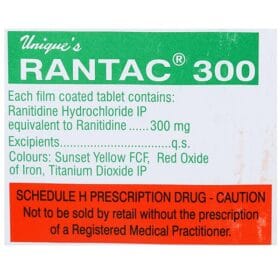 Rantac 300
Vragen & antwoorden
Rantac 300
Gerelateerde producten
Beoordelingen
Er zijn nog geen beoordelingen