







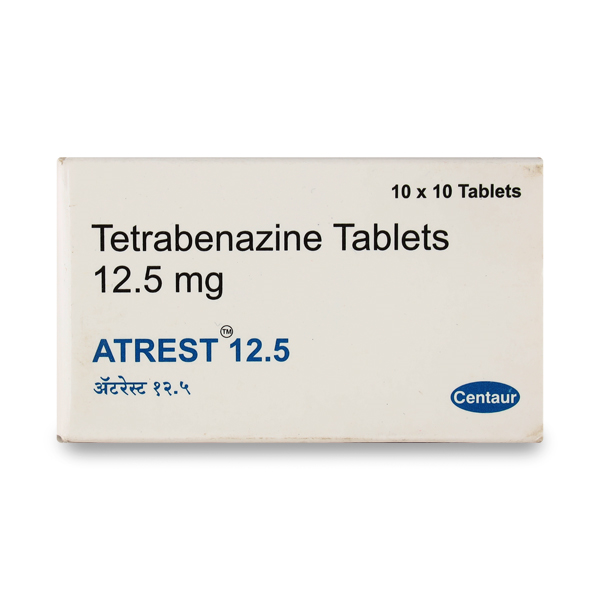
Atrest
✅ Snižuje mimovolní pohyby
✅ Kontroluje příznaky chorey
✅ Zlepšuje motorické funkce
✅ Zlepšuje kvalitu života
✅ Minimalizuje svalové křeče
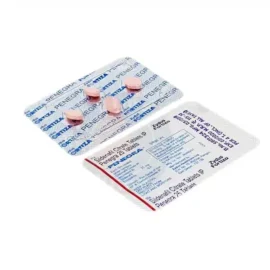
Přípravek Atrest obsahuje tetrabenazin.
✓ Lékařsky ověřeno Morgan Ellis — Pharmacy Researcher · 8 years experience Last reviewed: May 2026
⚡ Rychlá odpověď — Co je Atrest?
Atrest je perorální tetrabenazin (12,5 mg) tableta — inhibitor VMAT2 (vezikulárního monoaminového transportéru 2) schválený speciálně pro léčbu chorey spojené s Huntingtonovou chorobou. Působí snížením hladiny dopaminu v nervových zakončeních, čímž omezuje mimovolní kroutivé a trhavé pohyby typické pro Huntingtonovu choreu. Počáteční dávka: 12,5 mg jednou denně, zvyšovaná týdně o 12,5 mg až na maximum 37,5 mg/dávka (75–100 mg/den), vždy rozděleno do 2–3 dávek. Pacienti přijímající >50 mg/den vyžadují genotypizaci CYP2D6. Běžné vedlejší účinky: sedace, akathisie, deprese, parkinsonismus, nespavost. Černé varování: zvyšuje riziko deprese a sebevražednosti u pacientů s Huntingtonovou chorobou — pečlivě sledujte náladu.
📦 Každá objednávka je pokryta naší Zárukou opětovného odeslání — pokud vaše zásilka nedorazí do 20 pracovních dnů, přeposíláme ji.
Proč objednávat z MedsBase
Naše generické léky pocházejí od výrobců certifikovaných WHO-GMP a jsou expedovány po celém světě v diskrétním, nenápadném balení – na vnější straně balíku není uveden název léku. Platby kartou jsou směrovány prostřednictvím regulovaného procesoru (popisky na výpisu zahrnují regulovaného procesora plateb kartou – nikdy “MedsBase” nebo název léku). Přijímáme také kryptoměny a bankovní převody SEPA. Každá objednávka je zajištěna naší politikou přeposlání.
Co je Atrest?
Atrest je perorální tableta obsahující tetrabenazin 12,5 mg. Tetrabenazin je inhibitor vezikulárního monoaminového transportéru 2 (VMAT2) — první lék speciálně schválený pro léčbu chorey spojené s Huntingtonovou chorobou.
Deplece presynaptických zásob dopaminu tetrabenazinem snižuje mimovolné, taneční pohyby (chorea), které charakterizují Huntingtonovu chorobu, bez rizika tardivní dyskineze spojeného s tradičními blokátory dopaminových receptorů. Poprvé byl používán v Evropě v 70. letech a získal schválení FDA v roce 2008 jako Xenazine. Atrest je vyráběn ve zařízení certifikovaném WHO-GMP a je bioekvivalentní k originální značce ve stejné síle.
Jak funguje Atrest (Tetrabenazin)?
Tetrabenazine ireverzibilně inhibuje VMAT2, protein zodpovědný za balení dopaminu, serotoninu a noradrenalinu do synaptických vezikul. Blokováním VMAT2 lék vyčerpává presynaptické zásoby monoaminů – především dopaminu v bazálních gangliích. Nadměrná dopaminergní aktivita ve striatu je hlavní příčinou choreiformních pohybů u Huntingtonovy choroby, proto snížení dostupnosti dopaminu na postsynaptickém receptoru přímo potlačuje choreu.
Lék je výrazně metabolizován CYP2D6 na dva aktivní metabolity (α-HTBZ a β-HTBZ), které jsou zodpovědné za většinu klinického účinku. Pomalí metabolizátoři CYP2D6 mají výrazně vyšší plazmatické hladiny, proto je před překročením dávky 50 mg/den nutné genotypování.
Dávkování a podávání
| Týden | Denní dávka | Dávkovací schéma |
|---|---|---|
| Týden 1 | 12,5 mg | Jednou denně (ráno) |
| Týden 2 | 25 mg | 12,5 mg dvakrát denně |
| 3. týden a více | 37,5–50 mg | Rozděleno do 2–3 dávek |
| Maximálně | 75–100 mg/den* | *Genotypování CYP2D6 vyžadováno při dávkách >50 mg/den |
Užívejte s jídlem nebo bez jídla. Žádná jednotlivá dávka by neměla překročit 37,5 mg. Pokud je léčba přerušena na >5 dní, opětovně titrujte od 12,5 mg.
Vedlejší účinky
Časté (≥10 %): sedace/ospalost, únava, nespavost, deprese, akatizie (neklid), úzkost, nevolnost.
Závažné: parkinsonismus (dávkově závislý), neuroleptický maligní syndrom (vzácně), prodloužení QTc intervalu (vyvarovat se u vrozeného dlouhého QT syndromu), dysfagie (zvýšené riziko aspirace u pacientů s Huntingtonovou chorobou).
Varování a opatření
- Deprese a suicidální chování — FDA varování v černé skříňce. Tetrabenazin zvyšuje riziko deprese a sebevražedných myšlenek/chování u pacientů s Huntingtonovou chorobou, kteří již mají vysokou základní míru sebevražd (~5–10%). Vyhodnoťte depresi před zahájením léčby. Přerušte léčbu, pokud se deprese zhorší nebo se objeví sebevražedné myšlenky.
- Neuroleptický maligní syndrom (NMS). Vzácný, ale hlášený. Podezření na NMS, pokud se u pacienta objeví hypertermie, rigidita, porucha vědomí a autonomní nestabilita. Okamžitě přerušte léčbu.
- Parkinsonismus. Vyčerpání dopaminu může způsobit bradykinezi, rigiditu, tremor a pády. Dávkově závislý — snižte dávku, pokud se objeví parkinsonské příznaky.
- Dysfagie. Tetrabenazin může zhoršit potíže s polykáním, které jsou již problémem u Huntingtonovy choroby. Riziko aspirace se zvyšuje. Monitorujte a zvažte vyšetření logopedem.
- Prodloužení QTc intervalu. Při dávkách >50 mg/den tetrabenazin prodlužuje QTc interval. Při vyšších dávkách se doporučuje monitorování EKG. Vyhněte se kombinaci s dalšími léky prodlužujícími QTc interval.
- Špatní metabolizátoři CYP2D6. Tetrabenazin je významně metabolizován CYP2D6. Špatní metabolizátoři mají vyšší plazmatické hladiny a zvýšenou toxicitu. Maximální dávka u špatných metabolizátorů CYP2D6 je 50 mg/den (oproti 100 mg/den u rychlých metabolizátorů). Před překročením dávky 50 mg/den se doporučuje genotypizace CYP2D6.
- Jaterní porucha. Kontraindikováno u pacientů s jaterním poškozením (nejsou dostupná data pro úpravu dávkování).
- Řízení vozidel. Sedace, akatizie a parkinsonismus mohou ovlivnit schopnost řídit. Vyhněte se řízení, dokud není dávka stabilizována.
Kontraindikace — Kdo by NEMĚL užívat Atrest
- Aktivně sebevražední nebo nedostatečně léčení pacienti s depresí
- Porucha funkce jater
- Současné užívání Inhibitory MAO (riziko hypertenzní krize)
- Současné užívání reserpin (aditivní deplece dopaminu/serotoninu)
- Známá přecitlivělost na tetrabenazin nebo jakoukoli pomocnou látku
Interakce s léčivy
- Inhibitory MAO: Kontraindikováno — riziko hypertenzní krize. Po vysazení MAOI počkejte ≥14 dní před zahájením léčby tetrabenazinem.
- Silné inhibitory CYP2D6 (fluoxetin, paroxetin, chinidin): Zvyšují expozici tetrabenazinu — je nutná redukce dávky.
- Reserpin: Kontraindikováno — aditivní deplece monoaminů. Mezi podáním látek vyčkejte ≥20 dní.
- Antagonisté dopaminu (antipsychotika, metoklopramid): Zvýšené riziko parkinsonismu a akatizie.
- Alkohol a CNS depresiva: Zvýšená sedace — vyvarujte se nebo užívejte opatrně.
Pokyny k uchovávání
- Skladujte při pokojové teplotě, 15–30°C. Chraňte před vlhkostí.
- Uchovávejte v původním obalu až do použití.
- Uchovávejte mimo dosah dětí.
- Nepoužívejte po uplynutí data expirace.
Související kategorie na MedsBase
- Prohlédněte si všechny neurologické a antiepileptické léky
- Procházejte léky na duševní zdraví a psychiatrické léky
Často kladené dotazy
K čemu se Atrest používá?
Atrest obsahuje tetrabenazin 12,5 mg a používá se k léčbě chorey (mimovolních pohybů) spojené s Huntingtonovou chorobou. Je to první lék speciálně schválený pro tuto indikaci. Může být také používán off-label pro tardivní dyskinezi a další hyperkinetické pohybové poruchy.
Jak dlouho trvá, než tetrabenazin sníží choreu?
Redukce chorey je typicky patrná do 1–2 týdny po dosažení terapeutické dávky během titrace. Studie TETRA-HD prokázala významné snížení skóre chorey po průměrné udržovací dávce ~50 mg/den po dobu 12 týdnů.
Proč tetrabenazin vyžaduje genotypizaci CYP2D6?
Tetrabenazine je metabolizován enzymem CYP2D6 na aktivní metabolity. Slabí metabolizátoři (5–10 % kavkazské populace) mají výrazně vyšší expozici léku a jsou vystaveni většímu riziku nežádoucích účinků. Před překročením dávky 50 mg/den je nutné genotypování pro stanovení bezpečné horní hranice dávkování.
Mohu přípravek Atrest vysadit náhle?
Náhlé vysazení je obvykle dobře tolerováno (chorea se vrací, ale nepřekračuje výchozí úroveň). Pokud však lék užíváte měsíce, je rozumné postupně snižovat dávku po dobu 1–2 týdnů, abyste mohli sledovat případné změny nálady. Pokud je léčba přerušena na více než 5 dní, je třeba znovu titrovat od 12,5 mg.
Jaký je rozdíl mezi tetrabenazinem a deutetrabenazinem?
Deutetrabenazine (Austedo) je deuterovaná forma – stejná molekula s deuteriovými atomy nahrazujícími vodík na klíčových pozicích. To zpomaluje metabolismus CYP2D6, což vede k delšímu poločasu, nižším vrcholovým hladinám a dávkování dvakrát denně místo třikrát denně. Deutetrabenazine má také v klinických studiích nižší výskyt ospalosti.
Způsobuje tetrabenazine parkinsonismus?
Ano — protože vyčerpává dopamin, může způsobovat dávkově závislé parkinsonské příznaky (bradykineze, rigidita, tremor). Ty obvykle vymizí po snížení dávky. Cílem je najít nejnižší dávku, která dostatečně kontroluje choreu bez vyvolání parkinsonismu.
Je Atrest stejný jako Xenazine?
Oba obsahují tetrabenazin. Xenazine je původní značka vyráběná společností Lundbeck. Atrest je generický ekvivalent se stejnou účinnou látkou, silou (12,5 mg) a biologickou dostupností za nižší cenu.
Může se tetrabenazin používat k tardivní dyskinezi?
Tetrabenazin se používá mimo schválené indikace k tardivní dyskinezi (TD) a prokázal prospěch v kazuistikách a malých studiích. Avšak, valbenazin (Ingrezza) a deutetrabenazin (Austedo) jsou speciálně schváleny FDA pro TD a jsou obecně preferovány.
Mohu pít alkohol při užívání Atrestu?
Alkohol zesiluje sedaci a depresivní účinky tetrabenazinu na CNS. Také zhoršuje depresi — což je významný problém vzhledem k černé výstraze. Vyhněte se alkoholu nebo jeho příjem výrazně omezte.
Co mám dělat, když vynechám dávku?
Vynechanou dávku užijte co nejdříve, pokud není téměř čas na další dávku. Nedávejte dvojnásobnou dávku. Pokud vynecháte dávky po dobu 5 nebo více po sobě jdoucích dnů, kontaktujte svého lékaře — může být nutné opětovné titrování od počáteční dávky.
Interaguje Atrest s antidepresivy?
SSRI a SNRI, které silně inhibují CYP2D6 (fluoxetin, paroxetin), zvýší hladiny tetrabenazinu — je nutná úprava dávkování. Slabší inhibitory CYP2D6 (sertralin, citalopram, escitalopram) jsou bezpečnější volbou, pokud je potřeba antidepresivum spolu s tetrabenazinem.
Související alternativy
Další produkty v Chronická onemocnění které zákazníci také prohlížejí:
Více možností v oblasti neurologických onemocnění a epilepsie
Řazeno podle nedávného objemu objednávek na MedsBase — co si ostatní zákazníci v této kategorii vybírají.

| Síla | 12,5 mg |
|---|---|
| Množství | 10 Tablet/s, 30 Tablet/s, 60 Tablet/s, 90 Tablet/s, 180 Tablet/s |
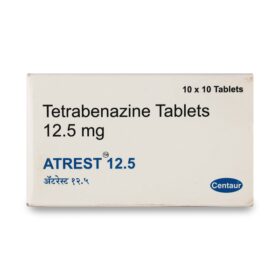 Atrest
Otázky a odpovědi
Atrest
Související produkty





Hodnocení
Zatím zde nejsou žádná hodnocení