







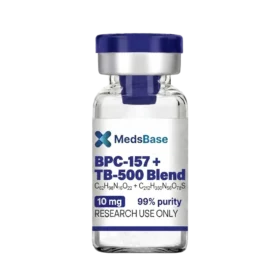
BPC-157 + TB-500 Μείγμα
✅ Υποστηρίζει κυτταρική σηματοδότηση
✅ Προωθεί την ιστική μοντελοποίηση
✅ Ενισχύει την αγγειογενετική έρευνα
✅ Παρατηρήθηκε δραστηριότητα ινοβλαστών
✅ Σταθερό σε πειραματικές δοκιμές
BPC-157 + TB-500 περιέχει συνθετική πεπτιδική ένωση.
✓ Ιατρικά ελεγμένο από Morgan Ellis — Ερευνητής Φαρμακευτικής · 8 χρόνια εμπειρία · Τελευταία αναθεώρηση: Μάιος 2026
Γρήγορη απάντηση — Τι είναι το μείγμα BPC-157 + TB-500;
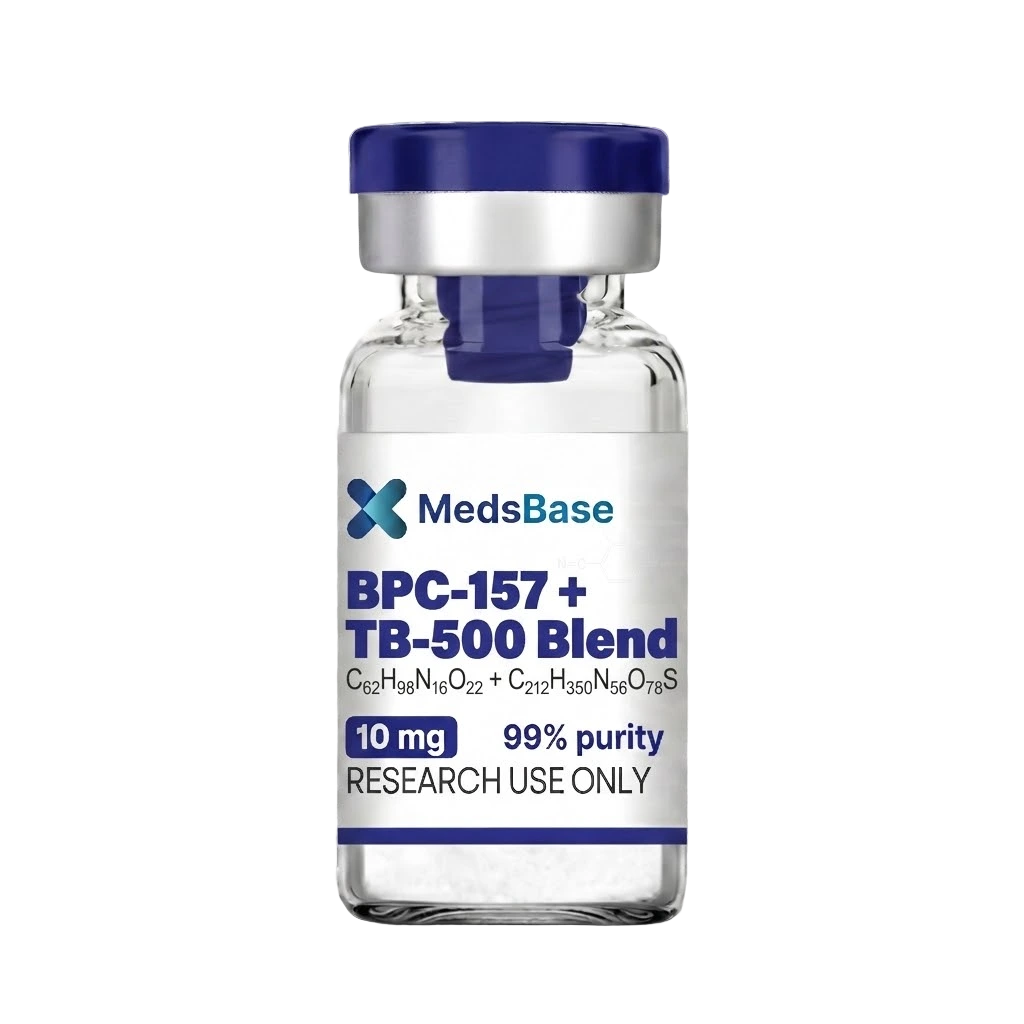
Αυτό είναι ένα προ-αναμεμειγμένο ερευνητικό πεπτίδιο που παρέχεται ως μίγμα 50/50 BPC-157 και TB-500 (Θυμοσίνη Βήτα-4) σε έναν μόνο λυοφιλισμένο φιαλίδιο. Διατίθενται τρεις συνολικές δόσεις mg: 10 mg (5 mg BPC + 5 mg TB), 20 mg (10 mg + 10 mg), και 30 mg (15 mg + 15 mg) — το καθένα σε συσκευασίες των 10, 20 ή 30 φιαλιδίων. Το προ-αναμεμειγμένο προϊόν εξοικονομεί το βήμα της ανασύνθεσης για ερευνητικά πρωτόκολλα που μελετούν αυτές τις δύο ενώσεις μαζί.
BPC-157 + TB-500 Μίγμα — Προ-Αναμεμειγμένη Διπλή Πεπτιδική Ένωση για Έρευνα
Το BPC-157 και το TB-500 είναι τα δύο πιο μελετημένα πεπτίδια στον τομέα της έρευνας για την επισκευή ιστών και τη συστημική ανάκαμψη. Στοχεύουν σε συμπληρωματικές οδούς: το BPC-157 (Body Protection Compound, ένα θραύσμα 15 αμινοξέων που προέρχεται από ένα γαστρικό πρωτεΐνη) διερευνάται για την τοπική επισκευή ιστών, την αγγειογένεση και τον έλεγχο των αυξητικών παραγόντων, ενώ το TB-500 (ένα συνθετικό θραύσμα της Θυμοσίνης Βήτα-4) μελετάται για τη συστημική μετακίνηση κυττάρων, την ακολουθία G-ακτίνης και ευρύτερα σήματα ανάκαμψης.
Τα ερευνητικά πρωτόκολλα που διερευνούν τις δύο ενώσεις μαζί συνήθως δοσοποιούνται σε αναλογία 1:1, γι' αυτό και το προ-αναμεμειγμένο μίγμα 50/50 έχει γίνει μια τυποποιημένη μορφή παροχής. Αυτό το προϊόν εξαλείφει το επιπλέον βήμα της ανασύνθεσης που θα απαιτούνταν διαφορετικά όταν διεξάγεται μια μελέτη συνδυασμένης δοσολογίας.
Γιατί ένα Μίγμα Αντί για Δύο Χωριστά Φιαλίδια;
Τα εργαστήρια έρευνας που εκτελούν πρωτόκολλα συνδυασμένου BPC-157 + TB-500 έχουν δύο επιλογές παροχής: (α) να παραγγείλουν τα πεπτίδια χωριστά και να ανασυνθέσουν κάθε φιαλίδιο ανεξάρτητα, αναμιγνύοντας τις τελικές δόσεις κατά τη στιγμή της έγχυσης, ή (β) να παραγγείλουν ένα προ-αναμεμειγμένο φιαλίδιο και να ανασυνθέσουν μία φορά.
Και οι δύο προσεγγίσεις είναι έγκυρες. Το μίγμα επιλέγεται συχνότερα όταν:
- Το πρωτόκολλο έρευνας καθορίζεται σε αναλογία 1:1 BPC:TB σε όλες τις ομάδες μελέτης.
- Ο χρόνος ανασύνθεσης, το βάρος της στείρας τεχνικής και το απόθεμα φιαλίδων αποτελούν σημαντικά κέντρα κόστους.
- Επιθυμητή είναι μια σταθερή αναλογία από παρτίδα σε παρτίδα (ένα προ-μείγμα κατασκευάζεται με μία μόνο προδιαγραφή· ξεχωριστά παραγγελθέντα φιαλίδια μπορεί να προέρχονται από διαφορετικές παρτίδες παραγωγής).
Οι μεμονωμένες ενώσεις παραμένουν διαθέσιμες για πρωτόκολλα που απαιτούν ανεξάρτητη προσαρμογή δόσης του BPC-157 έναντι του TB-500. Για πληροφορίες σχετικά με τα μεμονωμένα πεπτίδια, δείτε τον οδηγό έρευνας BPC-157 και οδηγό TB-500 (Θυμοσίνη Βήτα-4). Για μια άμεση σύγκριση θεραπείας, δείτε το σύγκριση BPC-157 vs TB-500.
Επιλογές Ισχύος — Πώς να Επιλέξετε
Και οι τρεις ισχύς περιέχουν την ίδια αναλογία 1:1 BPC-157 : TB-500. Ο συνολικός αριθμός mg αναφέρεται στη συνολική μάζα πεπτιδίου ανά φιαλίδιο:
- 10 mg συνολικά — 5 mg BPC-157 + 5 mg TB-500 ανά φιαλίδιο. Κατάλληλο για πρωτόκολλα έρευνας που μελετούν χαμηλότερες δόσεις ή σύντομες διάρκειες μελέτης. Καλύτερη τιμή ανά φιαλίδιο· υψηλότερο κόστος ανά mg.
- 20 mg συνολικά — 10 mg BPC-157 + 10 mg TB-500 ανά φιαλίδιο. Η πιο συχνά παραγγελθούσα ισχύς για πρωτόκολλα έρευνας πολλών εβδομάδων. Ισορροπημένη σε κόστος ανά mg και πρακτικούς όγκους αραίωσης εργασίας.
- 30 mg συνολικά — 15 mg BPC-157 + 15 mg TB-500 ανά φιαλίδιο. Καλύτερο κόστος ανά mg. κατάλληλο για μεγαλύτερης διάρκειας μελέτες ή ερευνητικά πρωτόκολλα υψηλότερων δόσεων.
Διατίθενται συσκευασίες των 10, 20 ή 30 φιαλιδίων με κλιμακωτή τιμολόγηση — οι συσκευασίες των 20 και 30 φιαλιδίων προσφέρουν σημαντική εξοικονόμηση ανά φιαλίδιο σε σύγκριση με τη βασική συσκευασία των 10 φιαλιδίων.
Ανασύνθεση — Πρότυπο Ερευνητικό Πρωτόκολλο
Το μείγμα παρέχεται λυοφιλισμένο. Η μέθοδος εργασιακής αραίωσης είναι η ίδια όπως για τα φιαλίδια μεμονωμένων πεπτιδίων:
- Ανασυνθέστε με βακτηριοστατικό νερό. Μια κοινή εργασιακή αραίωση για το φιαλίδιο των 20 mg είναι 2 mL Νερό BAC, δίνοντας 10 mg/mL συνολικού πεπτιδίου (5 mg/mL BPC + 5 mg/mL TB).
- Προσθέστε το βακτηριοστατικό νερό αργά κατά μήκος του εσωτερικού τοιχώματος του φιαλιδίου — μην ψεκάζετε απευθείας πάνω στο λυοφιλισμένο κέικ.
- Ανακατέψτε απαλά για 30–60 δευτερόλεπτα μέχρι να διαλυθεί πλήρως. Μην σείετε δυνατά· η ταραχή στη διεπιφάνεια αέρα-νερού μπορεί να καταστρέψει τις δομές των πεπτιδίων.
- Επισημάνετε το φιαλίδιο με την ημερομηνία ανασύνθεσης. Διατηρείστε στο ψυγείο στους 2–8 °C και χρησιμοποιήστε εντός 30 ημερών.
Για μια λεπτομερή ανάλυση των μαθηματικών αραίωσης και των κοινών σφαλμάτων ανασύνθεσης, δείτε τον οδηγό ανασύνθεσης με βακτηριοστατικό νερό.
Ερευνητικό Πλαίσιο — Συνδυασμένη Χορήγηση BPC + TB
Η λογική για τη μελέτη του BPC-157 και του TB-500 μαζί βασίζεται στους μη επικαλυπτόμενους μηχανισμούς τους. Η έρευνα για το BPC-157 εστιάζει στην τοπική επισκευή — αγγειογένεση, διαμόρφωση αυξητικών παραγόντων (FGF, VEGF, EGF) και σηματοδότηση προσκόλλησης τένοντα-οστού. Η έρευνα για το TB-500 στοχεύει στη συστημική μετακίνηση κυττάρων, δέσμευση G-ακτίνης και ευρύτερες οδούς επίλυσης φλεγμονής. Σε συνδυαστικά ερευνητικά πρωτόκολλα, οι ερευνητές υποθέτουν πρόσθετες ή ακόμη και συνεργιστικές επιδράσεις στη ζώνη επικάλυψης μεταξύ τοπικής και συστημικής ανάκαμψης.
Τυπικές αναφερόμενες περιοχές δόσεων ερευνητικών πρωτοκόλλων (ανά συστατικό πεπτίδιο):
- Συστατικό BPC-157: 250–500 µg ανά δόση, μία ή δύο φορές ημερησίως, σε κύκλους 4–8 εβδομάδων.
- Συστατικό TB-500: 2–5 mg ανά εβδομάδα, συνήθως χωρισμένα σε 2–3 δόσεις ανά εβδομάδα.
Αυτοί οι αριθμοί αντικατοπτρίζουν δημοσιευμένες ερευνητικές πρωτόκολλες και δεν αποτελούν συστάσεις χορήγησης. Ούτε το BPC-157 ούτε το TB-500 έχουν εγκριθεί για θεραπευτική χρήση σε ανθρώπους από την FDA, EMA, MHRA ή TGA. Και τα δύο παρέχονται ως ερευνητικά συστατικά μόνο για εργαστηριακή έρευνα.
Αποθήκευση & Χειρισμός
- Αποθηκεύστε τα λυοφιλισμένα φιαλίδια στους 2–8 °C (ψυγείο). Επιτρέπεται σύντομη μεταφορά σε θερμοκρασία δωματίου.
- Μετά την ανασύνθεση, διατηρήστε το διάλυμα στο ψυγείο και χρησιμοποιήστε το εντός 30 ημερών.
- Αποφύγετε επαναλαμβανόμενους κύκλους κατάψυξης-απόψυξης.
- Προστατέψτε από άμεσο φως. Προτιμώνται καφέ φιαλίδια ή τυλίγματα από αλουμινόχαρτο για παρατεταμένη αποθήκευση στο ψυγείο.
- Χρησιμοποιήστε 70% ισοπροπυλική αλκοόλη για τον καθαρισμό του καουτσούκ πριν από κάθε παραπομπή με βελόνα.
📦 Κάθε παραγγελία καλύπτεται από την Πολιτική Εγγύησης Επαναποστολής — εάν το δέμα σας δεν φτάσει εντός 20 εργάσιμων ημερών, το επαναποστέλλουμε.
| Προδιαγραφή | Λεπτομέρεια |
|---|---|
| Αριθμός CAS | σύνθετο (BPC-157 137525-51-0 / TB-500 77591-33-4) |
| Μοριακός Τύπος | BPC-157: C62H98N16O22 · TB-500: C212H350N56O78S |
| Μοριακό Βάρος | BPC-157: 1419.55 Da · TB-500: ~4963 Da |
| Ακολουθία | BPC-157 (15 aa) + Ακετυλιωμένη Θυμοσίνη β-4 (43 aa) συγλυοφιλισμένα σε μία φιάλη |
| Μορφή | Υαλοποιημένη σκόνη (ή όπως παρέχεται) |
| Καθαρότητα | ≥99% (HPLC επαληθευμένο, COA κατόπιν αιτήματος) |
| Αποθήκευση | Λυοφιλισμένο μείγμα: 2–8 °C (ψυγείο) για το απόθεμα χρήσης· −20 °C για μακροπρόθεσμη αποθήκευση ανοιγμένων φιαλών. Ανασυσταθέν: 2–8 °C, χρήση εντός ~30 ημερών. Αποφύγετε τον εντονότατο κραδασμό. Μην καταψύχετε και αποψύχετε το ανασυσταθέν διάλυμα. |
| Διαλυτότητα | Βακτηριοστατικό νερό (προτείνεται) ή στειρωμένο νερό για μικρότερα χρονικά διαστήματα χρήσης |
| Ερευνητική Χρήση | Μόνο για εργαστηριακή έρευνα. Δεν προορίζεται για διαγνωστική ή θεραπευτική χρήση σε ανθρώπους ή ζώα. |
Σχετικές Ερευνητικές Ενώσεις
- οδηγό έρευνας BPC-157 — το μεμονωμένο συστατικό.
- TB-500 (Thymosin Beta-4) ερευνητικός οδηγός — το μεμονωμένο συστατικό.
- σύγκριση BPC-157 vs TB-500 — άμεση σύγκριση θεραπείας των δύο πεπτιδίων.
- GHK-Cu (Copper Peptide) ερευνητικός οδηγός — το συστατικό ανάκαμψης που συνδυάζεται συχνότερα με πρωτόκολλα BPC/TB.
- Καλύτερα πεπτίδια για στοίβα ανάκτησης μυών — άρθρο-κόμβος που καλύπτει συνδυαστικά πρωτόκολλα.
Συχνές Ερωτήσεις
Ποια είναι η αναλογία BPC-157 : TB-500 στο μείγμα;
Και οι τρεις δυνάμεις παρέχονται σε σταθερή αναλογία 1:1 κατά μάζα. Το φιαλίδιο 10 mg περιέχει 5 mg BPC-157 + 5 mg TB-500; το φιαλίδιο 20 mg περιέχει 10 mg + 10 mg; το φιαλίδιο 30 mg περιέχει 15 mg + 15 mg.
Γιατί να επιλέξετε το μείγμα αντί για δύο ξεχωριστά φιαλίδια;
Το μείγμα εξοικονομεί ένα βήμα ανασύνθεσης και εγγυάται μια σταθερή αναλογία 1:1 κατά τη διάρκεια της μελέτης. Τα ξεχωριστά φιαλίδια προσφέρουν μεγαλύτερη ευελιξία εάν θέλετε να προσαρμόσετε τη δόση των δύο συστατικών ανεξάρτητα.
Ποια δύναμη να παραγγείλω;
Το φιαλίδιο 20 mg είναι η πιο συχνά παραγγελνόμενη δύναμη για τυπικά ερευνητικά πρωτόκολλα. Το φιαλίδιο 10 mg ταιριάζει σε σύντομες μελέτες ή σε χαμηλότερες δόσεις. Το φιαλίδιο 30 mg προσφέρει το καλύτερο κόστος ανά mg για μεγαλύτερες μελέτες ή υψηλότερες δόσεις.
Πώς πρέπει να ανασυντεθεί το μείγμα;
Χρησιμοποιήστε βακτηριοστατικό νερό. Για το φιαλίδιο 20 mg, 2 mL βακτηριοστατικού νερού δίνουν μια συγκέντρωση εργασίας 10 mg/mL συνολικού πεπτιδίου. Προσθέστε το νερό αργά στην πλευρά του φιαλιδίου και ανακατέψτε — μην το κουνήσετε.
Πόσο διαρκεί το ανασυσταθέν μείγμα;
Σε ψύξη στους 2–8 °C, χρησιμοποιήστε εντός 30 ημερών. Αποφύγετε επαναλαμβανόμενους κύκλους κατάψυξης-απόψυξης. Απορρίψτε εάν το διάλυμα γίνει θολό ή αλλάξει χρώμα.
Ποιες είναι οι τυπικές ερευνητικές δόσεις για αυτό το μείγμα;
Οι δημοσιευμένες ερευνητικές πρωτόκολλο συνήθως δίνουν 250–500 µg του συστατικού BPC-157 μία ή δύο φορές ημερησίως, και 2–5 mg του συστατικού TB-500 εβδομαδιαίως, κατανεμημένα σε 2–3 δόσεις. Επειδή η αναλογία είναι σταθερή στο 1:1, η έλξη ενός όγκου που παρέχει την επιθυμητή δόση BPC-157 θα παρέχει ταυτόχρονα την ίδια μάζα TB-500.
Είναι αυτό το μείγμα εγκεκριμένο από τον FDA;
Όχι. Ούτε το BPC-157 ούτε το TB-500 έχουν εγκριθεί από τον FDA, EMA, MHRA, TGA ή οποιαδήποτε άλλη ρυθμιστική αρχή για θεραπευτική χρήση σε ανθρώπους. Αυτό το προϊόν παρέχεται αυστηρά ως ερευνητική ένωση για εργαστηριακή έρευνα.
Μπορεί το μείγμα να αποθηκευτεί σε θερμοκρασία δωματίου;
Τα μη ανασυσταθέντα λυοφιλισμένα φιαλίδια είναι σταθερά κατά τη διάρκεια σύντομης μεταφοράς σε θερμοκρασία δωματίου, αλλά θα πρέπει να ψυχθούν μετά την άφιξη. Μόλις ανασυσταθεί, το διάλυμα πρέπει να ψύχεται.
Θα διαρκέσει η συσκευασία των 20 mg περισσότερο από δύο συσκευασίες των 10 mg;
Ανά φιαλίδιο, ναι — το φιαλίδιο των 20 mg περιέχει διπλάσια ποσότητα πεπτιδίου ανά φιαλίδιο. Σε επίπεδο κιτ, μια συσκευασία 10 φιαλιδίων με ισχύ 20 mg περιέχει την ίδια συνολική ποσότητα πεπτιδίου (200 mg) με δύο συσκευασίες 10 φιαλιδίων με ισχύ 10 mg (επίσης 200 mg), αλλά με χαμηλότερο κόστος ανά mg.
Ποια είναι η διάρκεια ζωής του ανοιχτού φιαλιδίου;
Τα λυοφιλισμένα πεπτίδια που αποθηκεύονται σωστά στους 2–8 °C παραμένουν σταθερά μέχρι την ημερομηνία λήξης που δηλώνει ο κατασκευαστής — συνήθως 18–24 μήνες από την παραγωγή. Πάντα ελέγχετε την ημερομηνία λήξης στο μεμονωμένο φιαλίδιο.
Πώς συγκρίνεται το μείγμα με την παραγγελία των BPC-157 και TB-500 χωριστά;
Λειτουργικά ισοδύναμο εάν το πρωτόκολλο σας λειτουργεί σε αναλογία 1:1. Το μείγμα εξοικονομεί ένα βήμα ανασύνθεσης ανά παρτίδα και εγγυάται τη συνέπεια της αναλογίας. Η προσέγγιση με ξεχωριστά φιαλίδια προτιμάται εάν θέλετε να διαφοροποιήσετε τις δόσεις των δύο πεπτιδίων ανεξάρτητα σε διαφορετικές ομάδες μελέτης.
Αποστέλλετε αυτό το μείγμα διεθνώς;
Ναι. Όλες οι παραγγελίες που περιλαμβάνουν μόνο πεπτίδια αποστέλλονται παγκοσμίως μέσω του αφοσιωμένου μας μεταφορέα πεπτιδίων χωρίς επιπλέον χρέωση. Οι μικτές παραγγελίες (πεπτίδια συν άλλα φάρμακα) χρησιμοποιούν την τυπική μας παρακολουθούμενη διεθνή αποστολή.
Ποιο είναι το συνιστώμενο πρωτόκολλο έρευνας για το μείγμα BPC-157 + TB-500;
Η δημοσιευμένη προκλινική έρευνα που χρησιμοποιεί τα BPC-157 και TB-500 μαζί εφαρμόζει κάθε πεπτίδιο στις ατομικές παραμέτρους του πρωτοκόλλου — BPC-157 στην περιοχή 250–500 mcg και TB-500 στην περιοχή 2–5 mg, με το BPC-157 να δοσοποιείται πιο συχνά λόγω της μικρότερης ημιζωής του. Οι συγκεκριμένες δόσεις για οποιαδήποτε εφαρμογή πρέπει να προέρχονται από κριτικές βιβλιογραφίας σχετικές με το μοντέλο μελέτης.
Γιατί ο συνδυασμός των BPC-157 και TB-500 ενδιαφέρει τους ερευνητές;
Τα BPC-157 και TB-500 στοχεύουν σε συμπληρωματικές οδούς επισκευής ιστών — το BPC-157 κυρίως μέσω VEGF, νιτρικού οξέος και σηματοδότησης υποδοχέων αυξητικής ορμόνης με ισχυρές τοπικές επιδράσεις· το TB-500 μέσω δέσμευσης ακτίνης, αγγειογένεσης και συστημικής κατανομής. Τα προκλινικά μοντέλα συνδυασμού έχουν χρησιμοποιήσει και τα δύο πεπτίδια μαζί, και τα δύο μελετώνται συχνά στα ίδια πλαίσια έρευνας επισκευής και ανάκτησης.
Ποιο πρότυπο καθαρότητας παρέχει η MedsBase για αυτό το μείγμα;
Όλα τα φιαλίδια αυτού του μείγματος που διατίθενται από τη MedsBase παρέχονται με καθαρότητα HPLC 99%+ σε λυοφιλισμένη μορφή. Ένα πιστοποιητικό ανάλυσης (COA) είναι διαθέσιμο κατόπιν αιτήματος — στείλτε μήνυμα στην ομάδα υποστήριξης μας μετά την υποβολή της παραγγελίας σας και θα σας προωθήσουμε το COA ειδικό για την παρτίδα των φιαλιδίων που λάβατε.
Περαιτέρω ανάγνωση
📖 Μάθετε την έρευνα πίσω από αυτό το πεπτίδιο
Διαβάστε τον πλήρη αποδεικτικά τεκμηριωμένο οδηγό μας: BPC-157 vs TB-500 — άμεση σύγκριση & καθοδήγηση συνδυασμένου πρωτοκόλλου. Καλύπτει τον μηχανισμό δράσης, δημοσιευμένα δεδομένα μελέτης, τυπικές ερευνητικές δοσολογίες, πρωτόκολλα ανασύνθεσης, ζητήματα στοίβαξης και σημειώσεις ασφαλείας/αντενδείξεων.
Σχετικοί Οδηγοί Έρευνας Πεπτιδίων
Περισσότερες επιλογές σε Πεπτίδια
Ταξινομημένα σύμφωνα με τον όγκο παραγγελιών στο MedsBase — τι επιλέγουν άλλοι πελάτες σε αυτήν την κατηγορία.
| Ισχύς | 10 mg, 20 mg, 30 mg |
|---|---|
| Ποσότητα | 10 Φιαλίδια, 20 Φιαλίδια, 30 Φιαλίδια |
 BPC-157 + TB-500 Μείγμα
Ερωτήσεις & Απαντήσεις
BPC-157 + TB-500 Μείγμα
Σχετικά προϊόντα
Κριτικές
Δεν υπάρχουν ακόμη κριτικές