







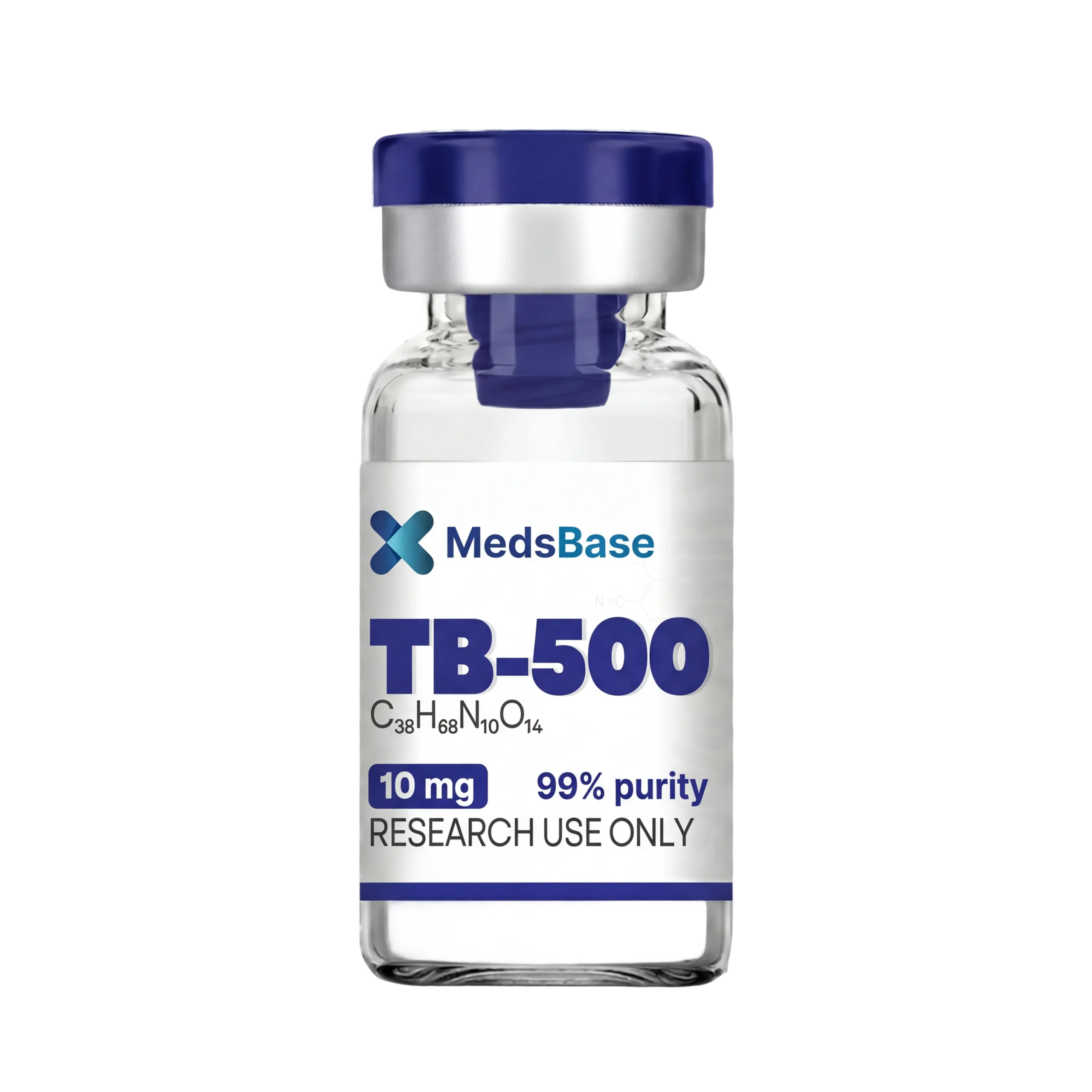
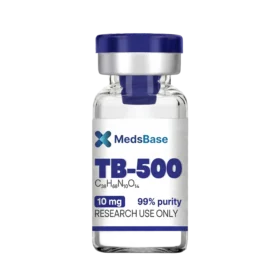
TB-500 (Θυμοσίνη Βήτα-4)
✅ Υποστηρίζει την αναγέννηση των κυττάρων
✅ Ενισχύει τη μοντελοποίηση των ιστών
✅ Προάγει τη δραστηριότητα των ινοβλαστών
✅ Ενισχύει την αγγειογενετική σηματοδότηση
✅ Βελτιώνει τη σταθερότητα του εξωκυττάριου πίνακα
TB-500 περιέχει συνθετική πεπτιδική ένωση.
✓ Ιατρικά ελεγμένο από Morgan Ellis — Ερευνητής Φαρμακευτικής · 8 χρόνια εμπειρία · Τελευταία αναθεώρηση: Μάιος 2026
Γρήγορη Απάντηση — Τι είναι το TB-500;
TB-500 είναι ένα συνθετικό ανάλογο του Θυμοσίνη Βήτα-4, ένα φυσικά υ υπάρχον πεπτίδιο 43 αμινοξέων με συστημική θεραπευτική δράση. Σε δημοσιευμένες προκλινικές έρευνες δεσμεύει G-ακτίνι, διεγείρει την αγγειογένεση μέσω της οδούβας VEGF/KDR και ρυθμίζει την φλεγμονώδη σηματοδότηση TGF-beta. Προμήθεσμία σε λυοφιλισμένα φιαλίδια 2 mg έως 10 mg μόνο για εργαγχειρηματική χρήση σε εργαστήριο.
📦 Κάθε παραγγελία καλύπτεται από την Πολιτική Εγγύησης Επαναποστολής — εάν το δέμα σας δεν φτάσει εντός 20 εργάσιμων ημερών, το επαναποστέλλουμε.
| Προδιαγραφή | Λεπτομέρεια |
|---|---|
| Αριθμός CAS | 77591-33-4 |
| Μοριακός Τύπος | C212H350N56O78S |
| Μοριακό Βάρος | ~4963 Da (N-ακετυλοθυμοσίνη β-4 (1–43)) |
| Ακολουθία | Ac-SDKPDMAEIEKFDKSKLKKTETQEKNPLPSKETIEQEKQAGES |
| Μορφή | Υαλοποιημένη σκόνη (ή όπως παρέχεται) |
| Καθαρότητα | ≥99% (HPLC επαληθευμένο, COA κατόπιν αιτήματος) |
| Αποθήκευση | Λυοφιλισμένο: 2–8 °C (ψυγείο) για το τρέχον απόθεμα· −20 °C για μακροπρόθεσμη αποθήκευση ανοιχτών φιαν φιαλίδια. Ανασυντεθειμένο: 2–8 °C, χρήση εντός ~30 ημερών. Αποφύγετε έντονο κούνημα· μεγάλα πεπτίδια διαφθείρονται με κούνημα. Μην καταψύχετε-αναθερμαίνετε το ανασυντεθειμένο διάλυμα. |
| Διαλυτότητα | Βακτηριοστατικό νερό (προτείνεται) ή στειρωμένο νερό για μικρότερα χρονικά διαστήματα χρήσης |
| Ερευνητική Χρήση | Μόνο για εργαστηριακή έρευνα. Δεν προορίζεται για διαγνωστική ή θεραπευτική χρήση σε ανθρώπους ή ζώα. |
Τι Είναι Το TB-500;
TB-500 είναι η εργαστηριακή ονομασία για ένα συνθετικό ανάλογο του Thymosin Beta-4 (TB4), ένα φυσικά απαντώμενο πεπτιδικό ορμόνη 43 αμινοξέων που απαντάται σε σχεδόν κάθε κύτταρο του ανθρώπινου σώματος. Το TB4 είναι πιο άφθονο στα αιμοπετάλια και απελευθερώνεται σε θέσεις ιστικής βλάβης όπου συντονίζει τη μετακίνηση των κυττάρων, την αγγειογένεση και την αντιαφλεγμονώδη σηματοδότηση. Η συνθετική ερευνητική μορφή — TB-500 — αναπαράγει τη βιολογική δραστηριότητα του TB4 και είναι η πιο ευρέως μελετημένη ερευνητική ένωση σε αυτήν την κατηγορία.
Η αλληλουχία του TB4 είναι Ac-SDKPDMAEIEKFDKSKLKKTETQEKNPLPSKETIEQEKQAGES, με μοριακό βάρος περίπου 4.963 Da. Παρασκευάζεται ως υψηλής καθαρότητας λυοφιλισμένη σκόνη για ανασύνθεση με βακτηριοστατικό νερό. Το TB-500 είναι μόνο για εργαστηριακή έρευνα και δεν προορίζεται για ανθρώπινη ή κτηνιατρική διάγνωση ή θεραπεία. Για τον μηχανισμό δράσης, δημοσιευμένες λεπτομέρειες δοκιμών και ερευνητικές δοσολογικές εκτιμήσεις, δείτε τον πλήρη ερευνητικό οδηγό TB-500.
Μηχανισμός Δράσης — Συστηματική Αποκατάσταση μέσω Τριών Διαδρομών
Το TB-500 διακρίνεται από τα περισσότερα πεπτίδια από την συστηματική του κατανομή και τον μακρύ χρόνο ημίσειας ζωής στην κυκλοφορία, που επιτρέπουν σε μια μόνο χορήγηση να επηρεάσει τις διαδικασίες επισκευής σε πολλούς ιστούς ταυτόχρονα. Οι τρεις κύριες μηχανιστικές διαδρομές στη δημοσιευμένη έρευνα:
- Δέσμευση G-ακτίνης — Το TB-500 δένεται τη μονομερή ακτίνη (G-ακτίνη) μέσω ενός κεντρικού μοτίβου δέσμευσης ακτίνης (LKKTETQ). Αυτό διατηρεί το κυτταροσκελετικό απόθεμα που χρειάζονται τα κύτταρα για να επεκτείνουν ψευδοπόδια, να μετακινούνται προς τα σημεία τραυματισμού και να αναδιαμορφώνονται μετά τη βλάβη. Οι δοκιμές μετακίνησης κυττάρων σε έρευνες πληγής δείχνουν σταθερά αυξημένους ρυθμούς μετακίνησης σε κύτταρα που έχουν υποστεί θεραπεία με TB4.
- Αγγειογένεση μέσω σηματοδότησης VEGF / KDR — Το TB-500 διεγείρει τη μετακίνηση των αγγειακών ενδοθηλίων και τον σχηματισμό τριχοειδών μέσω της διαδρομής του υποδοχέα VEGF 2 (KDR). Σε έρευνες ισχαιμίας-αναπλήρωσης και επούλωσης πληγών, αυτό μεταφράζεται σε ταχύτερη αποκατάσταση της αιμάτωσης στα σημεία επισκευής.
- Αντιφλεγμονώδης σηματοδότηση μέσω διαμόρφωσης του TGF-beta — Το TB-500 μειώνει την απελευθέρωση προφλεγμονωδών κυτοκινών και επιταχύνει την επίλυση της φλεγμονώδους φάσης της επούλωσης. Σε έρευνες για καρδιακή ισχαιμία, αυτό έχει συνδεθεί με μειωμένο μέγεθος εμφράγματος και διατηρημένη λειτουργία των καρδιομυοκυττάρων.
Επειδή αυτοί οι τρεις μηχανισμοί διασπώνται σε όλο το σώμα, το TB-500 παράγει αποτελέσματα σε ιστούς μακριά από τον τόπο έγχυσης — το χαρακτηριστικό που το διακρίνει από άλλα πιο τοπικά πεπτίδια επούλωσης όπως BPC-157. Η πρακτική συνέπεια: τα πρωτόκολλα έρευνας για το TB-500 δοσοποιούνται δύο φορές την εβδομάδα και όχι καθημερινά.
Εφαρμογές Δημοσιευμένης Έρευνας
Το TB-500 χρησιμοποιείται σε πλαίσια εργαστηριακής έρευνας που διερευνούν:
- Αναπαραγωγή σκελετικού μυός — συστημική κινητική ανάκτησης σε μοντέλα τρωκτικών με θλάση, τέντωμα και ατροφία από αχρηστία
- Έρευνα για καρδιακή ανάκτηση — επιβίωση καρδιομυοκυττάρων, μέγεθος εμφράγματος και αγγειακή αναδόμηση μετά από ισχαιμία (Smart et al., Nature 2011; Bock-Marquette et al., Nature 2004)
- Επούλωση τένοντα και συνδέσμου — μόνο ή σε συνδυασμό με BPC-157 σε έρευνες για επισκευή συνδετικού ιστού
- Συστηματική επισκευή τραυμάτων — έρευνες για επούλωση δερματικών και κερατοειδών τραυμάτων, ειδικά όταν επηρεάζονται πολλαπλοί ιστοί
- Έρευνα για τον κύκλο της τρίχας — αγγειογένεση θυλακίων και μεταβάσεις φάσεων ανάπτυξης τριχών σε ερευνητικά μοντέλα τρωκτικών
- Αγγειακή αποκατάσταση — μετανάστευση ενδοθηλιακών κυττάρων, σχηματισμός τριχοειδών και έρευνα ισχαιμίας
- Συγκριτική έρευνα πεπτιδίων — σύγκριση με το BPC-157 ως τον κανονικό τοπικό θεραπευτικό συγκριτικό, ή με IGF-1 LR3 και Ipamorelin/CJC-1295 στην έρευνα αυξητικών παραγόντων. Δείτε το σύγκριση BPC-157 vs TB-500 για την παράλληλη σύγκριση.
Για ευρύτερο πλαίσιο σχετικά με το πού ταιριάζει το TB-500 στο τοπίο των θεραπευτικών πεπτιδίων, δείτε τα καλύτερα πεπτίδια για ανάκαμψη μυών ομαδικό άρθρο και συμπληρωματικές ερευνητικές ενώσεις στο κατάλογος πεπτιδίων.
Διαθέσιμες Δυνάμεις και Συγκεντρώσεις
Η MedsBase διαθέτει TB-500 (συνθετικό Thymosin Beta-4) στις ακόλουθες μορφές λυοφιλισμένων φιαλών. Κάθε παραλλαγή αποστέλλεται σε συσκευασίες 10, 20 ή 30 φιαλών με πλήρεις οδηγίες ανασύνθεσης:
| Δύναμη Φιαλιδίου | Τυπική Περίπτωση Χρήσης | Μεγέθη Συσκευασίας |
|---|---|---|
| 2 mg | Πιλοτική έρευνα, τιτλοδότηση ή σύντομα πρωτόκολλα | 10, 20 ή 30 φιαλίδια |
| 5 mg | Τυπική ερευνητική δόση, αντιστοιχεί σε κοινά πρωτόκολλα δόσης 2–2,5 mg ανά χορήγηση | 10, 20 ή 30 φιαλίδια |
| 10 mg | Εκτεταμένη έρευνα, μαζική προετοιμασία, χαμηλότερο κόστος ανά mg | 10, 20 ή 30 φιαλίδια |
Και οι τρεις δόσεις είναι της ίδιας χημικής μορφής (λυοφιλισμένη σκόνη, καθαρότητα HPLC 99%+). Οι φιάλες με υψηλότερη δόση mg προσφέρουν χαμηλότερο κόστος ανά mg και συνήθως προτιμώνται όταν οι ερευνητές μοντελοποιούν τη δόση 2–2,5 mg ανά χορήγηση που χρησιμοποιείται στα περισσότερα δημοσιευμένα πρωτόκολλα TB-500.
Σύγκριση — TB-500 vs BPC-157
Το TB-500 και BPC-157 είναι τα δύο πιο αναφερόμενα πεπτίδια για έρευνα επούλωσης. Συχνά μελετώνται μαζί επειδή οι μηχανισμοί τους είναι συμπληρωματικοί και όχι επικαλυπτόμενοι — το BPC-157 δρα τοπικά μέσω της ενίσχυσης των αυξητικών παραγόντων, ενώ το TB-500 δρα συστημικά μέσω των μονοπατιών ακτίνης και αγγειογένεσης.
| Κριτήριο | TB-500 (Θυμοσίνη Βήτα-4) | BPC-157 |
|---|---|---|
| Length | 43 αμινοξέα (~4.963 Da) | 15 αμινοξέα (~1.419 Da) |
| Κύριος μηχανισμός | Δέσμευση G-ακτίνης, αγγειογένεση, TGF-beta | VEGF + NO + αυξημένη έκφραση υποδοχέων GH |
| Διανομή | Συστημική, ευρεία διανομή | Πιο εντοπισμένη στο σημείο έγχυσης |
| Τυπική δόση έρευνας | 2–2,5 mg δύο φορές την εβδομάδα, φόρτωση 4–6 εβδομάδων | 250–500 mcg, 1–2 φορές ημερησίως |
| Ισχυρότερο ερευνητικό σήμα | Καρδιακό, συστημικό μυϊκό, αγγειακό, τρίχα | Τένοντας, σύνδεσμος, γαστρεντερική φραγή |
| Συνδυασμός | Συχνά συνδιαχειρίζεται με BPC-157 | Συχνά συνδυάζεται με το TB-500 |
Για την πλήρη σύγκριση μεθοδολογίας πλευρά-προς-πλευρά και όταν οι ερευνητές επιλέγουν το ένα έναντι του άλλου, διαβάστε BPC-157 vs TB-500: ποιο πεπτίδιο επούλωσης για τον στόχου ανάρρωσής σας.
Αποθήκευση και ανασύνθεση
Πριν την ανασύνθεση: Αποθηκεύστε τα λυοφιλιωμένα φιαλίδια σε ψυγείο στους 2–8 °C στην αρχική συσκευασία. Το λυοφιλιωμένο TB-500 είναι σταθερό υπό αυτές τις συνθήκες για έως και 36 μήνες. Αποφύγετε τους κύκλους κατάψυξης-απόψυξης στην σκόνη.
Διαδικασία ανασύνθεσης: εγχύστε βακτηριοστατικό νερό στον πλευρικό τοίχο του φιαλιδίου με το πεπτίδιο (όχι απευθείας πάνω στο λυοφιλισμένο κέικ) σύμφωνα με τον πίνακα αραίωσης παραπάνω. Ανακατέψτε απαλά — μην δεν Ανακινήστε ελαφρά — και αφήστε 5–10 λεπτά για πλήρη διάλυση. Ένα σωστά ανασυσκευασμένο διάλυμα θα πρέπει να είναι διαυγές και άχρωμο.
Μετά την ανασύνθεση: αποθηκεύστε σε ψυγείο στους 2–8 °C και χρησιμοποιήστε εντός 30 ημερών για βέλτιστη σταθερότητα. Μην καταψύχετε το ανασυσταθέν διάλυμα — οι κύκλοι κατάψυξης-απόψυξης υποβαθμίζουν την ακεραιότητα του πεπτιδίου. Απορρίψτε οποιοδήποτε φιαλίδιο εμφανίζει θολότητα, ίζημα ή αποχρωματισμό.
Συχνές Ερωτήσεις
Για τι χρησιμοποιείται το TB-500 στην έρευνα;
Το TB-500 χρησιμοποιείται σε εργαστηριακή έρευνα για τη μελέτη της επισκευής του σκελετικού μυός, της καρδιακής ανάκαμψης, της επούλωσης των τένοντα και των συνδέσμων, της επούλωσης πληγών, της έρευνας του κύκλου των τριχών, της αγγειακής επισκευής και της συστηματικής αναγέννησης ιστών. Είναι δεν εγκεκριμένο από τον FDA και πωλείται εδώ αποκλειστικά για εργαστηριακή έρευνα.
Πώς διαφέρει το TB-500 από το BPC-157;
Το TB-500 είναι ένα συνθετικό ανάλογο 43 αμινοξέων της Θυμοσίνης Βήτα-4 που δρα συστηματικά μέσω της δέσμευσης G-ακτίνης, αγγειογένεσης και σηματοδότησης TGF-βήτα. Το BPC-157 είναι ένα πενταδεκαπεπτίδιο 15 αμινοξέων που δρα κυρίως τοπικά μέσω VEGF, νιτρικού οξέος και οδών υποδοχέα αυξητικής ορμόνης. Τα δύο συχνά συνδυάζονται στην έρευνα επειδή οι μηχανισμοί τους είναι συμπληρωματικοί.
Ποια είναι η τυπική δόση έρευνας του TB-500;
Οι δημοσιευμένες προκλινικές πρωτόκολλοι συνήθως χρησιμοποιούν 2–2,5 mg ανά χορήγηση, δίνονται δύο φορές την εβδομάδα για μια φάση φόρτωσης 4–6 εβδομάδων ακολουθούμενη από μια εβδομαδιαία φάση συντήρησης. Ένα φιαλίδιο 5 mg ανασυσκευασμένο με 2,0 mL βακτηριοστατικού νερού δίνει 2,5 mg/mL — 80 τικ σε σύριγγα U-100 παρέχουν 2 mg.
Είναι το TB-500 εγκεκριμένο από την FDA;
Όχι. Το TB-500 (συνθετική Θυμοσίνη Βήτα-4) δεν έχει εγκριθεί από την FDA, EMA, MHRA ή οποιονδήποτε άλλο ρυθμιστικό φορέα για θεραπευτική χρήση σε ανθρώπους. Όλο το TB-500 που πωλείται από προμηθευτές μόνο για ερευνητική χρήση προορίζεται για εργαστηριακή έρευνα και δεν πρέπει να χορηγείται σε ανθρώπους.
Πώς πρέπει να αποθηκεύεται το TB-500;
Λυοφιλισμένα φιαλίδια: στο ψυγείο στους 2–8 °C στην αρχική συσκευασία, σταθερά έως και 36 μήνες. Ανασυσταθέν διάλυμα: στο ψυγείο στους 2–8 °C, χρήση εντός 30 ημερών. Μην καταψύχετε το ανασυσταθέν διάλυμα — οι κύκλοι κατάψυξης-απόψυξης υποβαθμίζουν το πεπτίδιο.
Πώς ανασυσκευάζω το TB-500;
Ακολουθήστε το παραπάνω διάγραμμα ανασυσκευασίας. Προσθέστε βακτηριοστατικό νερό κατά μήκος του πλευρικού τοιχώματος του φιαλιδίου (όχι πάνω στο λυοφιλιωμένο κέικ), ανακινήστε απαλά και αφήστε 5–10 λεπτά για πλήρη διάλυση. Μην δεν κουνήσετε το φιαλίδιο.
Ποιες δόσεις διαθέτει το MedsBase;
Το MedsBase μεταφέρει TB-500 σε φιαλίδια λυοφιλισμένης σκόνης των 2 mg, 5 mg και 10 mg. Κάθε δόση είναι διαθέσιμη σε συσκευασίες των 10, 20 ή 30 φιαλιδίων. Όλα τα φιαλίδια παρέχονται με καθαρότητα HPLC 99%+ και πιστοποιητικό ανάλυσης διαθέσιμο κατόπιν αιτήματος.
Μπορούν το TB-500 και το BPC-157 να συνδυαστούν σε έρευνα;
Ναι. Το TB-500 και το BPC-157 είναι από τα πιο συχνά συνδυαζόμενα πεπτίδια στην προκλινική έρευνα. Οι μηχανισμοί τους είναι συμπληρωματικοί (συστημικοί έναντι τοπικοί, δέσμευση ακτίνης έναντι επαγωγή αυξητικών παραγόντων), και συνδυασμένες πρωτοκόλλους εμφανίζονται συχνά σε έρευνες συνδετικού ιστού και ανάκτησης μυών. Δείτε το οδηγό σύγκρισης.
Γιατί το TB-500 δίνεται λιγότερο συχνά από το BPC-157;
Το TB-500 έχει μεγαλύτερο χρόνο ημιζωής στον οργανισμό και διανέμεται συστημικά, επομένως τα δημοσιευμένα ερευνητικά πρωτόκολλα συνήθως προτείνουν δόση δύο φορές την εβδομάδα. Το BPC-157 είναι πιο τοπικό και συνήθως δίνεται μία ή δύο φορές την ημέρα στις ίδιες έρευνες μοντέλων τραυματισμών.
Προκαλεί το TB-500 παρενέργειες στην έρευνα;
Η δημοσιευμένη προκλινική έρευνα έχει αναφέρει ένα λογικό προφίλ ασφάλειας σε τυπικές ερευνητικές δόσεις. Δεν υπάρχουν δεδομένα μακροπρόθεσμης ασφάλειας σε ανθρώπους, καθώς το TB-500 δεν έχει εγκριθεί για ανθρώπινη χρήση και πωλείται μόνο για ερευνητικούς σκοπούς. Η δημοσιευμένη τοξικολογική έρευνα δεν έχει εντοπίσει σήματα εκτός στόχου σε τυπικές ερευνητικές δόσεις.
Είναι το TB-500 το ίδιο με το πλήρες Thymosin Beta-4;
Το TB-500 πωλείται ως συνθετική μορφή του Thymosin Beta-4 (TB4). Στην εμπορική προσφορά μόνο για ερευνητική χρήση, αυτό που πωλείται ως “TB-500” είναι συνήθως το πλήρες μόριο TB4 των 43 αμινοξέων συνθετικό χημικά. Μερική βιβλιογραφία αναφέρεται σε μικρότερα τμήματα δέσμευσης ακτίνης (LKKTETQ) ως λειτουργικά ανάλογα TB4 σε στενά ερευνητικά πλαίσια, αλλά η πλήρης μορφή TB4 είναι η κυρίαρχη ερευνητική μορφή.
Ποιος είναι ο χρόνος ημιζωής του TB-500;
Το TB-500 (συνθετική Θυμοσίνη Βήτα-4) έχει εκτιμώμενο χρόνο ημιζωής στο ορό αρκετών ημερών σε προκλινικές έρευνες — σημαντικά μεγαλύτερο από τους περισσότερους GHRPs και ειδικούς πεπτίδια επούλωσης όπως το BPC-157. Αυτός ο εκτεταμένος χρόνος ημιζωής υποστηρίζει τις λιγότερο συχνές δοσολογίες που συνήθως χρησιμοποιούνται στα πρωτόκολλα έρευνας της Tβ4.
Πόσο καιρό χρειάζεται το TB-500 για να δείξει αποτελέσματα σε προκλινικές έρευνες;
Οι προκλινικές μελέτες που χρησιμοποιούν Θυμοσίνη Βήτα-4 σε καρδιακούς, σκελετικούς μυικούς και μοντέλα συνδετικού ιστού συνήθως παρατηρούν μετρήσιμα αποτελέσματα σε κύκλους έρευνας 2–4 εβδομάδων. Η συστημική κατανομή και ο μεγαλύτερος χρόνος ημιζωής σε σύγκριση με τα τοπικά πεπτίδια σημαίνει ότι οι χρονοδιαγράμματα έρευνας του TB-500 είναι γενικά εκτεταμένοι.
Μπορώ να παραγγείλω TB-500 για διεθνή αποστολή;
Ναι. Η MedsBase αποστέλλει TB-500 παγκοσμίως από το αφοσιωμένο δίκτυο αποστολής πεπτιδίων μας. Οι παραγγελίες μόνο με πεπτίδια πληρούν τις προϋποθέσεις για την αυτόνομη υπηρεσία αποστολής πεπτιδίων μας. Όλες οι παραγγελίες αποστέλλονται σε θερμοκρασιακά ελεγχόμενες συσκευασίες με πλήρη παρακολούθηση.
Το TB-500 συνήθως χρησιμοποιείται μαζί με το BPC-157 — η αγγειογένεση (BPC-157) συν την επισκευή του κυτταροσκελετού (TB-500) παρέχει ταχύτερη και πληρέστερη ανάκαμψη των μαλακών ιστών από οποιοδήποτε πεπτίδιο μόνο του· η Peptide Healing Stack (BPC-157 5 mg + TB-500 5 mg + βακτηριοστατικό νερό) αποστέλλει το αντιστοιχισμένο πρωτόκολλο σε μία μόνο συσκευασία.
Άλλα πεπτίδια για έρευνα ανάκαμψης και απόδοσης
- BPC-157 — Body Protection Compound — έρευνα ανάκαμψης τένοντα, συνδέσμου, εντέρου
- Ιπαμορελίνη — Επιλεκτικός αγωνιστής ghrelin — καθαρός παλμός GH χωρίς κορτιζόλη/προλακτίνη
- CJC-1295 with DAC — Αναλογικό GHRH με παρατεταμένο χρόνο ημιζωής
- GHK-Cu — Πεπτίδιο χαλκού — έρευνα για αναγέννηση δέρματος και συνδετικού ιστού
- IGF-1 LR3 — Αναλόγιο Long-R3 IGF-1 — αναβολική / αναγεννητική έρευνα
Περαιτέρω ανάγνωση
📖 Μάθετε την έρευνα πίσω από αυτό το πεπτίδιο
Διαβάστε τον πλήρη αποδεικτικά τεκμηριωμένο οδηγό μας: TB-500 — μηχανισμός, δεδομένα δοκιμών και προοπτική. Καλύπτει τον μηχανισμό δράσης, δημοσιευμένα δεδομένα μελέτης, τυπικές ερευνητικές δοσολογίες, πρωτόκολλα ανασύνθεσης, ζητήματα στοίβαξης και σημειώσεις ασφαλείας/αντενδείξεων.
Περισσότερες επιλογές σε Πεπτίδια
Ταξινομημένα σύμφωνα με τον όγκο παραγγελιών στο MedsBase — τι επιλέγουν άλλοι πελάτες σε αυτήν την κατηγορία.
| Ισχύς | Βιταμίνη B12 (Κυανοκοβαλαμίνη) Ενέσιμη — Ερευνητικής Ποιότητας |
|---|---|
| Ποσότητα | 10 Φιαλίδια, 20 Φιαλίδια, 30 Φιαλίδια |
 TB-500 (Θυμοσίνη Βήτα-4)
Ερωτήσεις & Απαντήσεις
TB-500 (Θυμοσίνη Βήτα-4)
Σχετικά προϊόντα
Κριτικές
Δεν υπάρχουν ακόμη κριτικές