







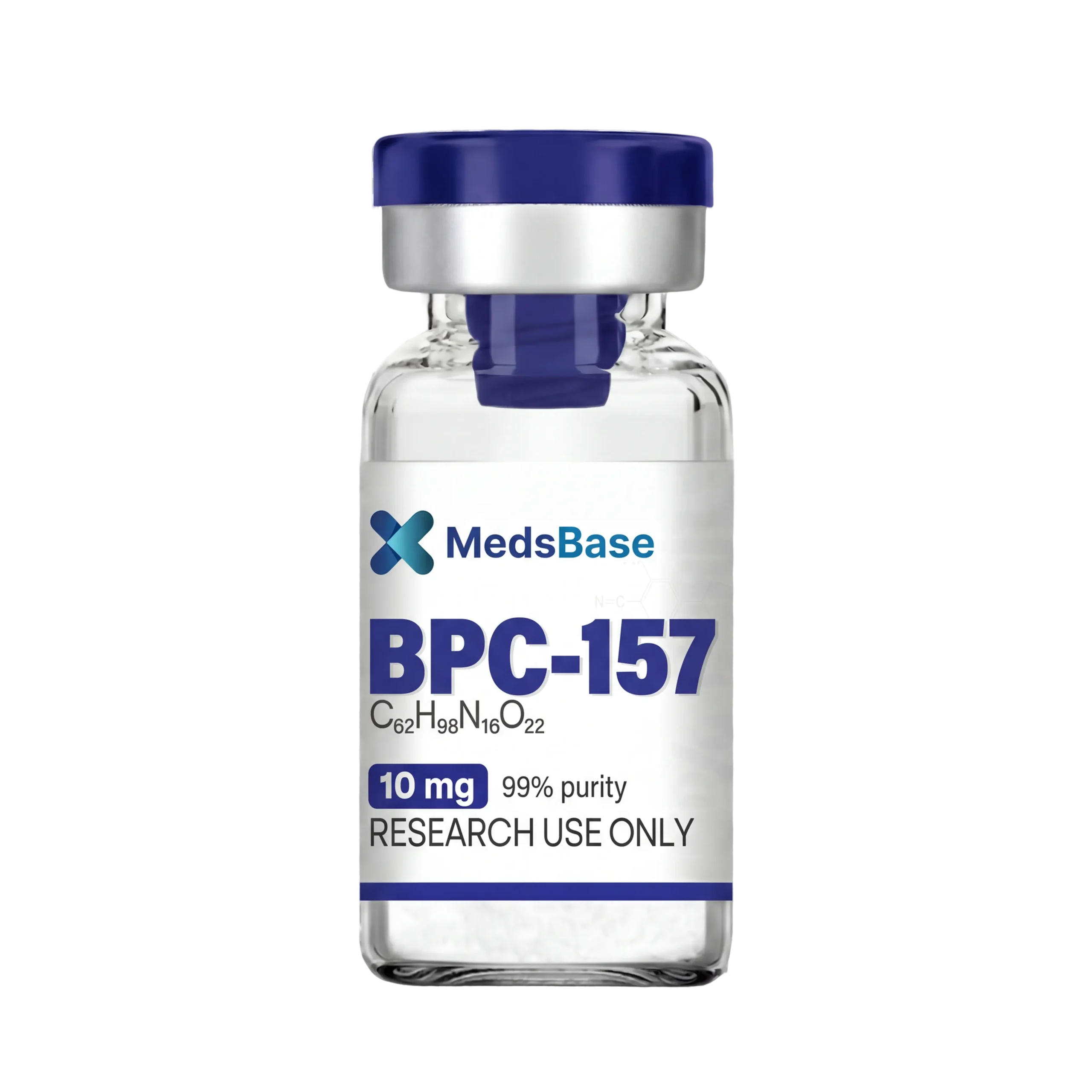
BPC-157
✅ Υποστηρίζει την αναγέννηση των κυττάρων
✅ Ενισχύει τη μοντελοποίηση των ιστών
✅ Προάγει τη δραστηριότητα των ινοβλαστών
✅ Ενισχύει την αγγειογενετική σηματοδότηση
✅ Βελτιώνει τη σταθερότητα του εξωκυττάριου πίνακα
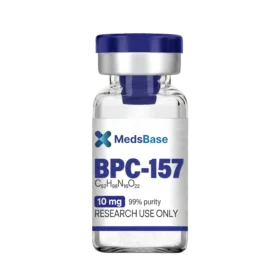
BPC-157 περιέχει συνθετική πεπτιδική ένωση.
✓ Ιατρικά ελεγμένο από Morgan Ellis — Ερευνητής Φαρμακευτικής · 8 χρόνια εμπειρία · Τελευταία αναθεώρηση: Μάιος 2026
Γρήγορη Απάντηση — Τι είναι το BPC-157;
BPC-157 (Body Protection Compound 157) είναι ένα συνθετικό πενταδεκαπεπτίδιο 15 αμινοξέων που προέρχεται από ένα προστατευτικό γαστρικό πρωτεΐνη. Σε δημοσιευμένη προκλινική έρευνα έχει δείξει συνεπείς επιδράσεις στην ανάκαμψη ινών, συνδέσμων, γαστρεντερικού, μυϊκού και αγγειακού ιστού μέσω σηματοδότησης VEGF, νιτρικού οξέος και υποδοχέα αυξητικής ορμόνης. Προσφέρεται σε φιαλίδια λυοφιλισμένου υλικού 2 mg έως 10 mg μόνο για εργαστηριακή ερευνητική χρήση.
📦 Κάθε παραγγελία καλύπτεται από την Πολιτική Εγγύησης Επαναποστολής — εάν το δέμα σας δεν φτάσει εντός 20 εργάσιμων ημερών, το επαναποστέλλουμε.
| Προδιαγραφή | Λεπτομέρεια |
|---|---|
| Αριθμός CAS | 137525-51-0 |
| Μοριακός Τύπος | C62H98N16O22 |
| Μοριακό Βάρος | 1419.55 Da |
| Ακολουθία | Gly-Glu-Pro-Pro-Pro-Gly-Lys-Pro-Ala-Asp-Asp-Ala-Gly-Leu-Val (GEPPPGKPADDAGLV) |
| Μορφή | Υαλοποιημένη σκόνη (ή όπως παρέχεται) |
| Καθαρότητα | ≥99% (HPLC επαληθευμένο, COA κατόπιν αιτήματος) |
| Αποθήκευση | Λυοφιλιωμένο: 2–8 °C (ψυγείο) για εργαστικό απόθεμα· −20 °C για μακροπρόθεσμη αποθήκευση ανοιχτών φιαλών. Ανασυντεθειμένο: 2–8 °C, χρήση εντός ~30 ημερών. Προστασία από το φως. Μην καταψύχετε-αποψύχετε το ανασυντεθειμένο διάλυμα. |
| Διαλυτότητα | Βακτηριοστατικό νερό (προτείνεται) ή στειρωμένο νερό για μικρότερα χρονικά διαστήματα χρήσης |
| Ερευνητική Χρήση | Μόνο για εργαστηριακή έρευνα. Δεν προορίζεται για διαγνωστική ή θεραπευτική χρήση σε ανθρώπους ή ζώα. |
Τι Είναι το BPC-157;
BPC-157 είναι η συντομογραφία του Body Protection Compound 157, ένα συνθετικό πενταδεκαπεπτίδιο 15 αμινοξέων που αρχικά απομονώθηκε ως θραύσμα μιας μεγαλύτερης προστατευτικής πρωτεΐνης που βρέθηκε στον ανθρώπινο γαστρικό χυμό. Σε αντίθεση με τα περισσότερα πεπτίδια, είναι σταθερό στο γαστρικό οξύ, γεγονός που το έχει καταστεί συχνό αντικείμενο έρευνας για από του στόματος χορήγηση σε μοντέλα τρωκτικών, παράλληλα με την πιο συνηθισμένη υποδόρια οδό. Το BPC-157 είναι ένα από τα πιο ευρέως μελετημένα πεπτίδια έρευνας για επούλωση στην προκλινική βιβλιογραφία, με δημοσιευμένη εργασία που καλύπτει τένοντες, συνδέσμους, γαστρεντερική φραγή, σκελετικό μυ, οστό και αγγειακό ιστό.
Η ακολουθία του πεπτιδίου είναι GEPPPGKPADDAGLV, μοριακό βάρος περίπου 1,419 Da, εμπειρικός τύπος C62H98N16O22. Προσφέρεται ως υψηλής καθαρότητας λυοφιλισμένη σκόνη για ανασύνθεση με βακτηριοστατικό νερό. Το BPC-157 είναι μόνο για εργαστηριακή έρευνα και δεν προορίζεται για ανθρώπινη ή κτηνιατική διάγνωση ή θεραπεία. Για μια βαθιά ανάλυση του μηχανισμού, λεπτομέρειες δημοσιευμένων δοκιμών και ζητήματα δοσολογίας έρευνας, δείτε την πλήρη οδηγό έρευνας BPC-157.
Μηχανισμός Δράσης — Τρεις Διασταυρούμενες Οδοί Επούλωσης
Αυτό που διαφοροποιεί το BPC-157 από τα πεπτίδια μονής οδού είναι η ταυτόχρονη δραστηριότητά του σε τρεις διακριτές οδούς σηματοδότησης, καθεμία από τις οποίες συμβάλλει στο παρατηρούμενο φαινότυπο ανάκτησης ιστού σε δημοσιευμένες έρευνες:
- Αγγειογένεση / ενίσχυση VEGF — Το BPC-157 ενισχύει την έκφραση του υποδοχέα παράγοντα αγγειακής ενδοθηλιακής ανάπτυξης 2 (VEGFR2) σε τραυματισμένο ιστό, προάγοντας τον σχηματισμό νέων τριχοειδών αγγείων. Αυτό βελτιώνει την τοπική αιμάτωση στους τόπους επισκευής, το βηματοδοτικό στάδιο στην επούλωση τένοντα, συνδέσμου και μυός.
- Οδός νιτρικού οξέος (NO) — Το BPC-157 ενισχύει τη δραστηριότητα της ενδοθηλιακής νιτρικής οξειδάσης (eNOS) και προστατεύει το αγγειακό ενδοθήλιο από οξειδωτική βλάβη. Σε μοντέλα τρωκτικών με πυλαία υπέρταση, συστημική αγγειοσύσπαση και στομαχικά έλκη, αυτό το αποτέλεσμα είναι κεντρικό για την προστατευτική δράση της ένωσης.
- Ενίσχυση υποδοχέα αυξητικής ορμόνης — Το BPC-157 αυξάνει την έκφραση του υποδοχέα αυξητικής ορμόνης (GHR) σε ινοβλάστες και τενοκύτταρα, ενισχύοντας τη σύνθεση κολλαγόνου τύπου Ι. Πιστεύεται ότι αυτός ο μηχανισμός ευθύνεται για τις παρατηρούμενες βελτιώσεις στην αντοχή των τένοντα σε μοντέλα διατομής Αχίλλειου τένοντα και έσω πλαγίου συνδέσμου.
Επειδή αυτές οι τρεις οδοί συγκλίνουν σε τραυματισμένο ιστό, το BPC-157 παράγει ταχύτερη και πληρέστερη ανάκτηση σε σύγκριση με παρεμβάσεις μονής οδού στα ίδια μοντέλα. Επίσης, είναι αξιοσημείωτα καλά ανεκτό σε όλο το φάσμα των δημοσιευμένων δόσεων, με ελάχιστη παρενεργητική σηματοδότηση που αναφέρεται σε τοξικολογικές έρευνες.
Εφαρμογές Δημοσιευμένης Έρευνας
Το BPC-157 χρησιμοποιείται σε πλαίσια εργαστηριακής έρευνας που διερευνούν:
- Ανάκτηση από τραυματισμούς τένοντα και συνδέσμου — μοντέλα διατομής Αχίλλειου τένοντα, ρήξης έσω πλαγίου συνδέσμου, ρήξης περιστροφικού μανδύα σε τρωκτικά (Chang et al., J Appl Physiol 2011; Staresinic et al., J Orthop Res 2003)
- Έρευνα για ακεραιότητα γαστρεντερικής φραγής και έλκη — μοντέλα στομαχικού έλκους, κολίτιδας και φλεγμονώδους νόσου του εντέρου· η γαστρικής προέλευσης φύση του BPC-157 είναι μηχανιστικά σχετική εδώ (Sikiric et al., Curr Med Chem 2011)
- Αναγέννηση σκελετικού μυός — κινητική ανάκτησης μετά από τραυματισμό, πολλαπλασιασμός μυοβλαστών και έρευνα σχηματισμού μυοσωλήνων
- Έρευνα αρθρώσεων και χόνδρου — μοντέλα οστεοαρθρίτιδας σε τρωκτικά, σύνθεση χονδρικού πίνακα, συνοδική φλεγμονή
- Αγγειακή αγγειογένεση — σχηματισμός νέων τριχοειδών και αιμάτωση σε τραυματισμένους ιστούς
- Οστική επούλωση — σχηματισμός κάλου κατάγματος σε μοντέλα έρευνας οστεοτομίας και οστικών ελλειμάτων
- Συγκριτική έρευνα ανάκτησης — συγκριτική αξιολόγηση έναντι άλλων πεπτιδίων επούλωσης, ειδικά TB-500 (Θυμοσίνη Βήτα-4) ως το κανονικό συστημικό θεραπευτικό συγκριτικό. Δείτε το σύγκριση BPC-157 vs TB-500 για μια πλήρη παράλληλη σύγκριση.
Για ευρύτερο πλαίσιο σχετικά με το πού ταιριάζει το BPC-157 στο τοπίο των θεραπευτικών πεπτιδίων, δείτε τα καλύτερα πεπτίδια για ανάκαμψη μυών άρθρο συστάδας και το πεπτίδιο χαλκού GHK-Cu ως συμπληρωματική ένωση έρευνας κατά της γήρανσης. Περιηγηθείτε στο πλήρες κατάλογο ερευνητικών πεπτιδίων για σχετικές ενώσεις.
Διαθέσιμες Δυνάμεις και Συγκεντρώσεις
Η MedsBase διαθέτει BPC-157 στις ακόλουθες μεγέθη λυοφιλισμένων φιαλίδων. Κάθε παραλλαγή αποστέλλεται σε συσκευασίες 10, 20 και 30 φιαλίδων με πλήρεις οδηγίες ανασύνθεσης:
| Δύναμη Φιαλιδίου | Τυπική Περίπτωση Χρήσης | Μεγέθη Συσκευασίας |
|---|---|---|
| 2 mg | Σύντομα πρωτόκολλα έρευνας, πιλοτική δοσολογία, τιτλοδότηση | 10, 20 ή 30 φιαλίδια |
| 5 mg | Τυπική ερευνητική δόση, η πιο συχνά παραγγελλόμενη | 10, 20 ή 30 φιαλίδια |
| 10 mg | Εκτεταμένα πρωτόκολλα έρευνας, χαμηλότερο κόστος ανά mg | 10, 20 ή 30 φιαλίδια |
Και οι τρεις δυνάμεις είναι της ίδιας χημικής μορφής (λυοφιλισμένη σκόνη, καθαρότητα HPLC 99%+). Τα φιαλίδια με υψηλότερο mg απαιτούν μικρότερους όγκους ανασύνθεσης ανά μονάδα δόσης, κάτι που είναι χρήσιμο όταν οι ερευνητές θέλουν να ελαχιστοποιήσουν τον όγκο έγχυσης σε πρωτόκολλα τρωκτικών.
Σύγκριση — BPC-157 vs TB-500
Το BPC-157 και το TB-500 είναι τα δύο πιο αναφερόμενα πεπτίδια έρευνας θεραπείας. Συχνά μελετώνται παράλληλα επειδή δρουν μέσω συμπληρωματικών, σε μεγάλο βαθμό μη επικαλυπτόμενων μηχανισμών. Πολλά προκλινικά πρωτόκολλα τα συνδυάζουν αντί να χρησιμοποιούν το ένα μόνο.
| Κριτήριο | BPC-157 | TB-500 (Θυμοσίνη Βήτα-4) |
|---|---|---|
| Length | 15 αμινοξέα (πενταδεκαπεπτίδιο) | 43 αμινοξέα (θυμικό πεπτίδιο) |
| Κύριος μηχανισμός | VEGF + NO + αυξημένη έκφραση υποδοχέων GH | Απομάκρυνση G-ακτίνης, μετακίνηση κυττάρων |
| Διανομή | Πιο εντοπισμένη στο σημείο έγχυσης | Συστημική, ευρεία διανομή |
| Τυπική δόση έρευνας | 250–500 mcg, 1–2 φορές ημερησίως | 2–2.5 mg, 2 φορές εβδομαδιαίως |
| Ισχυρότερο ερευνητικό σήμα | Τένοντας, σύνδεσμος, γαστρεντερική φραγή | Καρδιακή, συστημική μυική, αγγειακή |
| Συνδυασμός | Συχνά συνδυάζεται με TB-500 σε έρευνα | Συχνά συνδυάζεται με BPC-157 σε έρευνα |
Για πλήρη μεθοδολογική σύγκριση, συμπεριλαμβανομένων των πρωτοκόλλων δοσολογίας και των κριτηρίων επιλογής μεταξύ τους, διαβάστε BPC-157 vs TB-500: ποιο πεπτίδιο επούλωσης για τον στόχου ανάρρωσής σας.
Αποθήκευση και ανασύνθεση
Πριν την ανασύνθεση: αποθηκεύστε τα λυοφιλισμένα φιαλίδια σε ψυγείο στους 2–8 °C στην αρχική συσκευασία. Το λυοφιλισμένο BPC-157 είναι σταθερό υπό αυτές τις συνθήκες για έως και 36 μήνες. Αποφύγετε κύκλους κατάψυξης-απόψυξης στο σκόνη.
Διαδικασία ανασύνθεσης: εγχύστε βακτηριοστατικό νερό στον πλευρικό τοίχο του φιαλιδίου με το πεπτίδιο (όχι απευθείας πάνω στο λυοφιλισμένο κέικ) σύμφωνα με τον πίνακα αραίωσης παραπάνω. Ανακατέψτε απαλά — μην δεν ταρακουνήσετε — και αφήστε 2–5 λεπτά για πλήρη διάλυση. Ένα σωστά ανασυσκευασμένο διάλυμα θα πρέπει να είναι διαυγές και άχρωμο.
Μετά την ανασύνθεση: αποθηκεύστε σε ψυγείο στους 2–8 °C και χρησιμοποιήστε εντός 30 ημερών για βέλτιστη σταθερότητα. Μην καταψύχετε το ανασυσταθέν διάλυμα — οι κύκλοι κατάψυξης-απόψυξης υποβαθμίζουν την ακεραιότητα του πεπτιδίου. Απορρίψτε οποιοδήποτε φιαλίδιο εμφανίζει θολότητα, ίζημα ή αποχρωματισμό.
Συχνές Ερωτήσεις
Για τι χρησιμοποιείται το BPC-157 στην έρευνα;
Το BPC-157 χρησιμοποιείται σε εργαστηριακή έρευνα για τη μελέτη της επούλωσης των τένοντα και των συνδέσμων, της ακεραιότητας του γαστρεντερικού φραγμού, της ανάρρωσης των σκελετικών μυών, της αγγειογένεσης, της αντιφλεγμονώδους σηματοδότησης και της επούλωσης των οστών. Είναι δεν εγκεκριμένο από τον FDA και πωλείται εδώ αποκλειστικά για εργαστηριακή έρευνα.
Πώς διαφέρει το BPC-157 από το TB-500;
Το BPC-157 είναι ένα πενταδεκαπεπτίδιο 15 αμινοξέων που προέρχεται από τον γαστρικό υγρό, ενεργώντας κυρίως τοπικά μέσω των οδών VEGF, νιτρικού οξέος και υποδοχέων αυξητικής ορμόνης. Το TB-500 είναι ένα θυμικό πεπτίδιο 43 αμινοξέων που ενεργεί συστηματικά μέσω δέσμευσης G-ακτίνης και μετακίνησης κυττάρων. Τα δύο συχνά συνδιατίθενται στην έρευνα επειδή οι μηχανισμοί τους είναι συμπληρωματικοί και όχι επικαλυπτόμενοι.
Ποια είναι η τυπική δόση έρευνας του BPC-157;
Οι δημοσιευμένες προκλινικές πρωτόκολλες συνήθως χρησιμοποιούν 250–500 mcg ανά χορήγηση, που δίνεται μία ή δύο φορές ημερησίως για κύκλους 4–8 εβδομάδων. Ένα φιαλίδιο 5 mg ανασυντιθέμενο με 2,0 mL βακτηριοστατικού νερού παράγει διάλυμα 2,5 mg/mL — 10 τμήματα σε σύριγγα U-100 ισούνται με 250 mcg.
Είναι το BPC-157 εγκεκριμένο από την FDA;
Όχι. Το BPC-157 δεν έχει εγκριθεί από την FDA, την EMA, την MHRA ή οποιονδήποτε άλλο ρυθμιστικό φορέα για θεραπευτική χρήση σε ανθρώπους. Όλο το BPC-157 που πωλείται από προμηθευτές μόνο για ερευνητική χρήση προορίζεται για εργαστηριακή έρευνα και δεν πρέπει να χορηγείται σε ανθρώπους.
Πώς πρέπει να αποθηκεύεται το BPC-157;
Λυοφιλισμένα φιαλίδια: στο ψυγείο στους 2–8 °C στην αρχική συσκευασία, σταθερά έως και 36 μήνες. Ανασυσταθέν διάλυμα: στο ψυγείο στους 2–8 °C, χρήση εντός 30 ημερών. Μην καταψύχετε το ανασυσταθέν διάλυμα — οι κύκλοι κατάψυξης-απόψυξης υποβαθμίζουν το πεπτίδιο.
Πώς ανασυνθέτω το BPC-157;
Ακολουθήστε το παραπάνω πίνακα αναφοράς ανασύνθεσης. Προσθέστε βακτηριοστατικό νερό κατά μήκος του πλευρικού τοιχώματος του φιαλιδίου (όχι απευθείας πάνω στο λυοφιλισμένο υλικό), ανακατέψτε απαλά και αφήστε 2–5 λεπτά για πλήρη διάλυση. Μην δεν κουνήσετε το φιαλίδιο.
Ποιες δόσεις διαθέτει το MedsBase;
Η MedsBase διαθέτει BPC-157 σε φιαλίδια 2 mg, 5 mg και 10 mg σε λυοφιλισμένη μορφή. Κάθε δόση είναι διαθέσιμη σε συσκευασίες 10, 20 ή 30 φιαλιδίων. Όλα τα φιαλίδια παρέχονται με καθαρότητα HPLC 99%+ και πιστοποιητικό ανάλυσης κατόπιν αιτήματος.
Μπορούν το BPC-157 και το TB-500 να συνδυαστούν στην έρευνα;
Ναι. Το BPC-157 και το TB-500 συχνά συνδυάζονται σε προκλινική έρευνα επειδή οι μηχανισμοί δράσης τους είναι συμπληρωματικοί. Το BPC-157 δρα κυρίως τοπικά μέσω αύξησης των αυξητικών παραγόντων· το TB-500 δρα συστημικά μέσω δέσμευσης G-ακτίνης και κυτταρικής μετανάστευσης. Συνδυαστικά πρωτόκολλα περιγράφονται στον οδηγό σύγκρισης.
Προκαλεί το BPC-157 παρενέργειες στην έρευνα;
Η δημοσιευμένη προκλινική έρευνα σε τρωκτικά έχει αναφέρει ένα ιδιαίτερα καλό προφίλ ασφάλειας σε τυπικές ερευνητικές δόσεις, χωρίς συνεπείς παρενέργειες και με καλή ανοχή. Δεν υπάρχουν δεδομένα μακροπρόθεσμης ασφάλειας σε ανθρώπους επειδή δεν έχουν ολοκληρωθεί κλινικές δοκιμές.
Ποια είναι η διαφορά μεταξύ του από του στόματος και του ενέσιμου BPC-157 στην έρευνα;
Το BPC-157 είναι ασυνήθιστα σταθερό στο γαστρικό οξύ λόγω της γαστρικής του προέλευσης, επομένως η από του στόματος χορήγηση είναι εφικτή σε πρωτόκολλα με τρωκτικά (σε αντίθεση με τα περισσότερα πεπτίδια). Η υποδόρια ένεση παραμένει η πιο κοινή ερευνητική μέθοδος στη βιβλιογραφία επειδή παράγει πιο αναπαραγώγιμες πλασματικές συγκεντρώσεις.
Ποια είναι η ημιζωή του BPC-157;
Σε προκλινικές έρευνες, το BPC-157 έχει εκτιμώμενη ημιζωή πλάσματος περίπου 4 ώρες μετά από υποδόρια χορήγηση. Μελέτες με από του στόματος χορήγηση σε μοντέλα τρωκτικών υποδηλώνουν ταχύτερη συστηματική κάθαρση αλλά διατηρούμενες τοπικές επιδράσεις στο γαστρεντερικό σωλήνα, αποδίδομενες στην ασυνήθιστη οξύ-ανθεκτικότητα του πεπτιδίου.
Πόσο χρόνο χρειάζεται το BPC-157 για να δείξει αποτελέσματα σε προκλινικές έρευνες;
Οι περισσότερες προκλινικές μελέτες που χρησιμοποιούν BPC-157 σε μοντέλα τραυματισμών τένοντα, συνδέσμου και εντέρου αναφέρουν μετρήσιμες αλλαγές σε ιστικό επίπεδο εντός 7–14 ημερών. Η χρονική πορεία ποικίλει ανάλογα με το μοντέλο έρευνας, τη σοβαρότητα του τραυματισμού, τον τρόπο χορήγησης και τη δόση που χρησιμοποιείται στο πλαίσιο της μελέτης.
Μπορώ να παραγγείλω BPC-157 για διεθνή αποστολή;
Ναι. Η MedsBase αποστέλλει BPC-157 παγκοσμίως από το αποκλειστικό μας δίκτυο αποστολής πεπτιδίων. Παραγγελίες μόνο με πεπτίδια πληρούν τις προϋποθέσεις για την ξεχωριστή υπηρεσία αποστολής πεπτιδίων μας. Όλες οι παραγγελίες αποστέλλονται σε θερμοκρασιακά ελεγχόμενη συσκευασία με πλήρη παρακολούθηση.
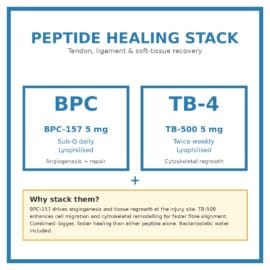
Τα πρωτόκολλα BPC-157 για ανάκαμψη τένοντα, συνδέσμου και μαλακών ιστών συνήθως το συνδυάζουν με TB-500 για συνεργιστικές αγγειογενετικές + κυτταροσκελετικές επιδράσεις· για το συνδυασμένο σχήμα δείτε το Peptide Healing Stack (BPC-157 5 mg + TB-500 5 mg + βακτηριοστατικό νερό) με και τα δύο λυοφιλισμένα φιαλίδια και νερό ανασύνθεσης σε ένα δέμα με τιμή αποστολής πεπτιδίων $0.
Άλλα πεπτίδια για έρευνα ανάκαμψης και απόδοσης
- TB-500 — Θραύσμα Thymosin Beta-4 — έρευνα ανάκαμψης μαλακών ιστών και αγγείων
- Ιπαμορελίνη — Επιλεκτικός αγωνιστής ghrelin — καθαρός παλμός GH χωρίς κορτιζόλη/προλακτίνη
- CJC-1295 with DAC — Αναλογικό GHRH με παρατεταμένο χρόνο ημιζωής
- GHK-Cu — Πεπτίδιο χαλκού — έρευνα για αναγέννηση δέρματος και συνδετικού ιστού
- IGF-1 LR3 — Αναλόγιο Long-R3 IGF-1 — αναβολική / αναγεννητική έρευνα
Περαιτέρω ανάγνωση
📖 Μάθετε την έρευνα πίσω από αυτό το πεπτίδιο
Διαβάστε τον πλήρη αποδεικτικά τεκμηριωμένο οδηγό μας: BPC-157 — μηχανισμός, δεδομένα δοκιμών & προοπτικές. Καλύπτει τον μηχανισμό δράσης, δημοσιευμένα δεδομένα μελέτης, τυπικές ερευνητικές δοσολογίες, πρωτόκολλα ανασύνθεσης, ζητήματα στοίβαξης και σημειώσεις ασφαλείας/αντενδείξεων.
Περισσότερες επιλογές σε Πεπτίδια
Ταξινομημένα σύμφωνα με τον όγκο παραγγελιών στο MedsBase — τι επιλέγουν άλλοι πελάτες σε αυτήν την κατηγορία.
| Ισχύς | Βιταμίνη B12 (Κυανοκοβαλαμίνη) Ενέσιμη — Ερευνητικής Ποιότητας |
|---|---|
| Ποσότητα | 10 Φιαλίδια, 20 Φιαλίδια, 30 Φιαλίδια |
 BPC-157
Ερωτήσεις & Απαντήσεις
BPC-157
Σχετικά προϊόντα
Κριτικές
Δεν υπάρχουν ακόμη κριτικές