







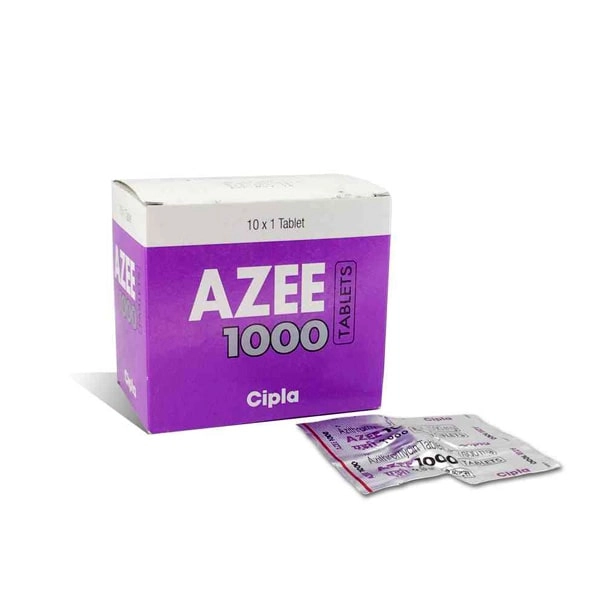
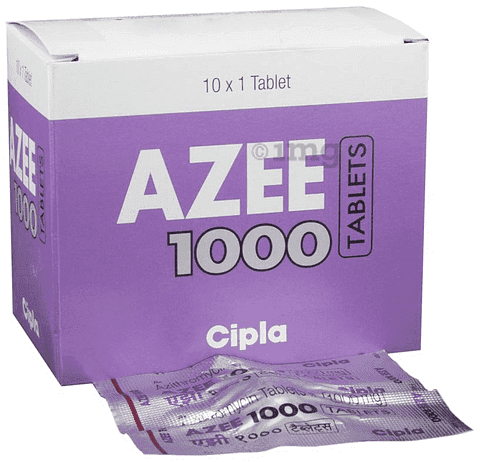
Azee
✅ Krachtig antibacterieel middel
✅ Behandelt diverse infecties
✅ Bevordert snel herstel
✅ Eenvoudig in te nemen
✅ Minimale bijwerkingen
✓ Medisch beoordeeld door Morgan Ellis — Apotheekonderzoeker · 8 jaar ervaring · Laatst beoordeeld: mei 2026
⚡ Snel antwoord — Wat is Azee?
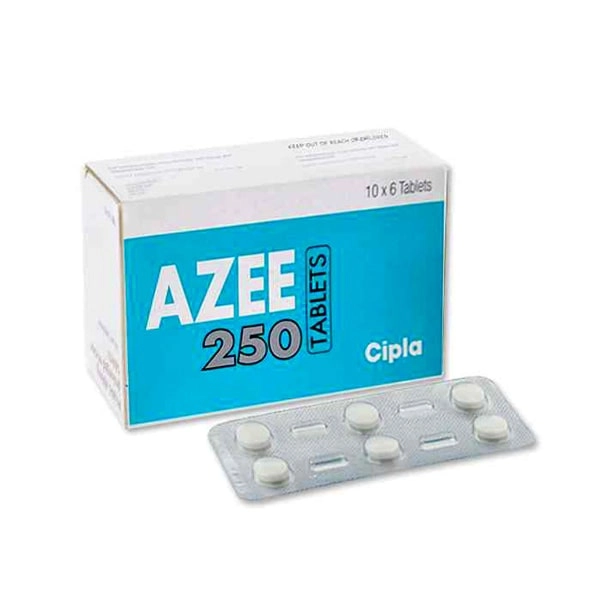
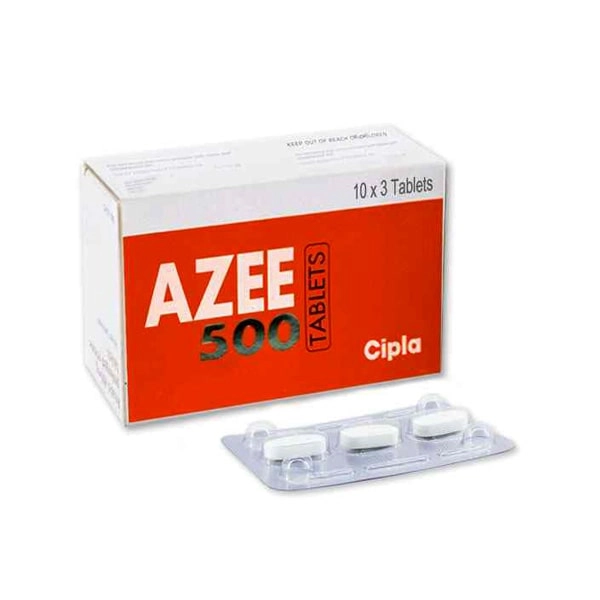
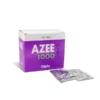
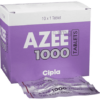
Azee is een azithromycine tablet (250 mg / 500 mg, Cipla) — het meest gebruikte macrolide wereldwijd. Het standaardregime voor volwassenen is 500 mg eenmaal daags gedurende 3 dagen voor sinusitis of een luchtweginfectie, of een eenmalige dosis van 1 g voor chlamydia. De lange intracellulaire halfwaardetijd maakt korte kuren mogelijk met een aanhoudend antibacterieel effect gedurende 7 dagen.
📦 Elke bestelling is gedekt door onze Reshipment Assurance-beleid — als uw pakket niet binnen 20 werkdagen arriveert, sturen wij het opnieuw.
Waarom bestellen bij MedsBase
Onze generieke medicijnen zijn afkomstig van WHO-GMP gecertificeerde fabrikanten en worden wereldwijd verzonden in discrete, eenvoudige verpakkingen — geen medicijnnaam op de buitenkant van het pakket. Betalingen met kaart worden verwerkt via een gereguleerde processor (betalingsoverzichten vermelden een gereguleerde kaartbetalingprocessor — nooit “MedsBase” of een medicijnnaam). Crypto en SEPA bankoverschrijvingen worden ook geaccepteerd. Elke bestelling wordt ondersteund door ons Reshipment Assurance Policy.
Hoe Azee werkt
Azee bevat Azithromycine, een macrolide-antibioticum dat bindt aan de 50S-ribosomale subeenheid van bacteriën en de verlenging van de peptideketen blokkeert, waardoor de bacteriële eiwitsynthese wordt gestopt. Macroliden zijn bacteriostatisch in standaarddoseringen maar bacteriedodend bij hogere concentraties tegen gevoelige organismen. Het spectrum omvat Streptococcus-soorten (inclusief sommige penicilline-resistente pneumokokken), Mycoplasma pneumoniae, Chlamydia trachomatis en pneumoniae, Legionella, Bordetella en Helicobacter pylori. De activiteit tegen stafylokokken is onbetrouwbaar vanwege wijdverspreide macrolide-resistentie, en de meeste Enterobacteriaceae zijn intrinsiek resistent.
Azithromycine is het meest gebruikte macrolide vanwege de verlengde halfwaardetijd (~68 uur intracellulair), eenvoudige doseringsschema's en minder CYP3A4-remming in vergelijking met erytromycine of claritromycine.
Indicaties & dosering
| Indicatie | Dosering | Duur |
|---|---|---|
| Acute bacteriële sinusitis / milde CAP | 500 mg dag 1, daarna 250 mg dagelijks — totaal 5 dagen | 5 dagen |
| Acute bacteriële sinusitis (alternatief schema) | 500 mg eenmaal daags | 3 dagen |
| Streptokokkenfaryngitis (penicilline-allergie) | 500 mg dag 1, daarna 250 mg dagelijks | 5 dagen |
| Ongecompliceerde chlamydia-urethritis / cervicitis | 1 g eenmalige dosis | Eenmalige dosis |
| Ongecompliceerde gonorroe (in combinatie met ceftriaxon) | 1 g eenmalige dosis | Eenmalige dosis |
| Mycoplasma genitalium (uitgebreid behandelingsschema) | 500 mg dag 1, daarna 250 mg dagelijks | 5 dagen |
| Reizigersdiarree (ontwikkelingslanden) | 500 mg–1 g per dag | 3 dagen |
| Kinkhoest | 500 mg dag 1, daarna 250 mg dagelijks | 5 dagen |
| MAC-profylaxe bij HIV (CD4 < 50) | 1,2 g eenmaal per week | Totdat CD4 > 100 aanhoudt |
Alle macroliden kunnen het QT-interval verlengen en torsades de pointes veroorzaken — vooral bij patiënten met een aangeboren lang QT-interval, elektrolytstoornissen (laag K+/Mg2+), bradycardie, gelijktijdig gebruik van QT-verlengende medicatie (azolen, fluoroquinolonen, citalopram, ondansetron, bepaalde antipsychotica, sommige anti-aritmica) of significante hartaandoeningen. Azitromycine kreeg in 2013 een FDA black-box waarschuwing na observationele gegevens die een kleine absolute toename van cardiovasculaire sterfte aantoonden bij patiënten met een verhoogd basisrisico op hartproblemen. Patiënten met stabiele cardiovasculaire aandoeningen kunnen meestal veilig een macrolide gebruiken; hoogrisicopatiënten — bekend lang QT-interval, recent myocardinfarct, gevorderd hartfalen — hebben mogelijk een alternatieve klasse nodig.
Bijwerkingen
- Maag-darm: misselijkheid, buikkrampen, diarree (ergst bij erytromycine — treft tot 30% van de patiënten door motiline-agonisme). Azitromycine/claritromycine/roxitromycine worden beter verdragen.
- Smaakstoornis / metaalachtige smaak: veelvoorkomend bij claritromycine; vervelend maar omkeerbaar.
- Hepatotoxiciteit: cholestatische hepatitis (zeldzaam bij azitromycine; vaker bij erytromycine-estolaat). Let op geelzucht, pijn in het rechter bovenbuik kwadrant.
- QT-verlenging / torsades: zeldzaam absoluut risico maar reëel (zie waarschuwing hierboven).
- Gehoorstoornis: omkeerbare ototoxiciteit gemeld bij hoge doses macroliden, vooral bij nierfunctiestoornissen.
- Allergische reacties: huiduitslag, netelroos, zeer zelden Stevens-Johnson / TEN.
Contra-indicaties
- Bekende overgevoeligheid voor macroliden.
- Gelijktijdig gebruik met sterke QT-verlengende geneesmiddelen (met name klasse IA / III anti-aritmica).
- Ernstige leverfunctiestoornis (vooral erytromycine-estolaat).
- Gelijktijdig gebruik van ergotalkaloïden (risico op vasospasme met sterke CYP3A4-remmers — claritromycine/erytromycine).
- Gelijktijdig gebruik van terfenadine / astemizol / cisapride / pimozide / lovastatine / simvastatine (alleen met sterke CYP3A4-remmers).
Geneesmiddelinteracties
| Geneesmiddel | Effect | Actie |
|---|---|---|
| Warfarine | INR-stijging — meerdere mechanismen | Controleer INR na 3–5 dagen; adviseer |
| Statines (simvastatine / lovastatine) | Hoog risico op ernstige rabdomyolyse met claritromycine / erytromycine | Stop de statine tijdens de kuur (atorvastatine / rosuvastatine / pravastatine / fluvastatine zijn veiliger) |
| Calciumantagonisten (verapamil / diltiazem / amlodipine) | Hypotensie / shock met claritromycine | Vermijd combinatie bij ouderen |
| Colchicine | Ernstige colchicine-toxiciteit (vooral bij nierfunctiestoornissen) | Stop colchicine of gebruik een alternatief antibioticum |
| Carbamazepine / fenytoïne | Verhoogde spiegels door CYP3A4-remming (clari/eryth) | Controleer spiegels |
| Ergotalkaloïden | Ernstige perifere vasospasmen (clari/eryth) | Absolute contra-indicatie |
| Digoxine | Verhoogt digoxineniveaus via darmflora-effect | Controleer digoxineniveau |
| Quetiapine / pimozide | QT-verlenging | Vermijd combinatie |
Zwangerschap & Borstvoeding
Macroliden zijn FDA categorie B. Erytromycine en azitromycine worden veel gebruikt tijdens de zwangerschap. Claritromycine is categorie C — reserveer voor situaties waarin het voordeel opweegt tegen het risico; alternatieven (azitromycine, amoxicilline) hebben de voorkeur. Voor chlamydia tijdens de zwangerschap is azitromycine 1 g eenmalige dosis de eerste keus. Alle macroliden gaan in kleine hoeveelheden over in de moedermelk; compatibel met borstvoeding.
Opslag
Bewaren bij temperaturen onder 25 °C, uit direct zonlicht en vocht. Houd in de originele verpakking. Buiten bereik van kinderen houden. Gooi ongebruikte tabletten weg na de gedrukte vervaldatum — afgebroken antibiotica kunnen hun werkzaamheid verliezen of afbraakproducten afgeven.
Dit medicijn is alleen effectief tegen bacteriële infecties. Gebruik het niet voor virale aandoeningen (verkoudheid, de meeste keelpijn, griep, COVID-19), stop niet voortijdig wanneer u zich beter voelt, en bewaar geen restjes voor toekomstige infecties. Misbruik leidt tot resistente bacteriën zoals MRSA, ESBL en CRE — de WHO classificeert antimicrobiële resistentie als een van de top 10 wereldwijde bedreigingen voor de volksgezondheid.
Veelgestelde vragen
Hoe snel werkt Azee?
De meeste patiënten beginnen zich binnen 48–72 uur beter te voelen. De lange intracellulaire halfwaardetijd van azitromycine betekent dat de behandeling nog ~7 dagen doorgaat, zelfs nadat een 5-daagse kuur is afgelopen — ga er niet vanuit dat de kuur te kort is.
Moet ik het met voedsel innemen?
Azitromycine tabletten/suspensies kunnen met of zonder voedsel worden ingenomen. Neem het op een lege maag in als u vermoedt dat er chelatie met calcium/ijzer plaatsvindt zoals bij tetracycline — dit is bij azitromycine geen groot probleem.
Kan ik het innemen als ik een hartaandoening heb?
Stabiele cardiovasculaire ziekte is geen absolute contra-indicatie. Patiënten met aangeboren lang-QT, recente acute coronaire gebeurtenissen, gevorderd hartfalen of gelijktijdig gebruik van QT-verlengende medicijnen moeten alternatieven bespreken met hun voorschrijver.
Waarom vermijdt mijn arts claritromycine met mijn statine?
Claritromycine is een sterke CYP3A4-remmer en verhoogt de niveaus van simvastatine en lovastatine aanzienlijk — risico op ernstige spierbeschadiging (rhabdomyolyse) en acuut nierletsel. De statine moet worden gepauzeerd tijdens de antibioticakuur of worden vervangen door een niet-CYP3A4-statine (rosuvastatine, pravastatine).
Wat als ik een dosis vergeet?
Neem het in zodra u eraan denkt. Als u binnen een paar uur van de volgende dosis zit, sla deze dan over en hervat. Neem geen dubbele dosis.
Heeft Azee invloed op mijn anticonceptiepil?
Modern bewijs ondersteunt geen klinisch belangrijke verminderingen van de pilwerkzaamheid. Houd u aan uw gebruikelijke schema. Gebruik extra bescherming als u braken of diarree ervaart.
Mag ik alcohol drinken?
Er is geen directe wisselwerking. Zwaar drinken verhoogt misselijkheid en vertraagt het immuunherstel — matig gebruik is acceptabel.
Werkt Azee tegen MRSA?
Nee — de meeste MRSA-stammen zijn macrolide-resistent via effluxpompen en doelwitmodificaties. Gebruik voor MRSA clindamycine/doxycycline/TMP-SMX/linezolid op basis van lokale gevoeligheidsgegevens.
Waarom gaf mijn arts me een enkele dosis van 1 g voor chlamydia?
Azithromycin in een enkele orale dosis van 1 g bereikt genezende weefselniveaus voor >7 dagen tegen Chlamydia trachomatis. Bevestigde behandelingsfalen zijn laag (~5%); een genezingscontrole wordt na 3 maanden aanbevolen omdat herinfectie vaak voorkomt.
Kan ik dit gebruiken voor een virale verkoudheid?
Nee. Macroliden hebben geen antivirale werking. Het gebruik ervan bij gewone verkoudheid of simpele griep biedt geen voordeel, versnelt resistentie en stelt u onnodig bloot aan QT- en maag-darm bijwerkingen.
Andere antibiotica & anti-infectieuze medicijnen
- Azee (Azithromycin) — kortdurend macrolide-alternatief
- Claribid (Clarithromycin) — H. pylori, atypische longontsteking
- Doxt (Doxycycline) — atypische longontsteking / SOA's
- Augmentin (Amoxicilline + Clavulaanzuur) — bèta-lactam-alternatief
- Levomac (Levofloxacine) — respiratoire fluoroquinolone
Meer opties in Antibiotica
Gerangschikt op recente bestelvolumes van MedsBase — wat andere klanten in deze categorie kiezen.

| Sterkte | 250 mg, 500 mg, 1000 mg |
|---|---|
| Hoeveelheid | 10 tabletten, 20 tabletten, 30 tabletten, 60 tabletten, 90 tabletten |
| Farmaceutische vorm | Tablet/s |
| Fabrikant | Cipla Inc |
| Behandeling | bacteriële infecties van amandelen, bijholten, oor, neus, keel, huid |
| Generiek merk | Azithromycine |
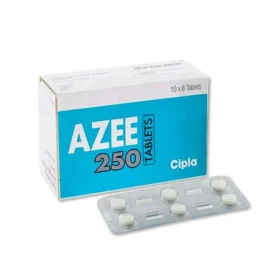 Azee
Azee
Vragen & antwoorden
Azee
Gerelateerde producten



Beoordelingen
Er zijn nog geen beoordelingen