








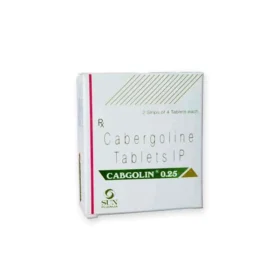
Cabgolin
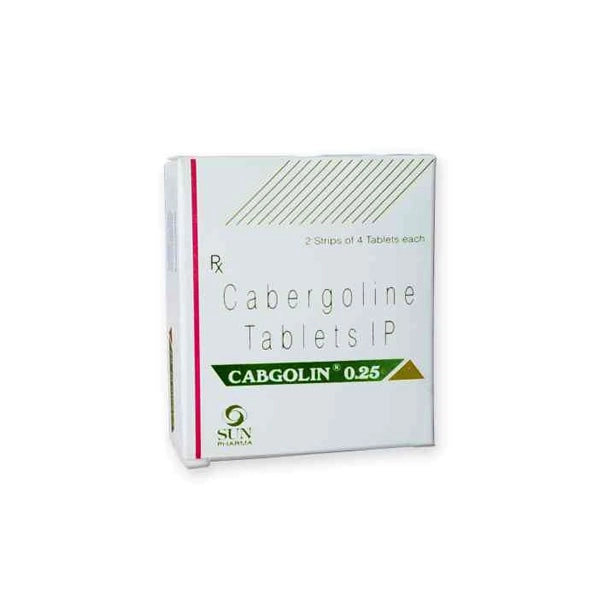

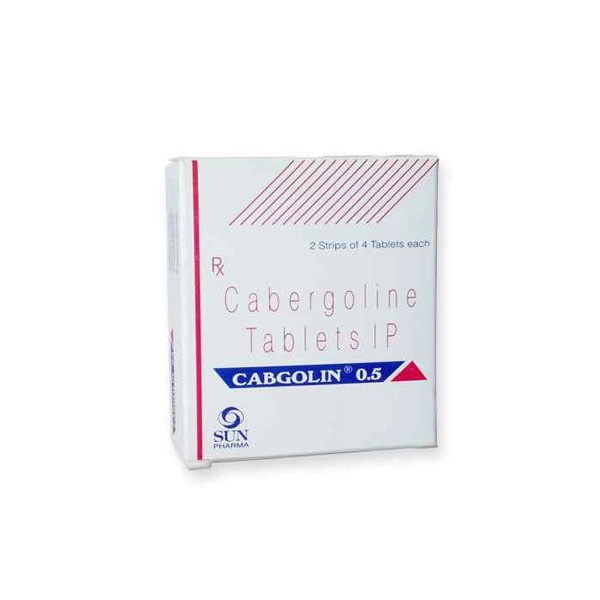



✅ Normalisatie van prolactineniveau
✅ Regulatie van de menstruatiecyclus
✅ Verbeterde vruchtbaarheidsondersteuning
✅ Vermindering van borstvoeding
Cabgolin bevat Cabergoline
✓ Medisch beoordeeld door Morgan Ellis — Apotheekonderzoeker · 8 jaar ervaring · Laatst beoordeeld: mei 2026
⚡ Snelle uitleg — Wat is Cabgolin?
Cabgolin is een oraal cabergoline tablet in 0,25 mg en 0,5 mg sterktes — een langwerkende dopamine D₂-receptoragonist gebruikt voor de behandeling van hyperprolactinemie, prolactine-afscheidende hypofyseadenomen (prolactinomen), en voor onderdrukking van lactatie. De gebruikelijke dosering is 0,25–1 mg tweemaal per week. Cabergoline is niet hormoonvervangende therapie — het verlaagt de prolactinespiegels en herstelt de normale functie van de gonadale as. Klinisch equivalent aan Pfizer's Dostinex®.
📦 Elke bestelling is gedekt door onze Reshipment Assurance-beleid — als uw pakket niet binnen 20 werkdagen arriveert, sturen wij het opnieuw.
Waarom bestellen bij MedsBase
Elke MedsBase-bestelling wordt verzonden door een WHO-GMP gecertificeerde fabrikant in eenvoudige, volledig discrete verpakking — aan de buitenkant is niets te zien dat de inhoud of de apotheek identificeert. Betalingen met kaart verlopen via een gereguleerde crypto-onramp; de omschrijving op uw bankafschrift is de naam van de verwerker (een gereguleerde kaartbetalingverwerker) — nooit “MedsBase” of iets apotheekgerelateerds. Cryptobetalingen via Plisio blijven volledig anoniem. Elk pakket valt onder onze Reshipment Assurance-beleid.
Cabgolin is Sun Pharma's cabergoline tablet — een langwerkende selectieve dopamine D₂-receptoragonist afgeleid van ergotalkaloïden. Cabergoline is sinds 1993 beschikbaar en is nu de eerstelijnsbehandeling voor hyperprolactinemie en prolactinomen (het meest voorkomende type functionerende hypofysetumor).
Cabgolin bevat hetzelfde werkzame bestanddeel in dezelfde sterkte als het merkproduct van Pfizer Dostinex®. De lange plasmahalfwaardetijd (~65 uur) maakt tweewekelijkse dosering, mogelijk, wat veel handiger is dan het oudere alternatief bromocriptine (dagelijks of tweemaal daags ingenomen).
Wat is Cabgolin?
Cabgolin is een voorschriftplichtige dopamine D₂-agonist geïndiceerd voor:
- Idiopathische hyperprolactinemie — verhoogd prolactine zonder geïdentificeerde oorzaak
- Microprolactinoma — hypofyse-adenomen <10 mm die prolactine afscheiden
- Macroprolactinoma — hypofyse-adenomen ≥10 mm die prolactine afscheiden (cabergoline verkleint deze vaak, waardoor een operatie wordt vermeden)
- Lactatieremming — wanneer direct postpartum of bij gevestigde lactatie vereist (enkele dosis van 1 mg postpartum; 0,25 mg tweemaal daags gedurende 2 dagen bij gevestigde lactatie)
- de ziekte van Parkinson — off-label of historisch gebruik; nieuwere niet-ergot dopamine-agonisten hebben de voorkeur
- Prolactine-gerelateerde vrouwelijke onvruchtbaarheid — herstelt ovulatoire cycli
- Mannelijk hypogonadisme / erectiestoornissen door hyperprolactinemie
Hoe werkt Cabgolin?
Prolactine wordt vrijgegeven door de hypofysevoorkwab en wordt normaal gesproken onder controle gehouden door dopamine (ook wel prolactineremmer genoemd) dat vanuit de hypothalamus reist:
- Cabergoline bindt aan dopamine D₂-receptoren op de lactotrofe cellen van de hypofyse
- This onderdrukt de synthese en afgifte van prolactine, en bij prolactinoom krimpt het ook de tumorcellen
- Normale prolactinespiegels worden meestal hersteld binnen 2–4 weken
- Zodra prolactine genormaliseerd is, verdwijnen de downstream-effecten: terugkeer van de menstruatie bij vrouwen, hervatting van ovulatie en vruchtbaarheid, herstel van libido en testosteron bij mannen, en stopzetting van galactorroe
- De zeer lange halfwaardetijd van cabergoline (~65 uur) maakt tweewekelijkse dosering — een groot praktisch voordeel ten opzichte van bromocriptine
Bij lactatieremming blokkeert cabergoline snel de prolactinepiek na de bevalling, zodat borststuwing en melkproductie tot een minimum worden beperkt.
Cabgolin Dosage en toediening
| Indicatie | Dosering | Schema |
|---|---|---|
| Hyperprolactinemie (startdosis) | 0,25 mg tweemaal per week | bijv. maandag en donderdag, voor het slapengaan met voedsel |
| Hyperprolactinemie (streefdosis) | 0,5–1 mg tweemaal per week | Verhoog maandelijks op basis van prolactinespiegel |
| Macroprolactinoom (grote tumor) | 1–3 mg tweemaal per week | Protocol met hogere dosering; endocrinologisch toezicht |
| Voorkoming van lactatie (postpartum) | 1 mg (vier tabletten van 0,25 mg) | Enkele dosis binnen 24 uur na de bevalling |
| Onderdrukking van gevestigde lactatie | 0,25 mg tweemaal daags | Gedurende 2 dagen (totaal 1 mg) |
| Ziekte van Parkinson (historisch) | 2–6 mg eenmaal daags | Nieuwere niet-ergot dopamineagonisten nu voorkeur |
| Ouderen | Start met 0,25 mg eenmaal per week | Langzamere titratie |
| Leverfunctiestoornis | Dosis verlagen; nauwlettend monitoren | Cabergoline wordt hepatisch gemetaboliseerd |
| Maximale wekelijkse dosis | 3 mg | Hogere doseringen brengen een risico op hartklepaandoeningen met zich mee |
Hoe Cabgolin op de juiste manier in te nemen
- Slik de tablet heel door met water; neem in met voedsel en voor het slapengaan om misselijkheid en duizeligheid te minimaliseren
- Kies twee vaste dagen van de week en houd u hieraan (bijv. maandag en donderdag)
- Controleer prolactinespiegels na 4–6 weken na start en na elke dosisaanpassing
- Zodra het prolactinegehalte normaal en stabiel is, voortzetten gedurende minimaal 2 jaar voordat geleidelijke dosisvermindering onder endocrinologisch toezicht wordt geprobeerd
- Let op impulscontrole-stoornissen (gokken, hyperseksualiteit, compulsief shoppen, eetbuien) — meld gedragsveranderingen
- Echocardiografie wordt aanbevolen bij aanvang en periodiek bij patiënten op hooggedoseerde langdurige therapie (>2 mg per week voor prolactinoom, of elke dosis voor de ziekte van Parkinson)
- Niet abrupt stoppen bij prolactinoom — tumorgroei kan optreden
Bijwerkingen van Cabgolin
| Ernst | Bijwerking |
|---|---|
| Vaak (≥1 op de 10) | Misselijkheid, hoofdpijn, duizeligheid, vermoeidheid, obstipatie (verdwijnt meestal binnen 2–4 weken) |
| Vaak (≥1 op de 100) | Orthostatische hypotensie (vooral bij de eerste dosis), buikpijn, stemmingswisselingen, opvliegers, pijn in de borsten, depressie |
| Minder vaak | Hartkloppingen, huiduitslag, paresthesie, slapeloosheid, perifeer oedeem |
| Zeldzaam maar ernstig | Impulscontrole-stoornissen (pathologisch gokken, hyperseksualiteit, compulsief winkelen), klepafwijkingen van het hart (fibrotische veranderingen — dosisgerelateerd, zeldzaam bij <3 mg/week), pulmonale of retroperitoneale fibrose (historische zorg bij Parkinson-doseringen), leverdysfunctie |
Impulscontrole-gedrag is een klasse-effect van dopamine-agonisten. Het kan subtiel ontstaan — partners en familie merken het vaak eerder op dan de patiënt. Meld altijd nieuw compulsief of ongebruikelijk gedrag aan uw arts. Het effect keert om bij dosisverlaging of stopzetting.
Waarschuwingen en voorzorgsmaatregelen
- Klepafwijkingen van het hart. Langdurig hooggedoseerd cabergoline (historisch voor Parkinson bij 3–6 mg/dag) veroorzaakte fibrotische veranderingen van de hartkleppen. Bij de veel lagere prolactinoom-doseringen (<3 mg/week) is dit risico zeer laag, maar screeningsechocardiografie wordt toch aanbevolen bij aanvang en elke 1–2 jaar bij chronisch gebruik.
- Impulsbeheersingsstoornissen. Patiënten, partners en families moeten worden geïnformeerd; monitoring is essentieel
- Eerste-dosis hypotensie. Neem de eerste dosis thuis in, voor het slapengaan, met voedsel. Vermijd alcohol rond de eerste dosis
- Zwangerschap. Stop zodra de zwangerschap is bevestigd — gegevens over foetale veiligheid zijn beperkt, maar het medicijn zelf is niet duidelijk teratogeen. Herstart als tumorgroei een probleem wordt onder specialistische begeleiding
- Borstvoeding. Gecontra-indiceerd tijdens het geven van borstvoeding — cabergoline onderdrukt de lactatie en komt in de moedermelk terecht
- Psychiatrische voorgeschiedenis. Wees voorzichtig bij patiënten met ernstige depressie of psychose — kan zelden stemmingsafleveringen veroorzaken
- Alcohol. Versterkt orthostatische hypotensie bij de eerste dosis; beperk in de eerste weken van de behandeling
- Nier-/leverfunctiestoornissen. Verminder de dosis en monitor bij significante beperking
Contra-indicaties — Wie moet Cabgolin NIET innemen
- Bekende overgevoeligheid voor cabergoline, ergotalkaloïden of enig hulpstof
- Ongecontroleerde hypertensie (>170/100 mmHg)
- Reeds bestaande hartklepaandoeningen
- Voorgeschiedenis van fibrotische aandoeningen (pulmonaal, retroperitoneaal, pericardiaal)
- Postpartum hypertensie of pre-eclampsie
- Ernstige leverfunctiestoornis
- Borstvoeding (tenzij lactatieremming het doel is)
Geneesmiddelinteracties
| Geneesmiddel / Klasse | Interactie |
|---|---|
| Dopamine-antagonisten (antipsychotica, metoclopramide, prochlorperazine) | Werkt rechtstreeks tegen cabergoline — vermindert effectiviteit; kies een alternatief anti-emeticum |
| Macrolide-antibiotica (erytromycine, claritromycine) | Kan cabergoline-plasmaspiegels verhogen — voorzichtig gebruiken |
| Antihypertensiva | Additieve hypotensie — bloeddruk monitoren |
| Andere ergot-derivaten | Niet combineren |
| Alcohol | Versterkt duizeligheid en hypotensie |
Bewaaradvies
- Bewaren onder 25°C op een droge plaats, uit direct zonlicht en vocht
- Bewaren in de originele blisterverpakking
- Buiten bereik van kinderen houden
- Niet gebruiken na de vervaldatum
Gerelateerde alternatieven op MedsBase
- Ropark — ropinirol, een niet-ergot dopamineagonist voor Parkinson en rustelozebenensyndroom
- Pramirol — pramipexol, een andere niet-ergot dopamineagonist
- Bekijk alle medicijnen voor Vrouwengezondheid →
Veelgestelde vragen
Waar wordt Cabgolin voor gebruikt?
Cabgolin (cabergoline) wordt gebruikt voor de behandeling van hyperprolactinemie, prolactinomen (prolactine-afscheidende hypofysetumoren) en voor het onderdrukken van de melkproductie. Het herstelt normale menstruatiecycli bij vrouwen, vruchtbaarheid en testosteronniveaus bij mannen met prolactinegerelateerd hypogonadisme, en kan grote prolactine-afscheidende hypofysetumoren verkleinen.
Hoe snel werkt Cabgolin?
Prolactinespiegels dalen meestal tot het normale bereik binnen 2–4 weken. De menstruatiecyclus keert meestal terug binnen en de vruchtbaarheid binnen een vergelijkbaar tijdsbestek. Tumorkrimp (bij macroprolactinomen) is zichtbaar op MRI binnen en vruchtbaarheid binnen een vergelijkbaar tijdsbestek. Tumorverkleining (bij macroprolactinomen) is zichtbaar op MRI door Is Cabgolin hetzelfde als Dostinex?.
Is Cabgolin hetzelfde als Dostinex?
Ja — beide bevatten cabergoline in dezelfde sterktes. Cabgolin is het merk van Sun Pharma; Dostinex is het merk van Pfizer. Klinisch equivalent.
Waarom wordt Cabgolin slechts twee keer per week gedoseerd?
Cabergoline heeft een zeer lange plasmahalfwaardetijd (~65 uur), dus tweewekelijkse dosering handhaaft adequate niveaus. Dit is een van de belangrijkste voordelen ten opzichte van bromocriptine, dat dagelijks of tweemaal daags moet worden ingenomen.
Geneest Cabgolin prolactinoom?
Cabergoline is meestal een onderdrukkende behandeling — het normaliseert prolactine en verkleint de tumor zolang het wordt ingenomen. Na 2 of meer jaren van goed gecontroleerd prolactine op een stabiele dosis, kan een geleidelijke afbouw onder specialistisch toezicht soms leiden tot duurzame remissie, vooral bij kleinere tumoren.
Kan Cabgolin helpen om zwanger te worden?
Ja — als uw onvruchtbaarheid wordt veroorzaakt door hyperprolactinemie, herstelt cabergoline meestal de ovulatoire cycli. Veel vrouwen worden zwanger binnen enkele maanden na het starten. Zodra de zwangerschap is bevestigd, stop dan met cabergoline tenzij uw endocrinoloog anders adviseert.
Kan ik Cabgolin gebruiken tijdens het geven van borstvoeding?
Nee — cabergoline onderdrukt de lactatie. Het wordt specifiek gebruikt voor lactatie onderdrukking en is gecontra-indiceerd tijdens het geven van borstvoeding.
Beïnvloedt Cabgolin mijn gedrag?
Een klein maar belangrijk deel van de patiënten die dopamine-agonisten gebruiken, ontwikkelt impulscontrole-stoornissen — pathologisch gokken, hyperseksualiteit, compulsief shoppen of eetbuien. Meld elk nieuw compulsief gedrag aan uw arts. Het effect keert om bij dosisvermindering of stopzetting.
Moet ik een echocardiografie ondergaan bij Cabgolin?
Ja — een baseline echocardiogram voor aanvang en periodieke follow-up (elke 1–2 jaar) wordt aanbevolen voor iedereen die langdurig cabergoline gebruikt, om zeldzame fibrotische klepveranderingen op te sporen. Het risico is laag bij typische prolactinoomdoseringen (<3 mg/week), maar monitoring blijft standaardpraktijk.
Hoe moet ik Cabgolin innemen als ik een dosis heb gemist?
Als de vergeten dosis binnen een dag valt, neem deze dan zo snel mogelijk in. Als het bijna tijd is voor de volgende geplande dosis, sla de gemiste dan over — neem geen dubbele dosis. Het missen van een enkele dosis heeft geen significant effect op de prolactinecontrole vanwege de lange halfwaardetijd.
Mag ik alcohol drinken bij Cabgolin?
Matig alcoholgebruik wordt meestal verdragen na de eerste paar weken. Aan het begin van de behandeling versterkt alcohol de duizeligheid en orthostatische hypotensie na de eerste dosis — beperk alcoholgebruik totdat u weet hoe u het middel verdraagt.
Gerelateerde alternatieven
Andere producten in Vrouwengezondheid die klanten ook bekijken:
Meer opties in hormoonvervangende therapie (HVT) medicatie voor menopauze
Gerangschikt op recente bestelvolumes van MedsBase — wat andere klanten in deze categorie kiezen.
| Sterkte | 0,25 mg, 0,5 mg |
|---|---|
| Hoeveelheid | 12 Tablet/s, 24 Tablet/s, 36 Tablet/s |
| Farmaceutische vorm | Tablet/s |
| Fabrikant | Sun Pharma |
| Behandeling | Verhoogde prolactinespiegels, Acromegalie |
| Generiek merk | Cabergoline |
 Cabgolin
Vragen & antwoorden
Cabgolin
Gerelateerde producten




Beoordelingen
Er zijn nog geen beoordelingen