







Lasix-injectie
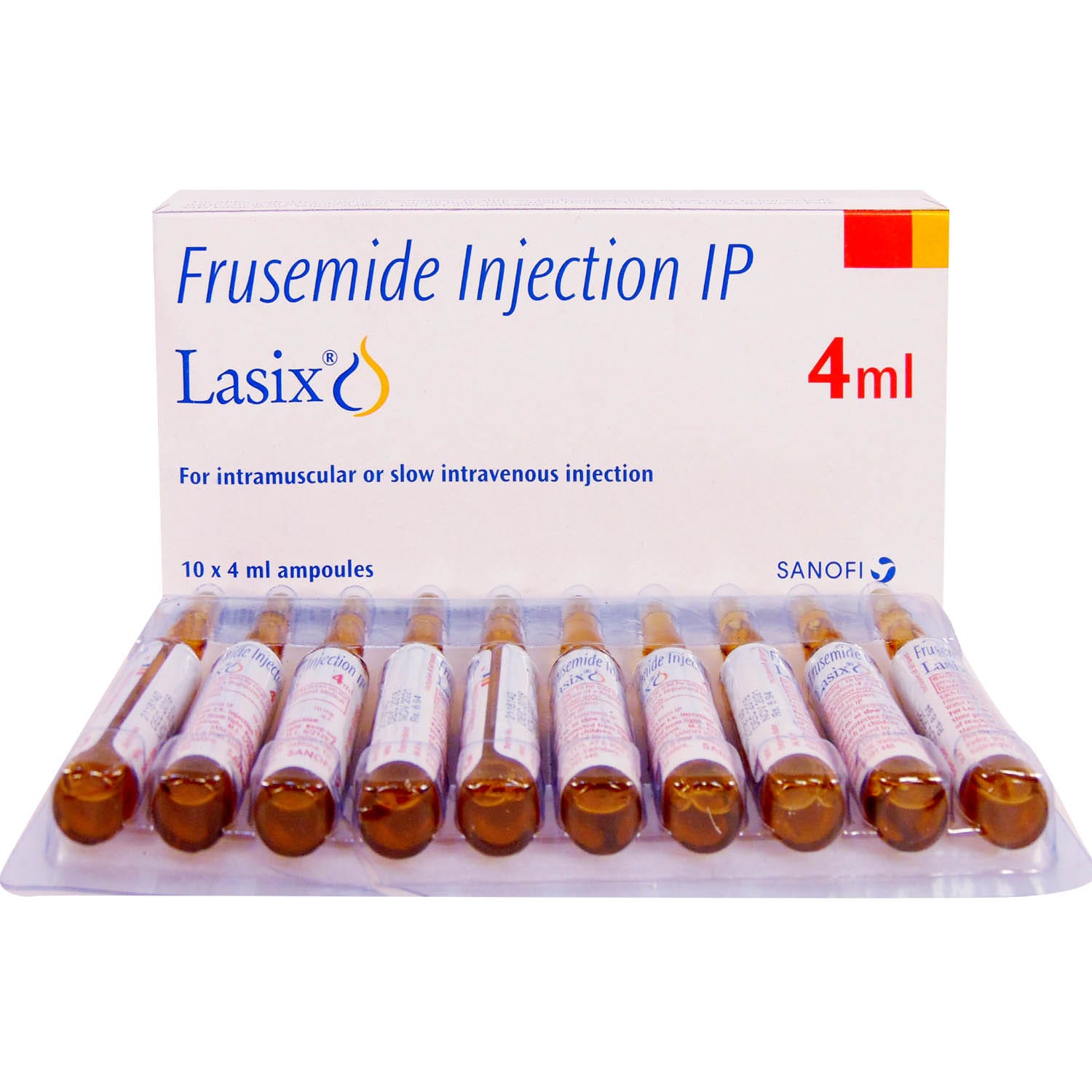
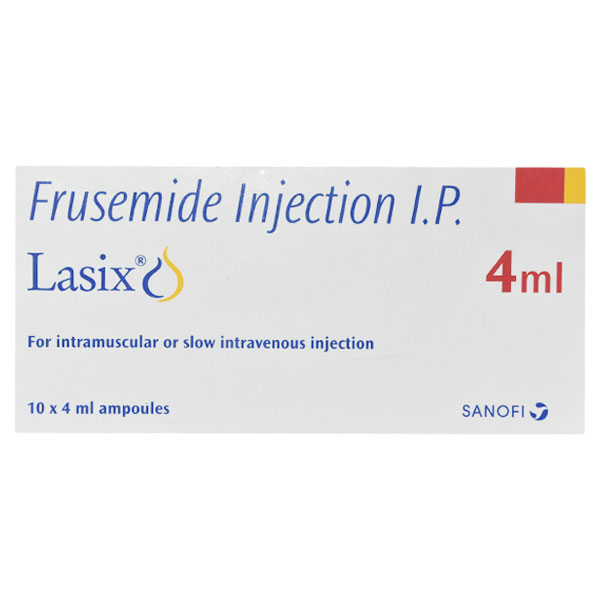
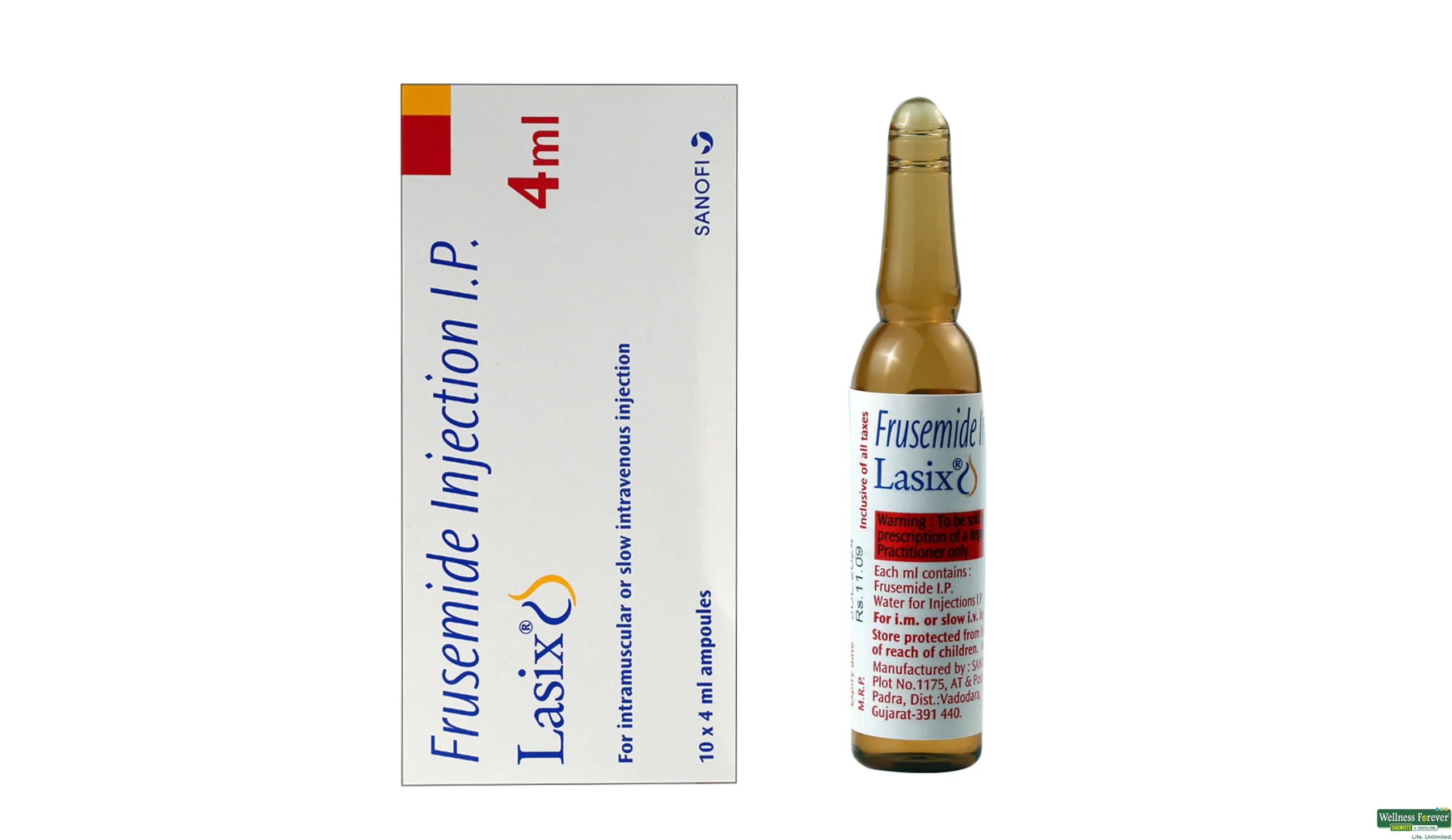
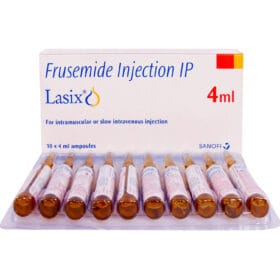
Lasix-injectie is Sanofi's furosemide 40 mg/4 mL IV-ampullen — het referentie-intraveneuze lisdiureticum. Voor acuut longoedeem, gedecompenseerd hartfalen, cirrotische ascites die snelle interventie vereisen, oligurisch acuut nierletsel, hypercalciëmie bij maligniteit. IV-werking begint na 5 minuten; maximale injectiesnelheid 4 mg/min (sneller verhoogt het risico op ototoxiciteit); sterke diurese binnen 2 uur. Alleen voor klinisch gebruik onder toezicht — geen product voor zelftoediening.
✓ Medisch beoordeeld door Morgan Ellis — Apotheekonderzoeker · 8 jaar ervaring · Laatst beoordeeld: mei 2026
⚡ Snel antwoord — Wat is Lasix-injectie?
Lasix-injectie is injecteerbare furosemide (frusemide) 40 mg/4 ml ampul van Sanofi — een lisdiureticum voor intraveneus of intramusculair gebruik. Gebruikt wanneer orale lisdiuretica ontoereikend of onmogelijk zijn — acuut longoedeem, gedecompenseerd hartfalen, cirrotische ascites die snel ingrijpen vereist, hypercalciëmie bij maligniteit, behandeling van oligurisch acuut nierletsel, en acute behandeling van ernstige vochtretentie. Standaarddosering voor volwassenen: 20-80 mg langzame IV bolus (maximaal 4 mg/min); titratie op basis van respons. Kan elke 2-4 uur worden herhaald of als continue infusie worden gebruikt (5-40 mg/uur bij ernstig HF). IV-gebruik is een onder toezicht uitgevoerde klinische procedure — geen product voor zelftoediening. Vereist klinische monitoring voor ototoxiciteit (snelle IV-injectie), ernstige hypokaliëmie, hypovolemie en pre-renaal acuut nierletsel. Absoluut gecontra-indiceerd bij anurie, ernstige elektrolytstoornis, hepatische encefalopathie, overgevoeligheid voor sulfonamiden.
📦 Elke bestelling is gedekt door onze Reshipment Assurance-beleid — als uw pakket niet binnen 20 werkdagen arriveert, sturen wij het opnieuw.
Waarom bestellen bij MedsBase
Onze generieke medicijnen zijn afkomstig van WHO-GMP gecertificeerde fabrikanten en worden wereldwijd verzonden in discrete, eenvoudige verpakkingen — geen medicijnnaam op de buitenkant van het pakket. Betalingen met kaart worden verwerkt via een gereguleerde processor (betalingsoverzichten vermelden een gereguleerde kaartbetalingprocessor — nooit “MedsBase” of een medicijnnaam). Crypto en SEPA bankoverschrijvingen worden ook geaccepteerd. Elke bestelling wordt ondersteund door ons Reshipment Assurance Policy.
Wat is Lasix-injectie?
Lasix-injectie is injecteerbare furosemide (frusemide in de UK/India-nomenclatuur) geleverd als 40 mg / 4 mL ampul glazen ampullen van Sanofi, in verpakkingen van 10-60 ampullen. Voor intraveneuze of intramusculaire toediening door een gekwalificeerde clinicus.
Furosemide is de referentie lisdiureticum, geïntroduceerd door Hoechst in 1964 als Lasix — “werkt zes uur”. De injectie wordt gebruikt wanneer orale toediening onmogelijk is (braken, nil-by-mouth status, darmoedeem dat de absorptie belemmert) of wanneer een snel begin essentieel is (acuut longoedeem, hypertensieve noodsituatie met volumebelasting).
Hoe injecteerbare Furosemide Werkt
Furosemide blokkeert NKCC2 (Na-K-2Cl cotransporter) in het dikke opstijgende deel van de lis van Henle. Belangrijke kenmerken van de IV-route:
- 5-minuten begin na IV bolus (vs 30-60 min oraal); 1-2 uur piek; 2 uur durende krachtige diurese, afnemend over 6 uur
- Directe venodilatatie binnen minuten na IV-toediening — draagt bij aan symptomatische verlichting bij acuut longoedeem voordat de diurese optreedt
- Tot 25% van het gefilterde natrium uitgescheiden — de grootste natriuretische respons van alle diureticaklassen
- Bioavailability-probleem omzeild — orale furosemide-bioavailability is 10-90% en varieert met darmoedeem; IV omzeilt dit volledig
Goedgekeurde en evidence-based toepassingen
- Acuut longoedeem — hoeksteenbehandeling met zuurstof, nitraten en positieve-drukbeademing
- Acuut gedecompenseerd hartfalen
- Cirrotische ascites snelle volumereductie nodig (klinisch; gecombineerd met spironolacton)
- Oligurisch acuut nierletsel — om oligurische in polyurische acute nierinsufficiëntie om te zetten (verbetert NIET de overleving; vergemakkelijkt alleen vochtmanagement)
- Hypercalciëmie bij maligniteit — na adequate zoutoplossing rehydratie
- Hypertensieve noodsituaties met volume-overbelasting
- Nefrotisch syndroom met ernstig oedeem
Dosering
Standaard IV bolus voor volwassenen: 20-80 mg langzaam IV push, maximale infusiesnelheid 4 mg/min (snellere push verhoogt het risico op ototoxiciteit). Werking na 5 minuten; indien nodig elke 2-4 uur herhalen.
Ernstig HF / IC-omgeving: continue IV infusie 5-40 mg/uur heeft vaak de voorkeur boven herhaalde bolussen — zorgt voor een gelijkmatigere natriurese met minder ototoxiciteit dan zeer hoge bolusdoseringen. Patiënten met CKD en HF kunnen onder specialistisch toezicht 100-250 mg/uur nodig hebben.
Intramusculair: 20-40 mg waar IV-toegang onmogelijk is; minder vaak gebruikt.
Monitoring tijdens IV-therapie:
- Continue bewaking van de bloeddruk (risico op snelle over-diurese en hypotensie)
- Seriële elektrolyten — kalium, magnesium, natrium, creatinine — minstens elke 6-12 uur bij acuut hartfalen
- Urineproductie en dagelijks gewicht
- Let op ototoxiciteit vooral bij gelijktijdig gebruik van aminoglycosiden of nierfalen
- Overschakelen op orale furosemide of torasemide zodra klinisch haalbaar
Bijwerkingen
- Hypovolemie en pre-renaal acuut nierletsel bij over-diurese
- Hypokaliëmie, hyponatriëmie, hypomagnesiëmie, hypocalciëmie
- Ototoxiciteit — tijdelijke tinnitus, omkeerbaar gehoorverlies, zelden permanent. Risicofactoren: snelle IV push >4 mg/min, cumulatieve hoge doses, gelijktijdig gebruik van aminoglycosiden of cisplatin, nierfalen
- Hyperurikemie, jichtaanval
- Milde hyperglykemie
- Fotogevoeligheid, huiduitslag
- Interstitiële nefritis (zeldzaam)
- Trombocytopenie, leukopenie (zeldzaam)
Contra-indicaties
- Anurie (tenzij de urineproductie hersteld kan worden)
- Overgevoeligheid voor sulfonamiden
- Ernstig leverfalen met encefalopathie (elektrolytverschuivingen kunnen coma veroorzaken)
- Ernstige uitdroging en pre-renale azotemie
- Symptomatische ernstige hyponatriëmie (<125 mmol/L) of hypokaliëmie (<3.0)
- Digitalisintoxicatie (totdat hypokaliëmie is gecorrigeerd)
Geneesmiddelinteracties
- Aminoglycoside antibiotica (gentamicine, amikacine) — additieve ototoxiciteit en nefrotoxiciteit. Vermijd combinatie bij hoge doseringen.
- Lithium — verminderde lithiumklaring; kan toxiciteit veroorzaken. Vermijd combinatie.
- NSAID's — vermindert het diuretisch effect; 'triple-whammy' acuut nierletsel met ACE-remmers/ARB's.
- ACE-remmers, ARB's — combinatie is standaard bij hartfalen; monitor nierfunctie en bloeddruk zorgvuldig.
- Digoxine — hypokaliëmie versterkt toxiciteit. Monitor kaliumspiegel.
- Corticosteroïden, amfotericine B, stimulerende laxantia — additieve hypokaliëmie.
- Cisplatin — additieve ototoxiciteit.
- Metformine — voorzichtigheid geboden; risico op lactaatacidose bij acuut nierletsel.
Opslag
Bewaar Lasix-injectie onder 25°C, beschermd tegen licht. Niet invriezen. Wegwerpen bij deeltjes of verkleuring. Buiten bereik van kinderen houden.
Veelgestelde vragen
Kan ik Lasix Injectie zelf toedienen?
Nee — intraveneus furosemide is een onder toezicht staande klinische procedure. Snelle IV-injectie kan ototoxiciteit en ernstige hypotensie veroorzaken. Thuisgebruik, indien klinisch geschikt, gebeurt meestal via gemeenschapsverpleging voor IV-toediening of ziekenhuisondersteunde ambulante diureseprogramma's. Voor zelfzorg thuis bij chronisch oedeem wordt oraal furosemide of torasemide aanbevolen.
Hoe snel moet Lasix Injectie worden toegediend?
Langzame IV-injectie met een maximale snelheid van 4 mg/min — dus een dosis van 40 mg moet minimaal 10 minuten duren. Snellere injectie verhoogt het risico op ototoxiciteit aanzienlijk. Bij ernstig hartfalen wordt vaak gekozen voor continue infusie (5-40 mg/uur) in plaats van grote bolussen.
Wat is het verschil tussen orale en IV-dosering van furosemide?
De biologische beschikbaarheid van oraal furosemide is gemiddeld 50% maar varieert tussen 10-90% tussen patiënten en onder verschillende omstandigheden (darmoedeem vermindert de opname). Een ruwe equivalentie: 40 mg oraal ≈ 20 mg IV. Bij patiënten met hartfalen en vermoedelijk darmoedeem kan overschakelen van oraal naar IV vaak een diuretische respons “ontgrendelen” die met orale dosering niet bereikt kon worden.
Wanneer moet Lasix Injectie worden vermeden?
Vermijd bij anurie (geen reactie), ernstige uitdroging, hepatische encefalopathie (kan coma veroorzaken), ernstige elektrolytstoornis en overgevoeligheid voor sulfonamiden. Wees voorzichtig bij gelijktijdige therapie met aminoglycosiden of cisplatin (additieve ototoxiciteit).
Waar kan ik Lasix Injectie online kopen?
U kunt Lasix Injectie (furosemide 40 mg / 4 mL ampul, 10-60 ampullen) kopen bij MedsBase met discrete verpakking en wereldwijde verzending.
Gerelateerde hart- en hypertensiemedicijnen
- Amlode — Amlodipine (CCB)
- Amlopres AT — Amlodipine + Atenolol combinatie
- Cardace — Ramipril (ACE-remmer)
- Lanoxin — Digoxine 0,25 mg (cardiac glycoside)
- Lipvas — Atorvastatin 10/20/40 mg
- Rosuline — Rosuvastatine 5/10 mg
- Bekijk alle hoge bloeddruk medicijnen
Gerelateerde alternatieven
Andere producten in Chronische aandoeningen die klanten ook bekijken:
Meer opties in medicatie tegen hoge bloeddruk
Gerangschikt op recente bestelvolumes van MedsBase — wat andere klanten in deze categorie kiezen.
| Sterkte | 4 ml |
|---|---|
| Hoeveelheid | 10 Ampoule/s, 20 Ampoule/s, 30 Ampoule/s, 60 Ampoule/s |
 Lasix-injectie
Vragen & antwoorden
Lasix-injectie
Gerelateerde producten










Beoordelingen
Er zijn nog geen beoordelingen