







Licab
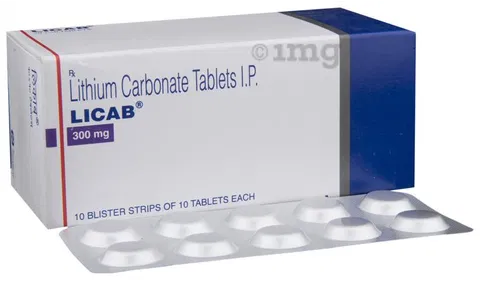
Licab (Lithiumcarbonaat 300 mg) — gouden standaard stemmingsstabilisator voor onderhoud van bipolaire stoornis en manie. Enige psychiatrische medicijn waarvan bewezen is dat het het zelfmoordpercentage verlaagt (~60%).
✓ Medisch beoordeeld door Morgan Ellis — Apotheekonderzoeker · 8 jaar ervaring · Laatst beoordeeld: mei 2026
⚡ Snel antwoord
Licab (Lithiumcarbonaat 300 mg, directwerkend) is de gouden standaard stemmingsstabilisator voor bipolaire stoornis. De enige stemmingsstabilisator met reproduceerbaar bewijs voor het verlagen van het zelfmoordpercentage. Smal therapeutisch venster — verplichte serumspiegelmonitoring.
📦 Elke bestelling is gedekt door onze Reshipment Assurance-beleid — als uw pakket niet binnen 20 werkdagen arriveert, sturen wij het opnieuw.
Waarom bestellen bij MedsBase
Licab bij MedsBase wordt rechtstreeks geleverd door een WHO-GMP gecertificeerde fabrikant in eenvoudige, discrete verpakking. Elke bestelling wordt gedekt door onze Reshipment Assurance-beleid — 20 werkdagen levertermijn of wij sturen kosteloos opnieuw — en komt in aanmerking voor ons klantenloyaliteitsprogramma. Wereldwijde verzending is beschikbaar naar de meeste bestemmingen.
Wat Licab is en hoe het werkt
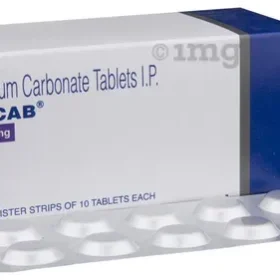
Licab is een lithiumcarbonaat tablet met directe afgifte, geleverd door Intas. Beschikbare sterktes: 300 mg. Lithium is een eenwaardig kation dat al meer dan 70 jaar wordt gebruikt bij bipolaire stoornis (Cade, 1949). Het werkingsmechanisme is multimodaal: remming van inositolmonofosfatase (IMPase), remming van GSK-3β, modulatie van glutamaattransmissie en effecten op circadiane klokgenen. De klinische vertaling: profylaxe tegen zowel manische als depressieve episodes, antidepressieve augmentatie en een reproduceerbare vermindering van het suïciderisico (~60% in langetermijnstudies).
Therapeutisch bereik: 0,6–1,2 mEq/L voor onderhoud (acute manie tot 1,2). Toxiciteit begint bij 1,5 mEq/L; ernstige toxiciteit (verwardheid, aanvallen, nierfalen, overlijden) bij 2,0+ mEq/L. Controleer de spiegel: 12 uur na inname op het dal. Schema: 5–7 dagen na elke dosisaanpassing, daarna halfjaarlijks bij stabiliteit. Plus baseline en halfjaarlijks TSH, creatinine/eGFR, calcium.
Indicaties en dosering
| Indicatie | Startdosering | Doeldosis | Doelspiegel |
|---|---|---|---|
| Bipolaire manie (acuut) | 600–900 mg/dag in verdeelde doses | 900–1800 mg/dag | 0,8–1,2 mEq/L |
| Bipolaire onderhoudsbehandeling | — | 600–1200 mg/dag | 0,6–1,0 mEq/L |
| Bipolaire depressie / unipolaire augmentatie | — | 600–900 mg/dag | 0,4–0,8 mEq/L |
| Oudere volwassenen / nierfunctiestoornis | 150–300 mg/dag | op basis van bloedspiegel | 0,4–0,8 mEq/L |
XR-formuleringen worden eenmaal of tweemaal daags gedoseerd (vlakker bloedspiegelverloop, lagere piek bijwerkingen). IR-formuleringen worden meestal 2-3 maal daags gedoseerd.
Belangrijke veiligheidsoverwegingen
Na 10–20 jaar lithiumtherapie ontwikkelt ongeveer 20% van de patiënten een chronische interstitiële nefritis met progressieve eGFR-daling. Verplichte creatinine/eGFR-bepaling bij aanvang, na 3 maanden, 6 maanden en vervolgens halfjaarlijks. Stop of verlaag de dosis als de eGFR onder 60 daalt met verder onverklaarde progressie.
Lithium hoopt zich op in de schildklier en remt de hormoonafgifte. Hypothyreoïdie ontwikkelt zich bij 20–30% van de langdurige gebruikers; verplichte TSH-bepaling bij aanvang, na 3 maanden, 6 maanden en vervolgens halfjaarlijks. Voeg levothyroxine toe indien symptomatisch — meestal is stoppen met lithium niet nodig.
Lithium kan milde hyperparathyreoïdie met hypercalciëmie veroorzaken. Controleer calcium bij aanvang en elke 6 maanden.
De meeste lithiumtoxiciteit in de kliniek komt voor bij patiënten met een stabiele dosering bij wie de lithiumklaring daalde door: (1) uitdroging (diarree en braken, koorts, warm weer, intensieve inspanning zonder vochtinname); (2) starten met NSAID's; (3) starten met een ACE-remmer of ARB; (4) starten met een thiazidediureticum; (5) plotseling natriumarm dieet. Informeer patiënten expliciet over elk van deze risico's. Stop lithium tijdelijk gedurende 24–48 uur bij diarree/braken en controleer de spiegel na herstel.
Lithium is historisch geassocieerd met hartafwijkingen (met name Ebstein-anomalie van de tricuspidalisklep) bij blootstelling in het eerste trimester. Moderne studies suggereren dat het absolute risico klein maar reëel is (ongeveer 1,2–7%). Idealiter wordt vóór de zwangerschap overgeschakeld; zo niet, foetale echocardiografie bij 20 weken. Lithiumgebruik laat in de zwangerschap en postpartum is over het algemeen veiliger dan in het eerste trimester. Lithium komt in significante hoeveelheden in de moedermelk terecht — wordt meestal vermeden tijdens borstvoeding.
Veelvoorkomende bijwerkingen
- Tremor — fijne posturale tremor bij de meeste gebruikers; grove tremor bij hoge spiegels (teken van toxiciteit).
- Polyurie, polydipsie — nefrogene diabetes insipidus, in de meeste gevallen gedeeltelijk.
- Gewichtstoename — gemiddeld 4–7 kg over 12 maanden.
- Maag-darmklachten — misselijkheid, diarree, vaak dosisgerelateerd (minder bij XR-formulering).
- Hypothyreoïdie — vaak voorkomend; behandel met levothyroxine.
- Nierfunctievermindering — cumulatief; monitor.
- Cognitieve vervlakking — sommige patiënten beschrijven een “traag gevoel” — vaak dosisgerelateerd.
- Acne, psoriasis — verergeringen beschreven.
Geneesmiddelinteracties
- NSAID's — vermindert de renale lithiumklaring; kan niveaus met 30–50% verhogen; vermijd of controleer niveau frequent.
- ACE-remmers / ARB's — vermindert klaring; zelfde voorbehouden.
- Thiazidediuretica — vermindert klaring; niveau stijgt voorspelbaar.
- Lisdiuretica — wisselend effect.
- SSRI's — additief serotonerg effect; meestal compatibel.
- Antipsychotica — additief risico op NMS (zeldzaam).
Zwangerschap, borstvoeding, pediatrie
Zwangerschap: klein maar reëel teratogeen risico in het eerste trimester (Ebstein-anomalie); wissel indien mogelijk voor de zwangerschap. Late zwangerschap: dosisaanpassingen nodig vanwege uitgebreid distributievolume. Borstvoeding: lithium concentreert zich in melk; meestal vermeden. Kinderen: vergund vanaf 12 jaar in veel rechtsgebieden; specialistisch toezicht.
Opslag
Bewaren bij 15–30 °C in originele verpakking.
Veelgestelde vragen
Waarom is bloedspiegelmonitoring nodig bij lithium?
Lithium heeft een smalle therapeutische breedte (0,6–1,2 mEq/L) — toxisch bij 1,5 en ernstig toxisch bij 2,0+. Kleine doseringsveranderingen, vochtverschuivingen of interacties kunnen niveaus in toxiciteit doen schommelen. Monitoring is wat lithium veilig maakt. Niveaus overslaan is niet veilig.
Waarom verlaagt lithium het zelfmoordcijfer?
Lithium is het enige psychiatrische medicijn met reproduceerbaar bewijs op lange termijn voor het verlagen van het zelfmoordcijfer (ongeveer 60% reductie in gepoolde studies). Het mechanisme is onzeker — waarschijnlijk een combinatie van betere stemmingsstabilisatie, verminderde impulsiviteit en directe effecten op serotonerge en circadiane systemen. Het effect lijkt specifiek voor lithium te zijn en wordt niet gezien bij andere stemmingsstabilisatoren.
Hoe presenteert lithiumtoxiciteit zich?
Vroeg: grove tremor (anders dan de fijne tremor van normale therapie), maag-darmklachten, ataxie, onduidelijke spraak, verwardheid. Laat: aanvallen, nierfalen, hartritmestoornissen, coma. Ga altijd naar de spoedeisende hulp voor lithiumspiegel + elektrolyten als een van deze symptomen optreedt. Veelvoorkomende uitlokkende factoren: diarree & braken, uitdroging, nieuwe NSAID/ACE-remmer/thiazide.
Waarom veroorzaakt lithium polyurie?
Lithium veroorzaakt een gedeeltelijke nefrogene diabetes insipidus door interferentie met vasopressinesignalering in het nierverzamelkanaal. De meeste patiënten hebben polyurie van 2–4 L/dag; ernstige polyurie (> 5 L) suggereert een dosisverlaging of overstappen. Op de lange termijn kan de polyurie onomkeerbaar worden.
Hoe lang duurt het voordat lithium werkt?
Acute manie-reactie binnen 1–2 weken. Het onderhoudsprofylactische effect bouwt zich op over 6–12 maanden — het anti-zelfmoordeffect verschijnt na ongeveer 6–12 maanden van stabiele therapie. Patiënten die stoppen met lithium en opnieuw beginnen, hebben vaak minder effect bij de tweede blootstelling (mogelijk 'kindling').
Kan ik alcohol drinken bij lithiumgebruik?
Licht alcoholgebruik wordt meestal verdragen. Zwaar of binge-drinken is een groot risico omdat het uitdroging en verminderde lithiumklaring veroorzaakt — toxiciteit is het voorspelbare gevolg. Veel lithiumpatiënten beperken alcoholgebruik tot incidentele en bescheiden hoeveelheden.
Waarom trilt mijn hand door lithium?
Een fijne posturale tremor is dosisgerelateerd en komt bij de meeste gebruikers voor. Het is meestal mild en verergert door cafeïne en stress. Een grove tremor of verergerende tremor is een teken van toxiciteit — laat een bloedspiegel bepalen.
Kan lithium abrupt worden gestopt?
Over het algemeen niet — bouw het af over 2–4 weken waar mogelijk. Plotselinge stopzetting veroorzaakt een significante toename van het risico op terugval en zelfmoord bij bipolaire stoornis; dit is een van de sterkste signalen in de psychiatrische farmacologie. Zelfs patiënten die jarenlang stabiel zijn geweest, moeten lithium niet impulsief stoppen.
Waarom moet mijn schildklier worden gecontroleerd?
Lithium hoopt zich op in de schildklier en remt de hormoonafgifte. Ongeveer 20–30% van de langdurige gebruikers ontwikkelt hypothyreoïdie. De oplossing is eenvoudig (voeg levothyroxine toe) — maar het moet worden opgespoord voordat symptomen optreden, vandaar de routinematige controle.
Kom ik aan van lithium?
Ja — meestal 4–7 kg in 12 maanden. Minder dan olanzapine, meer dan aripiprazol. Dieet/beweging vanaf het begin helpt.
Andere medicijnen voor geestelijke gezondheid
- Torvate (Natriumvalproaat — alternatieve stemmingsstabilisator)
- Qutan SR 400 (Quetiapine — onderhoudstherapie bij bipolaire stoornis)
- Olanzap (Olanzapine — bipolaire manie)
- Aripicon (Aripiprazol — bipolaire manie)
- Atlura (Lurasidon — bipolaire depressie)
Meer opties in Mentale Gezondheid en Psychiatrische Medicatie
Gerangschikt op recente bestelvolumes van MedsBase — wat andere klanten in deze categorie kiezen.
| Sterkte | 300 mg |
|---|---|
| Hoeveelheid | 30 Tabletten, 60 Tabletten, 90 Tabletten, 180 Tabletten |
 Licab
Licab
Vragen & antwoorden
Licab
Gerelateerde producten


Beoordelingen
Er zijn nog geen beoordelingen