








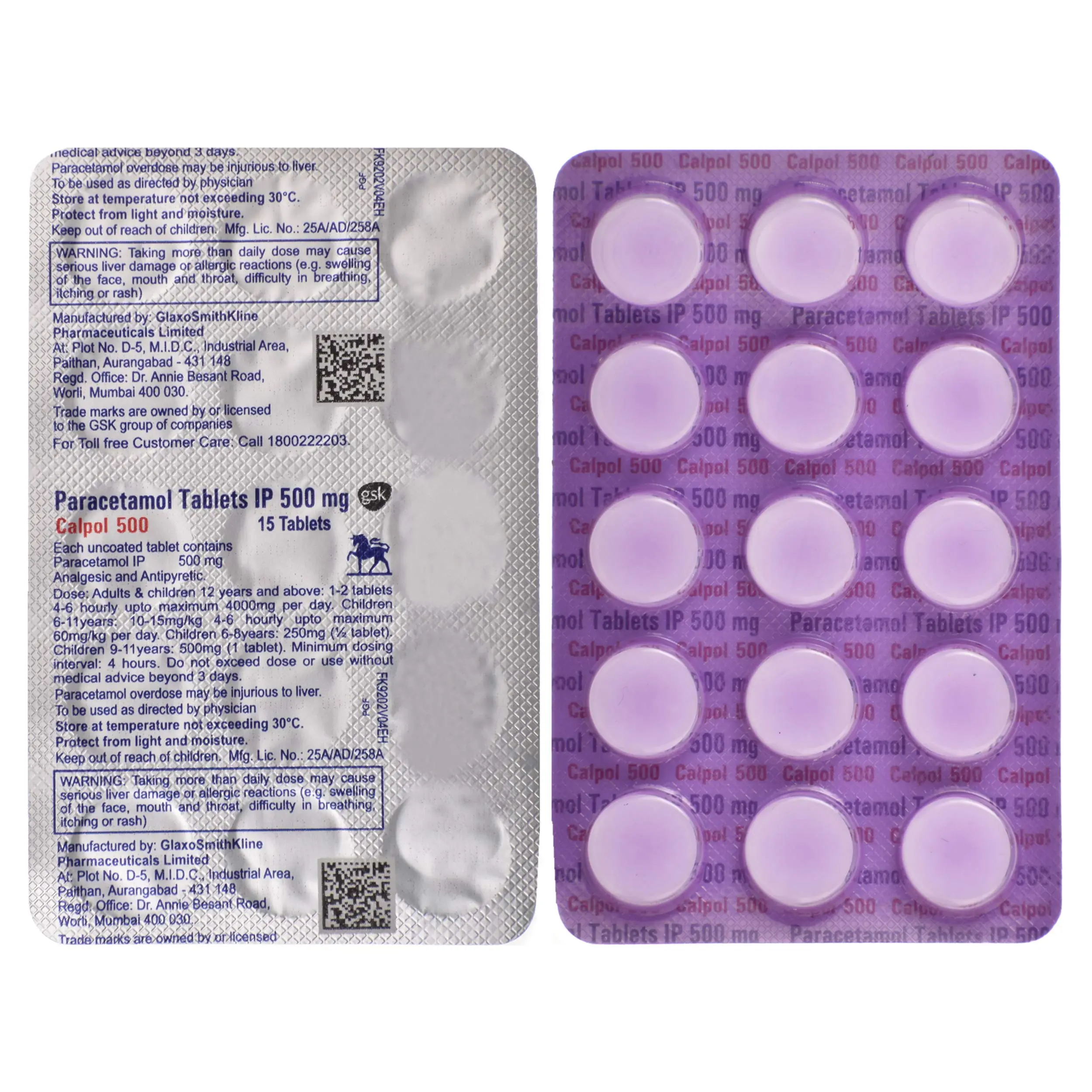
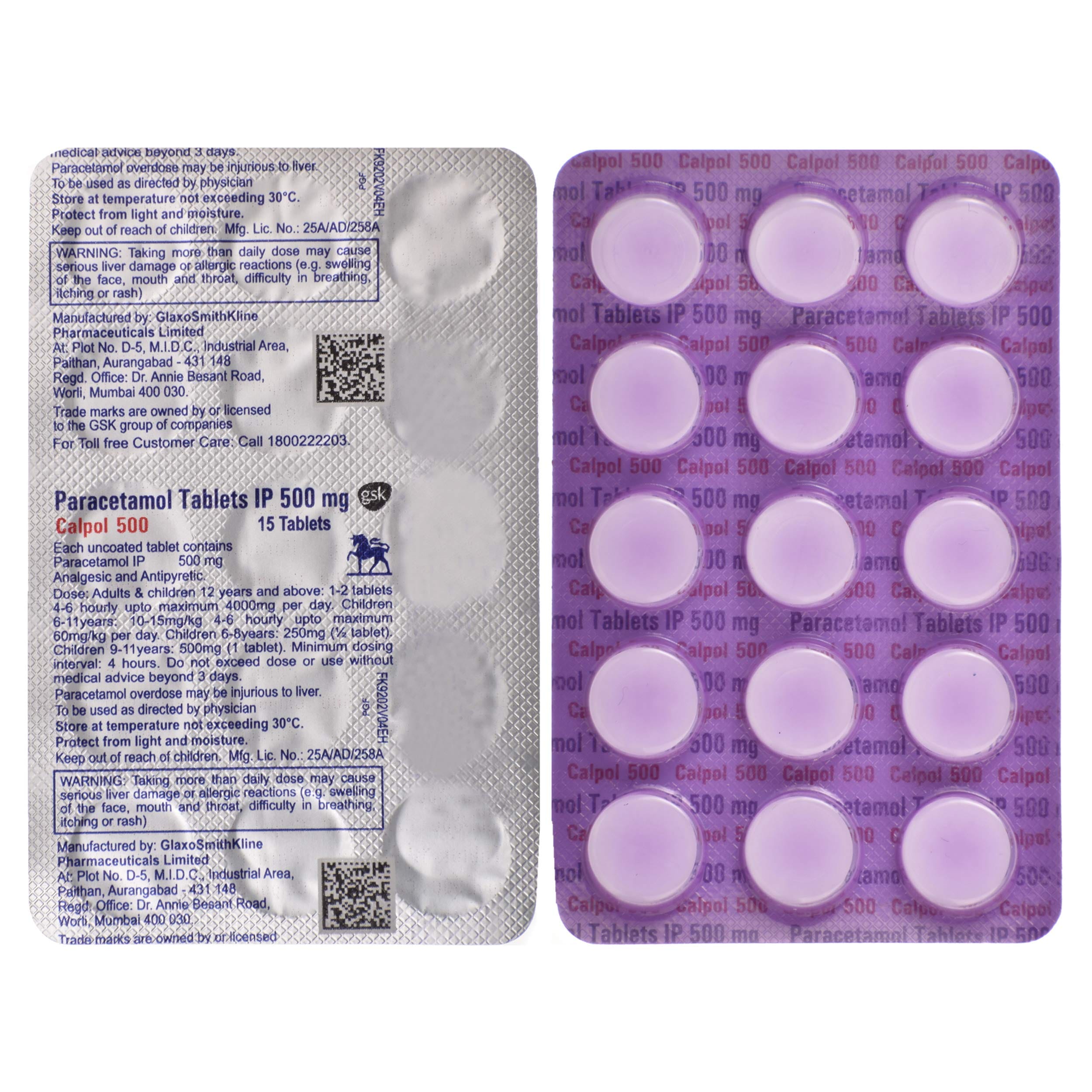
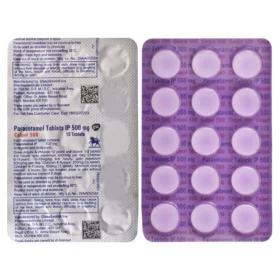
Calpol

✅ Koortsverlagend
✅ Pijnverlichting
✅ Hoofdpijnverlichting
✅ Spierpijnbehandeling
✅ Lichte pijnen onder controle
Calpol bevat Paracetamol.
✓ Medisch beoordeeld door Morgan Ellis — Apotheekonderzoeker · 8 jaar ervaring · Laatst beoordeeld: mei 2026
⚡ Snel antwoord — Wat is Calpol?
Calpol is een paracetamol 500 mg tablet, onderdeel van een van de bekendste paracetamolmerken ter wereld (GlaxoSmithKline). Het wordt gebruikt voor milde tot matige pijn en koorts — hoofdpijn, tandpijn, menstruatiepijn, spierpijn, verkoudheids- en griepsymptomen, en elke oorzaak van koorts. Gebruikelijke dosis voor volwassenen: 500 mg tot 1 g elke 4 tot 6 uur, maximaal 4 g (acht tabletten) per 24 uur. Calpol is verkrijgbaar als tabletten, vloeibare suspensie, druppels en zetpillen — waardoor het het favoriete paracetamolmerk is voor zowel kinderen als volwassenen.
📦 Elke bestelling is gedekt door onze Reshipment Assurance-beleid — als uw pakket niet binnen 20 werkdagen arriveert, sturen wij het opnieuw.
Waarom bestellen bij MedsBase
Onze generieke medicijnen zijn afkomstig van WHO-GMP gecertificeerde fabrikanten en worden wereldwijd verzonden in discrete, eenvoudige verpakkingen — geen medicijnnaam op de buitenkant van het pakket. Betalingen met kaart worden verwerkt via een gereguleerde processor (betalingsoverzichten vermelden een gereguleerde kaartbetalingprocessor — nooit “MedsBase” of een medicijnnaam). Crypto en SEPA bankoverschrijvingen worden ook geaccepteerd. Elke bestelling wordt ondersteund door ons Reshipment Assurance Policy.
Calpol 500 mg is een GlaxoSmithKline-merk van paracetamol (acetaminophen), bekend in het VK en vele andere markten als het klassieke paracetamolmerk voor koorts en milde tot matige pijn. Hoewel Calpol het bekendst is vanwege zijn kinder suspensie (gebruikt door generaties ouders voor kinderkoorts en vaccinatiegerelateerde pijn), is de 500 mg tablet de standaard volwassen formulering.
Paracetamol is het meest gebruikte pijnstillende middel ter wereld. Het staat op de WHO-lijst van essentiële geneesmiddelen en is het eerstelijns pijn- en koortsmiddel voor kinderen, zwangere vrouwen, oudere patiënten en iedereen met risico op NSAID-bijwerkingen.
Waar wordt Calpol voor gebruikt?
- Hoofdpijn, inclusief spanningshoofdpijn en migraine
- Tandpijn, pijn na het trekken van een tand
- Koorts door elke oorzaak — viraal, bacterieel, na vaccinatie, na een operatie
- Spierpijn, milde rugpijn, verkoudheids- en griepsymptomen
- Menstruatiepijn (als eerstelijns of naast NSAID's)
- Pijn door artrose (mild tot matig)
- Postoperatieve pijn — als onderdeel van multimodale analgesie
- Koorts en pijn bij kinderen (op basis van gewichtsgerelateerde dosering)
Hoe Werkt Calpol?
Paracetamol werkt voornamelijk op het centrale zenuwstelsel. Het remt zwak cyclo-oxygenase (met name een COX-3-variant) in het ruggenmerg en de hersenen, moduleert endocannabinoïde pathways en kan de dalende serotonerge pijnremming versterken. Het netto-effect is een verminderde pijnperceptie en een verlaagd hypothalamisch temperatuurinstelpunt. Paracetamol heeft vrijwel geen ontstekingsremmend effect in perifere weefsels, waardoor het de maag, nieren en bloedplaatjes spaart die door NSAID's kunnen worden beïnvloed.
Calpol Dosering
- Volwassenen en kinderen > 12 jaar: 500 mg tot 1 g (1–2 tabletten) elke 4–6 uur naar behoefte
- Maximum: 4 g (4.000 mg) per 24 uur uit alle bronnen gecombineerd
- Kinderen 6–12 jaar: 250–500 mg elke 4–6 uur, maximaal 60 mg/kg/dag
- Kinderen onder 6 jaar: gebruik Calpol kindersuspensie met gewichtsgerelateerde dosering (120 mg/5 mL of 250 mg/5 mL sterktes)
- Ouderen, laag lichaamsgewicht, chronische leverziekte, regelmatig alcoholgebruik: verlaag het dagelijkse maximum tot 2–3 g
Calpol tabletten kunnen met of zonder voedsel worden ingenomen. Slik door met een vol glas water. Als u een dosis vergeet, neem deze dan in wanneer u eraan denkt, tenzij uw volgende geplande dosis binnen 2 uur gepland staat — sla deze dan over. Neem nooit een dubbele dosis.
Paracetamol en de lever. Paracetamol is zeer veilig bij aanbevolen doseringen, maar is wereldwijd de meest voorkomende oorzaak van acuut leverfalen bij hogere doseringen. Overschrijd niet 4 g (4.000 mg) per dag uit alle bronnen samen. Dat zijn 8 tabletten van 500 mg. Wees voorzichtig om geen dubbele dosis te nemen door merkparacetamol (Calpol, Anacin, Panadol, Crocin, Tylenol) te combineren met verkoudheids-/griepmiddelen die vaak ook paracetamol bevatten. Het leverrisico neemt toe bij regelmatig alcoholgebruik, chronische leverziekte en langdurig vasten — verlaag in die gevallen de dagelijkse limiet tot 2 g.
Wie mag Calpol niet gebruiken?
- Bekende overgevoeligheid voor paracetamol
- Ernstige leverfunctiestoornis (gevorderde cirrose, actieve hepatitis)
- Gelijktijdig gebruik van een ander product dat paracetamol bevat waardoor de dagelijkse dosis van 4 g overschreden wordt
- Chronisch zwaar alcoholgebruik zonder medisch advies
Bijwerkingen
Bij aanbevolen doseringen is paracetamol een van de veiligste systemische medicijnen.
- Minder vaak voorkomend: milde huiduitslag, jeuk, misselijkheid
- Zeldzaam: ernstige huidreacties (syndroom van Stevens-Johnson, TEN), trombocytopenie, leverschade bij supra-therapeutische doseringen
- Overdosering: acute hepatotoxiciteit — het belangrijkste risico. Symptomen kunnen 24–48 uur vertraagd optreden; elke vermoedelijke overdosering is een medisch noodgeval.
Bestellen & Levering
MedsBase biedt wereldwijde verzending bij elke bestelling. Bestellingen worden verzonden in discrete verpakkingen en arriveren in verpakkingen van de fabrikant. Als uw gewenste verpakkingsmaat niet op voorraad is, neem dan contact op met de klantenservice voor een verwachte leverdatum.
Medisch disclaimer. De informatie op deze pagina is alleen bedoeld voor algemene educatie. Het is geen vervanging voor advies van uw eigen arts of apotheker. Overleg met een gekwalificeerde zorgverlener voordat u een therapie start, stopt of wijzigt, vooral als u een voorgeschiedenis heeft van maagzweer, hartaandoeningen, nieraandoeningen, astma, leveraandoeningen of als u zwanger bent.
Veelgestelde vragen
Waar wordt Calpol voor gebruikt?
Calpol (paracetamol 500 mg) wordt gebruikt voor milde tot matige pijn en koorts — hoofdpijn, tandpijn, spierpijn, menstruatiekrampen, verkoudheid en griep, en koorts door welke oorzaak dan ook. Het is geschikt voor volwassenen en, op gewichtsafhankelijke doseringen, voor kinderen.
Hoe verschilt Calpol van ibuprofen?
Calpol is paracetamol — een centraal werkend pijn- en koortsmiddel zonder ontstekingsremmend effect. Ibuprofen is een NSAID dat werkt op ontstekingen. Paracetamol is milder voor de maag, nieren en bloedplaatjes; ibuprofen is effectiever wanneer pijn door ontsteking wordt veroorzaakt.
Hoe snel werkt Calpol?
De verlichting van pijn en koorts begint meestal binnen 30 minuten na inname; het maximale effect treedt op na 1 uur.
Kan ik Calpol samen met ibuprofen of diclofenac innemen?
Ja. De combinatie is veilig en wordt vaak gebruikt voor matige pijn.
Kan ik Calpol aan mijn kind geven?
Ja, mits in correct afgewogen kinderdoseringen. Voor kinderen onder de 6 jaar heeft de Calpol-peuterdrank de voorkeur boven het splitsen van volwassen tabletten. Gebruik altijd de bijgeleverde spuit of maatbeker — nooit een huishoudelijke lepel.
Is Calpol veilig tijdens zwangerschap?
Ja — paracetamol is het eerste keus pijn- en koortsmiddel tijdens zwangerschap. Gebruik de laagst effectieve dosis voor de kortst mogelijke duur.
Kan ik alcohol drinken tijdens het gebruik van Calpol?
Af en toe licht drinken bij standaarddoseringen is acceptabel. Regelmatig of overmatig drinken verhoogt het leverrisico — verlaag de maximale dagelijkse dosis naar 2 g of vermijd paracetamol helemaal.
Hoeveel Calpol is te veel?
Volwassenen mogen niet meer dan 4 g (8 tabletten van 500 mg) per 24 uur innemen uit alle bronnen. Doseringen boven 150 mg/kg kunnen ernstige leverschade veroorzaken en vormen een medisch noodgeval, zelfs als u zich aanvankelijk goed voelt.
Is Calpol hetzelfde als Crocin, Panadol of Tylenol?
Ja — allemaal zijn het merken van paracetamol (acetaminophen). Bij dezelfde sterkte zijn ze klinisch equivalent. Pas op dat u niet meer dan één paracetamolmerk tegelijk inneemt.
Kan ik Calpol elke dag gebruiken voor chronische pijn?
Kortdurend dagelijks gebruik is veilig. Voor chronisch dagelijks gebruik (bijv. artrose), blijf ruim binnen de limiet van 4 g/dag, vermijd combinatie met andere paracetamolbevattende producten en overleg met uw arts.
Wat als mijn kind moet overgeven na Calpol?
Als het braken binnen 30 minuten plaatsvindt, kan de dosis worden herhaald. Als het braken meer dan 30 minuten na inname plaatsvindt, herhaal dan niet — de meeste opname heeft dan al plaatsgevonden.
Gerelateerde alternatieven
Andere producten in Chronische aandoeningen die klanten ook bekijken:
Meer opties in pijnstillende medicatie
Gerangschikt op recente bestelvolumes van MedsBase — wat andere klanten in deze categorie kiezen.
| Sterkte | 500 mg |
|---|---|
| Hoeveelheid | 30 Tabletten, 60 Tabletten, 90 Tabletten, 180 Tabletten |
 Calpol
Vragen & antwoorden
Calpol
Gerelateerde producten





Beoordelingen
Er zijn nog geen beoordelingen