








Doxinate
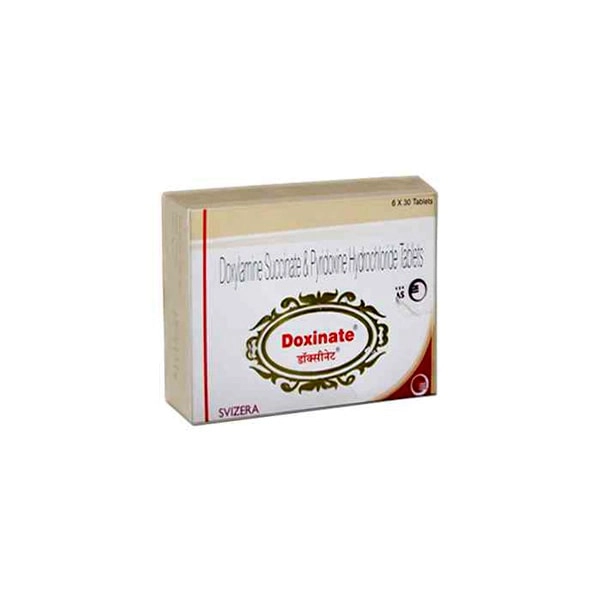


Doxinate (Doxylamine 10 mg + Vitamine B6 10 mg) — ACOG/NICE/SOGC eerstelijnsfarmacotherapie voor misselijkheid en braken tijdens de zwangerschap (NVP). FDA Zwangerschaps Categorie A.
✓ Medisch beoordeeld door Morgan Ellis — Apotheekonderzoeker · 8 jaar ervaring · Laatst beoordeeld: mei 2026
⚡ Snelle vraag — Wat is Doxinate?
Doxinate is een tablet met vaste dosering van doxylamine succinaat 10 mg + pyridoxine (vitamine B6) 10 mg — de door ACOG en FDA aanbevolen eerste keuze farmacotherapie bij misselijkheid en braken tijdens zwangerschap (NVP). De combinatie wordt ook verkocht als Diclegis (VS) en Cariban (EU). Doxylamine is een sederend H1-antihistaminicum; pyridoxine vermindert misselijkheid via mechanismen die nog niet volledig worden begrepen. Standaard dosering: 2 tabletten voor het slapengaan, met 1 ochtend- + 1 middagdosis toegevoegd als de symptomen aanhouden. Werking begint na 4–6 uur, dus de avonddosis is gericht op ochtendmisselijkheid. WHO-GMP gecertificeerde fabrikant.
📦 Elke bestelling is gedekt door onze Reshipment Assurance-beleid — als uw pakket niet binnen 20 werkdagen arriveert, sturen wij het opnieuw.
Waarom bestellen bij MedsBase
Onze generieke medicijnen zijn afkomstig van WHO-GMP gecertificeerde fabrikanten en worden wereldwijd verzonden in discrete, eenvoudige verpakkingen — geen medicijnnaam op de buitenkant van het pakket. Betalingen met kaart worden verwerkt via een gereguleerde processor (betalingsoverzichten vermelden een gereguleerde kaartbetalingprocessor — nooit “MedsBase” of een medicijnnaam). Crypto en SEPA bankoverschrijvingen worden ook geaccepteerd. Elke bestelling wordt ondersteund door ons Reshipment Assurance Policy.
Waarom bestellen bij MedsBase
Doxinate wordt geleverd door een WHO-GMP gecertificeerde fabrikant. Elke bestelling wordt discreet wereldwijd verzonden en valt onder onze Reshipment Assurance-beleid — als het niet binnen 20 werkdagen arriveert, sturen wij kosteloos een nieuwe zending. Het is de enige anti-emeticumcombinatie met FDA-categorie A-status tijdens zwangerschap en wordt als eerste keus aanbevolen door ACOG, NICE en de SOGC voor misselijkheid en braken tijdens zwangerschap.
Werkingsmechanisme
Doxylamine is een eerste generatie ethanolamine H1-antihistaminicum met sterke centrale penetratie; H1-antagonisme in de hersenstamvestibulaire kernen en CTZ produceert een anti-emetisch effect, met de sedatie en anticholinerge activiteit die kenmerkend is voor deze antihistamineklasse. Pyridoxine (vitamine B6) is een cofactor voor > 100 enzymen inclusief dopa decarboxylase en glutamaat decarboxylase; het precieze anti-emetische mechanisme tijdens zwangerschap is onduidelijk, maar een gerandomiseerde trial (Sahakian 1991) toonde onafhankelijk voordeel bij 30 mg/dag en het gecombineerde product is effectiever dan elk afzonderlijk.
Indicaties
- Misselijkheid en braken tijdens zwangerschap (NVP) inclusief hyperemesis gravidarum (initiële therapie)
- Slapeloosheid tijdens zwangerschap (off-label, beperkte onderbouwing)
Dosering — standaard NVP-regime
Dag 1: 2 tabletten voor het slapengaan. Dag 2: 1 's ochtends + 2 voor het slapengaan als de symptomen de volgende dag aanhouden. Dag 3+: 1 's ochtends + 1 's middags + 2 voor het slapengaan (maximaal 4 tabletten/dag). Enkele doses zijn onvoldoende omdat steady-state 2–3 dagen duurt. Ga door tot de symptomen stabiel zijn, daarna afbouwen over een week.
Bijwerkingen
- Slaperigheid (zeer vaak voorkomend — het slaaptijdschema vermindert dit)
- Droge mond, wazig zien, moeite met plassen (anticholinergisch)
- Obstipatie
- Duizeligheid, hoofdpijn
- Allergische huidreacties (zeldzaam)
Geneesmiddelinteracties
- Andere CNS-depressiva (alcohol, opioïden, benzodiazepinen): additieve sedatie — vermijd alcohol volledig tijdens de zwangerschap.
- Andere anticholinergica: additieve droge mond, obstipatie, urineretentie.
- MAO-remmers: vermijd combinatie.
- Levodopa: pyridoxine verhoogt de perifere omzetting; alleen significant zonder carbidopa.
Veelgestelde vragen
Wanneer tijdens de zwangerschap kan ik Doxinate innemen?
Het kan worden gestart zodra de eerste symptomen van NVP optreden — meestal week 6 van de zwangerschap. Ga door zolang de symptomen aanhouden, meestal piekend tussen week 9–12 en verdwijnend tegen week 16–20.
Schadelijk voor de baby?
Er is geen bewijs van een teratogeen effect. De FDA heeft de categorie in 2013 verhoogd naar A na een grote meta-analyse van > 200.000 blootstellingen. Het wordt sinds de jaren 50 gebruikt bij miljoenen zwangerschappen.
Waarom twee tabletten voor het slapengaan?
Het maximale anti-emetische effect treedt 4–6 uur na een dosis op. Een hogere dosis voor het slapengaan richt zich op ochtendmisselijkheid, wanneer de symptomen meestal het ergst zijn.
Word ik er overdag slaperig van?
Mogelijk. Het innemen voor het slapengaan minimaliseert slaperigheid overdag, maar de ochtend- en middagdoses kunnen nog steeds slaperigheid veroorzaken. Rijd niet totdat u weet hoe het u beïnvloedt.
Kan ik het samen met ondansetron innemen?
Ja, dit is een erkende optie als pyridoxine-doxylamine alleen onvoldoende werkt. ACOG plaatst ondansetron als tweedelijnsbehandeling bij NVP (na week 10) vanwege een klein risico op gehemeltespleet bij vroeg gebruik.
Wanneer moet ik me zorgen maken?
Ernstig braken (> 3 keer/dag), geen vocht binnen kunnen houden, gewichtsverlies > 5% van het gewicht voor de zwangerschap, ketonen in de urine of tekenen van uitdroging vereisen dringende verloskundige beoordeling — dit is hyperemesis gravidarum en kan opname nodig hebben.
Zijn niet-medicamenteuze opties het proberen waard?
Ja. Kleine, frequente maaltijden, gember, acupressuur (P6-polsbandjes), het vermijden van triggers (geuren, vette voedingsmiddelen) en vitamine B6-monotherapie (10–25 mg drie keer per dag) worden aanbevolen als startpunt en helpen vaak bij milde NVP.
Moet ik stoppen als mijn symptomen verbeteren?
U kunt afbouwen in plaats van abrupt stoppen — veel vrouwen merken dat volledig stoppen leidt tot terugkeer van de symptomen. Bouw af met één tablet elke 1–2 dagen, afhankelijk van wat u verdraagt.
Opslag
Bewaren onder 30°C, beschermen tegen vocht. Buiten bereik van kinderen houden.
Wat als ik een dosis vergeet?
Neem het in wanneer u eraan denkt, tenzij het dicht bij de volgende geplande dosis ligt. Neem geen dubbele dosis — dat verhoogt alleen maar de slaperigheid.
Andere Maag-Darm Gezondheidsmedicijnen
- Dompewal — Domperidon (alternatief voor misselijkheid buiten zwangerschap)
- Reglan — Metoclopramide (tweede keuze tijdens zwangerschap)
- Stemetil — Prochlorperazine (derde keuze tijdens zwangerschap)
- Zofer — Ondansetron (tweede keuze bij misselijkheid en braken na week 10)
- Folvite — Foliumzuur (zwangerschapssupplement)
- Bekijk alle Maag-Darm Gezondheidsmedicijnen
Meer opties in Anti-Emeticum
Gerangschikt op recente bestelvolumes van MedsBase — wat andere klanten in deze categorie kiezen.

| Sterkte | 10+10 mg |
|---|---|
| Hoeveelheid | 10 tabletten, 30 tabletten, 60 tabletten, 90 tabletten, 180 tabletten |
 Doxinate
Vragen & antwoorden
Doxinate
Gerelateerde producten


Beoordelingen
Er zijn nog geen beoordelingen