








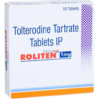
Dytor

Dytor is Cipla’s torasemide 5/10/20 mg tabletten — een langwerkend lisdiureticum met 80-100% voorspelbare biologische beschikbaarheid (vs furosemide 10-90%). Voorkeursmiddel bij patiënten met darmoedeem, inconsistente furosemiderespons of wanneer eenmaal daagse lisdiureticumdekking nodig is. Milde aldosteronantagonisme vermindert hypokaliëmie. Enige lisdiureticum met redelijk bewijs voor hypertensie. TRANSFORM-HF 2023 — gelijkwaardige mortaliteit aan furosemide bij hartfalen.
✓ Medisch beoordeeld door Morgan Ellis — Apotheekonderzoeker · 8 jaar ervaring · Laatst beoordeeld: mei 2026
⚡ Snelle Antwoord — Wat is Dytor?
Dytor is een 5 / 10 / 20 mg torasemide tablet van Cipla — een lisdiureticum (pyridine-sulfonylureastructuur) dat inwerkt op de NKCC2 (Na-K-2Cl cotransporter) in het dikke opstijgende deel. Torasemide (torsemide in de Amerikaanse nomenclatuur) werd in 1993 geïntroduceerd door Boehringer Mannheim — het derde belangrijke lisdiureticum na furosemide en bumetanide. Op de markt gebracht vanwege de voorspelbare biologische beschikbaarheid en langere werkingsduur vergeleken met furosemide. Halveringstijd 3-4 uur (langer dan furosemide); beginwerking 30-60 minuten; piekeffect 1-2 uur; werkingsduur 6-8 uur. Primaire indicatie: chronisch hartfalen-oedeem, hypertensie (inclusief refractaire), hepatisch ascites, oedeem bij chronische nierziekte. Standaard dosering: Hypertensie: 5-10 mg eenmaal daags 's ochtends. Torasemide is de enige lisdiureticum met redelijk bewijs voor antihypertensieve werking — de langere werkingsduur en aanvullende anti-aldosteron/anti-fibrotische activiteit maken het beter geschikt voor eenmaal daagse bloeddrukcontrole dan furosemide. Belangrijke contra-indicaties: zie de volledige lijst hieronder. Houd elektrolyten, creatinine en glucose in de gaten. Niet combineren met lithium (thiazide-/lusdiuretica kunnen lithiumtoxiciteit veroorzaken). Gebruik tijdens zwangerschap is afhankelijk van het specifieke geval (zie zwangerschapsopmerking). Voor de meeste hypertensieve patiënten werken diuretica het beste als het tweede of derde middel — meestal gecombineerd met een ARB, ACE-remmer of calciumkanaalblokker in plaats van alleen gebruikt te worden.
📦 Elke bestelling is gedekt door onze Reshipment Assurance-beleid — als uw pakket niet binnen 20 werkdagen arriveert, sturen wij het opnieuw.
Waarom bestellen bij MedsBase
Onze generieke medicijnen zijn afkomstig van WHO-GMP gecertificeerde fabrikanten en worden wereldwijd verzonden in discrete, eenvoudige verpakkingen — geen medicijnnaam op de buitenkant van het pakket. Betalingen met kaart worden verwerkt via een gereguleerde processor (betalingsoverzichten vermelden een gereguleerde kaartbetalingprocessor — nooit “MedsBase” of een medicijnnaam). Crypto en SEPA bankoverschrijvingen worden ook geaccepteerd. Elke bestelling wordt ondersteund door ons Reshipment Assurance Policy.
Wat is Dytor?
Dytor is een orale tablet van 5 / 10 / 20 mg torasemide van Cipla, verkrijgbaar in verpakkingen van 30-180 tabletten. Torasemide (torsemide in de Amerikaanse nomenclatuur) werd in 1993 geïntroduceerd door Boehringer Mannheim — het derde belangrijke lisdiureticum na furosemide en bumetanide. Op de markt gebracht vanwege de voorspelbare biologische beschikbaarheid en langere werkingsduur in vergelijking met furosemide.
Hoe Torasemide Werkt
Torasemide remt de NKCC2 (Na-K-2Cl cotransporter) in het dikke opstijgende deel. De downstream-effecten:
- Dramatische vermindering van natriumheropname — lisdiuretica blokkeren het grootste natriumheropnemende segment van de nefron; tot 25% van het gefilterde natrium kan worden uitgescheiden
- Grote diurese binnen 1-2 uur na orale inname (5 minuten intraveneus) — nuttig bij acuut gedecompenseerd hartfalen en longoedeem
- Verlies van magnesium en calcium naast natrium en kalium — in tegenstelling tot thiaziden die calcium vasthouden
- Directe venodilatatie binnen minuten na IV-toediening — draagt bij aan symptoomverlichting bij acuut longoedeem voordat de diurese optreedt
- Activeert prostaglandinesynthese in de nier — de basis van de NSAID-interactie (NSAID's verminderen het effect van lisdiuretica)
- Milde mineralocorticoïde receptorantagonisme — vermindert hypokaliëmie en biedt gedeeltelijke anti-fibrotische activiteit op het myocard
Goedgekeurde en evidence-based toepassingen
- Chronisch hartfalen-oedeem, hypertensie (inclusief refractaire), hepatische ascites, oedeem bij chronische nierziekte — primaire indicatie
- Chronisch hartfalen met oedeem
- Cirrotische ascites (gecombineerd met spironolacton)
- Hypertensie, inclusief refractaire hypertensie (enkele lisdiureticum met redelijk bewijs voor HTN)
- Oedeem gerelateerd aan CKD — effectief bij eGFR <30 waar thiaziden falen
- Geen respons op furosemide — overschakeling op torasemide herstelt vaak de respons vanwege een betere biologische beschikbaarheid
Belangrijke klinische onderzoeksresultaten: TORIC-studie (2002) — observationele studie van 1.377 HF-patiënten; torasemide versus furosemide, de torasemide-groep liet 52% lagere mortaliteit zien. Veel aangehaald maar bekritiseerd vanwege niet-gerandomiseerd ontwerp. TRANSFORM-HF (2023) — grote gerandomiseerde studie van 2.859 HF-patiënten, torasemide versus furosemide; geen significant verschil in mortaliteit door alle oorzaken na 12 maanden. Huidige conclusie: torasemide is minstens even goed als furosemide; de keuze hangt af van biologische beschikbaarheid, gebruiksgemak en verdraagzaamheid in plaats van mortaliteit.
Dytor Dosering
Chronische dosering: Hypertensie: 5-10 mg eenmaal daags 's ochtends. Torasemide is de enige lisdiureticum met redelijk bewijs voor antihypertensieve werking — de langere werkingsduur en aanvullende anti-aldosteron/anti-fibrotische activiteit maken het beter geschikt voor eenmaal daagse bloeddrukcontrole dan furosemide.
Andere indicaties: Hartfalen: 10-20 mg oraal per dag aanvankelijk; titreer naar 10-100 mg/dag. Eenmaal daagse dosering is meestal voldoende. Cirrotisch ascites: 5-40 mg/dag in combinatie met spironolacton 100-200 mg/dag. CKD-oedeem: hogere doses nodig (20-100 mg/dag) naarmate nefronen afnemen.
Toediening: eenmaal daags (of tweemaal daags voor hoge doses lisdiuretica bij HF), 's ochtends. Avonddosering veroorzaakt nycturie en moet waar mogelijk worden vermeden. Neem op hetzelfde tijdstip elke dag. Voedsel heeft geen significant effect op de absorptie van deze diuretica.
Controleschema:
- Uitgangswaarden: ureum, elektrolyten (met name kalium en natrium), creatinine, eGFR, glucose, serumuraat. Thuis- of kliniekbloeddruk en dagelijkse gewichtsmeting voor HF-patiënten.
- 1-2 weken na start of dosisaanpassing: herhaal U&E en creatinine. Verwacht milde elektrolytverschuivingen; onderzoek substantiële veranderingen.
- 4-6 weken: Bloeddrukcontrole en volledig metabool panel.
- Doorlopend: jaarlijks U&E, uraat, glucose en lipidenpanel eenmaal stabiel. Vaker bij CKD, HF of bij combinatietherapie.
- Stop of verlaag de dosis bij: natrium <130 met symptomen, kalium 5,5, creatininetoename >30%, nieuwe jicht, ernstige dehydratiesymptomen.
Stopzetting: geen onttrekkingssyndroom maar abrupt stoppen kan rebound volumebehoud veroorzaken bij HF-patiënten op chronische hoge doses lisdiuretica — afbouwen waar mogelijk en gewicht monitoren.
- Biologische beschikbaarheid 80-100% (furosemide 10-90%) — vooral nuttig bij patiënten met congestief hartfalen, darmoedeem of inconsistente reactie op furosemide.
- Milde aldosteronantagonisme — gedeeltelijke antifibrotische activiteit in het myocard. Klinische betekenis bescheiden; draagt waarschijnlijk bij aan het voordeel dat TORIC liet zien.
- Minder hypokaliëmisch dan furosemide bij equivalente natriuretische doses (gerelateerd aan het aldosteron-antagonistische effect).
- Equivalente dosering: torasemide 10 mg ≈ furosemide 40 mg. Handig bij het wisselen van patiënten tussen middelen.
Bijwerkingen
Vaak (>1%):
- Hypokaliëmie (minder dan furosemide)
- Hypomagnesiëmie
- Hyponatriëmie
- Pre-renaal AKI bij overmatige diurese
- Ototoxiciteit (zeldzaam; minder dan furosemide per eenheid natriurese)
- Hyperurikemie
- Milde hyperglykemie
- Orthostatische hypotensie
- Duizeligheid, hoofdpijn
Zeldzaam maar klinisch belangrijk:
- Ernstige hyponatriëmie — vooral bij ouderen met zoutarme diëten, SIADH-gevoelige toestanden of in combinatie met SSRI's. Kan zich uiten als verwardheid, vallen of epileptische aanvallen.
- Pancreatitis — zeldzaam bijwerking van thiazide-/loopklasse; stop direct bij bovenbuikpijn met verhoogd lipase
- Trombocytopenie, leukopenie, agranulocytose — zeldzame overgevoeligheidsreacties (komt vaker voor bij thiaziden dan bij lisdiuretica)
- Acute bijziendheid en geslotenhoekglaucoom — zeldzame sulfonamide-klasse reactie binnen uren tot dagen na start; stop onmiddellijk bij plotselinge oogpijn of verandering in gezichtsvermogen
- Syndroom van Stevens-Johnson / toxische epidermale necrolyse — extreem zeldzaam maar gerapporteerd
Contra-indicaties
- Anurie
- Overgevoeligheid voor sulfonamiden
- Ernstig leverfalen met hepatisch coma
- Ernstige hyponatriëmie of hypokaliëmie bij aanvang
- Ernstige uitdroging en pre-renale azotemie
Zwangerschap: niet gebruikt voor routine-hypertensie; alleen gebruiken bij duidelijke indicaties (longoedeem, resistent HF) onder specialistische zorg. Lisdiuretica passeren de placenta en kunnen de foetale urineproductie verminderen.
Borstvoeding: over het algemeen acceptabel bij lage doses; hoge doses kunnen de lactatie onderdrukken (vooral thiaziden). Alternatieve antihypertensiva (propranolol, nifedipine) hebben de voorkeur waar mogelijk.
Geneesmiddelinteracties
- Lithium - KRITISCHE INTERACTIE. Thiazide- en lisdiuretica verminderen de renale klaring van lithium en kunnen lithiumtoxiciteit veroorzaken. Vermijd combinatie indien mogelijk; als het onvermijdelijk is, controleer lithiumspiegels wekelijks gedurende de eerste maand en verlaag de lithiumdosis met 25-50%.
- NSAID's - verminderen het diuretisch effect (via prostaglandineremming) en verhogen aanzienlijk het risico op acuut nierfalen in combinatie met ACE-remmers/ARB's (de “triple whammy”). Gebruik bij voorkeur paracetamol voor chronische pijn.
- ACE-remmers en ARB's - de combinatie is standaard en gunstig bij hypertensie; toevoeging van ACE-remmers/ARB's blokkeert compensatoire RAAS-activatie en versterkt het diuretisch effect. Controleer kalium en creatinine.
- Kaliumsupplementen en kaliumsparende diuretica - vaak nodig om loop/thiazide-geïnduceerde hypokaliëmie te compenseren. Controleer kalium; voorkom overcorrectie.
- Digoxine - hypokaliëmie versterkt digoxinetoxiciteit (loop- en thiazidediuretica); spironolacton vermindert direct de digoxineklaring. Controleer digoxinespiegels en kalium bij starten of wijzigen van diureticum.
- Orale corticosteroïden, amfotericine B, stimulerende laxeermiddelen - additieve hypokaliëmie (loop/thiazide) of gemaskeerde kaliumbehoefte (spironolacton).
- Orale antidiabetica, insuline - thiaziden en (in mindere mate) lisdiuretica verslechteren de glucosetolerantie; mogelijk dosisaanpassing vereist.
- Cholestyramine / colestipol — vermindert de absorptie van thiaziden en lisdiuretica met 40-85%. Houd een doseringsinterval van 4 uur aan.
- Aminoglycoside antibiotica (gentamicine, amikacine) — additieve ototoxiciteit. Vermijd gelijktijdig gebruik bij hoge IV doses.
- Alcohol — additieve orthostatische hypotensie.
Waar Dytor past in de klasse van diuretica
| Klasse | Vertegenwoordigers | Typisch gebruik |
|---|---|---|
| Thiazide | HCTZ, chlorthalidone | Eerstelijns bij HTN, calciumstenen, nefrogene DI |
| Thiazide-achtige | Indapamide, metolazone | HTN (ouderen, HYVET-bewijs), sequentiële nefronblokkade |
| Lisdiuretica (kortwerkend) | Furosemide, bumetanide | Acuut longoedeem, CHF, ascites, hypercalciëmie |
| Lisdiureticum (langwerkend) | Torasemide | Chronisch CHF, HTN (alleen lisdiureticum met HTN-evidentie), CKD-oedeem |
| Aldosteronantagonist | Spironolacton, eplerenon | HF-REF (RALES), resistente HTN (PATHWAY-2), Conn-syndroom, cirrotische ascites |
| Andere kaliumsparende middelen | Amiloride, triamtereen (meestal in combinaties) | Preventie van hypokaliëmie bij toevoeging aan lisdiureticum/thiazide |
| Carbonic anhydrase | Acetazolamide | Hoogteziekte, glaucoom, metabole alkalose |
Opslag
Bewaar Dytor onder 25°C in de originele blisterverpakking. Buiten bereik van kinderen houden.
Veelgestelde vragen
Wanneer moet ik Dytor innemen — 's ochtends of 's avonds?
's Ochtends in bijna alle gevallen. Het diuretisch effect zorgt voor een verhoogde urineproductie gedurende 2-4 uur na inname. Inname 's avonds veroorzaakt nocturie en verstoort de slaap. Patiënten die tweemaal daags lisdiuretica gebruiken, nemen deze meestal bij het ontbijt en vroeg in de middag (niet voor het slapengaan).
Is Dytor een eerstelijns bloeddrukmedicijn?
Nee. Lisdiuretica zijn geen eerstelijns antihypertensiva — ze werken te kort en veroorzaken bloeddrukschommelingen. Lisdiuretica worden alleen bij hypertensie gebruikt in specifieke situaties: gelijktijdig hartfalen met oedeem, gevorderde chronische nierziekte (eGFR <30) waarbij thiaziden falen, of resistente hypertensie als aanvulling. Voor standaard hypertensie kies je liever een thiazide, ARB, ACE-remmer of calciumkanaalblokker.
Beïnvloedt Dytor mijn kaliumgehalte?
Ja — Dytor verlaagt het kaliumgehalte door een verhoogde kaliumuitscheiding in het distale tubulusstelsel. Controleer bij aanvang, na 1-2 weken en periodiek. Het risico op hypokaliëmie is geminimaliseerd door combinatie Dytor met een ARB of ACE-remmer — wat overigens de standaardcombinatie is bij hypertensie. Als het kaliumgehalte onder 3,5 daalt bij geïsoleerd diureticagebruik, voeg dan kaliumsuppletie toe, een kaliumrijk dieet, of een kleine dosis van een kaliumsparend middel (spironolacton, eplerenon, of een combinatie die amiloride bevat).
Ik heb jicht — kan ik Dytor gebruiken?
Met voorzichtigheid. Thiaziden en (in mindere mate) lisdiuretica verhogen het serumuraat door competitie voor proximale tubulusexcretie. Bij patiënten die vatbaar zijn voor jicht: geef de voorkeur aan combinaties op basis van losartan (Cosart H, Cozartan H) waarvan het losartan-component uniek uricosurisch is en de thiazide-geïnduceerde uratenstijging compenseert. Als Dytor al in gebruik is en jichtaanvallen optreden, voeg dan uratenverlagende therapie toe (allopurinol) of zet deze voort in plaats van Dytor volledig te stoppen.
Ik heb diabetes — is Dytor veilig?
Over het algemeen wel, maar wees je ervan bewust dat thiaziden en (in mindere mate) lisdiuretica matig de glucosetolerantie verslechteren (gemiddelde stijging nuchtere glucose 5-8 mg/dL, HbA1c 0,1-0,3%). Het voordeel voor de bloeddruk weegt hier in de meeste gevallen van diabetes tegenop. Als u een metabolisch neutrale combinatie wilt, is ARB+CCB een alternatief (Olmezest AM).
Kan ik ibuprofen met Dytor gebruiken?
Incidenteel kortdurend gebruik is meestal geen probleem. Chronisch dagelijks gebruik van NSAID's (ibuprofen, diclofenac, naproxen) vermindert het diuretische en antihypertensieve effect van Dytor (prostaglandineblokkade) en verhogen aanzienlijk het risico op acuut nierfalen in combinatie met een ACE-remmer of ARB — de “triple whammy”. Gebruik bij voorkeur paracetamol voor chronische pijn.
Zal ik 's nachts meer moeten plassen?
Meestal niet, als u Dytor 's ochtends inneemt. Het diuretisch effect piekt 2-4 uur na inname en is tegen de avond grotendeels verdwenen. Nycturie is een veelgehoorde klacht wanneer patiënten overschakelen op avondinname; schakel terug naar ochtendinname en nycturie verdwijnt binnen 1-3 dagen.
Kan ik Dytor gebruiken tijdens de zwangerschap?
Routinematig vermeden. Lisdiuretica passeren de placenta en kunnen de foetus beïnvloeden. Voor hypertensie tijdens de zwangerschap, schakel over op labetalol, methyldopa of nifedipine. Diuretica worden tijdens de zwangerschap alleen gebruikt voor specifieke indicaties (longoedeem, resistief HF) onder specialistisch toezicht.
Wat als ik een dosis vergeet?
Neem het in zodra u eraan denkt, tenzij het bijna tijd is voor uw volgende dosis — sla in dat geval de gemiste dosis over. Neem geen dubbele dosis. Een enkele gemiste dosis heeft geen significant effect op de langetermijnregulatie van bloeddruk of vochtbalans.
Waar kan ik Dytor online kopen?
U kunt Dytor (5/10/20 mg torasemide, 30-180 tabletten) kopen bij MedsBase met discrete verpakking en wereldwijde verzending.
Gerelateerde antihypertensiva & diuretica op MedsBase
- Amifru — Furosemide + Amiloride (lis + K-besparend)
- Cosart H — Losartan + HCTZ vaste combinatie
- Losar — Losartan (ARB-partner voor diureticum)
- Natrilix SR — Indapamide 1,5 mg SR (thiazide-achtig)
- Ramcor — Ramipril (ACE-remmer partner voor diureticum)
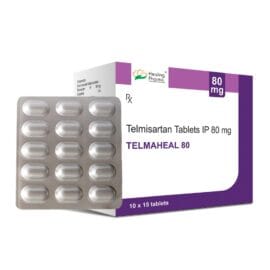
- Telmaheal — Telmisartan (ARB-partner voor diureticum)
- Bekijk alle hoge bloeddruk medicijnen
Gerelateerde alternatieven
Andere producten in Chronische aandoeningen die klanten ook bekijken:
Meer opties in medicatie tegen hoge bloeddruk
Gerangschikt op recente bestelvolumes van MedsBase — wat andere klanten in deze categorie kiezen.

| Sterkte | 100 mg |
|---|---|
| Hoeveelheid | 10 tabletten, 30 tabletten, 60 tabletten, 90 tabletten, 180 tabletten |
Vragen & antwoorden
Gerelateerde producten











Beoordelingen
Er zijn nog geen beoordelingen