








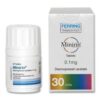
Minirin Neusspray
✅ Reguleert overmatig plassen
✅ Behandelt bedplassen
✅ Behandelt diabetes insipidus
✅ Vermindert nachtelijk plassen
✅ Voorkomt uitdroging
Minirin Neusspray bevat Desmopressin.
✓ Medisch beoordeeld door Morgan Ellis — Apotheekonderzoeker · 8 jaar ervaring · Laatst beoordeeld: mei 2026
⚡ Kort antwoord — Wat is Minirin Neusspray?
Minirin Neusspray is een neusspray van desmopressin (0,1 mg/mL nasaal) — een synthetisch analoog van het natuurlijke antidiuretisch hormoon (vasopressine). Het wordt gebruikt voor centrale diabetes insipidus (de hypofyse-aandoening, NIET de veelvoorkomende diabetes mellitus type 2), primaire nocturne enuresis (bedplassen), en nycturie. Desmopressin vermindert de urineproductie met tot 90% door de waterherabsorptie in de verzamelbuisjes van de nieren te bevorderen. Werking begint na 15–30 minuten; duur: 6–12 uur. Kritieke veiligheidsregel — beperk vochtinname 1 uur voor en 8 uur na elke dosis om gevaarlijke hyponatriëmie (laag natriumgehalte, wat tot aanvallen kan leiden) te voorkomen. Niet gebruiken bij hartfalen, matig tot ernstig nierfalen, hyponatriëmie en SIADH. Desmopressine is GEEN behandeling voor diabetes type 2 of insulineresistentie — de twee aandoeningen hebben alleen het woord “diabetes” gemeen.
📦 Elke bestelling is gedekt door onze Reshipment Assurance-beleid — als uw pakket niet binnen 20 werkdagen arriveert, sturen wij het opnieuw.
Waarom bestellen bij MedsBase
Onze generieke medicijnen zijn afkomstig van WHO-GMP gecertificeerde fabrikanten en worden wereldwijd verzonden in discrete, eenvoudige verpakkingen — geen medicijnnaam op de buitenkant van het pakket. Betalingen met kaart worden verwerkt via een gereguleerde processor (betalingsoverzichten vermelden een gereguleerde kaartbetalingprocessor — nooit “MedsBase” of een medicijnnaam). Crypto en SEPA bankoverschrijvingen worden ook geaccepteerd. Elke bestelling wordt ondersteund door ons Reshipment Assurance Policy.
Wat Is Minirin Neusspray?
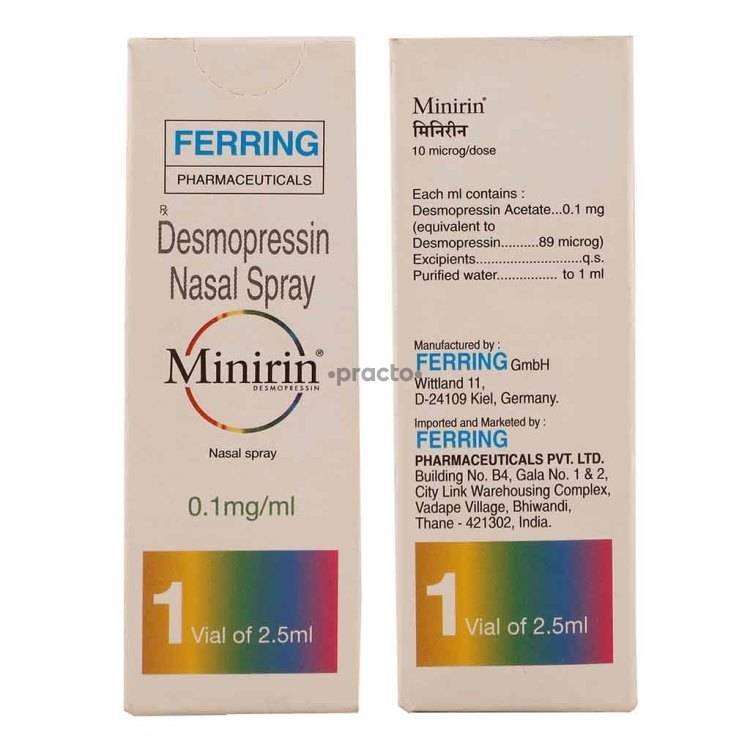
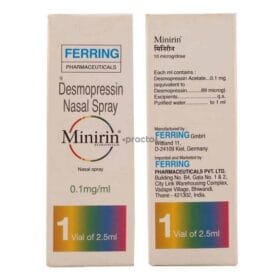
Minirin Neusspray is een intranasale sprayformulering van desmopressine acetaat (0,1 mg/mL intranasaal), geproduceerd door Ferring Pharmaceuticals. Leverbaar in verpakkingen van 1 of 3 flesjes (elk 2,5 mL).
Desmopressine (DDAVP) is een synthetisch analoog van arginine vasopressine (ADH), het natuurlijke antidiuretisch hormoon van het lichaam. Het is op twee manieren aangepast: een deaminering op positie 1 (wat de weerstand tegen enzymatische afbraak verhoogt) en vervanging van L-arginine door D-arginine op positie 8 (wat het vaatvernauwende effect verwijdert). Het resultaat is een medicijn met sterke antidiuretische werking maar minimale effecten op de bloeddruk.
Waar Wordt Minirin Neusspray Voor Gebruikt?
Desmopressine is goedgekeurd voor drie hoofdgroepen van aandoeningen:
- Centrale diabetes insipidus — veroorzaakt door een tekort aan ADH (vaak door een hypofysetumor, operatie of hoofdletsel). Patiënten produceren 3–20 liter verdunde urine per dag en hebben chronisch dorst. Desmopressine vervangt het ontbrekende hormoon.
- Primaire nocturne enuresis (bedplassen) — bij kinderen van 6 jaar en ouder, en bij volwassenen met aanhoudend bedplassen. Vermindert de urineproductie 's nachts.
- Nocturie (volwassenen) — 's nachts wakker worden om te plassen, wanneer vochtbeperking en andere maatregelen niet hebben geholpen.
Off-label: milde hemofilie A en type 1 von Willebrand ziekte (verhoogt factor VIII en von Willebrand factor niveaus kortdurend), bloedingen bij uremie vóór ingrepen.
Is Desmopressin voor Type 2 Diabetes?
Nee. “Diabetes insipidus” en “diabetes mellitus” delen het Latijnse woord diabetes (betekent “doorstromen” — verwijzend naar overmatige urineproductie) maar zijn volledig verschillende aandoeningen:
- Diabetes mellitus (type 1 en type 2) — een probleem met insuline en bloedglucose. Behandeld met metformine, SGLT-2 remmers, GLP-1 agonisten, sulfonylureumderivaten, insuline, etc.
- Diabetes insipidus — een probleem met het antidiuretisch hormoon (ofwel een tekort vanuit de hypofyse, of weerstand van de nieren). Behandeld met desmopressine (centrale vorm) of thiazidediuretica / amiloride (nefrogene vorm).
Als u op zoek bent naar een medicijn om de bloedsuiker te verlagen, zie dan de productpagina's van metformine, SGLT-2 of DPP-4.
Hoe Werkt Minirin Neusspray?
Desmopressin bindt aan V2-receptoren op cellen die de verzamelbuisjes van de nieren bekleden. Dit veroorzaakt de inbouw van aquaporine-2 waterkanalen in het celmembraan, waardoor water uit de urine terug in het bloed wordt opgenomen. De urineproductie neemt af en de urineconcentratie stijgt.
Bij centrale diabetes insipidus vervangt dit het ontbrekende hormoon. Bij primaire nocturne enuresis en nocturie vermindert het de hoeveelheid urine die 's nachts wordt geproduceerd — zodat de blaas niet zo vol raakt dat er lekkage of wakker worden optreedt.
Desmopressin heeft vrijwel geen effect op V1-receptoren, wat betekent dat het geen vasoconstrictie veroorzaakt of de bloeddruk verhoogt (in tegenstelling tot natuurlijk vasopressine).
Dosering en toediening
Centrale diabetes insipidus (volwassenen): 10–20 µg (1–2 sprays) intranasaal een of twee keer per dag. Kinderen: 5–10 µg intranasaal een of twee keer per dag, afgestemd op de reactie.
Primaire nocturne enuresis: 10–20 µg intranasaal voor het slapengaan (alleen waar tabletten niet geschikt zijn). Let op: de FDA heeft in 2007 de goedkeuring van de intranasale formulering voor bedplassen ingetrokken vanwege zorgen over hyponatriëmie; tabletten hebben de voorkeur voor enuresis.
Hemofilie A / ziekte van von Willebrand (off-label bloedingprofylaxe): specialistisch gebruik; dosering op maat.
- Activeer de pomp — spray 4 keer in de lucht als deze nieuw is, of als deze meer dan 24 uur niet is gebruikt, tot er een fijne nevel zichtbaar is.
- Snuit voor het doseren zachtjes uw neus.
- Houd de fles rechtop, breng de tuit in een neusgat aan en spray één keer terwijl u langzaam door de neus inademt.
- Vermijd te hard snuiven — het medicijn moet in de neusholtes blijven en niet naar de keel lopen.
- Vochtbeperking van 1 uur voor tot 8 uur na elke dosis is essentieel.
- Een verstopte of loopneus vermindert de opname; schakel over op tabletten als u verkouden bent of allergieën heeft.
Alle patiënten: controleer het serum natrium, vooral in de eerste 2 weken en na elke dosisaanpassing. Symptomen van een laag natriumgehalte — hoofdpijn, misselijkheid, verwardheid, toevallen — vereisen directe medische aandacht.
Bijwerkingen
Vaak voorkomend:
- Hoofdpijn
- Misselijkheid, buikklachten
- Droge mond (zeldzaam ondanks het antidiuretisch effect)
- Opvliegers
- Neusirritatie, rhinitis, epistaxis (neusspray)
Zeldzaam maar belangrijk — hyponatriëmie en waterintoxicatie:
The belangrijkste ernstige risico van desmopressine is dilutionele hyponatriëmie — laag natriumgehalte veroorzaakt door vochtretentie wanneer vochtinname niet wordt beperkt. Vroege symptomen zijn hoofdpijn, misselijkheid, gewichtstoename en lethargie. Ernstige hyponatriëmie kan aanvallen en coma veroorzaken. Preventie: strikte vochtbeperking rond elke dosis. Het risico is het hoogst bij ouderen, mensen die SSRI's, NSAID's of thiaziden gebruiken, en tijdens acute ziekte.
Andere zeldzame: overgevoeligheid, conjunctivale ontsteking, kleine verhogingen van de bloeddruk.
Geneesmiddelinteracties
- Geneesmiddelen die vochtretentie of SIADH-achtige effecten veroorzaken — SSRI's, tricyclische antidepressiva, carbamazepine, oxcarbazepine, chloorpromazine, NSAID's. Verhogen het risico op hyponatriëmie; zorgvuldige natriummonitoring.
- Lisdiuretica (furosemide) — kunnen snelle natriumverschuivingen veroorzaken; gebruik met voorzichtigheid.
- Thiazidediuretica — verhogen het risico op hyponatriëmie.
- Loperamide — kan de orale desmopressinespiegels aanzienlijk verhogen; vermijd combinatie.
- Glucocorticoïden — verminderen het effect van desmopressine.
Wie mag Minirin Neusspray niet gebruiken?
- Huidige of voorgeschiedenis van hyponatriëmie
- SIADH (syndroom van inadequate ADH-secretie)
- Matige tot ernstige nierinsufficiëntie (creatinineklaring < 50 ml/min)
- Hartfalen of andere aandoeningen die behandeling met diuretica vereisen
- Polydipsie (gewoonlijk overmatige dorst/drinken)
- Bekende overgevoeligheid voor desmopressine
- Neusspray specifiek: chronische rhinitis, beschadigd neusslijmvlies, onbetrouwbare absorptie
- Wees voorzichtig bij oudere volwassenen (verhoogd risico op hyponatriëmie); sommige regelgevers raden desmopressine af voor nocturie bij volwassenen > 65
Opslag
Bewaar Minirin Neusspray onder 25°C op een droge plaats (tabletten) of bij 2–8°C tot eerste gebruik, daarna onder 25°C na opening (neusspray). Buiten bereik van kinderen houden. Controleer het etiket voor de houdbaarheid en gebruiksduur na opening.
Veelgestelde vragen
Is desmopressine hetzelfde als een medicijn voor diabetes type 2?
Nee. Desmopressine behandelt diabetes insipidus (een hormoon-/waterbalansprobleem) en bedplassen/nocturie. Het verlaagt de bloedsuikerspiegel niet en wordt niet gebruikt voor diabetes type 2. De twee aandoeningen hebben alleen het woord “diabetes” gemeen.
Hoeveel water mag ik drinken tijdens het gebruik van Minirin Neusspray?
Beperk vochtinname van 1 uur voor tot 8 uur na elke dosis. De exacte hoeveelheid hangt af van lichaamsgrootte en klimaat, maar de meeste patiënten wordt geadviseerd alleen te drinken wanneer ze dorst hebben tijdens dit tijdsbestek en eerder te stoppen met drinken als de urineproductie niet toeneemt. Forceer nooit vochtinname tijdens desmopressinegebruik — dit is de meest voorkomende oorzaak van hyponatriëmie.
Wat moet ik doen als ik hoofdpijn, misselijkheid of verwardheid krijg door Minirin Neusspray?
Dit kunnen vroege tekenen van hyponatriëmie zijn. Stop het medicijn, stop met drinken en zoek medische hulp. Een bloednatriumtest zal dit bevestigen. Ernstige hyponatriëmie kan epileptische aanvallen veroorzaken en is een medisch noodgeval.
Kan ik Minirin Neusspray gebruiken voor bedplassen?
Ja, bij kinderen van 6 jaar en ouder en bij volwassenen met aanhoudende primaire nocturne enuresis is desmopressine een standaardbehandeling — tabletten hebben de voorkeur boven neusspray voor deze indicatie. Gebruikelijke dosis: 0,2 mg voor het slapengaan (verhoog indien nodig tot 0,4 mg). Strikte vochtbeperking in de avond is essentieel.
Kunnen ouderen Minirin Neusspray gebruiken?
Met voorzichtigheid. Volwassenen > 65 jaar hebben een aanzienlijk hoger risico op hyponatriëmie bij desmopressine, en sommige regelgevende instanties (waaronder de UK MHRA) raden het gebruik voor nocturie in deze leeftijdsgroep af. Indien gebruikt, begin met de laagste dosis en controleer het natriumgehalte nauwlettend.
Waar kan ik Minirin Nasal Spray online kopen?
U kunt Minirin Nasal Spray (0,1 mg/mL intranasaal) bestellen bij MedsBase in verpakkingen van 1 of 3 flesjes (elk 2,5 mL). Wij verzenden wereldwijd, met discrete verpakking en echte voorraad van Ferring Pharmaceuticals.
Gerelateerde medicatie
Gerelateerde alternatieven
Andere producten in Chronische aandoeningen die klanten ook bekijken:
Meer opties in Diabetes
Gerangschikt op recente bestelvolumes van MedsBase — wat andere klanten in deze categorie kiezen.
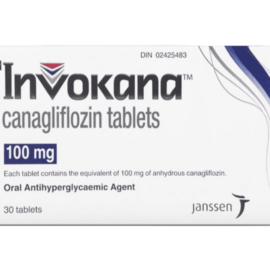
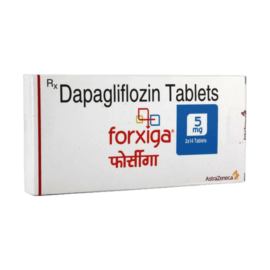

| Sterkte | 0,1mg/ml |
|---|---|
| Hoeveelheid | 1 Fles/je, 2 Fles/jes, 3 Fles/jes, 6 Fles/jes |
 Minirin Neusspray
Vragen & antwoorden
Minirin Neusspray
Gerelateerde producten







Beoordelingen
Er zijn nog geen beoordelingen