








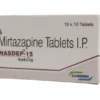
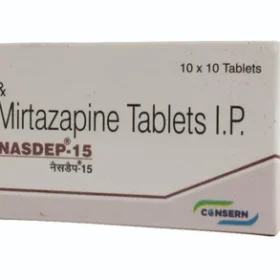
Nasdep



✅ Behandelt depressie
✅ Verbeterd de stemming
✅ Verlicht angst
✅ Verbetering van de slaapkwaliteit
✅ Reguleert de eetlust
✓ Medisch beoordeeld door Morgan Ellis — Apotheekonderzoeker · 8 jaar ervaring · Laatst beoordeeld: mei 2026
⚡ Snel antwoord — Wat is Nasdep?
Nasdep bevat mirtazapine 30 mg van een WHO-GMP gecertificeerde fabrikant (Lupin Pharmaceuticals) — een tetracyclisch NaSSA antidepressivum met een uniek werkingsmechanisme: alfa-2 adrenerge auto- en heteroreceptorantagonisme verhoogt zowel noradrenaline als serotonineafgifte, terwijl 5-HT2/5-HT3 antagonisme de geactiveerde serotonine wegleidt van de receptoren die SSRI-bijwerkingen veroorzaken. Standaarddosering: 15–45 mg voor het slapengaan (start met 15 mg, streef naar 30–45 mg). Sterk aanbevolen wanneer MDD gepaard gaat met slapeloosheid, verminderde eetlust, gewichtsverlies of therapieresistente geagiteerde depressie. Paradoxaal sedatiepatroon: meer sederend bij lage doses (15 mg) dan bij volledige dosering (45 mg) omdat hogere doses meer noradrenerge activiteit opwekken. Aanzienlijke gewichtstoename — de meeste van de antidepressiva, vergelijkbaar met paroxetine.
📦 Elke bestelling is gedekt door onze Reshipment Assurance-beleid — als uw pakket niet binnen 20 werkdagen arriveert, sturen wij het opnieuw.
Waarom bestellen bij MedsBase
Onze generieke medicijnen zijn afkomstig van WHO-GMP gecertificeerde fabrikanten en worden wereldwijd verzonden in discrete, eenvoudige verpakkingen — geen medicijnnaam op de buitenkant van het pakket. Betalingen met kaart worden verwerkt via een gereguleerde processor (betalingsoverzichten vermelden een gereguleerde kaartbetalingprocessor — nooit “MedsBase” of een medicijnnaam). Crypto en SEPA bankoverschrijvingen worden ook geaccepteerd. Elke bestelling wordt ondersteund door ons Reshipment Assurance Policy.
Wat is Nasdep?
Nasdep is een orale tablet van mirtazapine 30 mg geproduceerd door Lupin Pharmaceuticals. Mirtazapine (US merknaam Remeron) is een tetracyclisch noradrenerge en specifieke serotonerge antidepressivum (NaSSA) op de markt gebracht door Organon in 1994. Het werkingsmechanisme verschilt van andere antidepressiva in routinematig gebruik: in plaats van heropname te blokkeren, antagoniseert het presynaptische alfa-2-adrenerge receptoren op noradrenerge neuronen (wat noradrenaline-afgifte verhoogt) en op serotonerge zenuwuiteinden (heteroreceptor-effect, wat serotonine-afgifte verhoogt), terwijl het tegelijkertijd 5-HT2A, 5-HT2C, en 5-HT3 receptoren antagoniseert. De 5-HT2 en 5-HT3 blokkade leidt het verhoogde serotonine weg van de receptoren die verantwoordelijk zijn voor SSRI-bijwerkingen (seksuele disfunctie, angst, maag-darmklachten).
Het is een sterk H1 antihistaminicum, wat sedatie en eetluststimulatie veroorzaakt.
Goedgekeurde indicaties
- Depressieve stoornis (MDD) — vooral wanneer slapeloosheid, weinig eetlust, gewichtsverlies of agitatie opvallend zijn
- Off-label: angststoornissen (GAD, sociale angst, PTSS), chronische slapeloosheid (lage dosis 7,5–15 mg), therapieresistente jeuk, chronische misselijkheid, anorexia/cachexie, opvliegers
- Therapieresistente depressie: in combinatie met venlafaxine (“California rocket fuel”) onder specialistische begeleiding
Dosering
| Indicatie | Start | Streefdosering | Maximum | Opmerkingen |
|---|---|---|---|---|
| MDD | 15 mg voor het slapengaan × 1 week | 30–45 mg voor het slapengaan | 45 mg/dag | Hogere doseringen activeren meer noradrenerge activiteit — paradoxaal genoeg minder sederend |
| Off-label slapeloosheid | 7,5–15 mg voor het slapengaan | 7,5–15 mg voor het slapengaan | — | Beperk tot kortdurend gebruik; gewichtstoename is reëel zelfs bij lage dosis |
| Ouderen | 7,5–15 mg voor het slapengaan | 15–30 mg voor het slapengaan | 30 mg/dag | Verminder de startdosis; meer orthostase en sedatie |
| Lever-/nierfunctiestoornis | 15 mg voor het slapengaan | Tot 30 mg/dag | — | Verminderde klaring — langzamere op-titratie |
Bijwerkingen
Bijwerkingsprofiel per werkingsmechanisme
| Werkingsmechanisme | Effecten | Opmerkingen |
|---|---|---|
| H1 blokkade | Sedatie, gewichtstoename (eetluststimulatie) | Gewichtstoename is aanzienlijk — vaak 4–7 kg in 6 maanden. Sedatie neemt paradoxaal genoeg af bij hogere doseringen |
| Alpha-1-blokkade | Orthostatische hypotensie, duizeligheid | Vooral bij ouderen — controleer liggende / staande bloeddruk |
| Anticholinerg (mild) | Droge mond | Minder dan TCA's |
| 5-HT3 antagonisme | Anti-emetisch; verminderde maag-darmklachten | Waarom mirtazapine veel minder misselijkheid veroorzaakt dan SSRI's / SNRI's |
| Anders | Verhoogd cholesterol, triglyceriden, glucose | Metabole monitoring nuttig na 6–12 maanden |
| Zeldzaam | Agranulocytose (1/1000) | Stop en controleer het volledige bloedbeeld bij aanhoudende koorts, keelpijn of slijmvlieszweren in de eerste 6 weken |
| Zeldzaam | Hyponatriëmie (SIADH) | Oudere volwassenen lopen het grootste risico |
| Zeldzaam | Rusteloze benen, levendige dromen | Patiëntenvoorlichting |
Het mirtazapine-sederingsparadox
Veel patiënten zijn verward dat mirtazapine 15 mg meer sederend is dan mirtazapine 30–45 mg. Dit is reëel en farmacologisch goed beschreven: bij lage doses domineert de H1 blokkade (sederend). Bij hogere doses is de noradrenerge boost door alpha-2-antagonisme meer activerend, wat de antihistaminerge sedering gedeeltelijk compenseert. Dus patiënten die beginnen met 15 mg en zich te suf voelen, kunnen soms geholpen worden door te verhogen naar 30 mg, niet te verlagen. Dit is contra-intuïtief en het waard om uit te leggen bij het voorschrijven.
Geneesmiddelinteracties
Absolute contra-indicatie: MAO-remmers (14 dagen wash-outperiode). Het risico op serotoninesyndroom is lager dan bij SSRI's omdat mirtazapine de synaptische serotonine niet verhoogt door remming van heropname, maar de waarschuwing blijft van kracht.
Additieve CNS-depressie: alcohol, benzodiazepinen, opioïden, sederende antihistaminica, slaapmedicatie.
CYP2D6 / CYP3A4-substraat: de spiegels stijgen bij sterke remmers; combinatie met paroxetine, fluoxetine, ketoconazol, ritonavir vereist voorzichtigheid.
Veelgestelde vragen
Hoe lang duurt het voordat Nasdep werkt?
Slaap en eetlust verbeteren vaak binnen 1–2 weken. Het volledige effect op de stemming bij MDD is meestal zichtbaar na 4–6 weken. Veel voorschrijvers overwegen mirtazapine voor patiënten met slapeloosheid en gewichtsverlies omdat de gunstige bijwerkingen voor hen werken in plaats van tegen hen.
Waarom veroorzaakt Nasdep gewichtstoename?
Mirtazapine is een sterk H1 antihistaminicum en 5-HT2C antagonist — beide stimuleren de eetlust. Gewichtstoename is dosisonafhankelijk en vaak aanzienlijk (4–7 kg in 6 maanden). Voor patiënten met depressiegerelateerd gewichtsverlies is dit therapeutisch; voor anderen is het de belangrijkste reden om over te stappen.
Kan ik Nasdep gebruiken voor slaap zonder depressie?
Het wordt soms in lage dosering (7,5–15 mg) gebruikt voor chronische slapeloosheid bij patiënten bij wie andere slaapmedicatie niet heeft gewerkt. Het is geen eerste keuze omdat de gewichtstoename en sedatie op de lange termijn aanhouden.
Waarom treedt het dosisparadox op?
Bij 15 mg overheerst de H1 blokkade (verdovend). Bij 30–45 mg is het noradrenerge effect door alpha-2-antagonisme meer activerend — wat de antihistaminerge sedatie gedeeltelijk compenseert. Patiënten kunnen soms de slaperigheid bij 15 mg oplossen door naar 30 mg te gaan.
Veroorzaakt Nasdep seksuele bijwerkingen?
Veel minder dan SSRIs — de 5-HT2 antagonisme leidt serotonine weg van de receptoren die verantwoordelijk zijn voor SSRI-gerelateerde seksuele disfunctie. Mirtazapine wordt soms toegevoegd aan of vervangen door SSRIs specifiek om seksuele bijwerkingen te verlichten.
Kan Nasdep gecombineerd worden met venlafaxine?
Ja — de combinatie venlafaxine + mirtazapine wordt informeel “California rocket fuel” genoemd en is een van de meest onderbouwde strategieën voor behandeling-resistente depressie. Dit gebeurt onder specialistische begeleiding.
Is Nasdep veilig tijdens de zwangerschap?
Beperkte veiligheidsgegevens — geen eerste keuze. SSRIs (voorkeur voor sertraline) hebben meer registergegevens. Bespreek dit individueel met de voorschrijver.
Wat gebeurt er als ik een dosis mis?
Neem het in zodra u het zich herinnert, tenzij het bijna tijd is voor de volgende dosis — verdubbel nooit de dosis. Mirtazapine heeft een lange halfwaardetijd (20–40 uur), dus een enkele vergeten dosis is zelden een probleem.
Hoe moet Nasdep worden afgebouwd?
Mirtazapine heeft een mildere onttrekkingssyndroom dan SSRIs/SNRIs. Bouw af met 15 mg elke 2–4 weken. Slaap- en eetlustveranderingen kunnen terugkeren — reken hierop.
Hoe moet Nasdep worden bewaard?
Bewaar bij 15–30 °C in de originele blisterverpakking, weg van vocht en zonlicht. Buiten bereik van kinderen houden.
Gerelateerde alternatieven
Andere producten in Chronische aandoeningen die klanten ook bekijken:
Meer opties in behandeling van situationele angst
Gerangschikt op recente bestelvolumes van MedsBase — wat andere klanten in deze categorie kiezen.


| Sterkte | 15 mg, 30 mg |
|---|---|
| Hoeveelheid | 30 Tabletten, 60 Tabletten, 90 Tabletten, 180 Tabletten |
 Nasdep
Vragen & antwoorden
Nasdep
Gerelateerde producten







Beoordelingen
Er zijn nog geen beoordelingen