







Sibelium
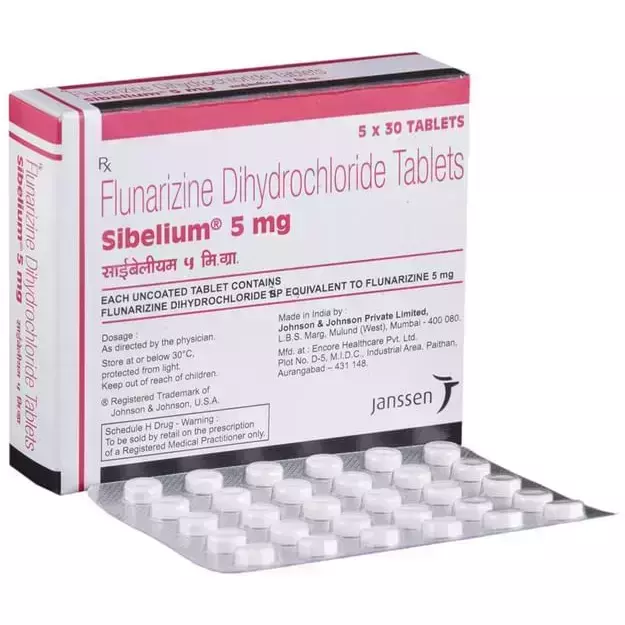
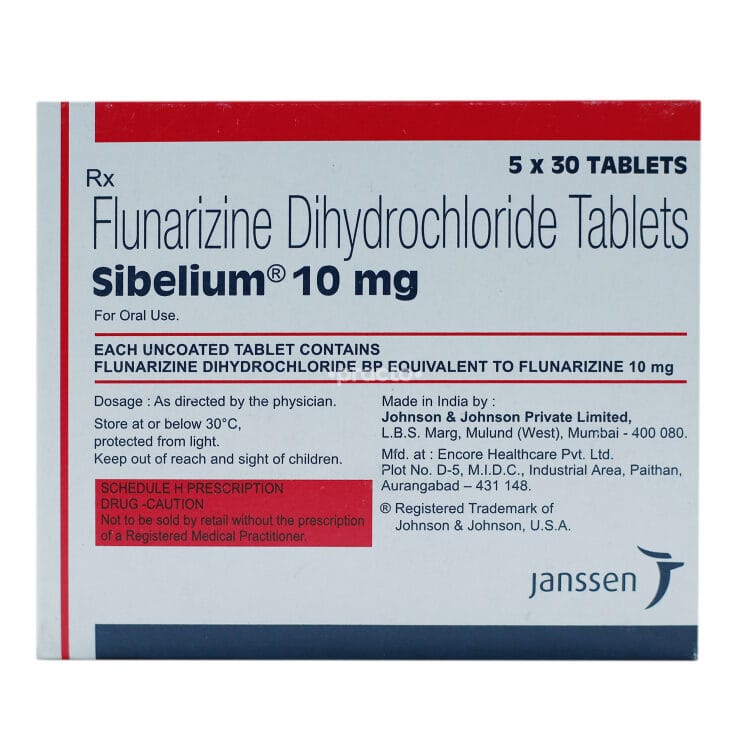

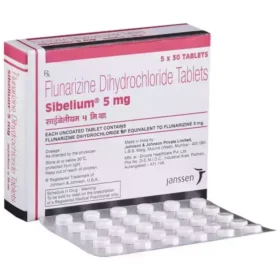
Sibelium is flunarizine 5 mg / 10 mg orale tabletten van Janssen — een selectieve calciumkanaalblokker met antihistaminische en anti-dopaminerge werking. Eerstelijns profylaxe voor migraine volgens Europese, Aziatische en Latijns-Amerikaanse richtlijnen (niet goedgekeurd door de FDA in de VS). Standaarddosis 10 mg voor het slapengaan voor volwassenen onder de 65; 5 mg voor ouderen of kinderen. Bijzonder effectief voor migraine bij kinderen, vestibulaire migraine en hemiplegische migraine. Maximale continue kuur 6 maanden.
✓ Medisch beoordeeld door Morgan Ellis — Apotheekonderzoeker · 8 jaar ervaring · Laatst beoordeeld: mei 2026
⚡ Kort antwoord — Wat is Sibelium?
Sibelium bevat flunarizine 5 mg / 10 mg tabletten van Janssen Pharmaceuticals — een selectieve calciumkanaalblokker met antihistaminische en anti-dopaminerge activiteit, gebruikt als een eerste keus profylaxe voor episodische en chronische migraine in Europa, Azië en Zuid-Amerika (niet door de FDA goedgekeurd in de VS). Standaarddosering: 10 mg 's nachts voor volwassenen, 5 mg 's nachts voor patiënten 65 jaar. Volledig effect na 6-8 weken. Vermindert de migrainefrequentie met 50-70% bij responders — een van de meest effectieve orale migraineprofylactica in head-to-head trials, alleen geëvenaard door topiramaat. Bijzonder nuttig voor: migraine bij kinderen en adolescenten (≥5 jaar), vertigineuze/vestibulaire migraine, hemiplegische migraine en cyclisch braakensyndroom. Belangrijkste bijwerkingen: gewichtstoename (bij ~15%), sedatie en — bij langdurig gebruik — geneesmiddelgeïnduceerde parkinsonisme en depressie (dopaminerge blokkade). Aanbevolen maximale continue gebruiksduur 6 maanden, met een geplande wash-outperiode.
Wat is Sibelium?
Sibelium is een orale tablet van flunarizine 5 mg / 10 mg van Janssen Pharmaceuticals, geleverd in verpakkingen van 30-180 tabletten. Flunarizine is een selectieve calciumkanaalblokker van het piperazine-derivaat met aanvullende antihistaminische (H1) en zwakke anti-dopaminerge (D2) activiteit. Het wordt sinds de jaren 80 veel gebruikt in Europa als Sibelium (origineel Janssen-merk) voor migraineprofylaxe en vestibulaire aandoeningen. Niet door de FDA goedgekeurd in de VS — vandaar dat het onbekend is bij veel in de VS opgeleide artsen, ondanks dat het eerste keus is in Europese, Aziatische en Latijns-Amerikaanse richtlijnen voor hoofdpijn.
Hoe Flunarizine Migraine Voorkomt
De effectiviteit van flunarizine bij migraine wordt toegeschreven aan vier werkingsmechanismen:
- Selectieve calciumkanaalblokkade — vermindert intracellulaire calciumoverbelasting in kwetsbare neuronen; remt corticale spreidingsdepressie (het pathofysiologische substraat van migraine-aura)
- Vasomotorische stabilisatie — vermindert zowel vasodilatatie als vasospasme van craniale arteriën
- Antihistaminerge werking (H1) — verklaart de sederende en antivertigo-effecten
- Zwakke D2 dopaminereceptorantagonisme — verklaart zowel de effectiviteit bij migraine (waarbij dopamineregulatie verstoord is) als de langetermijnbijwerkingen van parkinsonisme/depressie
Goedgekeurde en evidence-based toepassingen
- Profylaxe van migraine bij volwassenen — vermindert het aantal migraine dagen per maand met 50-70% (verschillende gerandomiseerde onderzoeken; meta-analyse NNT ~3)
- Profylaxe van migraine bij kinderen (kinderen 5+, adolescenten) — bijzonder effectief; vaak de eerstelijns preventieve behandeling in de Europese kinderneurologie
- Profylaxe van hemiplegische migraine (familiair en sporadisch)
- Vestibulaire migraine — nuttig voor zowel migraine- als duizeligheidscomponenten
- Ziekte van Ménière — vermindering van duizeligheid
- Cyclisch braakensyndroom bij kinderen
- Perifere vestibulaire vertigo (niet-migraine gerelateerd)
Sibelium Dosering
- Volwassenen (40 kg): 10 mg oraal voor het slapengaan
- Volwassenen >65 jaar of <40 kg lichaamsgewicht: 5 mg voor het slapengaan
- Kinderen 5+ (off-label in sommige landen): 5 mg voor het slapengaan
- Neem 's avonds in — flunarizine heeft een sederende werking, wat helpt bij het inslapen en overdag slaperigheid vermindert
- In te nemen met of zonder voedsel
- Evalueer het effect na 6-8 weken
- Maximale continue kuur: 6 maanden, gevolgd door een geplande washoutperiode van 1-3 maanden. Herstart als de migraine terugkeert.
Waarom de limiet van 6 maanden? De zwakke dopamine-receptorantagonisme van flunarizine is cumulatief. Bij meer dan 6 maanden continu gebruik neemt het risico op door geneesmiddelen geïnduceerde extrapiramidale bijwerkingen (parkinsonische tremor, bradykinesie, akathisie) toe, vooral bij oudere patiënten. Geplande washoutperiodes van 1-3 maanden zorgen voor herstel van de dopaminerge receptoren.
Bijwerkingen
Zeer vaak (>10%):
- Gewichtstoename (~15% van de gebruikers; tot 5-10 kg over 6 maanden; mechanisme: verhoogde eetlust via H1 blokkade)
- Slaperigheid, sedatie (neem 's avonds in; past zich deels aan over 2-4 weken)
- Toegenomen eetlust
Vaak (1-10%):
- Milde depressie, somberheid (dopaminerg effect; komt vaker voor bij patiënten met een voorgeschiedenis van depressie)
- Lethargie, asthenie
- Maagklachten, droge mond
- Galactorroe, hyperprolactinemie (dopaminerg effect)
- Menstruatieonregelmatigheden bij vrouwen
Belangrijk bij langdurig gebruik (maanden tot jaren continu gebruik):
- Geneesmiddelgeïnduceerd parkinsonisme — tremor, rigiditeit, bradykinesie. Meestal omkeerbaar binnen enkele maanden na stoppen. Het risico neemt sterk toe bij continu gebruik >6 maanden, vooral bij oudere patiënten. Dit is waarom de limiet van 6 maanden bestaat.
- Geneesmiddel-geïnduceerde depressie — kan ernstig zijn; werkingsmechanisme is dopaminerg. Komt het meest voor bij patiënten met een eerdere depressiegeschiedenis.
- Tardieve dyskinesie — zeldzaam; onvrijwillige bewegingen van gezicht, tong of ledematen; kan onomkeerbaar zijn zelfs na stoppen. Ongebruikelijk bij gebruik van 6 maanden.
Contra-indicaties
- Huidige of voorgeschiedenis van depressie
- Ziekte van Parkinson of andere extrapiramidale aandoening
- Overgevoeligheid voor flunarizine of piperazines
- Zwangerschap en borstvoeding (onvoldoende veiligheidsgegevens; dopaminerge medicatie wordt niet aanbevolen)
- Ernstige leverfunctiestoornis
Geneesmiddelinteracties
- Alcohol, benzodiazepines, opioïden, sederende antihistaminica — additionele CNS-depressie
- Antipsychotica — additieve dopamineblokkade; vermijd combinatie (risico op extrapiramidale bijwerkingen)
- Metoclopramide, prochlorperazine — dopaminergisch; vermijd langdurig gelijktijdig gebruik
- Bètablokkers — over het algemeen goed verdragen; kan gecombineerd worden met propranolol voor migrainepatiënten die gecombineerde preventie nodig hebben
Opslag
Bewaren onder 25°C. Buiten bereik van kinderen houden.
Veelgestelde vragen
Hoe lang duurt het voordat Sibelium begint te werken?
6-8 weken op de doeldosering. Een vermindering van 50-70% in maandelijkse migrainedagen is typisch bij responders. Als er na 8 weken op 10 mg geen reactie is, schakel dan over op een ander middel (topiramate, propranolol, amitriptyline).
Waarom slechts 6 maanden continu gebruik?
Flunarizine blokkeert zwak de dopaminereceptoren. Bij continu gebruik langer dan 6 maanden neemt het risico op door geneesmiddelen geïnduceerd parkinsonisme (tremor, rigiditeit, traagheid) en depressie toe. Een geplande wash-out van 1-3 maanden elke 6 maanden zorgt voor dopaminerge herstel. Als de migraine na een wash-out onder controle blijft, hoeft u mogelijk niet opnieuw te beginnen; als ze terugkeren, start dan opnieuw met een nieuwe kuur van 6 maanden.
Zorgt Sibelium voor gewichtstoename?
Ja, bij ongeveer 15% van de gebruikers — tot 5-10 kg over 6 maanden. Mechanisme: antihistaminische eetlusttoename. Als gewichtstoename zorgwekkend is, topiramate (veroorzaakt gewichtsverlies) of propranolol (gewicht-neutraal) zijn alternatieven.
Kan ik Sibelium gebruiken tijdens de zwangerschap?
Nee — onvoldoende veiligheidsgegevens en dopaminerge medicijnen worden over het algemeen vermeden tijdens de zwangerschap. Voor zwangere migrainepatiënten is, propranolol de voorkeursbehandeling voor preventie; amitriptyline is een tweede optie.
Is Sibelium veilig voor kinderen?
Ja — flunarizine is een van de voorkeursmedicijnen voor migrainepreventie in de Europese kinderneurologie (leeftijd 5+), meestal 5 mg voor het slapengaan. Pediatrische onderzoeken hebben een vergelijkbare werkzaamheid als bij volwassenen aangetoond. Dezelfde limiet van 6 maanden geldt.
Kan Sibelium duizeligheid behandelen?
Ja — flunarizine is goedgekeurd voor vestibulaire duizeligheid (ziekte van Ménière, perifere duizeligheid, vestibulaire migraine). De antihistaminische en calciumkanaalblokkerende werking vermindert de vestibulaire prikkelbaarheid. De dosering is hetzelfde als voor migraine.
Waarom is Sibelium niet beschikbaar in de VS?
Janssen heeft nooit een FDA-goedkeuring aangevraagd. Het is breed beschikbaar in Europa, Azië, Latijns-Amerika en Canada als eerstelijnsbehandeling voor migrainepreventie. Amerikaanse patiënten hebben soms toegang via internationale apotheken.
Waar kan ik Sibelium online kopen?
U kunt Sibelium (flunarizine 5 mg / 10 mg, verpakkingen van 30-180 tabletten) kopen bij MedsBase met discrete verpakking en wereldwijde verzending.
Gerelateerde migrainebehandelingen op MedsBase
- Zolmist Neusspray — Zolmitriptan 5 mg (snelle werking)
- Zolitas ODS — Zolmitriptan 2,5/5 mg orodispergeerbaar
- Maxtan — Rizatriptan 5/10 mg
- Rizatop — Rizatriptan 10 mg
- Rizact — Rizatriptan (Cipla)
- Sumitop — Sumatriptan 25/50/100 mg
- Bekijk alle anti-migrainebehandelingen
Waarom bestellen bij MedsBase
📦 Elke bestelling is gedekt door onze Reshipment Assurance-beleid — als uw pakket niet binnen 20 werkdagen arriveert, sturen wij het opnieuw.
Gerelateerde alternatieven
Andere producten in Chronische aandoeningen die klanten ook bekijken:
Meer opties in migrainebehandeling
Gerangschikt op recente bestelvolumes van MedsBase — wat andere klanten in deze categorie kiezen.



| Sterkte | 5 mg, 10 mg |
|---|---|
| Hoeveelheid | 30 Tabletten, 60 Tabletten, 90 Tabletten, 180 Tabletten |
 Sibelium
Vragen & antwoorden
Sibelium
Gerelateerde producten














Beoordelingen
Er zijn nog geen beoordelingen