







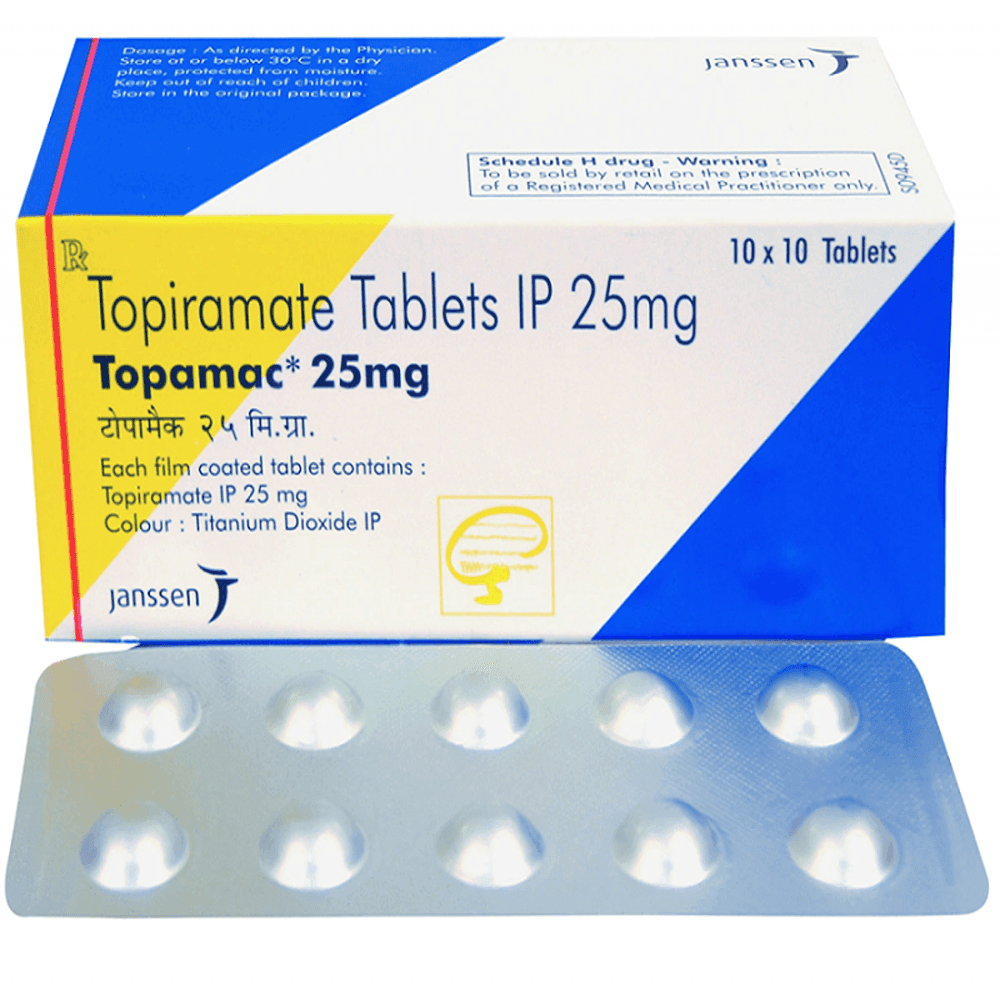
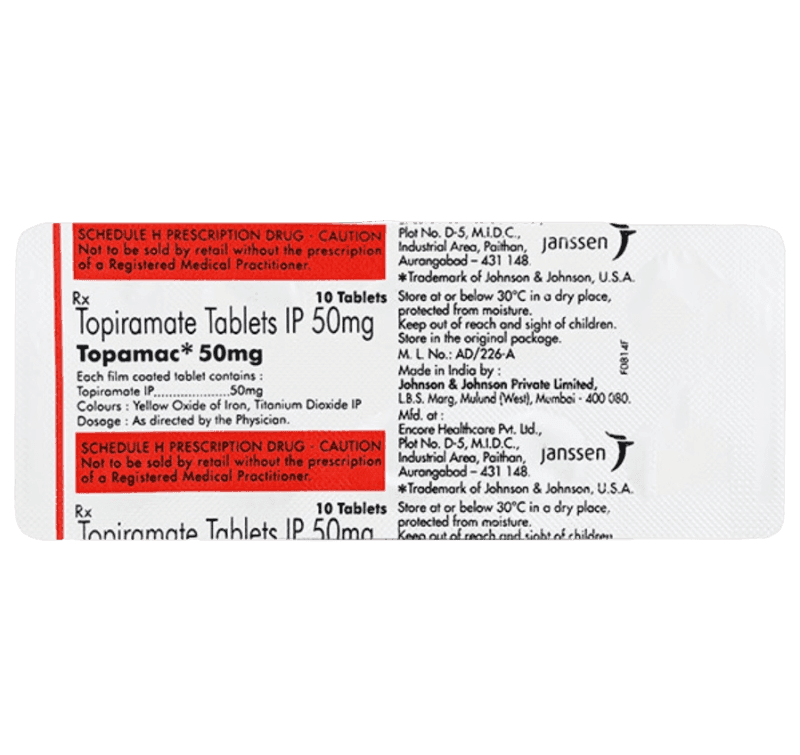
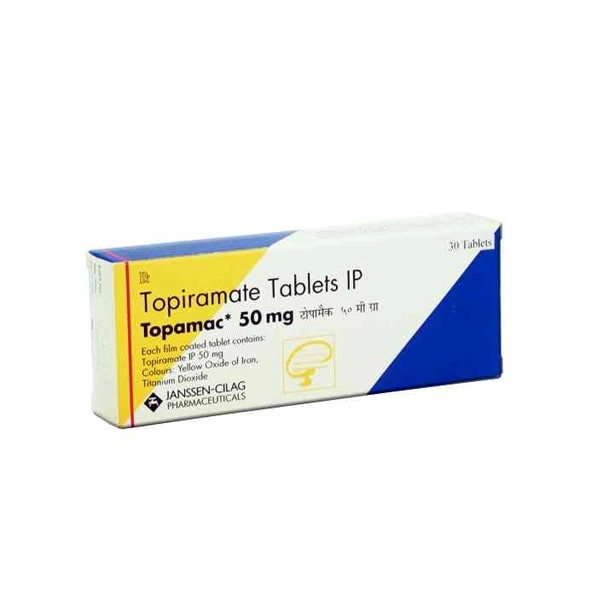
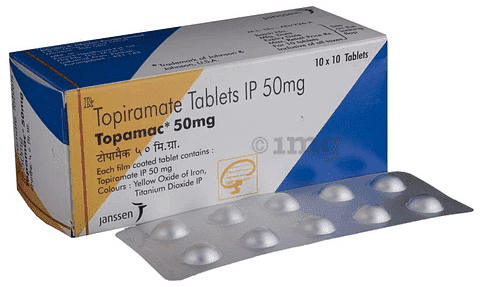
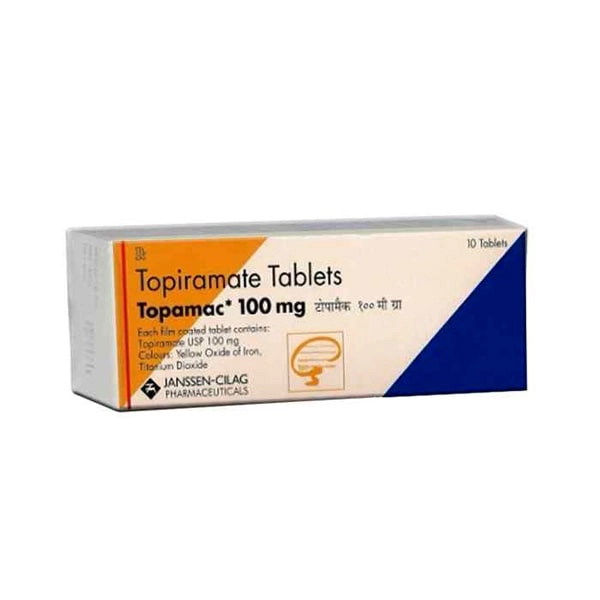
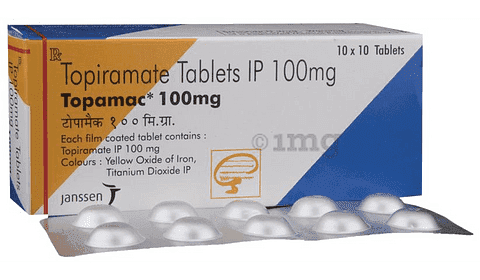
Topamac
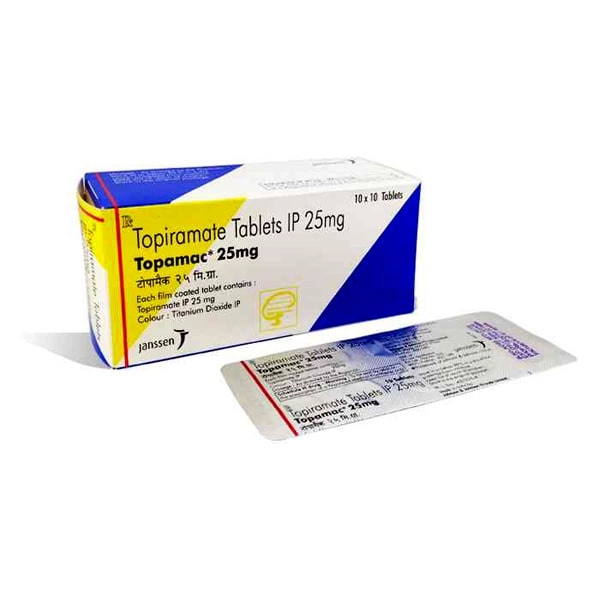
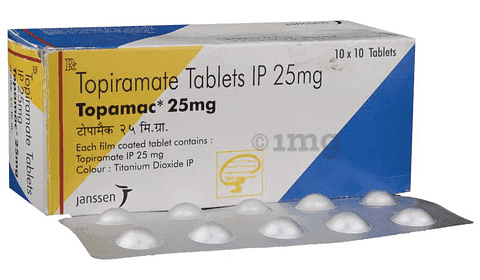
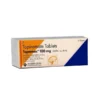
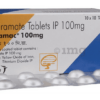
✅ Beheerst epileptische aandoeningen
✅ Voorkomt migrainehoofdpijn
✅ Beheert het syndroom van Lennox-Gastaut
✅ Vermindert zenuwpijn
✅ Verbetert cognitief functioneren
Topamac bevat Topiramate
✓ Medisch beoordeeld door Morgan Ellis — Apotheekonderzoeker · 8 jaar ervaring · Laatst beoordeeld: mei 2026
⚡ Snelle beantwoording — Topamac — topiramate 25 mg / 50 mg, multi-indicatie anticonvulsivum
Topamac is topiramate 25 mg / 50 mg, een anticonvulsivum goedgekeurd voor epilepsie en migraineprofylaxe en gebruikt off-label voor alcoholgebruiksstoornis, gewichtsbeheersing en eetbuistoornis. Langzame titratie (25 mg wekelijkse verhogingen) gedurende 8 weken beperkt cognitieve bijwerkingen (“topa-dopa”). Nierdosis aangepast. Zwangerschapsrisico — gespleten gehemelte. Let op nierstenen, glaucoom, metabole acidose.
📦 Elke bestelling is gedekt door onze Reshipment Assurance-beleid — als uw pakket niet binnen 20 werkdagen arriveert, sturen wij het opnieuw.
Waarom bestellen bij MedsBase
Onze generieke medicijnen zijn afkomstig van WHO-GMP gecertificeerde fabrikanten en worden wereldwijd verzonden in discrete, eenvoudige verpakkingen — geen medicijnnaam op de buitenkant van het pakket. Betalingen met kaart worden verwerkt via een gereguleerde processor (betalingsoverzichten vermelden een gereguleerde kaartbetalingprocessor — nooit “MedsBase” of een medicijnnaam). Crypto en SEPA bankoverschrijvingen worden ook geaccepteerd. Elke bestelling wordt ondersteund door ons Reshipment Assurance Policy.
Wat is Topamac?
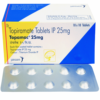
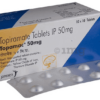
Topamac is een anticonvulsivum met meerdere indicaties, bevat topiramate 25 mg / 50 mg (filmomhulde tabletten), geleverd door Cipla. Het is geregistreerd voor volwassenen en kinderen bij partiële aanvallen en gegeneraliseerde tonisch-clonische aanvallen (monotherapie of als aanvulling) en voor migraineprofylaxe. Off-label gebruik wordt ondersteund door bewijs bij alcoholverslaving, eetbuistoornis, idiopathische intracraniële hypertensie, essentiële tremor en bipolaire stoornis — hoewel het sterkste off-label bewijs voor AUD is (Johnson 2007).
Hoe topiramate werkt
Topiramate heeft meerdere, complementaire werkingen in het CZS:
- Natriumkanaalblokkade — vermindert neuronale prikkelbaarheid (anticonvulsief)
- GABA-A-potentiëring op een niet-benzodiazepineplaats — verhoogt de remmende tonus
- Glutamaat AMPA/kainaatreceptorantagonisme — vermindert prikkelende neurotransmissie; wordt beschouwd als het belangrijkste werkingsmechanisme voor het AUD-effect
- Carbonic anhydraseremming — verklaart het bijwerkingenprofiel van metabole acidose, nierstenen en gewichtsverlies
- Modulatie van spanningsafhankelijke calciumkanalen
De combinatie van glutamaat AMPA-antagonisme en GABA-A-potentiëring zou het dopaminerge beloningscircuit dempen dat alcoholhonger en eetbuien aanstuurt — hetzelfde pad dat naltrexon via opioïdereceptoren beïnvloedt.
Hoe Topamac wordt gebruikt
Langzame titratie is essentieel — snelle escalatie veroorzaakt onacceptabele cognitieve bijwerkingen (het “topa-dopa”-fenomeen: woordvindingsproblemen, mentale vertraging, verwardheid). Standaard titratie van 8 weken:
| Week | Ochtenddosis | Avonddosis | Totaal per dag |
|---|---|---|---|
| 1 | — | 25 mg | 25 mg |
| 2 | 25 mg | 25 mg | 50 mg |
| 3 | 25 mg | 50 mg | 75 mg |
| 4 | 50 mg | 50 mg | 100 mg |
| 5–8 | verhoog met 25 mg/week | verhoog met 25 mg/week | tot maximaal 200 mg/dag |
| Onderhoudsdosis | variabel | variabel | variabel per indicatie (zie hieronder) |
| Indicatie | Doelonderhoudsdosis | Opmerkingen |
|---|---|---|
| Migraineprofylaxe | 50–100 mg/dag in twee verdeelde doses | Vaak effectief bij 100 mg; hogere doseringen verhogen de kans op bijwerkingen zonder veel extra voordeel |
| Epilepsie bij volwassenen (aanvullend) | 200–400 mg/dag in twee verdeelde doses | Gebruikelijke onderhoudsdosis; sommige patiënten verdragen tot 1.600 mg/dag |
| Alcoholgebruiksstoornis (off-label) | Getitreerd tot 200–300 mg/dag | Off-label — Johnson 2007 trial gebruikte een doel van 300 mg; lagere doseringen (100–150 mg) zijn soms effectief met minder cognitieve bijwerkingen |
| Eetbuienstoornis (off-label) | 200–400 mg/dag | Off-label; FDA-goedgekeurde combinatie fentermine+topiramaat bestaat voor gewichtsverlies |
Innemen met of zonder voedsel. Voldoende hydratatie vermindert het risico op nierstenen aanzienlijk (streef naar > 2 L water per dag). Zodra de onderhoudsdosis is bereikt, wordt de behandeling meestal voortgezet voor minimaal 6–12 maanden bij AUD, onbepaalde tijd voor chronische aanvals- of migraineprofylaxe.
Aanpassing van de nierdosis
| eGFR (mL/min/1.73 m²) | Aanpassing |
|---|---|
| > 70 | Standaard |
| 30–70 | Verminder met 50%; langzamer titreren |
| < 30 | Verminder met 50%, houd goed in de gaten |
| Hemodialyse | Aanvullende dosis na dialyse (aanzienlijk verwijderd) |
Bijwerkingen (langzame titratie is de sleutel tot verdraagzaamheid)
- Cognitieve vertraging, moeite met woordvinding (“topa-dopa”) — de dosisbeperkende bijwerking; vermindert bij langzamere titratie en lagere streefdosis
- Paresthesie (tintelingen in vingers en lippen) — zeer vaak, meestal mild; verminderd door kaliumrijk dieet
- Gewichtsverlies — consistent en aanzienlijk (gemiddeld ~5% lichaamsgewicht); meestal welkom maar kan problematisch zijn bij patiënten met een lage BMI
- Nefrolithiasis (nierstenen) — ~1,5% risico; koolzuuranhydraseremming verhoogt de urine-pH en verlaagt het citraat. Risico verminderd door adequate hydratatie; vermijd bij patiënten met voorgeschiedenis van stenen als andere opties beschikbaar zijn
- Acuut glaucoom met gesloten kamerhoek — zeldzaam maar oogheelkundig spoedgeval, meestal binnen de eerste maand; oogpijn, wazig zicht, rode ogen = stop het medicijn en zoek direct oogheelkundige beoordeling
- Metabole acidose (laag bicarbonaat) — mild en asymptomatisch bij de meeste; controleer basislijn + periodiek bicarbonaat
- Oligohidrose en hyperthermie — verminderd zweten, vooral bij kinderen; voorzichtigheid in warme klimaten
- Stemmingsstoornissen, depressie, suïcidale gedachten — klassiek signaal bij anticonvulsiva; monitor
- Anorexia, smaakverandering (koolzuurhoudende dranken smaken plat — klassiek en omkeerbaar)
Geneesmiddelinteracties
| Geneesmiddel / klasse | Effect | Actie |
|---|---|---|
| Orale anticonceptiva (gecombineerd) | Verminderde effectiviteit bij > 200 mg/dag topiramaat | Gebruik pil met hoger oestrogeengehalte, spiraal of barrièremethode |
| Carbamazepine | Verlaagt topiramaatspiegel (CYP3A4-inductie) | Mogelijk hogere topiramaatdosis nodig |
| Fenytoïne | Verlaagt topiramaatspiegel; verhoogt fenytoïnespiegel licht | Controleer spiegels |
| Andere carbonzuuranhydraseremmers (acetazolamide, zonisamide, dichloorfenamide) | Opstapeling van metabole acidose en steenvormingsrisico | Vermijd combinatie |
| Lithium | Wisselende lithiumspiegels | Controleer lithium vaker na dosisaanpassing |
| Valproaat | Beide kunnen hyperammonemische encefalopathie veroorzaken | Voorzichtigheid; controleer ammoniakgehalte bij verwardheid |
| Alcohol | Cognitieve beperkingen zijn additief; alcohol versterkt het effect van topiramaat op rijvaardigheid | Adviseer de patiënt |
| Metformine | Beide verhogen lactaat; theoretische stapeling van melkzuuracidose | Controleer; meestal veilig |
| Hydrochlorothiazide | Verhoogt het topiramaatniveau | Controleer op bijwerkingen |
Contra-indicaties en speciale populaties
- Overgevoeligheid voor topiramaat
- Recent episode van acuut geslotenhoekglaucoom (in de voorgeschiedenis)
- Ernstige metabole acidose
- Zwangerschapsplanning: vermijden; schakel over vóór conceptie (zie rode kader)
- Voorgeschiedenis van nefrolithiasis — relatief contra-indicatie; weeg het voordeel af en zorg voor agressieve hydratatie
- Kinderen < 2 jaar (gebruik bij epilepsie): alleen onder specialistische begeleiding
Opslag
Bewaren bij kamertemperatuur (15–30°C / 59–86°F), in de originele blister, weg van direct licht en vocht. Buiten bereik van kinderen houden.
Veelgestelde vragen
Is topiramate goedgekeurd voor alcoholgebruiksstoornis?
Nee — het wordt gebruikt . De door de FDA goedgekeurde medicijnen voor vrouwelijke hypoactieve seksuele verlangensstoornis (HSDD) en vrouwelijke seksuele opwindingsstoornis (FSAD) zijn voor AUD. Het sterkste bewijs komt uit de Johnson 2007-studie die voordeel aantoont bij 300 mg/dag over meerdere AUD-eindpunten, gerepliceerd in COMBINE-achtige ontwerpen. De NIAAA erkent topiramaat als een off-label optie, vooral bij patiënten die niet hebben gereageerd op naltrexon of acamprosaat of die comorbide migraine hebben.
Waarom moet de titratie zo langzaam gaan?
Cognitieve bijwerkingen (“topa-dopa”) treden scherp op bij hogere dagelijkse doseringen tenzij de hersenen de tijd hebben om zich aan te passen. Een titratie van 25 mg per week over 8 weken stelt de meeste patiënten in staat om een doel van 100–200 mg te bereiken zonder significante woordvindingsproblemen. Snellere titratie is de meest voorkomende reden voor voortijdige stopzetting.
Val ik af bij gebruik?
Vrijwel zeker — topiramaat veroorzaakt een gemiddeld gewichtsverlies van ~5% over 6 maanden, voornamelijk door verminderde eetlust en mogelijk veranderde smaak. Dit is welkom bij de meeste AUD-patiënten (alcoholcalorieën tellen op), en is de basis voor de door de FDA goedgekeurde combinatie voor gewichtsverlies fentermine+topiramaat (Qsymia). Patiënten met een lage BMI moeten mogelijk worden gecontroleerd.
Kan ik alcohol drinken tijdens het gebruik?
Topiramaat veroorzaakt geen disulfiram-achtige reactie. Het verstoort echter wel additief de cognitie en het rijden, en het doel bij AUD-gebruik is onthouding of vermindering. Adviseer patiënten om alcohol waar mogelijk te vermijden, tenminste tijdens de actieve titratieperiode.
Hoe zit het met het risico op nierstenen?
Topiramaat verhoogt de urine-pH en verlaagt het urinecitraatgehalte door remming van carbonzuuranhydrase, wat bij ongeveer 1,5% van de langdurige gebruikers kan leiden tot calciumfosfaatstenen. Agressieve hydratatie (> 2 liter water per dag) vermindert het risico aanzienlijk. Patiënten met een persoonlijke of sterke familiegeschiedenis van nierstenen moeten worden voorgelicht en gecontroleerd, en een ander middel moet worden overwogen als zich stenen voordoen.
Wat is de waarschuwing voor glaucoom?
Een zeldzame (< 0,1%) idiosyncretische acute hoeksluitingsglaucoom kan optreden binnen de eerste maand na het starten van topiramaat, vooral bij patiënten met een ondiepe voorste oogkamer. Symptomen: ernstige oogpijn, wazig zien, rood oog, halo's rond lichtbronnen. Stop het middel onmiddellijk en zoek dezelfde dag nog een oogheelkundige beoordeling — permanent verlies van het gezichtsvermogen is mogelijk zonder snelle behandeling.
Waarom smaken koolzuurhoudende dranken plat?
Remming van carbonzuuranhydrase beïnvloedt het speekselenzym dat helpt bij de waarneming van koolzuur. Het platte gevoel verdwijnt na het stoppen. Het is geen teken van toxiciteit, maar wel een van de meest kenmerkende ervaringen met topiramaat.
Kan ik het combineren met naltrexon of acamprosaat?
Ja — combinatie wordt soms gebruikt bij AUD wanneer monotherapie heeft gefaald, met redelijk bewijs en geen grote interactie. De belasting door bijwerkingen neemt licht toe, voornamelijk cognitief.
Is het veilig tijdens de zwangerschap?
Nee — topiramaat wordt geassocieerd met een 2–3-voudige toename van het risico op een gespleten lip/gehemelte wanneer het in het eerste trimester wordt gebruikt. Plan effectieve anticonceptie en schakel over op lamotrigine of levetiracetam vóór de conceptie als een zwangerschap gepland is. Overleg met de voorschrijver zodra een zwangerschap wordt vermoed.
Hoelang duurt het voordat ik een effect merk?
Effecten bij migraine en AUD treden op tijdens de titratie, maar zijn het duidelijkst bij de onderhoudsdosis van 100–200 mg, meestal tegen week 8–12. Als er na 12 weken stabiele onderhoudsdosis geen verbetering is, kan de voorschrijver besluiten te stoppen of over te schakelen.
Gerelateerde alternatieven
Andere producten in Algemene gezondheid die klanten ook bekijken:
Meer opties in Alcohol- en Drugsbehandeling
Gerangschikt op recente bestelvolumes van MedsBase — wat andere klanten in deze categorie kiezen.
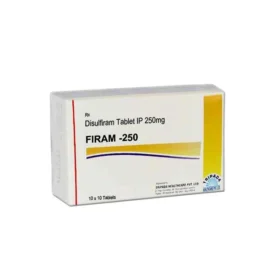
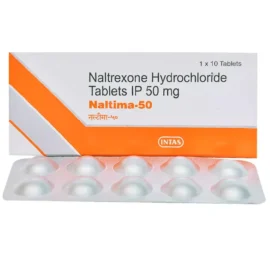
| Sterkte | 25 mg, 50 mg, 100 mg |
|---|---|
| Hoeveelheid | 30 Tablet/s, 60 Tablet/s, 90 Tablet/s, 120 Tablet/s |
| Farmaceutische vorm | Tablet/s |
| Fabrikant | Johnson & Johnson |
| Behandeling | Epilepsie/Aanvallen, Preventieve behandeling van migraine |
| Generiek merk | Topiramate |
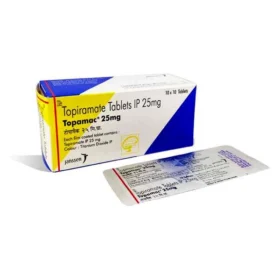 Topamac
Vragen & antwoorden
Topamac
Gerelateerde producten

Beoordelingen
Er zijn nog geen beoordelingen