







Στοίβα Αποκατάστασης Πεπτιδίων — BPC-157 + TB-500 + BAC Water
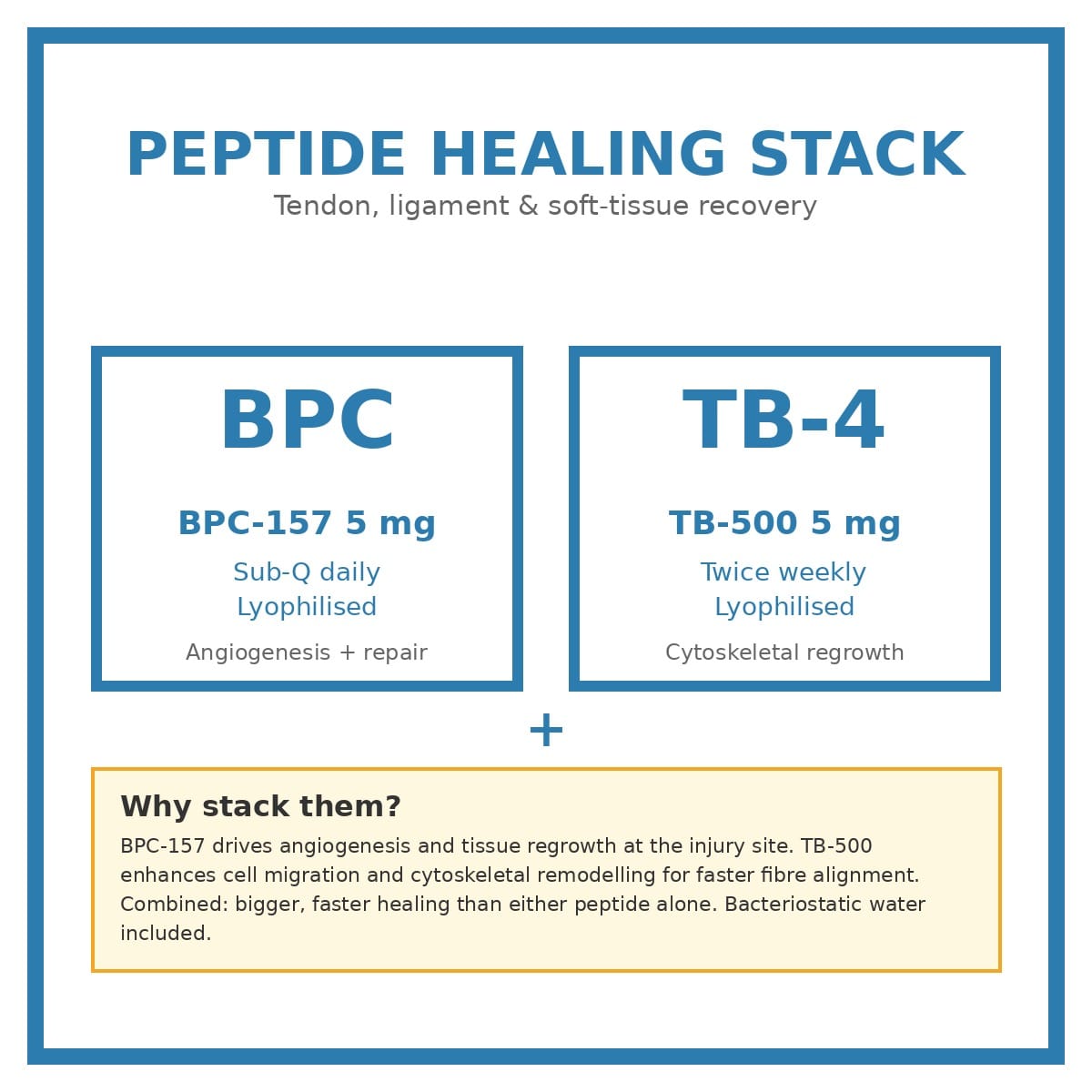
Στοίβα Αποκατάστασης Πεπτιδίων — BPC-157 5 mg + TB-500 5 mg λυοφιλισμένα φιαλίδια + βακτηριοστατικό νερό σε πακέτο. Αγγειογόνη + αναγέννηση κυτταροσκελετού για ανάκαμψη τένοντα/συνδέσμου/μαλακών ιστών. Πεπτίδια έρευνας — απαιτείται ειδικευμένη επίβλεψη.
✓ Ιατρικά ελεγμένο από Morgan Ellis — Ερευνητής Φαρμακευτικής · 8 χρόνια εμπειρία · Τελευταία αναθεώρηση: Μάιος 2026
Γρήγορη Απάντηση — Τι είναι το Peptide Healing Stack;
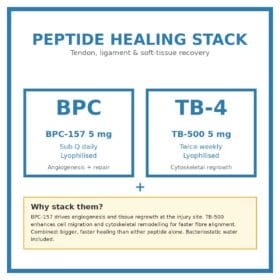
Το MedsBase Peptide Healing Stack συνδυάζει τα δύο πιο μελετημένα πεπτίδια ανάκαμψης — BPC-157 (Body Protection Compound, 5 mg λυοφιλισμένα φιαλίδια) και TB-500 (Thymosin Beta-4, 5 mg λυοφιλισμένα φιαλίδια) — με τα βακτηριοστατικό νερό απαραίτητα για την ανασύνθεσή τους. Το BPC-157 επιταχύνει την αγγειογένεση και την επισκευή των ινών/συνδέσμων/εντερικού ιστού· το TB-500 κινητοποιεί την ακτίνη για συστημική αναγέννηση μυϊκού ιστού, τένοντα, δέρματος και κερατοειδούς ιστού. Χρησιμοποιούνται μαζί από αθλητές, ασθενείς μετά από χειρουργείο και πάσχοντες από χρόνια τραυματισμούς υπό ειδικευμένη επίβλεψη. Τρεις βαθμίδες αξίας: Κουτί Αποκατάστασης (BPC μονοθεραπεία για αρχάριους), Πλήρες Πρωτόκολλο (πλήρες stack BPC + TB για έναν κύκλο θεραπείας), Εντατικό Πρωτόκολλο (διπλό Πλήρες Πρωτόκολλο για εκτεταμένη χρήση). Μόνο για ερευνητικούς σκοπούς σε πολλές δικαιοδοσίες — διαβάστε την νομική ενότητα.
📦 Κάθε παραγγελία καλύπτεται από την Πολιτική Εγγύησης Επαναποστολής — εάν το δέμα σας δεν φτάσει εντός 20 εργάσιμων ημερών, το επαναποστέλλουμε.
| Προδιαγραφή | Λεπτομέρεια |
|---|---|
| Αριθμός CAS | σύνθετο (BPC-157 137525-51-0 / TB-500 77591-33-4 / BAC water 7732-18-5 + 100-51-6) |
| Μοριακός Τύπος | BPC-157: C62H98N16O22 · TB-500: C212H350N56O78S · BAC water: H2O + 0.9% βενζυλική αλκοόλη |
| Μοριακό Βάρος | BPC-157: 1419.55 Da · TB-500: ~4963 Da · BAC water: n/a |
| Ακολουθία | BPC-157 (15 αα) + Θυμοσίνη β-4 οξικός (43 αα) παρέχεται με βακτηριοστατικό νερό ανασύνθεσης |
| Μορφή | Υαλοποιημένη σκόνη (ή όπως παρέχεται) |
| Καθαρότητα | ≥99% (Επαληθεύτηκε με HPLC, πιστοποιητικό ανάλυσης διαθέσιμο κατόπιν αιτήματος) |
| Αποθήκευση | Πεπτίδια (υαλοποιημένα): 2–8 °C (ψυγείο) για το τρέχον απόθεμα· −20 °C για μακροπρόθεσμη αποθήκευση. Βακτηριοστατικό νερό: 15–30 °C (ελεγχόμενη θερμοκρασία δωματίου). Ανασυντιθέμενα πεπτίδια: 2–8 °C, χρήση εντός ~30 ημερών. Αποφύγετε την κατάψυξη-απόψυξη ανασυντιθέμενων διαλυμάτων. |
| Διαλυτότητα | Βακτηριοστατικό νερό (προτείνεται) ή στειρωμένο νερό για μικρότερα χρονικά διαστήματα χρήσης |
| Ερευνητική Χρήση | Μόνο για εργαστηριακή έρευνα. Δεν προορίζεται για διαγνωστική ή θεραπευτική χρήση σε ανθρώπους ή ζώα. |
Τι περιλαμβάνει το Peptide Healing Stack
Κάθε επίπεδο αποστέλλει τις αντίστοιχες ποσότητες και των τριών συστατικών σε ένα δέμα:
- BPC-157 — Φιαλίδια υαλοποιημένης σκόνης 5 mg. Πενταδεκαπεπτίδιο που προέρχεται από προστατευτική πρωτεΐνη στο ανθρώπινο γαστρικό υγρό. Μηχανισμός: αγγειογένεση (VEGF + μονοξείδιο του αζώτου), ενίσχυση των υποδοχέων αυξητικής ορμόνης σε τραυματικές ζώνες, διαμόρφωση των συστημάτων ντοπαμίνης και σεροτονίνης και άμεση πολλαπλασιασμός ινοβλαστών. Ισχυρότερη προκλινική απόδειξη για μοντέλα τενόντων, συνδέσμων, γαστρεντερικού βλεννογόνου και εγκεφαλικών κακώσεων.
- TB-500 (Θυμοσίνη Βήτα-4) — Φιαλίδια υαλοποιημένης σκόνης 5 mg. Συνθετική εκδοχή ενός πεπτιδίου 43 αμινοξέων που υπάρχει φυσικά σε σχεδόν κάθε ανθρώπινο κύτταρο. Μηχανισμός: συγκρατεί την G-ακτίνη, επιτρέποντας τον ελεγχόμενο σχηματισμό κυτταροσκελετικής F-ακτίνης κατά τη μετακίνηση των κυττάρων· προάγει την επάλειψη τραυμάτων του κερατοειδούς, του δέρματος και της καρδιάς· καθορισμένος ερευνητικός ρόλος σε μοντέλα εγκεφαλικού επεισοδίου, έμφραγμα και τραυματικών κακώσεων.
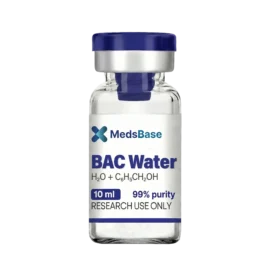
- Βακτηριοστατικό Νερό — Φιαλίδια πολλαπλών δόσεων 10 mL με συντηρητικό 0,9% βενζυλικής αλκοόλης. Απαιτούμενο διαλύτη για την ανασύνθεση λυοφιλισμένων πεπτιδίων· το συντηρητικό επιτρέπει την πολλαπλή χρήση του ίδιου φιαλιδίου (τυπική διάρκεια ζωής ~28 ημέρες σε 2–8°C μετά την πρώτη χρήση).
Γιατί να συνδυάσετε τα BPC-157 και TB-500;
Τα δύο πεπτίδια δρουν σε συμπληρωματικά στάδια αναγέννησης ιστού. Το BPC-157 κυριαρχεί στην πρώιμη αγγειογενετική φάση — αναπτύσσοντας νέα μικροαγγεία στην τραυματισμένη περιοχή μέσα σε ημέρες, αποκαθιστώντας την παροχή αίματος και οξυγόνου. Το TB-500 κυριαρχεί στη φάση της κυτταρικής μετακίνησης — μεταφέροντας ινοβλάστες, επιθηλιακά κύτταρα και ενδοθηλιακές προδρόμους στην πληγή για την αναδόμηση του μήτριξ. Οι Sikiric et al. (2018, J Pharmacol Sci) εξέτασαν τη βιβλιογραφία για το BPC-157 και πρότειναν ότι οι συνδυασμένες πρωτοκόλλους ξεπερνούν τη μονοθεραπεία για χρόνιες μη επουλωμένες βλάβες, επειδή το μπλοκαρισμό μετατοπίζεται από την παροχή αίματος στην κυτταρική παράδοση καθώς προχωρά η επούλωση.
Η ανεκδοτική πρακτική σε κλινικές εστιασμένες στην ανάκτηση (περιορισμένη αλλά αυξανόμενη υποστήριξη από ομόλογες μελέτες) τοποθετεί τον συνδυασμό μπροστά από κάθε πεπτίδιο ξεχωριστά για: χρόνια τενδονική πάθηση Αχίλλειου, μερικές ρήξεις περιστροφικού μανδύα, πρόληψη συμφύσεων μετά από χειρουργική επέμβαση, αργά επουλωμένες καταγές και φλεγμονώδεις εντέρου εκδηλώσεις που δεν ανταποκρίνονται στην τυπική θεραπεία.
Για ποιους προορίζεται αυτός ο συνδυασμός
Καλύτεροι υποψήφιοι:
- Αθλητές που ανακάμπτουν από βλάβη μαλακών ιστών (τενδονική πάθηση, τέντωμα συνδέσμου, μυική ρήξη) όπου η συμβατική αποκατάσταση έχει φθάσει σε σταθερό στάδιο
- Ασθενείς μετά από χειρουργική επέμβαση με επιπλοκές σχετικές με την επούλωση (αργή κλείσιμα πληγής, επίμονη φλεγμονή)
- Χρόνια γαστρεντερικά προβλήματα (απαραίτητη ειδική ιατρική παρακολούθηση — φλεγμονώδης νόσος του εντέρου, γαστρίτιδα από ΜΣΑΦ, σπειραματικές πάροδοι)
- Ερευνητές και κλινικοί γιατροί που χρησιμοποιούν αυτά τα πεπτίδια υπό κατάλληλη θεσμική επίβλεψη
ΔΕΝ είναι κατάλληλο για:
- Όποιον έχει ενεργό ή προηγούμενο καρκίνο (το TB-500 προάγει την αγγειογένεση — θεωρητικός κίνδυνος τροφοδοσίας όγκων)
- Έγκυες ή θηλάζουσες γυναίκες
- Άτομα με αιμορραγικές διαταραχές ή που λαμβάνουν αντιπηκτικά χωρίς ιατρική επίβλεψη
- Όποιος δεν είναι διατεθειμένος να μάθει τεχνική στείρης ανασύνθεσης + υποδόριας έγχυσης
Πώς να ανασυνθέσετε και να εγχύσετε
Θα χρειαστείτε (πωλούνται χωριστά): Σύριγγες ινσουλίνης 1 mL με βελόνες 29–31G × 1/2“, απορρυπαντικά με αλκοόλ, δοχεία για αιχμηρά αντικείμενα. Οι περισσότερες φαρμακείες πουλούν σύριγγες ινσουλίνης χωρίς συνταγή· οι ηλεκτρονικοί προμηθευτές πραγματοποιούν αποστολές διεθνώς.
Ανασύνθεση (μπουκάλι BPC-157 5 mg ως παράδειγμα):
- Καθαρίστε το πάνω μέρος του μπουκαλιού με βακτηριοστατικό νερό και του μπουκαλιού BPC-157 με ξεχωριστά απορρυπαντικά με αλκοόλ.
- Αντλήστε 2,5 mL βακτηριοστατικού νερού με σύριγγα ινσουλίνης 1 mL (σε 5 ξεχωριστές αναλήψεις ή με σύριγγα 3 mL).
- Εγχύστε αργά το βακτηριοστατικό νερό κατά μήκος του εσωτερικού τοιχώματος του μπουκαλιού BPC-157 — ποτέ απευθείας πάνω στο λυοφιλισμένο κέικ σκόνης.
- Ανακατέψτε απαλά, μην το κουνήσετε. Η σκόνα διαλύεται διαυγής εντός 30–60 δευτερολέπτων.
- Τελική συγκέντρωση: 5 mg ÷ 2,5 mL = 2 mg/mL = 200 mcg ανά 0,1 mL σε σύριγγα ινσουλίνης (σημείο 10 μονάδων).
Τυπικά πρωτόκολλα δοσολογίας (υποστηριζόμενα από έρευνα, όχι εγκεκριμένα από ρυθμιστικές αρχές):
| Πεπτίδιο | Δόση | Συχνότητα | Διάρκεια |
|---|---|---|---|
| BPC-157 | 250 mcg | Υποδόρια, δύο φορές ημερησίως (πρωί + βράδυ) | Κύκλοι 4–8 εβδομάδων |
| TB-500 (φόρτωση) | 5 mg | Υποδόρια, δύο φορές εβδομαδιαίως | 4 εβδομάδες (φάση φόρτωσης) |
| TB-500 (συντήρηση) | 2–5 mg | Υποδόρια, εβδομαδιαίως ή ανά δύο εβδομάδες | Συντήρηση 8–12 εβδομάδων |
Ενέσεις υποδόρια στο λίπος της κοιλιάς (αποφύγετε τον ομφαλό κατά ~5 cm). Για τοπικούς τραυματισμούς, ορισμένοι χρήστες κάνουν ενέσεις υποδόρια κοντά στην περιοχή του τραυματισμού (π.χ. περιοχή τένοντα) — η αποστειρωμένη τεχνική είναι απαραίτητη. Περιστρέψτε τις θέσεις κάθε έγχυση.
Αποθήκευση και διάρκεια ζωής
- Λυοφιλισμένα φιαλίδια (ανοίγματος): Ψύξη 2–8°C ιδανικά· σταθερά σε θερμοκρασία δωματίου για 30+ ημέρες κατά τη μεταφορά.
- Ανασυσταθέντα φιαλίδια: Ψύξη 2–8°C αμέσως. Χρήση εντός 28 ημερών (το όριο του βακτηριοστατικού συντηρητικού).
- Νερό BAC (ανοίγματος): 28 ημέρες ψύξη μετά το πρώτο τρύπημα.
- Απορρίψτε οποιοδήποτε φιαλίδιο που γίνεται θολό, αποχρωματισμένο ή περιέχει σωματίδια.
Παρενέργειες — τι να παρατηρήσετε
Και τα δύο πεπτίδια είναι εξαιρετικά καλά ανεκτά στη υπάρχουσα ερευνητική βιβλιογραφία, με προφίλ παρενεργειών που κυριαρχούνται από αντιδράσεις στο σημείο της έγχυσης:
- Σημείο έγχυσης: ήπια ερυθρότητα, ζέση, παροδικός κνησμός (5–15% των ενέσεων). Συνήθως επιλύεται μέσα σε ώρες.
- Ήπια ερύθημα ή πίεση στο κεφάλι: αναφέρεται με γρήγορη ένεση TB-500 — επιβραδύνετε την ένεση σε 10–15 δευτερόλεπτα για μετριασμό.
- Νωθρότητα την πρώτη εβδομάδα της χρήσης TB-500: αναφέρεται με ασυνέπεια, αποδίδεται σε συστημικές αντιφλεγμονώδεις επιδράσεις.
- BPC-157: ναυτία ή παροδική δυσφορία στο στομάχι (σπάνια με υποδόρια διαδρομή; πιο συχνά με την από του στόματος μορφή).
- Διακόψτε και τα δύο αμέσως για: οποιοδήποτε σημάδι αλλεργικής αντίδρασης (κνίδωση, οίδημα, δυσκολία στην αναπνοή), πόνος στο στήθος, επίμονο σοβαρό πονοκέφαλο ή αλλαγή στην όραση.
Νομική και ρυθμιστική κατάσταση
Σημαντικό — τα ερευνητικά πεπτίδια δεν είναι εγκεκριμένα φάρμακα
Ούτε το BPC-157 ούτε το TB-500 έχουν εγκριθεί από την FDA, EMA, MHRA ή οποιονδήποτε μεγάλο ρυθμιστικό φορέα για θεραπευτική χρήση σε ανθρώπους. Και τα δύο πωλούνται παγκοσμίως ως ερευνητικά χημικά ή εργαστηριακά πεπτίδια. Η παραγγελία για προσωπική χρήση είναι νόμιμη στις περισσότερες δικαιοδοσίες αλλά όχι σε όλες — ελέγξτε τους τοπικούς κανόνες. Η WADA απαγορεύει και τα δύο πεπτίδια για αθλητές που αγωνίζονται (κατηγορία S2, απαγορευμένα ανά πάσα στιγμή). Η χρήση γίνεται με δική σας ευθύνη και θα πρέπει να επιβλέπεται από έναν καταξιωμένο κλινικό γιατρό που είναι εξοικειωμένος με τις πεπτιδικές θεραπείες.
Συχνές Ερωτήσεις
Είναι ασφαλές να χρησιμοποιηθούν μαζί το BPC-157 και το TB-500;
Ο συνδυασμός έχει χρησιμοποιηθεί μαζί σε κλινικά και ερευνητικά πλαίσια για πάνω από μια δεκαετία χωρίς τεκμηριωμένη πρόσθετη τοξικότητα. Και τα δύο έχουν ευρείες θεραπευτικές περιθώρια σε μελέτες σε ζώα. Η ασφάλεια σε ανθρώπους βασίζεται σε περιπτώσεις και κλινική εμπειρία παρά σε τυχαιοποιημένες ελεγχόμενες μελέτες.
Πόσο καιρό μέχρι να δω αποτελέσματα;
Για οξεία κάκωση μαλακών ιστών (τενοντίτιδα, πρόσφατη διάστειξη), οι χρήστες συνήθως αναφέρουν μετρήσιμη βελτίωση μέσα σε 2–4 εβδομάδες. Για χρόνια κάκωση ή μεταχειρουργική επούλωση, το τυπικό παράθυρο είναι 6–10 εβδομάδες. Το TB-500 ειδικότερα έχει πιο αρχή έναρξης επειδή ο μηχανισμός της κυτταρικής μετανάστευσης χρειάζεται χρόνο για να μεταφραστεί σε αλλαγή των ιστών. Ορίστε τις προσδοκίες σε ένα ελάχιστο μάθημα 6–8 εβδομάδων.
Χρειάζομαι συνταγή;
Τα BPC-157 και TB-500 είναι ερευνητικά πεπτίδια, όχι φάρμακα που απαιτούν συνταγή. Πωλούνται παγκοσμίως ως εργαστηριακά χημικά. Η παραγγελία για προσωπική χρήση είναι νόμιμη στις περισσότερες δικαιοδοσίες· ελέγξτε τους τοπικούς κανόνες εισαγωγής.
Γιατί δεν περιλαμβάνεται η σύριγγα;
Οι συρίγγες ινσουλίνης αποστέλλονται με αυστηρές δηλώσεις τελωνείων σε πολλές χώρες — η συσκευασία τους αυξάνει τον κίνδυνο επιθεώρησης της δέσμης. Κοστίζουν πολύ λίγο (λιγότερο από $0,20 η καθεμία) και πωλούνται χωρίς συνταγή στα περισσότερα φαρμακεία και από ηλεκτρονικούς προμηθευτές ιατρικών προϊόντων. Χρησιμοποιήστε συρίγγες ινσουλίνης 1 mL με βελόνες 29–31G × 1/2“. Παραγγείλετε περίπου 50 για ένα πρωτόκολλο 4 εβδομάδων με BPC-157 + TB-500.
Μπορώ να πάρω το BPC-157 από το στόμα αντί να το κάνω ένεση;
Το BPC-157 είναι εξαιρετικά σταθερό στο γαστρικό υγρό (προέρχεται από μια πρωτεΐνη που βρίσκεται εκεί), και η από του στόματος χορήγηση έχει τεκμηριωμένη συστημική επίδραση για γαστρεντερικές ενδείξεις. Για ενδείξεις τένοντα, άρθρωσης ή μυός, η υποδόρια ένεση παρέχει υψηλότερη τοπική συγκέντρωση και είναι η προτιμώμενη διαδρομή στα περισσότερα δημοσιευμένα πρωτόκολλα. Το TB-500 πρέπει να εγχυθεί — η από του στόματος βιοδιαθεσιμότητα είναι αμελητέα.
Μπορώ να το πάρω μαζί με άλλα συμπληρώματα ανάρρωσης;
Γενικά ναι — η κολλαγόνη, η βιταμίνη C, τα ωμέγα-3, η γλυκοζαμίνη/χονδροϊτίνη και τα τυπικά ΜΣΑΦ δεν παρεμβαίνουν μηχανιστικά. Αποφύγετε τα αντιπηκτικά (warfarine, DOACs) χωρίς ιατρική επίβλεψη λόγω του θεωρητικού κινδύνου αιμορραγίας στα σημεία ένεσης.
Θα εμφανιστεί σε αθλητικό τεστ ναρκωτικών;
Ναι. Η WADA απαγορεύει τόσο το BPC-157 όσο και το TB-500 ανέκαθεν υπό την κατηγορία S2 (πεπτιδικές ορμόνες). Τα παράθυρα ανίχνευσης για τις τρέχουσες μεθόδους screening είναι εβδομάδες έως μήνες. Μην τα χρησιμοποιείτε εάν υπόκεισθε σε τεστ ναρκωτικών.
Υπάρχει κίνδυνος καρκίνου;
Το TB-500 προωθεί την αγγειογένεση — την ίδια διαδικασία που χρειάζονται οι όγκοι για να αναπτυχθούν. Υπάρχει μια θεωρητική ανησυχία ότι το πεπτίδιο θα μπορούσε να τροφοδοτήσει έναν υπάρχοντα μη διαγνωσμένο καρκίνο. Για το λόγο αυτό, μην χρησιμοποιείτε το TB-500 με ενεργό ή προηγούμενο ιστορικό καρκίνου χωρίς ειδική επίβλεψη. Η επίδραση του BPC-157 στην ανάπτυξη καρκίνου είναι πιο διαφοροποιημένη (κάποιες προκλινικές μελέτες υποδηλώνουν αντι-όγκους επιδράσεις, άρες ουδέτερες) αλλά ισχύει παρόμοια προσοχή.
Μπορώ να πληρώσω με κρυπτονομίσματα;
Ναι — Bitcoin, Ethereum, USDT και άλλα μεγάλα κρυπτονομίσματα μέσω Plisio με αυτόματη έκπτωση 10% κατά την πληρωμή. Δείτε το Οδηγός Κρυπτονομισμάτων.
Ποιο είναι το συνιστώμενο πρωτόκολλο έρευνας για το Peptide Healing Stack;
Η προκλινική έρευνα που χρησιμοποιεί BPC-157 και TB-500 μαζί συνήθως χρησιμοποιεί κάθε ένωση με τις ατομικές παραμέτρους πρωτοκόλλου της — BPC-157 στην περιοχή 250–500 mcg και TB-500 στην περιοχή 2–5 mg, με το BPC-157 να δοσολογείται πιο συχνά λόγω της μικρότερης ημιζωής του. Η συγκεκριμένη δοσολογία για οποιαδήποτε εφαρμογή έρευνας θα πρέπει να προέρχεται από κριτικές βιβλιογραφικές πηγές σχετικές με το μοντέλο μελέτης.
Γιατί το Healing Stack περιλαμβάνει BAC Water;
Τόσο το BPC-157 όσο και το TB-500 παρέχονται ως λυοφιλισμένες (κατεψυγμένες-αποξηραμένες) σκόνες που απαιτούν ανασύνθεση πριν από τη χρήση στην έρευνα. Το βακτηριοστατικό νερό είναι το πρότυπο όχημα ανασύνθεσης για τα πεπτίδια έρευνας — το 0.9% βενζυλική αλκοόλη διατηρεί την αποστειρωτικότητα σε φιαλίδια πολλαπλής χρήσης. Η συμπερίληψη του BAC νερού στο stack διασφαλίζει ότι οι ερευνητές έχουν όλα τα απαραίτητα υλικά σε μια ενιαία παραγγελία χωρίς να χρειάζονται ξεχωριστή προμήθεια.
Πώς αποστέλλεται το stack;
Τα πεπτίδια αποστέλλονται από τον αφοσιωμένο κούριερ μας με αλυσίδα ψύξης σε θερμοκρασιακά ελεγχόμενη συσκευασία χωρίς πρόσθετο κόστος αποστολής (παραγγελίες μόνο με πεπτίδια δικαιούνται το $0 ειδικό ποσοστό κούριερ). Διακριτική απλή συσκευασία. Παράδοση συνήθως 7–14 εργάσιμες ημέρες· το Πολιτική Εγγύησης Επαναποστολής καλύπτει δωρεάν επαναποστολή εάν το δέμα σας δεν φτάσει εντός 20 εργάσιμων ημερών.
Τι περιλαμβάνει κάθε επίπεδο
Κάθε επίπεδο αποστέλλει τα αντιστοιχούμενα συστατικά μαζί — φιαλίδια πεπτιδίων και το βακτηριοστατικό νερό που απαιτείται για την ανασύνθεσή τους. Οι ποσότητες μετρούν τα μεμονωμένα φιαλίδια μέσα στα κουτιά που αποστέλλονται. Δεν παρέχονται σύριγγες ινσουλίνης — παρακαλώ προμηθευτείτε τοπικά σύριγγες 0.5 ml / 29-31 G.
| Επίπεδο | Περιεχόμενα | Καλύτερο για |
|---|---|---|
| Κουτί Αποκατάστασης |
| Πρώτη χρήση για δοκιμή του BPC-157 μόνο για τοπικό τραυματισμό ή γαστρεντερικό πρόβλημα. ~10 εβδομάδες BPC σε δόση πρωτοκόλλου. |
| Πλήρες Πρωτόκολλο |
| Η πλήρης συνδυασμένη θεραπεία BPC + TB για χρόνια ανάκαμψη τένοντα, συνδέσμων ή μετά από χειρουργική επέμβαση. Καλύπτει έναν πλήρη κύκλο επούλωσης 6–8 εβδομάδων συν συντήρηση. |
| Εντατικό Πρωτόκολλο |
| Διπλό Πλήρες Πρωτόκολλο για εκτεταμένα προγράμματα, πολλαπλούς τραυματισμούς ή διαδοχικούς κύκλους. Καλύπτει πρωτόκολλο 12–16 εβδομάδων ή δύο πλήρεις γύρους επούλωσης. |
Οι τιμές συσκευασίας αντανακλούν έκπτωση περίπου 14–15% σε σχέση με την αγορά των ισοδύναμων συστατικών ξεχωριστά στις τυπικές μας τιμές ανά κουτί 10 φιαλιδίων.
Επίσης στην κατηγορία Πεπτιδίων μας
- Προ-αναμεμειγμένο BPC + TB μείγμα: BPC-157 + TB-500 Μείγμα (μονό φιαλίδιο, απλούστερη ανασύνθεση)
- Πεπτίδια επούλωσης: BPC-157 μόνο, TB-500 μόνο, GHK-Cu (αναγέννηση δέρματος/συνδετικού ιστού)
- Εκκριτογόνα αυξητικής ορμόνης: Ιπαμορελίνη, CJC-1295 χωρίς DAC, Σερμορελίνη, Tesamorelin
- IGF-1 / στήριξη μυών: IGF-1 LR3
- Αναγκαστικά υλικά ανασύνθεσης: Νερό BAC
- Δείτε όλα Πεπτίδια κατηγορία
Σημαντικές πληροφορίες ασφάλειας
Τα BPC-157 και TB-500 είναι ερευνητικά πεπτίδια, όχι εγκεκριμένα φάρμακα. Πωλούνται παγκοσμίως ως εργαστηριακά χημικά για ερευνητική χρήση. Οι παραγγελίες για προσωπική χρήση είναι νόμιμες στις περισσότερες δικαιοδοσίες αλλά όχι σε όλες — ελέγξτε τους τοπικούς κανόνες. Και τα δύο απαγορεύονται από την WADA ανά πάσα στιγμή για αθλητές που αγωνίζονται (κατηγορία S2). Μην χρησιμοποιείτε εάν έχετε ενεργό ή προηγούμενο ιστορικό καρκίνου χωρίς ειδική επίβλεψη (το TB-500 είναι αγγειογόνο). Μην χρησιμοποιείτε εάν είστε έγκυος ή θηλάζετε. Η στείρα ανασύνθεση και τεχνική έγχυσης είναι απαραίτητες — χρησιμοποιείτε μόνο βακτηριοστατικό νερό για ανασύνθεση, ψύξτε μετά την ανασύνθεση και απορρίψτε μετά από 28 ημέρες. Σταματήστε αμέσως και ζητήστε ιατρική περίθαλψη για οποιαδήποτε αλλεργική αντίδραση, πόνο στο στήθος, επίμονο σοβαρό πονοκέφαλο ή αλλαγή στην όραση.
Περισσότερες επιλογές σε Πεπτίδια
Ταξινομημένα σύμφωνα με τον όγκο παραγγελιών στο MedsBase — τι επιλέγουν άλλοι πελάτες σε αυτήν την κατηγορία.
| Επίπεδο | Healing Box, Πλήρες Πρωτόκολλο, Βαρύ Πρωτόκολλο |
|---|
 Στοίβα Αποκατάστασης Πεπτιδίων — BPC-157 + TB-500 + BAC Water
Ερωτήσεις & Απαντήσεις
Στοίβα Αποκατάστασης Πεπτιδίων — BPC-157 + TB-500 + BAC Water
Σχετικά προϊόντα
Κριτικές
Δεν υπάρχουν ακόμη κριτικές