







GHK-Cu
✅ Προάγει την αναγέννηση του δέρματος
✅ Ενισχύει τη σύνθεση κολλαγόνου
✅ Υποστηρίζει την υγεία των θυλάκων τριχών
✅ Βελτιώνει την ελαστικότητα του δέρματος
✅ Ενισχύει την επισκευή των ιστών
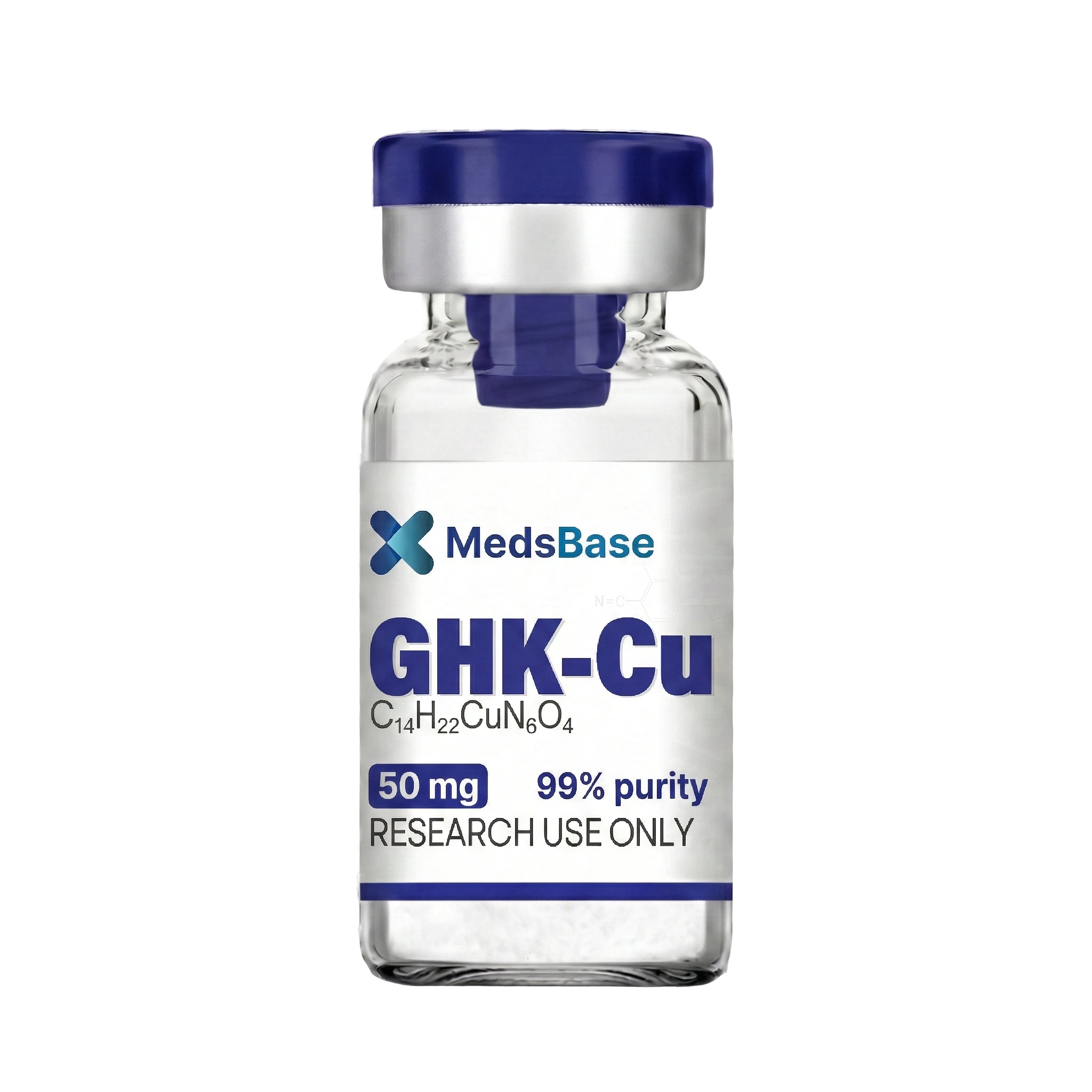
GHK-Cu περιέχει συνθετική πεπτιδική ένωση.
✓ Ιατρικά ελεγμένο από Morgan Ellis — Ερευνητής Φαρμακευτικής · 8 χρόνια εμπειρία · Τελευταία αναθεώρηση: Μάιος 2026
Γρήγορη Απάντηση — Τι είναι το GHK-Cu;
GHK-Cu είναι ένα φυσικά απαντώμενο τριπεπτίδιο (γλυκύ-L-ιστιδύ-L-λυσίνη) σε σύμπλοκο με χαλκό (Cu2+). Σε δημοσιευμένες έρευνες, διεγείρει τη σύνθεση κολλαγόνου, ενεργοποιεί ινοβλάστες, προάγει την επούλωση και ρυθμίζει περίπου 4.000 ανθρώπινους γονίδια προς μια νεανική έκφραση. Προσφέρεται σε λυοφιλισμένα φιαλίδια 50 mg μόνο για εργαστηριακή έρευνα.
📦 Κάθε παραγγελία καλύπτεται από την Πολιτική Εγγύησης Επαναποστολής — εάν το δέμα σας δεν φτάσει εντός 20 εργάσιμων ημερών, το επαναποστέλλουμε.
| Προδιαγραφή | Λεπτομέρεια |
|---|---|
| Αριθμός CAS | 49557-75-7 (GHK ελεύθερο) · 89030-95-5 (Cu²⁺ σύμπλοκο) |
| Μοριακός Τύπος | GHK: C14H24N6O4 · GHK-Cu: C14H22CuN6O4 |
| Μοριακό Βάρος | GHK: 340.38 Da · GHK-Cu σύμπλοκο: 403.92 Da |
| Ακολουθία | Γλυ-Ιστ-Λυσ (σε χηλική ένωση με Cu²⁺) |
| Μορφή | Υαλοποιημένη σκόνη (ή όπως παρέχεται) |
| Καθαρότητα | ≥99% (HPLC επαληθευμένο, COA κατόπιν αιτήματος) |
| Αποθήκευση | Λυοφιλιωμένο: 2–8 °C (ψυγείο) για εργαστικό απόθεμα· −20 °C για μακροπρόθεσμη αποθήκευση ανοιχτών φιαλών. Ανασυντεθειμένο: 2–8 °C, χρήση εντός ~30 ημερών. Προστασία από το φως. Μην καταψύχετε-αποψύχετε το ανασυντεθειμένο διάλυμα. |
| Διαλυτότητα | Βακτηριοστατικό νερό (προτείνεται) ή στειρωμένο νερό για μικρότερα χρονικά διαστήματα χρήσης |
| Ερευνητική Χρήση | Μόνο για εργαστηριακή έρευνα. Δεν προορίζεται για διαγνωστική ή θεραπευτική χρήση σε ανθρώπους ή ζώα. |
Τι Είναι το GHK-Cu;
GHK-Cu είναι ένα φυσικά απαντώμενο τριπεπτιδικό-χαλκού σύμπλοκο, που ανακαλύφθηκε από τον Loren Pickart το 1973 κατά τη διερεύνηση του αντιγηρασμικού παράγοντα στο ανθρώπινο πλάσμα. Η ακολουθία των τριών αμινοξέων γλυκύ-L-ιστιδύ-L-λυσίνη (GHK) έχει υψηλή συγγένεια με ιόντα χαλκού (Cu2+), και το προκύπτον σύμπλοκο GHK-Cu είναι η βιολογικά ενεργή μορφή που βρίσκεται στο πλάσμα, το σάλιο και τα ούρα — μειώνεται από κατά μέσο όρο 200 ng/mL στην ηλικία των 20 ετών σε λιγότερο από 80 ng/mL μέχρι την ηλικία των 60 ετών.
Το πεπτίδιο έχει μοριακό βάρος περίπου 340 Da (ελεύθερο GHK) ή 402 Da ως σύμπλοκο του χαλκού, με εμπειρικό τύπο C14H23CuN6O4. Παραδίδεται ως υψηλής καθαρότητας λυοφιλισμένη σκόνη με το χαρακτηριστικό ανοιχτό μπλε χρώμα του συμπλόκου του χαλκού. Το GHK-Cu είναι μόνο για εργαστηριακή έρευνα και δεν προορίζεται για ανθρώπινη ή κτηνιατρική διάγνωση ή θεραπεία. Για τον μηχανισμό δράσης, γονιδιακή ανάλυση και περιλήψεις δημοσιευμένων ερευνών, δείτε τον πλήρη οδηγό έρευνας GHK-Cu.
Μηχανισμός Δράσης — Φορέας Χαλκού και Ρυθμιστής Γονιδίων
Ο μηχανισμός του GHK-Cu είναι ασυνήθιστα ευρύς επειδή το τ τριπεπτίδιο λειτουργεί ταυτόχρονα ως φορέας χαλκού (μεταφέρει Cu2+ στα κύτταρα) και ως ρυθμιστής έκφρασης γονιδίων δρά σε χιλιάδες στόχους. Τρία μηχανιστικά μονοπάτια κυριαρχούν στη δημοσιευμένη βιβλιογραφία:
- Μεταφορά χαλκού — Το GHK δένεται με τον Cu2+ με υψηλή συγγένεια και τον μεταφέρει μέσω των κυτταρικών μεμβρανών. Ο χαλκός είναι συν-παράγοντας για τη λυσυλοξειδάση (το ένζυμο που διασυνδέει κολλαγόνο και ελαστίνη), τη σουπεροξειδική δισμουτάση και την κυτοχρώμη C οξειδάση. Ο μηχανισμός μεταφοράς χαλκού είναι το μοναδικό χαρακτηριστικό που διακρίνει το GHK-Cu από τα πεπτίδια χωρίς χαλκό.
- Ενεργοποίηση ινοβλαστών και σύνθεση κολλαγόνου — Το GHK-Cu αυξάνει την έκφραση των τύπων I και III κολλαγόνου, της ντεκορίνης και των γλυκοζαμινογλυκάνων σε έρευνες με δερματικούς ινοβλάστες. Αυτή είναι η μηχανιστική βάση του σήματος έρευνας για το δέρμα, την επούλωση και τον συνδετικό ιστό.
- Διαμόρφωση έκφρασης γονιδίων — Η γονιδιωματική ανάλυση του Pickart το 2010 αναγνώρισε το GHK ως διαμορφωτή περίπου 4.000 ανθρώπινων γονιδίων, με καθαρό αποτέλεσμα τη μετατόπιση των προτύπων έκφρασης προς ένα πιο νεανικό προφίλ. Οι επηρεαζόμενες ομάδες γονιδίων περιλαμβάνουν μονοπάτια επισκευής DNA, άμυνας κατά των οξειδωτικών και απόκρισης σε στρες.
Επειδή αυτοί οι τρεις μηχανισμοί λειτουργούν σε πολλούς τύπους ιστών, το GHK-Cu έχει διερευνηθεί σε ερευνητικά πλαίσια που κυμαίνονται από τη δερματολογία και την επούλωση έως τη βιολογία έκφρασης γονιδίων και την έρευνα νευρωνικής επιβίωσης. Είναι αξιοσημείωτα καλά ανεκτό σε τυπικές ερευνητικές δόσεις.
Εφαρμογές Δημοσιευμένης Έρευνας
Το GHK-Cu χρησιμοποιείται σε εργαστηριακά ερευνητικά πλαίσια που διερευνούν:
- Αναγέννηση δέρματος και φωτογήρανση — σύνθεση κολλαγόνου τύπου I και III, έρευνα πάχους δέρματος και βάθους ρυτίδων σε ανθρώπινα και τρωκτικά μοντέλα (Pickart, J Biomater Sci Polym 2008)
- Έρευνα θυλακίου τριχών — ενεργοποίηση βλαστικών κυττάρων θυλακίου και έρευνα κύκλου τριχών σε τρωκτικά μοντέλα
- Επίθεση τραυμάτων — έρευνα δερματικής επισκευής, χρόνιων τραυμάτων και τραυμάτων διαβητικών (Pickart et al., Biomed Res Int 2015)
- Έρευνα αντιοξειδωτικών και σιδηροδιαχωριστικών — μείωση ROS, προστασία από λιπιδική υπεροξείδωση σε μοντέλα κυτταρικού οξειδωτικού στρες
- Έρευνα γονιδιακής έκφρασης — ολικές αναλύες μεταγραφώματος δείχνουν διαμόρφωση ~4,000 ανθρώπινων γονιδίων
- Νευρωνική έρευνα — έρευνα νευριτικών αποφύσεων και νευροπροστασίας σε μοντέλα κεντρικού νευρικού συστήματος
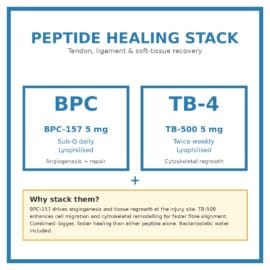
- Έρευνα στοίβαξης — συνήθως συνδυάζεται με BPC-157 και TB-500 σε έρευνα ανάκτησης συνδετικού ιστού. Δείτε τα καλύτερα πεπτίδια για ανάκαμψη μυών για πλαίσιο συστάδας.
Διαθέσιμες δυνάμεις
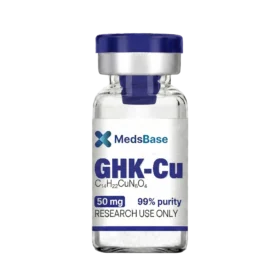
Η MedsBase διαθέτει GHK-Cu σε μία μόνο μορφή 50 mg λυοφιλισμένου φιαλιδίου. Κάθε παραλλαγή αποστέλλεται σε συσκευασίες 10, 20 ή 30 φιαλιδίων με πλήρεις οδηγίες ανασύνθεσης:
| Δύναμη Φιαλιδίου | Τυπική Περίπτωση Χρήσης | Μεγέθη Συσκευασίας |
|---|---|---|
| 50 mg | Τυπική ερευνητική δύναμη — υποστηρίζει πρωτόκολλα 1–3 mg ημερησίως για 2–4 εβδομάδες ανά φιαλίδιο | 10, 20 ή 30 φιαλίδια |
Το φιαλίδιο των 50 mg ανταποκρίνεται στη συνηθισμένη χρήση σε ερευνητικά πρωτόκολλα — 1–3 mg ανά χορήγηση, 1–2 φορές ημερησίως ή 3–5 φορές εβδομαδιαίως. Ένα μόνο φιαλίδιο 50 mg υποστηρίζει περίπου 16–50 χορηγήσεις ανάλογα με το πρωτόκολλο. Παρασχετόμενο ως λυοφιλισμένη σκόνη με καθαρότητα HPLC 99%+.
Σύγκριση — GHK-Cu έναντι άλλων επούλων επούλωσης
GHK-Cu, BPC-157, και TB-500 είναι τα τρία πιο συχνά αναφερόμενα επούλα ερευνητικής επούλωσης. Κάθε ένα δρα μέσω διακριτών μηχανισμών, γι' αυτό και συχνά συνδυάζονται παρά αντικαθίστανται:
| Κριτήριο | GHK-Cu | BPC-157 | TB-500 |
|---|---|---|---|
| Length | 3 αμινοξέα + χαλκός | 15 αμινοξέα | 43 αμινοξέα |
| Κύριος μηχανισμός | Μεταφορά χαλκού + ρύθμιση γονιδίων | VEGF + NO + υποδοχέας GH | Δέσμευση G-ακτίνης, αγγειογένεση |
| Ισχυρότερο ερευνητικό σήμα | Δέρμα, τρίχες, κολλαγόνο, έκφραση γονιδίων | Τένοντας, σύνδεσμος, γαστρεντερική φραγή | Καρδιακή, συστημική μυική, αγγειακή |
| Τυπική δόση έρευνας | 1–3 mg ημερησίως ή 3–5 φορές την εβδομάδα | 250–500 mcg 1–2 φορές ημερησίως | 2–2.5 mg δύο φορές την εβδομάδα |
Για ευρύτερο πλαίσιο σχετικά με το τοπίο των πεπτιδίων, δείτε το κατάλογο ερευνητικών πεπτιδίων.
Αποθήκευση και ανασύνθεση
Πριν την ανασύνθεση: αποθηκεύστε τα λυοφιλισμένα φιαλίδια σε ψυγείο στους 2–8 °C στην αρχική συσκευασία. Είναι σταθερά για έως και 36 μήνες. Το λυοφιλισμένο GHK-Cu έχει ένα χαρακτηριστικό ανοιχτό μπλε χρώμα από το σύμπλοκο του χαλκού.
Διαδικασία ανασύνθεσης: εγχύστε βακτηριοστατικό νερό στον πλευρικό τοίχο του φιαλιδίου του πεπτιδίου. Το διάλυμα πρέπει να είναι διαυγές ανοιχτό μπλε — το χρώμα του Cu2+ συμπλόκου. Ανακατέψτε απαλά — μην δεν κουνήσετε — και αφήστε 2–5 λεπτά για πλήρη διάλυση.
Μετά την ανασύνθεση: αποθηκεύστε σε ψυγείο στους 2–8 °C και χρησιμοποιήστε εντός 30 ημερών. Το ανοιχτό μπλε χρώμα θα πρέπει να παραμένει· η απώλεια χρώματος μπορεί να υποδηλώνει διάσταση του συμπλόκου χαλκού-πεπτιδίου. Απορρίψτε εάν είναι θολό ή έχει αλλάξει χρώμα (καφέ/πράσινο).
Συχνές Ερωτήσεις
Για τι χρησιμοποιείται το GHK-Cu στην έρευνα;
Το GHK-Cu χρησιμοποιείται σε εργαστηριακή έρευνα που διερευνά την αναγέννηση του δέρματος, τη βιολογία των θυλάκων των τριχών, την επούλωση πληγών, τη σύνθεση κολλαγόνου, τον διαμορφωτισμό της έκφρασης γονιδίων και τις αντιοξειδωτικές οδούς. Είναι δεν εγκεκριμένο από τον FDA και πωλείται εδώ αποκλειστικά για εργαστηριακή έρευνα.
Γιατί το GHK-Cu φαίνεται μπλε;
Το μπλε χρώμα είναι το χαρακτηριστικό του συμπλόκου χαλκού(II)-GHK. Το Cu2+ ιόν συντονίζεται με τον ιμιδαζολικό δακτύλιο της ιστιδίνης και τους αποπρωτονωμένους αμιδικούς αζώτες του τριπεπτιδίου, παράγοντας το χαρακτηριστικό ανοιχτό μπλε φάσμα απορρόφησης. Ένα σωστά ανασυσταθέν διάλυμα GHK-Cu θα πρέπει να είναι διαυγές και ανοιχτό μπλε.
Ποια είναι η τυπική δοσολογία έρευνας για το GHK-Cu;
Οι δημοσιευμένες προκλινικές πρωτόκολλες συνήθως χρησιμοποιούν 1–3 mg ανά χορήγηση, μια φορά την ημέρα ή 3–5 φορές την εβδομάδα για κύκλους 4–8 εβδομάδων. Ένα φιαλίδιο 50 mg ανασυσταμένο με 5,0 mL βακτηριοστατικού νερού δίνει διάλυμα 10 mg/mL — 10 τμήματα σε μια σύριγγα U-100 παρέχουν 1 mg.
Είναι το GHK-Cu εγκεκριμένο από τον FDA;
Όχι. Το GHK-Cu δεν έχει εγκριθεί από τον FDA, την EMA ή οποιονδήποτε άλλο ρυθμιστικό φορέα για θεραπευτική χρήση. Χρησιμοποιείται ευρέως σε καλλυντικά προϊόντα περιποίησης δέρματος ως συστατικό, αλλά η ερευνητική μορφή για ένεση που πωλείται εδώ προορίζεται μόνο για εργαστηριακή έρευνα.
Πώς πρέπει να αποθηκεύεται το GHK-Cu;
Λυοφιλιωμένα φιαλίδια: ψυγείο σε 2–8 °C στην αρχική συσκευασία, σταθερά έως 36 μήνες. Ανασυσταμένο διάλυμα: ψυγείο σε 2–8 °C, χρήση εντός 30 ημερών. Το μπλε χρώμα θα πρέπει να παραμένει καθ' όλη τη διάρκεια της αποθήκευσης — η απώλεια χρώματος μπορεί να υποδηλώνει διάσταση πεπτιδίου-χαλκού.
Πώς ανασυνιστάται το GHK-Cu;
Ακολουθήστε τον πίνακα ανασύνθεσης παραπάνω. Προσθέστε βακτηριοστατικό νερό κατά μήκος του πλευρικού τοιχώματος του φιαλιδίου, ανακατέψτε απαλά και αφήστε 2–5 λεπτά για πλήρη διάλυση. Το διάλυμα θα πρέπει να είναι διαυγές ανοιχτό μπλε. Μην δεν κουνήσετε το φιαλίδιο.
Μπορεί το GHK-Cu να συνδυαστεί με το BPC-157 ή το TB-500;
Ναι. Το GHK-Cu συχνά συνχορήγεται με BPC-157 και/ή TB-500 σε έρευνες για συνδετικό ιστό, επούλωση πληγών και αναγέννηση δέρματος, καθώς οι μηχανισμοί τους είναι συμπληρωματικοί. Το GHK-Cu παρέχει χαλκό και σηματοδότηση γονιδιακής έκφρασης· το BPC-157 παρέχει ενίσχυση αυξητικών παραγόντων· το TB-500 παρέχει συστηματική αγγειογένεση.
Διαφέρει το GHK-Cu για ένεση από το τοπικό καλλυντικό GHK-Cu;
Το ίδιο το πεπτίδιο είναι το ίδιο μόριο. Οι καλλυντικές μορφές στοχεύουν στην απορρόφηση από το δέρμα σε χαμηλές συγκεντρώσεις (συνήθως 0,1–1%)· οι ερευνητικές μορφές για ένεση παρέχουν πολύ υψηλότερες δόσεις συστηματικά μέσω υποδόριας ένεσης για εργαστηριακή έρευνα. Το προϊόν μας είναι η ερευνητική μορφή για ένεση, όχι καλλυντικό.
Ποιες δόσεις διαθέτει το MedsBase;
Η MedsBase διαθέτει GHK-Cu σε λυοφιλιωμένα φιαλίδια 50 mg, διαθέσιμα σε συσκευασίες 10, 20 ή 30 φιαλιδίων. Όλα τα φιαλίδια παρέχονται με καθαρότητα HPLC 99%+ και πιστοποιητικό ανάλυσης διαθέσιμο κατόπιν αιτήματος.
Προκαλεί το GHK-Cu παρενέργειες σε έρευνες;
Δημοσιευμένες προκλινικές έρευνες έχουν αναφέρει ένα καθαρό προφίλ ασφάλειας σε τυπικές δόσεις έρευνας. Η παράδοση χαλκού ρυθμίζεται αυστηρά από τις ενδογενείς μεταφορικές πρωτεΐνες του οργανισμού, πράγμα που πιθανώς συμβάλλει στο χαμηλό σήμα εκτός στόχου. Δεν υπάρχουν διαθέσιμα δεδομένα ασφάλειας για μακροπρόθεσμη χρήση σε ανθρώπους.
Ποια είναι η ημιζωή του GHK-Cu;
Το GHK-Cu είναι ένα μικρό σύμπλοκο τριπεπτιδίου-χαλκού με εκτιμώμενη ημιζωή ελεύθερου πεπτιδίου στο πλάσμα κάτω από 30 λεπτά. Ωστόσο, το GHK δείχνει ισχυρή συγγένεια με την κολλαγόνη, τη φιμπρονεκτίνη και άλλες πρωτεΐνες του εξωκυτταρικού πίνακα, γεγονός που επεκτείνει σημαντικά τον χρόνο παραμονής του στα τοπικά ιστούς πέρα από τις μετρήσεις ημιζωής στο πλάσμα.
Πώς λειτουργεί το GHK-Cu διαφορετικά από τα πεπτίδια που προκαλούν έκκριση αυξητικής ορμόνης;
Σε αντίθεση με τα GHRPs ή τα ανάλογα GHRH, το GHK-Cu λειτουργεί κυρίως μέσω διαμόρφωσης της γονιδιακής έκφρασης. Μελέτες μικροσυστοιχιών έχουν δείξει ότι το GHK ενεργοποιεί ή καταστέλλει πάνω από 4.000 ανθρώπινα γονίδια, συμπεριλαμβανομένων αυτών που ρυθμίζουν τη σύνθεση κολλαγόνης, την αντιοξειδωτική άμυνα, την αναγέννηση νεύρων και τις αντιφλεγμονώδεις οδούς. Αυτή η ευρεία γονιδιακή δράση το διακρίνει από τα πεπτίδια ειδικά για υποδοχείς, όπως το BPC-157 ή το Ιπαμορελίνη.
Μπορώ να παραγγείλω GHK-Cu για διεθνή αποστολή;
Ναι. Η MedsBase αποστέλλει GHK-Cu παγκοσμίως από το αφοσιωμένο δίκτυο αποστολής πεπτιδίων μας. Οι παραγγελίες που περιλαμβάνουν μόνο πεπτίδια πληρούν τις προϋποθέσεις για την αυτόνοπη υπηρεσία αποστολής πεπτιδίων μας. Οι παραγγελίες αποστέλλονται σε θερμοκρασιακά ελεγχόμενη συσκευασία με πλήρη παρακολούθηση.
Το GHK-Cu χρησιμοποιείται συχνότερα μαζί με αφοσιωμένα πεπτίδια επισκευής ιστού για την εργασία σε βαθύτερους ιστούς· συνδυάστε το με το Peptide Healing Stack (BPC-157 5 mg + TB-500 5 mg + βακτηριοστατικό νερό) για το στρώμα αγγειογένεσης + κυτταροσκελετού που συμπληρώνει τις επιδράσεις του GHK-Cu στην κολλαγόνη και τις αντιοξειδωτικές επιδράσεις.
Άλλα πεπτίδια για έρευνα ανάκαμψης και απόδοσης
- BPC-157 — Body Protection Compound — έρευνα ανάκαμψης τένοντα, συνδέσμου, εντέρου
- TB-500 — Θραύσμα Thymosin Beta-4 — έρευνα ανάκαμψης μαλακών ιστών και αγγείων
- Ιπαμορελίνη — Επιλεκτικός αγωνιστής ghrelin — καθαρός παλμός GH χωρίς κορτιζόλη/προλακτίνη
- CJC-1295 with DAC — Αναλογικό GHRH με παρατεταμένο χρόνο ημιζωής
- IGF-1 LR3 — Αναλόγιο Long-R3 IGF-1 — αναβολική / αναγεννητική έρευνα
Περαιτέρω ανάγνωση
📖 Μάθετε την έρευνα πίσω από αυτό το πεπτίδιο
Διαβάστε τον πλήρη αποδεικτικά τεκμηριωμένο οδηγό μας: GHK-Cu — μηχανισμός δράσης, γονιδιακή ανάλυση και προοπτικές. Καλύπτει τη χημεία του χαλκού, τις μελέτες γονιδιακής έκφρασης του Pickart, τις τυπικές δοσολογικές περιοχές έρευνας, πρωτόκολλα ανασύνθεσης, ζητήματα στοίβαξης και σημειώσεις ασφαλείας.
Περισσότερες επιλογές σε Πεπτίδια
Ταξινομημένα σύμφωνα με τον όγκο παραγγελιών στο MedsBase — τι επιλέγουν άλλοι πελάτες σε αυτήν την κατηγορία.
| Ισχύς | 50 mg |
|---|---|
| Ποσότητα | 10 Φιαλίδια, 20 Φιαλίδια, 30 Φιαλίδια |
 GHK-Cu
Ερωτήσεις & Απαντήσεις
GHK-Cu
Σχετικά προϊόντα
Κριτικές
Δεν υπάρχουν ακόμη κριτικές