







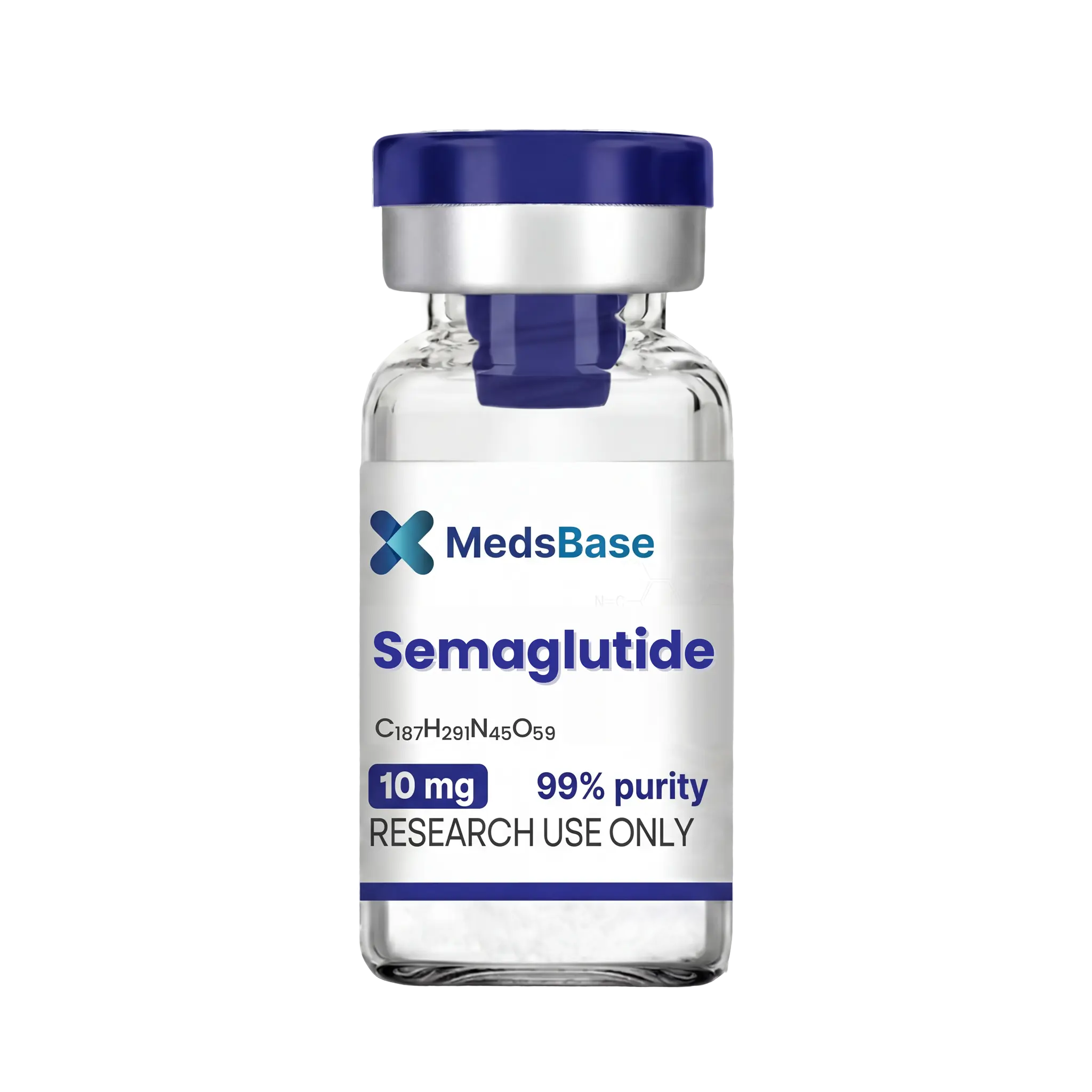
Semaglutida
✅ Agonista del receptor GLP-1 de acción prolongada
✅ Supports glycaemic control
✅ Modula la señalización de apetito y saciedad
✅ Delays gastric emptying
✅ Protocolos de dosificación semanal
Semaglutida contiene compuesto de péptido sintético.
✓ Revisado médicamente por Morgan Ellis — Investigador farmacéutico · 8 años de experiencia · Última revisión: mayo de 2026
Respuesta rápida — ¿Qué es el Semaglutide?
Semaglutida is a 31-amino-acid GLP-1 receptor agonist peptide and the active studies molecule behind Ozempic, Wegovy, and Rybelsus. It is the most extensively studied long-acting GLP-1 analog in published studies, with a plasma half-life of approximately 165 hours (~7 days) enabling once-weekly dosing protocols. Supplied in 2 mg to 50 mg lyophilized vials.
📦 Cada pedido está cubierto por nuestra Reshipment Assurance Policy — si tu paquete no llega en 20 días laborables, lo reenviamos.
| Especificación | Detalle |
|---|---|
| Número CAS | 910463-68-2 |
| Fórmula molecular | C187H291N45O59 |
| Peso molecular | 4113.58 Da |
| Secuencia | H-Aib-EGTFTSDVSSYLEGQAAK(Nε-(N-(17-carboxi-1-oxoheptadecil)-L-γ-glutamil)-[2-(2-aminoetoxi)etoxi]acetil-[2-(2-aminoetoxi)etoxi]acetil)EFIAWLVRGRG-OH (31 aa, GLP-1[7-37] con Aib8, Arg34, and Lys26-acilación de ácido graso) |
| Forma | Polvo liofilizado (blanco a blanquecino) |
| Pureza | ≥99% (verificado por HPLC, COA bajo solicitud) |
| Almacenamiento | Liofilizado: 2–8 °C (refrigerador) para stock de trabajo; −20 °C para almacenamiento a largo plazo de viales sin abrir. Reconstituido: 2–8 °C, usar dentro de ~30 días. Proteger de la luz. No congelar-descongelar la solución reconstituida. |
| Solubilidad | Agua bacteriostática (recomendada) o agua estéril para periodos de uso más cortos |
¿Qué es el Semaglutide?
Semaglutida is a long-acting glucagon-like peptide-1 (GLP-1) receptor agonist developed as a structural analog of the endogenous incretin hormone GLP-1. It is a 31-amino-acid peptide built on the GLP-1(7-37) backbone with three engineered modifications that distinguish it from earlier short-acting analogs: an α-aminoisobutyric acid (Aib) substitution at position 8 that resists DPP-4 cleavage, an arginine substitution at position 34 to prevent off-target acylation, and a C18 fatty diacid attached at lysine 26 via a γ-glutamic acid and two 2-(2-aminoethoxy)ethoxyacetic acid (AEEA) spacers. The fatty-acid tether drives strong reversible binding to circulating albumin, extending the plasma half-life to approximately 165 hours and making semaglutide the longest-acting GLP-1 agonist developed to date for once-weekly subcutaneous dosing in published studies. Semaglutide’s peptide sequence and molecular structure are well-characterised: empirical formula C187H291N45O59, average molecular weight 4113.58 Da. The compound is supplied as a high-purity lyophilized powder for reconstitution with bacteriostatic water. Pharmaceutical semaglutide is approved by the FDA, EMA, and MHRA under the brand names Ozempic (subcutaneous, type 2 diabetes), Wegovy (subcutaneous, chronic weight management), and Rybelsus (oral, type 2 diabetes). For a deep dive on mechanism, pharmacokinetics, and head-to-head trial data, see our full Guía de Retatrutida vs Tirzepatida y el catálogo de péptidos.
Mecanismo de acción — Señalización del receptor GLP-1 en tres compartimentos tisulares
What makes semaglutide more pharmacologically interesting than earlier GLP-1 analogs (liraglutide, exenatide) is the combination of high receptor selectivity with a half-life long enough to maintain near-continuous receptor occupancy. Published studies has mapped its activity across three distinct tissue compartments, each contributing to the observed metabolic phenotype:
- Pancreatic β-cell — glucose-dependent insulin secretion — Semaglutide binds the GLP-1 receptor on pancreatic β-cells, activating Gαs-coupled adenylyl cyclase, raising intracellular cAMP and PKA / EPAC2 signaling. The downstream effect is a glucose-dependent potentiation of insulin secretion: hypoglycaemia is rare because the signal requires elevated intracellular glucose to translate into insulin release. Parallel suppression of glucagon secretion from α-cells contributes to lower fasting hepatic glucose output in diabetes models.
- Central nervous system — appetite and satiety circuits — Semaglutide crosses the blood-brain barrier sufficiently to activate GLP-1 receptors in the arcuate nucleus, paraventricular nucleus, and area postrema. Studies in diet-induced obese (DIO) rodent models has documented activation of anorexigenic pro-opiomelanocortin (POMC) neurons and suppression of orexigenic neuropeptide Y / agouti-related peptide (NPY/AgRP) neurons. This central effect is the principal driver of the body-weight phenotype observed in obesity studies.
- Gastrointestinal motility — delayed gastric emptying — GLP-1 receptor activation in vagal afferents and enteric neurons slows the rate of gastric emptying, reducing postprandial glucose excursions and prolonging satiety signals. Tachyphylaxis (partial desensitisation) of this effect develops over weeks of continuous receptor occupancy, which is why gastrointestinal tolerability typically improves with prolonged dosing in study models.
The C18 fatty diacid tether is what differentiates semaglutide pharmacokinetically from older GLP-1 analogs. By binding reversibly to serum albumin via this tether, semaglutide forms a circulating depot that protects it from renal clearance and DPP-4 degradation. Combined with the Aib8 substitution (which directly blocks the DPP-4 cleavage site at position 8–9), this gives semaglutide a half-life of 165 hours compared with liraglutide’s 13 hours and native GLP-1’s <2 minutes — a roughly 12× extension that enables once-weekly dosing schedules.
Published Evidence
Semaglutide is used in clinical contexts that investigate:
- Glucose homeostasis and insulin sensitivity — glucose-stimulated insulin secretion, oral and intravenous glucose tolerance tests, hyperinsulinaemic-euglycaemic clamps in db/db, ZDF, and high-fat-diet rodent models (Lau et al., J Med Chem 2015; Knudsen & Lau, Front Endocrinol 2019)
- Body weight and appetite regulation — food intake assessments, body composition (DEXA / MRI), respiratory exchange ratio in DIO and ob/ob mouse models; benchmark for novel anti-obesity peptide studies
- Cardiovascular and atherosclerosis studies — effects on endothelial function, plaque progression in ApoE-/- and LDLR-/- ratones; seguimiento mecanístico de la señal cardiovascular de los ensayos clínicos SUSTAIN-6 y PIONEER
- Protección renal y modelos de nefropatía diabética — albuminuria, tasa de filtración glomerular, expansión mesangial en enfermedad renal diabética inducida por estreptozotocina y en ratones Akita
- Neuroprotection studies — cognitive function, neuroinflammation, α-synuclein and amyloid-β pathology in Parkinson’s and Alzheimer’s preclinical models — GLP-1R is expressed throughout the CNS and is a current studies frontier
- Hepatic steatosis (MASLD/MASH) studies — contenido de triglicéridos hepáticos, ALT/AST, estadificación de fibrosis en dietas de roedores deficientes en colina y altas en grasas y fructosa
- Comparative metabolic peptide studies — evaluación comparativa frente a agonistas múltiples más nuevos. Consulte la Retatrutida página para el comparador triple GLP-1/GIP/glucagón y el Guía de Retatrutida vs Tirzepatida para un comparativo lado a lado de agonistas duales.
Para un contexto más amplio sobre dónde encaja el semaglutida en el panorama de los péptidos metabólicos, consulte nuestro catálogo de péptidos y compuestos relacionados, incluidos Retatrutida (agonista triple) y Tesamorelin (GHRH analog for visceral adiposity).
Concentraciones y potencias disponibles
MedsBase stocks Semaglutide in seven lyophilized vial strengths to support both micro-dose titration studies and extended weekly-dosing protocols. Each strength is available in 10-vial, 20-vial, or 30-vial pack formats with full reconstitution guidance:
| Potencia del vial | Caso de uso típico | Tamaños de paquete |
|---|---|---|
| 2 mg | Dosificación piloto, titulación de bajo nivel, protocolos de ciclo corto | 10, 20 o 30 viales |
| 5 mg | Standard maintenance-dose strength | 10, 20 o 30 viales |
| 10 mg | Protocolos de ciclo extendido, brazos de titulación de dosis más altas | 10, 20 o 30 viales |
| 15 mg | Mid-range Bulk packs vial, reduced reconstitution volume | 10, 20 o 30 viales |
| 20 mg | Multi-month cycles, lower per-mg cost | 10, 20 o 30 viales |
| 30 mg | High-dose comparative studies, long-term protocols | 10, 20 o 30 viales |
| 50 mg | Bulk packs vial, lowest per-mg cost, multi-cohort studies | 10, 20 o 30 viales |
All seven strengths are the same chemical form (lyophilized powder, 99%+ HPLC purity). Higher-mg vials require smaller reconstitution volumes per unit dose, which is useful when users want to minimise injection volume per administration or run extended multi-month protocols from a single vial.
Comparativa — Semaglutide vs Retatrutide vs Tirzepatide
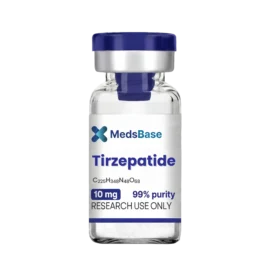
Semaglutide, Retatrutida, and tirzepatide are the three most-cited long-acting incretin peptides in current metabolic support. They differ primarily in selectividad del receptor: semaglutide es un agonista simple de GLP-1, tirzepatide es un agonista dual de GLP-1/GIP, y retatrutide es un agonista triple de GLP-1/GIP/glucagón. El perfil creciente de receptores se correlaciona con efectos progresivamente mayores en el peso corporal en modelos DIO, pero también con una señalización sistémica más amplia.
| Criterio | Semaglutida | Tirzepatida | Retatrutida |
|---|---|---|---|
| Perfil de receptor | GLP-1 (simple) | GLP-1 + GIP (doble) | GLP-1 + GIP + glucagón (triple) |
| Longitud de la secuencia | 31 aminoácidos | 39 aminoácidos | 39 aminoácidos |
| Vida media | ~165 horas (~7 días) | ~120 horas (~5 días) | ~6 días |
| Referencia de marca | Ozempic / Wegovy / Rybelsus | Mounjaro / Zepbound | En investigación (LY3437943) |
| Typical studies weekly dose | 0,25–2,4 mg | 2,5–15 mg | 2–12 mg |
| Strongest signal | Control glucémico, protección cardiovascular | Combinación glucémica + peso corporal, MASH | Mayor efecto en el peso corporal en modelos DIO |
| Efecto en el peso corporal en ensayos | ~15% (STEP) | ~22% (SURMOUNT-1) | ~24% (Fase 2) |
For a full methodological comparison of the dual- vs triple-agonist literature, read Retatrutida vs Tirzepatida: agonista triple vs dual y Ozempic vs Mounjaro. Users selecting between these peptides typically weigh receptor selectivity (cleaner pharmacology with semaglutide) against magnitude of effect (greater with dual- and triple-agonists).
Almacenamiento y reconstitución
Antes de la reconstitución: Almacene los viales liofilizados refrigerados a 2–8 °C en su embalaje original para existencias de trabajo a corto plazo. Para almacenamiento a largo plazo sin abrir, congele a −20 °C. El semaglutide liofilizado es estable bajo refrigeración hasta 24 meses y a −20 °C hasta 36 meses. Evite ciclos de congelación-descongelación en el polvo liofilizado. Procedimiento de reconstitución: Inyecte agua bacteriostática por la pared lateral del vial de péptidos (no directamente sobre el polvo liofilizado). Para un vial de 5 mg, 2.0 mL de agua bacteriostática producen una concentración de trabajo de 2.5 mg/mL — diez unidades en una jeringa de insulina U-100 equivalen a 250 mcg. Agite suavemente — no ajuste shake — and allow 2–5 minutes for full dissolution. A correctly reconstituted solution should be clear and colourless. Después de la reconstitución: store refrigerated at 2–8 °C and use within 30 days for optimal stability. Do not freeze the reconstituted solution — freeze-thaw cycles degrade peptide integrity. Discard any vial showing cloudiness, precipitate, or discolouration. Because semaglutide is dosed once weekly in protocols, a single reconstituted 5 mg vial typically supports 4–8 weeks of titration studies depending on the target dose.
Preguntas frecuentes
What is Semaglutide used for in studies?
Semaglutide is used in studies investigating glucose homeostasis, insulin secretion, body weight and appetite regulation, gastric emptying, cardiovascular endpoints, renal protection in diabetic nephropathy models, hepatic steatosis (MASLD/MASH), and neuroprotection. It is the most extensively characterised long-acting GLP-1 agonist in the published literature and serves as the benchmark comparator for newer multi-agonist incretin peptides. The pharmaceutical-grade semaglutide sold here is ajuste FDA-approved for human therapeutic use and is supplied strictly for clinical studies.
¿En qué se diferencia Semaglutide de Retatrutide y Tirzepatide?
La diferencia clave es selectividad del receptor. Semaglutide is a single GLP-1 receptor agonist with the cleanest receptor pharmacology of the three. Tirzepatide adds GIP receptor activity (dual agonist). Retatrutide adds glucagon receptor activity on top of that (triple agonist). The escalating receptor profile produces progressively larger body-weight effects in published studies but also broader systemic signalling. Semaglutide remains the gold standard for glycaemic control and cardiovascular studies; multi-agonists are preferred where maximum body-weight effect is the studies endpoint.
What is the typical Semaglutide dose?
Published preclinical and clinical studies protocols typically use a titration schedule starting at 0.25 mg weekly and increasing by 0.25–0.5 mg every 4 weeks up to a maintenance dose of 1.0–2.4 mg weekly. A 5 mg vial reconstituted with 2.0 mL bacteriostatic water yields 2.5 mg/mL — ten units on a U-100 insulin syringe equals 250 mcg.
¿Está Semaglutide aprobado por la FDA?
Pharmaceutical semaglutide is FDA-approved under the brand names Ozempic, Wegovy, and Rybelsus for human therapeutic use in type 2 diabetes and chronic weight management, manufactured to GMP standards by Novo Nordisk.
¿Cómo se debe almacenar Semaglutide?
Viales liofilizados: refrigerados a 2–8 °C para existencias de trabajo a corto plazo, o −20 °C para almacenamiento a largo plazo de viales sin abrir. Solución reconstituida: refrigerada a 2–8 °C, usar dentro de los 30 días. No congele la solución reconstituida: los ciclos de congelación-descongelación degradan el péptido. Proteja de la luz directa en todo momento.
¿Cómo reconstituyo Semaglutide?
Siga el procedimiento de reconstitución anterior. Añada agua bacteriostática por la pared lateral del vial (no sobre el polvo liofilizado), agite suavemente y permita de 2 a 5 minutos para la disolución completa. No ajuste agite el vial. Una solución correctamente reconstituida es transparente e incolora. Para un vial de 5 mg + 2,0 mL de diluyente, la concentración de trabajo es de 2,5 mg/mL.
¿Qué concentraciones tiene MedsBase en stock?
MedsBase carries Semaglutide in seven lyophilized vial strengths: 2 mg, 5 mg, 10 mg, 15 mg, 20 mg, 30 mg, and 50 mg. Each strength is available in 10-vial, 20-vial, or 30-vial pack sizes. All vials are supplied at 99%+ HPLC purity with a certificate of analysis available on request.
¿Cuál es la vida media de Semaglutide?
Semaglutide has an unusually long plasma half-life of approximately 165 hours (~7 days) following subcutaneous administration. This extended half-life is achieved by reversible binding to circulating serum albumin via the C18 fatty diacid tether at lysine 26, which protects the peptide from renal clearance. The long half-life enables once-weekly dosing schedules in published studies, in contrast to native GLP-1 (half-life under 2 minutes) and liraglutide (half-life ~13 hours).
Can Semaglutide and Tirzepatide be compared in studies?
Sí — la comparación directa es una de las áreas más activamente investigadas en la farmacología de péptidos metabólicos. Ensayos publicados como SURPASS-2 (clínico) y un creciente cuerpo de trabajo preclínico comparan los dos péptidos en control glucémico, peso corporal, vaciamiento gástrico y puntos finales cardiovasculares. El Semaglutide suele ser el brazo de comparación activa en los ensayos más recientes con agonistas múltiples porque su perfil de receptor único proporciona una línea base clara.
Does Semaglutide cause side reported effects?
The most consistent finding in semaglutide is gastrointestinal — nausea, transient appetite suppression, and delayed gastric emptying are dose-dependent and tend to attenuate over 4–8 weeks of continuous dosing as receptor tachyphylaxis develops. Less common findings in long-term studies include effects on gallbladder motility and (in rodent models with thyroid C-cell sensitivity) C-cell hyperplasia — the latter is a species-specific signal that has not translated to humans in long-term clinical follow-up.
What is the difference between subcutaneous and oral Semaglutide in studies?
Subcutaneous semaglutide (Ozempic, Wegovy) is the standard administration route because the peptide is rapidly degraded in the gastrointestinal tract. Oral semaglutide (Rybelsus) is co-formulated with the absorption enhancer SNAC (sodium N-(8-[2-hydroxybenzoyl]amino)caprylate), which transiently raises gastric pH and protects the peptide long enough for it to cross the gastric mucosa. Oral bioavailability remains low (~1%), so studies-relevant oral doses are substantially higher than subcutaneous equivalents.
How long does Semaglutide take to show effects in preclinical studies?
Acute pharmacodynamic effects on glucose tolerance and gastric emptying are detectable within hours of the first dose. Body-weight effects in DIO rodent models typically become statistically significant after 1–2 weeks of weekly dosing and continue to accrue through 8–12 weeks. Maximum effect on body composition is typically observed after 16–20 weeks of continuous dosing in study models.
¿Puedo pedir Semaglutide para envío internacional?
Sí. MedsBase envía Semaglutide a todo el mundo desde nuestra red de envío dedicada a péptidos. Los pedidos que solo contienen péptidos califican para nuestro servicio de envío independiente de péptidos. Todos los pedidos se envían en embalaje con control de temperatura con seguimiento completo y están cubiertos por nuestro Reshipment Assurance Policy.
Other Peptides for Metabolic and Body-Composition Studies
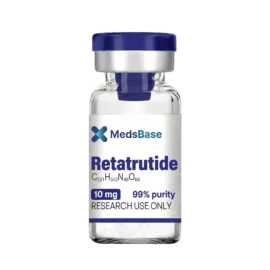
- Retatrutida — Triple GLP-1/GIP/glucagon agonist (LY3437943) — the largest body-weight effect in current metabolic peptide studies
- Tesamorelin — GHRH analog — visceral adipose tissue and lipodystrophy studies
- CJC-1295 con DAC — Long-acting GHRH analog for growth-axis studies
- Ipamorelina — Selective GHRP for clean GH-axis pulse studies
- IGF-1 LR3 — Long-arginine IGF-1 analog — anabolic and regenerative support
Lecturas adicionales
📖 Comparativa del panorama de incretinas de acción prolongada
Consulte nuestras guías comparativas: Retatrutide vs Tirzepatide — triple agonista vs dual agonista y Ozempic vs Mounjaro. Cubre la farmacología de los receptores, la ingeniería de secuencias, la vida media, la relación dosis-respuesta y los datos de ensayos publicados que distinguen al semaglutide de los péptidos multiagonistas más recientes.
Más opciones en Péptidos
Clasificados por volumen de pedidos reciente en MedsBase — lo que otros clientes están eligiendo en esta categoría.
| Potencia | 2 mg, 5 mg, 10 mg, 15 mg, 20 mg, 30 mg, 50 mg |
|---|---|
| Cantidad | 10 Viales, 20 Viales, 30 Viales |
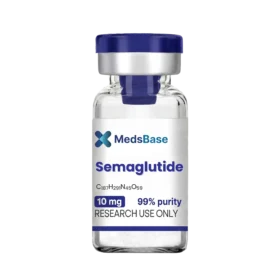 Semaglutida
Preguntas y respuestas
Semaglutida
Productos relacionados
Reseñas
Aún no hay reseñas