







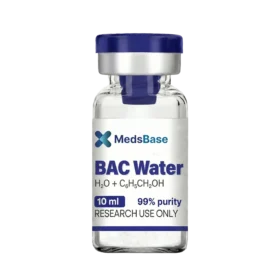
BAC Water (Bacteriostatisch Water)
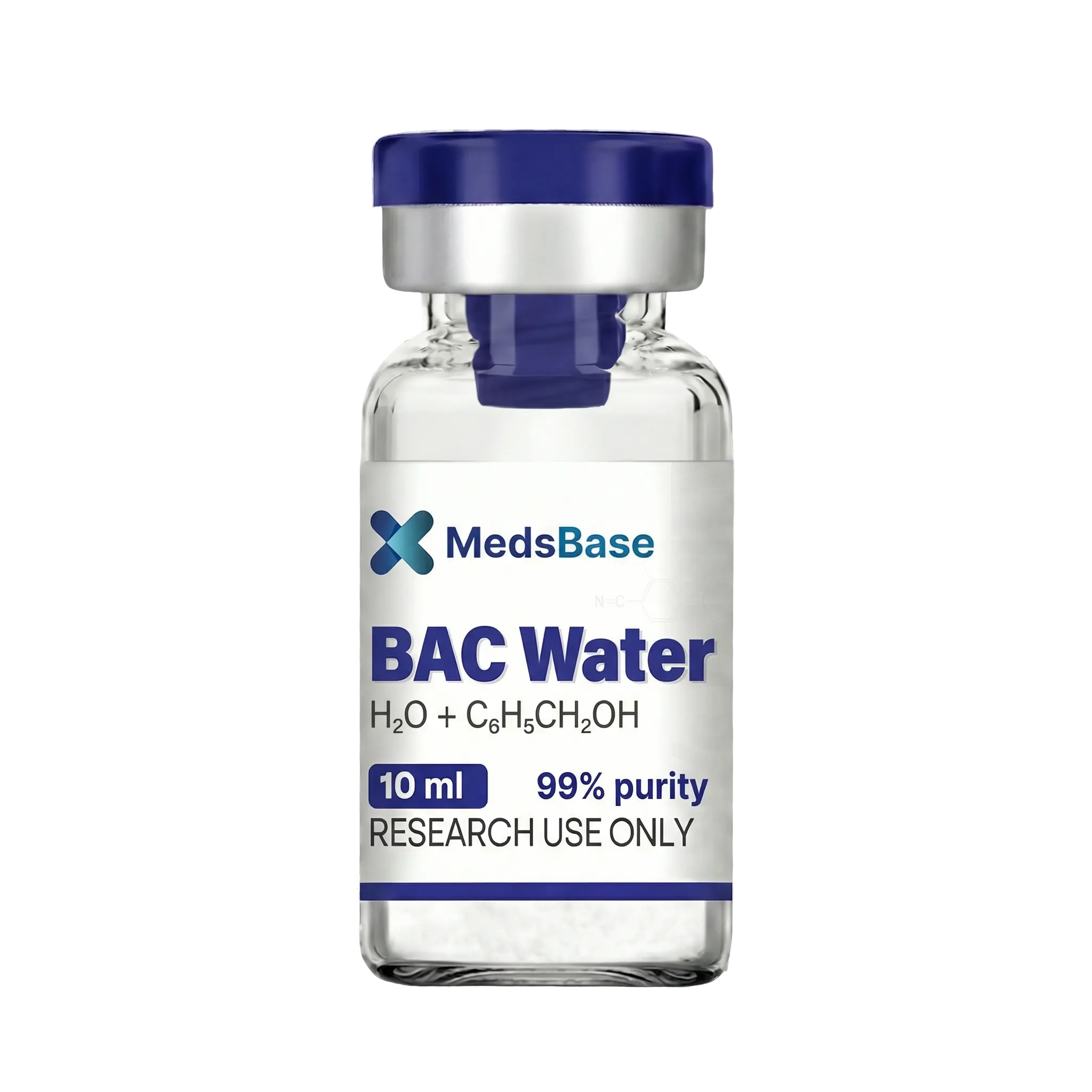
✅ Steriel, niet-pyrogeen bacteriostatisch water
✅ Bevat 0,9% benzylalcohol als conserveermiddel
✅ Ideaal voor reconsitutie van peptiden & lyofiliseerde verbindingen
✅ Geschikt voor laboratoriumgebruik met meerdere doses
✅ Alleen voor onderzoeksdoeleinden – hoge zuiverheid & verzegelde fles
✓ Medisch beoordeeld door Morgan Ellis — Apotheekonderzoeker · 8 jaar ervaring · Laatst beoordeeld: mei 2026
Als u bacteriostatisch water nodig heeft naast lyofiliseerde peptiden voor een volledige reconstitutiekit, onze Peptide Healing Stack (BPC-157 5 mg + TB-500 5 mg + BAC water) combineert beide peptiden met het reconstitutiewater in één pakket — handig voor gebruikers die gecombineerde herstelprotocollen uitvoeren.
Kort Antwoord — Wat is Bacteriostatisch Water?
Bacteriostatisch (BAC) water is steriel, niet-pyrogeen water dat 0,9% benzylalcohol bevat als conserveermiddel. De benzylalcohol remt de microbiële groei, wat betekent dat dezelfde herbruikbare fles meerdere keren kan worden gebruikt onder de juiste steriele techniek — in tegenstelling tot gewoon steriel water, dat na een enkele punctie moet worden weggegooid. Het is de standaard verdunningsvloeistof voor het reconstitueren van lyofiliseerde onderzoekspeptiden zoals BPC-157, TB-500, GHK-Cu, Semax en Adamax.
BAC Water — Steriele Multi-Dose Verdunningsvloeistof voor Onderzoekspeptiden
Bacteriostatisch Water voor Injectie is de meest gebruikte reconstitutievloeistof in peptideonderzoek. Het is farmaceutisch steriel water waaraan 0,9% benzylalcohol is toegevoegd als bacteriostatisch conserveermiddel. Die kleine maar cruciale toevoeging maakt het mogelijk dat een enkele 10 ml fles meerdere keren kan worden gepuncteerd en gebruikt over een periode van 28 dagen zonder microbiële besmetting — een praktisch voordeel in elk laboratoriumprotocol dat herhaalde dosering uit lyofiliseerde peptidevoorraad vereist.
Elk peptide dat wordt verkocht op MedsBase arriveert gevriesdroogd (lyofilized). Voor gebruik moet het poeder worden opgelost in een compatibele vloeistof om een oplossing te creëren die op volume kan worden gemeten. BAC Water is de industristandaard keuze omdat het drie eigenschappen tegelijkertijd biedt: steriliteit, pyrogen-vrije status en multi-dose compatibiliteit.
Waarom Bacteriostatisch Water in plaats van Steriel Water?
Steriel Water voor Injectie is gewoon water dat is gefilterd en gesteriliseerd. Zodra de rubberen stop van een sterielwaterflesje door een naald is doorboord, moeten de inhoud direct worden gebruikt en het flesje worden weggegooid, omdat er geen conserveermiddel aanwezig is om bacteriële of schimmelgroei te onderdrukken die door die punctie kan ontstaan.
Bacteriostatisch Water bevat 0,9% benzylalcohol — een concentratie ruim onder elke cytotoxische drempel maar hoog genoeg om te voorkomen dat veelvoorkomende omgevingsorganismen (Staphylococcus epidermidis, Escherichia coli, Candida albicans) zich vermenigvuldigen in de resterende vloeistof tussen de doses. Onderzoekswerkstromen waarbij een 5 mg peptideflesje wordt opgelost in 2 mL en vervolgens elke 24 uur 200 µg wordt gedoseerd gedurende 10–25 dagen, zijn afhankelijk van deze multi-dose mogelijkheid.
Reconstitutieprotocol — Stap voor Stap
Het onderstaande protocol is de standaardmethode die wordt gebruikt in peptide-onderzoekslaboratoria. Voor een meer gedetailleerde behandeling van verdunningsberekeningen, concentratieberekeningen en probleemoplossing, zie onze BAC Water reconstitutiegids.
- Bereid de werkruimte voor. Veeg een schoon, vlak oppervlak af met 70% isopropylalcohol. Was uw handen en trek wegwerphandschoenen aan.
- Inspecteer de flesjes. BAC Water moet helder en kleurloos zijn. Het lyofilized peptide moet eruitzien als een wit of off-white poeder of cake; elke verkleuring of zichtbare deeltjes betekent dat het flesje niet mag worden gebruikt.
- Veeg beide rubberen stoppen af met alcohol. Laat ze 15–20 seconden drogen — een naaldpunctie door een nog natte stop kan alcohol in het flesje duwen.
- Trek BAC Water op in een spuit. De standaard werkverdunning voor de meeste peptiden is 2 mL BAC Water per 5 mg peptide, wat een eindconcentratie geeft van 2,5 mg/mL (of 250 µg per 0,1 mL-markering op een insulinespuit).
- Spuit het BAC Water voorzichtig langs de zijkant van het peptideflesje in. Spuit het niet direct op het lyofiliseerde poeder — dit kan schuimvorming en lokale denaturatie veroorzaken. Laat de vloeistof langs de binnenwand van het glas lopen.
- Draai voorzichtig — niet schudden. De meeste peptiden lossen op binnen 30–60 seconden van zachtjes draaien. Krachtig schudden veroorzaakt turbulentie aan het lucht-wateroppervlak, wat peptide structuren kan fragmenteren, vooral bij grotere verbindingen zoals TB-500 en Thymosine Alpha-1.
- Label de gereconstitueerde fles. Schrijf de reconstitutiedatum op de fles. Koel bewaren en binnen 30 dagen gebruiken is standaard; daarna kunnen afbraakproducten zich ophopen.
Compatibiliteit met onderzoekspeptiden
BAC Water is compatibel met vrijwel elk onderzoekspeptide dat wordt verkocht op MedsBase, inclusief:
- BPC-157 — weefselherstel onderzoekspeptide; lost schoon op bij 2,5–5 mg/mL.
- TB-500 (Thymosin Beta-4) — systemisch herstelpeptide; vermijd krachtig schudden tijdens reconstitutie.
- GHK-Cu (Koperpeptide) — de koperchelatisatie is stabiel in BAC Water bij typische werkconcentraties.
- Semax en Adamax — korte nootropische peptiden met goede oplosbaarheid in BAC Water.
- Groei-hormoon-vrijmakende peptiden (Ipamorelin, CJC-1295, Sermorelin) — reconstitueer bij 1–2 mg/mL voor typisch onderzoeksdoseringen.
Een klein aantal onderzoeksverbindingen wordt geleverd met een specifiek aanbevolen verdunningsmiddel (steriel water of azijnzuuroplossing). Controleer altijd de productspecifieke documentatie voordat u standaard BAC Water gebruikt.
Opslag
- Ongeopende flacons: bewaren bij gecontroleerde kamertemperatuur (15–25 °C) beschermd tegen direct licht. Koeling is niet nodig.
- Eenmaal aangebroken: standaard laboratoriumpraktijk is om na 28 dagen weg te gooien, zelfs als de oplossing helder blijft. De 0,9% benzylalcoholconcentratie is ontworpen voor deze gebruiksduur.
- Gereconstitueerde peptideoplossingen: koel bij 2–8 °C en gebruik binnen 30 dagen voor de meeste peptiden (korter voor grotere of minder stabiele verbindingen).
Veiligheidsoverwegingen
De 0,9% benzylalcoholinhoud heeft twee gedocumenteerde veiligheidsoverwegingen in klinisch onderzoek:
- Neonataal onderzoeksprotocollen vermijden BAC Water volledig. Blootstelling aan grote hoeveelheden benzylalcohol bij neonaten is in verband gebracht met “gasping syndrome”. Onderzoek met neonatale weefsels of proefpersonen moet gewoon steriel water gebruiken.
- Overgevoeligheid voor benzylalcohol. Zeldzaam maar gedocumenteerd. Elk onderzoeksprotocol dat onverwachte injectieplaatsreacties meldt, moet gevoeligheid voor benzylalcohol uitsluiten voordat de reactie aan het peptide zelf wordt toegeschreven.
Voor de overgrote meerderheid van peptideonderzoekstoepassingen wordt de 0,9% concentratie goed verdragen en weegt het voordeel van meerdere doses op tegen eventuele zorgen.
📦 Elke bestelling is gedekt door onze Reshipment Assurance-beleid — als uw pakket niet binnen 20 werkdagen arriveert, sturen wij het opnieuw.
| Specificatie | Detail |
|---|---|
| CAS-nummer | Steriel water (CAS 7732-18-5) + 0,9% benzylalcohol (CAS 100-51-6) |
| Molecuulformule | H2O + C6H5CH2OH (0,9%) |
| Moleculair gewicht | n.v.t. (meervoudig diluent) |
| Sequentie | n.v.t. (steriel meervoudig injectiediluent — geen peptide) |
| Form | Sterile liquid solution (multi-dose vial) |
| Zuiverheid | Pharmaceutical-grade sterile solution (USP water + 0.9% benzyl alcohol) |
| Opslag | 15–30 °C (gecontroleerde kamertemperatuur). Beschermen tegen licht. Gebruik een geopende meervoudige doseerfles binnen 28 dagen na eerste punctie. |
| Oplosbaarheid | Bacteriostatisch water (aanbevolen) of steriel water voor kortere gebruiksperioden |
| Onderzoeksgebruik | Alleen voor laboratoriumonderzoek. Niet voor humaan of veterinair diagnostisch of therapeutisch gebruik. |
Veelgestelde vragen
Kan ik een BAC Water-fles voor meerdere peptiden hergebruiken?
Ja — dat is het primaire voordeel van bacteriostatisch water ten opzichte van steriel water. Een enkele 10 ml BAC Water-fles kan onder goede steriele techniek tot 28 dagen herhaaldelijk worden gebruikt (veeg de stop voor elke punctie met 70% IPA, gebruik elke keer een nieuwe steriele naald).
Hoe lang gaat BAC Water mee na opening?
Standaard laboratoriumpraktijk is 28 dagen na eerste punctie, opgeslagen bij kamertemperatuur. De 0,9% benzylalcoholconcentratie is specifiek ontworpen voor deze gebruiksperiode.
Wat is het verschil tussen BAC Water en steriel water?
Steriel water bevat geen conserveermiddel en moet binnen één sessie worden gebruikt na doorprikken. Bacteriostatisch water bevat 0,9% benzylalcohol, wat veilig meervoudig gebruik mogelijk maakt voor maximaal 28 dagen. Voor peptideonderzoek waarbij opeenvolgende doseringen nodig zijn vanuit een gereconstitueerde voorraad, is BAC Water bijna altijd de juiste keuze.
Wat is de juiste verdunningsverhouding voor BPC-157 of TB-500?
De meest gebruikelijke werkverdunning is 2 mL BAC Water per 5 mg peptide, wat 2,5 mg/mL oplevert. Op een insulinespuit gemarkeerd in stappen van 0,01 mL betekent dit 250 µg per 0,1 mL (10-eenheden markering). Pas aan op basis van de doeldosering per injectie volgens uw protocol.
Kan BAC Water worden gebruikt om HCG te reconstitueren?
Ja — BAC Water is de standaard verdunner voor het reconstitueren van onderzoeks-HCG-producten. Gebruik het volledige meegeleverde volume (meestal 2–5 mL per 5000 IU flesje) en bewaar het gekoeld na mengen.
Heb ik een recept nodig om BAC Water te kopen?
BAC Water wordt in verschillende rechtsgebieden anders geclassificeerd. Klanten zijn zelf verantwoordelijk voor naleving van hun lokale regelgeving.
Wat gebeurt er als ik verlopen BAC Water gebruik?
Het risicoprofiel is tweeledig: (1) het benzylalcohol-conserveermiddel kan zijn afgebroken, waardoor de antimicrobiële bescherming vermindert, en (2) het water zelf is mogelijk niet langer gegarandeerd pyrogeenvrij. Voor onderzoek waarbij data-integriteit belangrijk is, gebruik altijd BAC Water met geldige houdbaarheidsdatum.
Moet BAC Water gekoeld worden bewaard?
Nee, ongeopende flesjes zijn stabiel bij gecontroleerde kamertemperatuur (15–25 °C). Na eerste doorprikken koelen veel laboratoria geopende flesjes nog steeds af als extra voorzorgsmaatregel, hoewel de 0,9% benzylalcohol is ontworpen voor opslag bij kamertemperatuur tijdens gebruik.
Mag ik het peptideflesje schudden om het oplossen te versnellen?
Nee. Schudden veroorzaakt turbulentie aan het lucht-water-oppervlak dat peptidestructuren kan fragmenteren. Voeg BAC Water voorzichtig langs de zijkant van het flesje toe en draai (niet schudden) tot het is opgelost. De meeste peptiden lossen op binnen 30–60 seconden.
Is BAC Water hetzelfde als zoutoplossing?
Nee. Zoutoplossing is steriel water met toegevoegd natriumchloride. BAC Water bevat alleen steriel water plus 0,9% benzylalcohol (geen zout). Sommige peptiden worden geleverd met specifieke aanbevelingen voor verdunningsvloeistoffen — raadpleeg de productspecifieke documentatie voordat u substitueert.
Hoeveel flesjes van 10 mL heb ik nodig voor een standaard peptideprotocol?
Hangt af van uw protocol. Een veelgebruikte vuistregel: één flesje BAC Water van 10 mL reconstitueert ongeveer 25 mg peptide bij standaard werkverdunningen. Voor een peptidekit met 10 flesjes van elk 5 mg (50 mg totaal), bestel twee of drie flesjes BAC Water voor extra speelruimte.
Hoeveel BAC Water moet ik gebruiken om een peptideflesje te reconstitueren?
Het volume hangt af van de peptidedosis en de gewenste concentratie. Een veelgebruikte aanpak voor een peptideflesje van 2 mg is om 1 mL BAC water toe te voegen om een oplossing van 2.000 mcg/mL te verkrijgen, waardoor individuele doseringsberekeningen eenvoudig zijn. Gebruik tijdens het hele proces een steriele techniek (alcohol gereinigde septum, langzame injectie langs de wand van het flesje om schuimvorming te voorkomen).
Wat is de houdbaarheid van een gereconstitueerd peptideflesje?
Eenmaal gereconstitueerd met bacteriostatisch water blijven de meeste peptiden 30–60 dagen stabiel bij opslag bij 4 °C, dankzij de bacteriostatische eigenschappen van benzylalcohol. Lyofiliseerde peptiden opgeslagen bij −20 °C zijn 1–2 jaar stabiel. Eenmaal gereconstitueerd, vermijd het invriezen van de oplossing — herhaalde vries-dooicycli tasten de peptide-integriteit aan.
Levert u BAC Water internationaal?
Ja. BAC Water wordt wereldwijd verzonden samen met peptidebestellingen via onze speciale peptidekoerier. Bestellingen met alleen peptiden worden zonder extra kosten verzonden; gemengde bestellingen gebruiken standaard internationale tracking.
Verder lezen
📖 Lees het onderzoek achter dit peptide
Lees onze volledige evidence-based gids: BAC Water — reconstitutieprotocol & laboratoriumhandleiding. Behandelt het werkingsmechanisme, gepubliceerde onderzoeksgegevens, typische onderzoeksdoseringen, reconstitutieprotocollen, stapeloverwegingen en veiligheids-/contra-indicatie notities.
Gerelateerde Peptide Onderzoeksgidsen
Meer opties in Peptiden
Gerangschikt op recente bestelvolumes van MedsBase — wat andere klanten in deze categorie kiezen.
| Flesgrootte | 3 ml, 10 ml |
|---|---|
| Hoeveelheid | 10 flacons, 20 flacons, 30 flacons |
 BAC Water (Bacteriostatisch Water)
Vragen & antwoorden
BAC Water (Bacteriostatisch Water)
Gerelateerde producten
Beoordelingen
Er zijn nog geen beoordelingen