







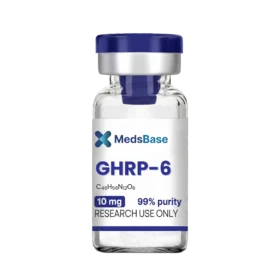
GHRP-6-asetaatti
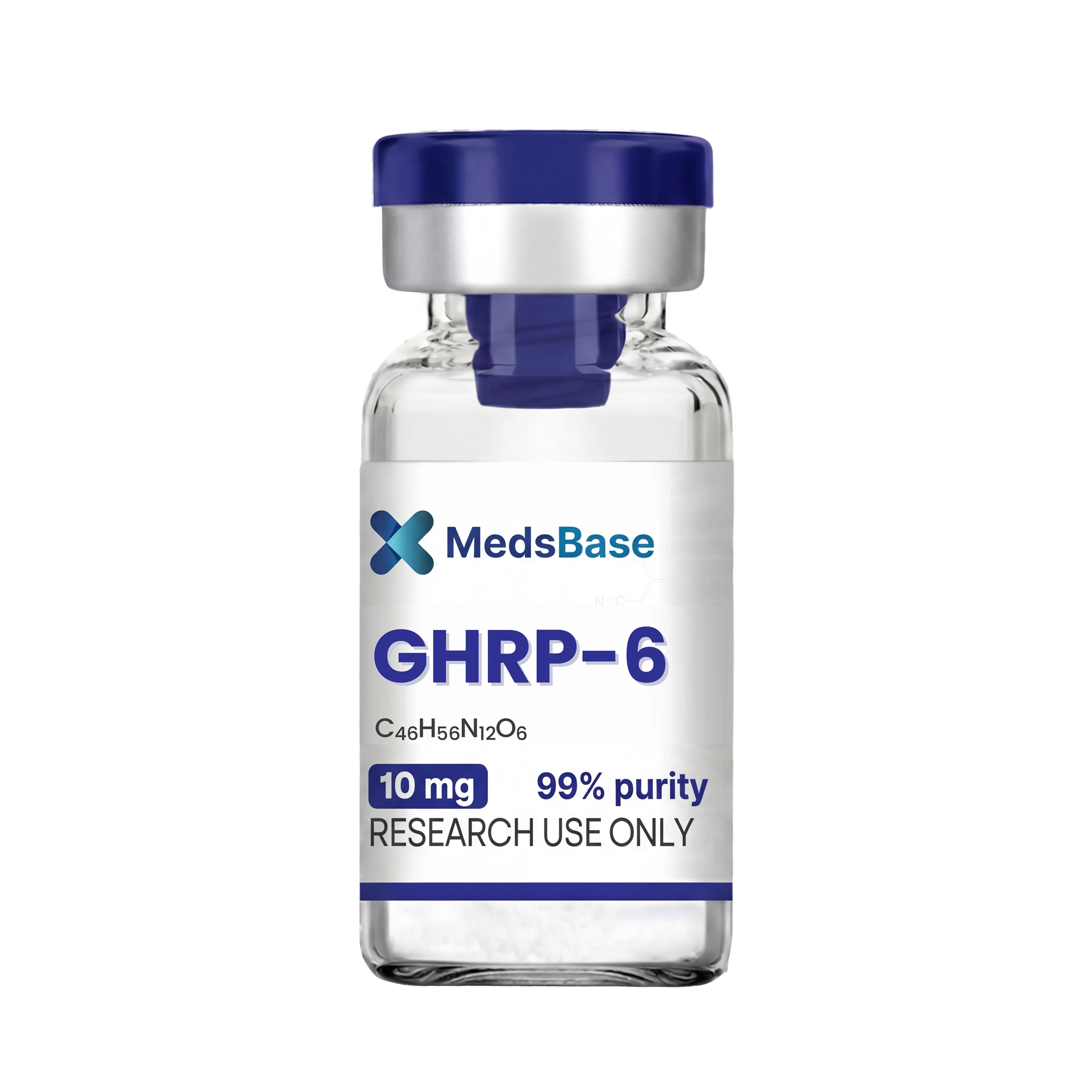
✅ Ensimmäisen sukupolven GHS-heksapeptidi
✅ GHS-R1a/ghrelinireseptoriagonisti
✅ Stimuloi pulsaatilista GH:n eritystä
✅ Ghrelin-akselin ruokahaluun liittyvä tutkimus
✅ Synergistinen GHRH-analogien kanssa
GHRP-6-asetaatti sisältää synteettistä peptidiyhdistettä.
✓ Lääketieteellinen tarkistus Morgan Ellis — Farmasian tutkija · 8 vuoden kokemus · Viimeisin arvio: toukokuu 2026
Pikavastaus — Mikä on GHRP-6-asetaatti?
GHRP-6-asetaatti (Kasvuhormonin eritystä stimuloiva peptidi 6) on 6-aminohapposynteettinen heksapeptidi ja yksi alkuperäisistä kasvuhormonin eritystä stimuloivista aineista, jonka kehittivät Bowers ja kollegat toisen sukupolven jäsenenä GHRP-sarjassa. Se vaikuttaa kasvuhormonin eritystä stimuloivaan reseptoriin (GHS-R1a) — samaan reseptoriin kuin endogeeninen ghrelini — tuottaen pulsaatilista GH:n eritystä ruokahalun stimuloinnin ohella. Toimitetaan 5 mg ja 10 mg lyofiloituina pulloina vain laboratoriotutkimuskäyttöön.
📦 Jokainen tilaus on katettuna meidän Reshipment Assurance Policy -politiikkamme piiriin — jos lähetyksesi ei saavu 20 arkipäivässä, lähetämme uuden.
| Tekniset tiedot | Yksityiskohta |
|---|---|
| CAS-numero | 87616-84-0 (GHRP-6 vapaabasen muodossa); toimitetaan asetaattisuolana |
| Molekyylikaava | C46H56N12O6 (vapaa emäs; asetaattisuola lisää CH3COOH-vastaiionin) |
| Molekyylipaino | 873.02 Da (vapaa emäs) |
| Sekvenssi | His-D-Trp-Ala-Trp-D-Phe-Lys-NH2 (HwAWfK-NH2, 6 aminohappoa; sisältää D-Trp-asemassa 2 ja D-Phe-asemassa 5 proteolyyttistä stabiilisuutta varten; C-terminaalisesti amidioitu) |
| Muoto | Liofilisoitu asetaattisuola (valkoista tai kellertävää jauhetta) |
| Puhdaus | ≥99 % (HPLC-varmistettu, COA saatavilla pyynnöstä) |
| Säilytys | Lyofiloitu: 2–8 °C (jääkaappi) käyttövarastoa varten; −20 °C pitkäaikaissäilytykseen avaamattomille pulloille. Uudelleenliuotettuna: 2–8 °C, käytä noin 30 päivän kuluessa. Suojaa valolta. Älä jäädytä–sulata uudelleenliuotettua liuosta. |
| Liukoisuus | Bakteriostaattinen vesi (suositus) tai steriili vesi lyhyemmille käyttöajalle |
| Tutkimuskäyttö | Vain laboratoriotutkimuskäyttöön. Ei tarkoitettu ihmis- tai eläinlääketieteelliseen diagnostiseen tai terapeuttiseen käyttöön. |
Mikä on GHRP-6-asetaatti?
GHRP-6 (Kasvuhormonin eritystä stimuloiva peptidi 6) on 6-aminohapposynteettinen heksapeptidi ja yksi kasvuhormonin eritystä stimuloivien (GHS) peptidien kanonisista jäsenistä. Sen kehittivät Cyril Y. Bowers ja kollegat Tulane Universityssa osana rakennus-aktivoitumissuhdeohjelmaa, jonka tavoitteena oli tunnistaa pieniä peptidikykyjä stimuloimaan pulsaatilista kasvuhormonin eritystä adenohypofyysistä — työ, joka johti lopulta kasvuhormonin eritystä stimuloivan reseptorin löytämiseen ja epäsuorasti endogeenisen ghrelinin tunnistamiseen sen luonnollisena ligandinä vuonna 1999 Kojima ja kollegoiden toimesta (Nature). Asetaatti-ionia käytetään tutkimusluokan lyofiloinnissa, koska se parantaa peptidin pitkäaikaista stabiilisuutta ja vesiliukoisuutta muuttamatta farmakologiaa.
Hyvin karakterisoitu sekvenssi on HwAWfK-NH2 (jossa pienet kirjaimet tarkoittavat D-aminohappojäämiä), molekyylipaino 873.02 Da, empiirinen kaava C46H56N12O6. Kaksi D-aminohappokorvausta (D-Trp asemassa 2 ja D-Phe asemassa 5) antavat vastustuskykyä endogeenisille proteaaseille ja pidentävät in-vivo puoliintumisaikaa verrattuna kaikki-L-analogeihin. C-terminus on amidioitu, mikä on välttämätöntä reseptoritoiminnalle. GHRP-6 on ei hyväksytty FDA:n, EMA:n, MHRA:n tai minkään muun suuren sääntelyviranomaisen hyväksymää ihmisterapeuttiseen käyttöön. Täällä myytävä tutkimuskäyttöön tarkoitettu GHRP-6-asetaatti toimitetaan vain laboratoriotutkimuskäyttöön eikä ole tarkoitettu ihmisille tai eläimille annettavaksi. Uudemman sukupolven reseptoriselektiivisestä analogista ilman kortisoli/prolaktiinisignaalia, katso Ipamorelin tuotesivu.
Toimintamekanismi — GHS-R1a-reseptorin agonistinen vaikutus ja GH-pulssi
Se, mikä tekee GHRP-6:sta mekanistisesti erityisen kasvuakselin tutkimuspeptidien joukossa, on sen selektiivinen vaikutus kasvuhormonin sekretagogireseptoriin — sama reseptori, jota endogeeninen ghreliini aktivoi — eikä GHRH-reseptoria, jota sermoreliini ja CJC-1295 käyttävät. Alavirran vaikutus on pulssimainen eikä toninen GH:n vapautumismalli julkaistuissa tutkimuksissa:
- GHS-R1a-reseptorin agonistinen vaikutus somatotrofeilla — GHRP-6 sitoutuu kasvuhormonin sekretagogireseptoriin tyyppiä 1a (GHS-R1a, myös ghreliinireseptori) etumaisen aivolisäkkeen somatotrofeilla. Reseptorin aktivoituminen kytkeytyy Gαq/11 ja fosfolipaasi C:hen, nostaa solunsisäistä kalsiumia ja laukaisee depolarisaatioon kytketyn eksosytoosin GH:ta sisältäville vesikkeleille. Signaali vahvistuu somatostatiinitonin supistumisella — GHRP-6 vaikuttaa sekä somatotrofeilla että hypotalamuksen somatostatiinineuroneilla, tuottaen suuremman GH-pulssin kuin suora somatotrofistimulaatio yksinään ennustaisi.
- Synergia endogeenisen GHRH:n kanssa — GHS-R- ja GHRH-R-signaalireitet konvergoivat solunsisäisesti, mutta käyttävät erilaisia toisen lähettijän järjestelmiä (PLC/IP3/Ca2+ vs adenylyl cyclase/cAMP/PKA), joten GHRP-6 ja GHRH-analogit tuottavat additiivista tai synergistä GH:n eritystä yhdistettynä. Tämä on perustelu kanonisille “GHRP + GHRH-analogi” tutkimuskombinaatioille: GHS kuten GHRP-6 parittuna GHRH-analogin kuten Sermorelin tai CJC-1295 DAC:lla. Epäspesifinen ruokahalun stimulaatio ja lievä kortisoli/prolaktiini-signaali.
- Ei-kohdennettu ruokahalun stimulointi ja lievä kortisoli/prolaktiini-signaali GHRP-6:n plasmahäviöaika on noin 30–60 minuuttia, huomattavasti pidempi kuin luonnollisella ghresiinillä (~10–30 minuuttia) johtuen D-aminohappokorvauksista, jotka tekevät siitä proteolyysille resistentimmän. Ihonalainen annostelu on julkaistussa kirjallisuudessa useimmin mainittu tutkimusreitti; laskimonsisäiset ja nenän kautta tapahtuvat annostelutavat on myös dokumentoitu mekanismitutkimuksissa.
GHRP-6:n plasmassa puoliintumisaika on noin 30–60 minuuttia, huomattavasti pidempi kuin luonnollisella ghrelinillä (~10–30 minuuttia) D-aminohappokorvausten ansiosta, jotka tekevät siitä proteolyysille resistentimmän. Ihonalainen annostelu on julkaistussa kirjallisuuduseen useimmin mainittu tutkimusreitti; laskimonsisäinen ja nenän kautta tapahtuva annostelu on myös dokumentoitu vaikutusmekanismitutkimuksissa.
Julkaistut tutkimussovellukset
GHRP-6:ää käytetään laboratoriotutkimuksissa, joissa tutkitaan:
- Kasvuhormoniaakselin farmakologia — pulsaattinen GH-dynamiikka, somatotrofien responsiivisuus, vertaileva GH-sekretagogitutkimus; vertailukohtana ensimmäisen sukupolven GHS julkaistuissa GH-pulssirakennetutkimuksissa (Bowers et al., J Clin Endocrinol Metab; Smith et al., Science 1996)
- Ruokahaluun ja syömiskäyttäytymiseen liittyvä tutkimus — ghrelin-aktiivisuuden aktivoiminen, ruokailutestit jyrsijämalleissa, kakeksiamallit kasvaimen kantavissa eläimissä; kanoninen tutkimusväline ghrelin-välitteisen oreksigeenisen signaloinnin erottamiseksi muista ruokahaluun liittyvistä reiteistä
- — GH-varantotestaus prekliinisissä malleissa, somatotrofien hypertrofia/hyperplasia, mekanismitutkimus uusille GH-sekretagogeille — GH-varantojen testaus prekliinisissä malleissa, somatotrofien hypertrofia/hyperplasia, uusien GH-sekretagogien toimintamekanismien tutkimus
- Kakeksia ja vajaakäyttöoireyhtymän tutkimus — kasvainkantavien jyrsijöiden kakeksia, COPD:hen liittyvät heikentymismallit, lihasmassan / rasvamassan säilyttäminen GH-akselin ja ruokahalun stimuloinnin yhdistelmällä
- Vertailu GHS-tutkimuksesta — suorat vertailut uudempien analogien kanssa, kuten Ipamorelin (reseptoriselektiivinen ilman kortisolia/prolaktinia), heksareliini (muokattu GHRP-6), GHRP-2 (vaihtoehtoinen ensimmäisen sukupolven analogi) ja suun kautta aktiiviset pienmolekyyliset GHS:t kuten MK-677
- Kardiovaskulaarinen tutkimus — GHS-R:n ilmentyminen kardiomyosyteissä; julkaistu tutkimus sydämen iskeemia-reperfuusiovauriosta ja sydämen toiminnasta GH-puutteisissa malleissa
- Yhdistetty GHRP + GHRH -tutkimus — synergistiset GH:n vapautusprotokollat, joissa yhdistetään GHRP-6 ja GHRH-analogeja kuten Sermorelin tai CJC-1295 DAC:lla maksimaalisen pulssimaisen GH-tutkimusstimuluksen saavuttamiseksi.
Laajemman kontekstin siitä, miten GHRP-6 sijoittuu kasvuakselin peptidimaailmaan, katso Ipamorelin uuden sukupolven reseptoriselektiivisenä analogina, CJC-1295 DAC:lla pitkävaikutteiselle GHRH-akselin tutkimukselle, ja Sermorelin lyhytvaikutteisemmalle GHRH-tutkimukselle. Selaa koko tutkimuspeptidien luettelo liittyvistä yhdisteistä.
Saatavat vahvuudet ja pitoisuudet
MedsBase stocks GHRP-6 Acetate in two lyophilized vial sizes calibrated to typical research protocol lengths. Each strength is available in 10-vial, 20-vial, or 30-vial pack formats with full reconstitution guidance:
| Pullon vahvuus | Tyypillinen tutkimuskäyttötapaus | Pakkauskoot |
|---|---|---|
| 5 mg | Vakiotutkimusvahvuus — lyhytaikaiset GH-pulssiprotokollat, yksittäiskohorttitutkimukset | 10, 20 tai 30 pulloa |
| 10 mg | Pidennetyt sykliprotokollat, monikohorttitutkimukset, alhaisin mg-hinta | 10, 20 tai 30 pulloa |
Molemmat vahvuudet ovat samaa kemiallista muotoa (liofilisoitu asetaattisuolajauhe, 99%+ HPLC-puhtaus). Suuremman mg-määrän pullot vaativat pienempiä uudelleenliuotusmääriä annosyksikköä kohden, mikä on hyödyllistä, kun tutkijat haluavat minimoida injektiomäärän jyrsijöiden protokollissa. Koska GHRP-6:n annosvälit ovat 50–300 mcg per annos, yksi 5 mg:n pullo riittää useiden viikkojen tutkimukseen tyypillisillä annoksilla.
Vertailu — GHRP-6 vs Ipamoreliini
GHRP-6 ja Ipamorelin ovat kasvuhormonin sekretagogipeptidiluokan kanoniset ensimmäisen ja kolmannen sukupolven jäsenet, ja ne ovat julkaistussa GHS-tutkimuksessa useimmin mainitut vertailukohteet. Niillä on sama reseptori (GHS-R1a) ja ne aiheuttavat samankaltaisia GH-pulsseja, mutta ne eroavat merkittävästi reseptorivalikoimassa ja sivuttaisissa signaalireiteissä.
| Kriteeri | GHRP-6 | Ipamorelin |
|---|---|---|
| Pituus | 6 aminohappoa (heksapeptidi) | 5 aminohappoa (pentapeptidi) |
| Sukupolvi | Ensimmäisen sukupolven GHS (noin 1984) | Kolmannen sukupolven GHS (noin 1998) |
| Reseptori | GHS-R1a (ghrelinireseptori) | GHS-R1a (ghrelinireseptori) |
| GH-pulssi | Voimakas pulssimainen GH-eritys | Voimakas pulssimainen GH-eritys (verrattavissa GHRP-6:een) |
| Ruokahalun signaali | Kyllä (ghreliniin verrattava oreksigeeninen vaikutus) | Vähäinen tai puuttuu julkaistuissa tutkimuksissa |
| Kortisoli / prolaktiini | Kohtuullinen nousu (tutkimukseen liittyvä sekoittava tekijä) | Ei mitattavissa olevaa nousua – keskeinen selektiivisyysetu |
| Tyypillinen tutkimusannos | 50–300 mcg, 1–3 kertaa päivässä | 100–300 mcg, 1–3 kertaa päivässä |
| Plasman puoliintumisaika | Noin 30–60 min | ~2 tuntia |
Tutkimuksissa, joissa ruokahalua stimuloiva signaali on haluttu ominaisuus (kakeksiamallit, ruokaan liittyvät tutkimukset), GHRP-6 on suositeltava, koska oreksigeeninen vaikutus on osa tutkimuskohdetta. Puhtaassa GH-akselin farmakologiassa, jossa kortisoli ja prolaktiini ovat sekoittavia muuttujia, Ipamorelin on suositeltava, koska reseptoriselektiivisyysedut eliminoivat nämä ei-kohdistetut signaalit. Molemmat yhdistetään usein GHRH-analogin kanssa (kuten CJC-1295 DAC:lla) kanoniseen synergistiseen GH-pulssitutkimusprotokollaan.
Säilytys ja liuotus
Ennen liuotusta: Säilytä liofilisoidut pullot jääkaapissa 2–8 °C:ssa alkuperäisessä pakkauksessa lyhytaikaista käyttövarastoa varten. Pitkäaikaista säilytystä varten pakastamattomille pulloille, pakasta -20 °C:ssa. Liofilisoitu GHRP-6-asetaatti on stabiili jääkaapissa jopa 24 kuukautta ja -20 °C:ssa jopa 36 kuukautta. Vältä liofilisoidun jauheen jäätymis-lämmityssyklejä.
Uudelleenliuotusmenettely: Ruiskuta bakteriostaattista vettä peptidipullon sivuseinämää pitkin (ei suoraan liofilisoidun kakkupalan päälle). 5 mg pullossa 2,0 ml bakteriostaattista vettä tuottaa 2,5 mg/ml käyttöpitoisuuden – 0,04 ml toimittaa 100 mcg tutkimusannoksen; 0,1 ml toimittaa 250 mcg. Kiertele varovasti – älä ei ravistele — ja anna 2–5 minuuttia täydelliseen liukenemiseen. Oikein uudelleenliuotettu liuos tulisi olla kirkas ja väritön.
Uudelleenliuotuksen jälkeen: Säilytä jääkaapissa 2–8 °C:ssa ja käytä 30 päivän kuluessa optimaalisen stabiilisuuden saavuttamiseksi. Älä pakasta uudelleenliuotettua liuosta — jäätymis-lämmityssyklit heikentävät peptidin eheyttä. Hylkää kaikki sumuiset, sakkautuneet tai värjäytyneet pullot.
Usein Kysytyt Kysymykset
Mihin GHRP-6:ta käytetään tutkimuksessa?
GHRP-6:ta käytetään laboratoriotutkimuksissa, joissa tutkitaan kasvuhormoniakselia, pulssimaista GH:n vapautumisdynamiikkaa, somatotrofien reagoivuutta, ghreliniakselin farmakologiaa, ruokahalua ja syömiskäyttäytymistä, kakeksiaa ja raihnausoireyhtymiä sekä yhdistettyjä GHRP + GHRH synergistisiä GH-vapautusprotokollia. Se on kanoninen ensimmäisen sukupolven GHS-tutkimuspeptidi ja rakennekaava, josta Ipamorelin ja muut myöhemmän sukupolven analogit on johdettu. Täällä myytävä tutkimusluokan GHRP-6 on ei FDA-hyväksytty ja sitä toimitetaan ainoastaan laboratoriotutkimuskäyttöön.
Miten GHRP-6 eroaa Ipamorelinista?
Molemmat vaikuttavat samaan reseptoriin (GHS-R1a, ghrelinireseptori) ja aiheuttavat verrattavan pulssimaista kasvuhormonin eritystä, mutta ne eroavat merkittävästi reseptorivalikoimassa ja sivusignaaleissa. GHRP-6 aiheuttaa ghrelinin kaltaista ruokahalun stimulaatiota ja lieviä kortisoli- ja prolaktinipitoisuuksien nousuja. Ipamorelin suunniteltiin erityisesti eliminoimaan nämä sivusignaalit säilyttäen samalla kasvuhormonivaikutuksen — se aiheuttaa vähäistä ruokahaluun vaikuttavaa signaalia eikä mitattavia kortisoli- tai prolaktinipitoisuuksien nousuja julkaistuissa tutkimuksissa. Puhtaan kasvuhormoniaakselin farmakologian kannalta Ipamorelin on suositeltava; tutkimuksissa, joissa ruokahalu on kohde, GHRP-6 on edelleen hyödyllinen.
Mikä on ero GHRP-6:n ja GHRP-2:n välillä?
Molemmat ovat ensimmäisen sukupolven heksapeptidikasvuhormonin eritystä edistäviä aineita Bowersin laboratorio-ohjelmasta. GHRP-2 on hieman tehokkaampi milligrammaa kohden ja aiheuttaa hieman vähemmän ruokahaluun vaikuttavaa signaalia kuin GHRP-6, mutta laadullinen farmakologia on samanlainen — molemmat nostavat lievästi kortisoli- ja prolaktinipitoisuuksia. GHRP-6 on paremmin tutkittu julkaistuissa tutkimuksissa ja säilyy kanonisena ensimmäisen sukupolven vertailuaineena.
Mikä on tyypillinen GHRP-6:n tutkimusannos?
Julkaistut esikliiniset protokollat käyttävät tyypillisesti 50–300 mcg per annos, annosteltuna ihonalaisesti 1–3 kertaa päivässä 2–12 viikon tutkimusjaksoissa. 5 mg pullo, jossa on 2,0 mL bakteriostaattista vettä, tuottaa 2,5 mg/mL — 0,04 mL vastaa 100 mcg, 0,1 mL vastaa 250 mcg.
Onko GHRP-6 FDA:n hyväksymä?
Ei. GHRP-6 ei ole FDA:n, EMA:n, MHRA:n tai minkään muun suuren sääntelyviranomaisen hyväksymä ihmisten terapian käyttöön. Kaikki tutkimuskäyttöön tarkoitetut GHRP-6-tuotteet on tarkoitettu laboratoriotutkimuksiin, eikä niitä saa annostella ihmisille.
Kuinka GHRP-6 Asetaatti tulisi säilyttää?
Lyofiloituja pulloja: lyhytaikainen käyttövarasto jääkaapissa 2–8 °C:ssa tai pitkäaikainen säilytys avaamattomille pulloille −20 °C:ssa. Uudelleenliuotettu liuos: jääkaapissa 2–8 °C:ssa, käytettävä 30 päivän kuluessa. Älä jäädytä uudelleenliuotettua liuosta - jäätymis-lämmitysjaksot heikentävät peptidin laatua. Suojaa aina suoralta valolta.
Kuinka GHRP-6 valmistetaan käyttöön?
Noudata yllä kuvattua uudelleenliuotusmenettelyä. Lisää bakteriostaattista vettä pullon sivuseinää pitkin (ei suoraan lyofiloituun kuoreen), kiertoile hellästi ja anna 2–5 minuuttia täydelliseen liukenemiseen. Älä ei Ravista pullo. Oikein uudelleenliuotettu liuos on kirkas ja väritön. 5 mg pullossa + 2,0 mL liuotinta työskentelypitoisuus on 2,5 mg/mL.
Mitä vahvuuksia MedsBase pitää varastossaan?
MedsBase carries GHRP-6 Acetate in 5 mg and 10 mg lyophilized vials. Each strength is available in 10-vial, 20-vial, or 30-vial pack sizes. All vials are supplied at 99%+ HPLC purity with a certificate of analysis available on request.
Miksi GHRP-6 stimuloi myös ruokahalua?
GHRP-6 sitoutuu kasvuhormonin eritystä edistävään reseptoriin (GHS-R1a) — samaan reseptoriin, jota endogeeninen ghrelini aktivoi. Koska ghrelini on tärkein nälänhormoni, mikä tahansa sen reseptorin agonistti perii jonkin verran oreksigeenistä (ruokahalua stimuloivaa) aktiivisuutta. Ensimmäisen sukupolven GHS:ille, kuten GHRP-6 ja GHRP-2, ruokahaluun vaikutus on merkittävä; myöhempien sukupolven reseptorivalikoiville analogeille, kuten Ipamorelin, oreksigeeninen signaali onnistuttiin heikentämään rakenteellisen optimoinnin avulla.
Voiko GHRP-6:ta yhdistää GHRH-analogin kanssa tutkimuksessa?
Kyllä — tämä on kanoninen synerginen kasvuhormonipulssin tutkimusprotokolla. GHRP-6 aktivoi GHS-R1a (PLC/IP3/Ca2+ signalling) kun taas GHRH-analogit kuten Sermorelin tai CJC-1295 DAC:lla aktivoivat GHRH-R (adenyylisyklaasi/cAMP/PKA-signalointi). Nämä kaksi reittiä kohtaavat somatotrofeissa mutta käyttävät erilaisia toissijaisia välittäjäjärjestelmiä, tuottaen additiivista tai synergistä GH:n vapautumista yhdistettäessä.
Aiheuttaako GHRP-6 sivuvaikutuksia tutkimuksessa?
Pääasialliset kohdevaikutukset ovat GH:n vapautuminen ja ruokahalun stimulointi. Kohdistamattomiin havaintoihin kuuluvat kohtuullinen kortisoli- ja prolaktinipitoisuuksien nousu (pääasiallinen GH-akselin tutkimuksissa relevantti sekoittava tekijä), ohimenevä punoitus tai paikalliset ruiskauskohtareaktiot sekä (harvoin) GHS-R-välitteiset vaikutukset sydämen toimintaan suurilla annoksilla. Kortisoli/prolaktini-signaali on pääsyy, miksi uuden sukupolven selektiiviset analogit kuten Ipamorelin kehitettiin.
Mikä on GHRP-6:n puoliintumisaika?
Esikliinisessä tutkimuksessa GHRP-6:n plasmassa puoliintumisaika on noin 30–60 minuuttia ihonalaisen annostelun jälkeen. Pitkittynyt puoliintumisaika verrattuna endogeeniseen greliiniin (~10–30 min) johtuu kahdesta D-aminohapposubstituutiosta (D-Trp asemassa 2 ja D-Phe asemassa 5), jotka vastustavat proteolyyttistä hajoamista. GH-pulssi kestää pidempään kuin plasmasta poistuminen, koska somatotrofien desensitisoituminen ja reseptorien alaspäin säätely ovat hitaampia prosesseja.
Kuinka kauan GHRP-6:lla kestää näyttää vaikutuksia esikliinisessä tutkimuksessa?
Akuutit GH-pulssit voidaan havaita 15–30 minuutin kuluessa ihonalaisesta annostelusta ja ne saavuttavat huippunsa 60–90 minuutissa. Ruokahalua stimuloivat vaikutukset ruokaan saantiin ovat mitattavissa tuntien kuluessa annostelusta jyrsijämalleissa. Alemman tason vaikutukset IGF-1:n tuotantoon ja kudos-tason GH-akselin signalointiin kertyvät 1–4 viikon säännöllisen annostelun aikana.
Voinko tilata GHRP-6:ta kansainväliseen toimitukseen?
Kyllä. MedsBase toimittaa GHRP-6:ta maailmanlaajuisesti omasta peptidien toimitusverkostostamme. Vain peptidejä sisältävät tilaukset oikeuttavat erilliseen peptidien toimituspalveluumme. Kaikki tilaukset toimitetaan lämpötilan hallinnassa olevassa pakkauksessa täydellä seurannalla ja ne kuuluvat Reshipment Assurance Policy -politiikkamme piiriin.
Muut peptidit kasvuakselin, GH-erityksen ja anabolisen tutkimuksen alueella
- Ipamorelin — Kolmannen sukupolven selektiivinen GHS-pentapeptidi — puhdas GH-pulssi ilman kortisolia/prolaktinia
- CJC-1295 DAC:lla — Pitkävaikutteinen GHRH-analogi — kanoninen GHRH-akselin tutkimusyhdiste
- Sermorelin — Lyhytvaikutteinen GHRH(1-29) analogi — luonnollinen GH-pulssitutkimus
- IGF-1 LR3 — Pitkä-arginiininen rekombinantti IGF-1-analogi — GH/IGF-akselin alajuoksussa
- Tesamorelin — GHRH-analogi — sisäelinten rasvakudostutkimus
Lisälukemista
📖 Tutustu GH-akselin peptidimaisemaan
Selaa koko tutkimuspeptidien luettelo, liittyvine GH-akselin yhdisteineen mukaan lukien Ipamorelin puhdas reseptoriselektiivinen GHS-tutkimus, CJC-1295 DAC:lla pitkävaikutteisen GHRH-tutkimuksen käyttöön Sermorelin luonnollisen pulssin GHRH-tutkimus.
Lisää vaihtoehtoja Peptideissä
Luokiteltu MedsBase-tilausmäärän mukaan — mitä muut asiakkaat tässä kategoriassa valitsevat.
| Vahvuus | 5 mg, 10 mg |
|---|---|
| Määrä | 10 pulloa, 20 pulloa, 30 pulloa |
 GHRP-6-asetaatti
Kysymykset ja vastaukset
GHRP-6-asetaatti
Liittyvät tuotteet
Arvostelut
Ei vielä arvosteluja