








Cotrip
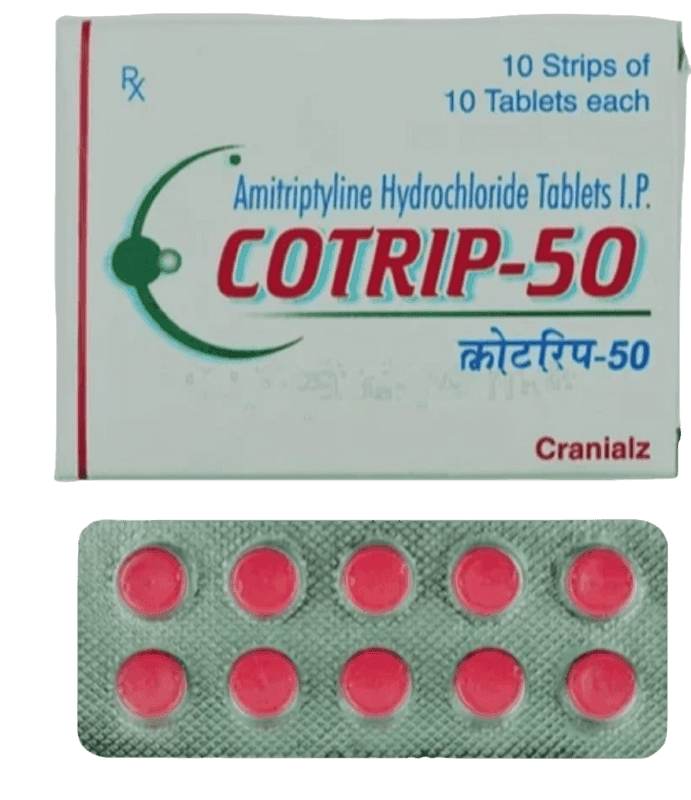
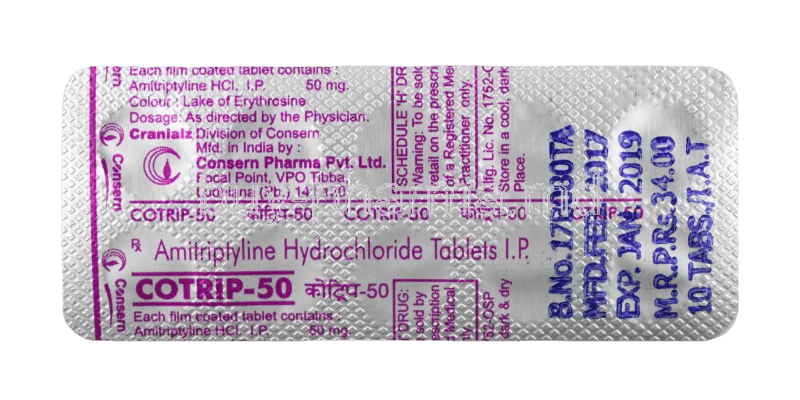

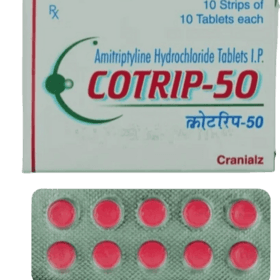
Cotrip is amitriptyline 10 / 25 / 50 / 75 mg orale tabletten — een klassiek tricyclisch antidepressivum dat in sub-antidepressieve doses wordt gebruikt voor migrainepreventie (eerste keuze volgens AHS / AAN-richtlijnen), chronische spanningshoofdpijn, neuropathische pijn (diabetische neuropathie, postherpetische neuralgie), fibromyalgie en depressie. Start met 10 mg 's nachts; titreer naar 25-75 mg voor migrainepreventie. Volledig effect na 8-12 weken. Basis-ECG bij patiënten ouder dan 50.
✓ Medisch beoordeeld door Morgan Ellis — Apotheekonderzoeker · 8 jaar ervaring · Laatst beoordeeld: mei 2026
⚡ Kort antwoord — Wat is Cotrip?
Cotrip bevat amitriptyline 10 / 25 / 50 / 75 mg van een WHO-GMP gecertificeerde fabrikant — een tertiair-amine tricyclisch antidepressivum (TCA) en het meest voorgeschreven tricyclische antidepressivum wereldwijd en de klassieke eerste keuze tricyclische voor migrainepreventie. Hoewel alleen door de FDA goedgekeurd voor depressie, hebben tricyclische antidepressiva decennia van evidence-based gebruik bij lagere doses voor migrainepreventie, chronische spanningshoofdpijn, neuropathische pijn, fibromyalgie en chronische slapeloosheid geassocieerd met pijn. Voor preventie van migraine: start met 10 mg 's nachts, titreer naar 25-75 mg 's nachts (bereik voor migrainepreventie; lager dan de 75-150 mg gebruikt voor depressie). Volledig effect na 8-12 weken. Vermindert het aantal migraine dagen per maand met ~50% bij responders. Sedatie is sterk sederend (H1 antagonisme is sterk) — altijd 's nachts doseren. Voor de meeste patiënten is dit een therapeutisch voordeel (verbeterde slaap die migraine in stand houdt), maar kan een ochtendkater veroorzaken. — altijd 's nachts doseren. Anticholinerge belasting is sterk — droge mond, obstipatie, moeite met plassen, wazig zien, geheugeneffecten. Kan dosisbeperkend zijn, vooral bij oudere patiënten. Gecontra-indiceerd bij recent myocardinfarct, ongecontroleerde ritmestoornissen, QT-verlenging, gelijktijdig gebruik van MAO-remmers, nauwe-kamerhoekglaucoom, ernstige leverfunctiestoornis en urineretentie/symptomatische BPH. Cardiologische veiligheid is het belangrijkste aandachtspunt bij patiënten boven de 50 — een basis-ECG voor aanvang is standaardpraktijk.
Wat Is Cotrip?
Cotrip is een orale tablet van amitriptyline 10 / 25 / 50 / 75 mg van een WHO-GMP gecertificeerde fabrikant, geleverd in verpakkingen van 30-180 tabletten. Geïntroduceerd in 1961 onder de merknaam Elavil; staat nog steeds op de WHO Essential Medicines List voor depressie, neuropathische pijn en migraine.
Amitriptyline is een tertiair-amine tricyclisch antidepressivum (TCA) — een van de klassieke geneesmiddelen uit de moderne psychofarmacologie. In de hedendaagse klinische praktijk zijn tricyclische antidepressiva grotendeels verdrongen door SSRI's als eerstelijnsbehandeling voor depressie, maar ze blijven een hoeksteen van de neurologie en pijnbestrijding bij doses ver onder het antidepressieve bereik, met name voor migrainepreventie, chronische spanningshoofdpijn en neuropathische pijn.
Hoe Amitriptyline Migraine Voorkomt
Het exacte werkingsmechanisme van tricyclische antidepressiva bij migraineprofylaxe is multimodaal:
- Serotonine + noradrenaline heropnameremming — versterkt de dalende remmende pijnbanen in de hersenstam, wat de trigeminovasculaire signalering vermindert
- Centrale sensibilisatiereductie — vermindert de amplificatie in het ruggenmerg en de trigeminuskern die chronische dagelijkse hoofdpijn veroorzaakt
- NMDA-receptorantagonisme (zwak) — vermindert de exciterende glutamaatoverdracht
- Natriumkanaalblokkade — membraanstabiliserend effect op hyperprikkelbare neuronen
- H1 histamineblokkade — verklaart de sedatie, wat indirect helpt bij migraine door de slaapkwaliteit te verbeteren (verstoorde slaap is een veelvoorkomende migraine-trigger)
- Anticholinerg effect — droogt tranen/slijm op, niet nuttig voor migraine; verklaart de bijwerking van een droge mond
De dosis voor migrainepreventie (25-75 mg per nacht (bereik voor migrainepreventie; lager dan de 75-150 mg gebruikt voor depressie)) is aanzienlijk lager dan de antidepressieve dosis (75-150 mg per nacht). Dit is om drie redenen belangrijk: (1) lagere doses minimaliseren bijwerkingen, (2) het analgetische mechanisme lijkt bereikt te worden bij doses die onvoldoende zijn voor een antidepressief effect, en (3) het betekent dat Cotrip gebruikt kan worden voor migrainepreventie zonder noodzakelijkerwijs effectief te zijn als antidepressivum. Voor patiënten met comorbide migraine en depressie, kunnen doses aan de hogere kant beide aandoeningen tegelijkertijd aanpakken.
Goedgekeurde en evidence-based toepassingen
- Migraineprofylaxe — off-label wereldwijd maar aanbevolen als eerstelijnsbehandeling in de richtlijnen van de American Headache Society, American Academy of Neurology en European Headache Federation. RCT-bewijs van Couch 2011 en de TOP-HAT-studie.
- Neuropathische pijn — diabetische perifere neuropathie, postherpetische neuralgie, post-stroke pijn, trigeminusneuralgie (alternatief voor carbamazepine)
- Fibromyalgie — lage doses amitriptyline verminderen pijn en verbeteren de slaap
- Chronische spanningshoofdpijn — de enige op bewijs gebaseerde preventieve
- Posttraumatische hoofdpijn
- Prikkelbare darm syndroom (pijn-dominant) — lage dosis
- Nachtelijke enuresis bij kinderen (historisch; nu zelden gebruikt)
- Depressie — originele FDA-indicatie; nu tweede of derde keuze achter SSRIs
Cotrip Dosage voor migrainepreventie
Tricyclische antidepressiva zijn getitreerd vanaf zeer lage startdoseringen om anticholinerge en sedatieve bijwerkingen te minimaliseren. Geduld is essentieel — het bereiken van een therapeutisch effect duurt meestal 8-12 weken.
| Stap | Dosis (elke avond ingenomen) | Duur van deze stap |
|---|---|---|
| Week 1-2 | 10 mg elke avond | Tolerantiecontrole |
| Week 3-4 | 25 mg elke avond | Titratiestap |
| Week 5-8 | 50 mg (bij goede tolerantie en gedeeltelijke respons) | Meest voorkomende streefdosis |
| Week 9-12 | 75 mg (bij nog onvolledige respons) | Hogere dosis ter voorkoming van migraine |
| Maximum | 150 mg 's nachts | Zelden nodig; indien vereist, overweeg een alternatief middel |
Evalueer het effect na 8-12 weken. Houd voor het starten en na 12 weken een migrainedagboek bij. Een klinisch relevante respons is een ≥50% reductie in maandelijkse migrainedagen. Bij geen respons op de streefdosis na 12 weken, schakel over op een ander preventief middel.
Dosering voor andere indicaties:
- Neuropathische pijn: 10-75 mg 's nachts
- Depressie: 75-150 mg 's nachts
Toediening: heel doorslikken met water. 's Nachts innemen — sterk sederend (H1 antagonisme is sterk) — altijd 's nachts doseren. Voor de meeste patiënten is dit een therapeutisch voordeel (verbetering van verstoorde slaap die migraine in stand houdt), maar kan een ochtendkater veroorzaken. Neem consequent op hetzelfde tijdstip elke nacht voor stabiele plasmaspiegels.
Stopzetting: afbouwen over 2-4 weken (verlaag met 10-25 mg elke 5-7 dagen). Plotseling stoppen van een tricyclisch middel na enkele weken gebruik veroorzaakt een ontwenningssyndroom — malaise, koude rillingen, zweten, slaapstoornissen, maag-darmklachten, levendige dromen. Het verdwijnt binnen 1-2 weken maar is onaangenaam. Stop nooit abrupt.
Basisonderzoeken en monitoring
Voor het starten van Cotrip:
- Baseline ECG — met name bij patiënten ouder dan 50 jaar, bij patiënten met een cardiovasculaire voorgeschiedenis en bij iedereen die andere QT-verlengende medicatie gebruikt. Tricyclische antidepressiva verlengen het QT-interval en kunnen ventriculaire aritmieën veroorzaken bij gevoelige personen. Vermijd bij QTc >450 ms.
- Electrolyten — hypokaliëmie en hypomagnesiëmie verhogen het risico op QT-verlenging. Corrigeer eerst indien afwijkend.
- Leverfunctietesten — tricyclische antidepressiva worden hepatisch gemetaboliseerd; dosisverlaging is nodig bij matige leverfunctiestoornis, vermijd bij ernstige.
- Glaucoom screening — nauwe-kamerhoekglaucoom is een absolute contra-indicatie (anticholinergisch effect kan een acute angle-closure aanval veroorzaken).
- Urineonderzoek bij mannen ouder dan 50 — symptomatische BPH/urineretentie verergert door het anticholinergische effect.
Bijwerkingen
Zeer vaak (>10%):
- Sedatie, slaperigheid, ochtendkater — dosisgerelateerd; past zich deels aan over 2-4 weken
- Droge mond, droge ogen (anticholinerg)
- Obstipatie (anticholinerg) — verhoog vezelinname en water; voeg indien nodig een laxeermiddel toe
- Gewichtstoename — gemiddeld 1-3 kg over 6-12 maanden bij migraine-preventieve doses; meer bij antidepressieve doses
- Orthostatische hypotensie en duizeligheid — meer prominent bij ouderen; sta langzaam op vanuit liggende/zittende positie
Vaak (1-10%):
- Wazig zien (anticholinerg)
- Moeite met plassen of urineretentie (vooral bij mannen met BPH)
- Hartkloppingen, tachycardie, milde QT-verlenging
- Geheugenproblemen, moeite met woordvinding (dosisgerelateerd; omkeerbaar)
- Tremor (fijn; goedaardig)
- Veranderde smaak
- Seksuele disfunctie (verminderd libido, erectiestoornissen, anorgasmie) — dosisgerelateerd
- Zweten
- Toegenomen eetlust
Zeldzaam maar belangrijk:
- QT-verlenging / ventriculaire aritmie — met name bij hogere doseringen, bij overdosering, of in combinatie met andere QT-verlengende medicijnen. Overdosering met tricyclische antidepressiva is de meest cardiotoxische van de veelvoorkomende antidepressiva-overdoseringen; opzettelijke inname is een medisch noodgeval.
- Acuut glaucoom met gesloten kamerhoek bij gevoelige ogen
- Toevallen bij hogere doseringen, vooral bij patiënten met een verlaagde drempel
- Suïcidale gedachten — klassewaarschuwing voor alle antidepressiva, met name in de eerste 4 weken en bij patiënten onder de 25
- Serotoninesyndroom — in combinatie met MAO-remmers of andere serotonerge middelen
- Hyponatriëmie (SIADH) — met name bij ouderen
Contra-indicaties
- Recent myocardinfarct (binnen 3 maanden)
- Ongecontroleerde hartritmestoornis of hartblok
- Bekend congenitaal lang QT-syndroom of QTc >450 ms
- Ernstige leverfunctiestoornis
- Gelijktijdig gebruik van MAOI of binnen 14 dagen na het staken van een MAOI (fenelzine, tranylcypromine, moclobemide, selegiline, linezolid)
- Nauwe-kamerhoekglaucoom
- Significante urineretentie
- Acute porfyrie
- Overgevoeligheid voor tricyclische antidepressiva
Zwangerschap: Amitriptyline is FDA zwangerschapscategorie C. Decennialange observationele gegevens zijn over het algemeen geruststellend; geen significant signaal van aangeboren afwijkingen. Neonataal onttrekkingssyndroom kan optreden bij gebruik in het derde trimester. Voor migrainepreventie tijdens de zwangerschap, propranolol is de eerste keuze; tricyclica zijn een redelijk tweede optie na falen van bètablokkers.
Borstvoeding: Amitriptyline komt in kleine hoeveelheden in de moedermelk terecht. Over het algemeen als compatibel beschouwd tijdens borstvoeding; blootstelling van de zuigeling is laag.
Ouderen (>65): tricyclics staan op de Beers-lijst van potentieel ongepaste medicatie voor oudere volwassenen vanwege de anticholinerge belasting (valrisico, cognitieve effecten, obstipatie, urineretentie). Als een oudere patiënt een tricyclisch middel nodig heeft, wordt nortriptyline meestal verkozen boven amitriptyline vanwege de lagere anticholinerge belasting.
Geneesmiddelinteracties
- MAO-remmers (fenelzine, tranylcypromine, moclobemide, selegiline, linezolid) — gecontra-indiceerd; risico op serotoninesyndroom. Minimaal 14 dagen tussen laten.
- SSRI's / SNRI's (fluoxetine, sertraline, paroxetine, citalopram, venlafaxine, duloxetine) — additief serotonerg effect; fluoxetine en paroxetine zijn sterke CYP2D6-remmers en verhogen de plasmaconcentratie van tricyclica aanzienlijk (verlaag Cotrip-dosering met 50%).
- Andere QT-verlengende geneesmiddelen (chinolonantibiotica, macroliden, methadon, antipsychotica, ondansetron, domperidon) — additieve QT-verlenging; vermijden of ECG monitoren
- Anticholinergica (antihistaminica, antispasmodica, oxybutynine, scopolamine) — additieve anticholinerge belasting; vooral problematisch bij ouderen
- Sederende middelen (benzodiazepines, opioïden, alcohol) — additieve CNS-depressie
- Adrenerge middelen (direct werkende sympathicomimetica, stimulantia) — overdreven reactie; vermijden met fenylefrine in decongestiva bij hogere doseringen
- Warfarine — tricyclica kunnen de warfarinespiegel verhogen; monitor INR
- Tramadol — additief risico op aanvallen en serotoninesyndroom; vermijden
- Carbamazepine, fenytoïne — vermindering van tricyclische niveaus via CYP-inductie
- Alcohol — additieve CNS-depressie en verminderde rijvaardigheid; beperk inname
Amitriptyline vs Nortriptyline — Welke tricyclische?
Amitriptyline wordt gemetaboliseerd in vivo tot nortriptyline (zijn actieve metaboliet). Beide werken voor migrainepreventie; ze verschillen in nadruk op bijwerkingen:
| Amitriptyline (Cotrip) | Nortriptyline (Primox) | |
|---|---|---|
| Chemische klasse | Tertiair amine | Secundair amine (actieve metaboliet van amitriptyline) |
| Sedatie | Sterk (H1 blokkade) | Matig |
| Anticholinergische belasting | Sterk | Matig — ongeveer de helft van amitriptyline |
| Orthostatische hypotensie | Vaak voorkomend | Minder vaak voorkomend |
| Effectiviteit bij migraine | Referentiestandaard | In grote lijnen equivalent |
| Beste voor | Migraine + slechte slaap + pijn — sedatie is therapeutisch | Migraine bij patiënten waarbij sedatie of anticholinergische effecten beperkend zijn; ouderen |
| Geschiktheid voor ouderen | Afgeraden (Beers-lijst) | Verkiesbaar tricyclisch antidepressivum indien nodig |
Indien bijwerkingen van amitriptyline dosisbeperkend zijn, nortriptyline (Primox) is het klassieke alternatief — het actieve metaboliet van amitriptyline, hetzelfde werkingsmechanisme, ongeveer de helft van de sedatie en anticholinerge belasting.
Opslag
Bewaren onder 25°C in de originele blisterverpakking. Beschermen tegen licht. Buiten bereik van kinderen houden — een overdosis tricyclische antidepressiva kan potentieel dodelijk zijn voor kleine kinderen bij relatief kleine doses.
Veelgestelde vragen
Zal Cotrip werken voor mijn migraine als ik niet depressief ben?
Ja — het migraine-preventiemechanisme (modulatie van het dalende pijnpad + natriumkanaalblokkade) werkt bij doses ver onder het antidepressieve bereik. ~50% van de tricyclische gebruikers zonder depressie ervaart nog steeds een significante vermindering van migraine. Veel patiënten zijn aanvankelijk terughoudend om “een antidepressivum” te nemen voor migraine, maar bij 10-50 mg per nacht is de dosis functioneel een neuromodulator, geen antidepressivum.
Hoe lang duurt het voordat Cotrip migraine begint te voorkomen?
Reken op 8-12 weken bij de streefdosis. Sommige patiënten zien eerder voordeel (na 4-6 weken), maar een eerlijke proefperiode is 12 weken. Houd een migrainedagboek bij aan het begin en na 12 weken. Als er na 12 weken geen reactie is bij 150 mg per nacht, schakel dan over op een ander preventief middel.
Waarom ben ik zo slaperig de volgende ochtend?
Amitriptyline heeft een lange eliminatiehalfwaardetijd (12-36 uur voor amitriptyline/nortriptyline). De sedatie piekt 's nachts maar kan aanhouden tot de ochtend. Verminder dit door: (1) de dosis eerder op de avond in te nemen (bijv. 20.00 uur in plaats van voor het slapengaan), (2) de dosis te verlagen als de sedatie invaliderend is, (3) over te schakelen op nortriptyline. De ochtendkater verbetert meestal na 2-4 weken naarmate tolerantie ontstaat.
Zal Cotrip ervoor zorgen dat ik aankom?
Ja, voor sommige mensen — gemiddeld 1-3 kg over 6-12 maanden bij migraine-preventiedoses. Mechanisme: verhoogde eetlust via H1 en 5-HT2C blokkade. Als gewichtstoename een zorg is, topiramate veroorzaakt gewichtsverlies en propranolol is gewichtsneutraal. Alternatief veroorzaakt nortriptyline iets minder gewichtstoename dan amitriptyline.
Is Cotrip veilig als ik hartproblemen heb?
Voorzichtigheid. Tricyclische antidepressiva verlengen het QT-interval en kunnen ventriculaire aritmieën veroorzaken bij gevoelige personen. Absolute contra-indicaties: recent myocardinfarct (binnen 3 maanden), ongecontroleerde aritmie, congenitaal lang QT-syndroom, QTc >450 ms op basis-ECG. Relatieve voorzichtigheid: voorgeschiedenis van coronaire hartziekte, bundeltakblok, of gelijktijdig gebruik van QT-verlengende medicatie. Een basis-ECG is standaardpraktijk voor aanvang bij patiënten ouder dan 50 jaar.
Kan ik Cotrip innemen met een triptaan wanneer een migraineaanval optreedt?
Ja — tricyclische antidepressiva zijn preventief, triptanen zijn abortief. Ze werken via verschillende mechanismen. Neem Cotrip 's nachts ter preventie; neem een triptaan (sumatriptan, rizatriptan, zolmitriptan) naar behoefte bij doorbraakaanvallen. Er is een theoretisch risico op serotoninesyndroom (FDA-waarschuwing uit 2006), maar praktijkgegevens tonen aan dat de combinatie in de klinische praktijk goed wordt verdragen.
Mag ik alcohol drinken tijdens gebruik van Cotrip?
Minimaliseer alcoholinname. Tricyclische antidepressiva en alcohol versterken elkaars effecten op sedatie, cognitieve stoornissen en rijvaardigheid. Alcohol is ook een veelvoorkomende trigger voor migraine, dus vermindering van inname verbetert vaak migraine onafhankelijk van Cotrip. Incidenteel kleine hoeveelheden (een glas wijn) veroorzaken waarschijnlijk geen problemen; regelmatig of overmatig drinken is gecontra-indiceerd.
Kan ik Cotrip gebruiken tijdens de zwangerschap?
Amitriptyline heeft decennia aan observationele zwangerschapsgegevens zonder signalen van grote misvormingen (FDA Categorie C). Voor migrainepreventie tijdens de zwangerschap is, propranolol eerste keus; tricyclische antidepressiva zijn een redelijk tweede optie als propranolol gecontra-indiceerd of niet effectief is. Neonatale onthoudingsverschijnselen (prikkelbaarheid, voedingsproblemen) kunnen optreden bij blootstelling in het derde trimester maar verdwijnen binnen enkele dagen.
Hoe stop ik met Cotrip?
Afbouwen over 2-4 weken (vermindering met 10-25 mg elke 5-7 dagen). Plotseling stoppen veroorzaakt een onthoudingssyndroom: malaise, koude rillingen, zweten, slaapstoornissen, maag-darmklachten, levendige dromen. Onplezierig maar zelflimiterend binnen 1-2 weken. Stop nooit abrupt.
Werkt Cotrip ook bij niet-migraine hoofdpijn?
Ja — tricyclische antidepressiva zijn de enige bewezen preventieve behandeling voor chronische spanningshoofdpijn. Ze helpen ook bij posttraumatische hoofdpijn, medicatie-overgebruik hoofdpijn (naast het afbouwen van overmatig gebruikte acute medicatie), en bij cervicogene hoofdpijn. Amitriptyline is de best onderzochte tricyclische antidepressiva voor deze indicaties; nortriptyline is grofweg gelijkwaardig maar beter verdraagbaar.
Waar kan ik Cotrip online kopen?
U kunt Cotrip (amitriptyline 10/25/50/75 mg, verpakkingen van 30-180 tabletten) kopen bij MedsBase met discrete verpakking en wereldwijde verzending.
Gerelateerde migrainebehandelingen op MedsBase
- Zolmist Neusspray — Zolmitriptan 5 mg (snelle werking)
- Zolitas ODS — Zolmitriptan 2,5/5 mg orodispergeerbaar
- Maxtan — Rizatriptan 5/10 mg
- Rizatop — Rizatriptan 10 mg
- Rizact — Rizatriptan (Cipla)
- Sumitop — Sumatriptan 25/50/100 mg
- Bekijk alle anti-migrainebehandelingen
Waarom bestellen bij MedsBase
📦 Elke bestelling is gedekt door onze Reshipment Assurance-beleid — als uw pakket niet binnen 20 werkdagen arriveert, sturen wij het opnieuw.
Gerelateerde alternatieven
Andere producten in Chronische aandoeningen die klanten ook bekijken:
Meer opties in Anti Migraine
Gerangschikt op recente bestelvolumes van MedsBase — wat andere klanten in deze categorie kiezen.



| Sterkte | 10 mg, 25 mg, 50 mg, 75 mg |
|---|---|
| Hoeveelheid | 30 Tabletten, 60 Tabletten, 90 Tabletten, 180 Tabletten |
 Cotrip
Vragen & antwoorden
Cotrip
Gerelateerde producten












Beoordelingen
Er zijn nog geen beoordelingen