








Nebracin Dm Eye Drop
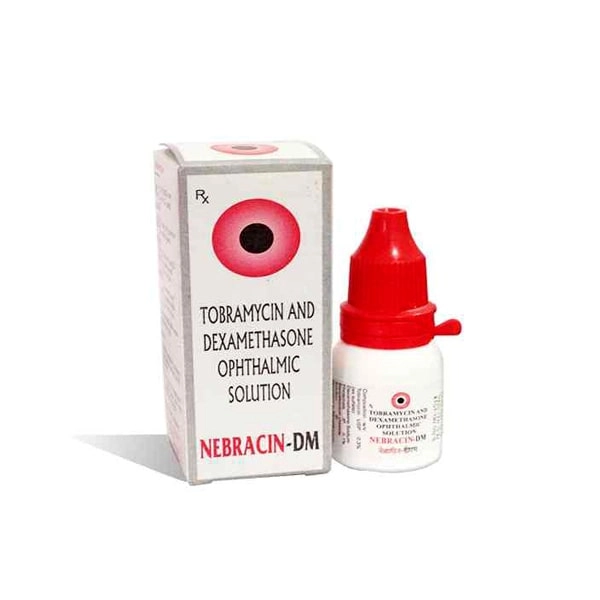
Nebracin DM (tobramycine 0,3% + dexamethason 0,1%) — aminoglycoside + steroïde oogdruppels voor bacteriële conjunctivitis met ontsteking. Gecontra-indiceerd bij HSV-keratitis.
✓ Medisch beoordeeld door Morgan Ellis — Apotheekonderzoeker · 8 jaar ervaring · Laatst beoordeeld: mei 2026
⚡ Kort antwoord — Wat is Nebracin DM Eye Drop?
Nebracin DM Eye Drop combineert Tobramycine 0,3% (antibioticum) met dexamethason 0,1% (corticosteroïd) voor bacteriële ooginfecties met significante ontsteking. Alleen gebruiken wanneer zowel bacteriële infectie ALS ontsteking aanwezig zijn. Vermijd bij virale of schimmelkeratitis.
📦 Elke bestelling is gedekt door onze Reshipment Assurance-beleid — als uw pakket niet binnen 20 werkdagen arriveert, sturen wij het opnieuw.
Waarom bestellen bij MedsBase
Nebracin DM Eye Drop is afkomstig van een WHO-GMP gecertificeerde fabrikant en wordt wereldwijd verzonden in eenvoudige, discrete verpakking. Elke bestelling wordt gedekt door onze Reshipment Assurance-beleid — als het niet is aangekomen na 20 werkdagen, sturen wij het opnieuw zonder extra kosten. Ondersteund door meer dan 1.400 geverifieerde klantbeoordelingen.
Wat is Nebracin DM Eye Drop?
Nebracin DM Eye Drop wordt geproduceerd door FDC — een vaste combinatie van het antibioticum Tobramycine 0,3% en het corticosteroïd dexamethason 0,1%. Het dubbele werkingsmechanisme doodt bacteriële pathogenen terwijl het de ontstekingsreactie onderdrukt die bijdraagt aan de ernst van de symptomen. Gereserveerd voor situaties waarbij beide componenten klinisch gerechtvaardigd zijn.
Hoe het werkt
Tobramycine bindt aan de 30S-ribosomale subunit en verstoort de bacteriële eiwitsynthese — bacteriedodend tegen gevoelige Gram-positieve en Gram-negatieve organismen. Dexamethason bindt aan intracellulaire glucocorticoïdreceptoren, onderdrukt de transcriptie van pro-inflammatoire cytokinen en leukocytenmigratie, waardoor roodheid, zwelling en ongemak verminderen.
Indicaties
- Bacteriële conjunctivitis met significante ontsteking
- Bacteriële blefaroconjunctivitis
- Postoperatieve bacteriële keratitis met cornea-oedeem (onder specialistische begeleiding)
- Anterior uveïtis met bacteriële co-infectie (zeldzaam; alleen in specialistische setting)
- Geselecteerde post-cataractregimes die antibiotische profylaxe combineren met steroïden
Dosering
1–2 druppels in het aangedane oog(en) elke 4–6 uur. Bij ernstige ontsteking kan de dosis worden verhoogd tot elke 2 uur gedurende de eerste 24–48 uur. Het afbouwschema wordt bepaald door de voorschrijvende oogarts. Typische kuur: 7–14 dagen, nooit onbepaald.
Bijwerkingen
Gerelateerd aan steroïden: verhoogde intraoculaire druk (steroïde respons - treedt meestal op na 2+ weken therapie; ongeveer een derde van de populatie zijn ‘steroïde responders’), posterieure subcapsulaire cataract bij langdurig gebruik, vertraagde genezing van hoornvlies-/bindvlieswonden, secundaire infectie door immuunsuppressie (vooral schimmel- en herpetische infecties).
Gerelateerd aan antibiotica: prikkeling bij toediening, conjunctivale hyperemie, ooglideczeem, overgevoeligheid, punctate keratopathie bij langdurig gebruik van aminoglycosiden.
Waarschuwingen & Contra-indicaties
- Herpes simplex keratitis (dendritische / geografische ulcus) — absoluut
- Schimmelkeratitis — absoluut
- Varicella, vaccinia, mycobacteriële oogaandoeningen — absoluut
- Overgevoeligheid voor een van de bestanddelen
- Kinderen — alleen gebruiken onder begeleiding van een specialist en met IOP-monitoring
- Zwangerschap/borstvoeding — overleg met voorschrijver; topische absorptie minimaal maar steroïde categorie C
- Openhoekglaucoom — relatieve contra-indicatie; IOP nauwlettend monitoren
- Langdurig gebruik langer dan 14 dagen — verhoogt alle bovenstaande risico's
Opslag
Bewaren bij 15–25°C beschermd tegen licht. Schudden voor elk gebruik indien aangegeven. Na eerste opening 28 dagen houdbaar.
Veelgestelde vragen
Wanneer is Nebracin DM-oogdruppel de juiste keuze?
Bacteriële ooginfectie waarbij ontsteking significant bijdraagt aan de symptomen — klassiek postoperatief of ernstig ontstoken bacteriële conjunctivitis. Als u niet zeker weet of de infectie bacterieel is, is alleen een antibioticum de veiligere keuze.
Waarom niet altijd een antibioticum en steroïde combineren?
Steroiden maskeren infectietekenen en versnellen virale en schimmelziekten. Het toevoegen van een steroïde aan een gemiste herpes simplex-ulcus of fungale keratitis kan het oog binnen dagen blind maken. Bevestig altijd eerst een bacteriële diagnose.
Wat is een steroïde respons?
Ongeveer 30% van de bevolking heeft een genetische aanleg om een verhoogde oogdruk (IOP) te ontwikkelen bij blootstelling aan plaatselijke steroïden. Het begin treedt meestal op na 2+ weken therapie. Uw oogarts moet de oogdruk controleren als u langer dan 2 weken plaatselijke steroïden gebruikt.
Hoe lang kan ik Nebracin DM Eye Drop gebruiken?
De meeste behandelingen duren 7–14 dagen. Langdurig gebruik verhoogt het risico op staar, glaucoom en opportunistische infecties. Zorg altijd voor een duidelijk eindpunt en een oogheelkundige evaluatie.
Wat als mijn zicht verslechtert tijdens de behandeling?
Stop en zoek dezelfde dag een oogheelkundige evaluatie. Verslechtering ondanks antibioticum+steroïd is een waarschuwingsteken voor gemiste herpes-, schimmel- of amoebenkeratitis.
Is Nebracin DM Eye Drop veilig tijdens de zwangerschap?
Plaatselijke opname is minimaal, maar steroïden hebben categorie C-status. Overleg met uw voorschrijver; kortdurend gebruik is meestal mogelijk wanneer duidelijk geïndiceerd.
Kunnen kinderen Nebracin DM Eye Drop gebruiken?
Alleen onder specialistisch toezicht met IOP-monitoring. Kinderen zijn bijzonder gevoelig voor steroïd-geïnduceerde staar en glaucoom.
Waarom zijn dexamethason en prednisolon verschillende keuzes?
Dexamethason is krachtiger maar heeft een hoger IOP-verhogend potentieel. Prednisolon heeft een iets lager IOP-risico. Loteprednol (een ander molecuul) is ontworpen als ‘zacht’ met lager IOP-risico en wordt vaak verkozen voor chronisch gebruik.
Wat als ik contactlenzen draag?
Stop met lenzen tijdens de behandeling. Steroïd-gemedieerde immunosuppressie maakt microbiële keratitis door contactlenzen bijzonder gevaarlijk.
Wat als ik een voorgeschiedenis van herpes simplex heb?
Geef dit duidelijk aan bij uw voorschrijver. Steroïden kunnen slapende herpes reactiveren en kleine opflakkeringen omzetten in gezichtsbedreigende keratitis. Een ander antibioticum-regime is veiliger.
Andere oogzorgmedicijnen
Klanten die dit product bekijken, overwegen ook deze alternatieven in ons Oogzorg assortiment:
- Pred Forte (prednisolonacetaat)
- FML Eye Drop (fluorometholon)
- Lotepred Eye Drop (loteprednol)
- Acular LS (ketorolac)
- Megabrom (bromfenac)
Medische Disclaimer
De informatie op deze pagina is alleen voor educatieve doeleinden en is geen vervanging voor medisch advies van een gekwalificeerde oogarts of optometrist. Oogaandoeningen kunnen snel een bedreiging vormen voor het gezichtsvermogen — plotseling verlies van gezichtsvermogen, hevige pijn of trauma is een oogheelkundig spoedgeval. Raadpleeg altijd een oogzorgprofessional voordat u een behandeling start, stopt of wijzigt.
Meer opties in oogzorg
Gerangschikt op recente bestelvolumes van MedsBase — wat andere klanten in deze categorie kiezen.
| Sterkte | 0.3%+0.1% |
|---|---|
| Hoeveelheid | 1 Oogdruppel, 3 Oogdruppels, 6 Oogdruppels |
| Farmaceutische vorm | Oogdruppel/s |
| Fabrikant | Sunways India |
| Behandeling | Oogzorg |
| Generiek merk | Tobramycine + Dexamethason |
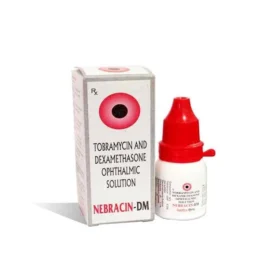 Nebracin Dm Eye Drop
Vragen & antwoorden
Nebracin Dm Eye Drop
Gerelateerde producten

Beoordelingen
Er zijn nog geen beoordelingen