







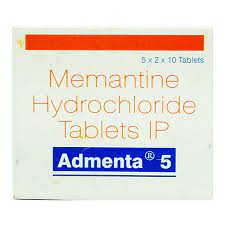
Admenta
✅ Verbetert cognitie
✅ Verbetert geheugen
✅ Vertraagt neurodegeneratie
✅ Vermindert verwardheid
✅ Behandelt Alzheimer
Admenta bevat Memantine.
✓ Medisch beoordeeld door Morgan Ellis — Apotheekonderzoeker · 8 jaar ervaring · Laatst beoordeeld: mei 2026
⚡ Snelle uitleg — Wat is Admenta?
Admenta is een orale tablet van Sun Pharma die bevat memantine 5 mg — een niet-competitieve NMDA-receptorantagonist gebruikt voor de symptomatische behandeling van matig tot ernstige ziekte van Alzheimer. Memantine is niet aangewezen bij milde ziekte van Alzheimer. Langzame opbouw over 4 weken: 5 mg week 1, 10 mg week 2 (5 mg tweemaal daags), 15 mg week 3, 20 mg vanaf week 4 (10 mg tweemaal daags). Over het algemeen goed verdragen — belangrijkste bijwerkingen zijn duizeligheid, hoofdpijn, obstipatie en verwardheid. Dosis verlagen bij eGFR < 30 ml/min. Wordt vaak gecombineerd met donepezil bij matig tot ernstige ziekte voor extra cognitief voordeel.
📦 Elke bestelling is gedekt door onze Reshipment Assurance-beleid — als uw pakket niet binnen 20 werkdagen arriveert, sturen wij het opnieuw.
Waarom bestellen bij MedsBase
Onze generieke medicijnen zijn afkomstig van WHO-GMP gecertificeerde fabrikanten en worden wereldwijd verzonden in discrete, eenvoudige verpakkingen — geen medicijnnaam op de buitenkant van het pakket. Betalingen met kaart worden verwerkt via een gereguleerde processor (betalingsoverzichten vermelden een gereguleerde kaartbetalingprocessor — nooit “MedsBase” of een medicijnnaam). Crypto en SEPA bankoverschrijvingen worden ook geaccepteerd. Elke bestelling wordt ondersteund door ons Reshipment Assurance Policy.
Wat is Admenta?
Admenta is een orale tablet van Sun Pharma met memantinehydrochloride 5 mg. Memantine is een laagaffiene, spanningsafhankelijke, niet-competitieve antagonist van de N-methyl-D-aspartaat (NMDA)-glutamaatreceptor. Het werkt mechanistisch anders dan de cholinesteraseremmers (donepezil, galantamine, rivastigmine) en beïnvloedt het tweede belangrijke pathway bij de ziekte van Alzheimer — glutamaatexcitotoxiciteit.
Admenta van Sun Pharma is een memantine tablet van 5 mg — de sterkte die wordt gebruikt tijdens de verplichte 4-weekse op-titratie naar de onderhoudsdosis van 20 mg/dag. De onderhoudsdosering is twee tabletten van 5 mg tweemaal daags (in totaal 4 tabletten per dag). Memantine is alleen goedgekeurd voor matig tot ernstige ziekte van Alzheimer — niet mild. Het is de standaard toevoeging aan een cholinesteraseremmer (meestal donepezil) wanneer patiënten verder gaan dan het milde stadium, en biedt aanvullende cognitieve en functionele voordelen met minimale toename van bijwerkingen.
Hoe Werkt Admenta?
De ziekte van Alzheimer veroorzaakt chronische overmatige glutamaatsignalering bij NMDA-receptoren — een proces genaamd glutamaat excitotoxiciteit. Constante lage NMDA-activatie beschadigt neuronen en verstoort het signaal-ruisverhoud dat de hersenen nodig hebben voor leren en geheugen. Memantine pakt dit aan via een uniek mechanisme:
- Spanning-afhankelijke NMDA-blokkade — memantine bindt aan NMDA-receptor kanalen, maar alleen wanneer deze al open zijn. Het blokkeert chronische lage excitotoxische activatie maar laat de receptor los tijdens fysiologische signalering met hoge amplitude die nodig is voor leren. Dit is het belangrijkste verschil tussen memantine en oudere NMDA-blokkers zoals ketamine, die beide modi blokkeren en cognitieve stoornissen veroorzaken.
- Herstelt signaal-ruisverhouding — door achtergrond glutamaatruis te verminderen, verbetert memantine het vermogen van de hersenen om betekenisvolle signalen te detecteren tijdens leer- en geheugentaken.
- Neuroprotectief effect — verminderde excitotoxiciteit kan de progressie van neuronale schade vertragen, hoewel dit niet definitief is aangetoond om te vertalen in een klinisch betekenisvol ziekte-modificerend effect.
Begin van cognitief voordeel: zichtbaar bij 4–12 weken na het bereiken van de onderhoudsdosis van 20 mg/dag; piekvoordeel na 6 maanden.
Toepassingen en Indicaties
- Matig tot ernstige dementie door Alzheimer — eerstelijnsindicatie
- Combinatietherapie met een cholinesteraseremmer — standaardzorg bij matig tot ernstige Alzheimer; aanvullende cognitieve voordelen
- Vasculaire dementie (gemengd type) — off-label bescheiden voordeel
- Dementie met Lewy-lichaampjes — off-label, nuttig voor gedragssymptomen
Admenta is niet geïndiceerd voor: milde ziekte van Alzheimer (cholinesteraseremmers zijn eerstelijnsbehandeling in dit stadium), milde cognitieve stoornis zonder dementie, frontotemporale dementie, of als cognitieve versterker bij gezonde volwassenen.
Admenta Dosering en Hoe In Te Nemen — LANGZAME TITRATIE
Admenta is verkrijgbaar in 5 mg tabletten. Het titratieschema is verplicht — direct starten met 20 mg/dag veroorzaakt bij de meeste patiënten onaanvaardbare verwarring en duizeligheid.
Standaard 4-weken titratie:
- Week 1: 5 mg eenmaal daags (1 tablet 's ochtends)
- Week 2: 10 mg/dag = 5 mg tweemaal daags ('s ochtends + 's avonds)
- Week 3: 15 mg/dag = 10 mg 's ochtends + 5 mg 's avonds
- Week 4 en verder (onderhoudsdosis): 20 mg/dag = 10 mg tweemaal daags
Hoe Admenta correct in te nemen
- In te nemen met of zonder voedsel — voedsel heeft geen invloed op de opname.
- Slik de tablet heel door met water. Standaard tabletten kunnen worden gesplitst als ze een breuklijn hebben.
- Tweemaal daags op onderhoudsdosis (10 mg 's ochtends + 10 mg 's avonds), met ongeveer 12 uur tussen de doses.
- Nierdosisaanpassing: als de geschatte GFR 30–49 mL/min is, beperk de onderhoudsdosis dan tot 10 mg/dag. Bij een eGFR van 5–29 mL/min is de onderhoudsdosis 10 mg/dag. Vermijd bij eGFR < 5 mL/min.
- Gemiste dosis: als u het dezelfde dag nog herinnert, neem het dan in. Als u het de volgende dag pas herinnert, sla het over en ga verder zoals normaal — neem geen dubbele dosis.
- Als de behandeling langer dan een paar dagen wordt onderbroken, begin opnieuw met 5 mg/dag en titreer opnieuw gedurende 4 weken. Memantine veroorzaakt geen acuut onttrekkingssyndroom, maar de langzame titratie is nodig om bijwerkingen te voorkomen.
- Toezicht door een verzorger is cruciaal — patiënten met matig-ernstige Alzheimer's slagen er zelden in om tweemaal daagse dosering betrouwbaar te beheren zonder ondersteuning. Gebruik een wekelijkse pillenorganizer die door een familielid of verzorger wordt gevuld.
- Herbeoordeling na 6 maanden met formele cognitieve tests (MMSE of MoCA). Ga door als er voordeel of stabilisatie is; stop geleidelijk als er duidelijke verslechtering is ondanks volledige dosering.
Bijwerkingen van Admenta
Vaak (ergst tijdens titratie, stabiliseert bij onderhoudsdosering):
- Duizeligheid
- Hoofdpijn
- Verwardheid of verergering van verwardheid (verbetert vaak bij stabiele onderhoudsdosering)
- Obstipatie
- Slaperigheid of vermoeidheid
- Hypertensie (lichte stijging van bloeddruk)
Minder vaak:
- Hallucinaties of verergering van bestaande hallucinaties
- Agitatie of agressie (paradoxaal, vooral tijdens titratie)
- Vallen (door duizeligheid)
- Urineweginfecties
Zeldzaam maar raadpleeg een arts:
- Toevallen
- Ernstige psychiatrische symptomen (psychose, manie)
- Pancreatitis
- Hepatitis
- Syndroom van Stevens-Johnson (gevalsbeschrijvingen)
Waarschuwingen en voorzorgsmaatregelen
- Nierfunctiestoornis: dosering verminderen is verplicht. Beperk tot 10 mg/dag als eGFR 5–49 mL/min. Vermijd bij eGFR < 5 mL/min. Memantine hoopt zich op bij nierfalen en veroorzaakt toxiciteit.
- Urinaire alkalisatie: aandoeningen die de urine-pH verhogen (ernstige UTI, renale tubulaire acidose, vegetarisch dieet met hooggedoseerde alkaliniserende medicatie, natriumbicarbonaat) verminderen de klaring van memantine en verhogen de bloedspiegels — monitor bijwerkingen.
- Epilepsie in de voorgeschiedenis: voorzichtig gebruiken — memantine kan de drempel voor aanvallen verlagen.
- Recent myocardinfarct, ongecontroleerde hypertensie, ernstig hartfalen: voorzichtigheid — onvoldoende veiligheidsgegevens bij deze populaties.
- Leverfunctiestoornis: geen dosisaanpassing voor mild-moderate; voorzichtigheid bij ernstig.
- Hallucinaties en wanen: kan bestaande psychiatrische symptomen verergeren bij sommige patiënten met dementie. Monitor gedragsveranderingen.
- Ondersteuning door mantelzorgers: patiënten in de matig-ernstige Alzheimer-populatie waarvoor memantine is geïndiceerd, beheren zelden hun eigen medicatie. Betrokkenheid van verzorgers bij doseringsbereiding, toezicht en therapietrouw is essentieel.
Contra-indicaties — Wie Admenta NIET mag gebruiken
- Bekende overgevoeligheid voor memantine of een hulpstof in de tablet
- Ernstige nierinsufficiëntie (eGFR < 5 ml/min)
- Milde ziekte van Alzheimer (gebruik eerst een cholinesteraseremmer)
- Milde cognitieve stoornis zonder dementie
- Frontotemporale dementie (geen voordeel en kan gedragssymptomen verergeren)
Geneesmiddelinteracties
| Combineren met | Effect | Wat te doen |
|---|---|---|
| Andere NMDA-antagonisten (amantadine, ketamine, dextromethorfan) | Additieve psychotomimetische effecten (verwardheid, hallucinaties, dissociatie) | Vermijd combinatie. Informeer de anesthesist over memantine vóór elke ingreep met ketamine. |
| Cholinesteraseremmers (donepezil, galantamine, rivastigmine) | Standaardcombinatie - additief cognitief voordeel, geen significante interactie | Standaard aanvullende therapie bij matig-ernstige Alzheimer. Zie Aricep. |
| Hydrochloorthiazide en andere thiazidediuretica | Memantine vermindert diuretisch effect; thiazide verhoogt memantine-spiegels | Controleer bloeddruk en let op bijwerkingen van memantine. |
| Natriumwaterstofcarbonaat, acetazolamide, urine-alkaliserende middelen | Verminderde renale klaring van memantine — verhoogde bloedspiegels | Controleer op memantine-toxiciteit (verwardheid, duizeligheid, slaperigheid). |
| Levodopa, dopamine-agonisten (Parkinson-medicijnen) | Memantine kan dopaminerge effecten versterken | Controleer op dyskinesieën en psychiatrische bijwerkingen. |
| Barbituraten, neuroleptica (antipsychotica) | Memantine kan hun effect verminderen | Controleer de symptoombeheersing; doseer indien nodig. |
| Warfarine | Enkele casusrapporten van verhoogde INR bij combinatie | Controleer INR vaker na starten van memantine. |
Bewaaradvies
- Bewaren bij kamertemperatuur, 15–25°C. Beschermen tegen licht en vocht.
- Bewaar tabletten in de originele blisterverpakking tot gebruik.
- Bewaar niet in de badkamer — vocht verkort de houdbaarheid.
- Buiten bereik van kinderen en patiënten die mogelijk niet begrijpen dat het medicijnen zijn houden.
- Niet gebruiken na de vervaldatum die op de verpakking staat vermeld.
- Breng ongebruikte tabletten terug naar een apotheek voor vernietiging.
Gerelateerde alternatieven op MedsBase
Andere medicijnen tegen Alzheimer en dementie op voorraad bij MedsBase:
- Aricep (donepezil 5/10 mg)
- Donect (donepezil 10 mg)
- Donemax (donepezil 10 mg)
- Galamer (galantamine 4 mg)
- Rivamer (rivastigmine 1.5 mg)
Handige lectuur: Alles wat u moet weten over de ziekte van Alzheimer · Alles over dementie · 7 manieren om uw hersengezondheid te beschermen naarmate u ouder wordt · Beste voedingsmiddelen voor een gezond brein en beter geheugen.
Veelgestelde vragen
Waarom is Admenta alleen voor matig tot ernstige Alzheimer?
Studies tonen geen klinisch significant cognitief voordeel van memantine bij milde Alzheimer aan — het glutamaat-excitotoxiciteitspad wordt pas later in de ziekte een dominante oorzaak van symptomen. Bij milde Alzheimer is een cholinesteraseremmer (donepezil, galantamine, rivastigmine) eerste keus. Memantine wordt toegevoegd wanneer de patiënt vordert naar matige of ernstige ziekte.
Kan Admenta gecombineerd worden met donepezil?
Ja — dit is de standaardcombinatie voor matig tot ernstige ziekte van Alzheimer. De twee medicijnen werken op verschillende paden (cholinerge + glutamaterge) en bieden een additief cognitief en functioneel voordeel. Er is geen significante farmacokinetische interactie. Combinatietherapie is effectiever dan elk medicijn afzonderlijk in het matig tot ernstige stadium. Aricep (donepezil) is de standaardpartner.
Waarom heeft Admenta een titratieperiode van 4 weken nodig?
Direct overschakelen naar de onderhoudsdosis van 20 mg/dag op dag één veroorzaakt onaanvaardbare verwarring, duizeligheid en soms hallucinaties — ernstig genoeg dat de meeste patiënten stoppen. De titratie over 4 weken (5 → 10 → 15 → 20 mg/dag) laat de hersenen geleidelijk wennen aan de NMDA-blokkade. Het overslaan van de titratie is de meest voorkomende reden dat patiënten memantine “niet kunnen verdragen”.
Wanneer zie ik of mijn familielid resultaten?
Zichtbaar cognitief voordeel na 4–12 weken na het bereiken van de onderhoudsdosis van 20 mg/dag; maximale verbetering na 6 maanden. Net als donepezil is memantine een symptomatische therapie, geen ziekte-modificerende. Herbeoordeel na 6 maanden met formele cognitieve tests.
Heeft Admenta dosisaanpassing nodig bij nierproblemen?
Ja. Memantine wordt via de nieren uitgescheiden en hoopt zich op bij nierfunctiestoornissen. Dosislimieten: eGFR 30–49 mL/min — maximale onderhoudsdosis van 10 mg/dag. eGFR 5–29 mL/min — onderhoudsdosis van 10 mg/dag. eGFR < 5 mL/min — vermijd memantine volledig. Controleer de nierfunctie voor aanvang en bij enig teken van toxiciteit (verwardheid, slaperigheid, duizeligheid bij een voorheen stabiele dosering).
Is Admenta een geneesmiddel of vertraagt het de progressie van Alzheimer?
Geen van beide. Memantine is symptomatische therapie — het stabiliseert de functie voor een periode van typisch 6–18 maanden. De onderliggende neurodegeneratie gaat door. Nieuwere ziekte-modificerende geneesmiddelen (anti-amyloïd antilichamen zoals lecanemab en donanemab) richten zich op de onderliggende pathologie maar vereisen intraveneuze toediening, regelmatige MRI-controles en specialistisch toezicht — deze worden hier niet aangeboden.
Helpt Admenta bij gedragssymptomen (agitatie, agressie, hallucinaties)?
Bescheiden effect op agitatie en agressie bij matig-ernstige Alzheimer — een van de redenen waarom memantine de voorkeursadd-on is in dit stadium in plaats van een tweede cholinesteraseremmer. Memantine kan bij een minderheid van de patiënten paradoxaal genoeg hallucinaties verergeren — monitor en stop indien dit optreedt.
Kan ik stoppen met Admenta als het niet helpt?
Overleg met de voorschrijver. Als formele cognitieve tests na 6 maanden geen voordeel aantonen en de patiënt duidelijk is achteruitgegaan, kan memantine worden gestopt. In tegenstelling tot donepezil heeft memantine geen significant onttrekkingssyndroom — maar een geleidelijke afbouw over 1–2 weken is nog steeds standaardpraktijk.
Is Admenta veilig in combinatie met de bloeddruk- of hartmedicatie van mijn ouder?
Memantine is over het algemeen veilig met de meeste cardiovasculaire medicijnen. Er is geen significante interactie met bètablokkers, ACE-remmers, ARB's, calciumantagonisten, statines of aspirine. Thiazidediuretica kunnen de memantinespiegel licht verhogen — monitor bijwerkingen maar meestal is dosisaanpassing niet nodig. Memantine veroorzaakt bij sommige patiënten een lichte stijging van de bloeddruk — controleer de bloeddruk na 6 weken en 3 maanden.
Gerelateerde alternatieven
Andere producten in Chronische aandoeningen die klanten ook bekijken:
Meer opties in de behandeling van Alzheimer
Gerangschikt op recente bestelvolumes van MedsBase — wat andere klanten in deze categorie kiezen.

| Sterkte | 5 mg |
|---|---|
| Hoeveelheid | 30 Tabletten, 60 Tabletten, 90 Tabletten, 180 Tabletten |
 Admenta
Vragen & antwoorden
Admenta
Gerelateerde producten

Beoordelingen
Er zijn nog geen beoordelingen