







Aziderm Cream
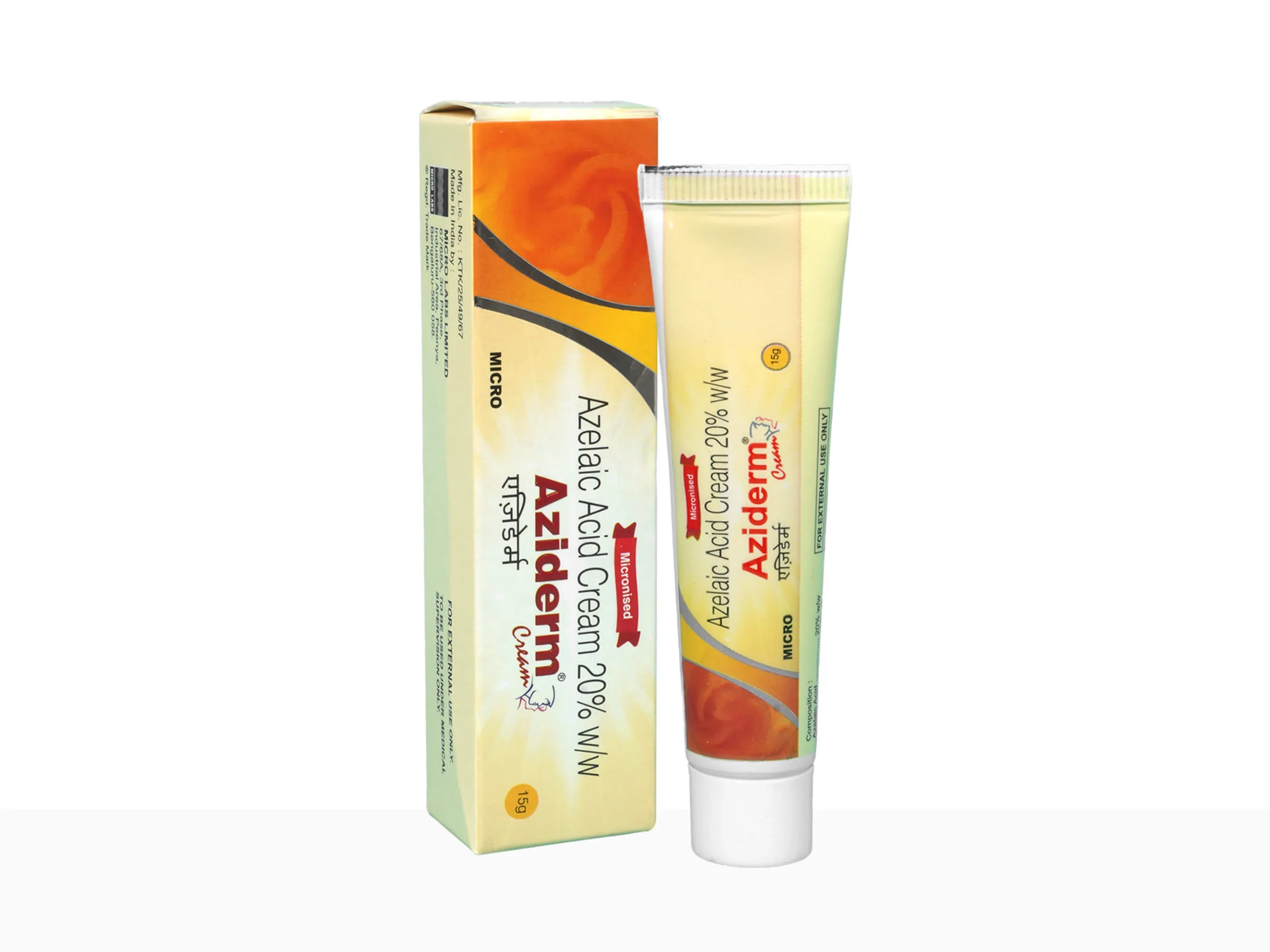
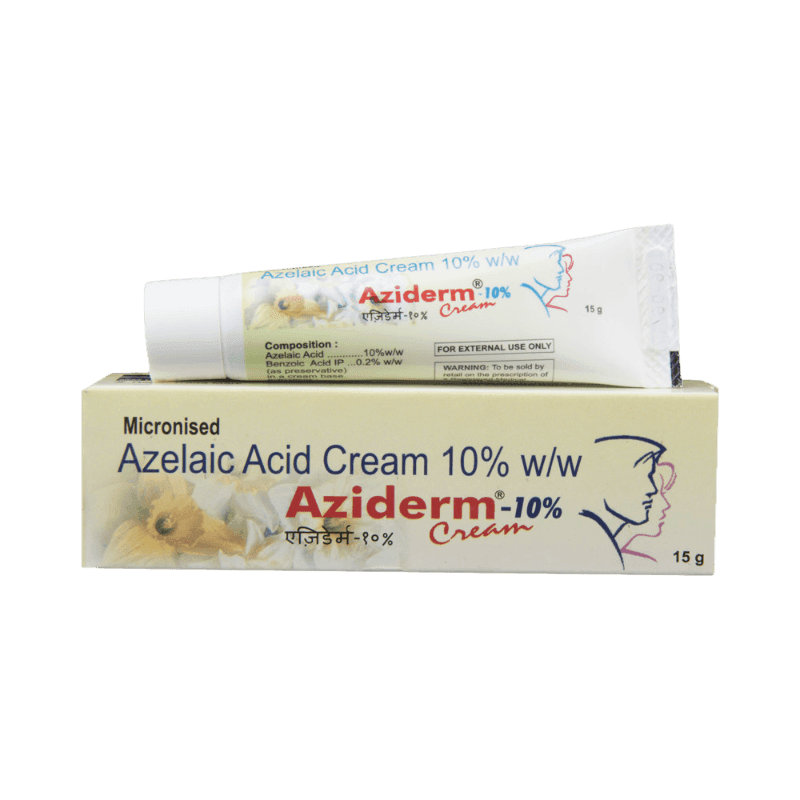
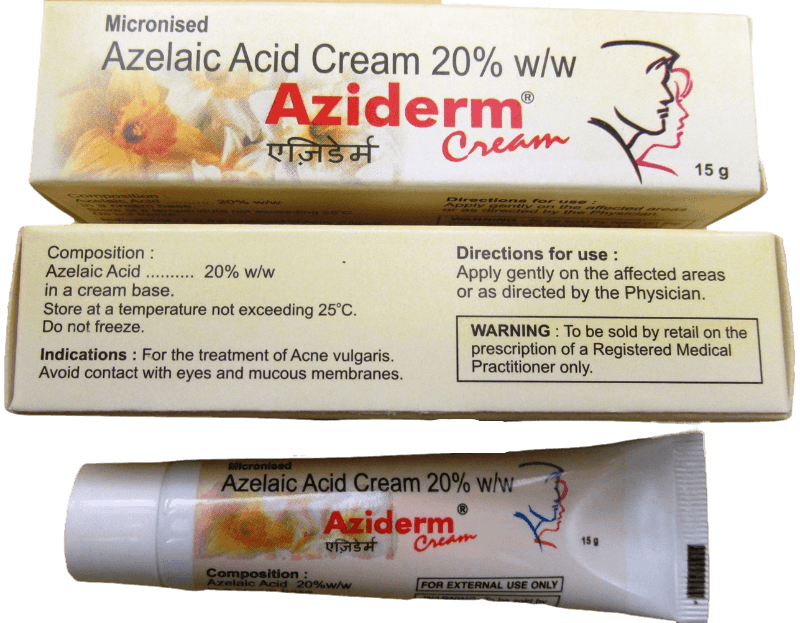
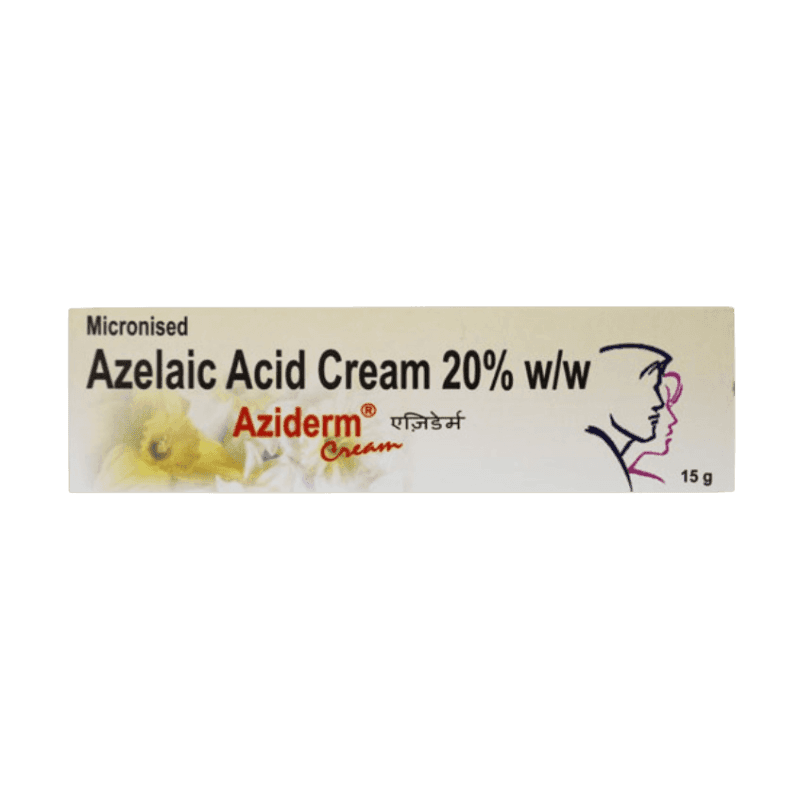
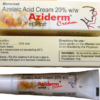
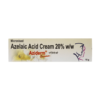
Aziderm Cream is een topische azelaïnezuur 20% crème van Micro Labs. Eerstelijnsbehandeling voor papulopustulaire rosacea, milde tot matige acne en melasma. Zwangerschapscategorie B (veilig tijdens zwangerschap). Tweemaal daags aanbrengen; zichtbaar effect na 4–12 weken. Combineert goed met ivermectine 1% en brimonidine voor gemengde-subtype rosacea.
✓ Medisch beoordeeld door Morgan Ellis — Apotheekonderzoeker · 8 jaar ervaring · Laatst beoordeeld: mei 2026
⚡ Kort antwoord — Wat is Aziderm Cream?
Aziderm Cream is een topische crème met azelaïnezuur 20% van Micro Labs — een van de meest veelzijdige dermatologische werkzame stoffen die tegenwoordig worden gebruikt. Het is eerste keus behandeling voor papulopustulaire rosacea, een bewezen therapie voor milde tot matige acne vulgaris, en een zwangerschapsveilig alternatief voor melasma en post-inflammatoire hyperpigmentatie. Breng een dun laagje aan op schone, droge huid twee keer per dag ('s ochtends en 's avonds). Begin: zichtbare vermindering van roodheid bij rosacea na 4–6 weken; opheldering van acne-laesies na 8–12 weken; vervaging van pigmentatie na 12–16 weken. De drie belangrijkste bijwerkingen zijn een kortstondig prikkend/warm gevoel bij de eerste aanbrenging (meestal verdwenen binnen een week), milde tijdelijke droogte en — zelden — een tintelend gevoel. Azelaïnezuur valt onder FDA Zwangerschapscategorie B (geschikt tijdens zwangerschap en borstvoeding), verhoogt de gevoeligheid voor de zon niet en kan worden gecombineerd met de meeste andere werkzame stoffen, waaronder retinoïden, niacinamide en vitamine C.
📦 Elke bestelling is gedekt door onze Reshipment Assurance-beleid — als uw pakket niet binnen 20 werkdagen arriveert, sturen wij het opnieuw.
Waarom bestellen bij MedsBase
Onze generieke medicijnen zijn afkomstig van WHO-GMP gecertificeerde fabrikanten en worden wereldwijd verzonden in discrete, eenvoudige verpakkingen — geen medicijnnaam op de buitenkant van het pakket. Betalingen met kaart worden verwerkt via een gereguleerde processor (betalingsoverzichten vermelden een gereguleerde kaartbetalingprocessor — nooit “MedsBase” of een medicijnnaam). Crypto en SEPA bankoverschrijvingen worden ook geaccepteerd. Elke bestelling wordt ondersteund door ons Reshipment Assurance Policy.
Wat is Aziderm Cream?
Aziderm Cream is een topische crème die azelaïnezuur 20%, bevat, geproduceerd door Micro Labs en geleverd in een tube van 15 g. Azelaïnezuur is een verzadigd negen-koolstof dicarbonzuur dat van nature voorkomt in granen zoals tarwe, rogge en gerst. In de dermatologie is het een van de zeldzame werkzame ingrediënten die drie afzonderlijke pathologieën aanpakt - inflammatoire rosacea, acne vulgaris en hyperpigmentatie - door een combinatie van ontstekingsremmende, antimicrobiële en tyrosinase-remmende effecten.
Omdat het Zwangerschapscategorie B is en geen van de fotosensitiviteit / verdunning / peeling van retinoïden met zich meebrengt, is azelaïnezuur vaak de eerste keuze voor patiënten die retinoïden, hydrochinon of topische steroïden niet kunnen verdragen of niet mogen gebruiken.
Hoe Azelaïnezuur Werkt
Azelaïnezuur werkt via vier afzonderlijke pathways die zijn ongebruikelijk brede toepasbaarheid verklaren:
- Ontstekingsremmend — remt de productie van reactieve zuurstofspecies (ROS) door neutrofielen en onderdrukt de cathelicidine/kallikreine-5-signalering, de cascade die de aanhoudende roodheid, papels en pustels van rosacea veroorzaakt.
- Antibacterieel — selectief vermindert Cutibacterium acnes (voorheen Propionibacterium acnes) op follikulaire huid zonder het bredere huidmicrobioom te verstoren of antibioticaresistentie te selecteren (een belangrijk voordeel ten opzichte van topische clindamycine/erytromycine).
- Comedolytisch — normaliseert follikulaire keratinisatie, waardoor microcomedonen worden geopend die anders zouden uitgroeien tot inflammatoire acne-laesies.
- Tyrosinaseremming — remt selectief hyperactieve melanocyten (heeft geen niet invloed op normaal gepigmenteerde huid), waardoor het effectief is voor melasma en post-inflammatoire hyperpigmentatie zonder het ochronoserisico van hydrochinon.
Goedgekeurde en evidence-based toepassingen
- Papulopustulaire rosacea — door de US FDA goedgekeurde indicatie; azelaïnezuur 15–20% is een eerste keus topical (naast topical ivermectine en topical metronidazol) in de American Acne & Rosacea Society (AARS) richtlijnen van 2020 en in de NICE UK richtlijnen.
- Milde tot matige acne vulgaris — effectief voor zowel inflammatoire papels/pustels als comedonale acne; veilig voor langdurig gebruik omdat het geen bacteriële resistentie selecteert.
- Melasma — 20% azelaïnezuur evenaart de werkzaamheid van 4% hydrochinon over 24 weken in head-to-head trials, zonder de ochronose, post-inflammatoire rebound of zwangerschapsrisico.
- Post-inflammatoire hyperpigmentatie (PIH) na acne of eczeem — bijzonder nuttig bij een donkere huid.
- Onderhoudstherapie na een orale isotretinoïnekuur of een Kligman-triple melasmacyclus — zacht genoeg voor continu langdurig gebruik.
Aziderm Cream voor Rosacea — Wat te verwachten
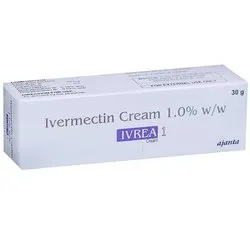
Azelaïnezuur is een van de drie eerste keus topicale behandelingen voor papulopustulaire rosacea, naast topical ivermectine 1% (Ivrea Cream / Soolantra) en topical metronidazol. De bewijsbasis voor azelaïnezuur bij rosacea komt uit twee 12-weken gerandomiseerde gecontroleerde onderzoeken (Thiboutot 2003, Elewski 2003) die een significant grotere vermindering van inflammatoire laesies (papels en pustels) en erytheem laten zien versus placebo.
Verwachte tijdlijn met Aziderm Cream voor rosacea:
- Week 0–2: de eerste applicatie kan kortdurend tijdelijk steken of warmte veroorzaken. Dit verdwijnt bijna altijd binnen 7–10 dagen.
- Week 4–6: zichtbare vermindering van papels en pustels; erytheem begint zachter te worden.
- Week 12: maximaal effect op inflammatoire laesies (typisch 50–70% reductie ten opzichte van baseline).
- Onderhoudsdosis: azelaic acid is veilig voor continu langdurig gebruik — in tegenstelling tot topische steroïden heeft het geen cumulatief atrofie-/telangiectasierisico.
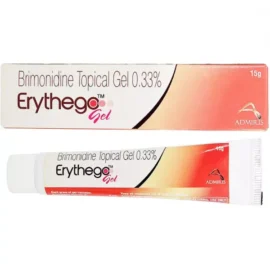
Azelaic acid vermindert niet niet de gezichtsflush of achtergrondroodheid van erythematotelangiectatische rosacea — daarvoor is, brimonidine 0.33% gel (Erythego) de optie. Veel patiënten met gemengde-subtype rosacea gebruiken azelaic acid voor de inflammatoire component en brimonidine voor flushing, op afwisselende ochtenden.
Aziderm Crème Dosering en Toepassing
- Was het gezicht met een milde niet-schuimende reiniger; dep zachtjes droog (niet scrubben).
- Wacht tot de huid volledig droog is — azelaic acid prikt iets meer op vochtige huid.
- Knijp een erwtgrote hoeveelheid uit en stip over het aangetaste gebied (wangen, kin, neus, voorhoofd — waar rosacea of acne aanwezig is).
- Wrijf in een dunne, gelijkmatige laag tot volledig geabsorbeerd. Breng geen dikke laag aan — meer product is niet effectiever.
- Breng aan twee keer per dag — 's ochtends en 's avonds. Consistentie over 12 weken is wat klinische respons oplevert.
- Wacht 5–10 minuten, en breng daarna een niet-comedogene moisturizer aan.
- Overdag: breng altijd af met een breedspectrum zonnebrandcrème met SPF 30+ (UV-straling triggert alle drie de aandoeningen die azelaïnezuur behandelt).
- Vermijd het gebied rond de ogen, de mondhoeken en de binnenkant van de neusgaten.
Tolerantietip: als het steken in de eerste week hevig is, begin dan met eenmaal daags alleen 's nachts gedurende 7 dagen, en voeg vanaf week 2 de ochtendtoepassing toe. 90% van de patiënten kan binnen 2 weken zonder problemen tweemaal daags gebruiken.
Bijwerkingen & Tolerantie
Vaak voorkomend (bij 10–30% van de gebruikers, vooral in week 1–2, meestal tijdelijk):
- Milde branderigheid, steken of warmte bij aanbrengen
- Tintelingen of prikkelingen
- Milde droogheid of schilfering
- Milde erytheem (tijdelijke roodheid)
Minder vaak voorkomend: contactdermatitis door azelaïnezuur zelf (zeldzaam), hypopigmentatie bij zeer donkere huid (zeldzaam; meestal omkeerbaar na staken).
Niet waargenomen bij azelaïnezuur: geen fotosensitiviteit, geen cumulatieve atrofie, geen teleangiëctasieën, geen zwangerschapsrisico, geen selectie van bacteriële resistentie, geen “purging” of retinoïde-achtige peeling.
Aziderm Crème versus Andere Topicale Middelen tegen Rosacea/Acne
| Topicaal | Beste voor | Zwangerschap | Typisch begin |
|---|---|---|---|
| Azelaïnezuur 20% (Aziderm Crème) | Rosacea, acne, melasma | Categorie B (veilig) | 4–12 weken |
| Ivermectine 1% (Ivrea) | Papulopustulaire rosacea (eerste keus) | Categorie C (voorzichtigheid) | 4–8 weken |
| Brimonidine 0,33% (Erythego) | Gezichtsflush / achtergrondroodheid | Categorie B | 30 min (begin), 12 uur (effect) |
| Topisch metronidazol 0,75%–1% | Milde rosacea (eerste keus) | Categorie B | 8–12 weken |
| Tretinoïne 0,025–0,1% | Acne, foto-veroudering | Categorie C — vermijden | 12–16 weken |
Contra-indicaties & Voorzorgsmaatregelen
- Overgevoeligheid voor azelaïnezuur of enige crème-excipiënt.
- Beschadigde of eczeemhuid — wacht tot de beschadigde huid genezen is; azelaïnezuur zal duidelijk prikken op beschadigd epidermis.
- Astma: voorzichtigheid — zeer zeldzame meldingen van verslechterde astmacontrole.
Zwangerschap en borstvoeding: Categorie B. De veiligste topische anti-rosacea en anti-pigmentatieoptie beschikbaar tijdens zwangerschap. Systemische absorptie is <4%. Veel gebruikt in obstetrische dermatologie.
Kinderen: veilig voor gebruik bij adolescenten 12+ voor acne. Gegevens bij kinderen <12 zijn beperkt.
Opslag
Bewaren onder 30°C in de originele tube met de dop goed dichtgedraaid. Niet koelen. Beschermen tegen direct zonlicht. Binnen 6 maanden na opening gebruiken of voor de vervaldatum.
Veelgestelde vragen
Hoe lang duurt het voordat Aziderm Cream werkt bij rosacea?
Zichtbare verbetering van papels en pustels is typisch na 4–6 weken. Maximale effect na 12 weken. Roodheid vermindert langzamer dan de vermindering van laesies en stabiliseert rond week 12–16. Gebruik het product als onderhoudsbehandeling onbeperkt — rosacea is chronisch en kan terugkeren bij stoppen.
Kan ik Aziderm Cream gebruiken als ik zwanger ben?
Ja. Azelaïnezuur is FDA Zwangerschapscategorie B — een van de weinige dermatologische actieve stoffen die als compatibel worden beschouwd met zwangerschap en borstvoeding. Het is de eerste keuze voor zowel rosacea als melasma tijdens de zwangerschap, omdat lokale retinoïden, hydrochinon en orale isotretinoïne allemaal gecontra-indiceerd zijn.
Veroorzaakt Aziderm Cream een purge-effect?
Azelaïnezuur veroorzaakt geen purge-effect zoals retinoïden met nieuwe acne-uitbarstingen. De korte 1–2 weken van tintelingen en milde roodheid bij de start is gewenning, geen purging — de bestaande laesies verbeteren gestaag vanaf week 2 zonder een opflakkering.
Kan ik Aziderm Cream combineren met retinoïden, niacinamide of vitamine C?
Ja op alle drie. Azelaïnezuur werkt goed samen met niacinamide (anti-inflammatoire synergie), vitamine C (verlichtende synergie) en retinoïden (gecombineerd acne/PIH-protocol — breng azelaïnezuur 's ochtends aan en retinoïde 's avonds). Vermijd het combineren met benzoylperoxide in dezelfde toepassing (niet gevaarlijk, maar BPO deactiveert een deel van het azelaïnezuur bij huidcontact).
Maakt Aziderm Cream me gevoelig voor de zon?
Nee. Azelaïnezuur verhoogt de UV-gevoeligheid niet. Dat gezegd hebbende, UV is een primaire trigger voor alle drie de aandoeningen (rosacea, acne, melasma), dus dagelijkse SPF 30+ breedspectrum zonnebrandcrème is een essentieel onderdeel van het behandelplan, ongeacht wat.
Kan ik Aziderm Cream gebruiken voor melasma in plaats van hydrochinon?
Ja. 20% azelaïnezuur is even effectief als 4% hydrochinon over 24 weken in directe vergelijkende onderzoeken, zonder het risico op ochronose of de noodzaak van cyclische pauzes. Het is de eerste keuze voor melasma tijdens de zwangerschap en voor onderhoud tussen hydrochinoncycli.
Is Aziderm Cream hetzelfde als Finacea/Skinoren?
Farmacologisch gezien ja — alle drie zijn topica met 15–20% azelaïnezuur. Finacea (VS/Bayer) is een 15% azelaïnezuurgel; Skinoren (Europa) is een 20% crème; Aziderm Cream (Micro Labs) is een 20% crème. De klinische respons is gelijkwaardig bij gelijke sterkten.
Hoe verschilt Aziderm Cream van topisch metronidazol voor rosacea?
Beide zijn eerstelijns topica voor papulopustulaire rosacea met vergelijkbare effectiviteit in directe vergelijkende onderzoeken. Azelaïnezuur is iets effectiever op papulopustulair laesies; metronidazol wordt iets beter verdragen bij eerste toepassing; azelaïnezuur behandelt ook acne en melasma bij patiënten met gemengde pathologie. De keuze is meestal gebaseerd op verdraagzaamheid en individuele respons.
Waar kan ik Aziderm Cream online kopen?
U kunt Aziderm Cream (20% azelaïnezuur, tube van 15 g) kopen bij MedsBase met discrete verpakking en wereldwijde verzending.
Gerelateerde behandelingen op MedsBase
- Erythego Gel — Brimonidine 0,33%
- Ivrea Crème — Ivermectine 1% Topicaal
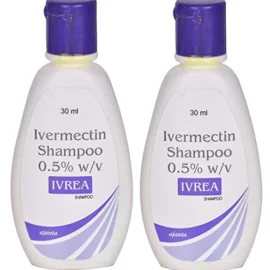
- Ivrea Shampoo — Ivermectine 1%
- Verpin — Ivermectine 6 mg Tabletten
- Bekijk alle behandelingen voor rosacea
Gerelateerde alternatieven
Andere producten in Chronische aandoeningen die klanten ook bekijken:
Meer opties in Rosacea Behandeling
Gerangschikt op recente bestelvolumes van MedsBase — wat andere klanten in deze categorie kiezen.

| Sterkte | 15 g 10% w/w, 15 g 20% w/w |
|---|---|
| Hoeveelheid | 1 Tube/s, 2 Tube/s, 3 Tube/s, 6 Tube/s |
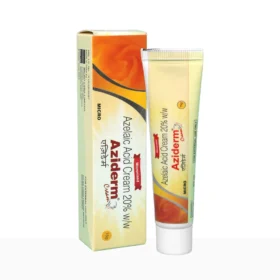 Aziderm Cream
Vragen & antwoorden
Aziderm Cream
Gerelateerde producten



Beoordelingen
Er zijn nog geen beoordelingen