







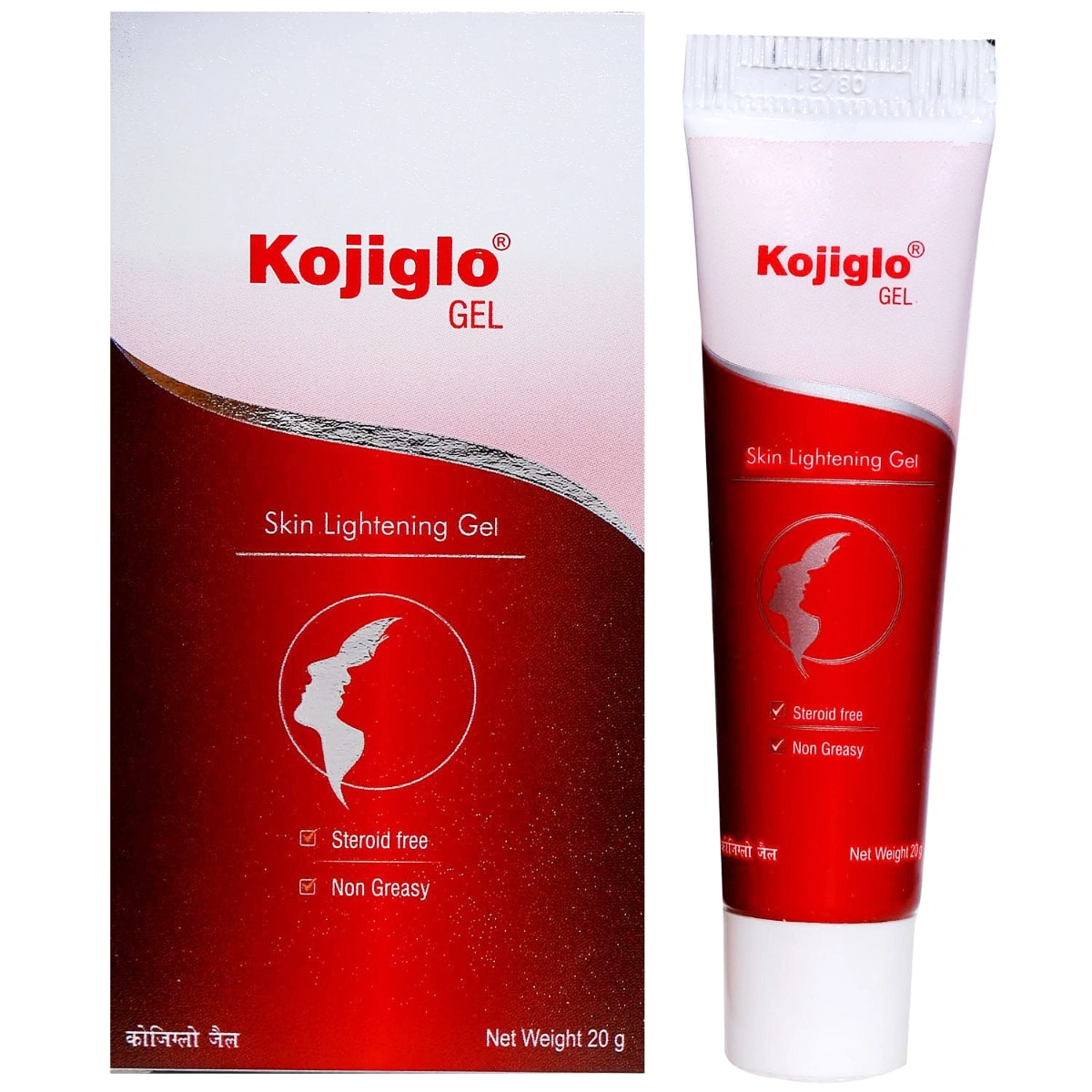
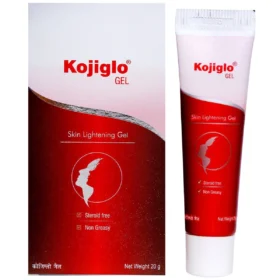
Kojiglo Gel
✅ Verheldert de huidskleur
✅ Vermindert hyperpigmentatie
✅ Vermindert donkere vlekken
✅ Maakt de huidtextuur gladder
✅ Bevat Kojic Acid
Kojiglo Gel bevat Kojic Acid.
✓ Medisch beoordeeld door Morgan Ellis — Apotheekonderzoeker · 8 jaar ervaring · Laatst beoordeeld: mei 2026
⚡ Snelle vraag — Wat is Kojiglo Gel?
Kojiglo Gel is een kojic acid 2% topical depigmentende gel van Glenmark, gebruikt voor melasma, post-inflammatoire hyperpigmentatie (PIH), solar lentigines (zonnevlekken), en andere vormen van huidhyperpigmentatie. Kojic acid is een natuurlijk fungale metaboliet dat tyrosinase remt — het beperkende enzym in melaninesynthese — wat geleidelijk een uniforme huidverlichting geeft over 8–12 weken. Breng een dun laagje aan op donkere plekken een of twee keer per dag; dagelijks breedspectrum SPF 50+ in de ochtend is essentieel om de resultaten te behouden. Kojic acid is een zachter alternatief voor hydroquinon — geschikt voor patiënten die gevoelig zijn voor hydroquinon, die de FDA-beperking op OTC-hydroquinon willen vermijden, of die een onderhoudstherapie willen na een hydroquinon- of Kligman-triple cyclus. Meest voorkomende bijwerkingen: milde irritatie, contactdermatitis (3–5% van de gebruikers) — voer voor gebruik op het gezicht een plakproef uit.
📦 Elke bestelling is gedekt door onze Reshipment Assurance-beleid — als uw pakket niet binnen 20 werkdagen arriveert, sturen wij het opnieuw.
Waarom bestellen bij MedsBase
Onze generieke medicijnen zijn afkomstig van WHO-GMP gecertificeerde fabrikanten en worden wereldwijd verzonden in discrete, eenvoudige verpakkingen — geen medicijnnaam op de buitenkant van het pakket. Betalingen met kaart worden verwerkt via een gereguleerde processor (betalingsoverzichten vermelden een gereguleerde kaartbetalingprocessor — nooit “MedsBase” of een medicijnnaam). Crypto en SEPA bankoverschrijvingen worden ook geaccepteerd. Elke bestelling wordt ondersteund door ons Reshipment Assurance Policy.
Wat Is Kojiglo Gel?
Kojiglo Gel is een depigmenterende gel voor uitwendig gebruik van Glenmark die bevat kojic acid 2%. Het wordt geleverd in een tube van 20 g. Kojinezuur (5-hydroxy-2-(hydroxymethyl)-4H-pyran-4-one) is een natuurlijke verbinding die oorspronkelijk is geïsoleerd uit Aspergillus oryzae, de schimmel die wordt gebruikt voor de productie van sake en sojasaus in traditionele Japanse fermentatie. Het wordt sinds de jaren 80 gebruikt als een depigmenterend middel in de dermatologie en is wereldwijd breed beschikbaar, zowel als voorschriftplichtige preparaten als in vrij verkrijgbare cosmeceuticals.
Hoe Werkt Kojinezuur?
Kojinezuur veroorzaakt huidverlichting via drie complementaire mechanismen:
- Tyrosinaseremming — kojinezuur cheleert het koper op de actieve plaats van tyrosinase, het snelheidsbepalende enzym in de melaninebiosynthese. Minder tyrosinase-activiteit betekent minder melanineproductie door melanocyten.
- Antioxidante activiteit — kojinezuur vangt vrije radicalen op die worden gegenereerd door UV-blootstelling, waardoor indirect de UV-gestuurde stimulatie van melanocyten wordt verminderd.
- Milde antibacteriële en antischimmelactiviteit — nuttig bij patiënten bij wie hyperpigmentatie gepaard gaat met lichte inflammatoire huidaandoeningen.
Vergeleken met hydrochinon (het referentie-depigmenterende middel) is kojinezuur ongeveer 10 keer minder krachtig op een procentuele basis — maar beter verdragen, met een veel lager percentage contactdermatitis en effectief geen risico op exogene ochronose (de onomkeerbare blauw-grijze verkleuring die het langdurig gebruik van hydrochinon beperkt).
Zichtbare verlichting treedt meestal op na 4–8 weken; piekeffect bereikt na Is Cabgolin hetzelfde als Dostinex? van consistent dagelijks gebruik plus rigoureuze SPF.
Toepassingen en Indicaties
- Melasma (chloasma) — symmetrische bruine vlekken op wangen, voorhoofd, bovenlip, vaak hormonaal veroorzaakt; bijzonder geschikt voor patiënten met een gevoelige huid die hydrochinon niet verdragen
- Post-inflammatoire hyperpigmentatie (PIH) na acne, eczeem of brandwonden — vooral bij Fitzpatrick huidtypen III–VI waar PIH het meest opvallend is
- Zonne-lentigines (zonnevlekken, ouderdomsvlekken)
- Sproeten (epheliden) — bescheiden effect
- Onderhoudstherapie na een hydrochinon- of Kligman-triple cyclus — milder dan HQ voor onbepaalde tijd gebruik
- Zwangerschap en borstvoeding — vaak gebruikt als het veiligere depigmentatiemiddel wanneer HQ gecontra-indiceerd is (hoewel lokale retinoïden nog steeds vermeden moeten worden)
Kojiglo Gel is niet voor: diep dermale pigmentmelasma (laser of chemische peeling), beschadigde of eczeemhuid, of als vervanging voor zonbescherming.
Kojiglo Gel Dosering en Toepassing
Kojiglo Gel is verkrijgbaar in een tube van 20 g met 2% kojinezuur.
Hoe Kojiglo Gel correct aan te brengen
- Was voorzichtig met een milde niet-schuimende reiniger, daarna voorzichtig droogdeppen. Wacht 10–15 minuten.
- Eerst een pleistertest uitvoeren — breng een kleine hoeveelheid aan op de binnenkant van de onderarm gedurende 24–48 uur voor gebruik in het gezicht. Kojinezuur veroorzaakt contactdermatitis bij 3–5% van de gebruikers.
- Breng een dun laagje aan alleen op de donkere vlekken — niet op het hele gezicht. Vermijd omliggende gezonde huid om demarcatielijnen te voorkomen.
- Vermijd ogen, mondhoeken, lippen, slijmvliezen, oogleden.
- Een of twee keer per dag — begin met eenmaal daags (meestal 's nachts), verhoog naar tweemaal daags indien verdragen.
- Dagelijks breedspectrum SPF 50+ 's ochtends is essentieel — UV-blootstelling maakt het effect van kojinezuur binnen enkele dagen teniet. Breng elke 2–3 uur opnieuw aan bij buitenactiviteiten. Breedgerande hoed. Vermijd zonnebanken volledig.
- Behandelduur — kojinezuur kan continu gebruikt worden gedurende 3–6 maanden, gevolgd door een pauze van 4–8 weken voordat het hervat wordt. Langdurig gebruik is over het algemeen acceptabel, maar onderhoud is het beste met intermitterende in plaats van continue toepassing.
- Stop onmiddellijk als aanhoudende stekende pijn, contactdermatitis of terugkerende donkerverkleuring optreedt.
Bijwerkingen van Kojiglo Gel
Vaak voorkomend (mild, verdwijnt binnen 1–2 weken):
- Milde stekende pijn, branderig gevoel of tinteling bij aanbrengen — vooral in de eerste week
- Erytheem (lichte roodheid) van behandelde gebieden
- Milde droogheid of schilfering
- Milde fotosensitiviteit — benadrukt de SPF-50+ regel
Minder vaak maar belangrijk:
- Contactdermatitis (3–5% van de gebruikers) — eczeemachtige reactie op de aanbrengplaats. Stop en wissel van middel.
- Aanhoudende erytheem of post-inflammatoire hyperpigmentatie paradoxaal veroorzaakt door irritatie — verminder de frequentie of stop tijdelijk
In tegenstelling tot hydrochinon veroorzaakt kojinezuur geen exogene ochronose (de onomkeerbare blauw-grijze verkleuring). Dit is het belangrijkste veiligheidsvoordeel voor langdurig gebruik.
Contra-indicaties en waarschuwingen
- Overgevoeligheid voor kojinezuur
- Actief eczeem, dermatitis of beschadigde huid in het te behandelen gebied — behandel eerst de ontsteking
- Actieve herpes labialis (koortslip) — stel uit tot het is opgelost
- Kinderen <12 — over het algemeen niet geïndiceerd; indien nodig, onder toezicht van een kinderarts dermatoloog
- Zwangerschap en borstvoeding — topisch kojinezuur heeft minimale systemische absorptie en wordt over het algemeen als veilig beschouwd; vaak gebruikt als het depigmenterende middel bij uitstek wanneer hydrochinon gecontra-indiceerd is
Geneesmiddelinteracties
Topisch kojinezuur heeft minimale systemische absorptie en geen klinisch significante systemische geneesmiddelinteracties. Lokale interacties om te beheren:
- Andere topische depigmenterende middelen (hydrochinon, arbutine, tretinoïne, azelaïnezuur) — kunnen onder begeleiding van een dermatoloog gecombineerd worden voor een synergetisch effect, maar verhogen het risico op irritatie; introduceer één per keer
- Topicale retinoïden (tretinoïne, adapaleen, tazaroteen) — worden vaak gecombineerd; breng ze op verschillende tijdstippen aan (retinoïde 's avonds, kojiczuur 's ochtends) om irritatie te minimaliseren
- Chemische peelings en microdermabrasie — stop tijdelijk met kojiczuur 1–2 weken voor en na de behandeling om het risico op post-procedure irritatie te verminderen
- SPF / zonnebrandcrèmes — verplicht begeleidend product
Vergelijking van Kojiglo Gel met Alternatieven
| Middel | Potentie | Opvallend kenmerk |
|---|---|---|
| Kojiczuur 2% (Kojiglo Gel) | Mild–matig | Zachter dan HQ; veilig voor langdurig gebruik; geen risico op ochronose |
| Hydrochinon 4% (Eukroma) | Sterk (gouden standaard) | FDA-beperkt (specialistisch gebruik); max 4–6 maanden; risico op ochronose |
| Kligman triple (Melacare, Triluma) | Sterkste | HQ + tretinoïne + steroïde; voor matige tot ernstige melasma; 8-aan/8-af cycli |
| HQ + Kojic combinatie (Eukroma-KJ) | Matig–sterk | Combineert de kracht van HQ met de verdraagzaamheid van kojiczuur |
| Azelaïnezuur 15–20% | Matig | Veilig alternatief tijdens zwangerschap; ontstekingsremmend |
| Niacinamide 4–5% | Mild | Zonder recept; zeer mild; voor langdurig cosmetisch gebruik |
Opslag en houdbaarheid
Bewaar Kojiglo Gel onder 25°C in de originele tube, uit direct zonlicht (kojiczuur is lichtgevoelig). Draai de dop na elk gebruik goed dicht. Buiten bereik van kinderen houden. Gebruik binnen de door de fabrikant aangegeven periode na eerste opening (meestal 6 maanden) of vóór de gedrukte vervaldatum, afhankelijk van wat eerder is.
Veelgestelde vragen
Is kojiczuur veiliger dan hydrochinon?
Ja — kojiczuur is milder, heeft een veel lager percentage contactdermatitis en vrijwel geen risico op exogene ochronose (de onomkeerbare blauw-grijze verkleuring die langdurig gebruik van hydrochinon beperkt). Het nadeel is dat kojiczuur ongeveer 10× minder krachtig is op basis van percentage — resultaten duren langer en zijn bescheidener. Voor milde tot matige melasma of PIH is kojiczuur vaak de juiste keuze. Voor ernstige melasma is hydrochinon of de Kligman-triple effectiever.
Hoelang duurt het voordat ik resultaten zie?
Zichtbare verlichting van de huid treedt meestal op na 4–8 weken van consistent dagelijks gebruik in combinatie met strikte SPF-bescherming. Het maximale effect wordt bereikt na 3–6 maanden. Als er na 12 weken geen zichtbare verbetering is, kan overschakelen naar een sterker middel (zoals hydrochinon of de Kligman-tripletherapie onder medisch toezicht) overwogen worden.
Mag ik Kojiglo Gel gebruiken tijdens de zwangerschap?
Topicale kojiczuur wordt minimaal systemisch opgenomen en wordt over het algemeen als veilig beschouwd tijdens zwangerschap en borstvoeding. Het is een veelgebruikt depigmenterend middel tijdens de zwangerschap, wanneer hydrochinon (te vermijden tijdens zwangerschap) en topicale retinoïden (te vermijden tijdens zwangerschap) gecontra-indiceerd zijn. Overleg altijd met uw verloskundige of dermatoloog voordat u een topicale behandeling start tijdens de zwangerschap.
Kan ik kojiczuur combineren met vitamine C of niacinamide?
Ja — kojiczuur kan goed gecombineerd worden met topicale vitamine C (L-ascorbinezuur 10–20%) en niacinamide (4–5%) voor een versterkt depigmenterend en antioxidant effect. Breng de middelen op verschillende tijdstippen aan om pH-gerelateerde interacties te minimaliseren: vitamine C 's ochtends onder SPF, niacinamide en kojiczuur 's avonds.
Zal kojiczuur mijn hele gezicht bleken als het in contact komt met gezonde huid?
Kojiczuur richt zich specifiek op actieve melanocyten — het licht gepigmenteerde vlekken effectiever op dan normale huidgebieden. Bij langdurig en uitgebreid gebruik kan enige verlichting van de omliggende normale huid optreden, wat een lichte aftekening rond de behandelde vlekken kan veroorzaken. Om dit te minimaliseren, breng het middel alleen aan op de donkere vlekken, niet op het hele gezicht.
Waarom heb ik SPF nodig als ik kojiczuur 's nachts gebruik?
UV-straling stimuleert melanocyten om meer melanine aan te maken, wat het effect van kojiczuur binnen enkele dagen teniet kan doen. Zonder dagelijkse breedspectrum SPF 50+ is kojiczuur (en elk ander depigmenterend middel) vrijwel machteloos. SPF is niet optioneel; het is de primaire therapie — het depigmenterende middel is de ondersteuning.
Is Kojiglo Gel een permanente oplossing voor melasma?
Geen enkel depigmenterend middel is een permanente oplossing voor melasma — de onderliggende neiging tot overproductie van melanine blijft bestaan. Met consistente SPF-bescherming, hormonale stabiliteit en onderhoudstherapie kunnen resultaten jarenlang worden behouden. Het stoppen van de behandeling OF het stoppen van SPF zal geleidelijk leiden tot het terugkeren van het melasma.
Waar kan ik Kojiglo Gel online bestellen?
U kunt Kojiglo Gel bestellen bij MedsBase in standaard verpakkingsgroottes (20 g tube). Bestellingen worden wereldwijd verzonden met discrete verpakking.
Gerelateerde alternatieven
Andere producten in Algemene gezondheid die klanten ook bekijken:
Meer opties in Beauty & Huidverzorging
Gerangschikt op recente bestelvolumes van MedsBase — wat andere klanten in deze categorie kiezen.


| Sterkte | 20 g |
|---|---|
| Hoeveelheid | 1 Tube/s, 2 Tube/s, 3 Tube/s, 6 Tube/s |
 Kojiglo Gel
Vragen & antwoorden
Kojiglo Gel
Gerelateerde producten






Beoordelingen
Er zijn nog geen beoordelingen