








Lobet
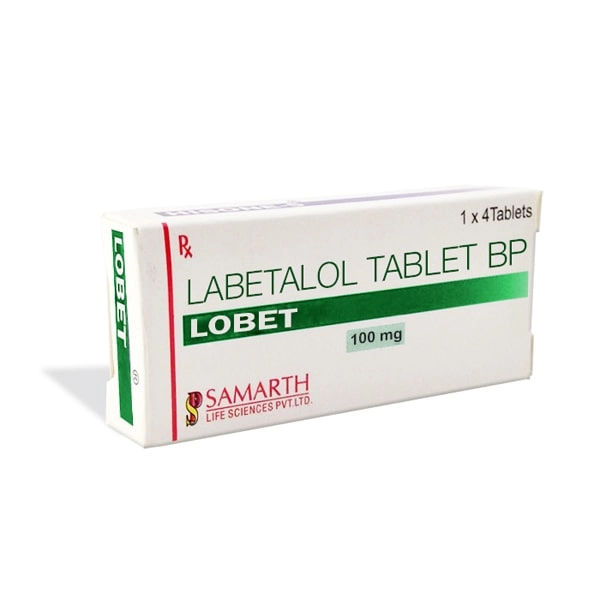
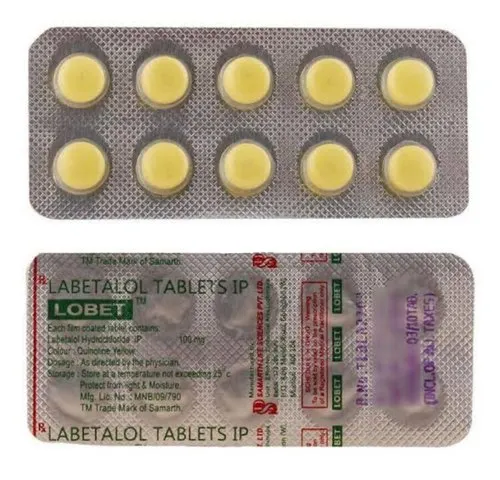
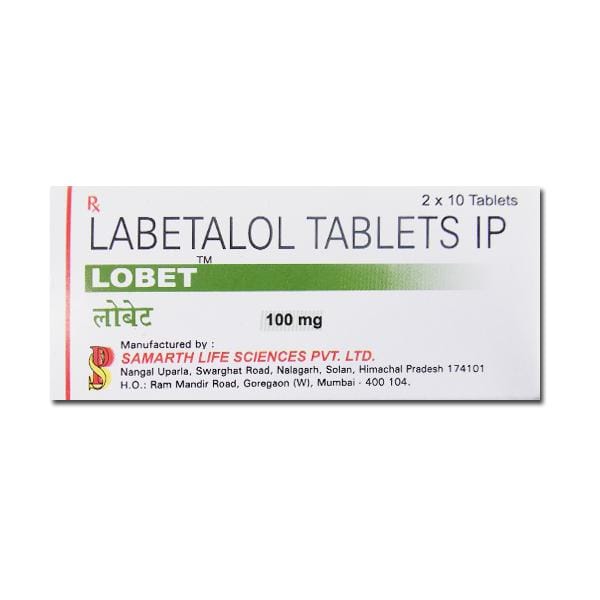
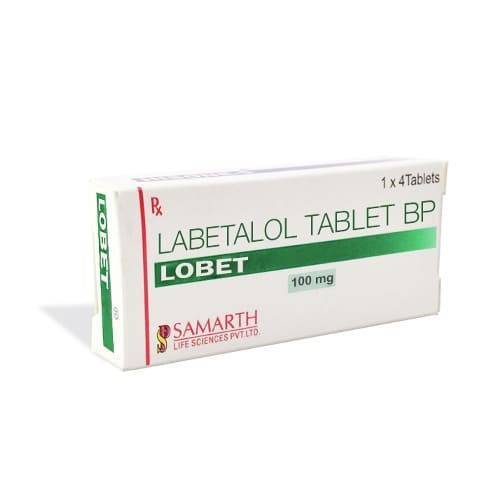

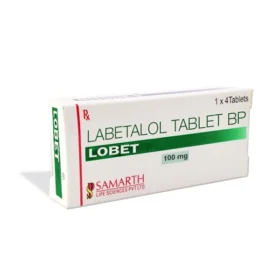
Lobet is labetalol 100 mg tabletten — een gecombineerde alfa-1 + niet-selectieve bètablokker. Voorkeursmiddel bij hypertensie tijdens zwangerschap (eerste keus bij zwangerschapshypertensie en pre-eclampsie). Ook gebruikt bij hypertensieve urgentie/nood (IV-formulering) en aortadissectie. Standaard orale dosering 100-400 mg tweemaal daags.
✓ Medisch beoordeeld door Morgan Ellis — Apotheekonderzoeker · 8 jaar ervaring · Laatst beoordeeld: mei 2026
⚡ Kort Antwoord — Wat is Lobet?
Lobet is een 100 mg labetalol tablet van een WHO-GMP gecertificeerde fabrikant — niet-selectieve bètablokker met extra alfa-1-blokkade (bèta:alfa-ratio ~3:1 oraal, 7:1 IV). Primair gebruik is hypertensie; ook gebruikt bij angina pectoris, ritmestoornissen, secundaire preventie na myocardinfarct, en als eerste keus antihypertensivum tijdens zwangerschap. Standaard dosering bij hypertensie: 100 mg tweemaal daags; verhoog indien nodig naar 200-400 mg BID (800 mg/dag gebruikelijke max; tot 2.400 mg/dag in ernstige gevallen). Gecontra-indiceerd bij astma, ernstige bradycardie, tweede/derdegraads AV-blok, acuut gedecompenseerd hartfalen en feochromocytoom zonder voorafgaande alfa-blokkade. NIET abrupt stoppen — afbouwen over 1-2 weken om reboundtachycardie/angina pectoris/infarct te voorkomen.
📦 Elke bestelling is gedekt door onze Reshipment Assurance-beleid — als uw pakket niet binnen 20 werkdagen arriveert, sturen wij het opnieuw.
Waarom bestellen bij MedsBase
Onze generieke medicijnen zijn afkomstig van WHO-GMP gecertificeerde fabrikanten en worden wereldwijd verzonden in discrete, eenvoudige verpakkingen — geen medicijnnaam op de buitenkant van het pakket. Betalingen met kaart worden verwerkt via een gereguleerde processor (betalingsoverzichten vermelden een gereguleerde kaartbetalingprocessor — nooit “MedsBase” of een medicijnnaam). Crypto en SEPA bankoverschrijvingen worden ook geaccepteerd. Elke bestelling wordt ondersteund door ons Reshipment Assurance Policy.
Wat Is Lobet?
Lobet is een orale tablet met labetalol 100 mg van een WHO-GMP gecertificeerde fabrikant, geleverd in 30-180 tabletten. Labetalol is een niet-selectieve bètablokker met extra alfa-1-blokkade (bèta:alfa-ratio ~3:1 oraal, 7:1 IV). Gecombineerde alfa-1 en niet-selectieve bètablokkade zorgt voor snelle bloeddrukverlaging zonder reflex tachycardie. Eerste keus antihypertensivum tijdens zwangerschap — een van de drie “veilige opties tijdens zwangerschap” naast methyldopa en nifedipine. Tevens het standaardmedicijn voor hypertensieve noodsituaties, waaronder pre-eclampsie, hypertensieve crisis en feochromocytoom (na alfa-blokkade).
Hoe Labetalol de Bloeddruk Verlaagt
Bètablokkers verlagen de bloeddruk via vier mechanismen:
- Vermindering van het hartminuutvolume — bèta-1-blokkade in de sinusknoop verlaagt de hartfrequentie, en blokkade in het ventriculaire myocard vermindert de contractiliteit. Lager hartminuutvolume = lagere bloeddruk.
- Remming van het renine-angiotensinesysteem — bèta-1-blokkade in de juxtaglomerulaire cellen vermindert de renineafgifte, wat angiotensine II en aldosteron over 2-4 weken verlaagt. Dit verklaart een groot deel van het langetermijneffect op de bloeddruk.
- Centrale sympathische reductie — lipofiele bètablokkers passeren de bloed-hersenbarrière en verminderen de centrale sympathische uitstroom.
- Alpha-1-blokkade — directe perifere vasodilatatie (specifiek voor labetalol), wat een snellere bloeddrukdaling geeft dan pure bètablokkers.
Bètablokkers zijn matig lipofiel. De plasmahalfwaardetijd van labetalol is 6-8 uur.
Goedgekeurde en evidence-based toepassingen
- Hypertensie (primaire indicatie)
- Hypertensie tijdens zwangerschap — eerstelijns; veiliger dan de meeste andere bloeddrukmedicijnen (geen teratogeen signaal, verdient de voorkeur boven methyldopa volgens veel UK/EU-richtlijnen)
- Pre-eclampsie / ernstige zwangerschapshypertensie
- Hypertensief noodgeval / urgentie (IV)
- Feochromocytoom — ALLEEN na instelling van alfa-blokkade (zoals alle bètablokkers; nooit als eerste middel)
- Aortadissectie — IV labetalol plus morfine voor bloeddruk/hartslagcontrole
Lobet Dosering
Dosering voor hypertensie bij volwassenen: 100 mg tweemaal daags; verhoog indien nodig naar 200-400 mg BID (800 mg/dag gebruikelijke max; tot 2.400 mg/dag in ernstige gevallen).
Begin laag en titreer gedurende 2-4 weken omhoog naar de streefbloeddruk (meestal <140/90 bij ongecompliceerde hypertensie; <130/80 bij diabetes, chronische nierziekte of vastgestelde cardiovasculaire ziekte). Controleer de rustpols voor elke dosisverhoging — titreer niet bij <55 slagen per minuut.
Monitoring:
- Rustpols en bloeddruk na 2, 4 en 8 weken na start of doseringsaanpassing
- Baseline ECG bij cardiale voorgeschiedenis; periodiek ECG bij verandering van symptomen
Toediening: heel doorslikken met water. Neem in ongeveer op hetzelfde tijdstip elke dag.
Stopzetting: NOOIT abrupt stoppen. Afbouwen over 1-2 weken (verlaag met 25-50% elke 3-5 dagen). Abrupt stoppen veroorzaakt reboundtachycardie, verergerde angina pectoris en — bij patiënten met coronaire aandoeningen — kan een myocardinfarct veroorzaken. Dit is een van de belangrijkste veiligheidspunten voor bètablokkers.
Bijwerkingen
Vaak (>5%):
- Vermoeidheid, lusteloosheid — past zich vaak aan binnen 2-4 weken
- Koude handen en voeten (perifere vasoconstrictie)
- Bradycardie (controleer pols; stop als <50 slagen per minuut)
- Verminderde inspanningstolerantie — maximale hartfrequentie wordt verminderd door bètablokade
- Duizeligheid, orthostatische hypotensie
- CNS-effecten mogelijk maar minder vaak dan bij propranolol
- Posturale duizeligheid (komt vaker voor door vaatverwijdend effect)
Minder vaak: depressie, verminderd libido / erectiestoornissen, maag-darmklachten, Raynaud-achtige koude-intolerantie, bronchospasme (komt vaker voor bij niet-selectieve middelen).
Belangrijk maar ongebruikelijk:
- Gemaskeerde hypoglykemie bij diabetici — bètablokkers onderdrukken de tachycardie / tremor waarschuwingssignalen van een lage bloedsuikerspiegel. Controleer glucose nauwkeuriger; geef de voorkeur aan nebivolol of metoprolol bij insulinebehandelde diabetes.
- Bronchospasme — kan ernstig zijn bij astma / COPD. Absolute contra-indicatie voor niet-selectieve middelen; relatief voor cardioselectieve.
- Hartblok of verergering van hartfalen — bij gevoelige patiënten. Start laag en titreer langzaam.
Contra-indicaties en waarschuwingen
- Astma / ernstige COPD / elk bronchospastisch syndroom — absolute contra-indicatie (niet-selectieve bètablokkers)
- Tweede- of derdegraads AV-blok (zonder pacemaker)
- Sinusbradycardie <50 bpm
- Cardiogene shock, gedecompenseerd hartfalen waarvoor inotropen nodig zijn
- Ernstige perifere arteriële ziekte, syndroom van Raynaud (relatief)
- Feochromocytoom zonder voorafgaande alfa-blokkade — paradoxale hypertensieve crisis (Labetalol heeft een alfa-1-blokkerende component, wat dit risico verzacht maar niet elimineert)
- Ernstige leverfunctiestoornis (voor sterk hepatisch gemetaboliseerde middelen: propranolol, metoprolol, carvedilol, labetalol)
- Ernstige nierfunctiestoornis — doseringsaanpassing nodig voor renale excretie middelen (atenolol, nadolol)
- Overgevoeligheid voor labetalol
Zwangerschap: Labetalol is het eerstekeus antihypertensivum tijdens de zwangerschap — veiliger dan de meeste alternatieven; geen teratogeen signaal; veel gebruikt bij zwangerschapshypertensie en pre-eclampsie.
Borstvoeding: compatibel (lage melkoverdracht).
Geneesmiddelinteracties
- Verapamil, diltiazem (niet-dihydropyridine CCB's) — additieve bradycardie, hartblok en negatieve inotropie; combinatie over het algemeen vermijden. Dihydropyridine CCB's (amlodipine, nifedipine) zijn veiliger te combineren met bètablokkers.
- Andere bètablokkers — niet combineren; additieve bradycardie
- Clonidine — bij het staken van clonidine, stop eerst de bètablokker (enkele dagen ervoor) om een rebound hypertensieve crisis te voorkomen
- Insuline en sulfonylureumderivaten — maskeren waarschuwingssignalen van hypoglykemie; glucose nauwlettend monitoren
- NSAID's — verminderen het antihypertensieve effect van bètablokkers; vermijd chronische combinatie
- Alcohol — additieve hypotensie en CNS-depressie (vooral voor lipofiele middelen)
Bètablokkerklasse in één oogopslag
| Bètablokker | Selectiviteit | Beste voor |
|---|---|---|
| Propranolol (Inderal, Ciplar, Beloc) | Niet-selectief | Migraine, tremor, thyreotoxicose, prestatieangst, HTN |
| Metoprolol | Cardioselectief | Post-MI, HF-REF (succinaat ER), angina, AF frequentiecontrole |
| Carvedilol | Niet-selectief + α-1 | HF-REF (sterftebewijs), post-MI |
| Bisoprolol | Zeer cardioselectief | HF-REF, HTN, angina, AF frequentiecontrole |
| Nebivolol | Ultra-selectief + NO | Ouderen, metabool syndroom, erectiestoornissen |
| Atenolol | Cardioselectief (hydrofiel) | Angina, AF ritmecontrole (tweede keus bij HTN) |
| Labetalol | Niet-selectief + α-1 | Zwangerschapshypertensie, hypertensieve crisis |
Het gecombineerde alfa + bèta-profiel vermijdt reflex tachycardie zoals gezien bij pure alfa-blokkers (prazosine) en de reflex vasoconstrictie zoals gezien bij pure bètablokkers. Eerstekeus bètablokker tijdens de zwangerschap. Gebruik niet als monotherapie voor feochromocytoom vóór alfa-blokkade — paradoxale hypertensieve crisis.
Opslag
Bewaar Lobet onder 25°C. Buiten bereik van kinderen houden — accidentele inname van bètablokkers door kinderen kan levensbedreigende bradycardie en hypoglykemie veroorzaken.
Veelgestelde vragen
Hoe lang duurt het voordat Lobet de bloeddruk verlaagt?
U zou binnen 1-2 dagen na start een bloeddrukdaling moeten merken; het volledige antihypertensieve effect treedt op na 2-4 weken (veroorzaakt door de geleidelijke renine-angiotensine suppressie, niet het directe hartslageffect). Meet thuis de bloeddruk dagelijks op hetzelfde tijdstip om het effect te volgen.
Kan ik Lobet gebruiken als ik astma heb?
Nee — Labetalol is niet-selectief en kan ernstige bronchospasmen veroorzaken bij astmapatiënten. Absolute contra-indicatie. Voor astmapatiënten die een bètablokker nodig hebben, nebivolol of metoprolol (zeer cardioselectief) zijn veiliger alternatieven — hoewel geen enkele bètablokker volledig veilig is bij astma.
Waarom mag ik Lobet nooit abrupt stoppen?
Abrupt stoppen veroorzaakt reboundtachycardie en verergerde angina binnen 24-48 uur, veroorzaakt door upregulatie van bèta-receptoren tijdens chronische blokkade. Bij patiënten met coronaire hartziekte kan dit een myocardinfarct of instabiele angina veroorzaken. Verminder de dosering altijd geleidelijk over 1-2 weken bij het stoppen.
Beïnvloedt Lobet mijn sportprestaties?
Ja — bètablokkade vermindert de hartslagrespons op inspanning, dus je maximale polsslag is lager en je raakt sneller vermoeid bij hoge intensiteiten. Voor recreatieve sporters passen de meeste mensen zich aan; voor competitieve duursporters kunnen bètablokkers de prestaties aanzienlijk beïnvloeden en zijn ze verboden in precisiesporten (schieten, boogschieten — waar ze fysiologische tremor verminderen).
Beïnvloedt Lobet mijn bloedsuiker als ik diabetes heb?
Bètablokkers maskeren de tachycardie / tremor / hartkloppingen waarschuwingssignalen van hypoglykemie, waardoor lage bloedsuiker moeilijker te detecteren is. Ze kunnen ook de tegenregulerende glucoserespons verminderen. Controleer de glucose vaker bij gebruik van een bètablokker, vooral bij gebruik van insuline of sulfonylureumderivaten. Nebivolol en metoprolol hebben het beste metabole profiel.
Mag ik alcohol drinken bij gebruik van Lobet?
Matig alcoholgebruik is over het algemeen acceptabel, maar alcohol versterkt de hypotensieve en CNS-remmende effecten. Sta langzaam op na het drinken. Alcohol is ook een onafhankelijke bloeddrukverhoger; het verminderen van de inname kan de bloeddrukcontrole verbeteren, onafhankelijk van Lobet.
Veroorzaakt Lobet gewichtstoename?
Oudere bètablokkers (propranolol, atenolol, metoprolol) worden geassocieerd met bescheiden gewichtstoename (1-3 kg) en verslechtering van de insulinegevoeligheid over tijd. Nebivolol en carvedilol zijn gewichtsneutraal of licht gewichtsgunstig vanwege hun vaatverwijdende componenten. Voor patiënten met metabool syndroom, nebivolol is de voorkeurs-bètablokker wanneer deze nodig is.
Is Lobet veilig tijdens de zwangerschap?
Ja — labetalol is het eerstelijns antihypertensivum tijdens de zwangerschap. Veel gebruikt bij zwangerschapshypertensie en pre-eclampsie; decennia aan real-world veiligheidsdata.
Kan ik Lobet gebruiken met andere bloeddrukmedicijnen?
Ja — bètablokkers combineren goed met dihydropyridine calciumantagonisten (amlodipine), ACE-remmers (ramipril, lisinopril), losartan (olmesartan, telmisartan, bètablokkers), en thiazidediuretica (HCTZ). Vermijd combinatie met niet-dihydropyridine calciumantagonisten (verapamil, diltiazem) — verhoogd risico op bradycardie en hartblok.
Waar kan ik Lobet online kopen?
U kunt Lobet (labetalol 100 mg tablet, 30-180 tabletten) kopen bij MedsBase met discrete verpakking en wereldwijde verzending.
Gerelateerde bètablokkers & antihypertensiva
- Carvejohn — Carvedilol 12.5/25 mg
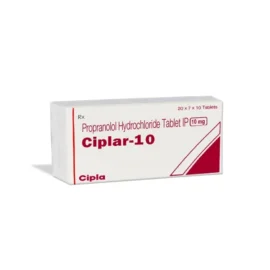
- Ciplar — Propranolol 10 mg (Cipla)
- Concor — Bisoprolol 5/10 mg (HTN-dosis)
- Concor Cor — Bisoprolol 2,5 mg (HF starter)
- Metomac — Metoprolol 25 mg
- Provanol SR — Propranolol 80 mg SR
- Bekijk alle hoge bloeddruk medicijnen
Gerelateerde alternatieven
Andere producten in Chronische aandoeningen die klanten ook bekijken:
Meer opties in medicatie tegen hoge bloeddruk
Gerangschikt op recente bestelvolumes van MedsBase — wat andere klanten in deze categorie kiezen.

| Sterkte | 100 mg |
|---|---|
| Hoeveelheid | 30 Tablet/s, 60 Tablet/s, 90 Tablet/s |
| Farmaceutische vorm | Tablet/s |
| Fabrikant | Samarth Life Sciences |
| Behandeling | HART & BLOEDDRUK |
| Generiek merk | Labetalol |
 Lobet
Lobet
Vragen & antwoorden
Lobet
Gerelateerde producten









Beoordelingen
Er zijn nog geen beoordelingen